
Principal
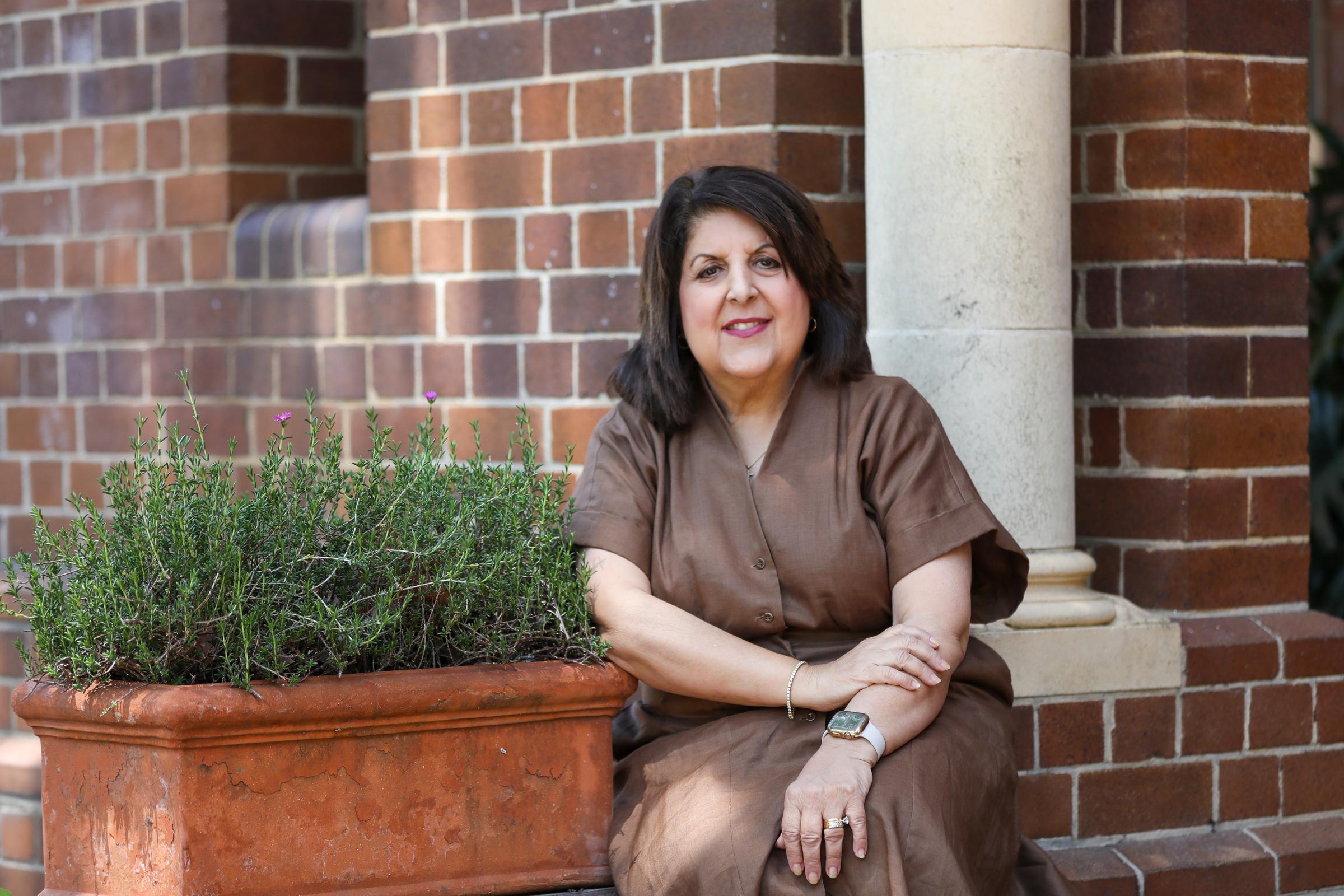
Opening School Mass and High Achievers’ Assembly
Last Friday, we gathered to celebrate our Opening School mass and then recognise and celebrate our 2025 HSC High Achievers, alongside families, staff and students.
The occasion is a significant day in the College calendar. At our Opening Mass, we began the year with the spiritual theme “Stand firm in faith, be courageous, be strong. Let all that you do be done in love” and we welcomed 217 new Year 5 students arriving from 69 different primary schools - a powerful reminder of the breadth of backgrounds that come together to form our community.

In acknowledging the High Achievers, my address emphasised what their success represents: commitment, hard work, diligence and sustained effort across thirteen years of education. Importantly, we also recognised the many students from the Class of 2025 who were not present, but who still gave their maximum effort and deserve our applause.
Gratitude was extended to those who walk alongside students on the learning journey -our teachers for their commitment and care (with particular acknowledgement of Year Coordinator Ms Fisicaro and our families for their love and support.
A central theme of the address was culture -and the idea that culture is shaped less by what we say and more by what we do. As the speech noted, actions define a culture, influencing decisions and relationships.
The newest members of our community, Year 5, provide a clear example: they arrive from dozens of school cultures and are challenged to understand the St Patrick’s culture, contribute to it, and strengthen it as the College moves toward its second century on its site.
As a College in the Edmund Rice tradition, we strengthen our culture through values—expressed in the symbols of our crest and uniform: Strength and Fortitude, Discipline, Knowledge, Truth and Loyalty, Constancy and Resilience, and Generosity. The message was clear: Our values shape who we are, and students are challenged to ensure their actions reflect what they say.
My address also outlined how culture takes shape through our shared beliefs, values and norms—including our conviction that all students have the potential to succeed, our high-expectation environment, and the practical actions that build community: attendance, settled learning, participation in College events, co-curricular involvement, and service learning.
In the assembly that followed, we celebrated not only individual achievements, but also the strength of the cohort’s collective performance. The Class of 2025 achieved 100% HSC completion, a median ATAR of 83, and 61 students with ATARs over 90. The speech also highlighted the College’s strong standing—ranking 9th among Catholic schools in NSW, 67th overall, and 4th among Catholic boys’ schools—especially impressive given St Patrick’s is not academically selective.
To students in attendance, the address offered both encouragement and expectation: you “carry the same light” and are called to lead by example—through academic excellence, goal setting, and embracing faith and learning opportunities. Current students were urged to “love your learning, love your school,” and to actively take hold of the future.
The message concluded with a hopeful call to the whole community: to animate and empower one another to hope and dream, to grow in strength, resilience and purpose, and to make a difference—beginning within the College and extending to the wider world.
Finally, our High Achievers were wished well for the next stage of their journey, with the reassurance of the College’s ongoing prayers and support. The speech closed with words attributed to **Blessed Edmund Rice (1810): “while we work for God, whether we succeed or not, we will be amply rewarded.”
The School Year Has Started! What Can Parents Do to Support a Strong Start?
The start of a new school year often brings fresh beginnings, newly sharpened pencils, and — for many families — a familiar wave of stress. Parents are encouraged to prioritise the “essentials”: stationery lists, new shoes, labelled containers, and the ideal lunchbox. While these tasks have their place, they play a very small role in how confidently a child settles, learns, and feels during the first weeks of school. Instead, focus on expectation-setting: “The first week is tiring for everyone. It takes time to adjust. That’s normal.” Children cope better when they know discomfort is temporary and expected.
There are four strategies that make a measurable difference across the school year for children of all ages:
1. The “How Can I Help?” Conversation
Now that school has started, ask:
“What do you want this year to look like for you?”
“What’s important to you?”
“How can I help?”
Notice we’re not asking about grades—we’re asking about values, direction, and ownership. When children define success on their own terms and know we’re behind them, motivation and confidence soar.
2. Daily Check-In Questions
Instead of “How was school?” (which invites “fine”) try rotating questions that build reflection, kindness, and resilience:
“What did you do today that was hard?”
“Who did you help today?”
“What made you laugh?”
“Who was kind to you?”
These questions strengthen emotional intelligence, provide insight into wellbeing, promote kindness as a daily habit, and build trust in the parent–child relationship. For teenagers, these can be texted, asked over dinner, or saved for bedtime.
3. The Friendship Audit
Friendships are a major predictor of belonging and school satisfaction.
For adolescents and tweens: Ask who they sit with, who they message, who they feel safe with, and help them nurture healthy rather than simply popular friendships.
A simple formula is:
Learn name
Learn patterns (who they mention most
If possible, make a parent-to-parent connection
Create opportunities for face time (not just FaceTime).
The Activity Opt-Out Audit
Many of our students are overloaded by extracurricular activities that they no longer enjoy, that exhaust them after school or are powered by parental nostalgia or sunk cost. Ask: “If we weren’t already doing this, would you choose it today?” If the answer is no, consider letting it go. Quitting is not failure -it’s alignment.
Children need one of the following (not all):
Movement
Creativity
Connection
Not a jam-packed schedule.
In Summary: What Parents Can Do This Week
Here are the 5 most effective actions:
Have a relaxed emotional check-in
Identify who has your child’s back at school
Lower the bar on routines—raise the bar on connection
Use daily check-in questions to learn and support
Run a friendship + activity audit in Week 3–5
This is how we build back-to-school experiences that support not just performance, but wellbeing, confidence, and belonging.
Year 5, 2028 Enrolments – Important Information for Current Families
As part of the College’s forward planning, we remind families with a child currently in Year 3 who have not yet submitted an enrolment application that now is the time to do so.
In the coming weeks, the Enrolments Office will begin contacting families who have expressed interest in Year 5 entry in 2028, including invitations to attend College Tours.
Applying ensures your child is included in this next stage of the enrolment process. Applications close on 28 February 2026 and incur a non-refundable Enrolment Fee of $250.
Siblings are among our top-priority enrolments, but as always, submitting an application does not guarantee a place; it is an important step in the enrolment process. The College reserves the right to ensure it can meet the learning needs of any student and we may not be the right setting for some.
Families who have not yet applied are encouraged to submit an application via the College website.
Should you have any questions or require assistance, the Enrolments Office is available to support you throughout the process.
Thank you for your continued partnership with the College.
St Maroun’s Feast Day, 9 February
On Monday, the world celebrated the feast day of St Maroun (also known as Maron or Maro), a 4th-century Syriac Christian saint and hermit whose ascetic life and miracles in the Taurus Mountains led to the founding of the Maronite Church. Celebrated today, he is honoured as a pioneer of monasticism in Syria, and his spiritual legacy underpins the Maronite faith. At St Patrick’s, we currently have 301 students who identify as Maronite Catholics, representing 19% of our student population.
Key Facts about St Maroun
Life & Ministry: Born around 350 AD near Antioch, he lived as a hermit in Syria, gaining renown for holiness, healing, and converting a pagan temple into a Christian church.
Death: He died around 410 AD, and his followers established a monastery and movement that grew into the Maronite Church.
Legacy: He is considered the father of the Maronite spiritual movement, which is the only Eastern rite church that has always been in full communion with the Catholic Church.
You may consider reciting this prayer throughout this week.
St Maroun Prayer O lord, accept the prayers we offer in memory of our Father, St Maroun. Bless and protect the people who bear your name. Make us worthy of his holy legacy that we may carry the message of your Gospel. Amen |
|---|
In Memoriam
We pray for Lucas Guindi (Year 9) and James Guindi (Year 7) for the loss of their grandmother, Mrs Genevieve Hanna.
Please keep Mrs Fotini El-Kazzi (English Teacher) and her family in your prayers as her grandmother passed away last week.
Eternal rest grant unto them, O Lord, and let perpetual light shine upon them. May their soul and the souls of all the faithful departed, Through the mercy of God, rest in peace. Amen. |
|---|
Dr Vittoria Lavorato
Principal
SPC boys can do anything!
**except divide by zero