Indo Info
Ibu Kas
Indo Info
Ibu Kas
CULTURAL CONNECTIONS
Grade Two’s have started experimenting with batik. Batik is a resist wax and dye technique that creates art on cloth. While it exists in many countries, Java Indonesia is where it has been taken to its highest level of sophistication. BUT, did you know batik is also practiced by many female Indigenous artists of Central Australia? Batik was introduced to Central Australia in the 1970s through cultural exchanges with Indonesia and government-sponsored workshops. These artists created batik with their own traditional symbols, developed new motifs and also adapted some traditional Javanese motifs.
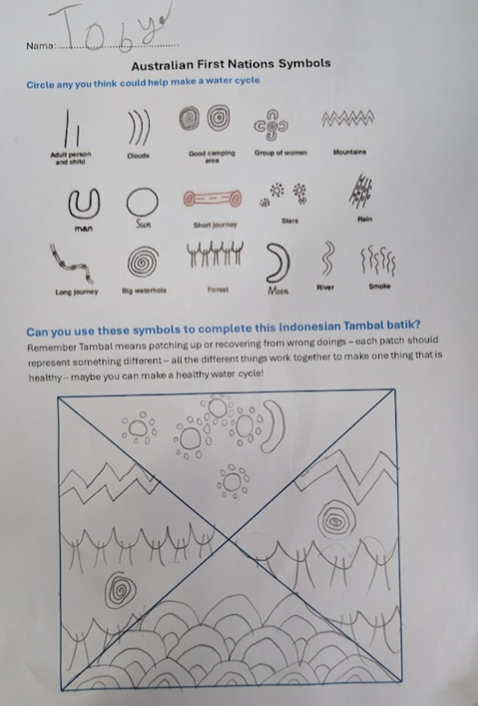
Grade Two’s are making cultural connections by experimenting with these same symbols. We have linked into the school inquiry cycle on water by focussing on symbols that represent key features in the water cycle. There are many steps to making batik so it will be some weeks before we are done but stay tuned to see some of our finished batik art works!
Meanwhile, here is an example of our experimentation from Toby in JBA.
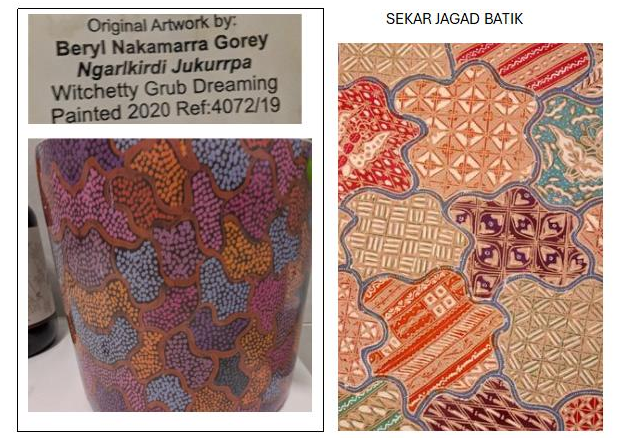
Because of its meaning, one of my favourite traditional Javanese batiks is Sekar Jagad Batik. This batik pattern symbolizes love, harmony and beauty in diversity. Can you see the influence of this pattern in Beryl’s work?
SEKAR JAGAD BATIK
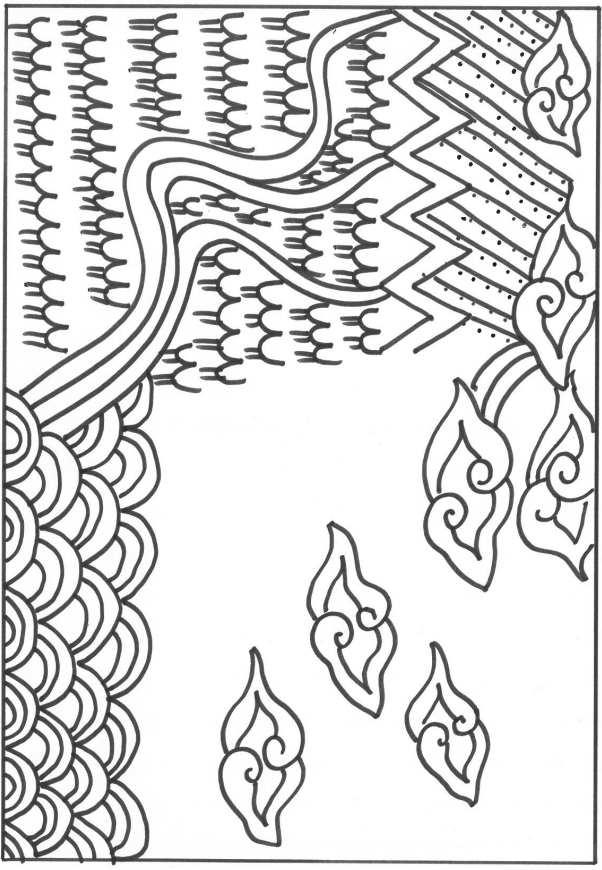
Maybe you would like to print out the representation of the water cycle below to colour in at home. The table on Toby’s sheet will help you understand the symbols. The clouds are an Indonesian motif called Mega Mendung.
Salam Hangat
Ibu Kas