Koorie Education
Koorie Education
A spotlight on teaching the cross-curriculum priority of Aboriginal and Torres Strait Islander Histories and Cultures.
Year 9 English students have recently begun their novel study of Catching Teller Crow by First Nations authors Ambelin and Ezekiel Kwaymullina. This engaging text provides students with an opportunity to explore Indigenous perspectives, culture, and storytelling.
To launch the unit, students participated in an Acknowledgement of Country. This meaningful introduction helped students connect with the importance of acknowledging Traditional Owners and understanding the cultural context of the novel.
As part of their learning, students are exploring the historical context of Catching Teller Crow, including the experiences of the Stolen Generations and the resilience of Aboriginal and Torres Strait Islander peoples. Through these discussions, students are developing a deeper understanding of Australia's history while building empathy, critical thinking skills, and appreciation for diverse perspectives.
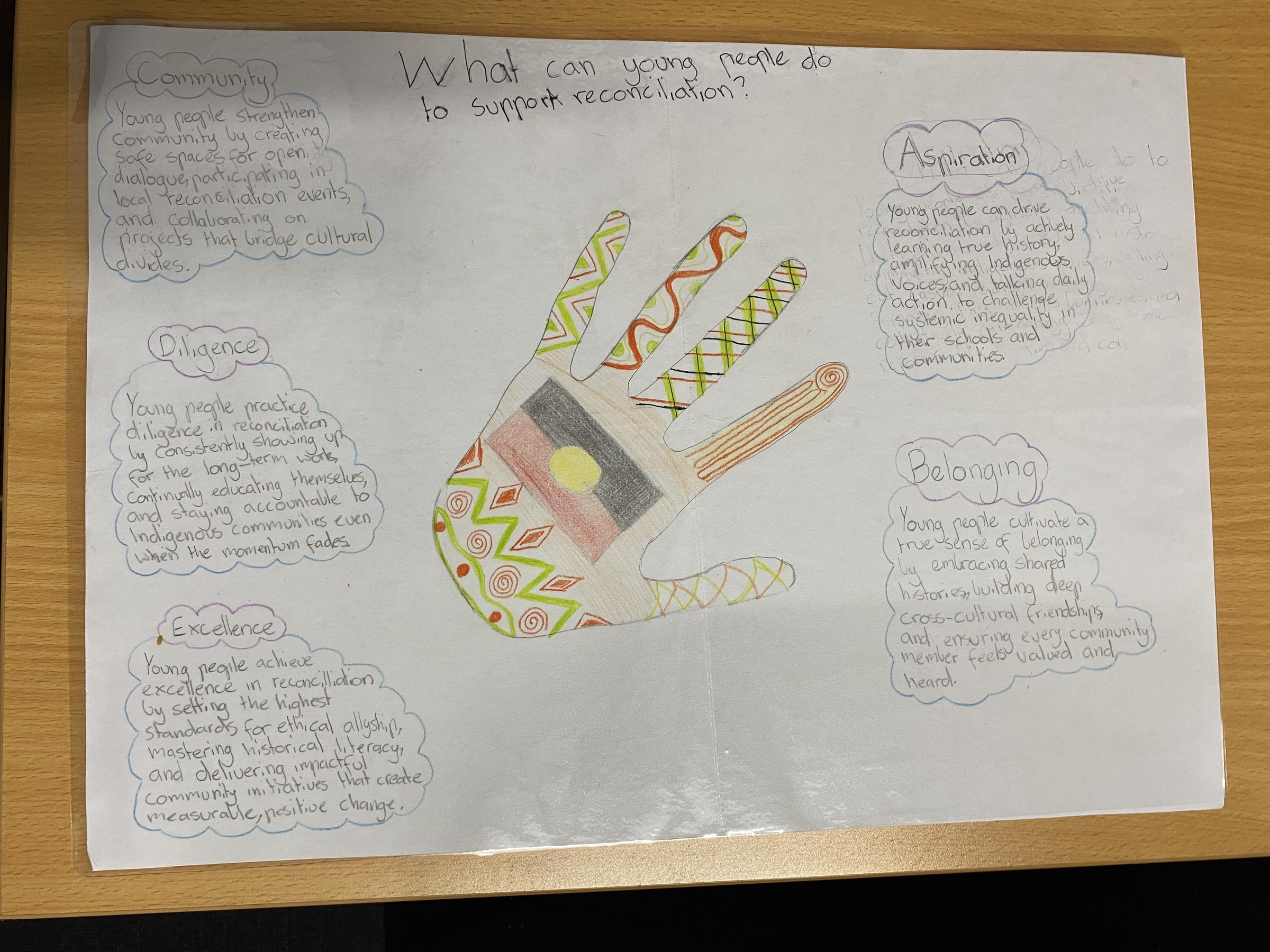
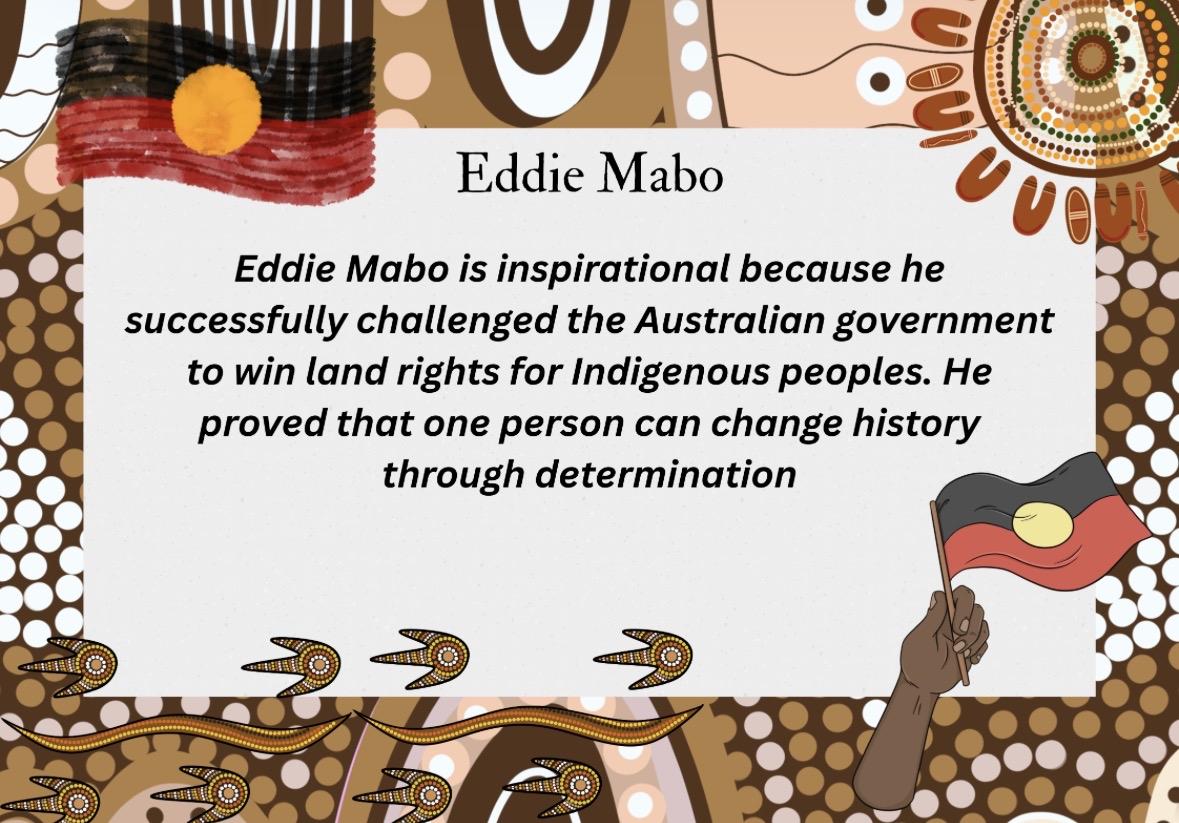
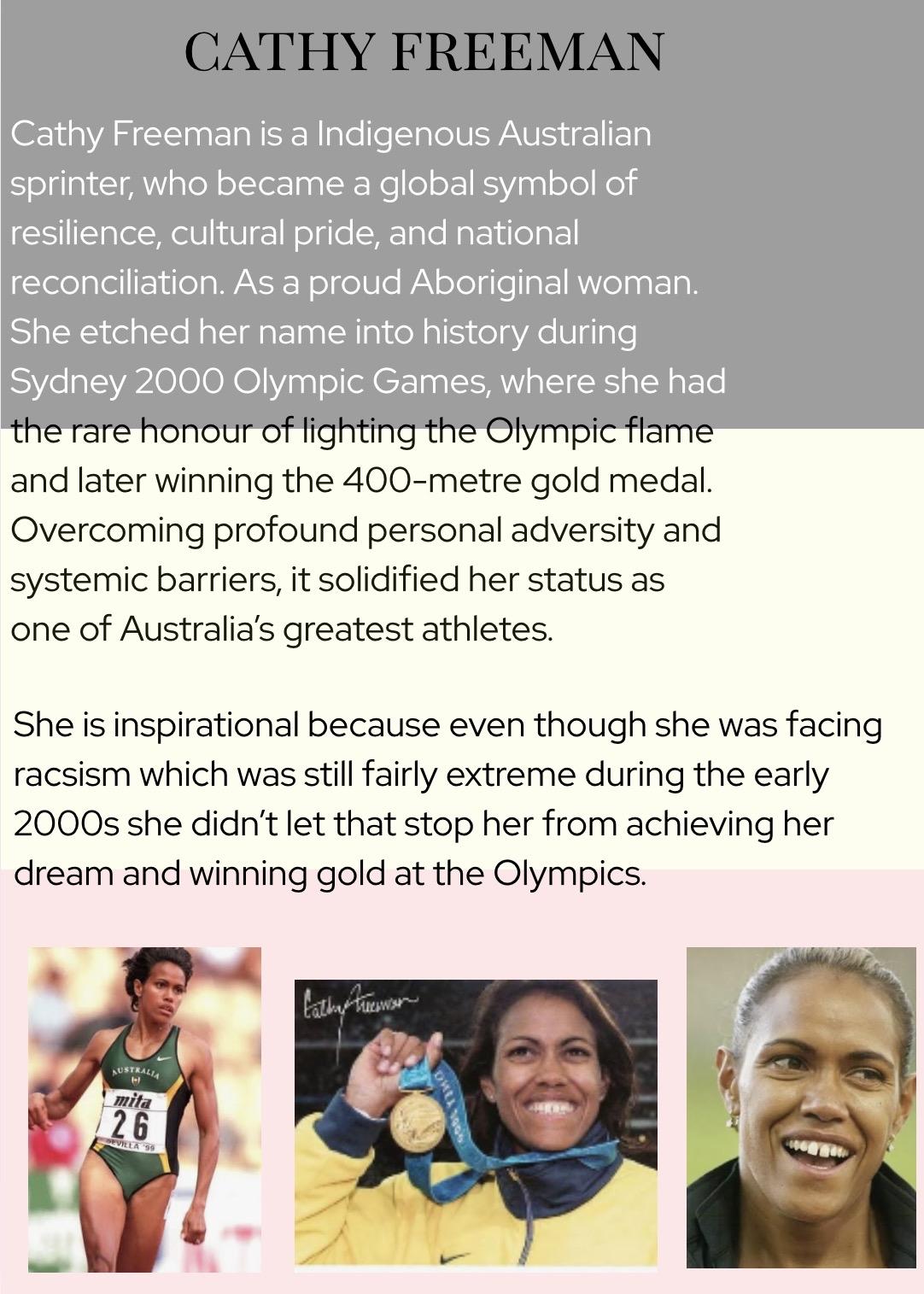
During Homegroup last week, Year 9 students explored NAIDOC Week, which will be celebrated during the school holidays from 5–12 July. We learned about the history and significance of NAIDOC Week and discussed the importance of recognising and celebrating the achievements, cultures and contributions of Aboriginal and Torres Strait Islander peoples. Students then selected an inspiring Indigenous Australian to research and created a poster showcasing their achievements and impact. It was wonderful to see students engaged in learning about the many contributions Indigenous Australians have made to our nation.
Stephanie Squires - Year 9 English and Homegroup teacher
In English we are committed to meaningfully embedding Aboriginal and Torres Strait Islander perspectives within our teaching and learning. Year Eleven students are currently studying the play The 7 Stages of Grieving by Indigenous Storytellers Wesley Enoch and Debora Mailman. The text encourages students to recognize continuing connection to Country, culture, community and storytelling while honouring the enduring strength, resilience and contributions of First Nations peoples. The play explores important First Nations histories, experiences and perspectives through themes of racism and discrimination, memory and trauma and importantly, resilience.
In addition to studying the play, I have embedded the opportunity for students to engage with the resource ‘Dreamy’, a collection of mindful audio stories written and spoken by the First Storytellers – Aboriginal and Torres Strait Islander people. The story our class listened to was 'Margaret'. Students were invited to close their eyes, follow the story and engage actively, by listening and drawing links between the story and our text ‘The 7 Stages of Grieving’. This decision was made not only to promote mindfulness but expose my students further to Aboriginal and Torres Strait Islander perspectives, promoting genuine empathy and reconciliation while fostering a culturally inclusive learning environment. It was wonderful to hear students acknowledge the importance of Country, connection and belief in our following discussion. I am looking forward to embedding this resource, and others similar, within my classrooms moving forward.
Larissa Wrigley - Year 9 English teacher
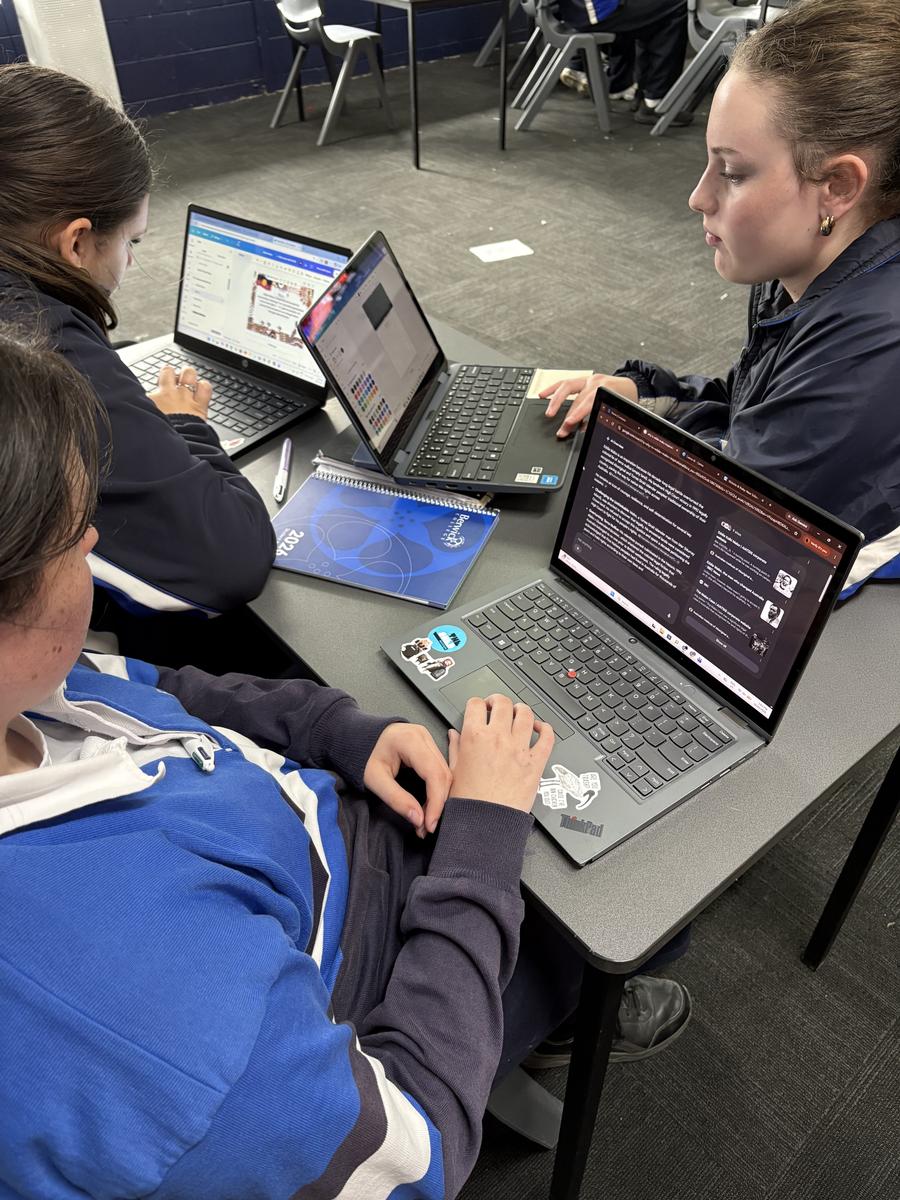
“Listening to “Margaret” allowed me to visualize the Indigenous Storytelling, deepening my understanding of First Nation Peoples connection to country. This story led me to further understand ‘The 7 Stages of Grieving’, making it easier for me to connect and sympathize with the text.” – Stellar Grant, Year 11 student.
In Year 9 HAP Humanities we’ve been exploring the numerous ways that people and places interconnect. In particular, we’ve understood how individuals perceive places differently. Using Uluru as an example, we’ve investigated the contrasting beliefs that Aboriginal elders and tourists hold about climbing the sacred landmark, with the purpose of understanding that different perceptions are not necessarily right or wrong, but that valuable insight is gained when we listen to others and respect their beliefs.
In Homegroup, I've tasked my students with designing a piece of a hypothetical new school uniform (t-shirt, socks, jumper) which includes our new school logo and imagery/colours/themes from Aboriginal and Torres Strait artwork (linking in with NAIDOC Week).
Emerson Randles -Year 9 Humanities and Homegroup teacher
In Psychology this term, we celebrated Aboriginal and Torres Strait Islander ways of learning and their use of songlines as a memory technique. Songlines are an extremely strong memorisation technique that use multimodal learning in order to encode and retrieve memories. One of the longest songlines is 3,500km in length, connecting the eastern coast of Australia to the central desert regions. Aboriginal people would walk this distance, using landmarks, song, dance and music to identify and tell stories about the route and locations along the way. Scientists have begun studying this ancient tradition to better understand how knowledge could be passed down and survive for tens of thousands of years. Students are encouraged to use their knowledge and adapt songlines to better help them encode and retrieve information for their studies. For example, can students create a song and dance about the five steps of observational knowledge? Can they accompany this with a drawing of the stages? By incorporating more than just written language, students use elaborative rehearsal, strengthening their ability to move information into long-term memory and retrieve it.
Stephanie Swain - Year 12 Psychology teacher
Reflection on the excursion to the Koorie Heritage Trust
- Aboriginal and Torres Strait Islander Peoples understand that human beings have relationships with all things: each other, ancestors, the past and the natural world. In the excursion, Yarning was talked about as a form of communication happening amongst each other. It's an informal communication system that doesn't have a hierarchy and it's just people talking amongst each other and forming a connection.
- Learning as a multimodal system means using a variety of methods. In the excursion they talked about how the communities communicated using artworks and the symbols in the artworks represented certain things such as straight line means men and curved and bendy lines represented women. They also used methods such as visual maps, story sharing, and learning through the environment around you (holistic) rather than section by section like Western cultures.
- Knowledge being patterned on Country is where learning is deeply embedded in, shaped by, and connected to the land, waterways, sky, and community. The guide in the excursion stated that teaching was done walking across the Yarra River as it connected them to the land and waterways.
- Aboriginal and Torres Strait Islander ways of learning differs from Western Learning as it is more community-based, where learning occurs through a range of processes that are interconnected. However, Western learning is more individualistic and separated into subjects such as English, Maths, ect, and is less about how everything is connected around us. The guide in the excursion mentioned that Aboriginal and Torres Strait Islander Peoples Way of learning are based on interconnected social, physical, and spiritual understandings. The guide when he was speaking to us also talked to us outside which connected to the Aboriginal and Torres Strait Islander Peoples culture as they also learn outside.
Dinora Anthony - Year 12 student
Get involved in NAIDOC Week celebrations!
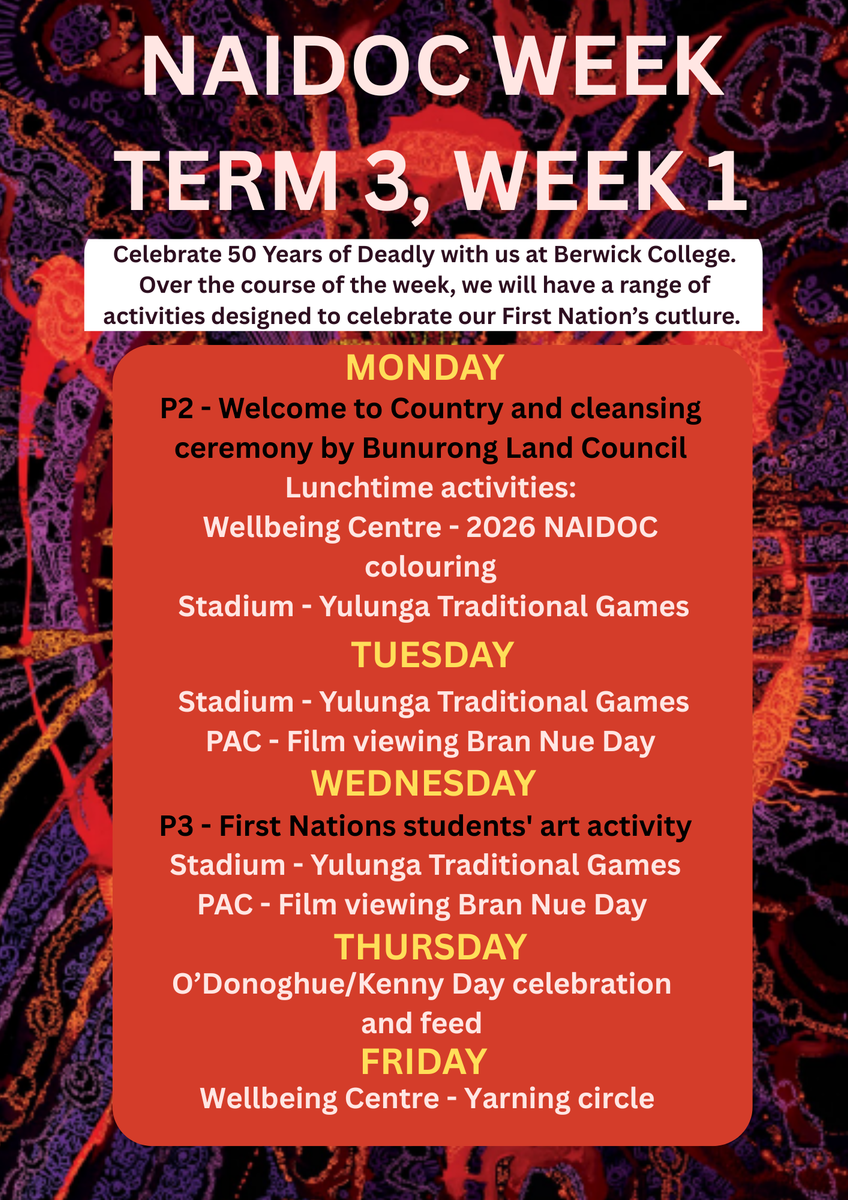
National NAIDOC Week celebrations are held across Australia in the first week of July each year (Sunday to Sunday), to celebrate and recognise the history, culture and achievements of Aboriginal and Torres Strait Islander peoples.
NAIDOC Week is an opportunity for all Australians to learn about First Nations cultures and histories and participate in celebrations of the oldest, continuous living cultures on earth. You can support and get to know your local Aboriginal and/or Torres Strait Islander communities through activities and events held across the country.
See below for some events held around Melbourne.
Cranbourne Botanical Gardens
Royal Botanic Gardens Cranbourne are hosting a series of welcoming and family-friendly events to celebrate First Peoples culture and knowledge this NAIDOC Week.
See link for more details:
NAIDOC Family Day 2026 (Thornbury)
- Community event
https://events.humanitix.com/ahv-naidoc-family-day-26
NAIDOC Week Shorts 2026 (ACMI)
- Viewing of 5 short films
https://www.acmi.net.au/whats-on/new-voices-australian-in-cinemas/naidoc-week-shorts-2026/
Gunawarra Re-Creation (Southbank)
- Theatre performance
https://www.ilbijerri.com.au/event/gunawarra-re-creation/
Camp Stove (Melbourne) (Melbourne)
- Art exhibition
https://craft.org.au/whats-on/all-events/camp-stove/
Water Bodies (Moorabbin)
- Art exhibition
https://www.kingstonarts.com.au/whats-on/water-bodies-exhibition
Echoes of Earth Exhibition (Northcote)
- Art exhibition
https://galleryunbound.com.au/show/echoes-of-earth/callout/
Koori Heritage Trust x National Gallery of Victoria Gallery Tour (Melbourne)
- Art exhibition and tour
https://kht.org.au/whats-on/events/past-events/kht-x-ngv-naidoc-gallery-tour/
Occupation studies: ngayanhurra bayarral Birrarung (they tried to tame Birrarung) (Melbourne)
- Multimedia exhibition
Other cultural experiences in June-July:
Aboriginal Heritage Walk (Melbourne)
- Tour of Melbourne Botanic Gardens
https://www.rbg.vic.gov.au/melbourne-gardens/whats-on-melbourne/aboriginal-heritage-walk/
Alcaston Gallery (Melbourne)
- Art gallery
https://www.alcastongallery.com.au/
D Lan Gallery (Melbourne)
- Art gallery
NGV exhibitions
https://www.ngv.vic.gov.au/exhibition/future-country-country-road-first-nations-commissions/
https://www.ngv.vic.gov.au/exhibition/bark-salon/
https://www.ngv.vic.gov.au/exhibition/wurrdha-marra/

Stephanie Swain
Wiradjuri - Marrung Leader