Whole School Activities
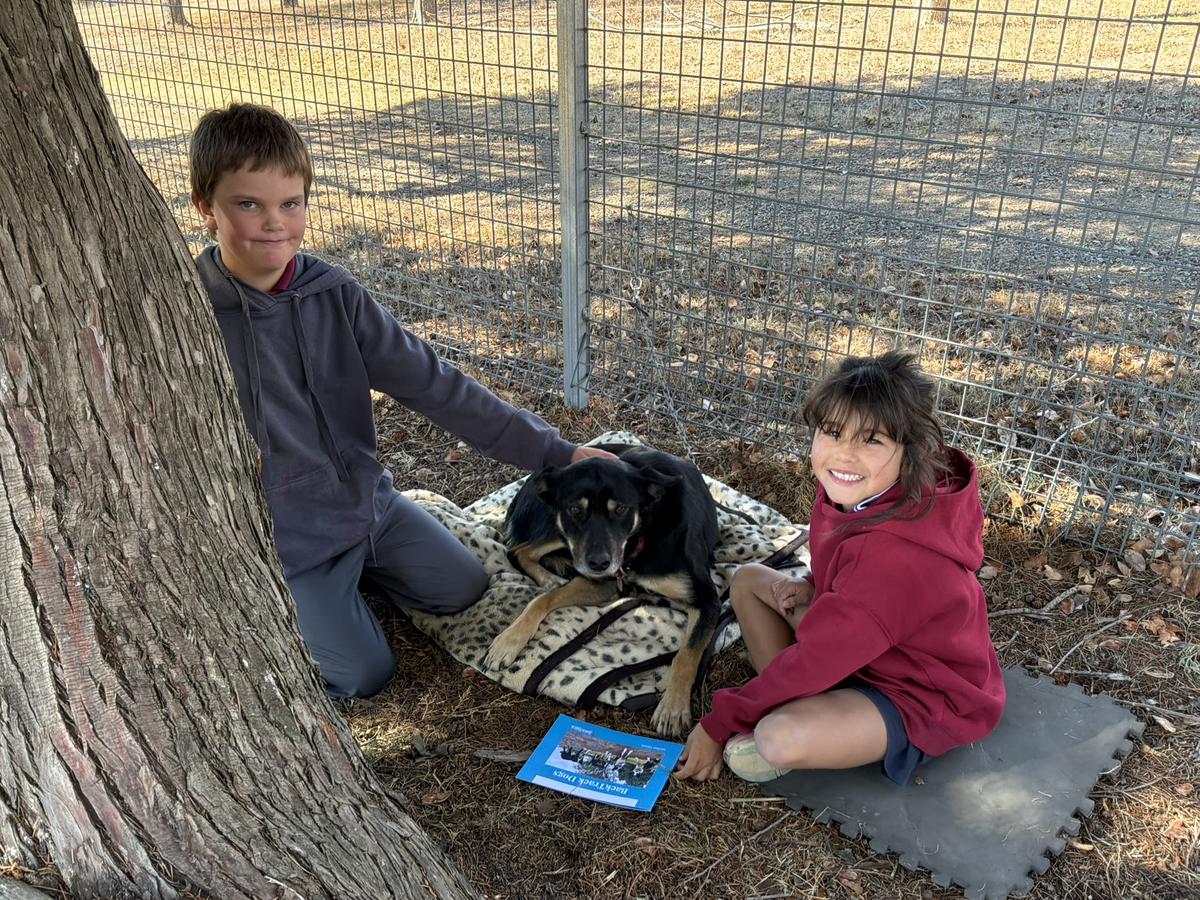
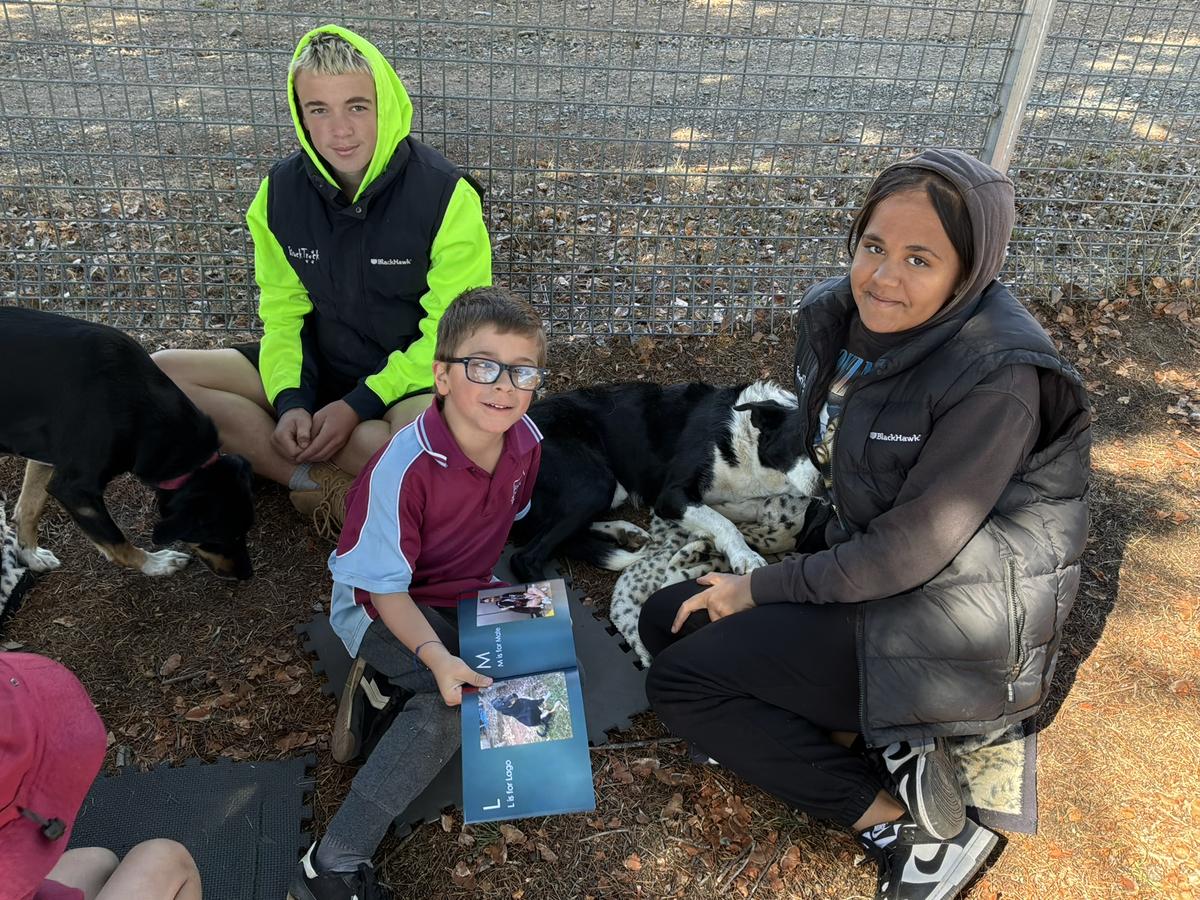
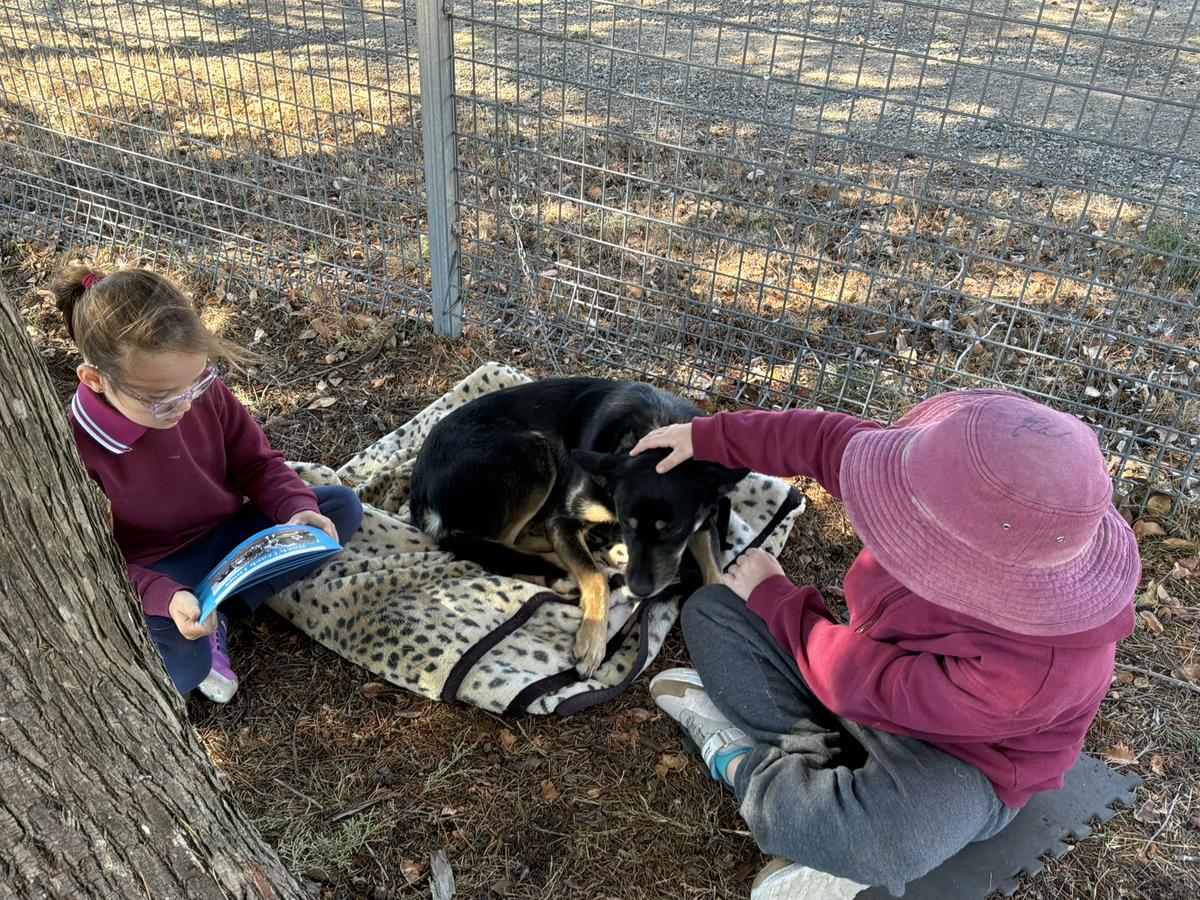
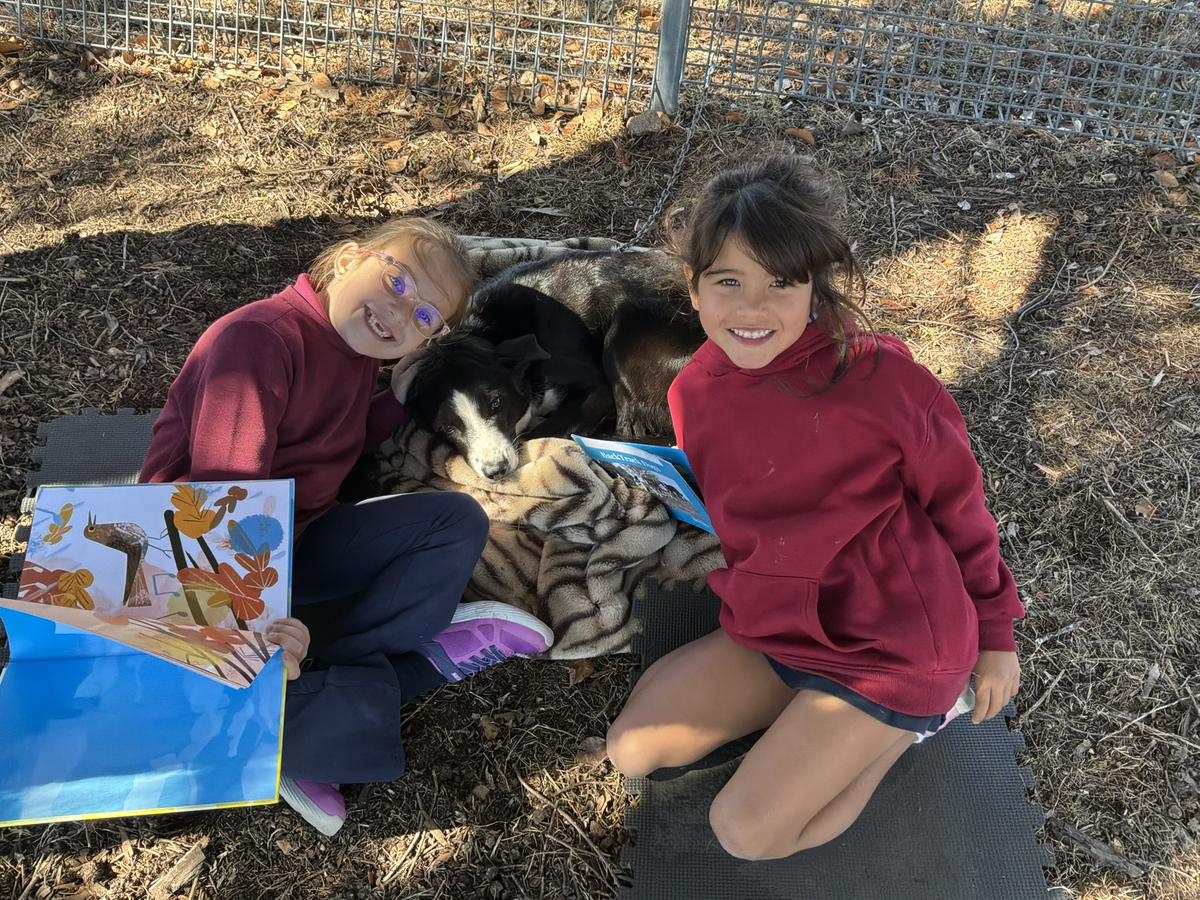
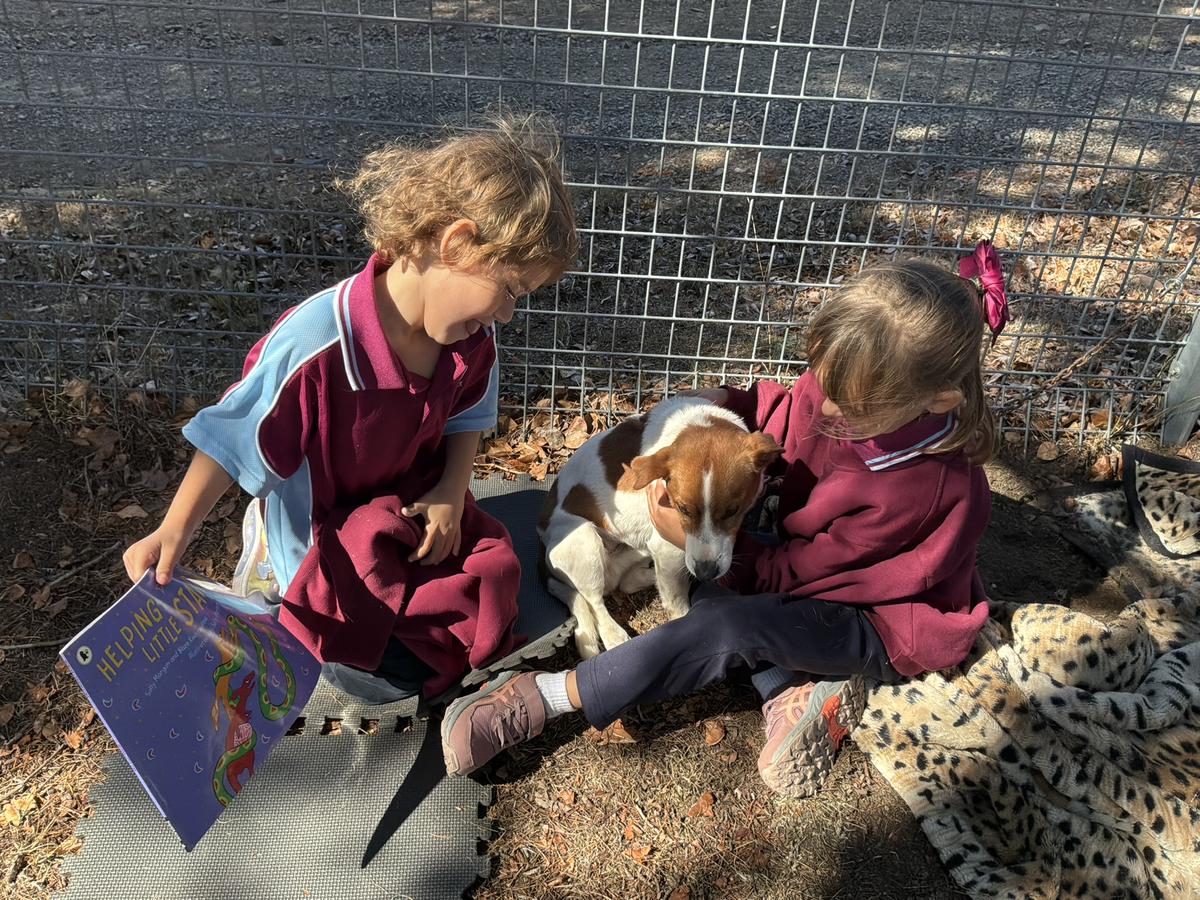
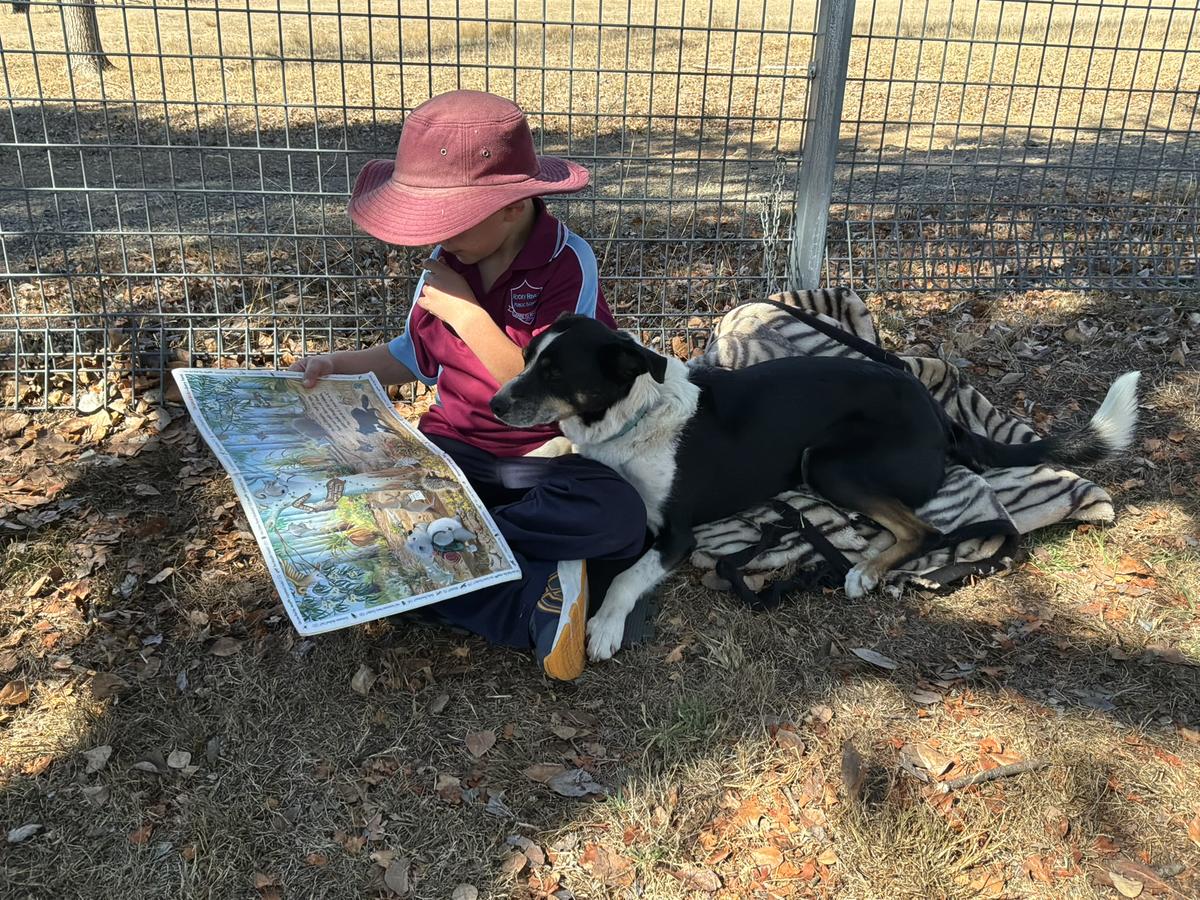
BackTrack Paws Up Dog Visit
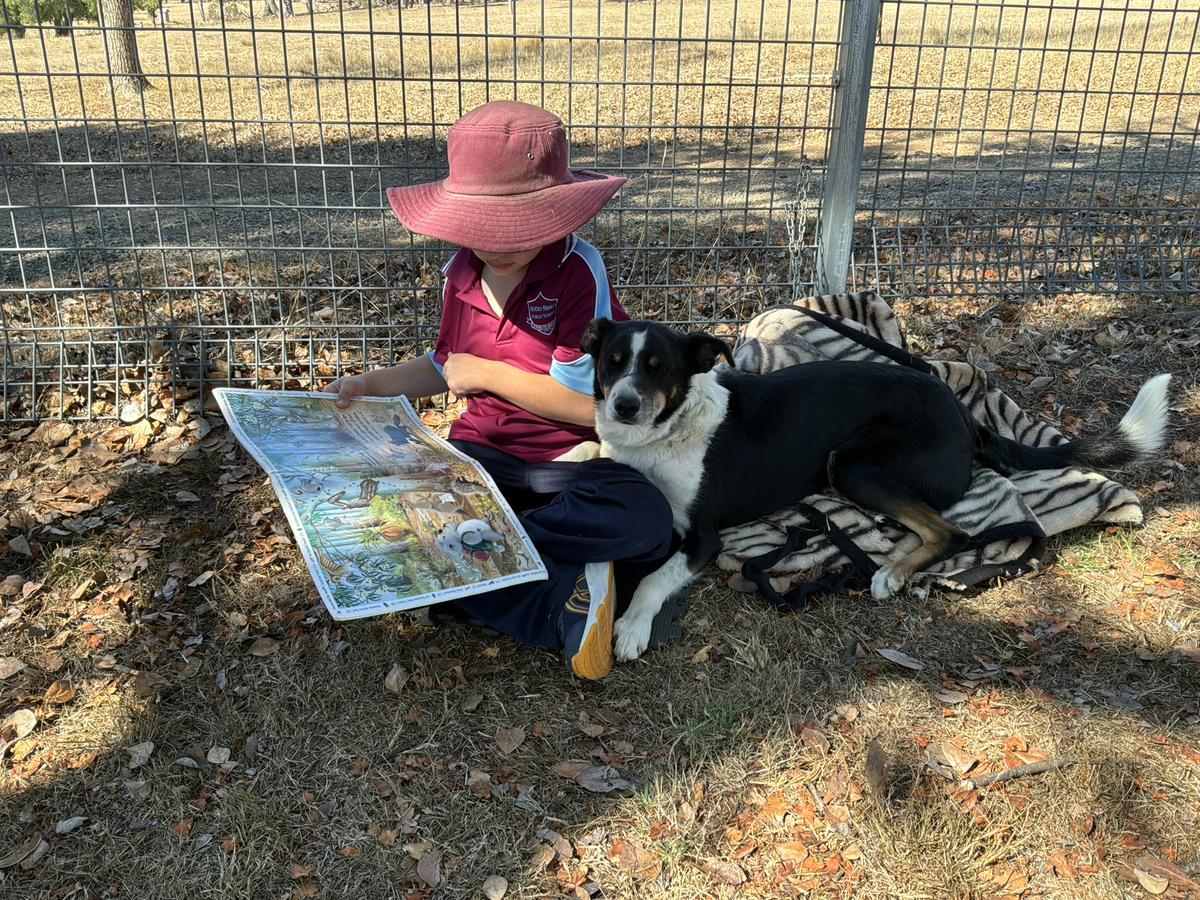
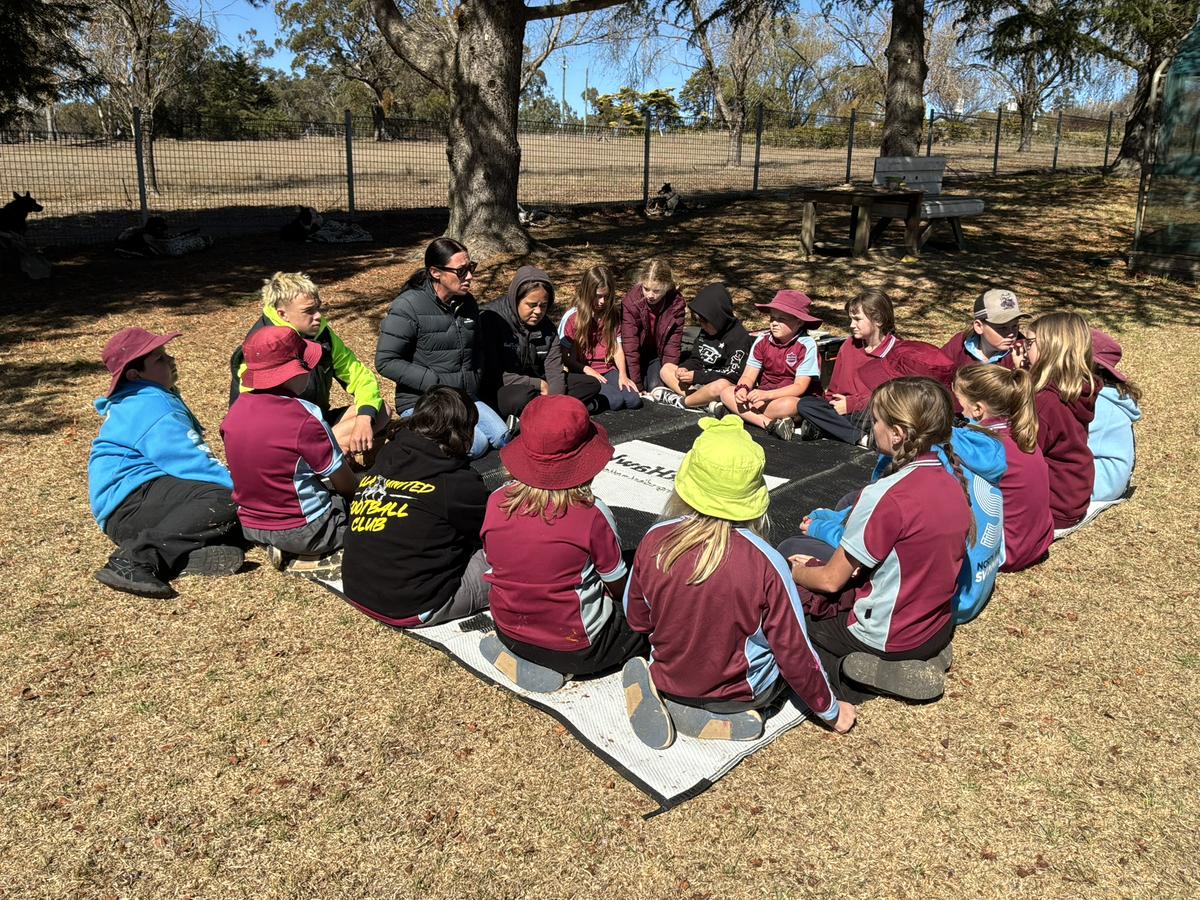
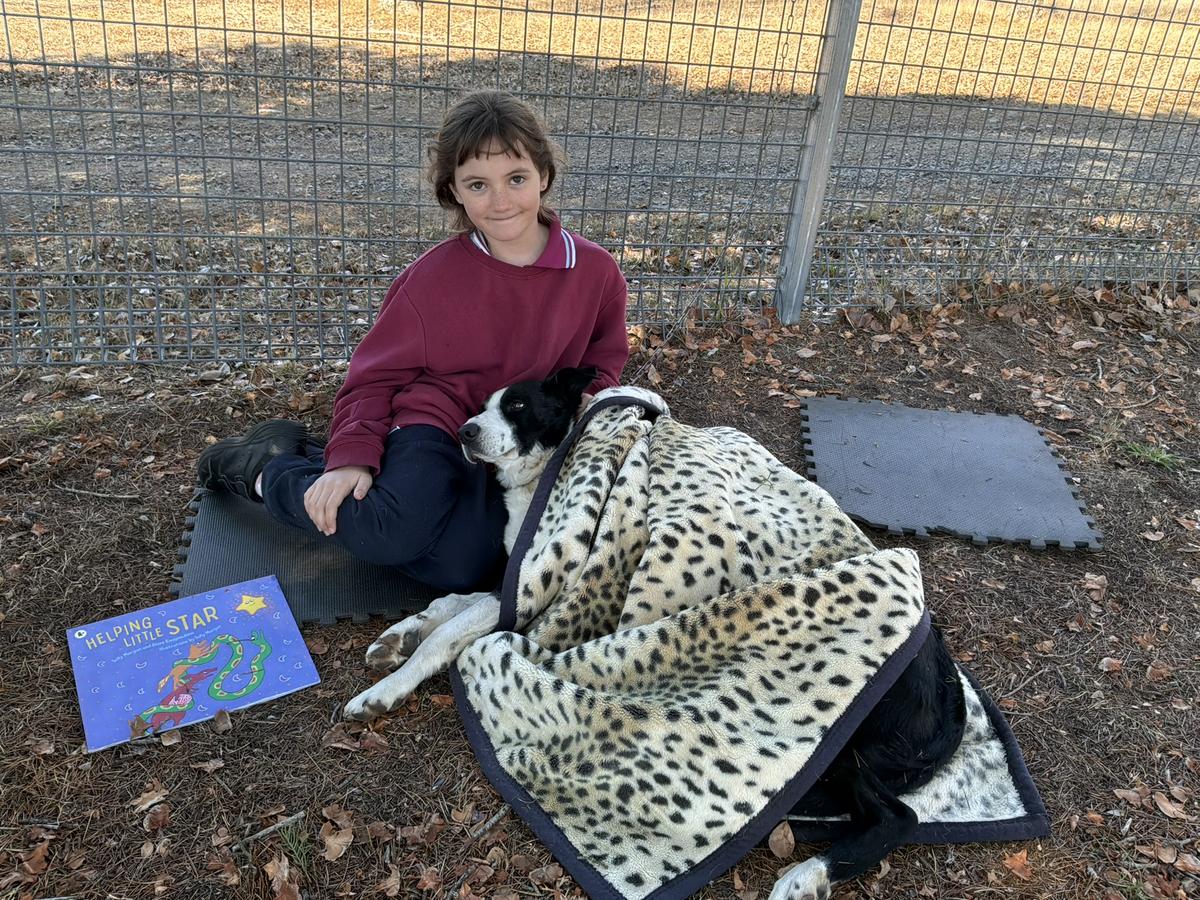
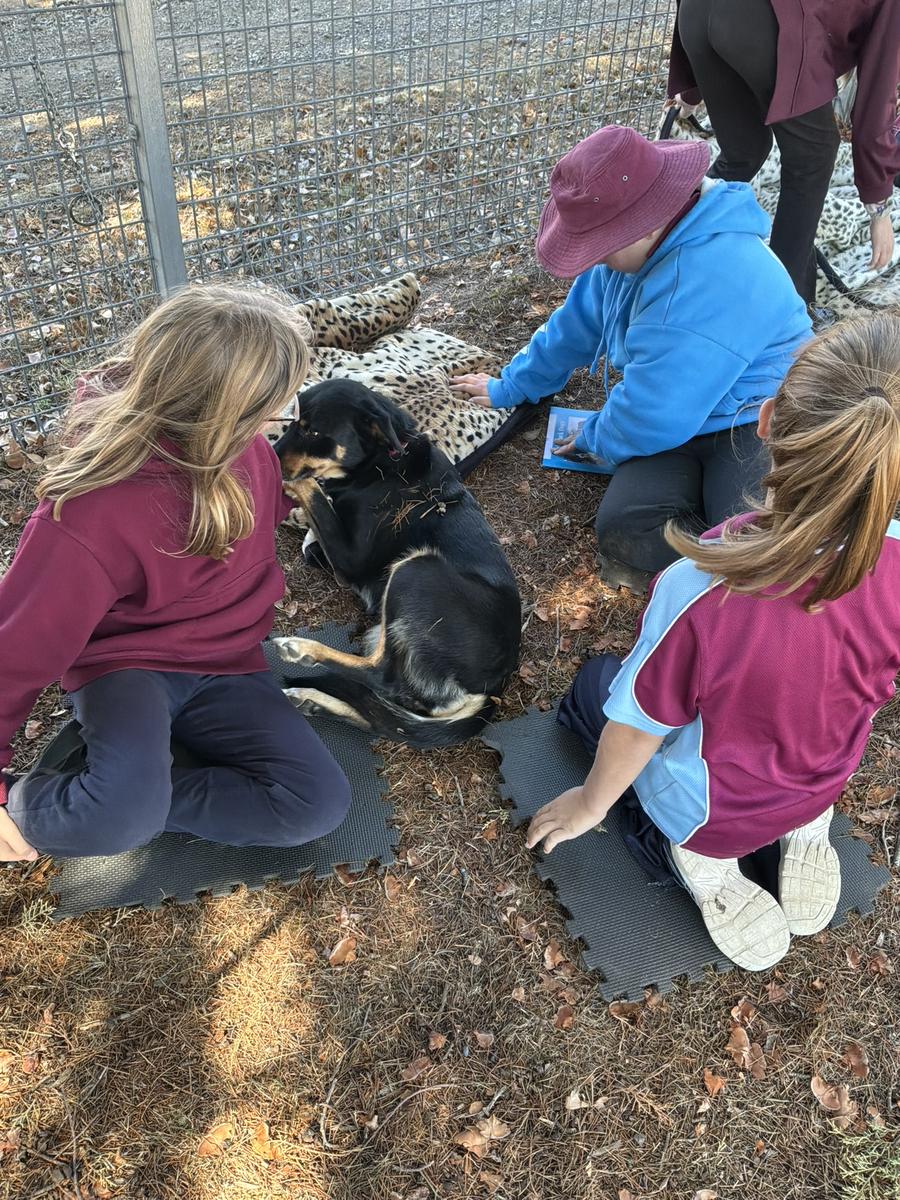
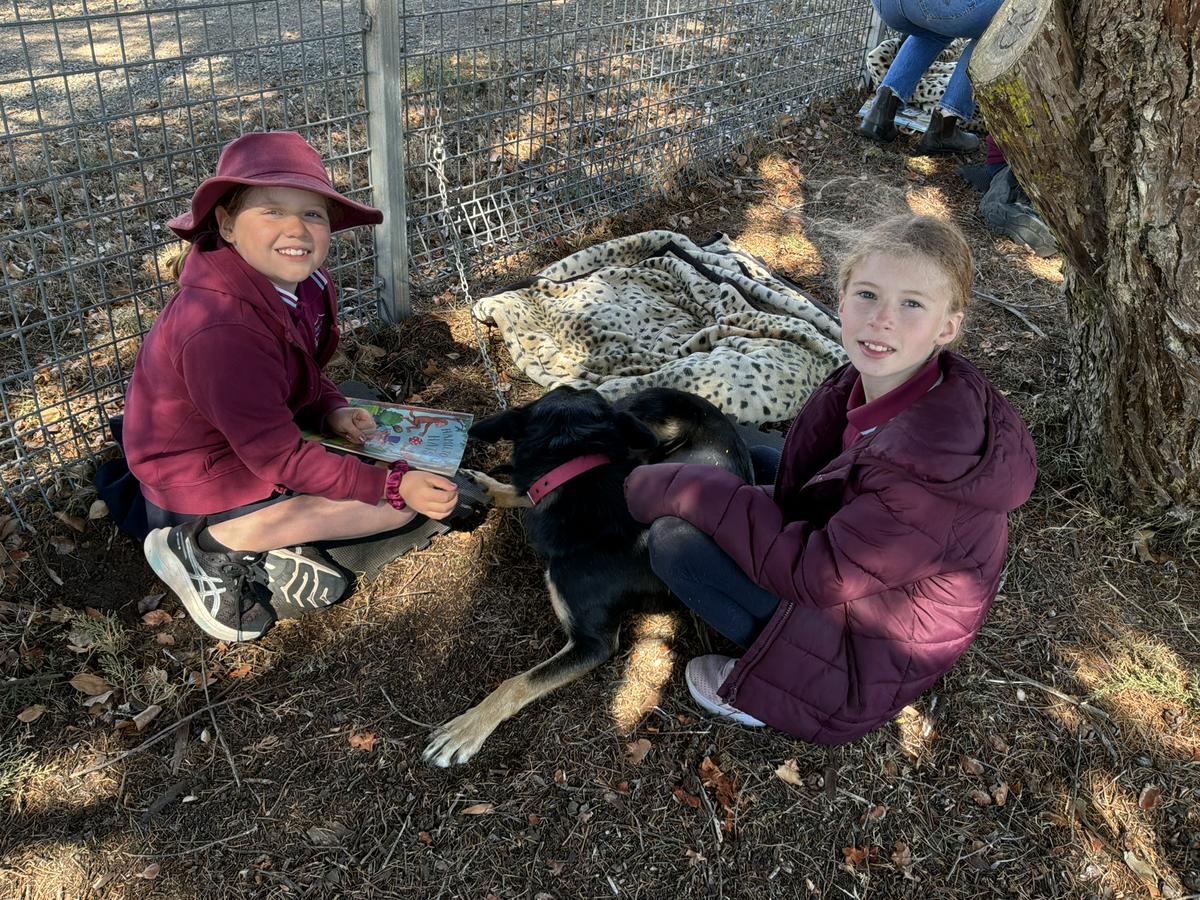
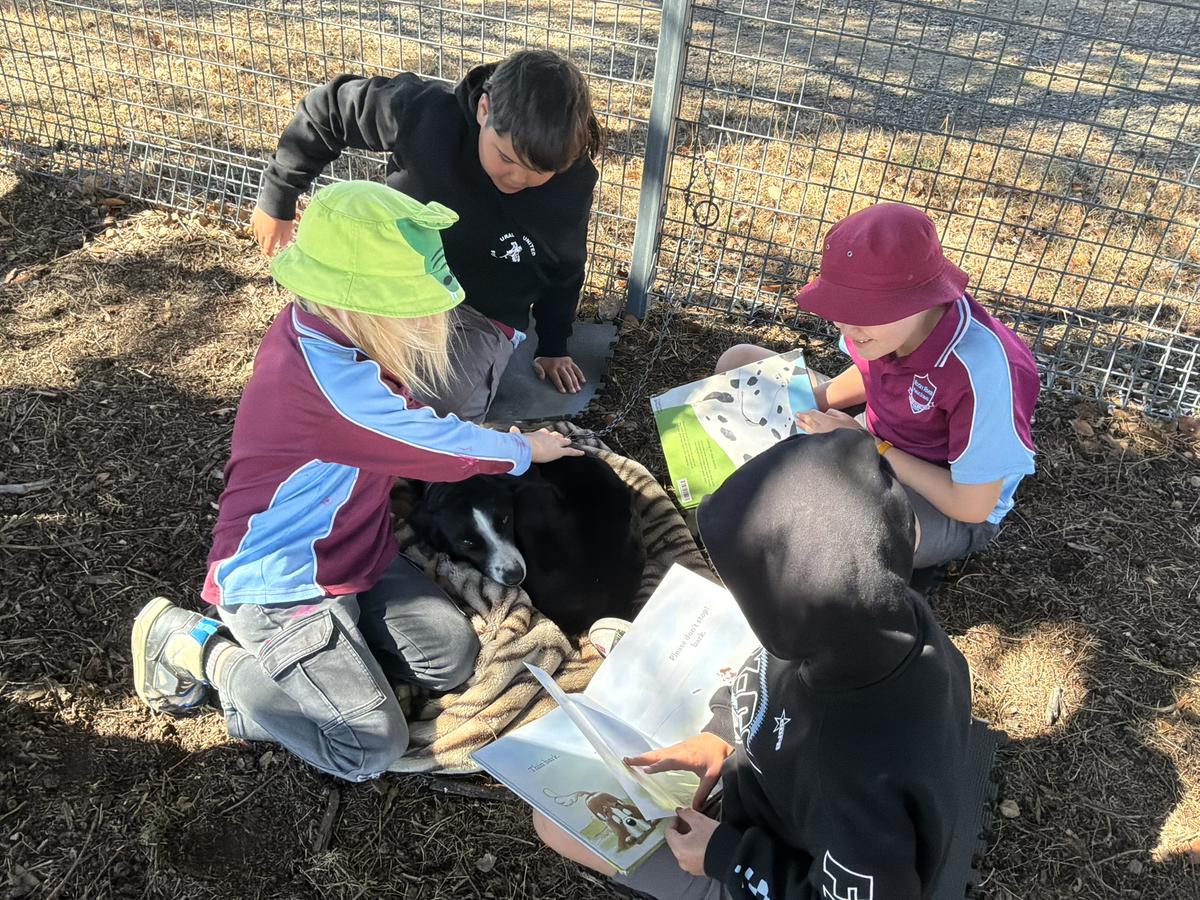
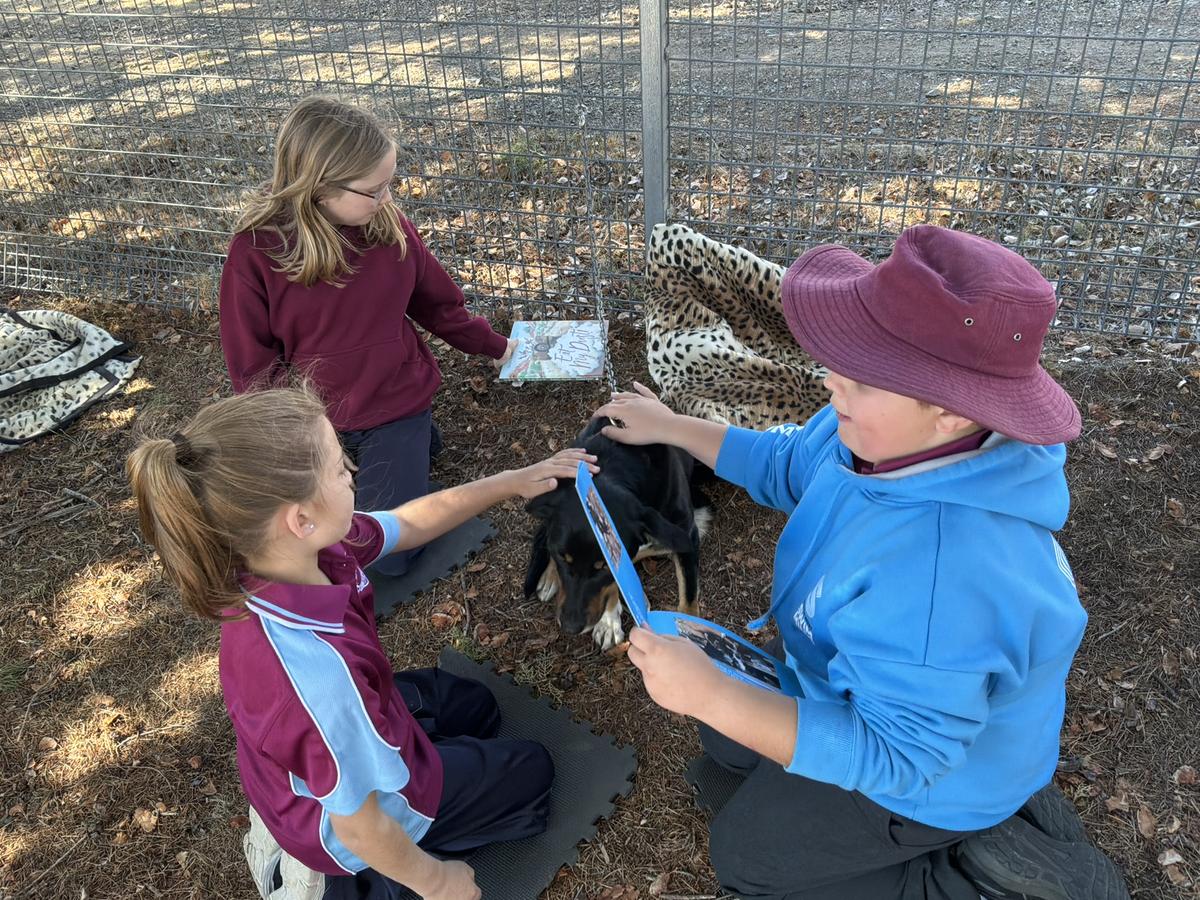
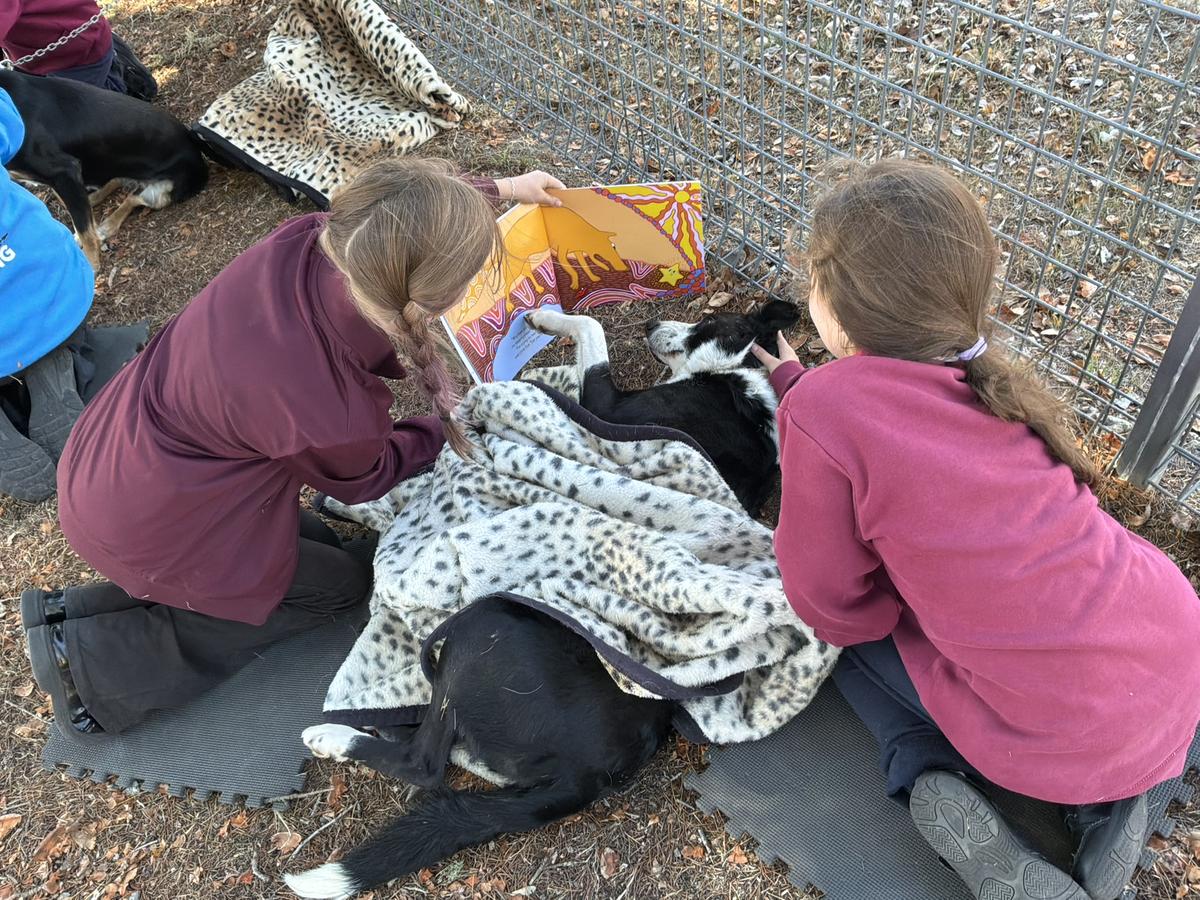
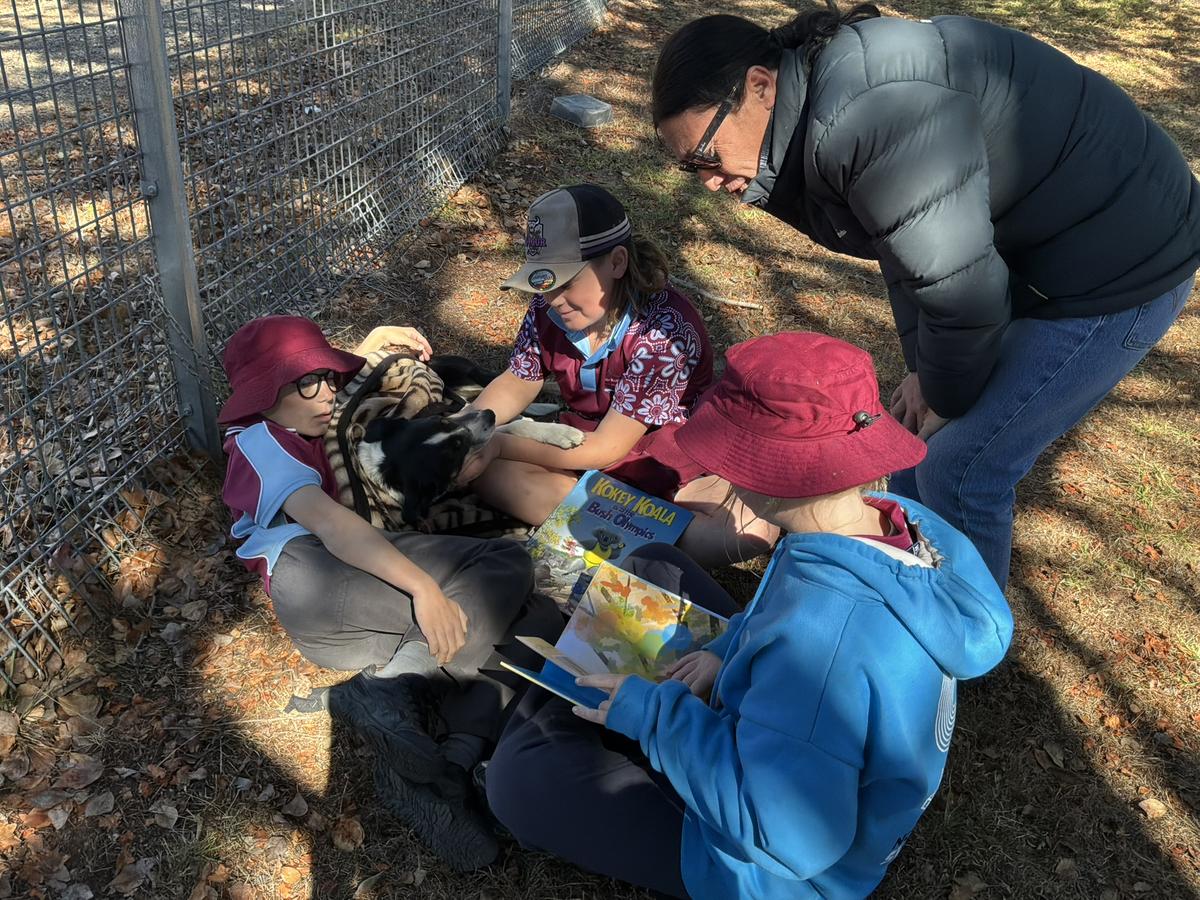
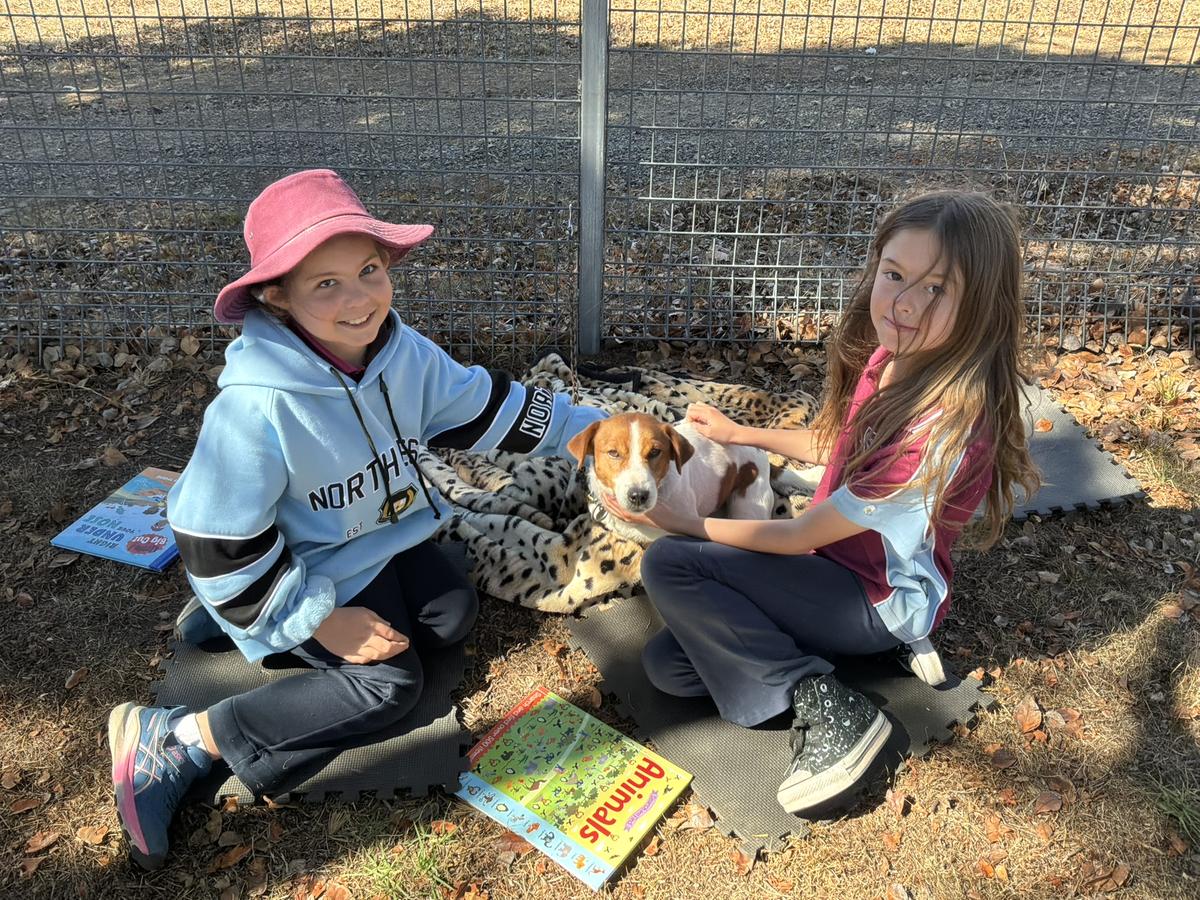
We would like to extend our heartfelt thanks to BackTrack for the wonderful Paws Up Dog Visit last week, where our K-6 students had the special opportunity to read stories to their furry friends. This unique program not only fosters a love of reading but also significantly supports student wellbeing by creating a calm and joyful environment. The presence of these gentle dogs helps build confidence and reduces anxiety, making literacy activities more engaging and accessible for every child. Beyond improving reading skills, the visit also strengthens connections among students, encouraging empathy and kindness. We are truly grateful for BackTrack’s contribution to nurturing a positive and supportive learning community, and we look forward to their next visit later this term!
Create a Chip Flavour
Recently, our entire school came together for an exciting and delicious learning experience all about potato chips. Students explored the fascinating journey of how potato chips are made—from growing and harvesting the potatoes right through to their manufacture in the factory. Everyone was amazed to discover just how many chips are produced and consumed each day.
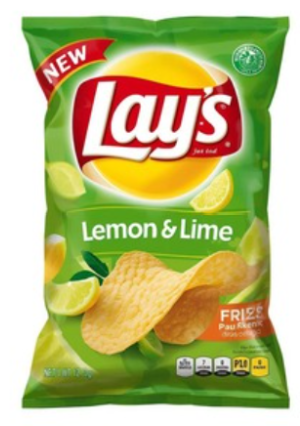
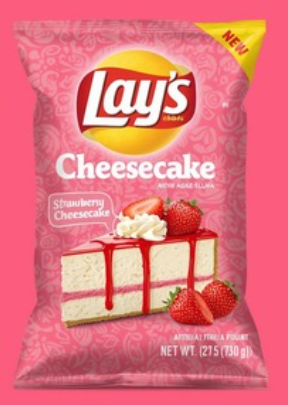
Inspired by this, students got creative by inventing their own new potato chip flavours. We each sketched our ideas how our new chips would be packaged.
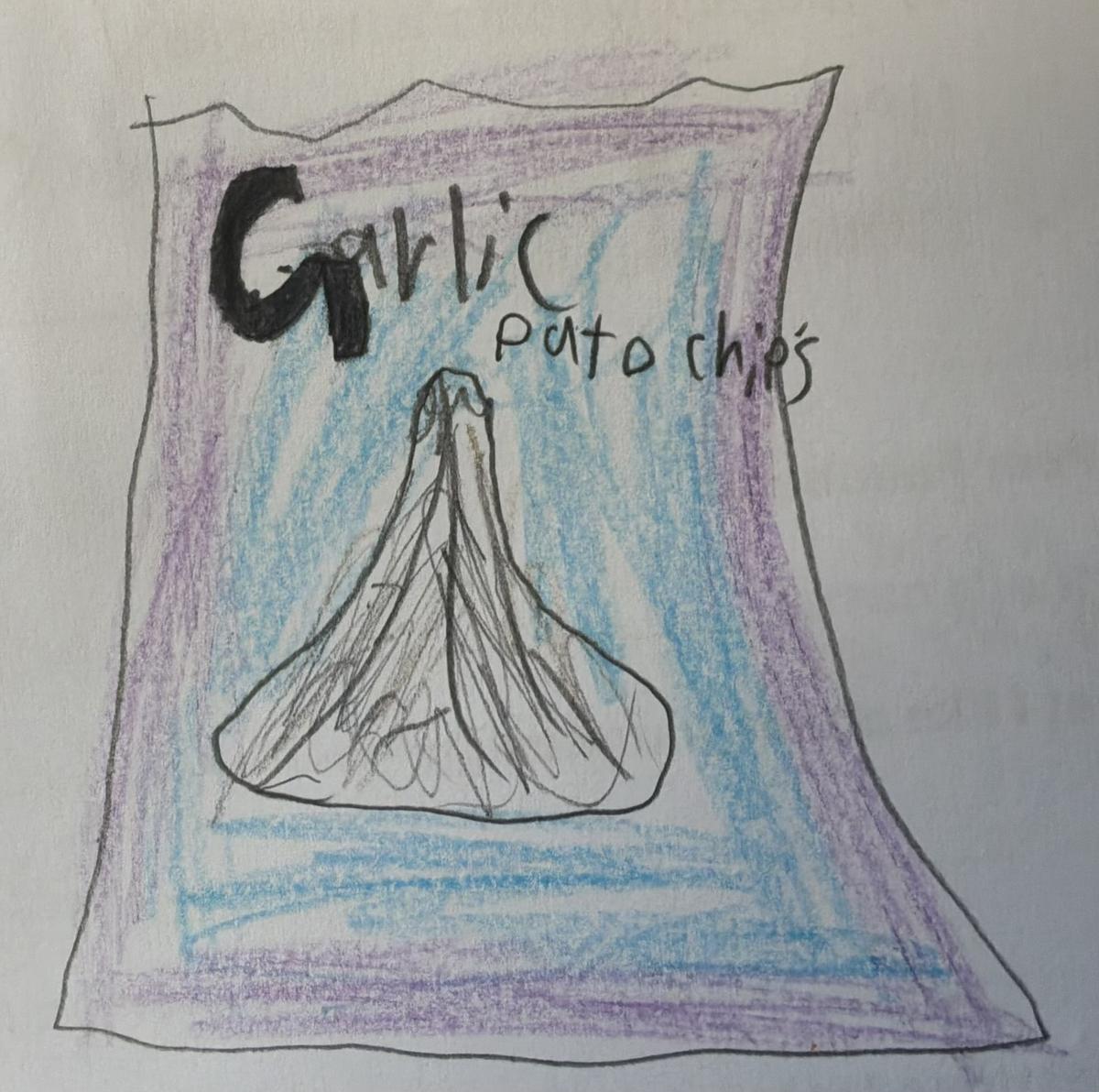
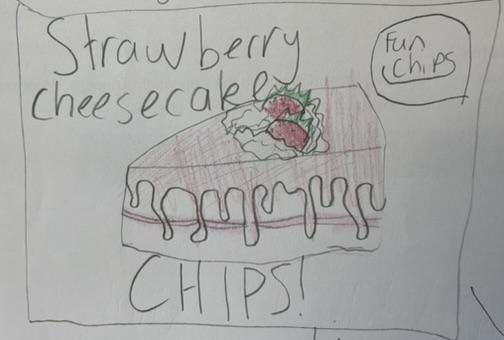
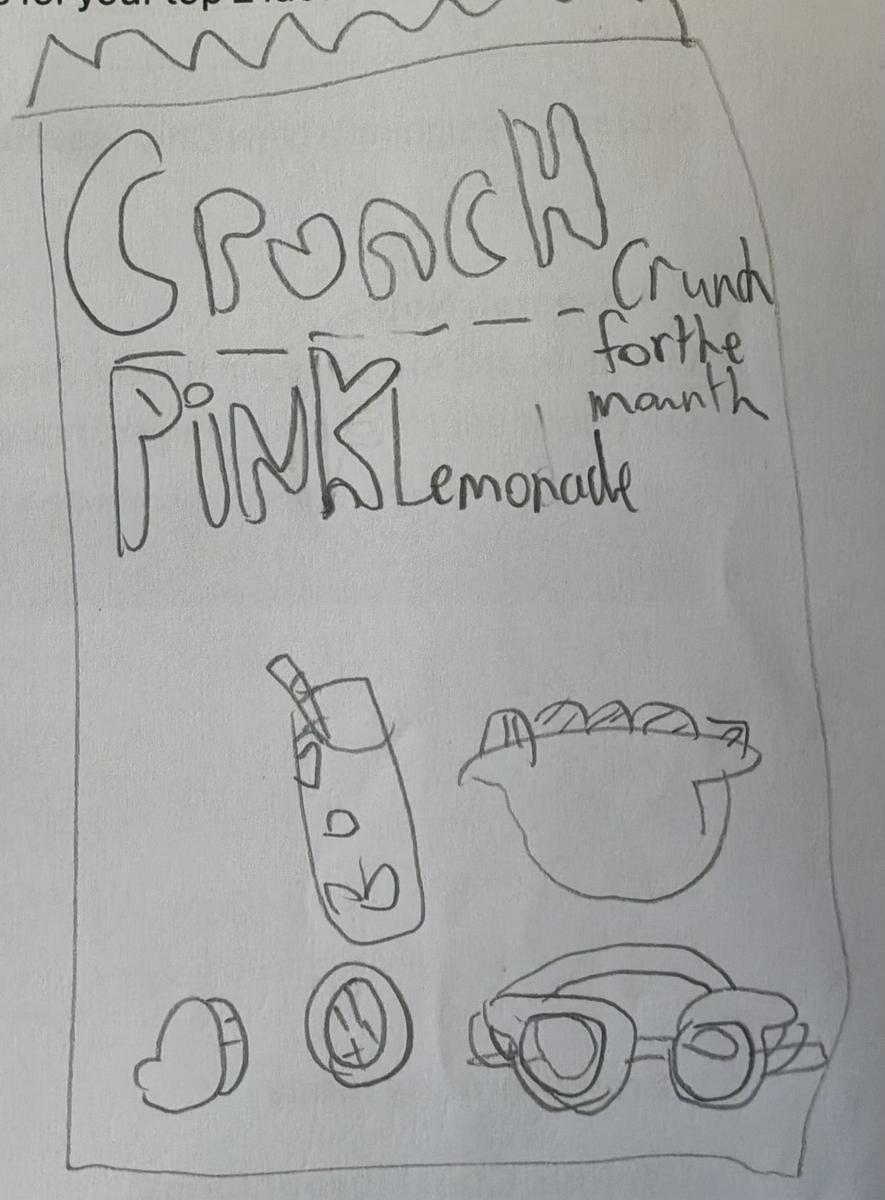
We then collaborated as a whole group to bring some to life using AI technology as shown below. The strawberry cheesecake flavour was a particular favourite of mine.
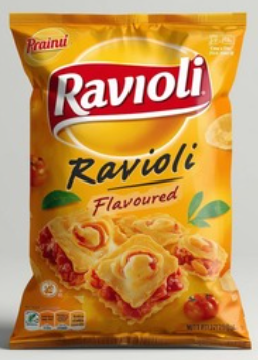
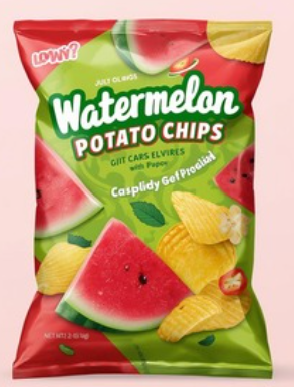
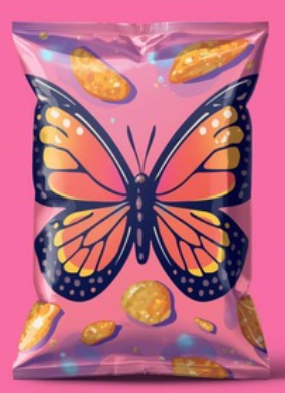
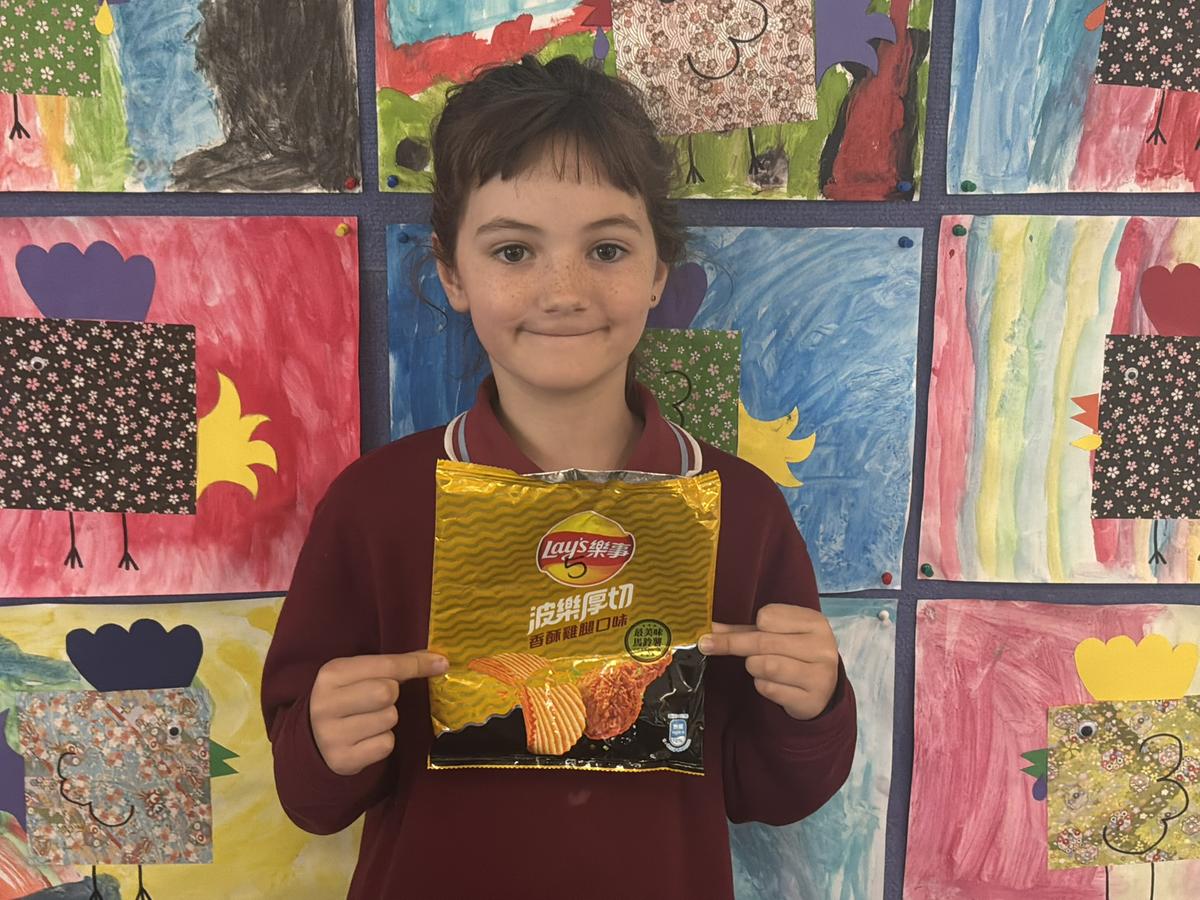
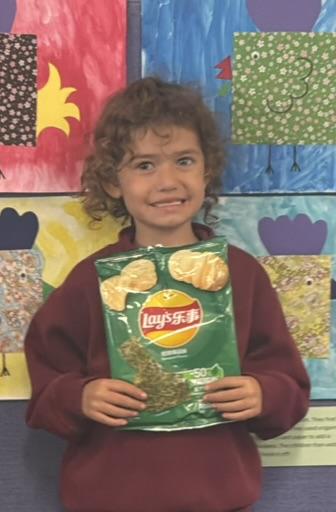
To top off the fun, we enjoyed a taste test featuring some unusual chip flavours, and here are some of the favourites that emerged.
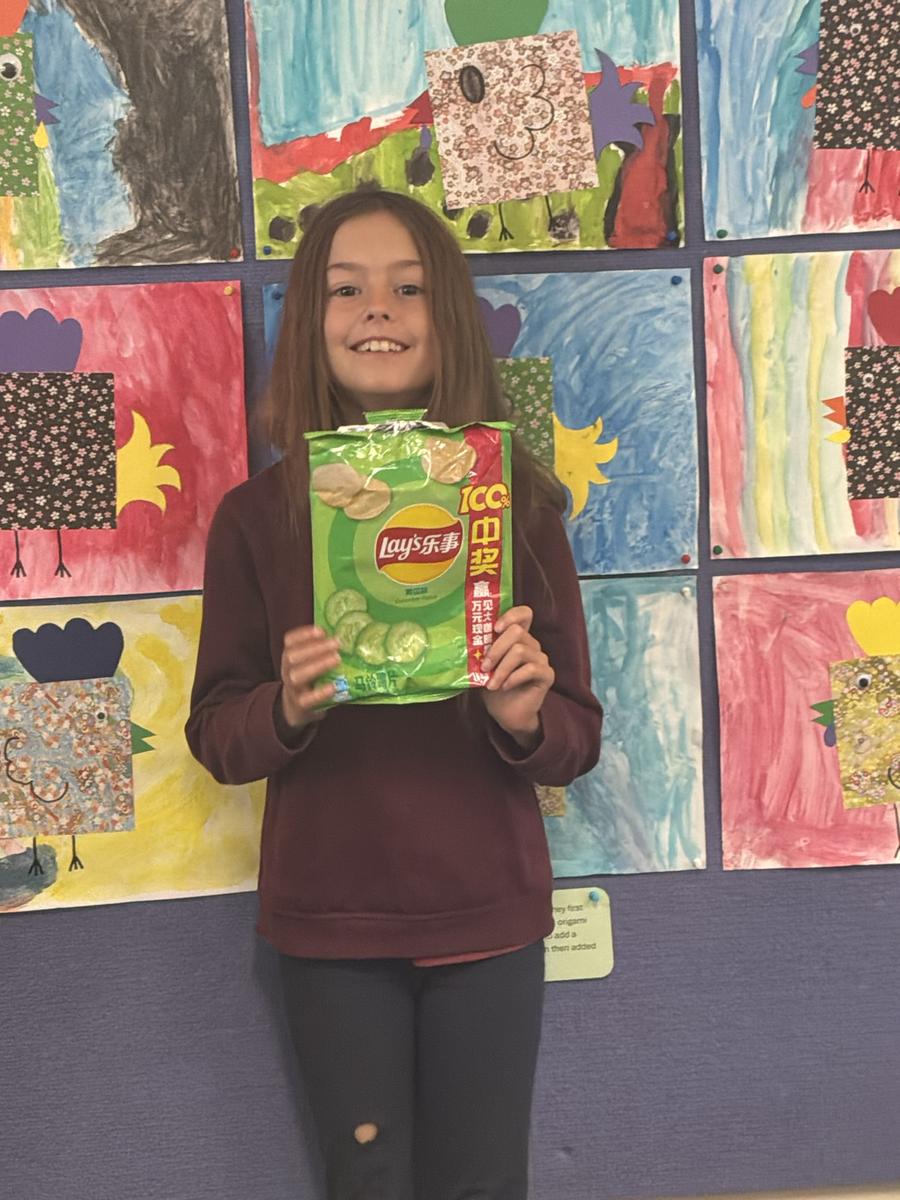
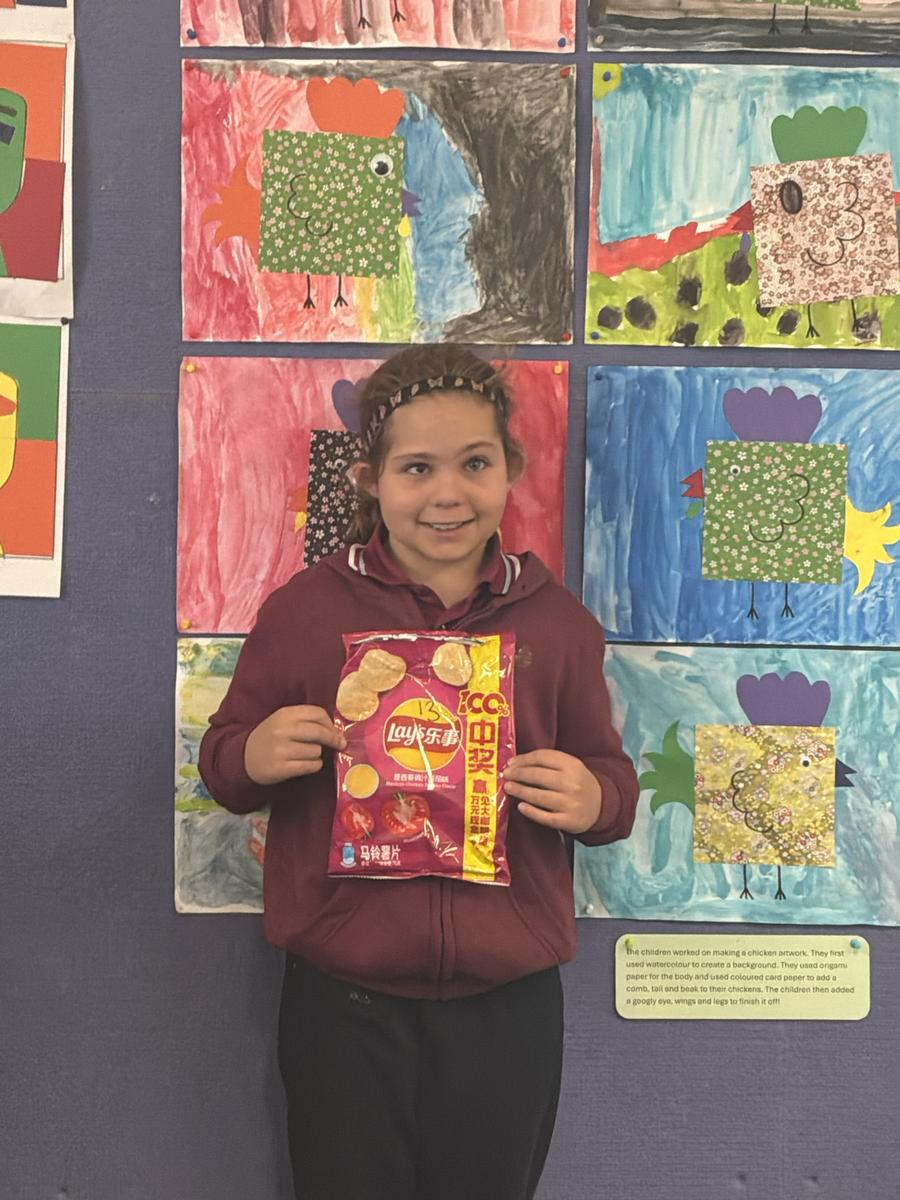
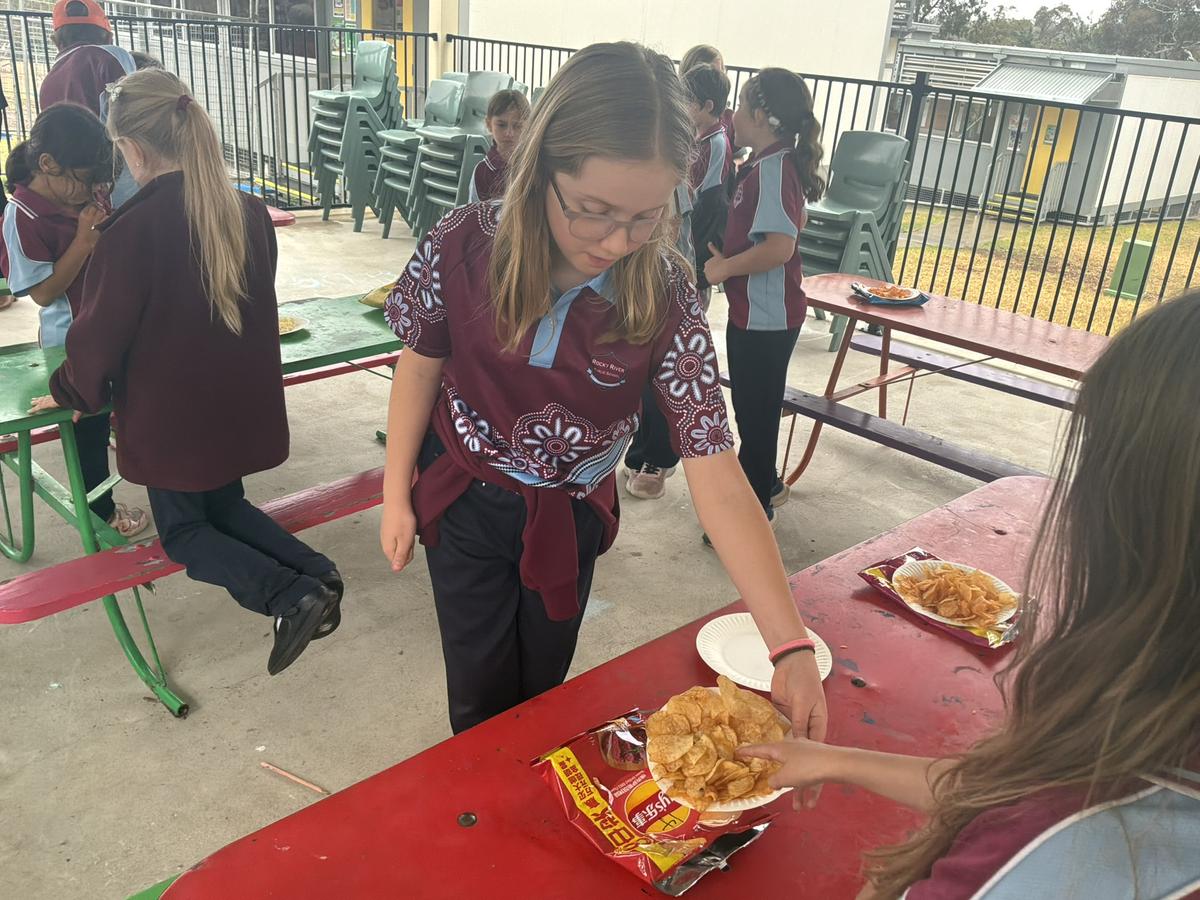
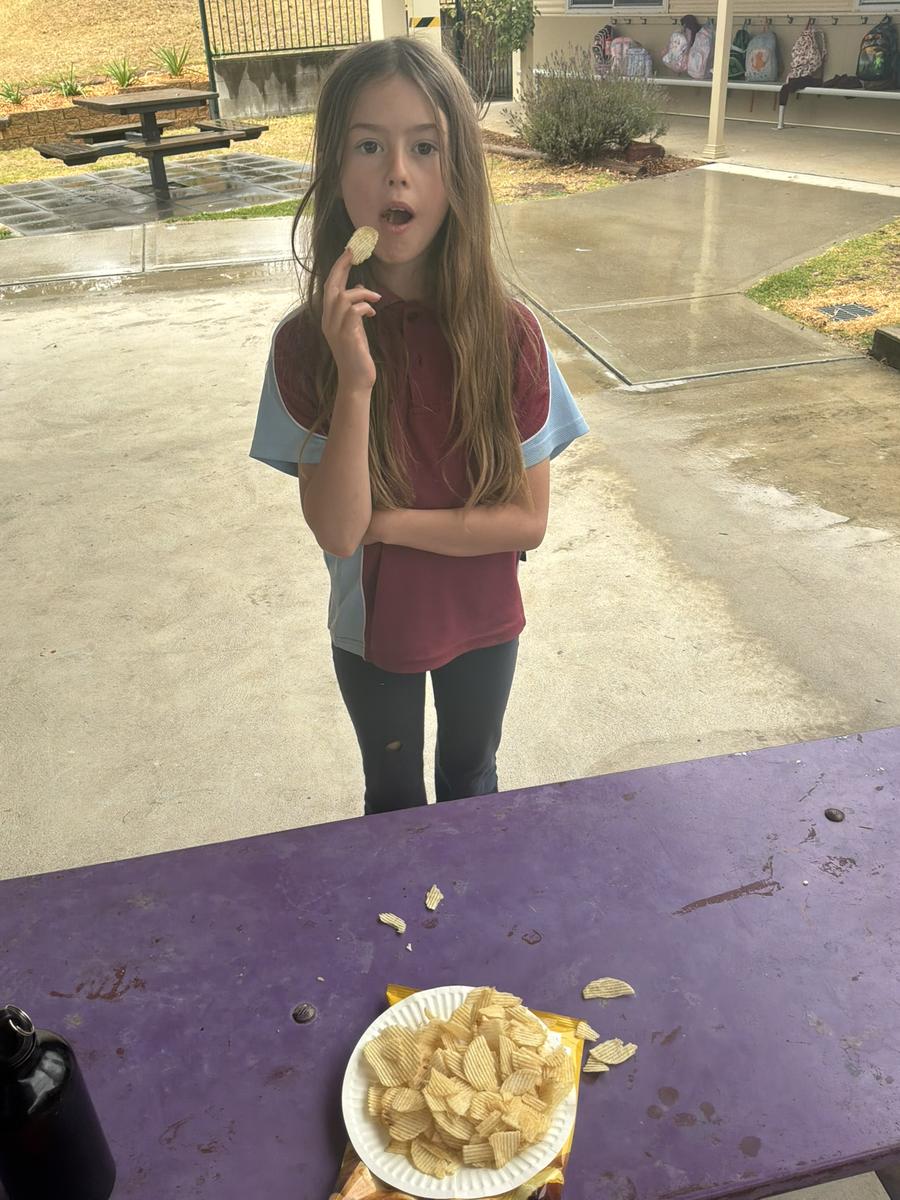
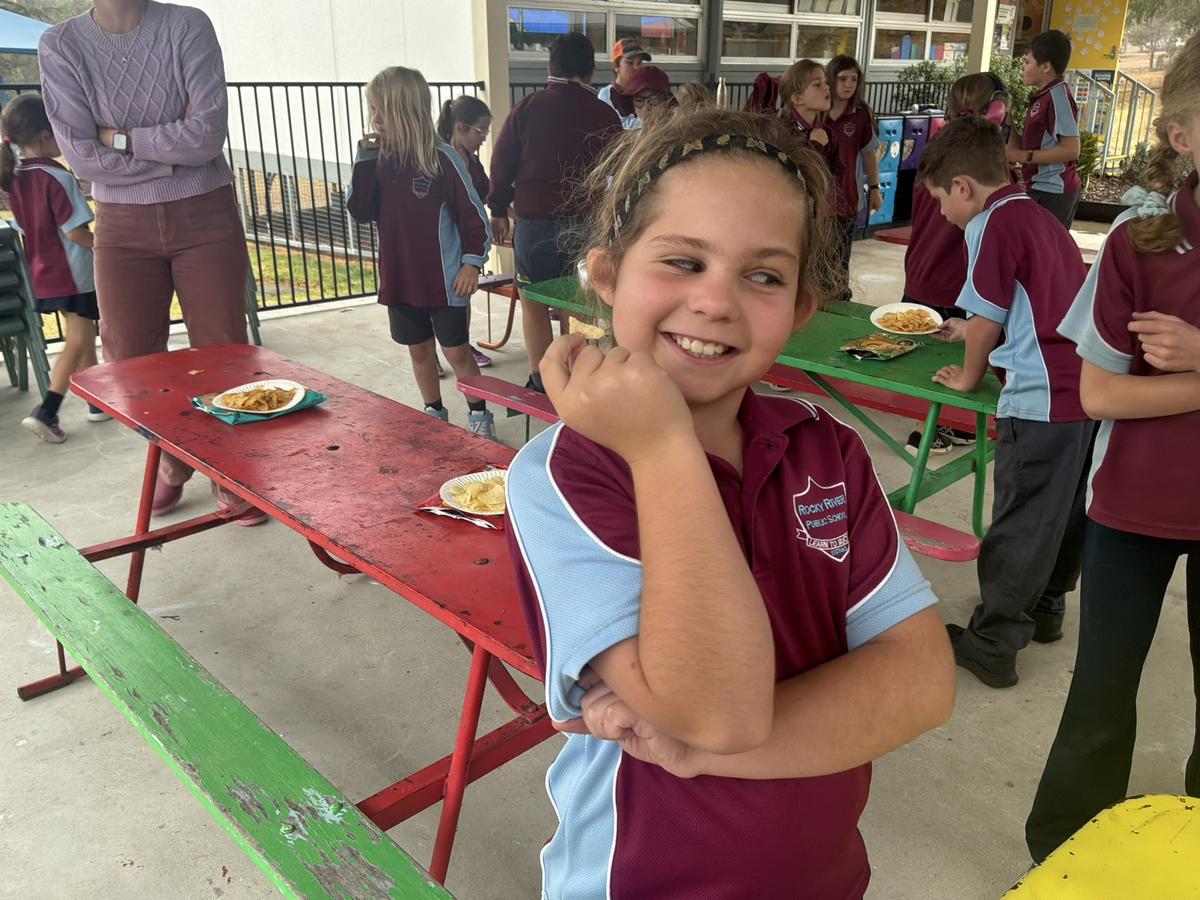
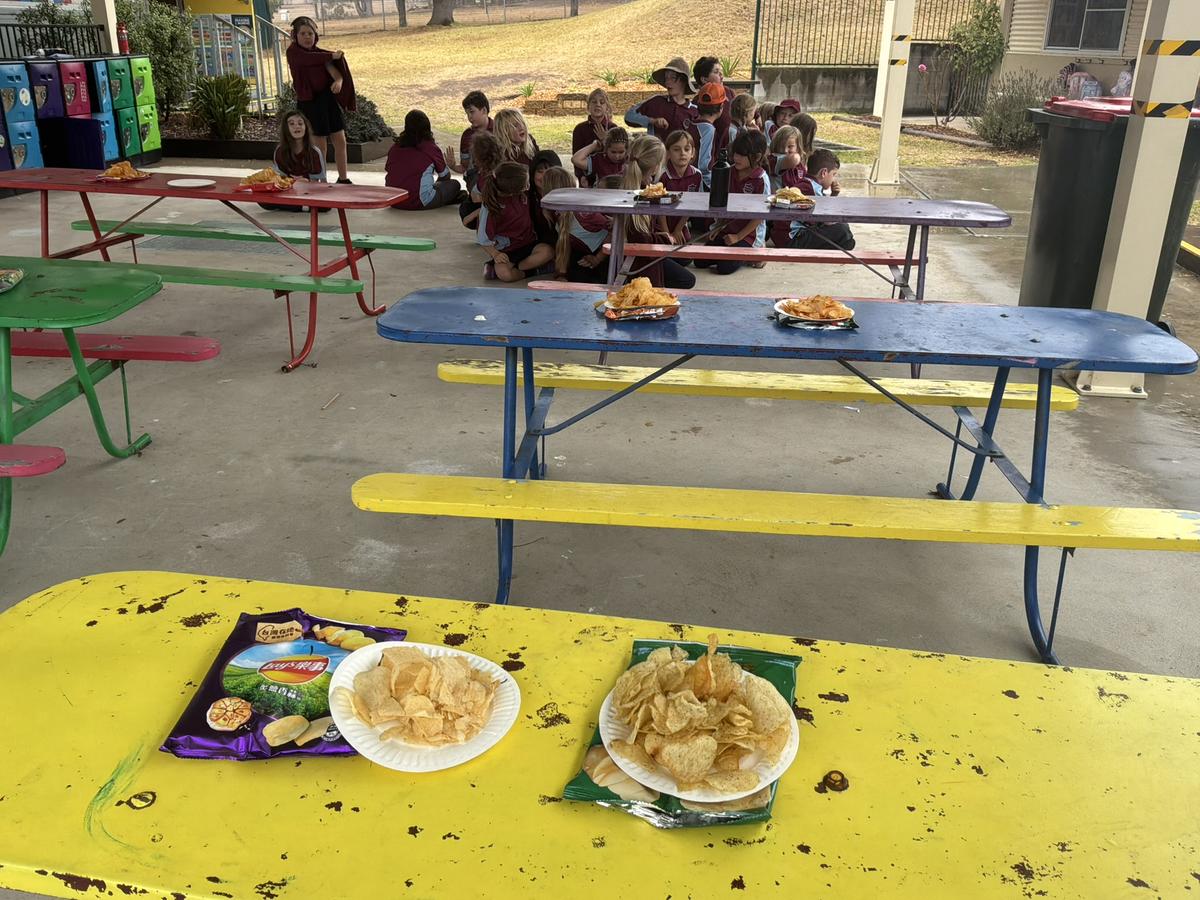
This engaging activity not only sparked creativity but also brought the whole school together, weaving learning through Creative Arts, Science, and HSIE.
Lower Division English
Last week we started our new English unit exploring Context and Representation. This unit focuses on how stories are shaped by the backgrounds, environments and personal experiences of their authors, as well as the role of language in connecting with readers.
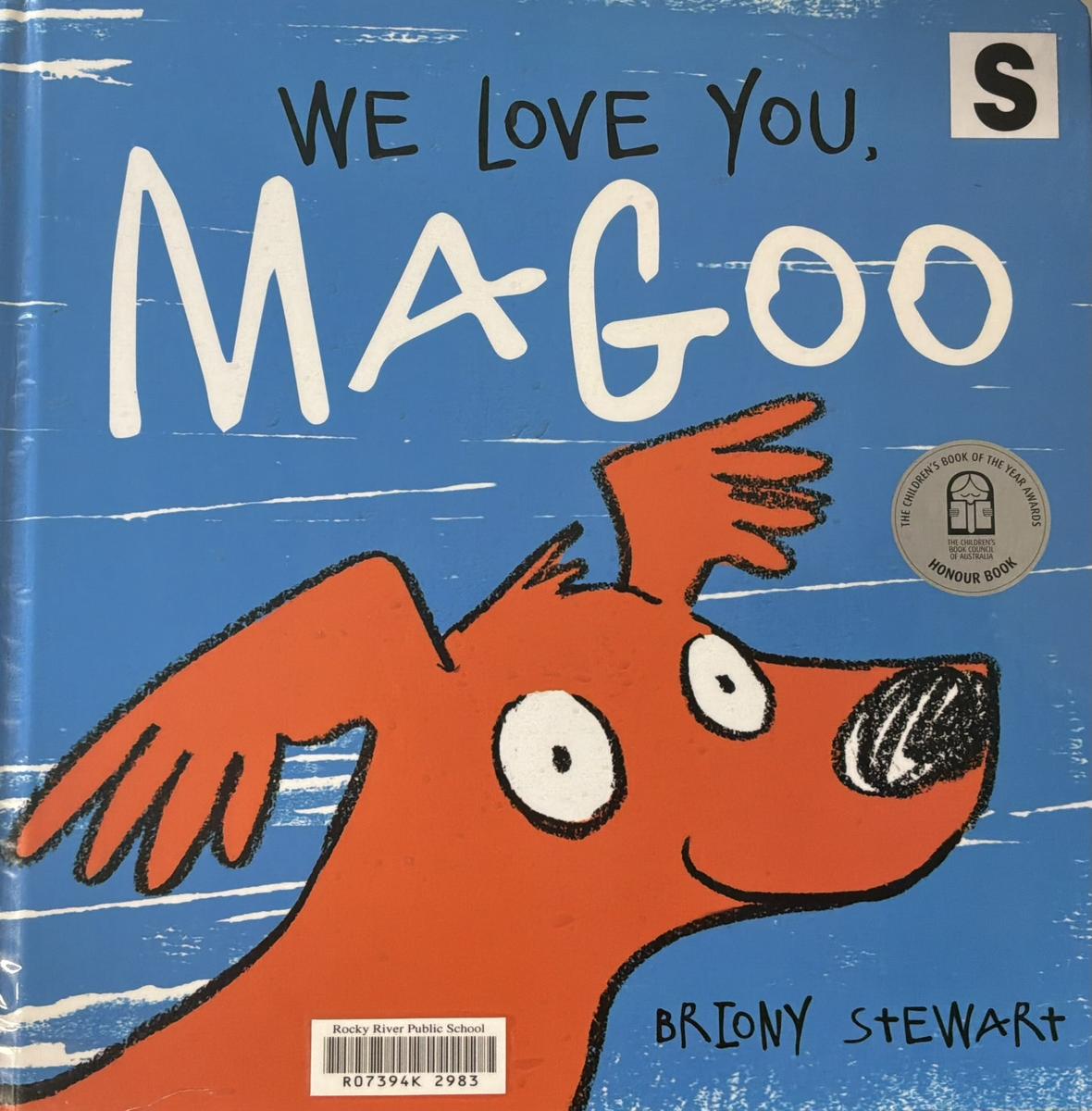
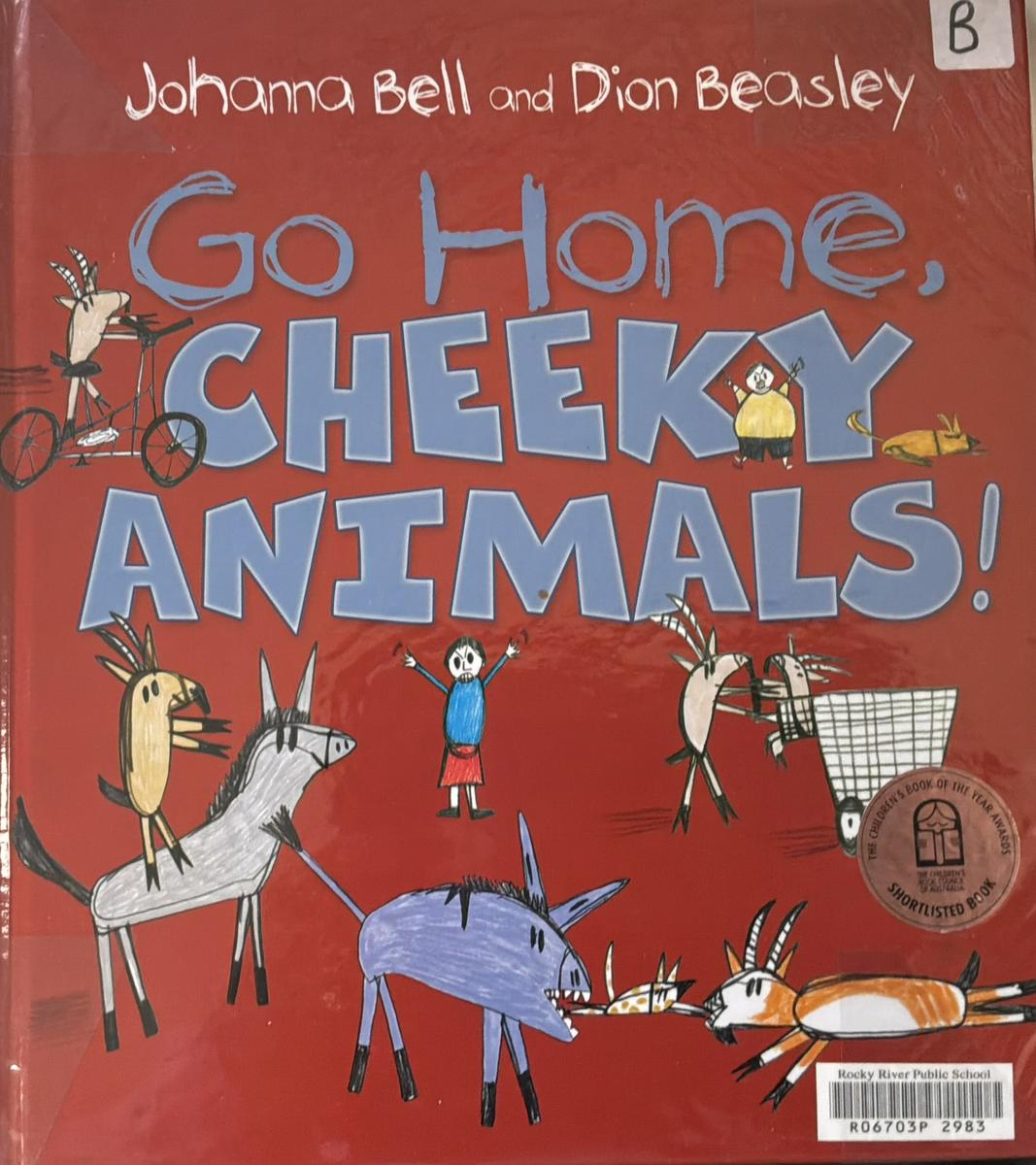
To help guide our learning, we are using two mentor texts: Go Home, Cheeky Animals by Johanna Bell and Dion Beasley, and We Love You, Magoo by Briony Stewart.
Go Home, Cheeky Animals is set in the remote town of Canteen Creek in the Northern Territory. It tells the story of the cheeky animals disrupting the everyday routines of the people who live there. Through this book, students learn about how setting and culture influence the language and humour used by the author, and how representation in stories can reflect real places and experiences.
We Love You, Magoo is based on the author’s experiences, focusing on the playful and sometimes mischievous antics of her dog, Magoo. This text shows how everyday events can be told in fun ways, making stories relatable and enjoyable for readers of all ages.
A key component of this unit is developing students’ writing skills. We have started by building simple sentences, ensuring we can confidently express an idea. Wre then extend these skills by combining sentences to form compound structures, making writing richer and more interesting to read. Students are experimenting with descriptive language, different sentence starters, and even some figurative language to capture their own personal experiences in writing.
Through this approach, students are not only learning the mechanics of writing but also discovering how to share their own stories in engaging ways. It’s wonderful to see how these mentor texts inspire creativity, spark discussions about representation, and support students in connecting their reading and writing to their own lives and communities.
Lower Division Mathematics
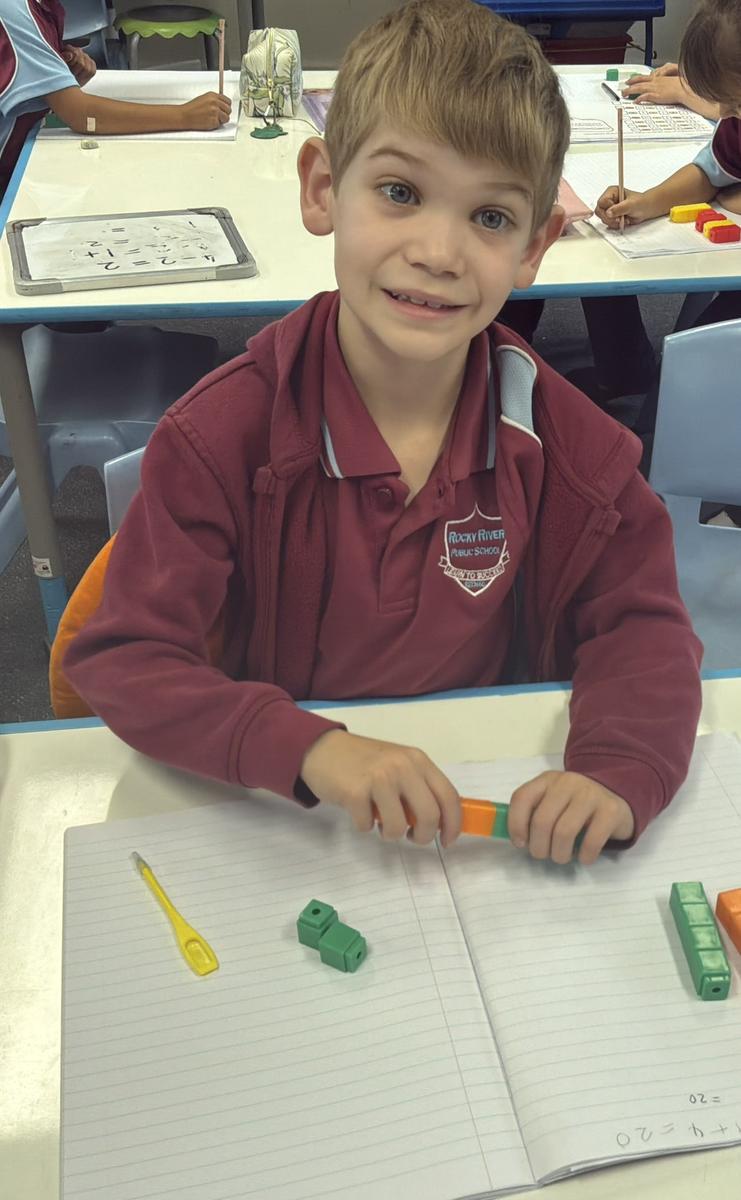
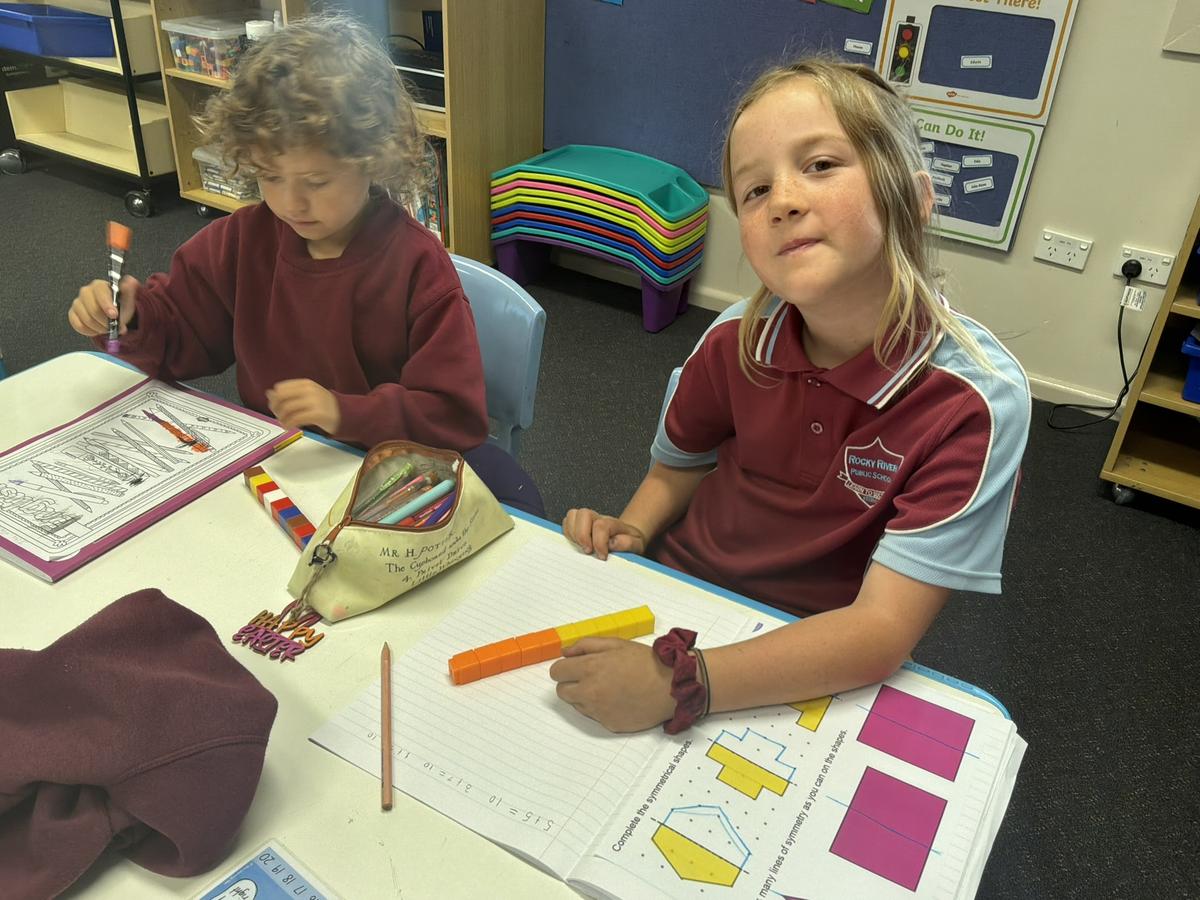
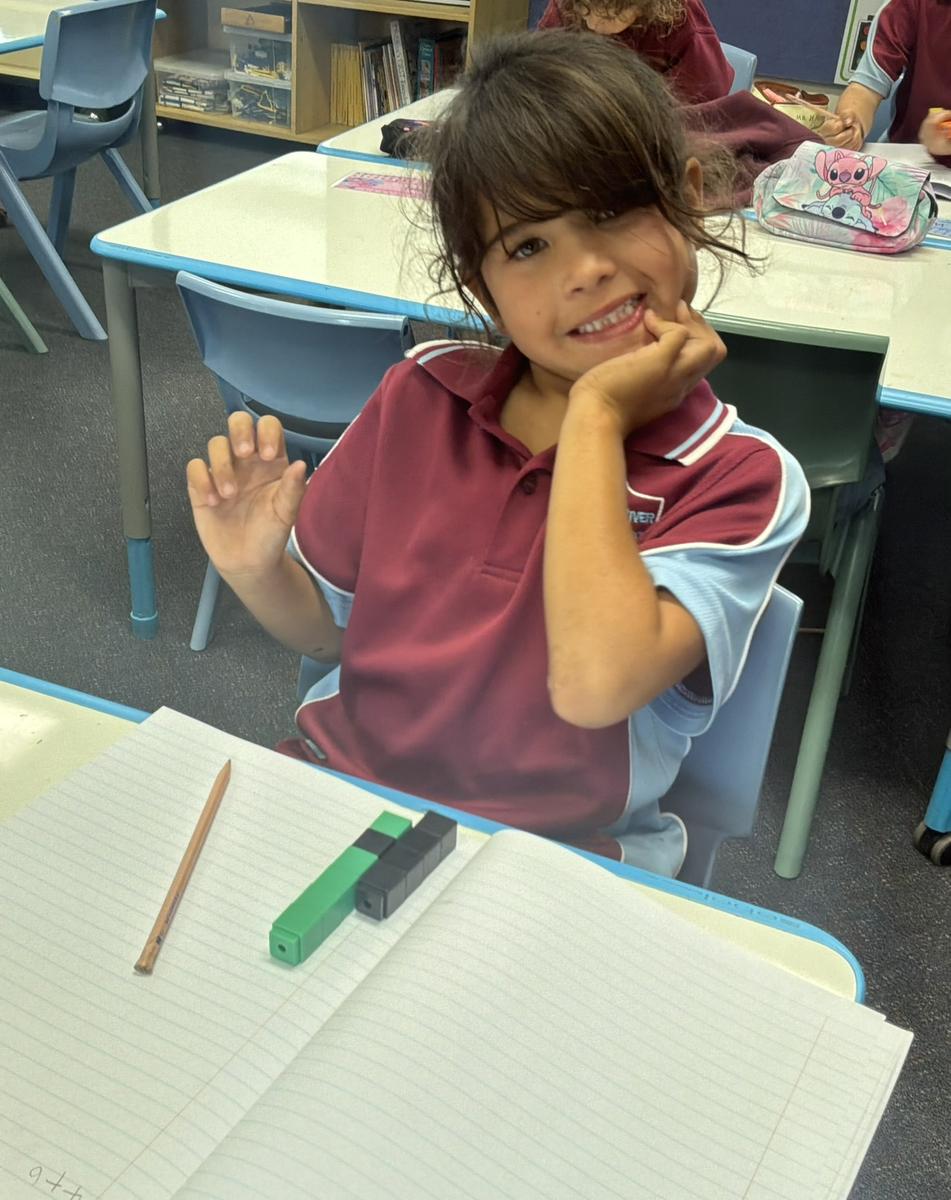
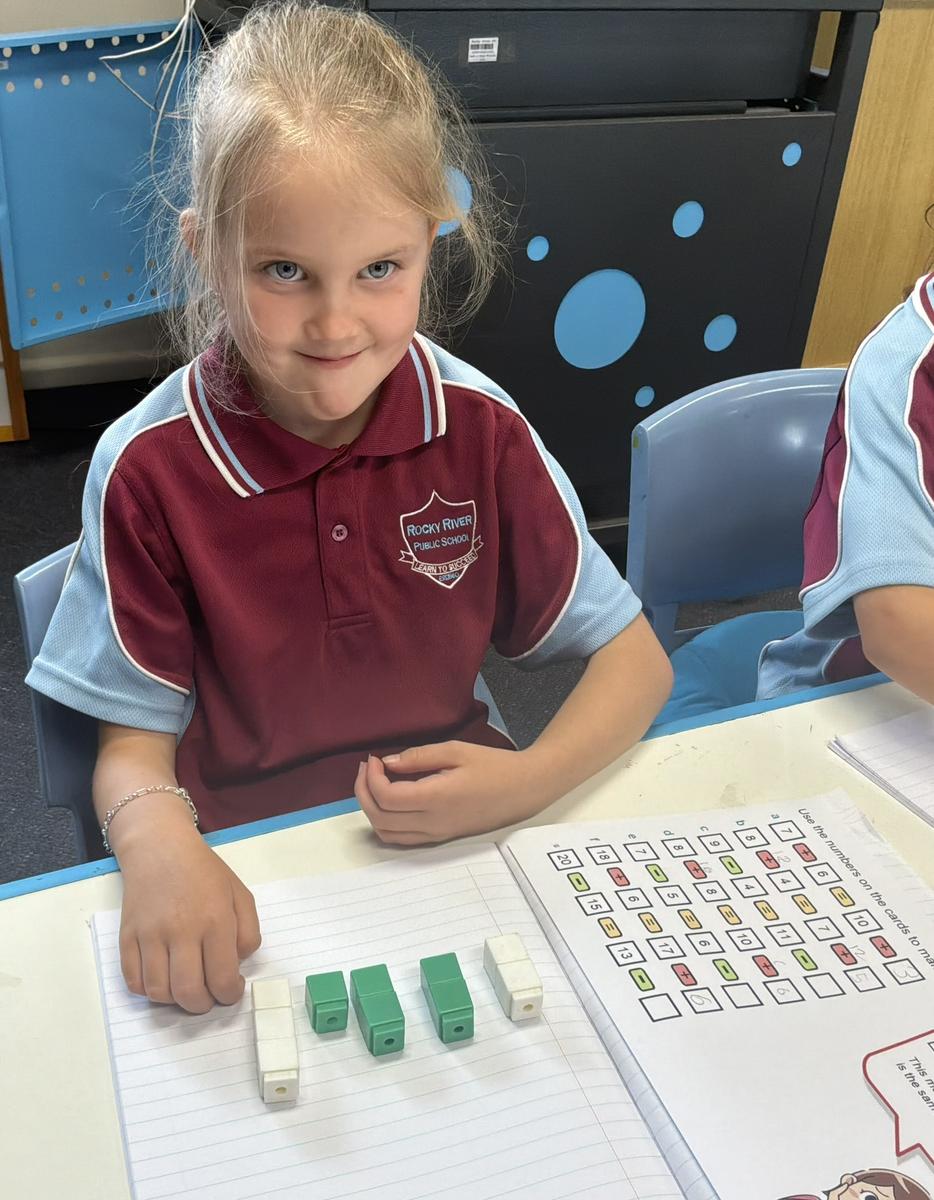
Lower Division are exploring what it means for things to be equal. We are doing this through hands-on activities where we use use real-world techniques like hefting—physically lifting objects—and the use of balance arms to determine relative weight. These concrete materials provide a tangible way for children to compare and describe objects using terms such as "lighter," "heavier," "heavier than," and "lighter than."
Students are also beginning to understand how quantities can be distributed into equal groups, helping them see how larger numbers are composed of smaller, equal-sized groups. From sharing blocks equally among friends to sorting counters or counting bears, these experiences build foundational concepts for future mathematical understanding. We are excited to see how our students use their curiosity, language, and hands-on materials to explore the world of mathematics.
Sophie Masson Author Visit
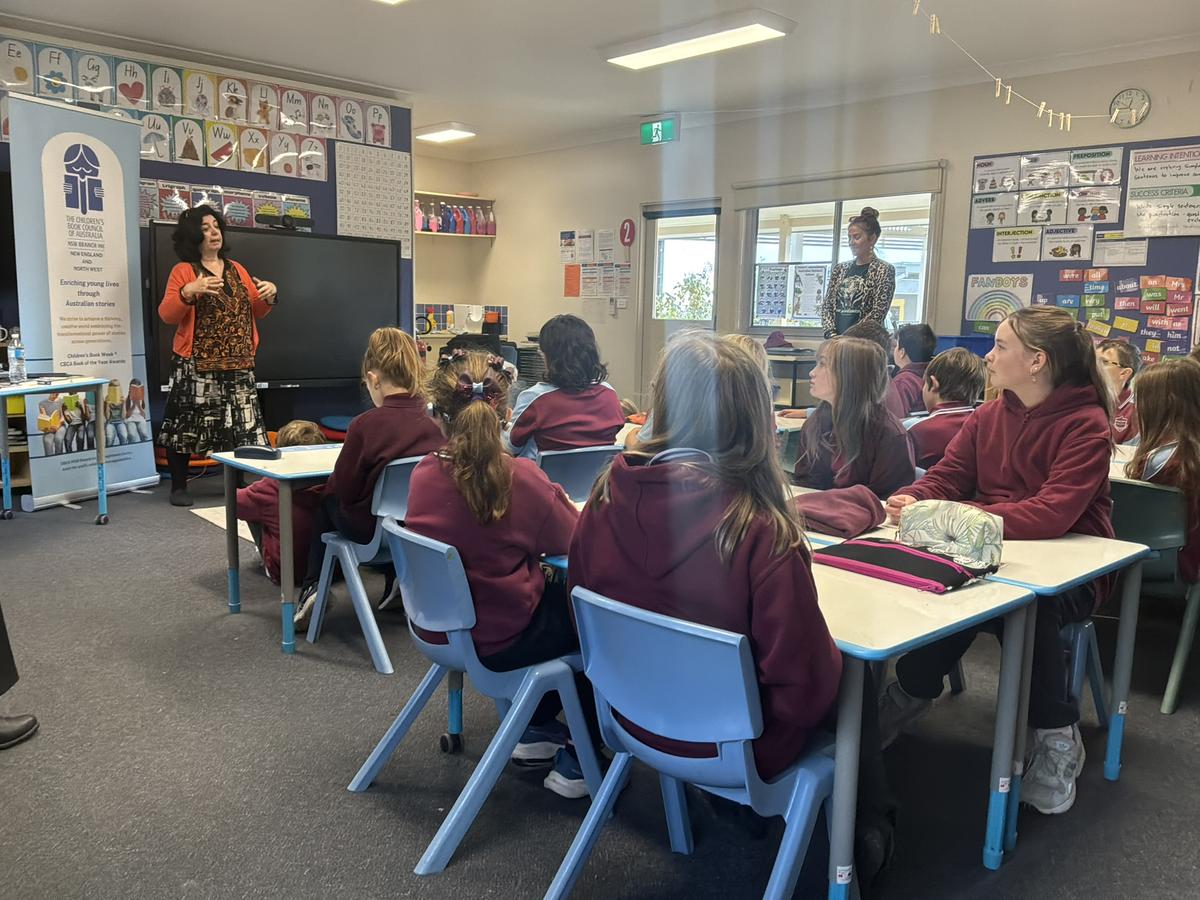
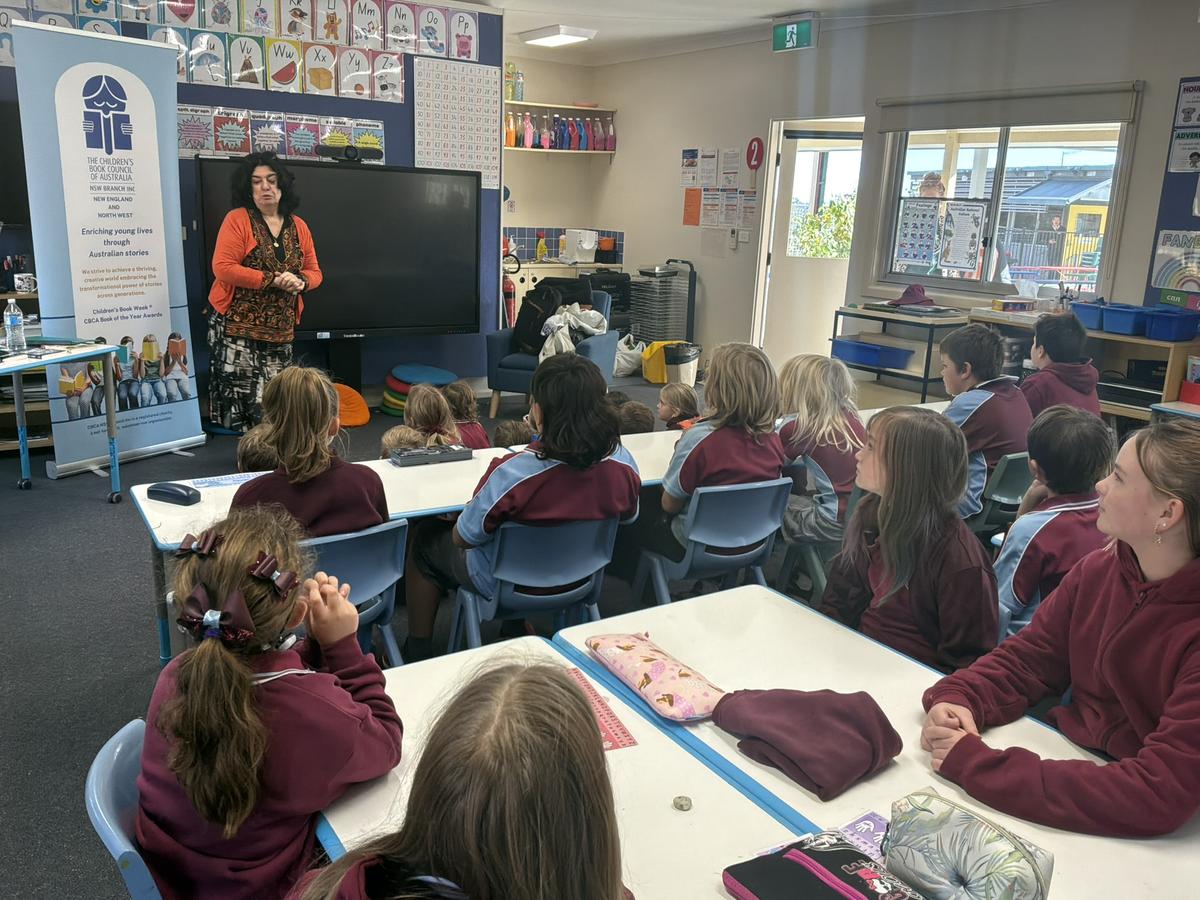
Rocky River was delighted to welcome award-winning local author Sophie Masson last Thursday as part of the Children's Book Council New England Northwest 2026 'Booked In' tour. Sophie captivated our students by sharing her journey to becoming an author, along with valuable tips and techniques she uses in her writing.
Our students were fascinated to learn about the many places Sophie has lived and travelled, sparking a lively discussion that touched on art, local customs, schools, and, of course, the creative writing process. To conclude the session, our school leaders Ivory and Harrison presented Sophie with a special gift – a Rocky River pen – as a token of our appreciation.
We extend our sincere thanks to Sophie Masson for sharing her knowledge and inspiring our students with her experience. It was truly a memorable and enriching visit for our school community.
Upper Division Science | Exploring Aeroponics
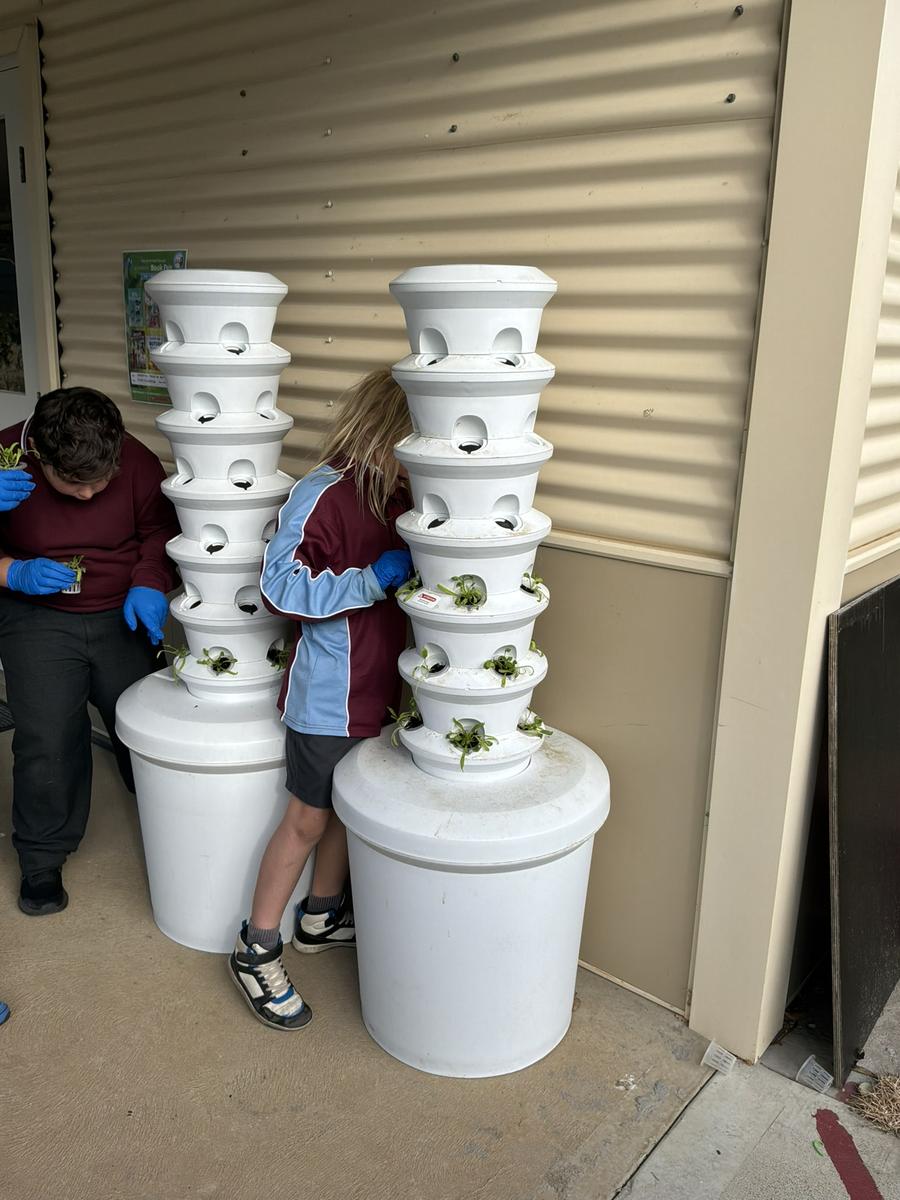
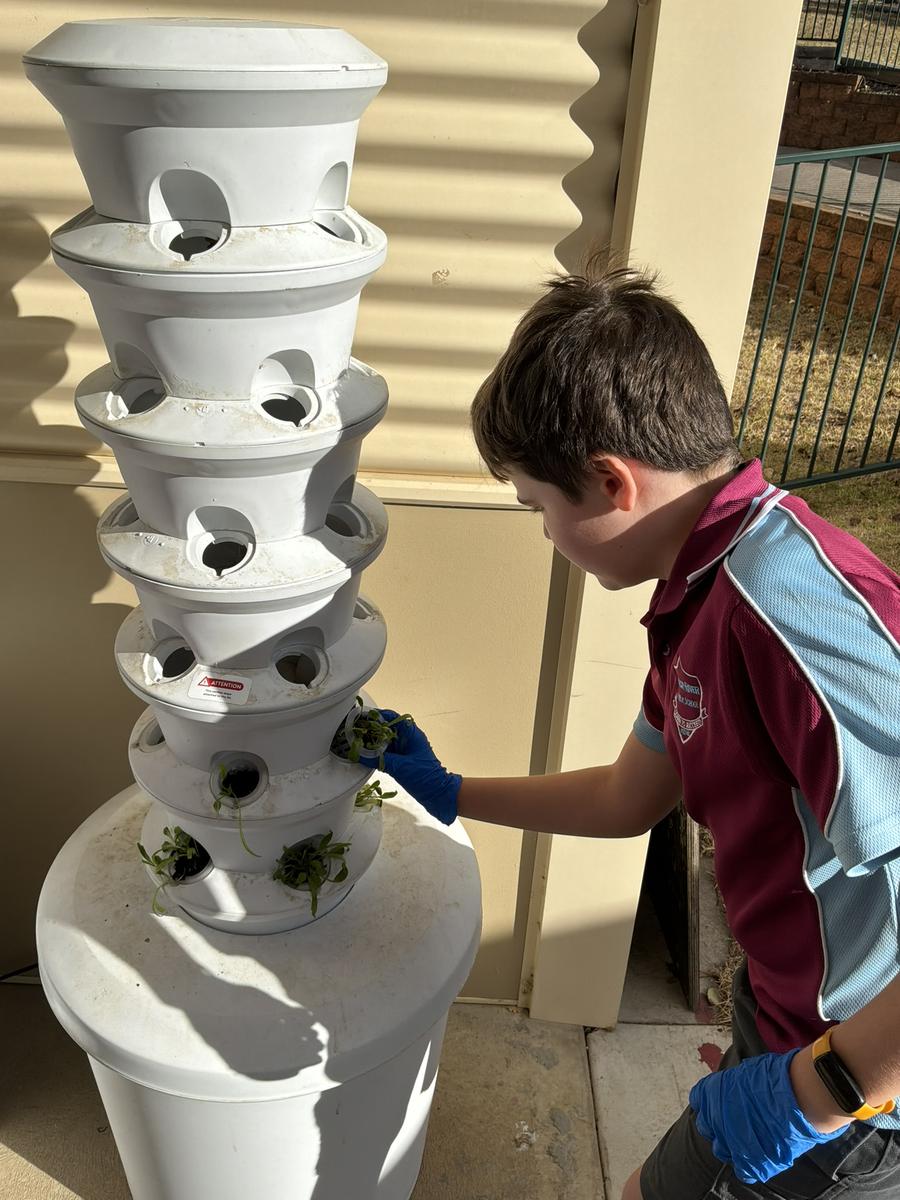
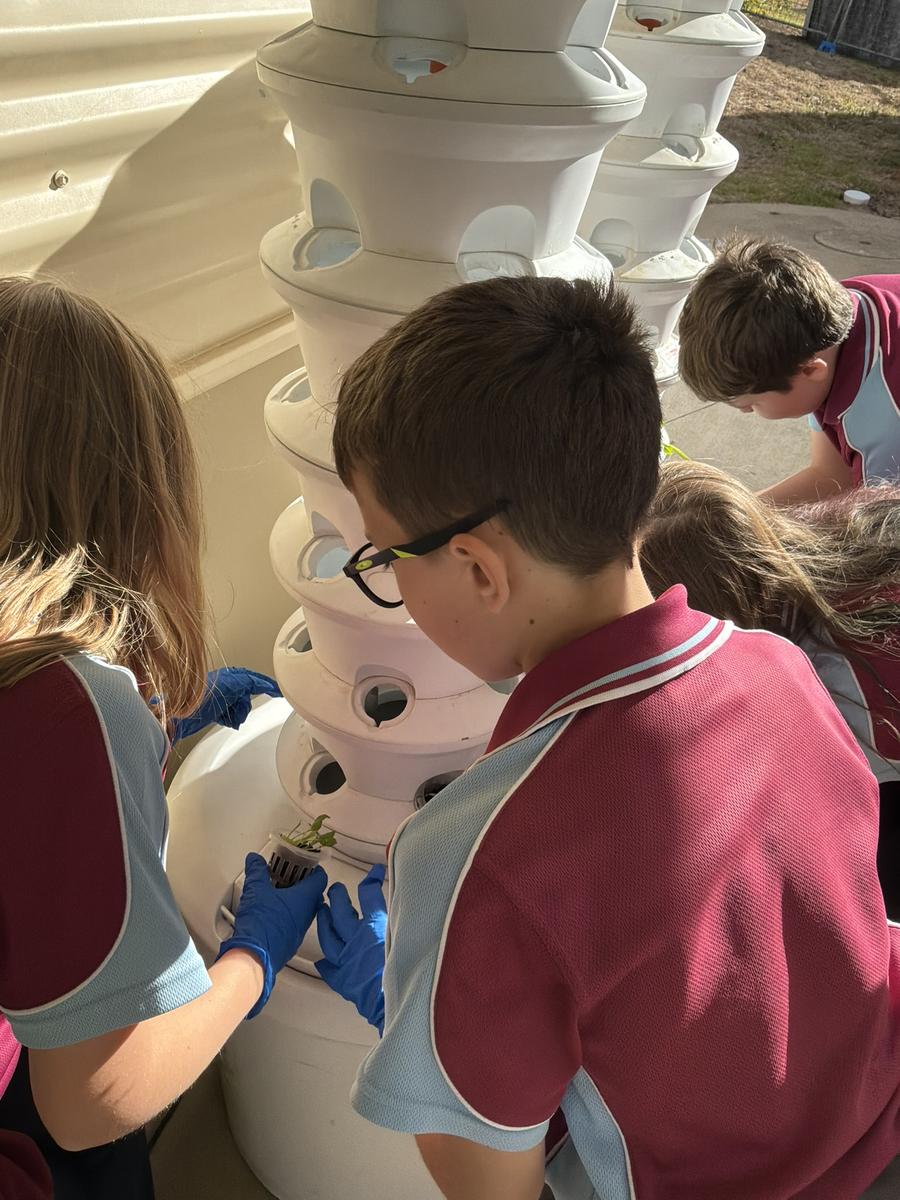
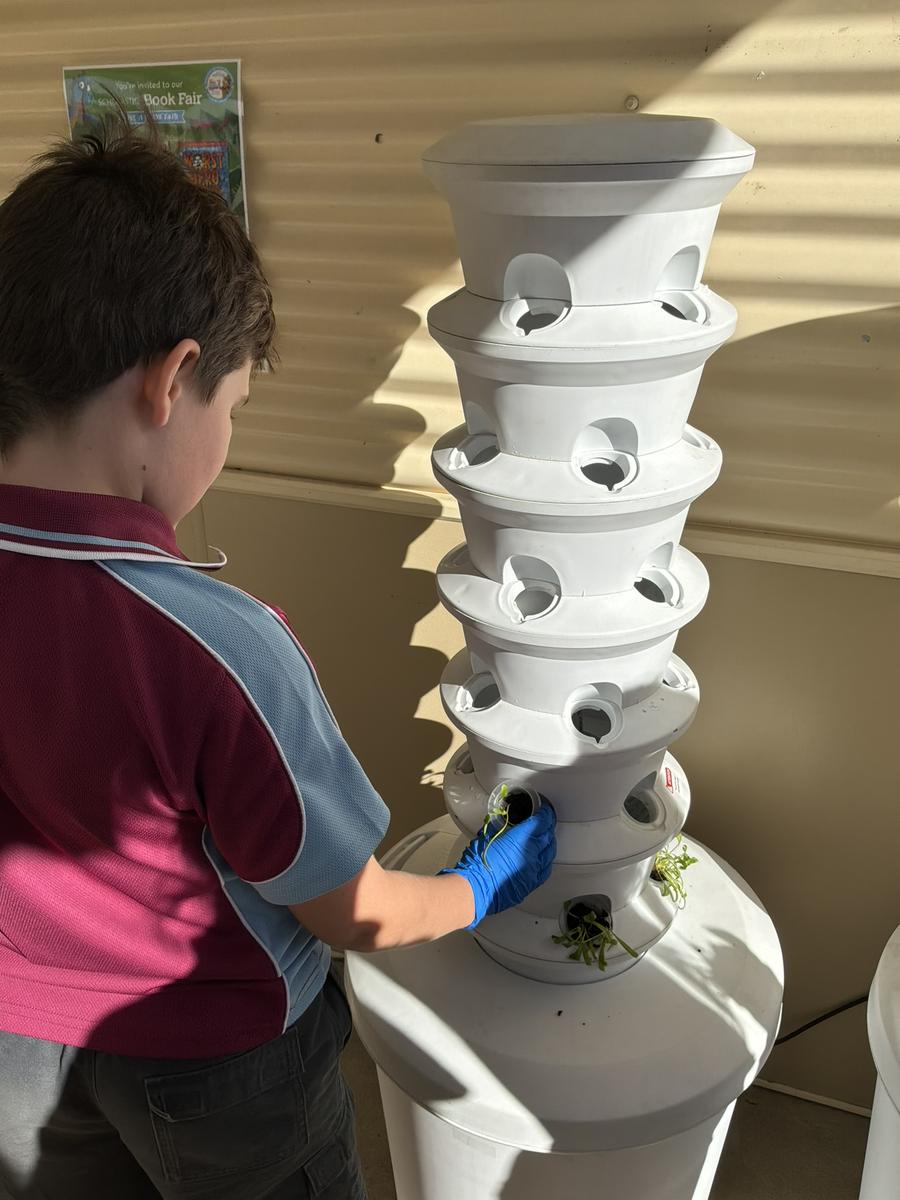
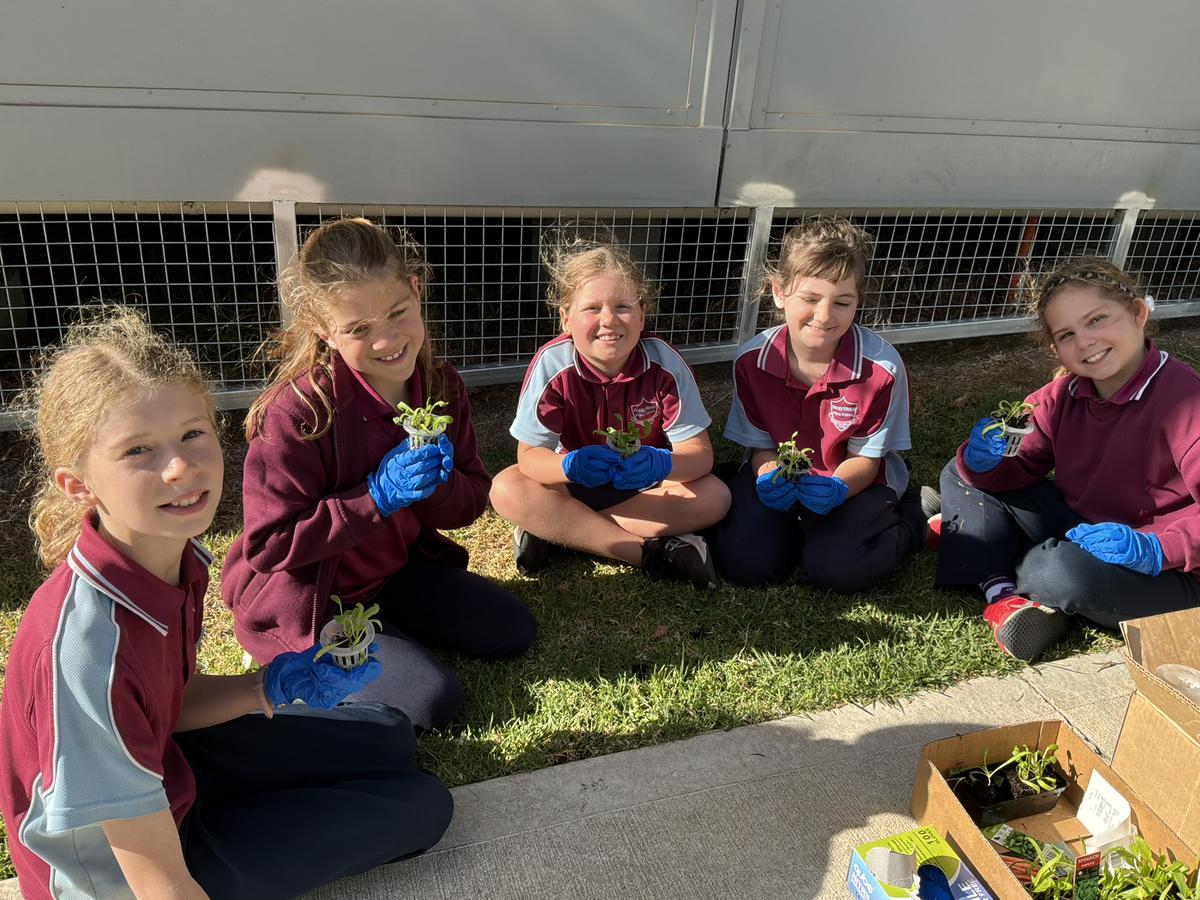
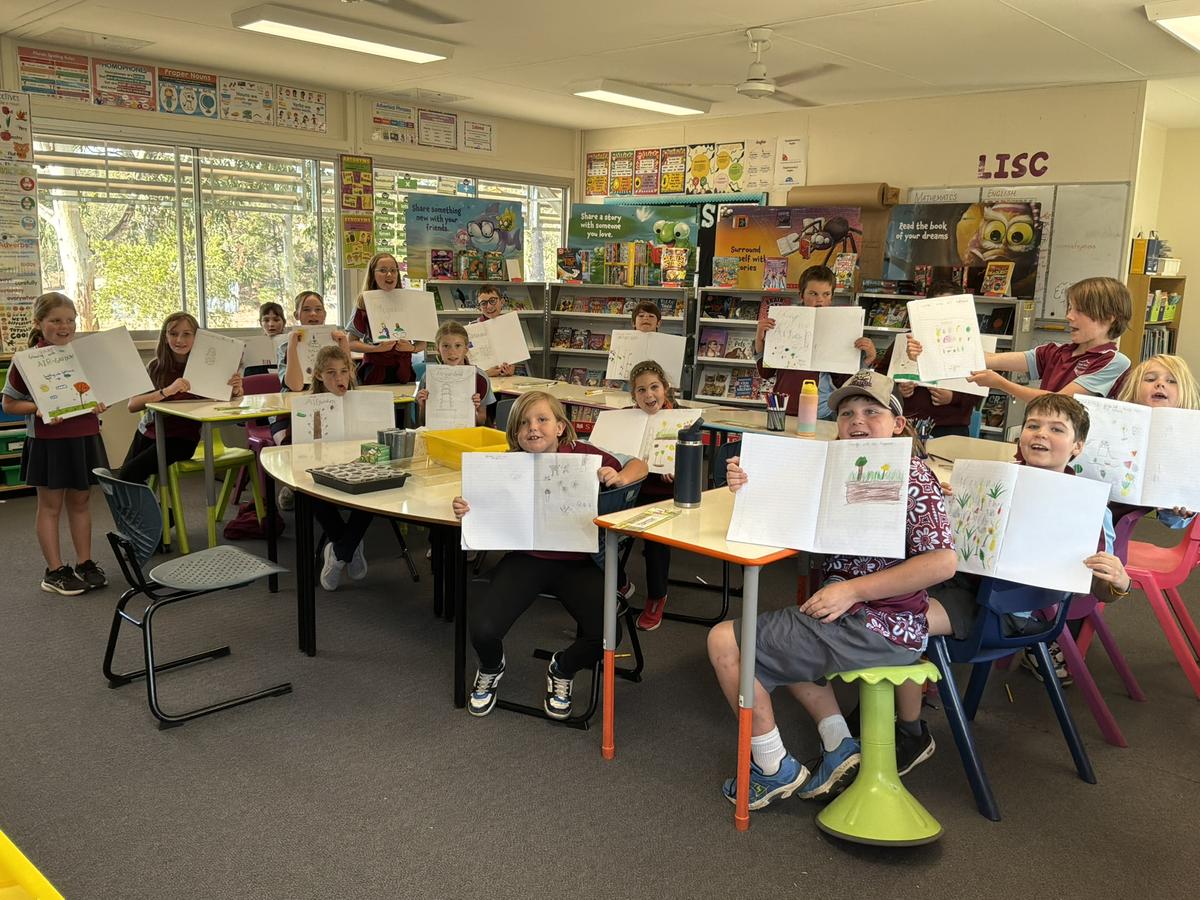
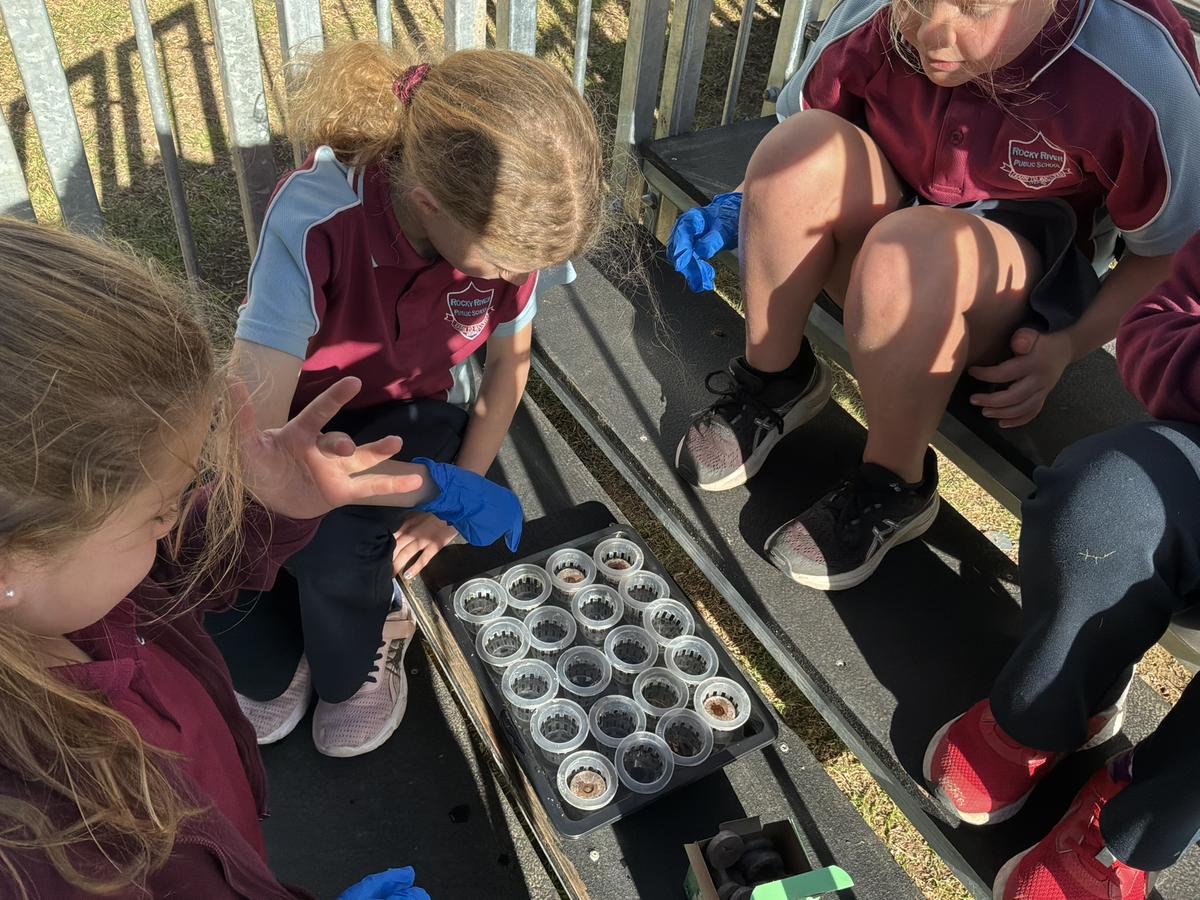
Our Year 3-6 students have begun an engaging Science unit exploring aeroponics gardening using the innovative Airgarden systems. Through this hands-on learning experience, students are discovering the benefits of aeroponics, including water efficiency, faster plant growth, and reduced need for soil, all while growing fresh kale and spinach. The journey begins with seed germination in coconut coir, a sustainable and natural medium that supports healthy root development. This project not only deepens students’ understanding of plant biology and modern agricultural techniques but also fosters a sense of responsibility and excitement as they nurture their crops. We look forward to celebrating the end of term with a special tasting event, where students will enjoy the fresh “fruits” (or, in this case, vibrant veggies) of their labour, highlighting the connection between science and healthy living.
Upper Division | Visual Arts | Cherry Blossom
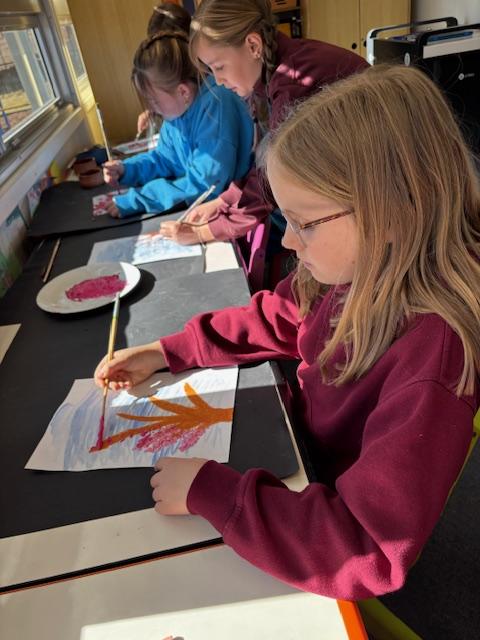
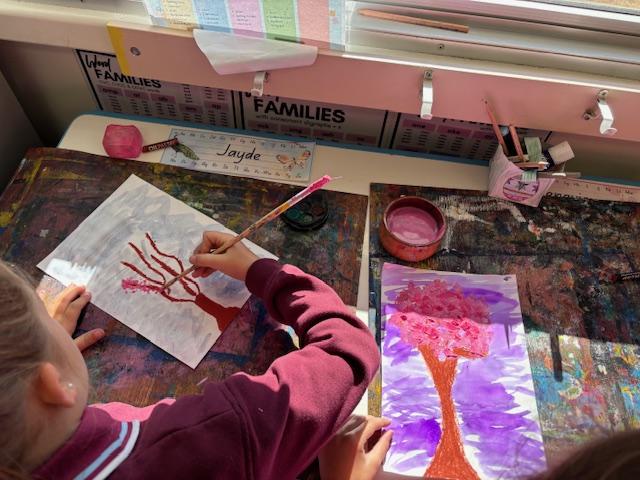
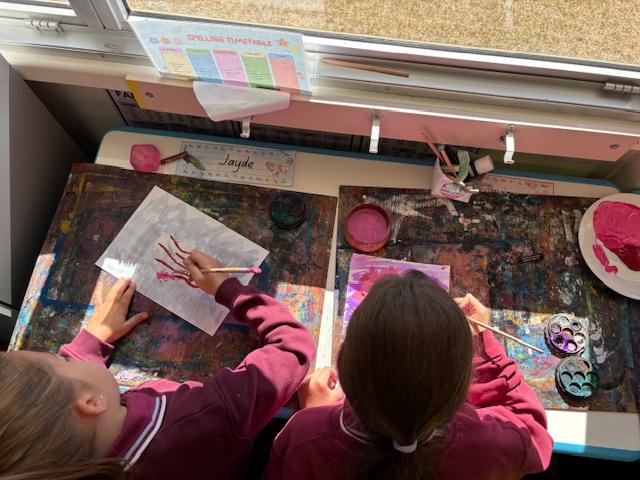
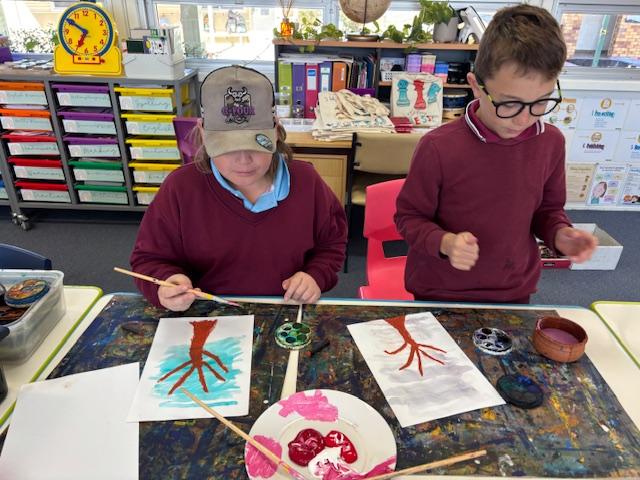
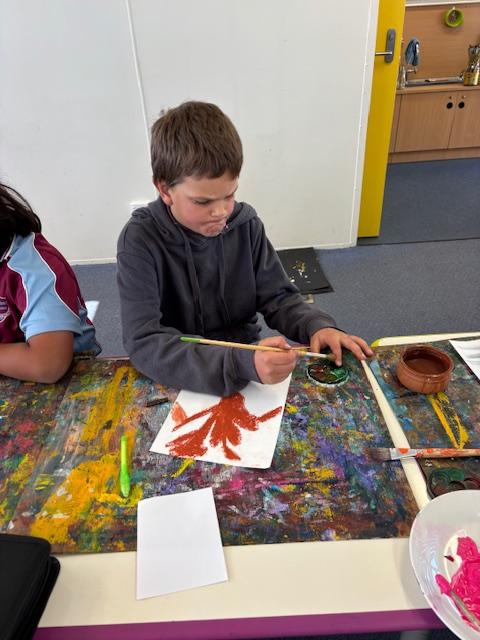
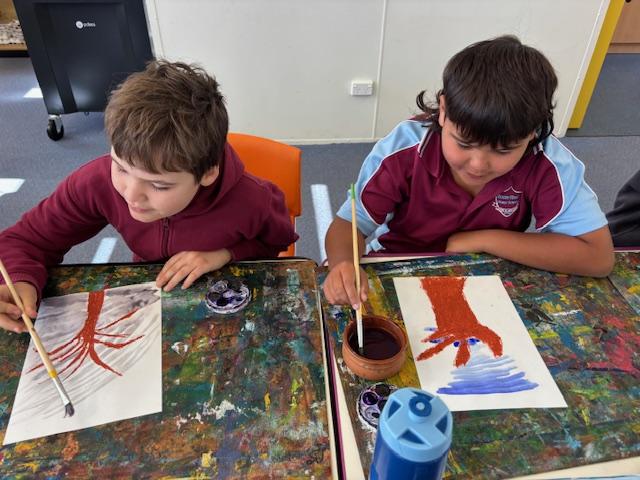
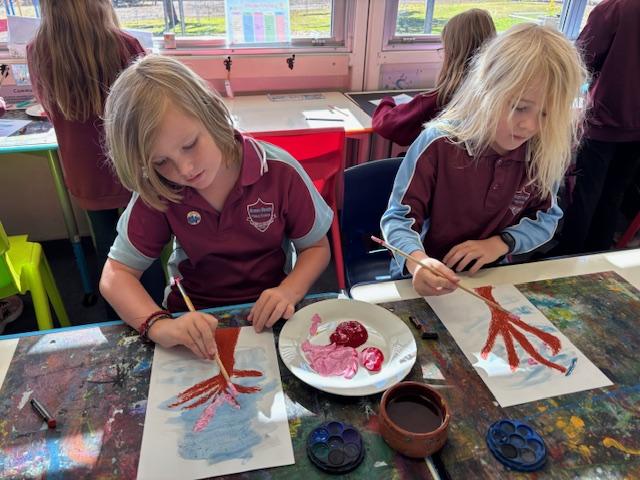
In Visual Arts, students embarked on a vibrant exploration of nature through the creation of beautiful cherry blossom artworks. Drawing inspiration from the elements of art, students thoughtfully combined colour, texture, and form to bring their pieces to life.
The process began with a cool watercolour wash, setting a tranquil background that evokes the serenity of springtime skies. Building upon this foundation, students used brown crayons to carefully sketch the tree trunk and delicate branches, giving structure and depth to their compositions.
Next, they mixed varying shades of red and white paint to develop a palette of pinks and reds, capturing the subtle hues of cherry blossoms in bloom. Demonstrating creativity and fine motor skills, students applied the paint using the end of a paintbrush to create the signature ‘blossom effect’ — a series of soft, rounded dots that mimic the petals’ natural texture.
Through this project, students have not only refined their technical art skills but have also deepened their appreciation for the natural world and the artistic elements that convey it. The cherry blossom artworks beautifully illustrate how thoughtful exploration of colour, line, and texture can transform simple materials into expressive visual stories.
Stage 2 Mathematics | Fractional Lamingtons
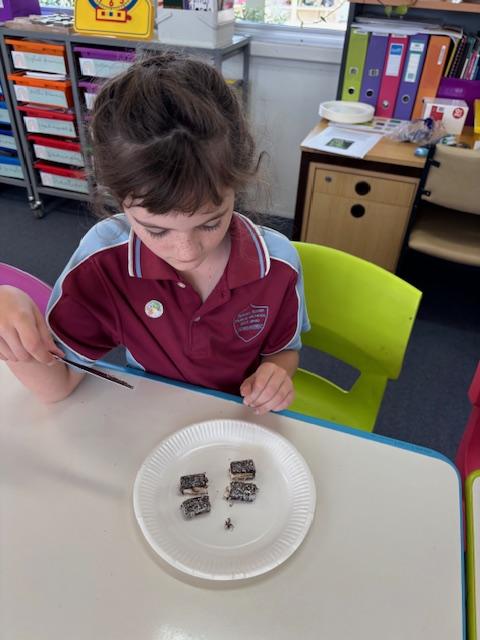
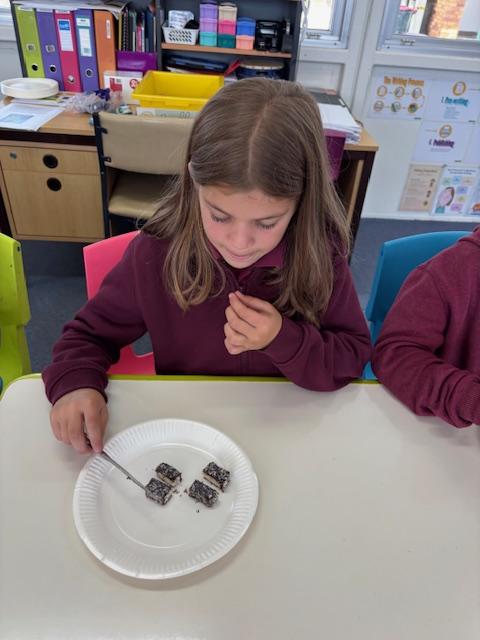
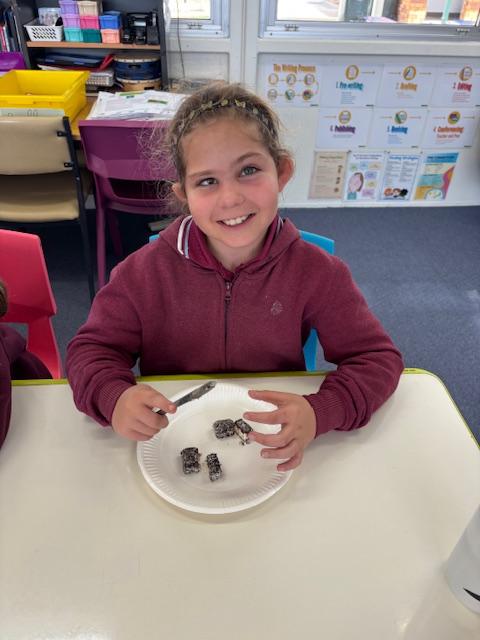
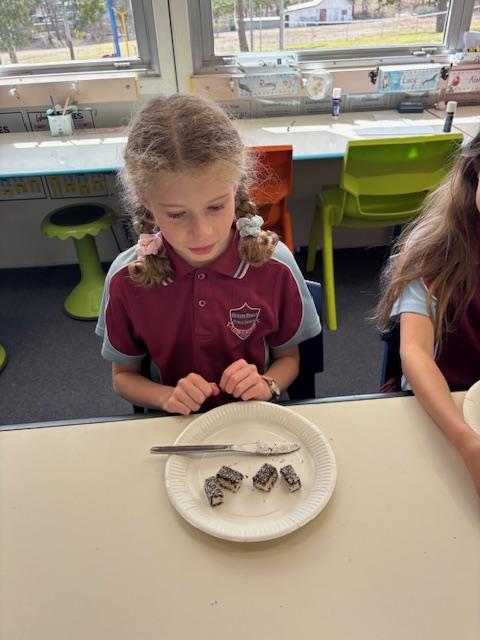
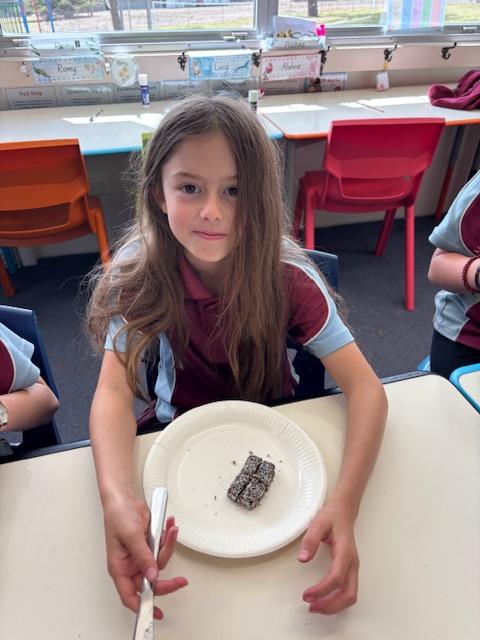
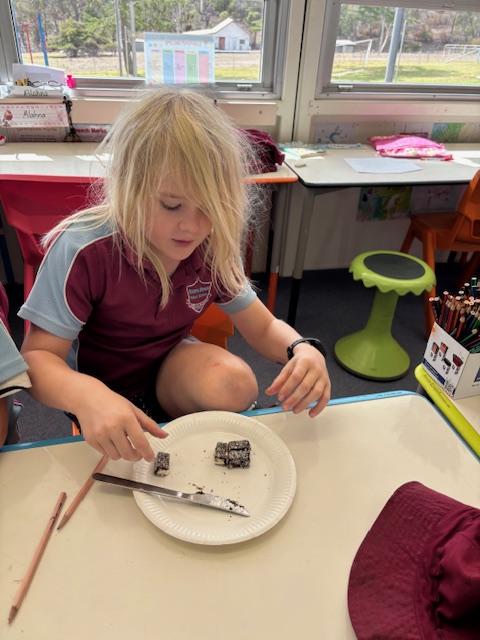
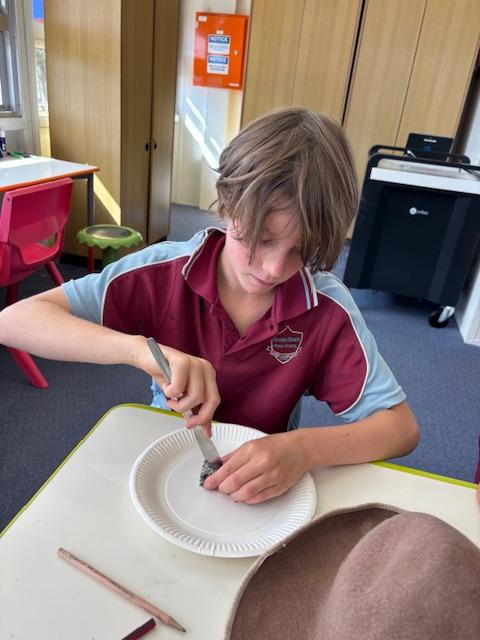
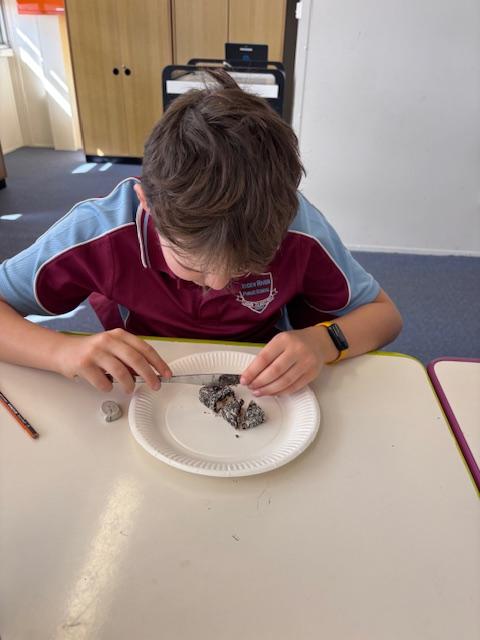
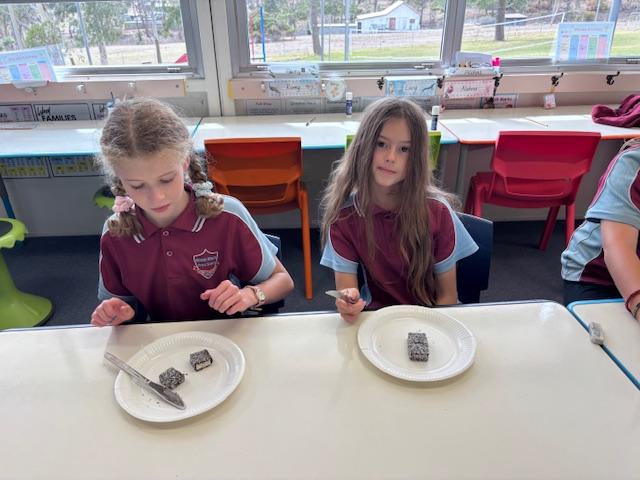
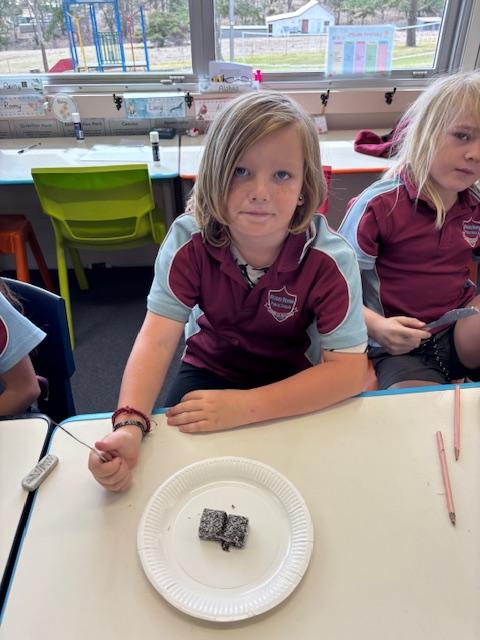
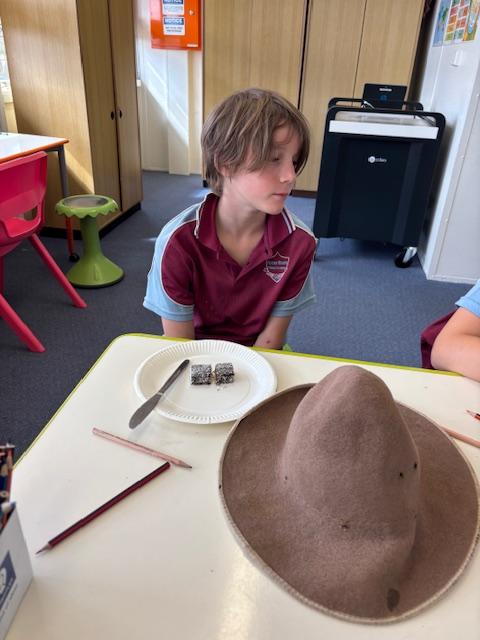
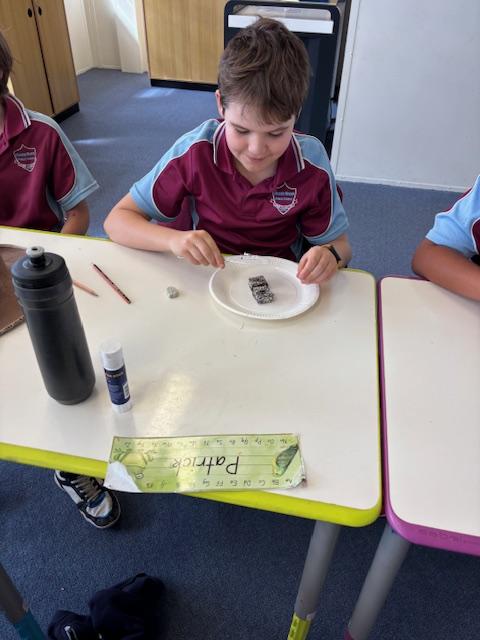
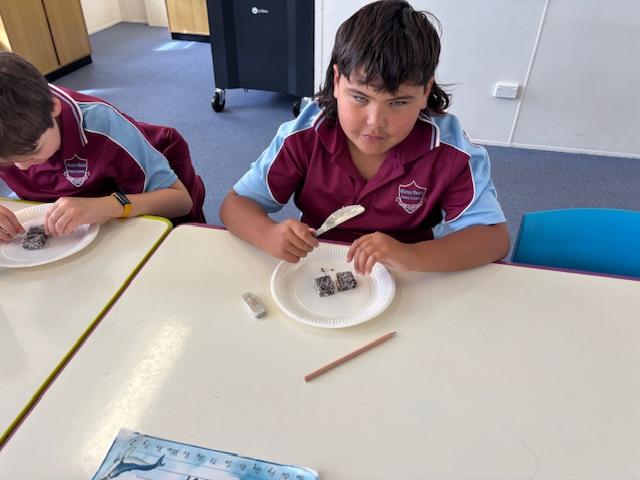
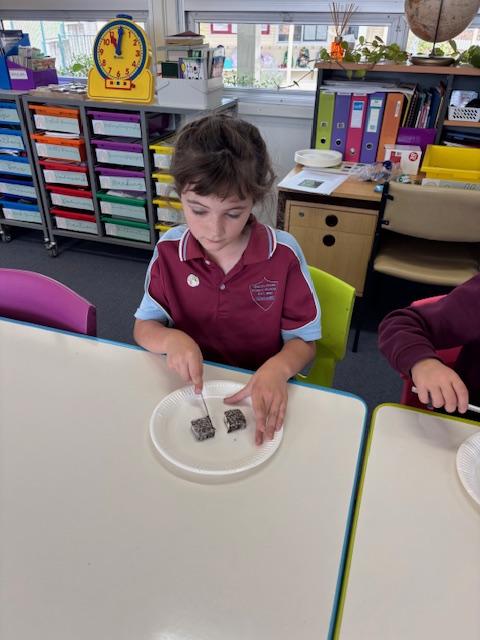
Stage 2 students have been deepening their understanding of fractions in a deliciously engaging way: by using lamingtons! Hands-on learning took centre stage as students explored halves, quarters, and eighths with this iconic Australian treat.
Students started by dividing whole lamingtons into equal halves, observing how each piece was exactly the same size. From there, they cut the halves further into quarters, reinforcing their grasp of equal parts and how fractions can be broken down. The most exciting part was dividing the quarters into eighths, allowing students to see and feel how smaller fractions relate to the whole — and to each other.
Using lamingtons made learning fractions both meaningful and memorable. Students could visually and physically manipulate the pieces, which helped consolidate their understanding of mathematical concepts beyond the textbook. This hands-on activity also encouraged collaborative learning, as students discussed their strategies and checked each other’s work.
By connecting mathematics to real-life experiences — and tasty treats — students not only built their knowledge of fractions, but also enjoyed maths as a practical, enjoyable subject. The lesson was a sweet success!
Stage 2 English | Sadako
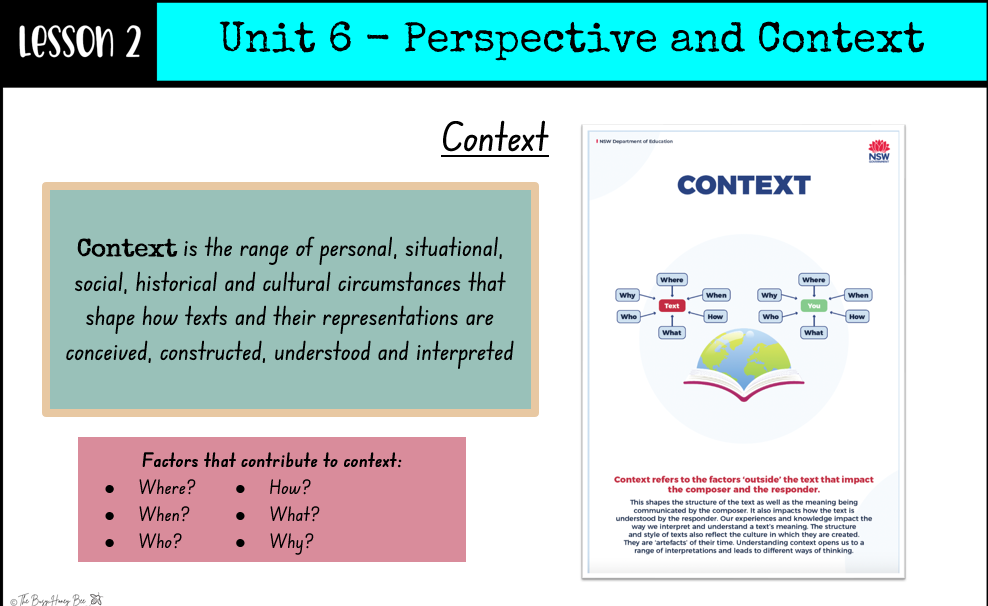
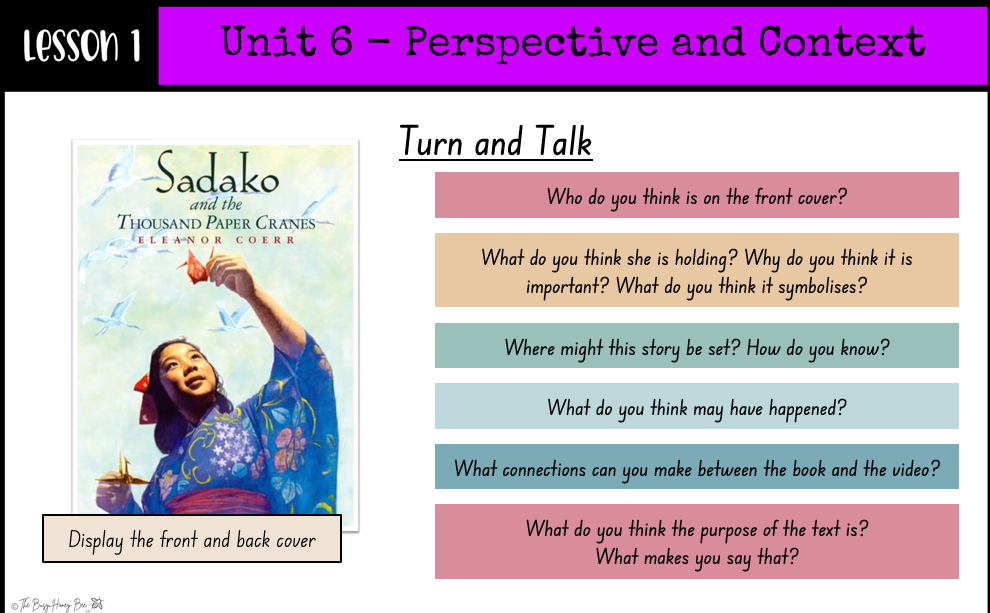
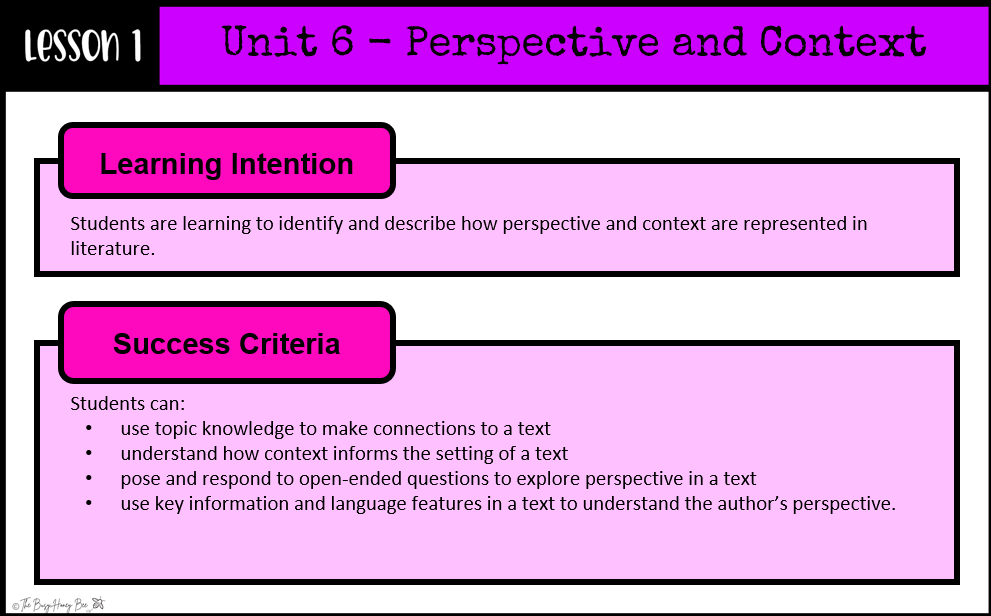
Stage 2 students have been delving into the rich textual concepts of perspective and context through their study of Sadako and the Thousand Paper Cranes. This powerful story has provided a meaningful lens for students to explore history, empathy, and the reasons behind storytelling.
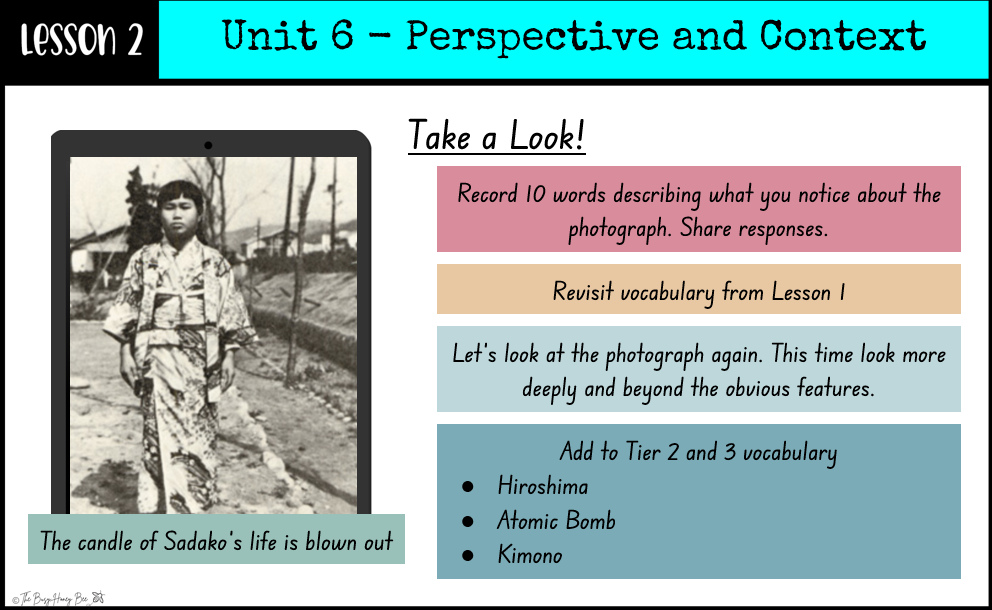
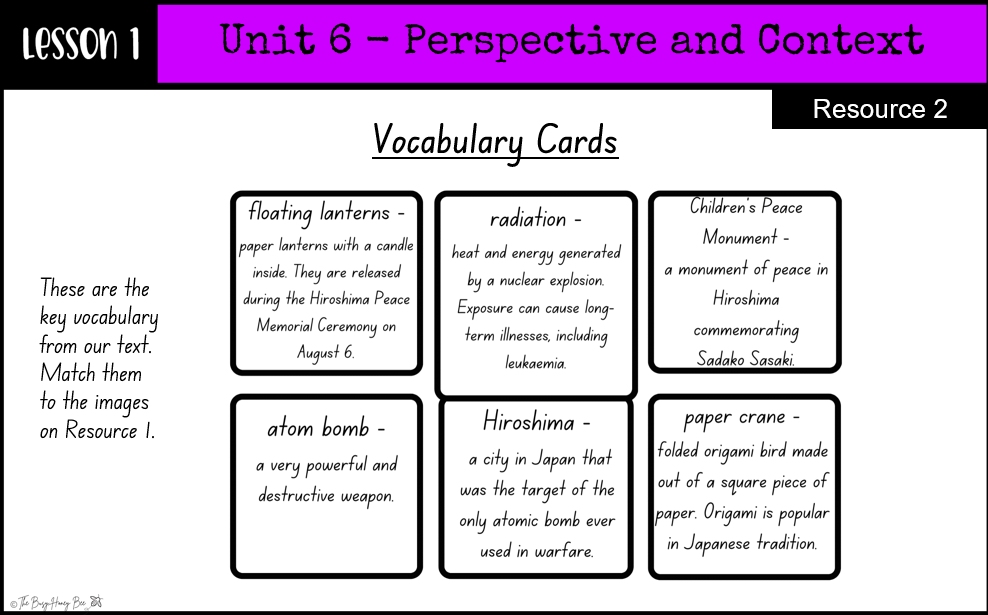
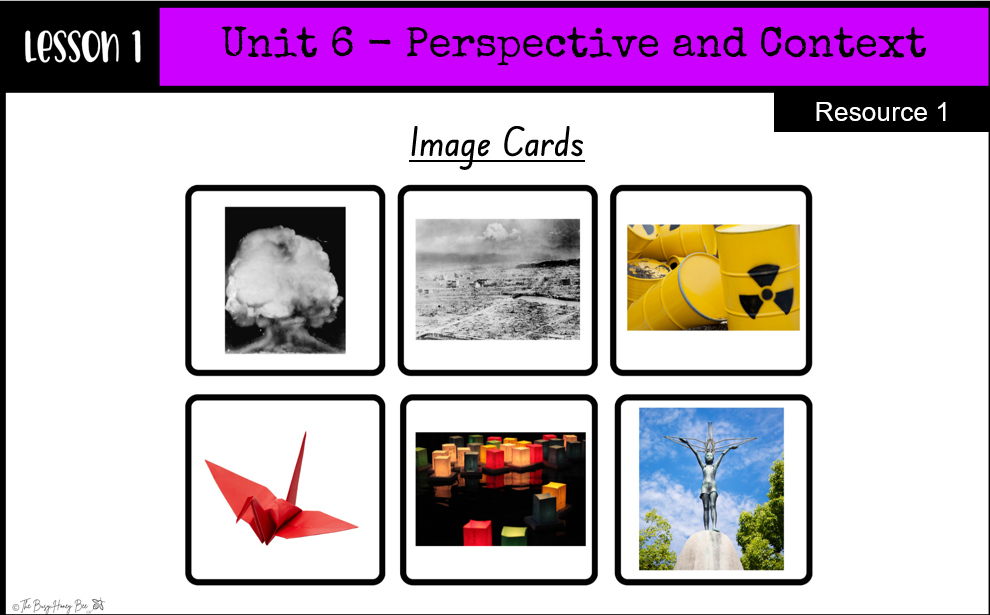
Our learning journey began with examining carefully selected images paired with key information and vocabulary. This approach helped students build background knowledge and deepen their understanding of the author’s context, including the historical events that inspired the book. By learning about the author’s motivations in writing Sadako and the Thousand Paper Cranes, students gained insight into how personal and cultural experiences shape narratives.
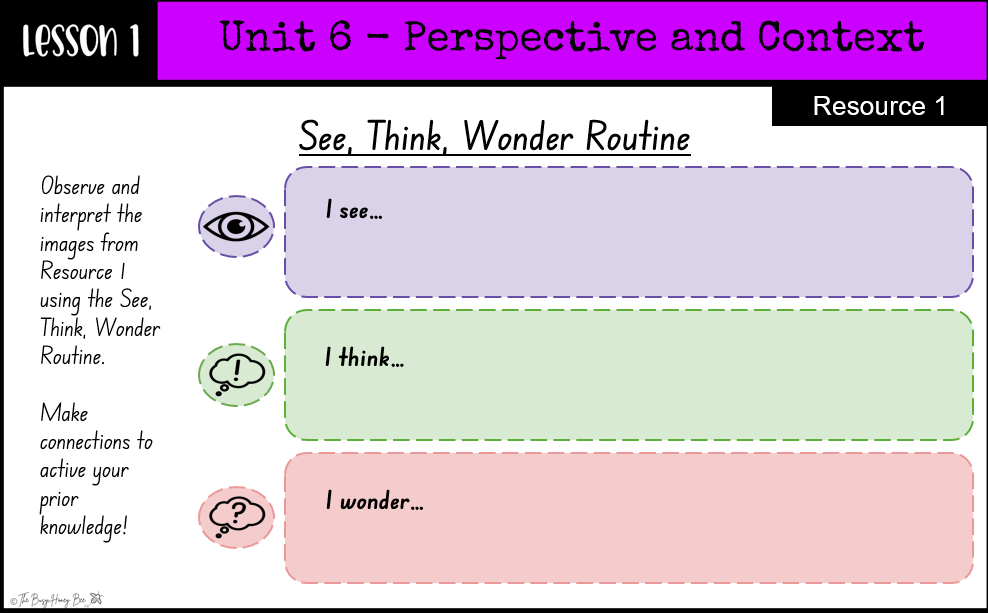
Students have engaged in reflective activities such as “I see, I think, I wonder,” encouraging them to observe, analyse, and question aspects of the text and images.
These exercises have sparked thoughtful discussions and allowed students to articulate their interpretations.
Additionally, students have been making connections between the text and their own experiences or prior knowledge, enhancing their comprehension and empathy. Predicting what might happen next in the story has further supported their critical thinking and engagement.
Through this unit, students are developing stronger skills in understanding multiple perspectives and the significance of context in literature. We look forward to continuing this meaningful exploration as the story unfolds.
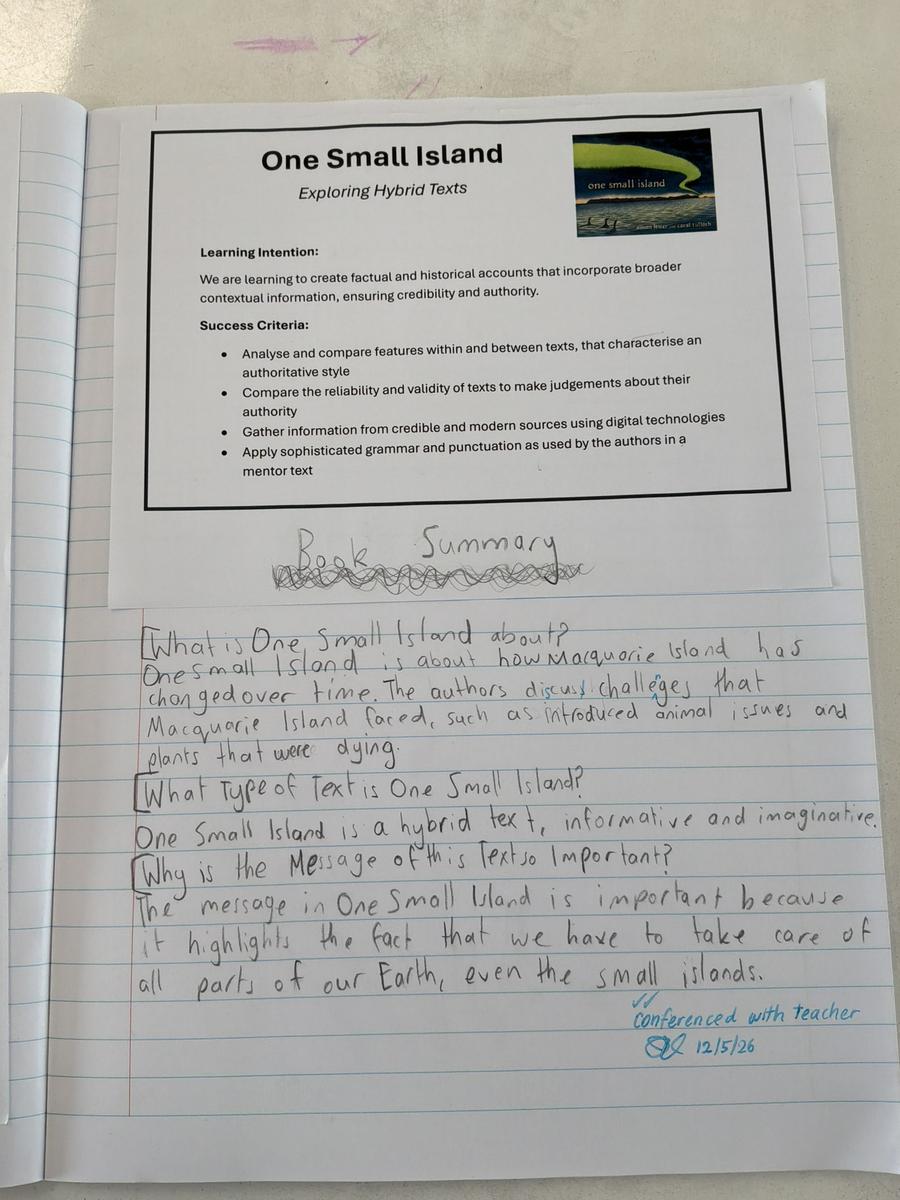
Stage 3 English | One Small Island
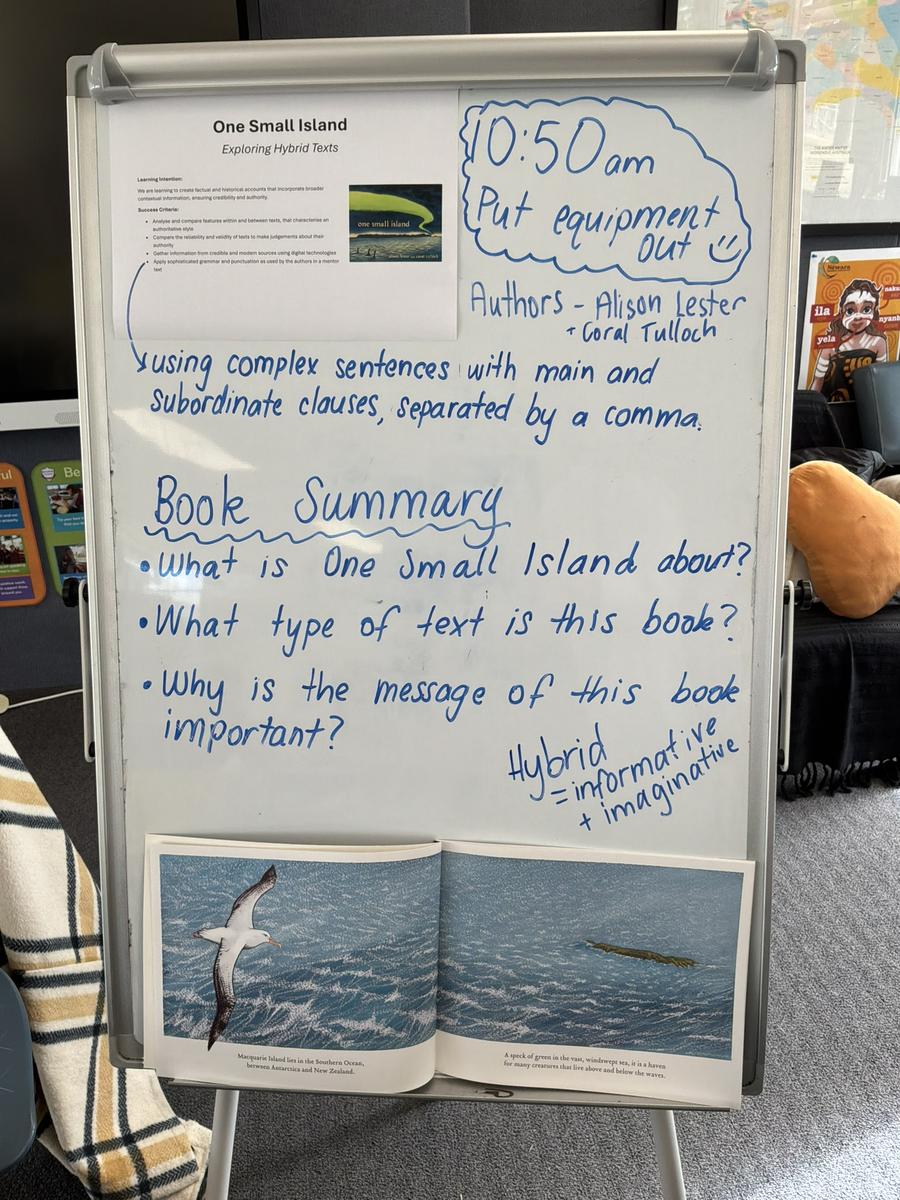
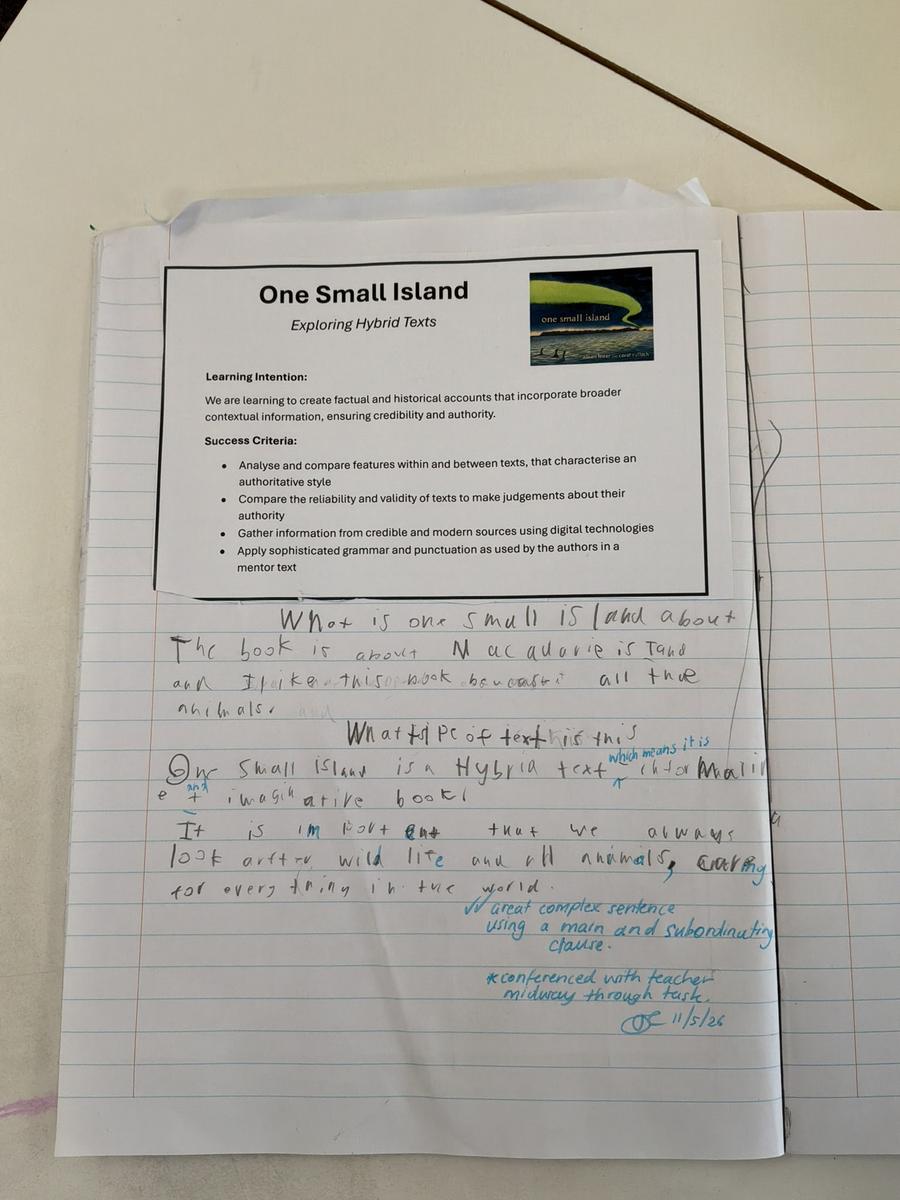
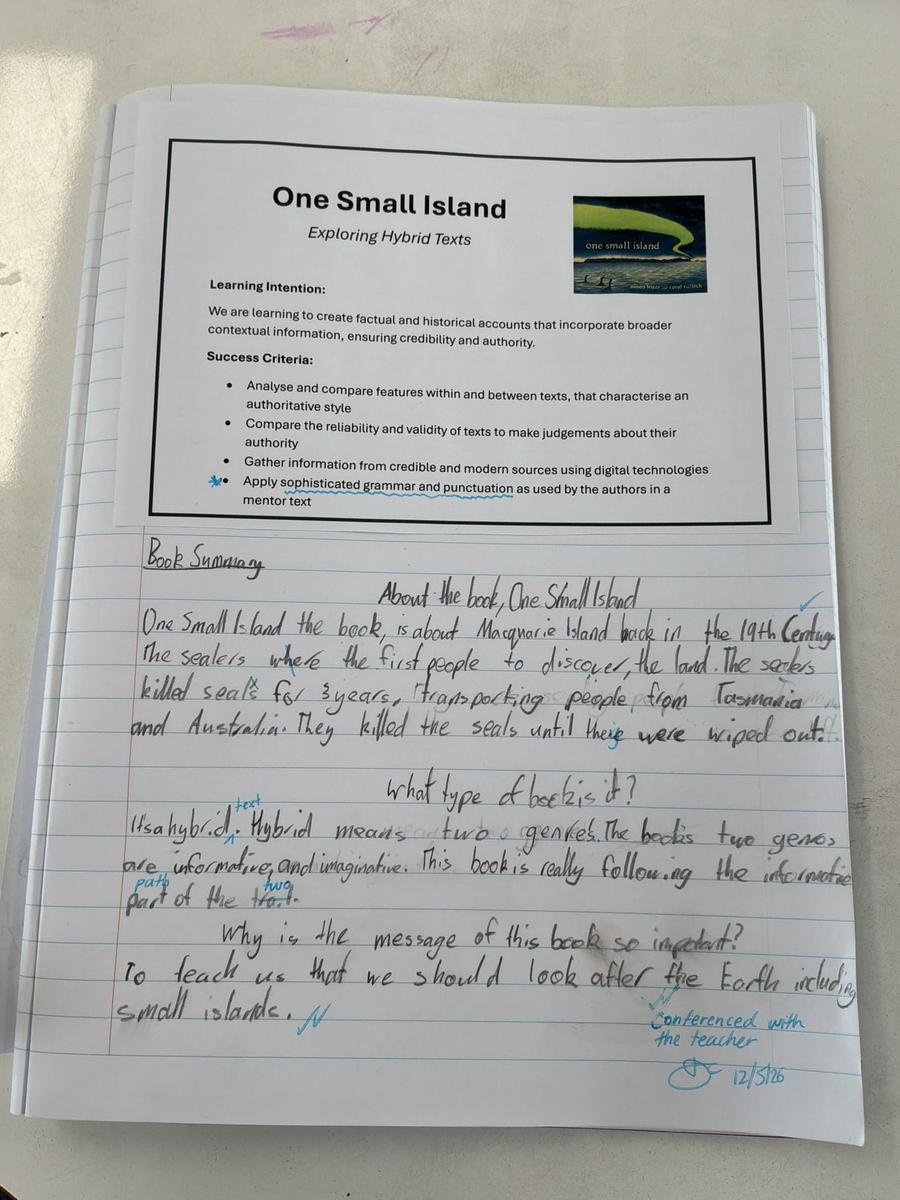
Our Stage 3 students have enthusiastically embarked on our Term 2 English unit centred on One Small Island by Alison Lester and Coral Tulloch. Through this unit, students have begun building their knowledge by researching Macquarie Island, its remote location and the importance of conserving its unique, heritage-listed ecosystem. As we explore the text’s hybrid nature, blending informative and imaginary elements, students are gaining a deeper understanding of genre and authority, appreciating how this approach makes learning both engaging and accessible. This exciting format encourages students to adapt the hybrid style in their own writing, fostering creativity alongside factual accuracy. Vocabulary development remains a key focus, as we unpack Tier 3 terms specific to the topic, while punctuation is continually explored through the author’s sophisticated use of main and subordinate clauses. By examining these complex sentences, often separated by commasstudents are enhancing their writing skills and gaining confidence in expressing ideas with greater clarity and depth.
Stage 3 Mathematics | Adding Fractions
In Stage 3 Mathematics, students have been revising factors and multiples, developing a clear understanding of what these are: factors are numbers that divide exactly into another number, while multiples are the products we get when we multiply a number by other whole numbers. Students are now extending their skills to adding fractions, including working with mixed numerals and improper fractions. They are demonstrating mathematical creativity as they tackle addition problems, working hard to convert improper fractions into mixed numerals, and then representing answers in their simplest form. Mrs Clyde-Smith brightened up our lessons by teaching us a song (sung to the tune of Frère Jacques) that we will never forget, helping us enjoy getting our maths brains sweaty as we develop understanding and fluency in mathematics - be sure to ask your Stage 3 child to sing it to you!
Adding fractions,
Adding fractions,
Look at the bottoms,
Look at the bottoms,
If they are identical,
If they are identical,
Add the tops,
Add the tops.
Adding fractions,
Adding fractions,
Look at the bottoms,
Look at the bottoms,
If they're not identical,
If they're not identical,
Cross multiply, times diagonally.