Special Feature
- the 'manosphere'

Special Feature
- the 'manosphere'
The following article can be found on the eSafety Commissioner website
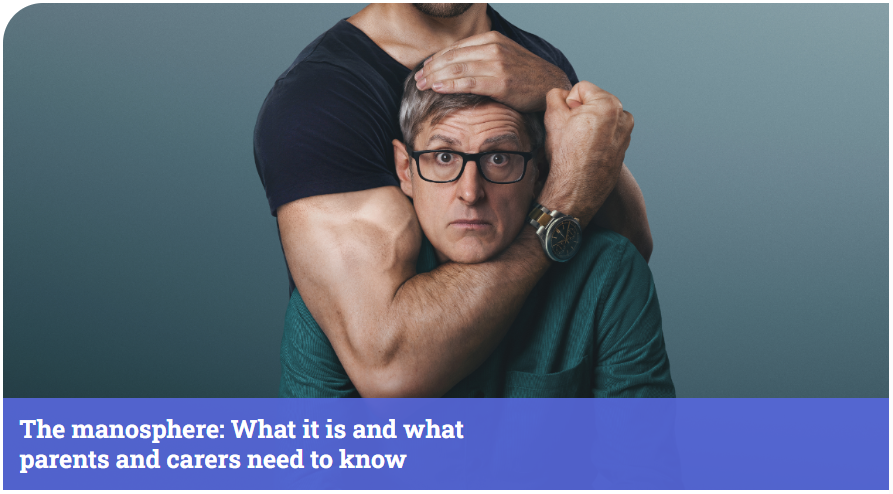
The manosphere: What it is and what parents and carers need to know
12/03/26
The global release of Louis Theroux’s Netflix documentary, ‘Inside the Manosphere’, will bring renewed attention to a part of the internet shaping how some boys and young men think about masculinity, relationships and power. For parents and carers, this is more than a passing media moment.
In this online safety advisory:
The manosphere is not just a fringe online subculture. Its harmful messages are filtering into online humour, memes, self-improvement content and recommender feeds. The content might seem harmless at first. Then the tone shifts.
eSafety’s young men online research reveals a more complex picture than headlines suggest.
Many boys and young men use digital spaces to learn, connect and explore healthy, positive masculinities.
However, some online spaces also exploit the natural insecurities that come with adolescence and can pull young men towards more hostile and harmful ideas that portray girls and women as inferior.
This advisory explains what the manosphere is and why it appeals to some boys and young men. We outline how its messages spread, how echo chambers reinforce conformity, and what parents and carers can do to support healthy, respectful and positive masculinities.
‘Manosphere’ is an umbrella term for a mix of online spaces that talk about men, masculinity and gender relations. Such spaces frequently advocate narrow and rigid ideas about what it means to be a ‘real man’.
This includes reinforcing the stereotype that material wealth, physical appearance, and dominance – especially over women – are markers of male worth.
Another common (but false) narrative is that feminism and gender equality have come at the expense of men’s rights.
These ideas are seeping into mainstream online culture through a mix of content tactics, influencers and platform designs – including recommender algorithms.
It's a toxic cycle: outrage drives engagement, which fuels amplification, which attracts new audiences, and algorithms keep pushing it because more eyeballs mean more ad dollars.
While young men might start out searching for relatable topics – like fitness or self-improvement – they can be propelled by these combined forces, step by step, into blame, resentment and hate, often aimed at women and the LGBTIQ+ community.
Most boys who watch this type of content won’t end up in a harmful community. But it’s still worth paying attention from a child’s earliest online experience because the promises made by powerful influencers can make harmful ideas attractive.
Most boys and young men are navigating the online world in constructive ways. They are empathetic, resilient and curious, and use digital spaces to learn, build skills and find community.
However, harmful creators and communities can also appeal by meeting ‘unmet’ needs: validation, guidance, belonging and edginess (content that feels raw, unfiltered or anti-establishment).
Uncertainty and loneliness can add pressure and drive interest. When someone is looking for connection, they may be more likely to trust people too quickly or join communities without understanding the risk.
Manosphere content is not limited to one app, platform or site. Young people can encounter it across:
Such harmful content often shows up in everyday, recognisable online content:
Content can start with self-improvement tips, financial or dating advice, fitness tips, confidence talk or ‘discipline’ – then slide into rigid gender roles and harmful messages about women and girls.
Memes can be funny. They can also carry coded messages, shift meaning over time, or be used to smuggle hateful ideas through dark humour.
Some groups use shorthand to signal membership. Even emojis can be used in coded ways. The key point is context: a symbol can be harmless in one chat and a red flag in another.
Here are just some of the ways emojis convey harmful beliefs or ideas:
🔴 Symbolises ‘red pill’ thinking – the idea that men need to ‘wake up’ to what they see as an unfair system working against them.
🔥 Used to praise someone for agreeing with manosphere beliefs or sharing an opinion that supports them.
💪 Stands for being a strong, dominant man, often linked to gym culture and the idea of being ‘high-status’.
🐍 Used to insult men who support feminism or gender equality, calling them traitors.
👑 Used to show dominance, often linked to the idea that ‘men are kings.’ Sometimes used to mock men seen as too submissive to women.
Remember: This is a rapidly evolving sub-culture. Its codes and symbols are constantly changing.
Our research show almost half of children aged 10 to 17 years have seen or heard offensive, sexist or hurtful things online about girls or women. And more than 1 in 10 have seen violent sexual images or videos.
How this harmful content spreads mostly comes down to the hidden inputs and mechanics governing recommender systems.
Recommender systems determine what content comes next. They sit behind ‘For You’ feeds, home pages, autoplay and suggestions for the following video.
They track what a user does – what they click, how long they watch and what they like, share, save, comment on or search for. Then they keep suggesting and serving up content intended to keep you hooked to your screen, including content that sparks controversy, disgust and outrage. After all, more eyeballs on a platform equates to more ad dollars.
The system is not making a judgement about what’s healthy or true. It’s responding to attention. Even a pause on something provocative can send the signal: ‘show me more’.
As examined in eSafety’s upcoming webinar Exploring the online experiences of boys and young menExternal link, the content appearing in a young person's feed can, over time, narrow and only provide one perspective on an issue.
A young person can start to feel like certain ideas are everywhere, simply because they keep seeing them in different formats and from different accounts. Such echo chambers reinforce and spread certain beliefs.
‘Incel’ is short for ‘involuntary celibate’.
Some men use this term when they feel shut out of sex or romance. They often blame women – and sometimes society – for being rejected. Incels believe men are entitled to sex and relationships with women.
Incel forums often reinforce beliefs through memes, coded language and shared resentment, where anonymity can make people bolder and can shift how they present themselves or see others.
Common in-group terms include:
MGTOW stands for ‘Men Going Their Own Way’.
MGTOW content often frames itself as self-improvement and self-protection. It promotes the idea that men should avoid relationships with women and focus on their own development.
These spaces can spread broad, demeaning messages about women. Over time, they can normalise disrespect and make it harder for women and girls to participate online without being targeted or silenced.
Some parts of the manosphere promote ideas that can feed into gender-based violence, especially when they are repeated, normalised and reinforced in online groups.
In the manosphere, women and girls are portrayed as manipulative, irrational or less deserving of respect. A common belief is they choose partners only for looks or financial status. These narratives undermine women’s autonomy and make it easier to dismiss their boundaries.
Some manosphere creators frame old stereotypes as biological or evolutionary explanations to make them seem more convincing. Degrading labels and dehumanising jokes can also shift what feels acceptable and normalise harassment and coercive attitudes.
Most people who see this content will never commit violence. However, there is concern that a small number of individuals can move from online hate into offline harm, especially when online communities reward extreme talk.
You don’t need to know every acronym or meme. What matters is connection, conversations and ongoing support.
Strong relationships offer protection. Young people who feel anchored offline are less likely to rely on online validation.
eSafety research found children were much more likely to talk to a parent or carer about an upsetting online experience when parents encouraged those conversations.
These are some practical moves:
Critical thinking is a strength many young men already show online. Help them apply it to influencers and gender-related content too.
Talk about:
When parents panic, young people often shut down. Be curious, not critical. Focus on respect and values, rather than giving them a list of people they can’t engage with online.
Instead of: ‘That influencer is dangerous’ try: ‘Do you think that person treats people with respect?’
These questions invite your child to explain, reflect and think:
You do not need to secretly monitor. You do need basic awareness.
Ask what platforms they use and what they like about them. Platforms can vary depending on the specific server, channel or forum.
Harmful content often meets a need for belonging, guidance and identity. You can meet that need in healthier ways too.
Encourage strong relationships beyond your child-parent bond, such as with aunties, uncles, grandparents, sports coaches and community leaders.
Try:
Have ongoing, age-appropriate conversations about:
Unfortunately, there’s still a lot of stigma and shame around mental health, especially for men.
From a very young age, it’s important to keep reminding all children it’s OK to ask for help – no matter the problem.
For appropriate crisis or mental health advice, check out:
For information on how to support positive masculinities, check out:
A single meme or phrase does not tell you everything. Instead, look for patterns of behaviour.
Some signs to watch for in your children include:
If you notice signs, start a gentle conversation, not a confrontation.
If you want more support, eSafety can help you:
This issue is moving fast, and support for parents, educators and young people needs to keep pace. We need more proven programs that reach more people to prevent and respond to online misogyny.
As Australia prepares its next five-year plan to support the National Plan to End Violence Against Women and their ChildrenExternal link, we need to invest in early support that helps boys and young men build respect, emotional skills, and healthy ideas about relationships – online and off.
eSafety will keep working on this from several angles. We will:
Image credit: Original image provided by Netflix. Resized with copy additions by eSafety.