
Chaplain's Reflection
Three Score Years and Ten
Australians born a century ago could expect to live to a little over fifty years on average; now our average life length is 83 years (even older for women). The evidence is all around us in society: pretty well everyone in our affluent world is living way beyond the nominal “three score years and ten” suggested in Psalms and Shakespeare. Our readings this week focus us on the reality that we will all die, though it seems some people conveniently forget that.
Reflecting for a moment, we realise our lives are but an infinitesimal blip in time and space, so the issue is what we do with our little lives, how we impact the world and how prepared we are for our brief time to end. Both Luke (Luke 12:13-21) and Ecclesiastes (Ecclesiastes 1:2,2:21-23) remind us of the foolishness of accruing power and property, to be left behind when we die, instead of heavenly things (Colossians 3:1-5, 9-11) which we take with us to glory in Christ.
Some years ago, my closest friend was there one moment and gone the next. Indeed, for all our average longevity, we know not the day nor the hour and so, whatever we hope of our merciful Creator, we don’t want to be found, when death comes, to have wasted our lives.
In our human frailty, we must strive to live authentically in the world, putting behind us greed, evil desires, lies and so forth and instead bravely working in a Christ-like manner: open, loving, rejecting prejudices and biases among our brothers and sisters and calling-out causes of violence, marginalisation, discrimination, and poverty. Strengthened, as we are, by Christian worship, we make our goals “the spirituality of awareness, of choice, of risk, of transformation …. the embrace of life, the pursuit of wholeness, the acceptance of others, the call to co-creation.” (Sr Joan Chittister, The Time is Now p16)

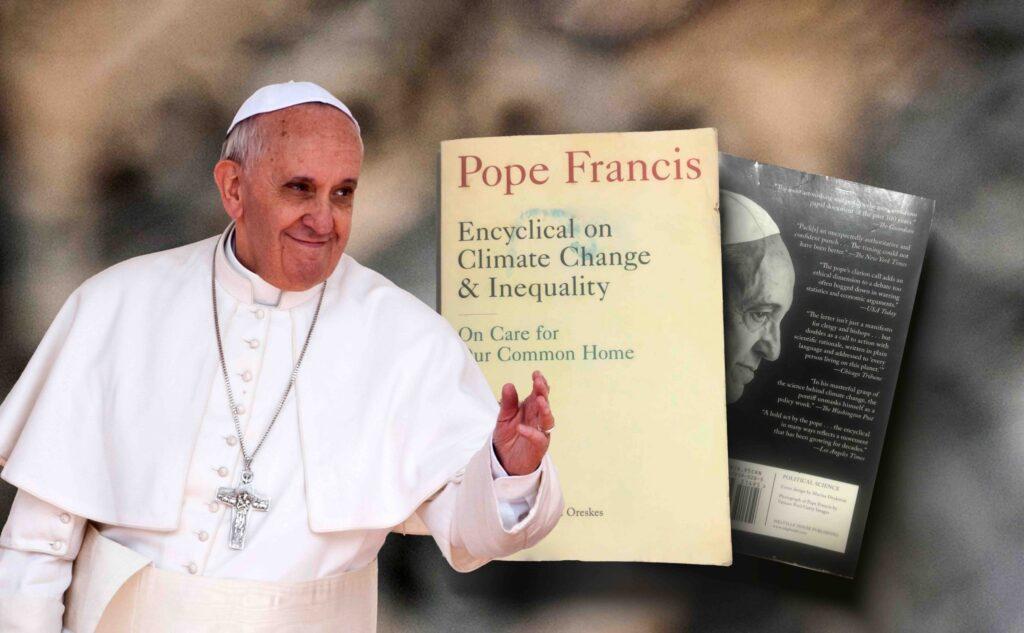
Legacy of Pope Francis No 2: Laudate Si 2015 (On care for our common home)
Taken chronologically this series is a summary of the seven most important writings of Pope Francis’ papacy.
1. Integral Ecology: Laudato Si' emphasizes that environmental and social issues are deeply intertwined. It argues that caring for the environment is not just an ethical duty, but a spiritual one, connected to human well-being and social justice.
2. Call for Action: The encyclical calls for urgent and unified global action to address climate change, pollution, and other environmental problems. It urges individuals, governments, and businesses to embrace sustainable practices, reduce waste, and promote a more just economy.
3. Focus on the Poor: Laudato Si' highlights the disproportionate impact of environmental problems on the poor and vulnerable. It emphasizes that efforts to address climate change and help those in poverty should not be seen as separate issues, but rather as a unified project.
4. Sustainable Development: The encyclical promotes sustainable development that meets the needs of the present without compromising the ability of future generations to meet their own needs. It calls for a shift away from unsustainable consumption patterns and towards more responsible and equitable development models.
5. Ecological Spirituality: Laudato Si' encourages a deeper appreciation for the natural world and a renewed sense of responsibility towards creation. It emphasizes the importance of ecological spirituality and a more holistic view of our relationship with the environment.
6. Laudato Si' Action Platform: The Laudato Si' Action Platform (LSAP) is a Vatican initiative that provides a framework for individuals and organizations to take concrete action based on the principles of Laudato Si'. It focuses on seven key areas: the cry of the earth, the cry of the poor, ecological economics, sustainable lifestyles, ecological education, ecological spirituality, and community resilience and empowerment.
7. Global Jubilee: The encyclical's anniversary is often celebrated during Laudato Si' Week, which unites people worldwide in a common effort to protect creation. The celebration has included a special focus on debt, recognizing the ecological debt between the developed and developing world.
8. Connection to Catholic Social Teaching: Laudato Si' builds upon the Catholic Church's long-standing social teachings on the environment, emphasizing the interconnectedness of all things and the importance of caring for the common good.
In essence, Laudato Si' is a powerful call to action for individuals and institutions to embrace ecological conversion and work towards a more just and sustainable world.

Deacon Mark Kelly
College Chaplain