
Science and Engineering News
Ms Wendy Macdonald - Curriculum Leader - Science and Engineering
Science and Engineering News
Ms Wendy Macdonald - Curriculum Leader - Science and Engineering
By Jeremy Harvey (Year 11 UQ Science Ambassador)
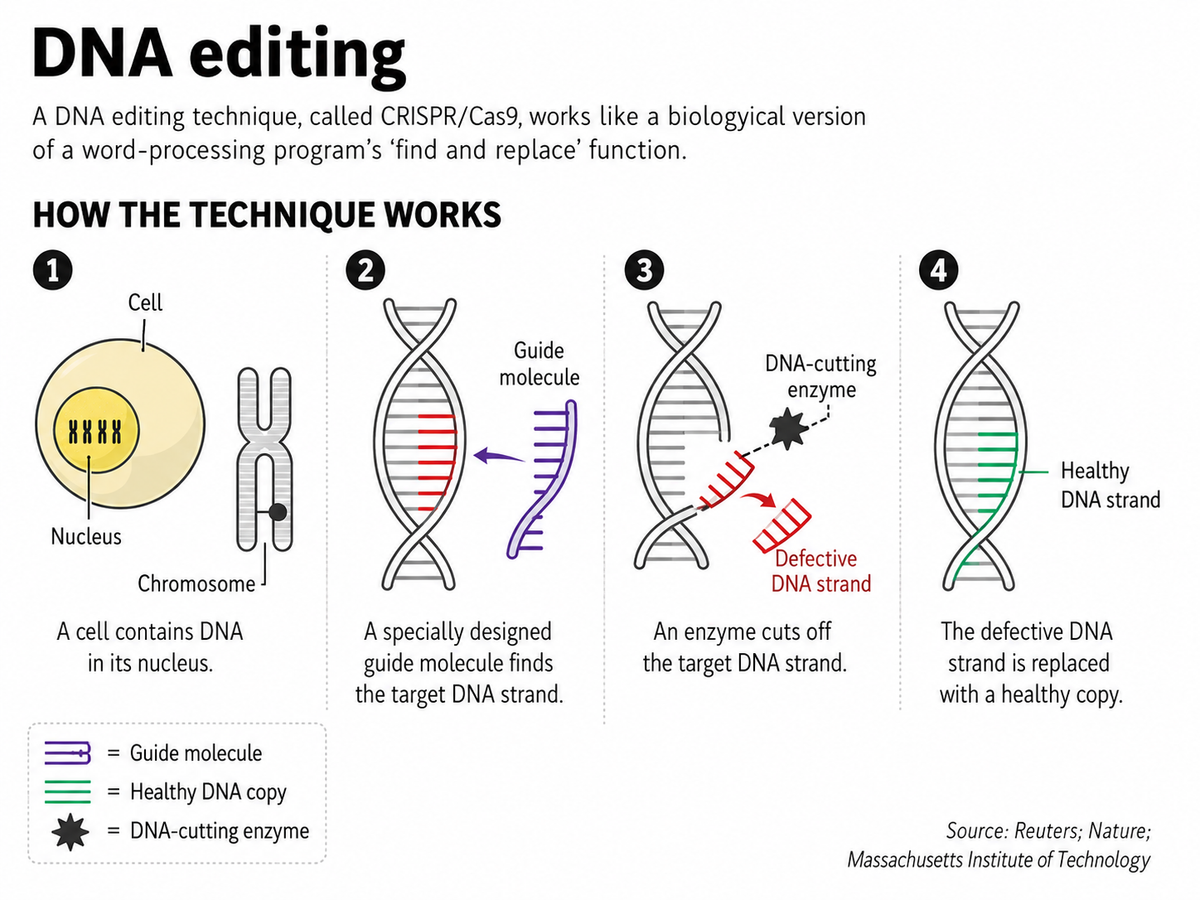
Gene editing is the ability to precisely change DNA, it is considered the genetic instruction manual that determines how living organisms grow and function. By altering specific genes, scientists can potentially correct genetic disorders, improve crops, and even help combat diseases.
One of the most well-known gene editing technologies is CRISPR-Cas9. This tool works like scissors, allowing scientists to cut DNA at a chosen location and remove or replace sections of genetic code. The accuracy and efficiency of CRISPR have made it a powerful technique in modern biology. Researchers are currently exploring its use in treating conditions such as cystic fibrosis, sickle cell disease, and certain types of cancer.
Beyond medicine, gene editing is also transforming agriculture. Scientists can modify crops to be more resistant to pests, drought, or disease, which is especially important in a changing climate. This could lead to higher crop yields and improved food security worldwide. For example, gene-edited plants may require fewer pesticides, making farming more sustainable and environmentally friendly.
However, gene editing also raises important ethical questions. Should scientists be allowed to edit human embryos? Where should the line be drawn between treating diseases and enhancing human traits? These debates highlight the need for careful regulation and public discussion as the technology continues to advance.
In conclusion, gene editing is a powerful and promising field that has the potential to improve lives across the globe.
Science Opportunity
A free opportunity to hear more about what is going on here in Australia with science research is The University of Queensland's public lecture series called BrisScience. Its aim is to bring science out of the labs and to the people, making it accessible to all – from scientists, to scientists-at-heart. See BrisScience - Faculty of Science - University of Queensland for more details.