Year 1 Teaching & Learning
Term 1 2026
Year 1 Teaching & Learning
Term 1 2026
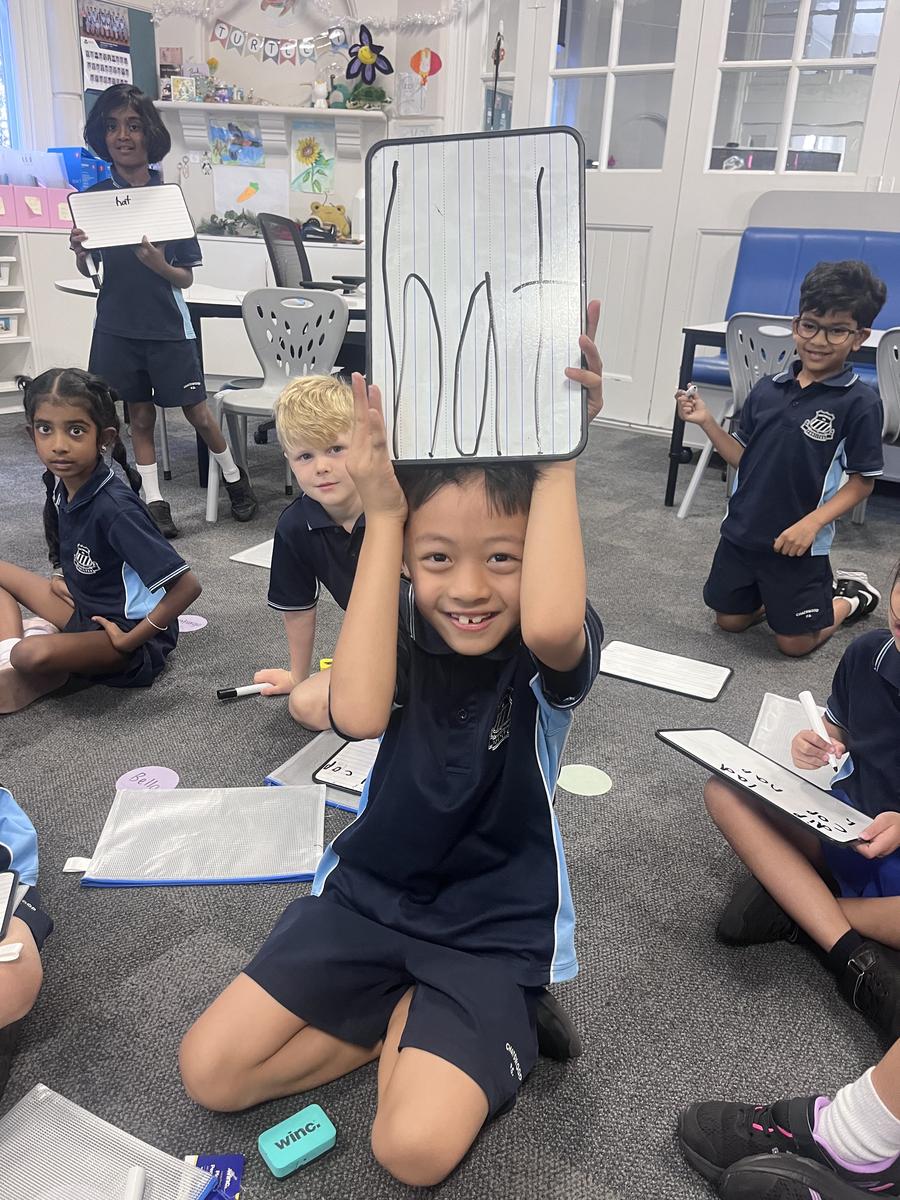
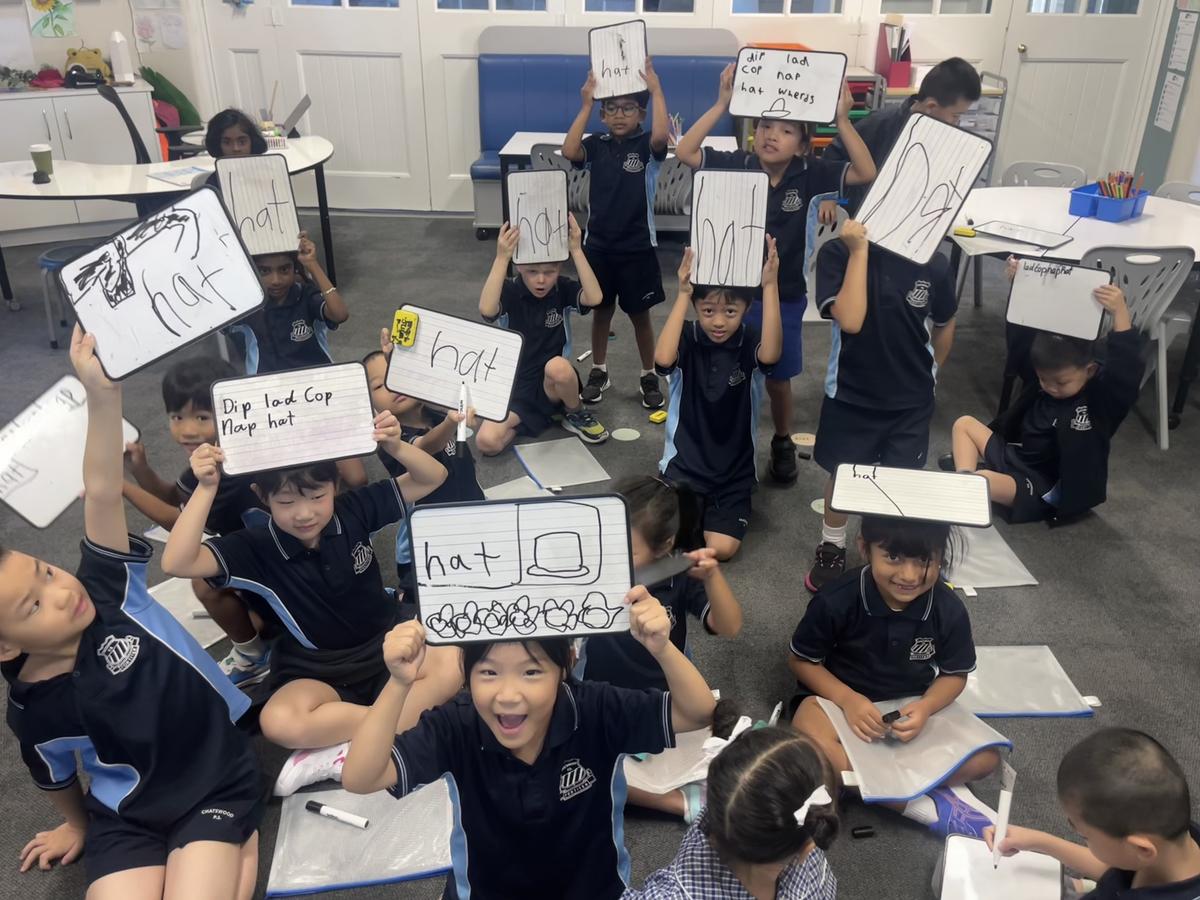
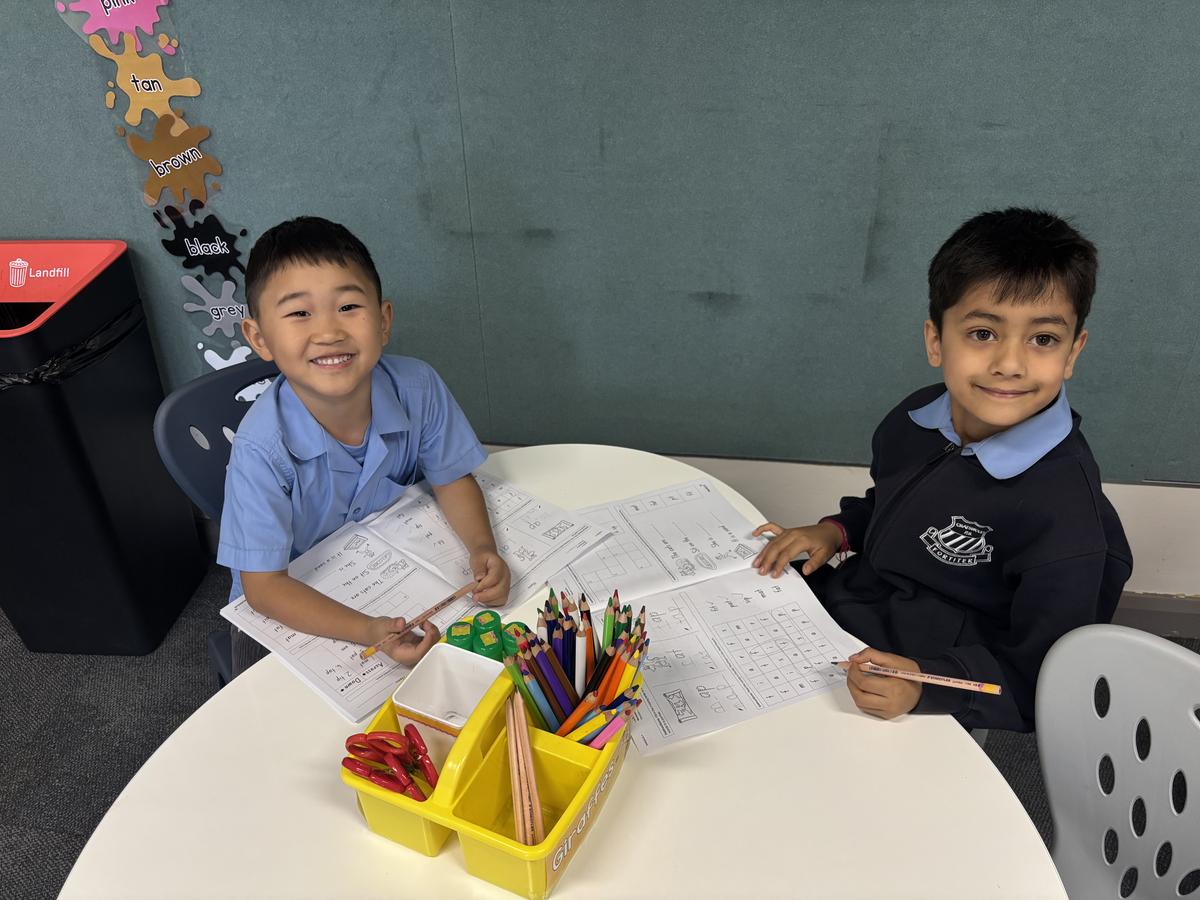
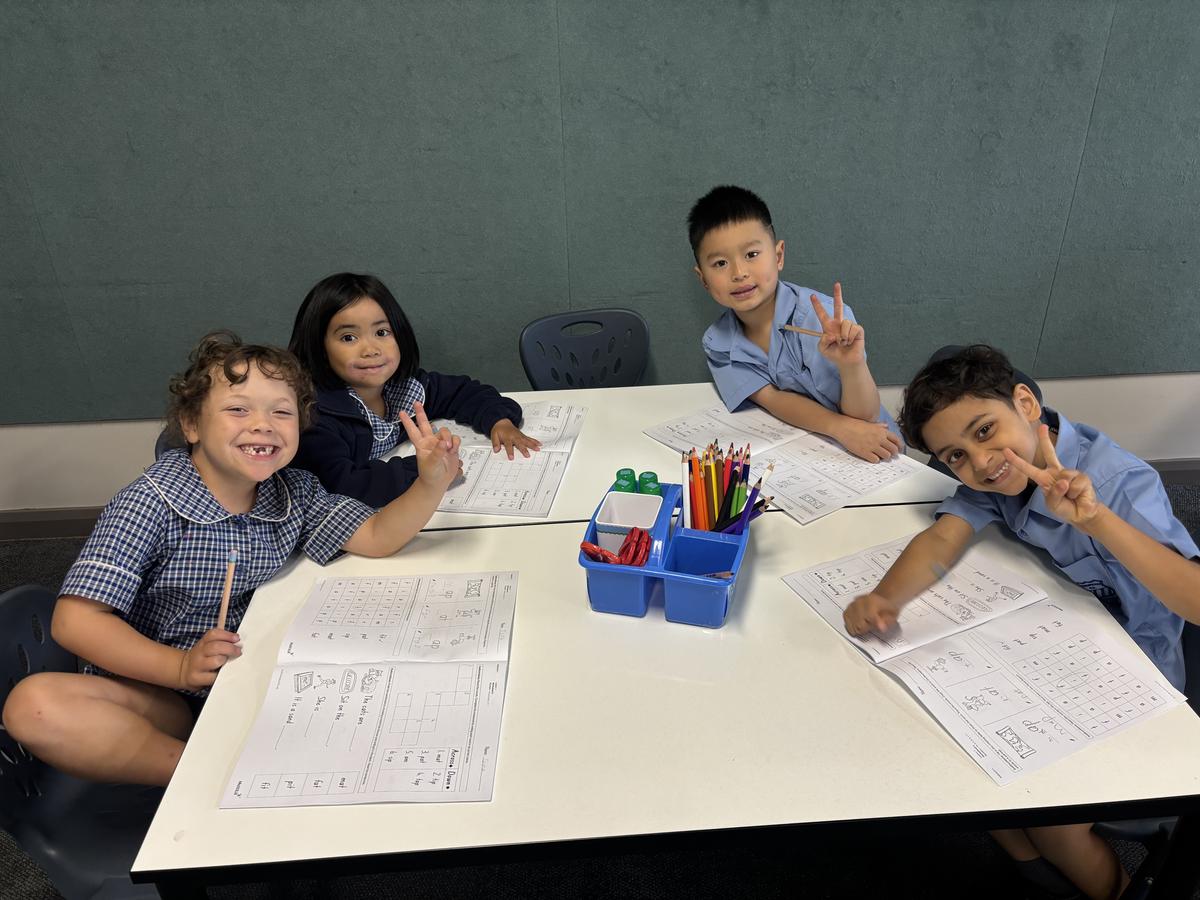
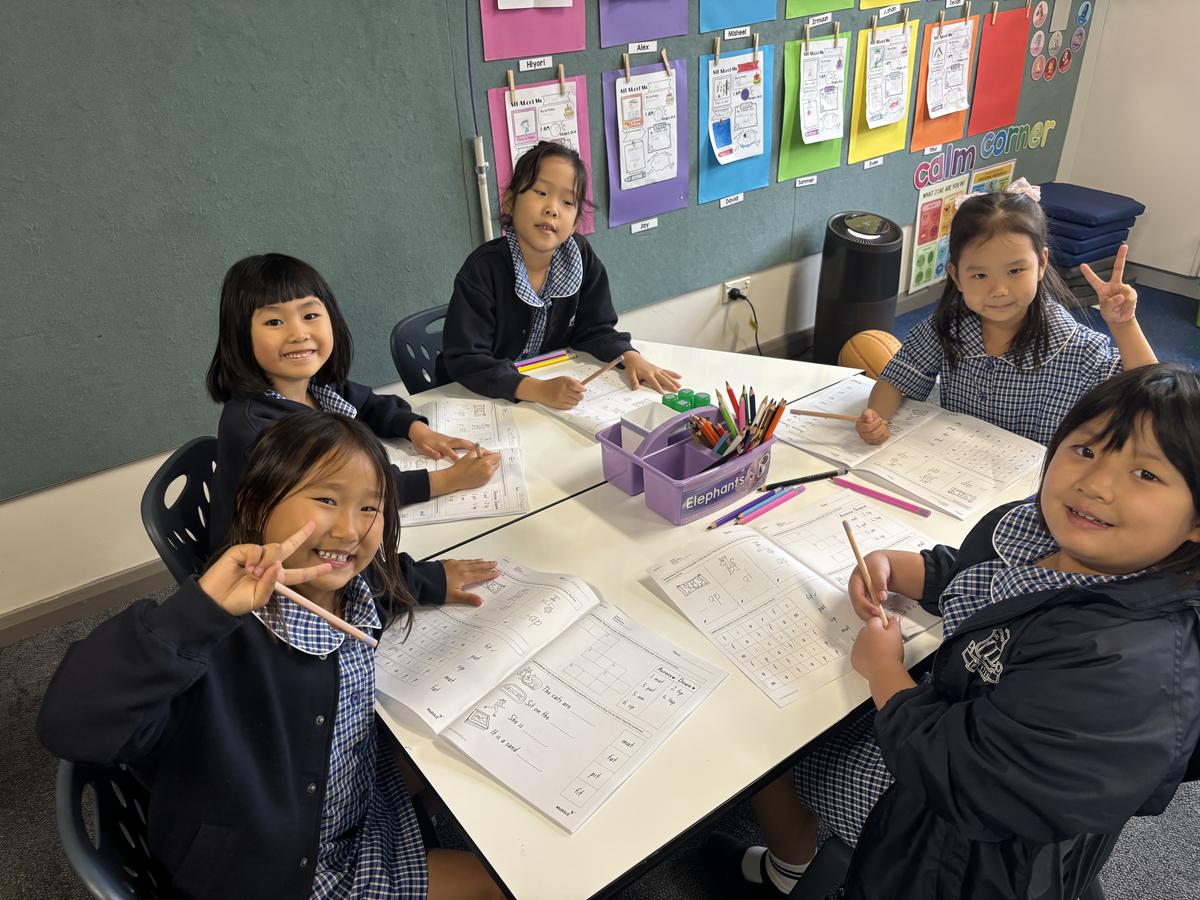
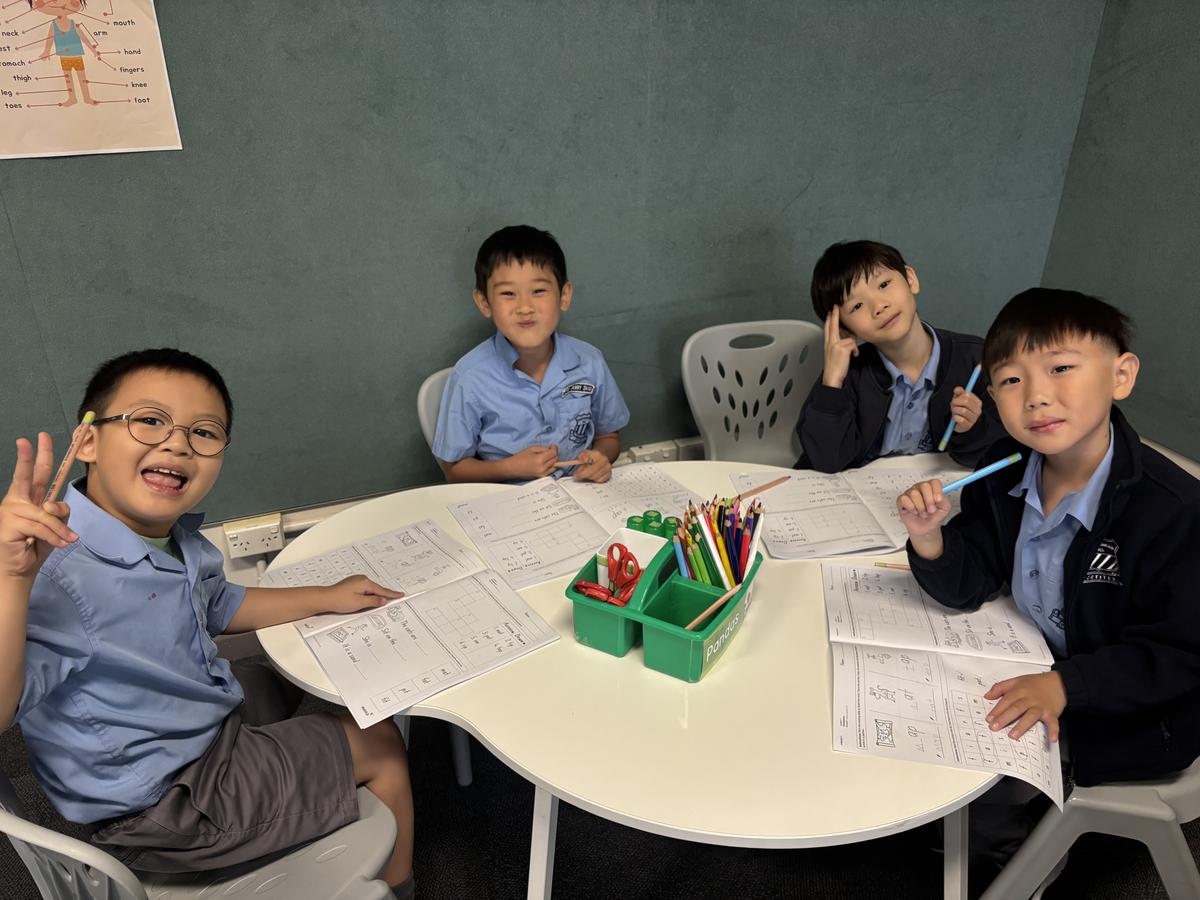
This term, teachers will use the InitiaLit literacy program each morning in classes to teach reading. The Term 1 InitiaLit ‘On the Mat’ program continues builds on the single sounds taught in Kindergarten and developes important spelling and reading skills. Students will also learn about vowels, consonants and two-syllable words. Students will revise previously learnt digraphs such as "ee", "ay", "ng", "th", "sh" and "ch" and will be introduced to "ea" like "beach" and "ai" like "rain". These lessons strengthen students’ reading, spelling, and vocabulary, building confidence in their ability to read and write independently.
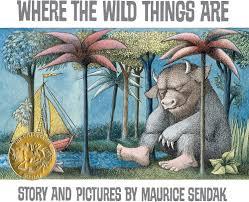
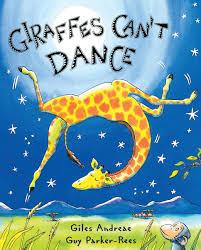
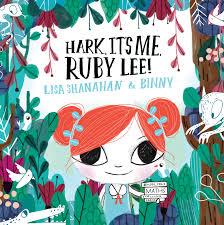
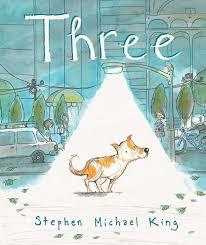
In our English Textual Concepts and Writing units, students are learning about characters and describing characters in writing. They are exploring how authors and illustrators make us feel about different characters and how they use characters to teach us about the world we live in. Students will learn to write character descriptions by using adjectives and noun groups to build a picture of people, animals and things. Students will also develop further understanding of correct sentence structure and grammar by creating simple and compound sentences and will learn to incorporate interesting vocabulary in their wiritng.
This term, we will explore a variety of mathematical concepts. Our lessons are designed to combine explicit teaching with independent activities tailored to each student's needs, ensuring challenging and engaging learning experiences.
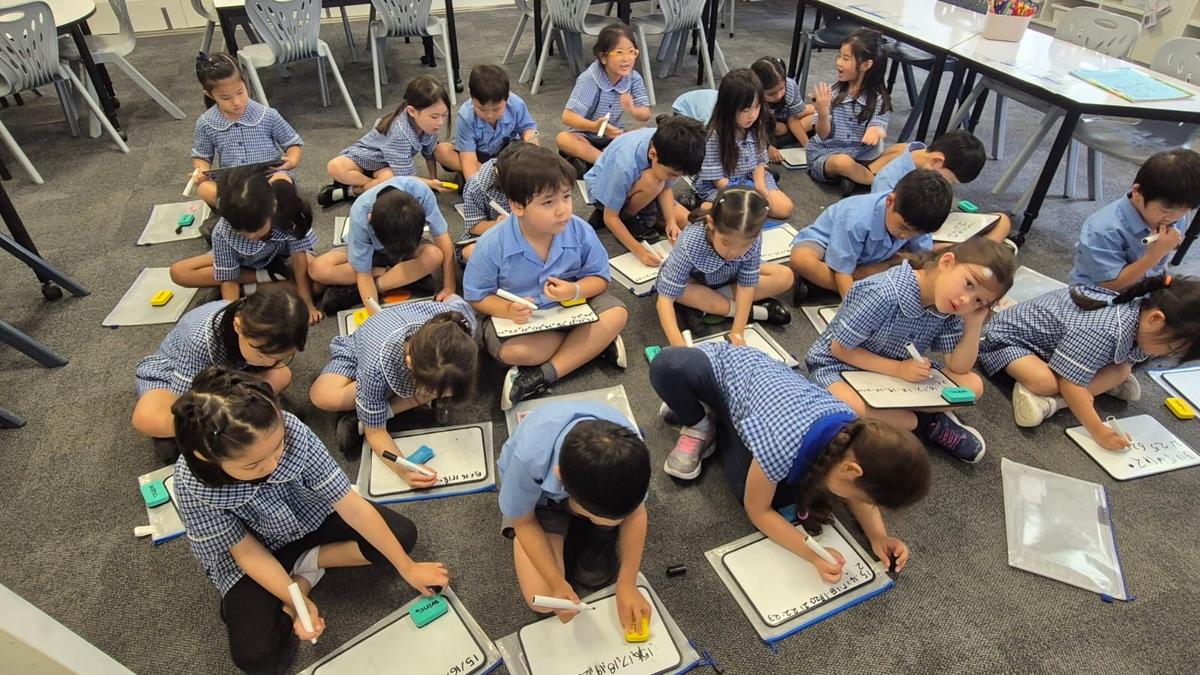
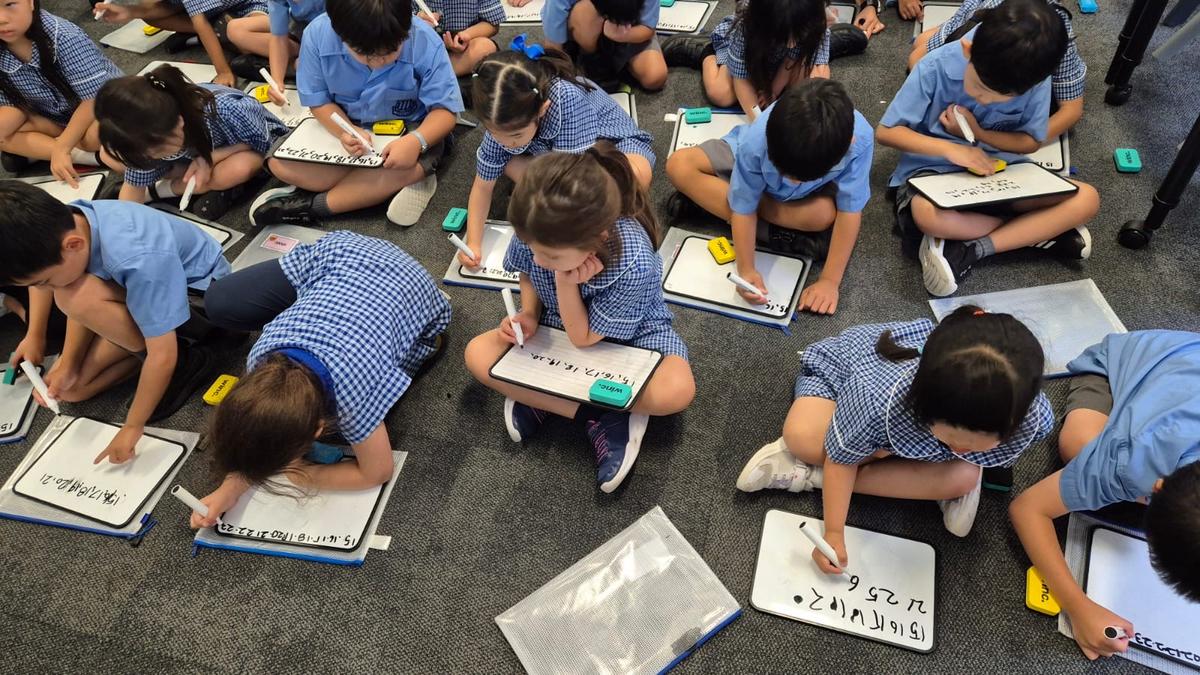
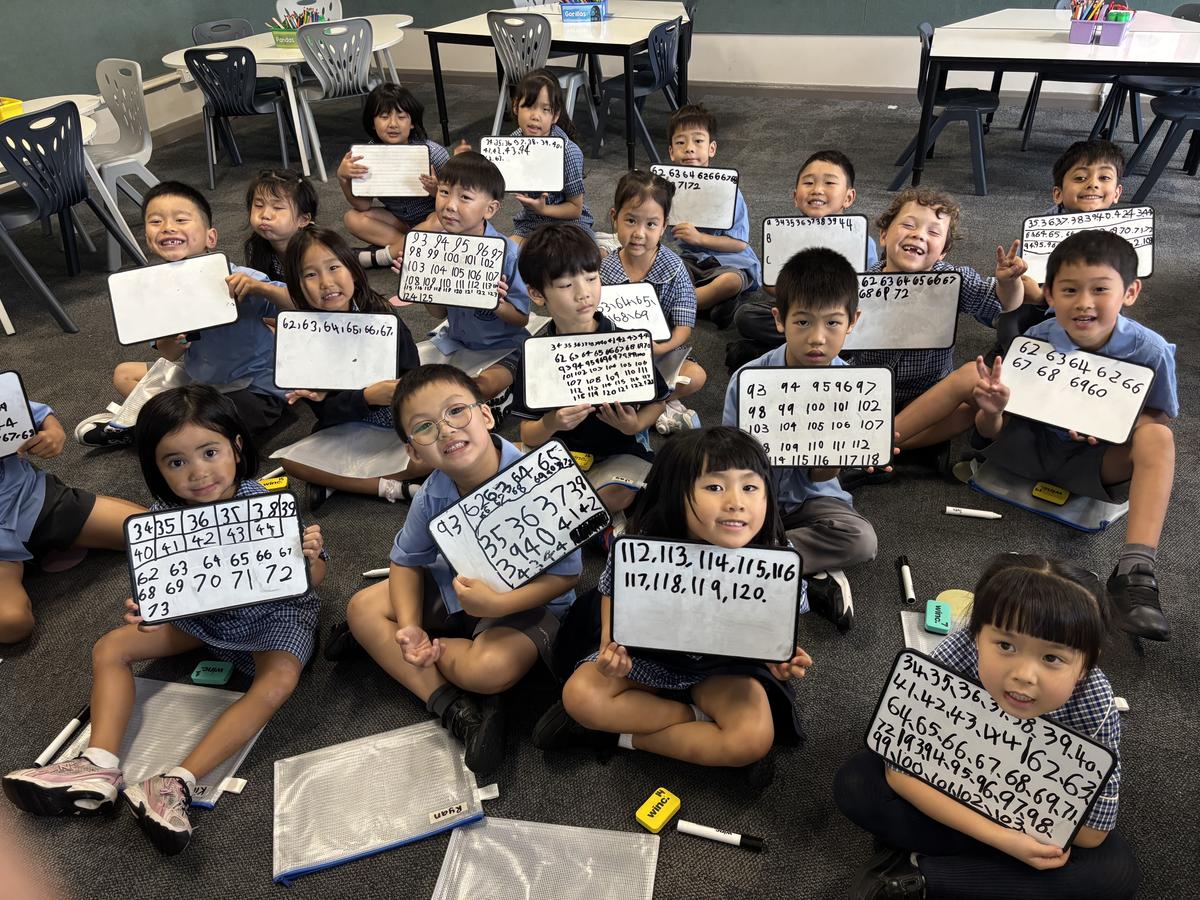
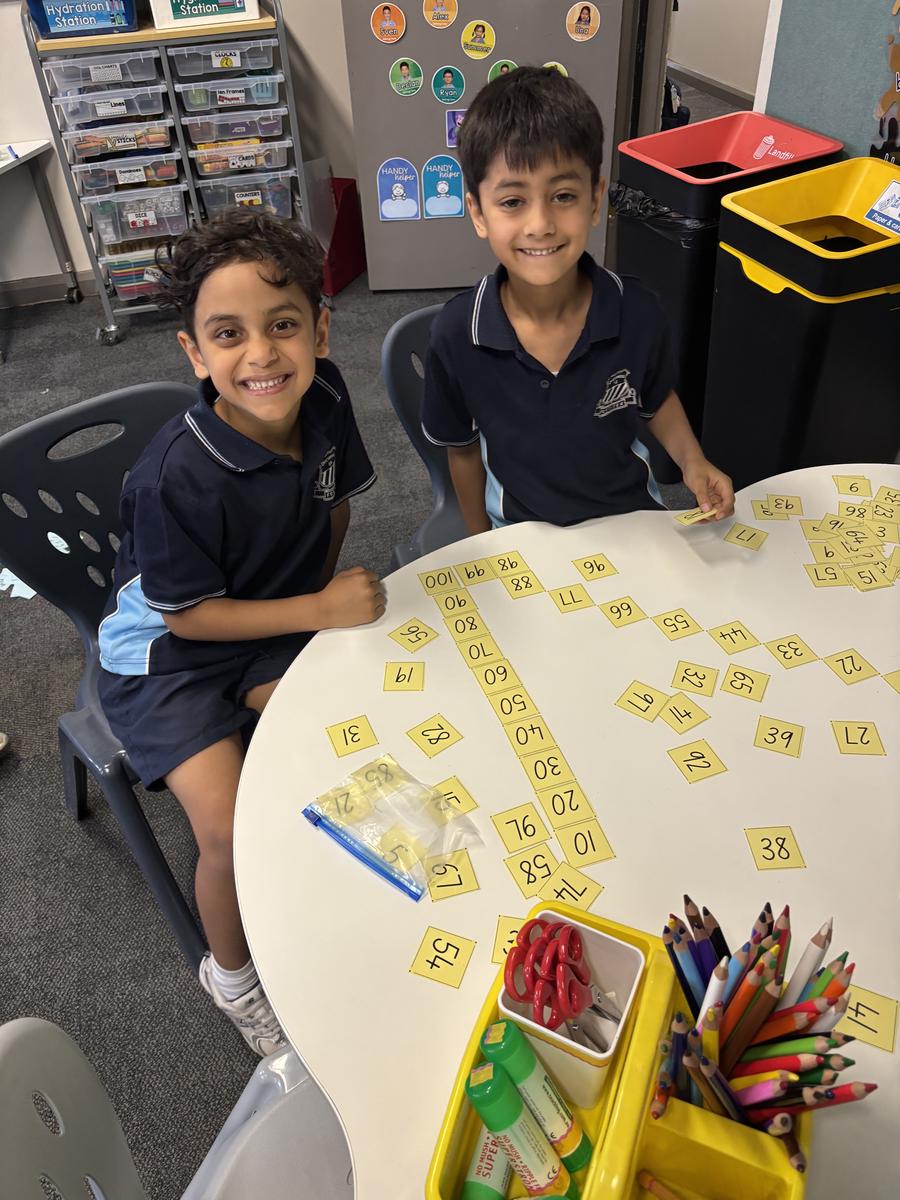
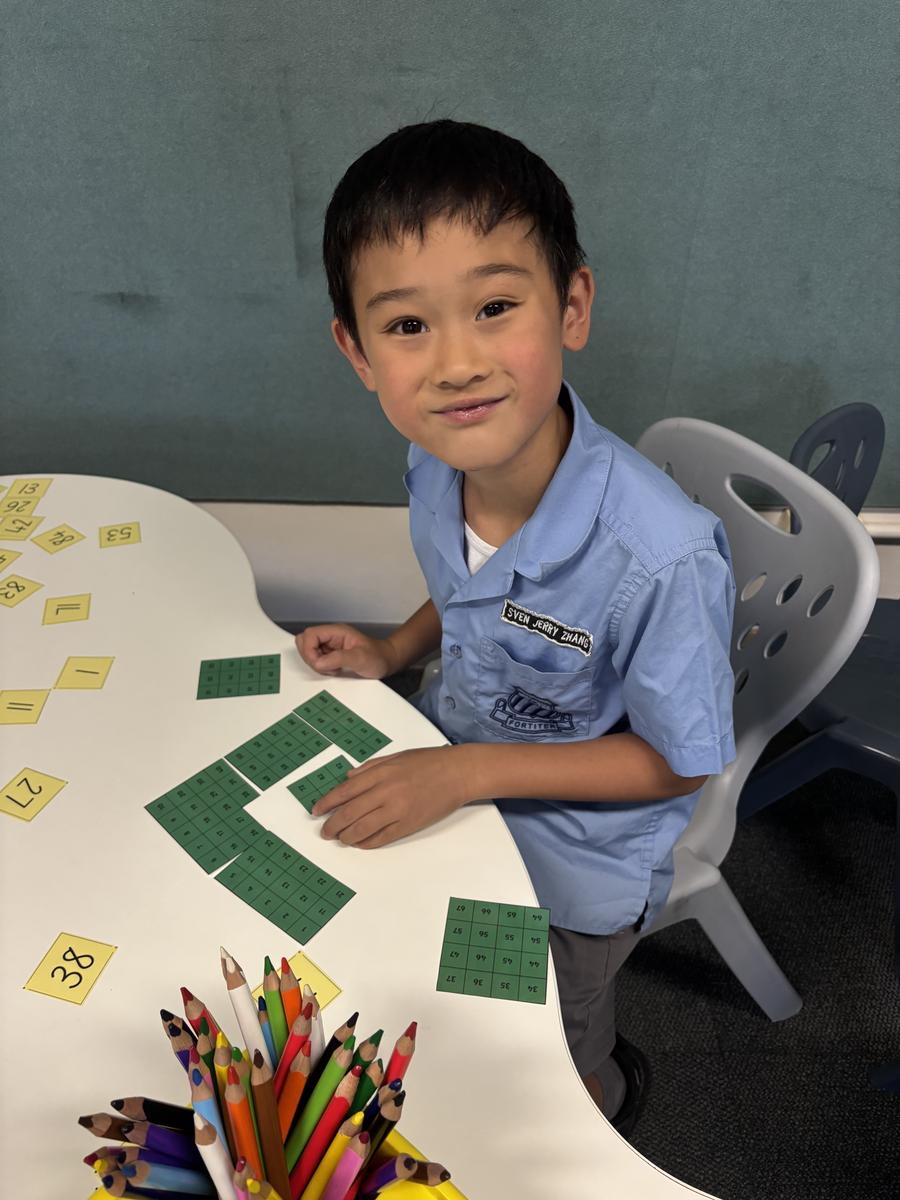
Weeks 1-3: Representing Whole Numbers and Position
This term, students are developing important number and spatial skills. They are learning to count forwards and backwards with two-digit numbers and beyond, and to identify the number that comes before and after a given number. Students are also practicing representing and sequencing numbers on a number line, and using directions—including turns—to navigate familiar locations and describe paths. These skills help students build confidence with numbers and improve their ability to follow and give instructions in real-life situations.
Weeks 4-6: Combining and Separating Quantities and Geometric Measure (Length)
This cycle, year one students are on an exciting mathematical journey, exploring two important areas: Combining and Separating Quantities and Geometric Measure (Length). Students will develop their skills in adding and subtracting groups of objects to solve everyday problems, building understanding of how numbers and quantities can change. They’ll also be learning to measure and compare lengths by using informal units, deepening their spatial awareness and practical measurement skills. Throughout these activities, students will be encouraged to think critically, communicate their mathematical reasoning, and use hands-on approaches to solve challenges.
Weeks 7-9: Forming Groups, 2D Spatial Structure
In weeks 8-10, students develop their number understanding of forming groups through hands-on activities and practical problem solving. They practise skip counting and learn to group numbers to help make sense of multiplication. Students explore shapes by recognising, sorting and describing their features and create simple patterns using shapes. They also investigate area by covering surfaces with units, helping them understand how space can be measured. Throughout their learning, students are encouraged to explain their thinking and apply their maths skills to everyday situations.
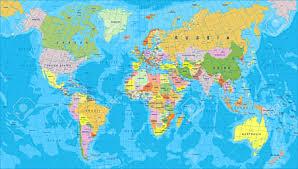
In this unit, students will explore the world by looking at maps of continents, oceans, and Australia. They will learn about how people are connected to different places around the world and in Australia. Students will discover the unique connection Aboriginal Peoples have with their Country and learn to tell the difference between Aboriginal Country and Torres Strait Islander Places using language maps. They will also compare cities and towns from different parts of Australia and find out why people care about places, water, and each other. This unit helps students understand the diversity of Australian communities and the importance of place and culture.
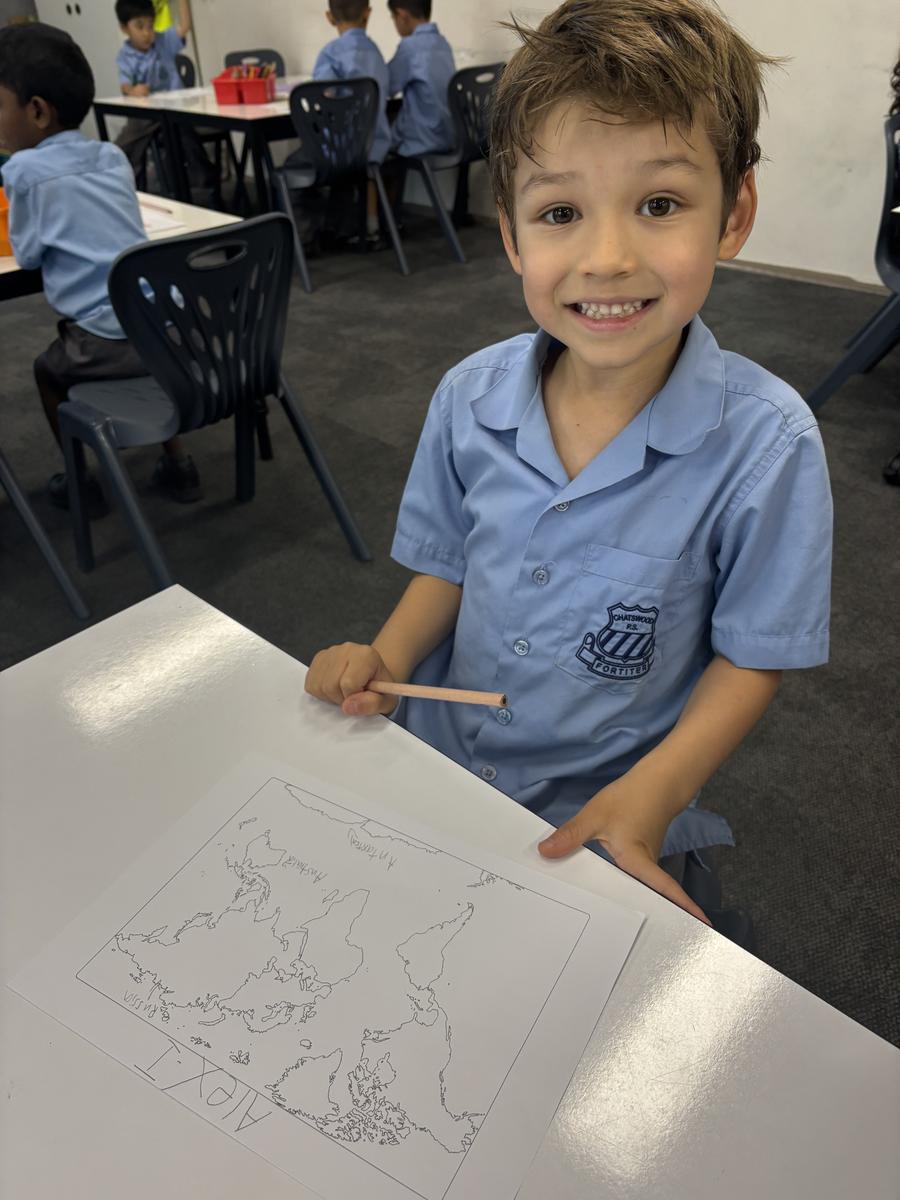
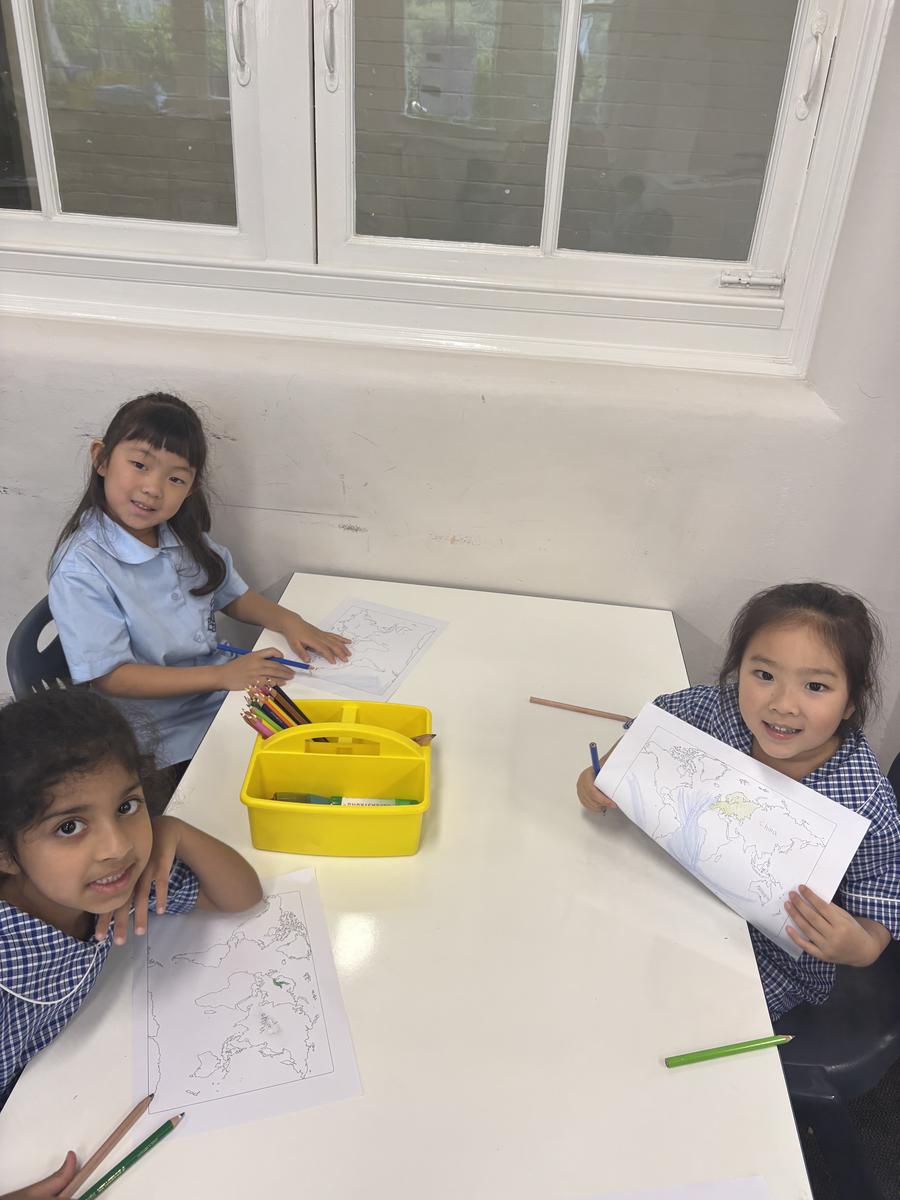
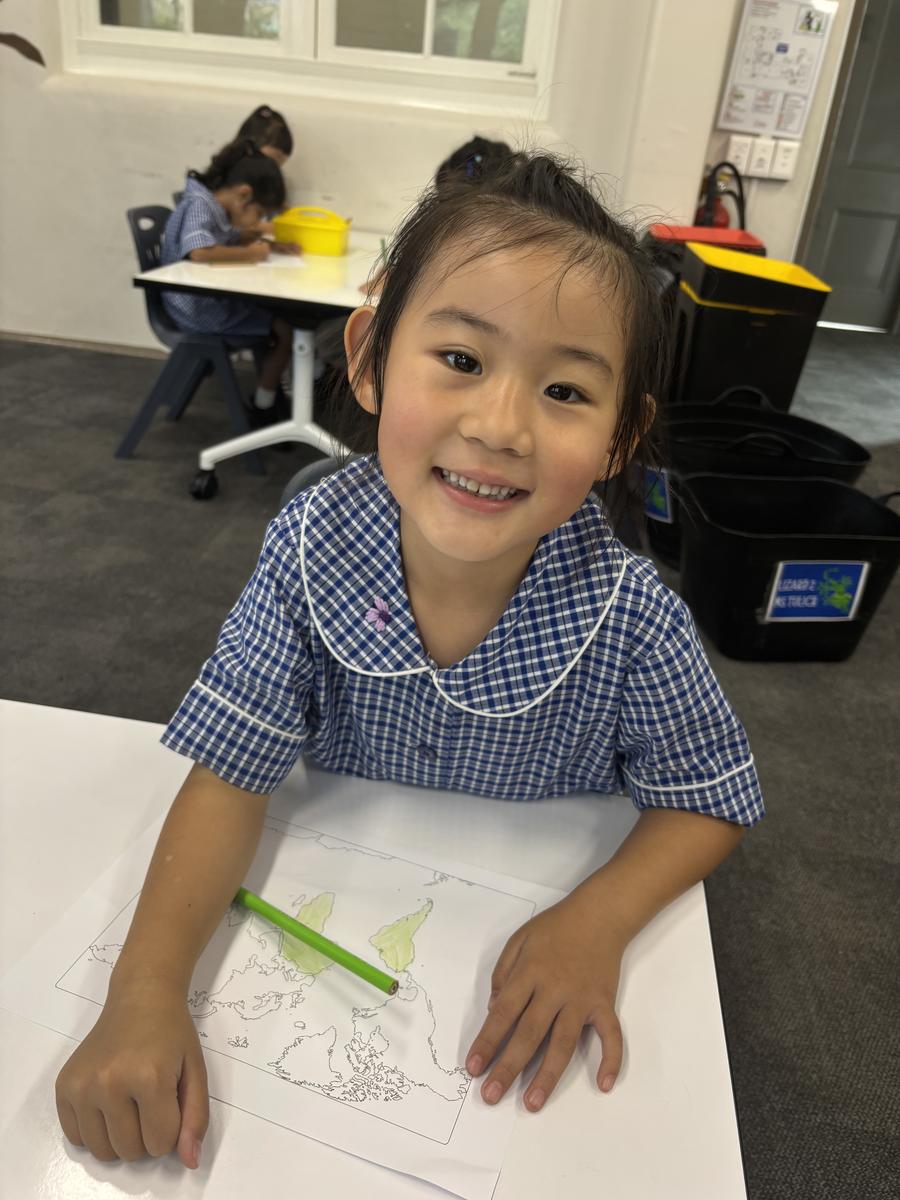
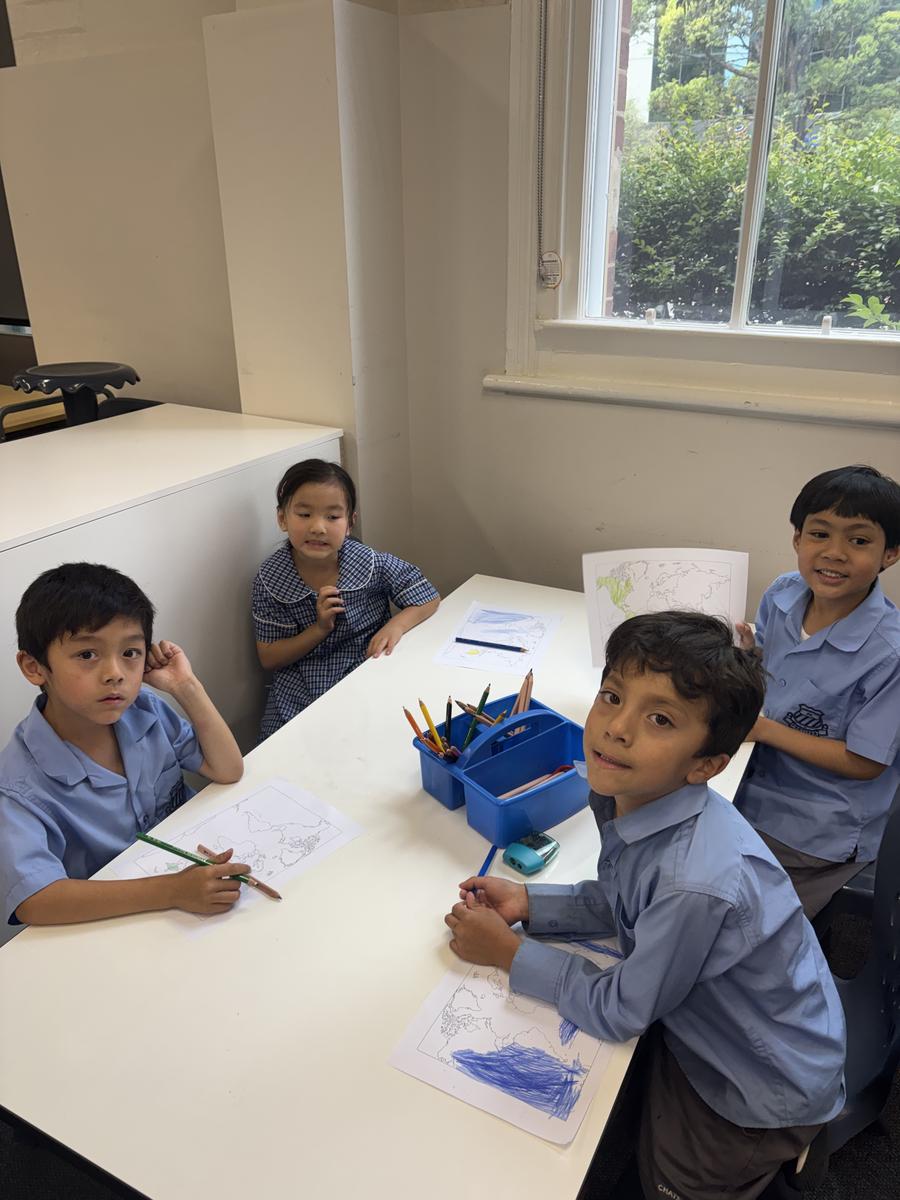
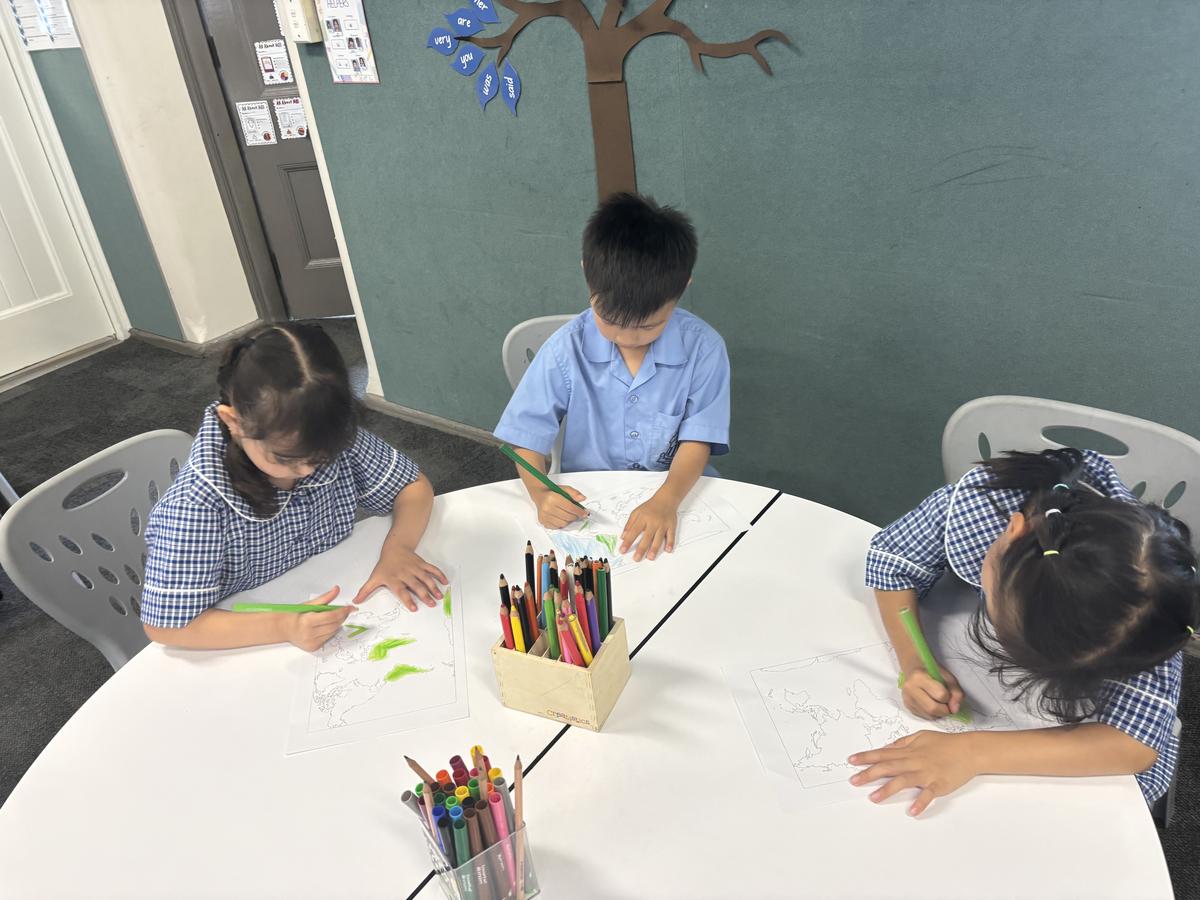
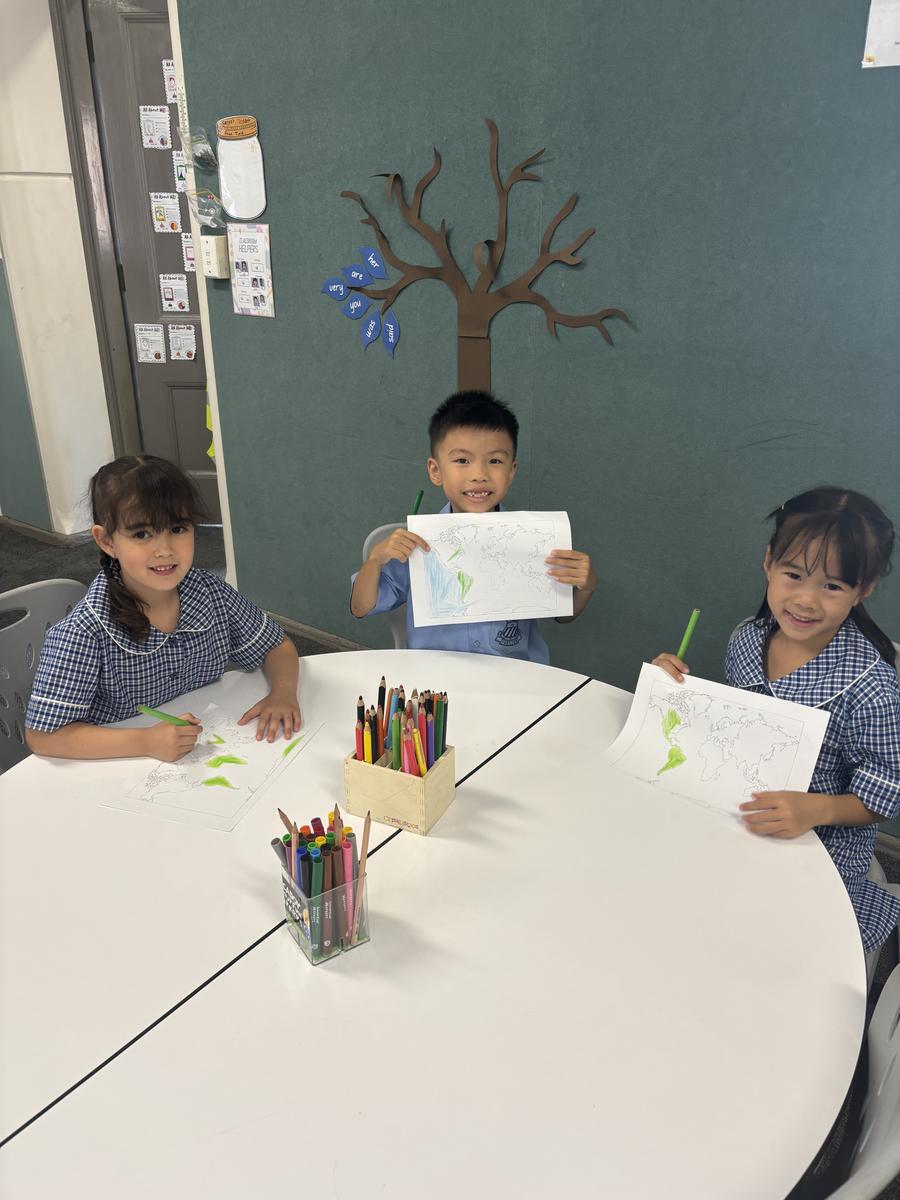
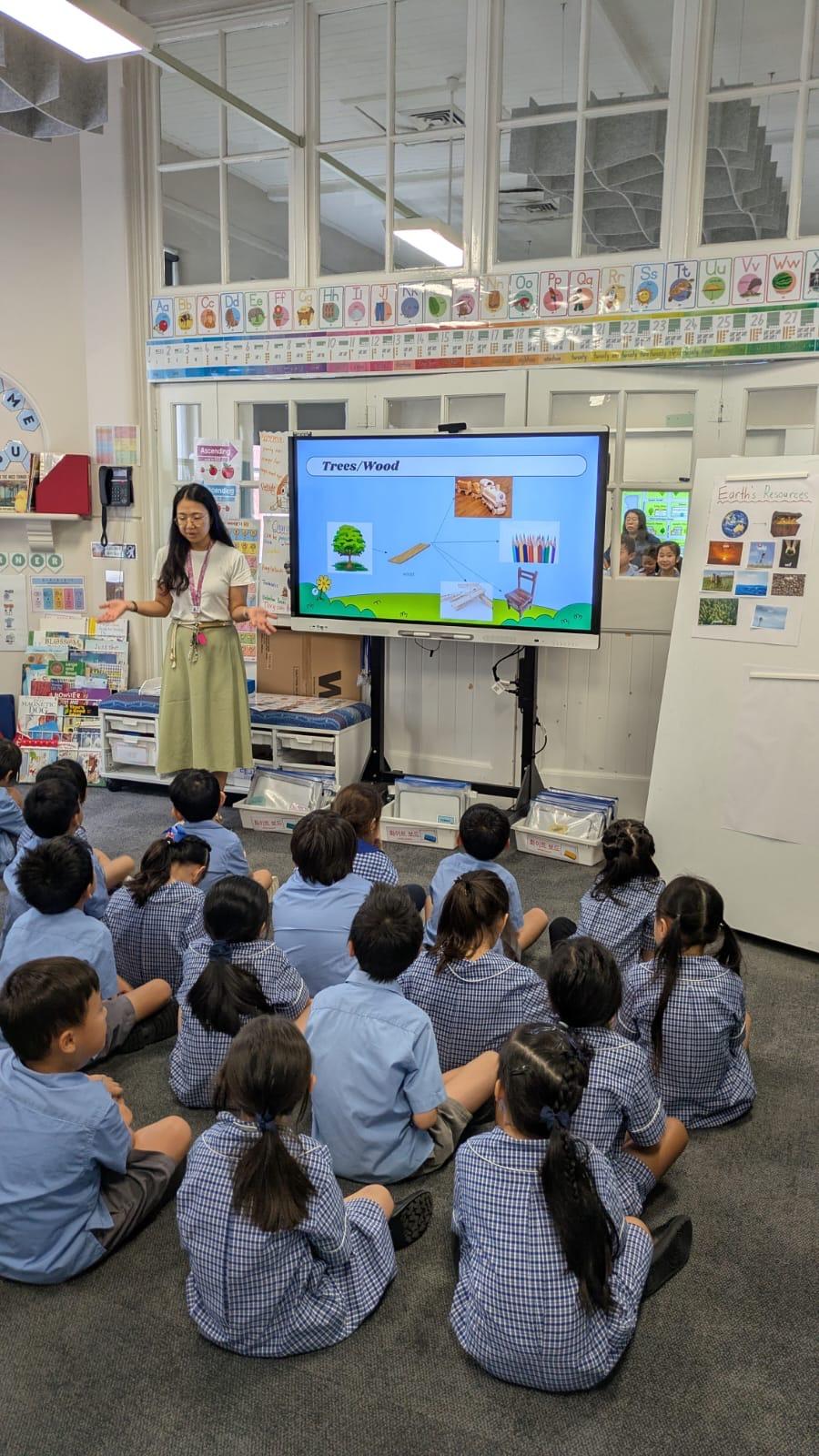
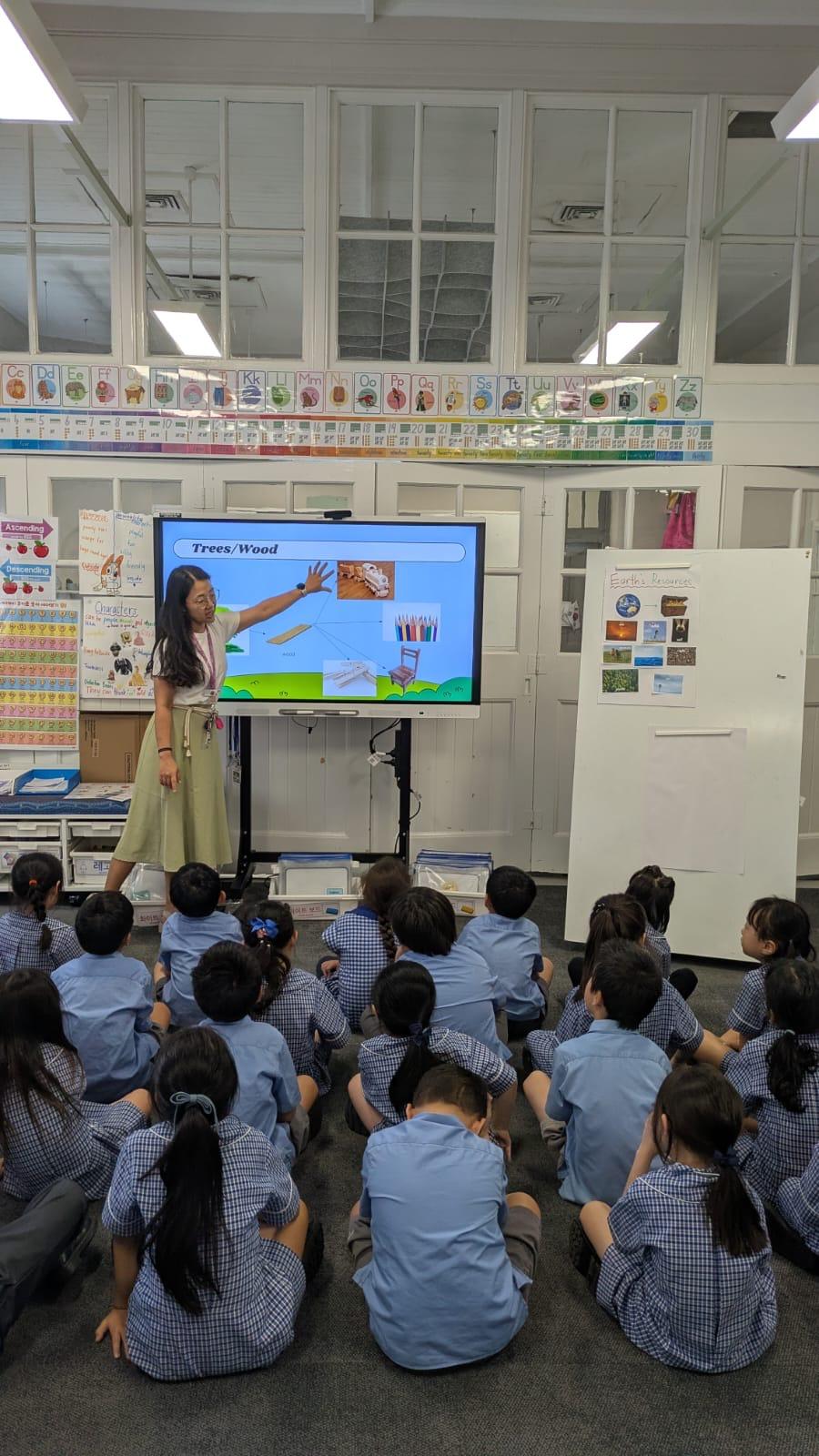
This term, our Stage 1 students are exploring the wonderful treasures of Earth’s resources and learning how to care for them thoughtfully. Through stories, hands-on activities, and art inspired by Aboriginal stewardship, they discover the importance of respecting and protecting our land and water. The unit encourages children to make personal promises to care for the environment, fostering a lifelong connection with nature and community.
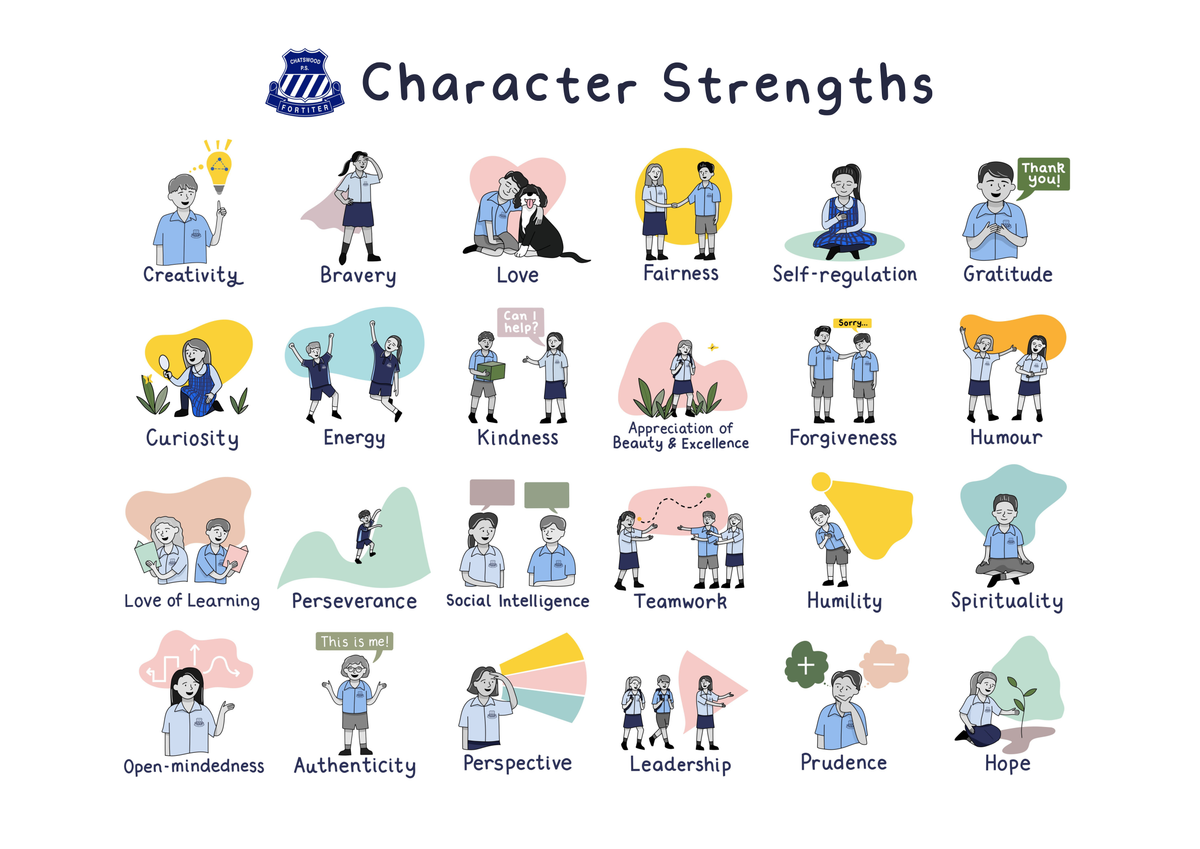
In Personal Development and Health, the Growing Strong Minds program teaches students about 24 evidence-based character strengths to support their wellbeing. Character strengths are the positive qualities that make each of us unique and reflect what we value most. Knowing and using our top strengths, called "signature strengths," helps children feel good about themselves and improves their wellbeing and motivation at school. Just like muscles, strengths grow stronger the more we use them, and it's also important to notice and appreciate strengths in others to build kindness and inclusiveness. By understanding and practicing these strengths, students can boost their confidence and do great things both in and out of school.
In Physical Education, our Sports in Schools Australia program places a strong emphasis on fun and fitness, allowing children of all levels of skill and fitness to participate. Through this program, students explore the different ways the body can move. During class sport sessions, students will develop balance, running and catching skills by applying them in games that promote safety, enjoyment, and fair play. They also build self-management skills by recognising emotional responses and understanding the connection between feelings, words, and body language.
Students will learn one of the following areas of Creative and Performing Arts each term.




Drama
In Stage 1 drama, students use their imagination to create and perform characters, stories, and situations through play, improvisation, and storytelling. They work collaboratively to explore roles, interact with others, and use performance spaces creatively, while practicing safe drama techniques. Children also learn to reflect on their experiences and discuss how drama communicates ideas and feelings. Additionally, they explore diverse cultural stories, including Aboriginal and Torres Strait Islander performances, to deepen their understanding of connection to Country and Place.
Visual Arts
In Stage 1 Visual Arts, students create artworks that represent their world using a variety of materials and techniques, including drawing, painting, and digital tools. They explore colour, shapes, patterns, and textures to express ideas in realistic, imaginative, or expressive ways while learning about safe art practices. Children also learn about the meanings of signs and symbols in Aboriginal and Torres Strait Islander artworks and how artists from different cultures express their connection to place. They discuss and reflect on their own and others’ artworks, and have opportunities to display their creations to share their ideas with an audience.
Dance
Stage 1 Dance students will be introduced to fundamental movement skills such as balance, coordination, and spatial awareness. Lessons will involve exploring basic body actions like stretching, bending, jumping, and turning through fun and imaginative dance activities. They will learn to follow simple dance sequences and use movement to express emotions and tell stories. Emphasis will be on listening to music and responding to rhythm and tempo with appropriate movement.
Music
Stage 1 Music students will focus on recognising and maintaining a steady beat using clapping, tapping, and playing simple percussion instruments. They will explore high and low sounds, loud and soft dynamics, and fast and slow tempos. Singing simple songs and learning call-and-response patterns will help develop listening skills and pitch matching. Basic notation concepts, such as rhythmic pattern,s may be introduced through games and visual supports.
Mandarin
In Term 1, Stage 1 students will explore the topic of seasons in Mandarin. They will compare the seasons in Australia and China and learn how they are different because the two countries are in different hemispheres. Students will connect Chinese characters to the features of each season and explore the shapes of the characters. They will practise writing simple Chinese characters and use creative activities to form them into short sentences in Chinese. Students with prior knowledge will be supported to write longer sentences to describe the beauty of each season.
Korean
In Term 1, Stage 1 students will be learning about workers in our community by exploring different jobs and roles around us. They will also learn about how we change as we grow and how to keep our body healthy.
In our Stage 1 Korean Bilingual Program this term, we enrich students’ learning through a dynamic blend of language and character development. As part of our Content and Language Integrated Learning (CLIL) program, students engage in the PDH program focused on character strengths, helping them build important personal and social skills alongside their Korean language studies. In addition, the Korean literacy program fosters bilingual communication and cultural understanding.
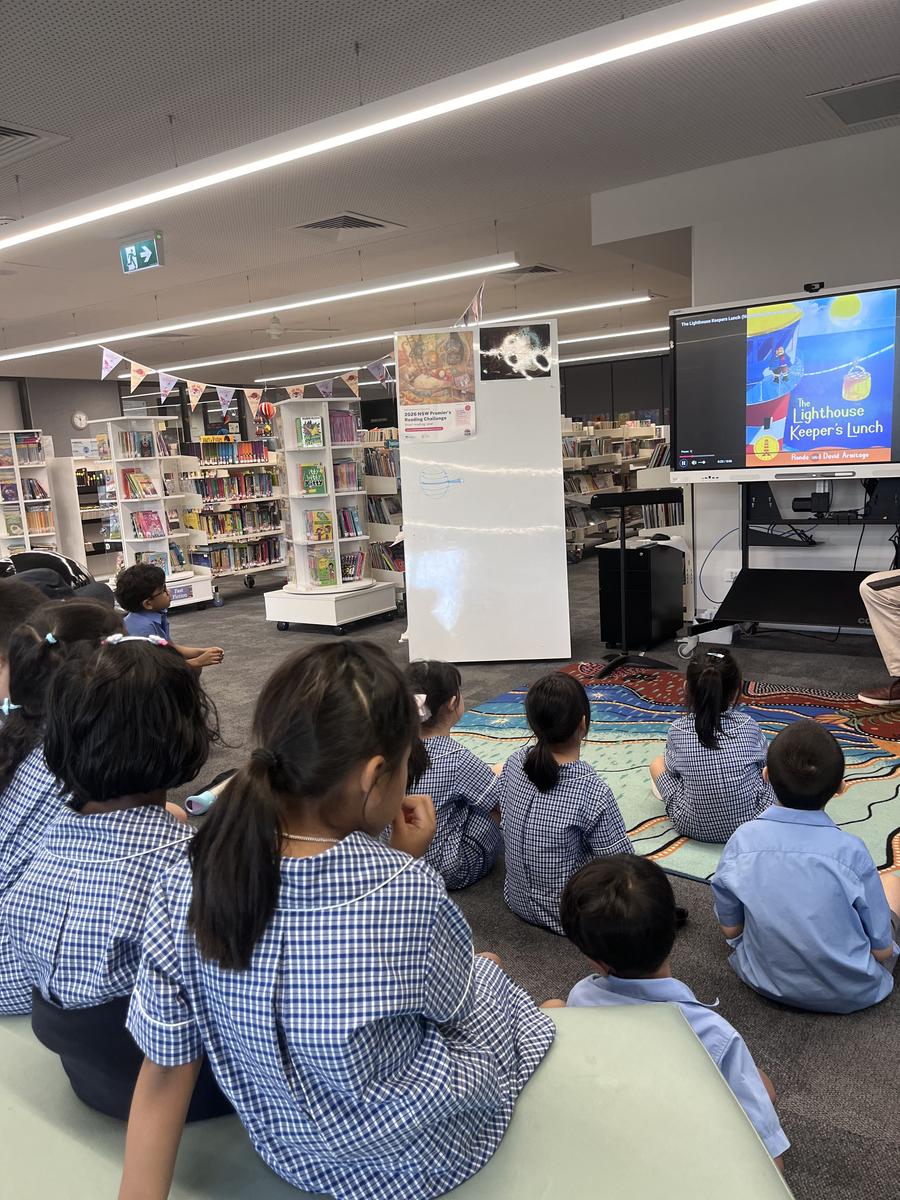
This term, students will participate in InitiaLit Storybook lessons during library time. The books will provide opportunities for students to learn and use new words, improve their listening comprehension, and develop a love of literature.
Students may borrow up to two books a week in Stage 1 and can borrow from junior fiction, fast fiction, and junior non-fiction. All students must have a library bag to borrow books. A library bag is any kind of protective bag that covers the books to and from school, so please use no disposable paper or plastic bags. Students may loan books from the library for two weeks at a time.
Throughout the term, students working on all phases of EAL/D will continue to be supported in their classrooms by specialist teachers and classroom teachers. Each program of learning content provides differentiated instruction and activities for all students to achieve progress in their learning.