YEAR 6
FROM THE CLASSROOM
READING
There is a book called 'Once' and we read it to find the information about what happened in the book, and there are questions that we are meant to answer and an example of it is “why did the main character do what he did?” and we wrote the answer in our book so it can stay there if we need more information to answer. We have a book so we can keep all the information if we need any more help with reading.
- Micah
WRITING
In Term 3, during writing we are using the model text - The compass to write our own descriptive narrative. When we started with the text, all the Year 6 classes drew text maps to help with understanding and vocab from the text. We took extended vocabulary from the text and worked in groups to find synonyms and antonyms to help with our personal narratives and also read the text while making the paragraphs, each paragraphs have descriptive vocabulary that we learnt from previous sessions between week 3-4, and during writing sessions we learned how to learn to use words for a purpose and a reason.
- Tinus
MATHS
During week 3-4 in Maths the Year 6s have been working on capacity, mass, measurement, perimeter and area. They are advancing their skills with conversions and learning formulas like length times width to find the area and add the length and width to make the perimeter. The year 6s have been converting and solving this week and have done a great job.
- Trina
INQUIRY
This term we are learning about computers and computer parts. So far we have learnt about the parts of computers which are: sound card, USB port, RAM, router, power supply, keyboard, mouse, monitor, speakers, mouse-mat, printer, Central Processing Unit, motherboard, video card, hard drive, and a computer case. At the start we did a Kahoot about input, output and what is internal, and external. We also saw a real disassembled old computer next to a new computer and learnt about what a digital footprint is.
- Aylah & Kiara
SPECIALIST
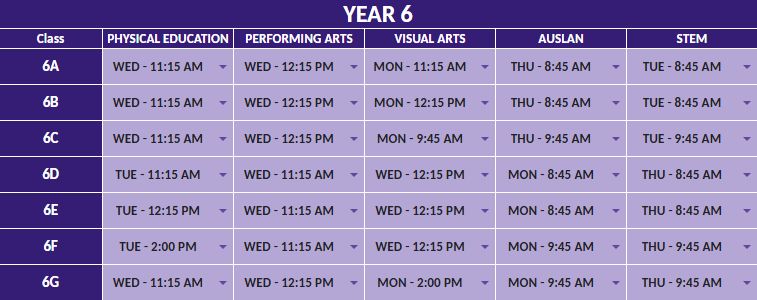
During Week 3 to 4 the Year 6's have been gaining lots of fascinating knowledge in multiple areas such as Performing Arts, PE, Art and STEM.
- Osadi
PERFORMING ARTS
In Performing Arts the Year 6's have been learning how to use a ukulele. They studied the notes such as C major, A minor, C, F , and how to hold a ukulele and which fingers to use. They applied the knowledge to play the song you can count on me by Bruno Mars.
ART
In Art, the students are creating papier mache inspired by the famous Brazilian artist Romero Britto. They used different techniques to create items like vases, teddy bears and other creative goods from their imagination. They used layers of glue and newspaper to make a sturdy base. The kids appreciated it and are looking forward for the next Art lessons.
PE
In PE the focus is AFL. The Year 6’s learned the skills such as drop punt, overhead catch, chest catch and handball. They used these skills and participated in AFL games showing incredible growth and determination.
STEM
This term for STEM the Year 6's are exploring a very engaging topic: Light!
The children explored how light travels, made shadow puppets and many more engaging activities.
LEARNING INTENTIONS FOR NEXT WEEK
READING
Students will continue exploring the text 'Once', with a focus on making inferences, making connections, and summarising key ideas.
WRITING
- Students will be beginning a new unit of Talk 4 Writing – Writing Discussions. Students will understand how to develop ideas that appeal to different people, include counter arguments and weave in non-fiction elements into the discussion.
MATHEMATICS
Students will be learning about negative integers, understanding which direction to move along a number line when adding and subtracting and using integers in real applications, such as sea levels and profit and loss.
WELLBEING
- Students will explain important rules and safety expectations for camp. They will also recognise feelings like fear or worry about camp and understand that these are normal.
INQUIRY
- Students will continue learning about how to keep themselves safe online. They will explore how algorithms are formed and its implications.
REMINDERS
YEAR 6 | SPECIALIST TIMETABLE