
Wellbeing

4 research-based tools to help you build a strong, resilient family in 2026
Here’s what kids tell us they want from parents when life gets busy.

Feb 9, 2025

Feeling time-poor?
Got too many things on the go?
Never seem to be able to make time for your partner or kids?
If you nodded your head to any of these questions, then you’re not alone.
Lack of time and competing priorities have long prevented parents from being the kind of parents we all aim to be.
But there’s a solution…..and it’s not Quality Time.
My research into busy working parents revealed four key strategies for building a strong, happy, and healthy family.
POLL
Are you time-poor?
Yes
No
What's time poor?
Let’s explore these four tools together and discover how you can apply them to your family.
Tool # 1: One-on-One Time
The best way to build relationships with kids is to spend time with them.
I’m not talking about grand gestures such as going to the movies, although, as I’ll mention further on, that has its part.
Rather, the ordinary, everyday interactions you have with kids are key to relationship-building.
In my work with Australian children, I heard repeated stories about the simple times they spend with a parent doing every day stuff.
Getting breakfast.
Playing a game.
Watching a program together online or on TV.
Going for a walk.
It was always the everyday, low or no-cost activities they enjoyed one-on-one with a parent. Not with the whole gang.
Don’t let your partner explain your kids to you
Some parents have relationships with their kids vicariously through their partners- who spend a great deal of their time explaining the kids to them (“You know, Benny had a bad day at school today….”) and vice versa (“Your father is very busy at the moment”).
That’s not how relationships work.
Some parents are permanently separated from their kids due to work or other circumstances, which is incredibly tough.
If this is you, then make the most of the time you are together. Look for opportunities to spend time with each child individually.
Establish personal rituals that link you with each child, even when you’re not around. (More about this below)
Remember middle children
The research shows that eldest children and youngest children receive more one-on-one time with parents than middle children.
You may need to intentionally ask middle children to accompany you to the supermarket, or invite them to play a game with you.
Don’t leave bonding to chance.
Expert tips for One-on-One Time
Choose the same place: Recall a place or space where you experience successful connections with your child. You will have one. It may be a chair, a couch or a play space outside. Return to this place when you want to talk or feel at peace with your child.
Understand their connection preferences: Dr. Gary Chapman's work on love languages is profound. My three kids prefer to connect in different ways, and understanding this has been a real bonus. One enjoys chatting, another loves doing activities together, and the third responds to acts of service. Aligning with their love languages makes bonding easier.
- Do things you enjoy with your child: Two reasons for this. First, when you share your passions, things you love or the activities you want, you are more likely to loosen up, relax and show your human side. Second, kids love it when you share something of yourself with them. It builds their sense of belonging and deepens their connection to you.
Tool # 2: Family Rituals
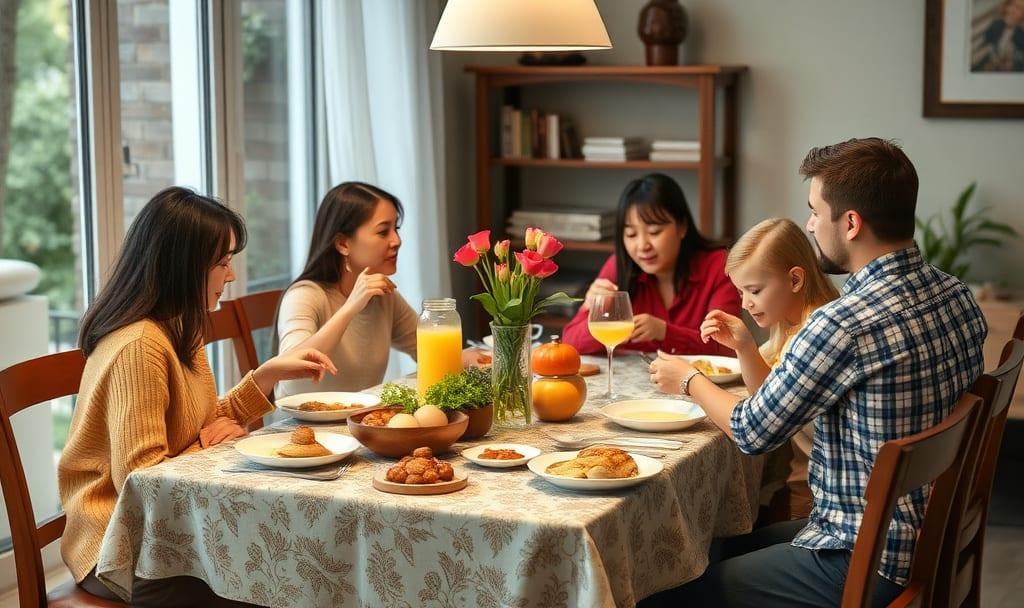
Rituals bind families together.
Without them, families inevitably break down.
Popular Australian Parenting educator Maggie Dent says, “Family rituals are positive, which strengthen the sense of warm connectedness in families. This makes sense, given that the number one biological need for every human is the hunger to belong, and to be accepted, valued and loved.”
So what makes a family ritual?
It’s anything that brings a family together regularly, whether to celebrate something special, such as a birthday, or other celebrations.
Make rituals your own
My family has developed its own set of rituals, including how we celebrate birthdays - yep, they are weird, noisy, with a silly version of the Happy Birthday song, and we also celebrate Christmas and other times of the year.
Regular mealtimes are the most critical ritual your family can have. There’s a high correlation between families that eat together at least five times a week and good mental health in teenagers.
This is presumably because parents can monitor their teens’ mental health more easily in this setting.
So when life is busy and catching up with everyone is hard, it’s the simple family rituals you’ve put in place that pull you all together.
- Your rituals are the super-glue that bonds you together into a tight family unit.
Expert tips for family rituals
Establish negotiables and non-negotiables: Work with children to determine which rituals they must attend and which they can miss. This is important for teenagers, whose social and school lives are increasingly busy. For instance, being home for a sibling’s birthday is non-negotiable; however, attending an aunt’s birthday may be negotiable.
Be flexible: Adapt your rituals to suit your family’s lifestyle. For instance, for many years I spoke to parents in schools and the community up to three nights a week, which made shared evening mealtimes with my family difficult. Our solution was to “do” mealtimes at breakfast. Slow and leisurely…..to a point…was the go. They were more than a fuel stop, as most breakfasts seem to be.
- Make sure they happen: One thing stood out in my research into family rituals - they rarely occurred by accident. It usually took a parent—usually a mother—to ensure they happened and that everyone showed up.
Tool # 3: Personal Rituals
What interactions with you do your kids look forward to? Which interactions can they rely on?
Is it a Saturday morning walk? An evening bedtime story? Watching a game of sport together each week?
While one-on-one time is generally random, built on the bedrock of good intentions, personal rituals are set in stone. By their nature, they always happen.
- Kids can rely on them. That’s their magic.
They bring predictability to your relationships. They show you are reliable. They help build their sense of security and safety.
Expert tips for personal rituals
1. Turn routines into rituals: Bedtime routines that include reading to children or singing special bedtime songs or even just lying beside your child do far more than help your child fall asleep. When these routines are repeated, they create neural pathways that enhance loving connection.
As a grandparent, I always made sure I was the one who bathed my grandkids when they were little, as it was the only chance I had to spend time with them alone. I was the ‘bathguy’ whenever they stayed over on visits. (Explanation: two of my kids live a long way from us, so they inevitably stay over on family visits.)
2. Make them special: If one-on-one is grounded in the everyday, personal rituals can be special events. A date with a teenager once a month, an ice cream with a young child each weekend, a special birthday movie once a year - are examples of special rituals that both you and your children will long remember.
3. Create greeting rituals: Welcoming and farewelling rituals for each child is essential. How you welcome and reconnect with children after a day away shows them that you have missed them and still love them.
With young children, leave a kiss on their palm. For others, there are special handshakes and or that oldie (but a goldie) “See you later alligator” to which they naturally reply, “in a while, crocodile.”
Tool # 4: Downtime
Pacific Islander cultures (e.g. Samoan, Tongan, Maori) are renowned for their strong family ties.
One feature they share is spending a great deal of time together, including extended family members. They don’t just gather for celebrations or special events; they go about their everyday lives, enjoying each other’s company.
My research on busy families found that close families in Western countries shared one factor that enabled the type of closeness evident in Pacific Islander families. They enjoyed downtime (also known as Mooch time) together.
Families who enjoyed some downtime together on a regular basis appeared happier and more tolerant of each other. They had closer ties, shared mutual interests and generally enjoyed each other’s company.
Downtime is the period spent together when little is happening. Family members are going about their lives, and interactions feel natural rather than contrived.
Lazy Sundays, easy evenings, do-nothing-much holidays here we come!!!
Expert tips for down-time:
Recognise its importance: Doing nothing can seem like a luxury, particularly when there are jobs to be done, or work is calling you. But regular time in the evening or at weekends, where nothing productive seems to be done, is good for your mental health and a boon for family relationships.
Guard it: Don’t be afraid to make a call on a child’s second/third organised activity for a day that takes you and/or them away from some downtime. Families in perpetual motion can easily grind to a halt and need someone to keep the guardrails up.
- Organise it: If all else fails, call time on everyone being off in every direction and organise a family weekend away every so often so people can chill and enjoy each other’s company. The best parenting is intentional rather than accidental when it comes to building strong family bonds in this current era.
Putting It Into Practice
Okay, time get practical and create some change - if that’s what’s needed. Revisit the 4 tools above and answer these three questions:
1. What’s working?
Which of these tools is working for you at the moment? It may help to rank them by effectiveness.
2. What’s not working?
Which tools are either not in place or are not working for you? What are the barriers to success?
3. What will you work on?
Choose one tool to work on. Make it a focus of your attention over the next fortnight. Make a plan to put that tool into action. Plan how to handle any barriers.
Make a start
The most important part of forming a new habit is starting! If you want to start establishing family mealtimes, then start with one a week. Make it non-negotiable.
Start small. Experience success.
Repeat.
Then repeat and expand.
Now get cracking! You’ve important work to do.
Helping kids make and keep friends: 10 proven strategies that make social success inevitable
Practical tools to help your child develop the empathy and social skills needed for healthy, long-term friendships.
Feb 24, 2026
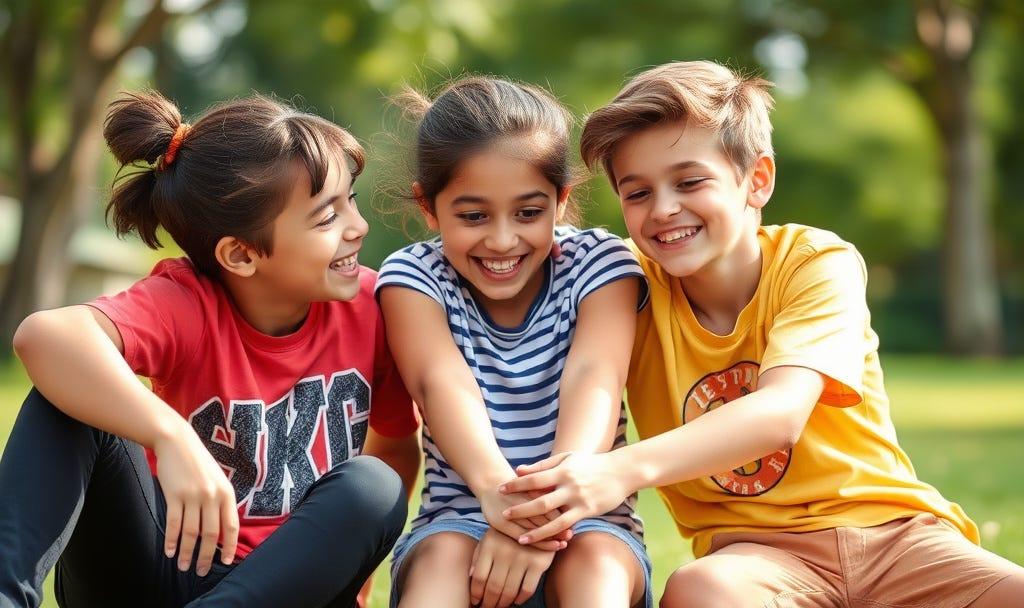
Developing and maintaining friendships is a dynamic process.
And that can present headaches for parents.
Most children experience some form of peer rejection throughout childhood.
One study found that even popular children were rejected about one quarter of the time when they approached children in school.
Most children experience social rejection and recover from it.
They move on and form constructive, worthwhile relationships with like-minded children, but some children benefit from additional support or coaching.
Several studies indicate that children can be coached in friendship skills; a supportive friendship coach can make a significant difference.
The strategies are simple and focus on teaching children a range of friendly behaviours, such as talking with others while playing, showing interest in others, smiling, offering help and encouragement when needed, being willing to share, and learning how to enter a game or social situation.
It is also useful to teach children alternatives to fighting and arguing when disagreements arise within groups.
What's your biggest 'heart-sink' moment regarding your child's social life?
Seeing them left out
Seeing them be the unkind one
Dealing with mean friends
Helping them manage peer pressure
Feeling helpless when they struggle
Gender, giftedness and birth order matter
Gender impacts the ability to make friends. Girls are further advanced along the stages of friendship than boys during the primary school years.
Many boys need a parent to be their social coach, constantly reminding them of friendly behaviours and providing social scripts for tricky social situations, such as meeting a new friend, asking an adult for help and saying No to a peer or sibling who teases.
Gifted children are often further advanced along the continuum of friendship behaviours than their peers. They seek more intimate friendships at a much younger age than their peers. This challenges the perception that gifted children have poor social skills; it appears they have a different concept of friendship than those around them.
My birth order research reveals that second and middle children generally have more friends than firstborns. They are more adaptable and welcoming of children with different interests. Their negotiation skills, needed in the hurly-burly of playground politics, are more advanced, honed by years of practice of negotiating to get their needs met under the competitive eye of a firstborn.
Eldest children are more likely to be introverted, preferring to spend time with a smaller number of friends.
Regardless, all children benefit from exposure to supportive adults adept in coaching them in the art of making and keeping friends.
Coaching kids in the art of making and keeping friends

Here are ten ideas to help you coach your child in the art of making friends:
1. Put friendships on the conversation table
Establish a dialogue with your child about friendships so you can offer support when difficulties arise and provide ideas when needed.
Be upfront with your child and discuss the importance of building connections with children both inside and outside school.
Talk, don’t lecture.
Open lines of communication before children enter adolescence.
2. Identify what may be holding a child back
Identify and discuss any behaviour, such as teasing, bullying or self-centredness, that may prevent your child from making friends.
Sometimes a child’s remarks can irritate others to the extent that he or she is ostracised.
Others struggle sharing information about themselves, which is a no-no in the give-and-take game of friendships.
Don’t be squeamish. Be upfront with your child.
If they’re not great sharers, let them know, then set up situations that require them to share.
3. Put your coaching hat on
Teach social skills such as starting a conversation, being a good winner and loser, and holding others' interest during a conversation.
Playing games with family members is a great way for kids to pick up many of these skills.
Overt teaching - “Next time you want to play a game with……try……”
There are many ways to help kids acquire those skills. Including workshopping………
4. Workshop tricky scenarios
The social world for many children is far more challenging than the academic world.
Math is a breeze compared to meeting new friends, saying no to peer pressure or letting a friend know that their behaviour is annoying.
It helps to workshop different scenarios with kids, providing them with social scripts and alternative behaviours that they can try in sticky situations.
Next time they come to you with a problem, try workshopping different solutions with them.
5. Focus on soft power
Some children (okay, usually firstborns) struggle with keeping friends as they often use assertion (and aggression) rather than adaptability when they don’t get their own way.
Full-on assertion (”do it my way”) usually meets with rejection at some point.
Undoubtedly, soft power wins in the long run in the friendship arena.
Kids who can adapt, use humour, have a positive attitude, are helpful, and know how to stand up for themselves when behaviour is unjust or unfair do well with friendships.
These are all soft power skills that are the domain of firstborn girls, some secondborns and most youngest children.
6. Teach your child how to read the room
Children who struggle to make friends often charge in too quickly or hover too far away in play or social situations.
It helps to teach them to “read the room” in social situations. Encourage them to watch a group for 30 seconds to identify the game being played and the overall “vibe” before making an approach to join in.
This gives slow-to-warm-up personality types the chance to feel comfortable (and weigh different social options) in new situations and environments.
By coaching them to look for a natural entry point- like offering to retrieve a stray ball- you help them avoid the social friction that comes from awkward interruptions.
7. Leverage the “home ground” advantage
Social anxiety is often lower in a familiar environment.
Organise a “micro-playdate” with just one other child at your home, centred around a structured activity like Lego or baking. This controlled setting enables you to use friendship coaching in real time.
If a conflict arises over sharing, you can quietly pull your child aside to validate their frustration while helping them navigate the social “repair” needed to keep the play session going.
8. Develop a host mindset in your child
If your child likes to take charge and struggles with sharing, teach them how to be a good host.
Start by asking, “What does a good host do?” Make a list of behaviours that make others comfortable at home and in their company.
This shifts their focus from their own comfort to others’ comfort, building a foundation of empathy and emotional regulation.
9. Get them out and about
Encourage your child to participate in out-of-school activities or groups that offer opportunities to meet new people outside their school peer groups.
Friendships formed through shared interests are often very strong.
Birds of a feather flock together, so it’s more likely for children to find soul mates through shared hobbies and activities. Certainly, more likely than sitting at home in their bedroom………
10. Limit solitary activities
Alone time is really important for kids. It gives them the chance to process their day, relax, and feel comfortable in their own skin. However, it’s a balancing act.
Too much alone time means your child doesn’t have the opportunity to develop the basic skills they need to navigate the social world.
These skills don’t develop in a vacuum.
They develop through trial and error (and supportive coaching) in real-life, person-to-person situations.
So don’t be afraid to say “enough alone time.” Invite (or insist) them/they join the social world one interaction at a time.
Finally
Your goal as parents isn’t to collect friends for your children. It’s to help them develop the social “muscles” to connect when they want to, and the self-worth to be comfortable being alone.
Helping a child find their tribe is rarely about a single “grand gesture”; it is found in quiet, consistent social interactions in familiar and unfamiliar situations, as well as in supportive friendship coaching.
As you guide them through these challenges, remember that you aren’t just helping them find a friend for today—you are equipping them with the emotional intelligence to lead and connect for a lifetime.
Stay patient, keep the dialogue open, and celebrate the small “social wins.”
Their confidence will grow, one conversation, one interaction and one friendly gesture at a time.