Specialist News
From our Engaging With Place, Italian, Sport & Music Educators

Specialist News
From our Engaging With Place, Italian, Sport & Music Educators
Prep:
This Term, the Prep children have been developing their Italian language skills through songs, games, discussions and hands-on activities.
Children have been learning to recognise and use the numbers 0-10 in Italian and are becoming increasingly confident counters, matching numerals to quantities and participating in number based activities.
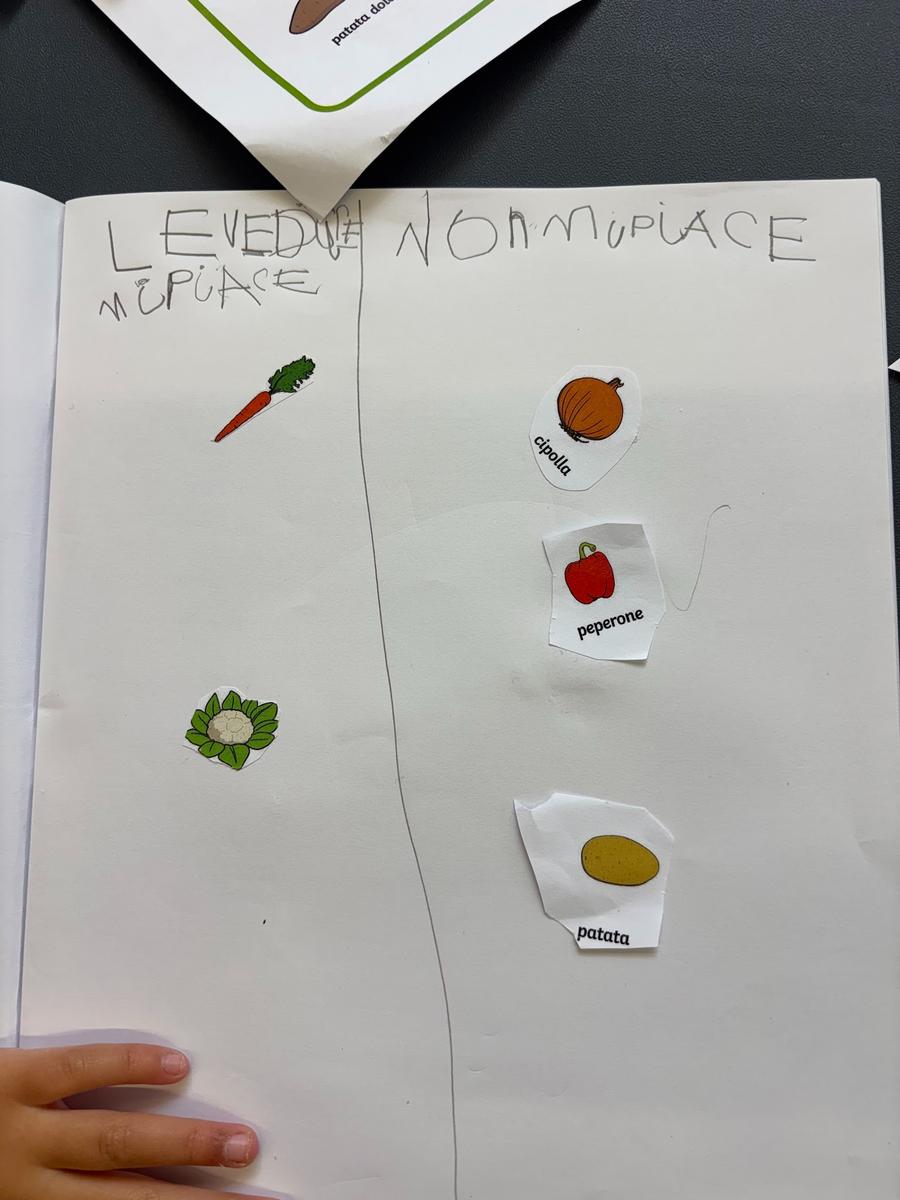
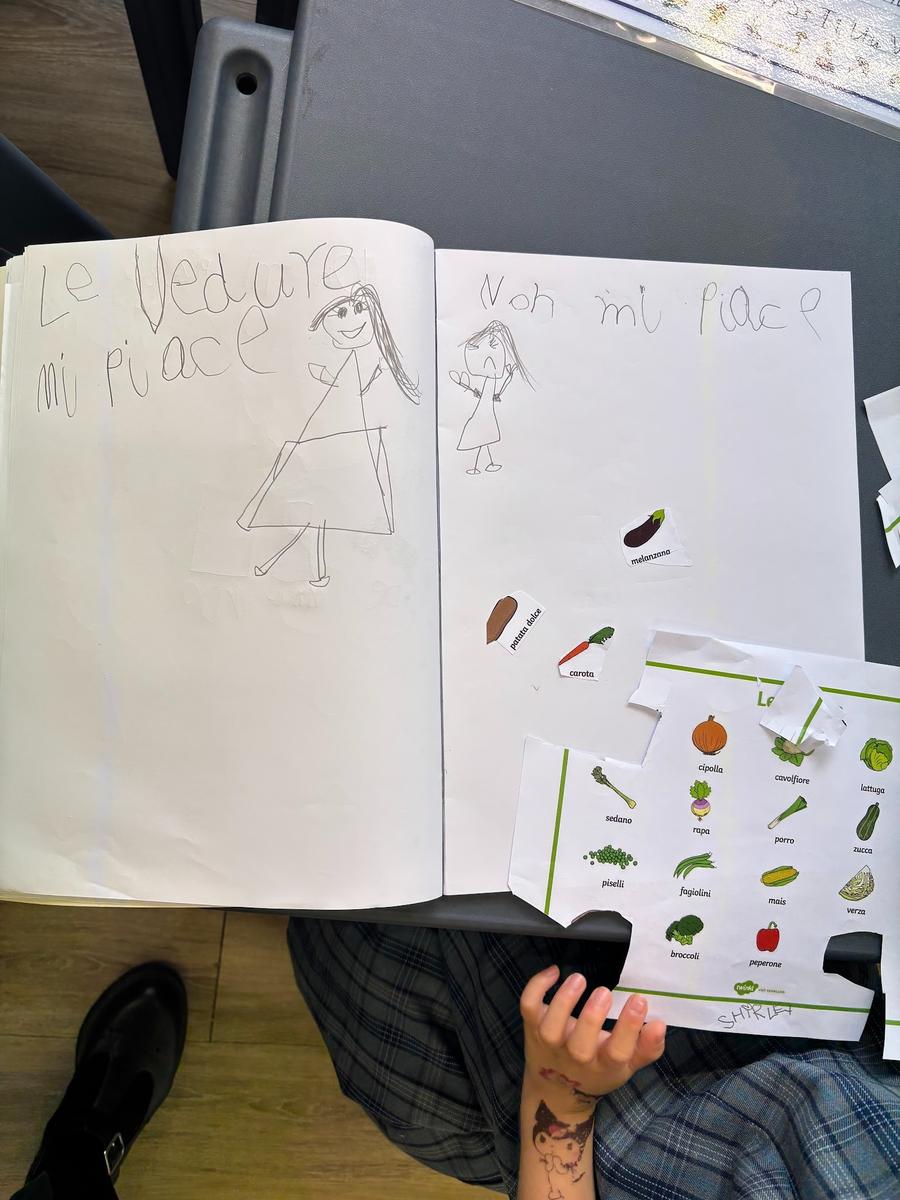
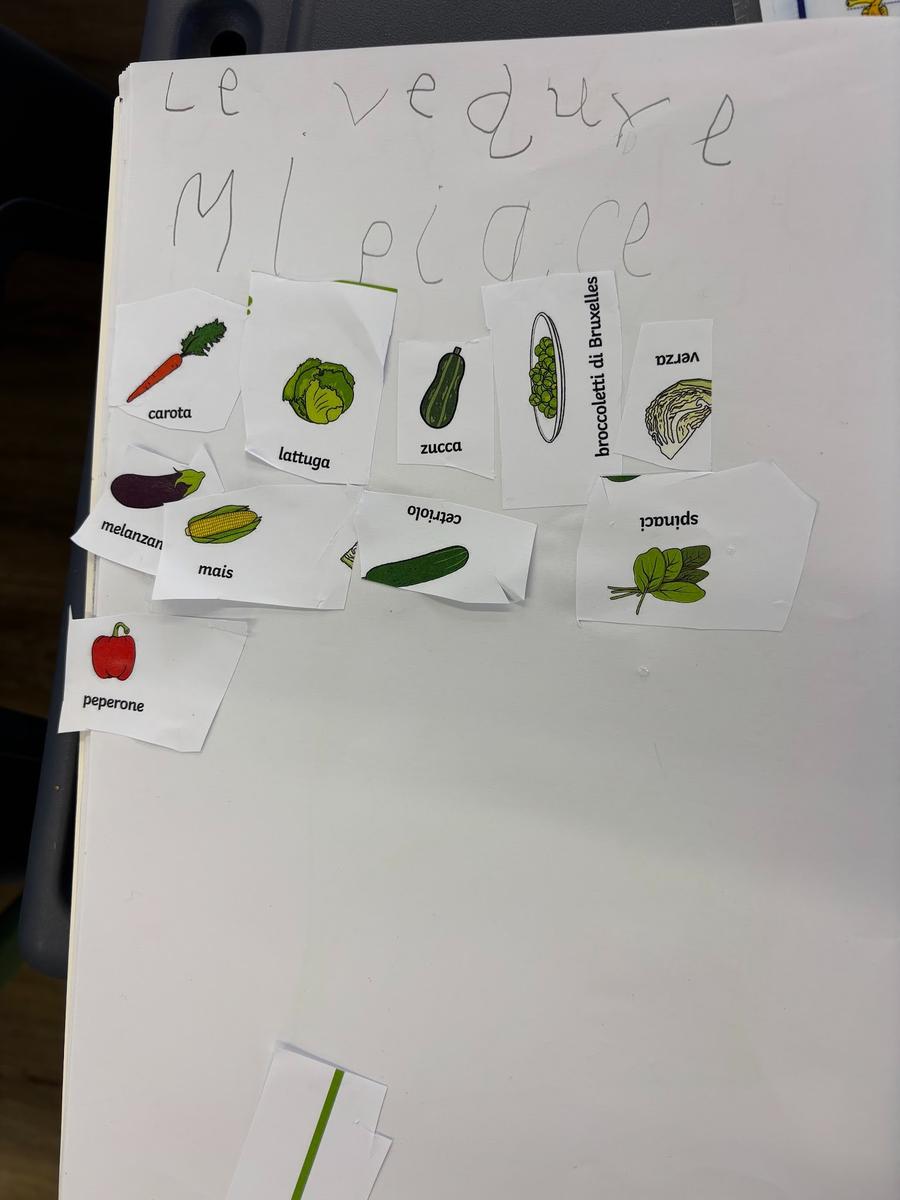
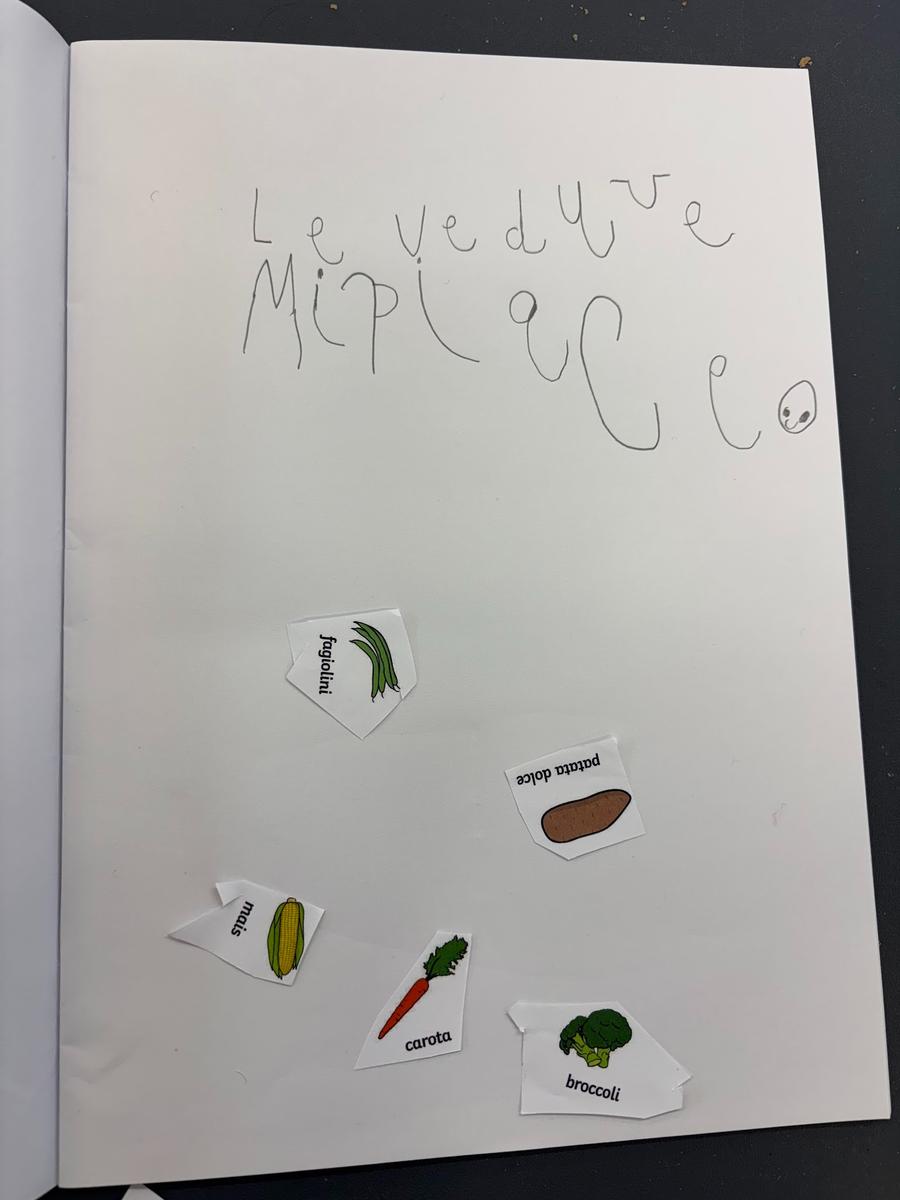
Children have explored the name of a variety of fruits and vegetables in Italian. They practiced identifying different foods and expressing their personal preferences by separating the fruits and vegetables into Mi piace and Non mi piace.
A key language focus has been the phrase Mi piace (I like), which children have used to create simple spoken statements about their food preferences. They have enjoyed sharing their likes and dislikes with each other using this new vocabulary.
Additionally, the children have begun learning the names of body parts through the Italian version of the song “Head, shoulders, knees and toes”, building their understanding of different parts of the body while participating in movement and song.
Over the Term, the children have explored the Italian alphabet and through engaging in music and aural practice, are developing an ear for the sounds each letter makes. They even discovered that there are five letters missing from the Italian alphabet!
Grade 1/2:
This Term, the Grade 1/2 children have continued to build their confidence and enthusiasm for learning Italian through song, games, movement and hands-on activities. They have explored the sounds of the Italian alphabet through songs and teacher-led activities, helping them to develop their pronunciation and ability to decode unfamiliar Italian words using their knowledge of the letter sounds.
Children learnt to recognise and use the number from 0-15 and we are building up to the number 20.
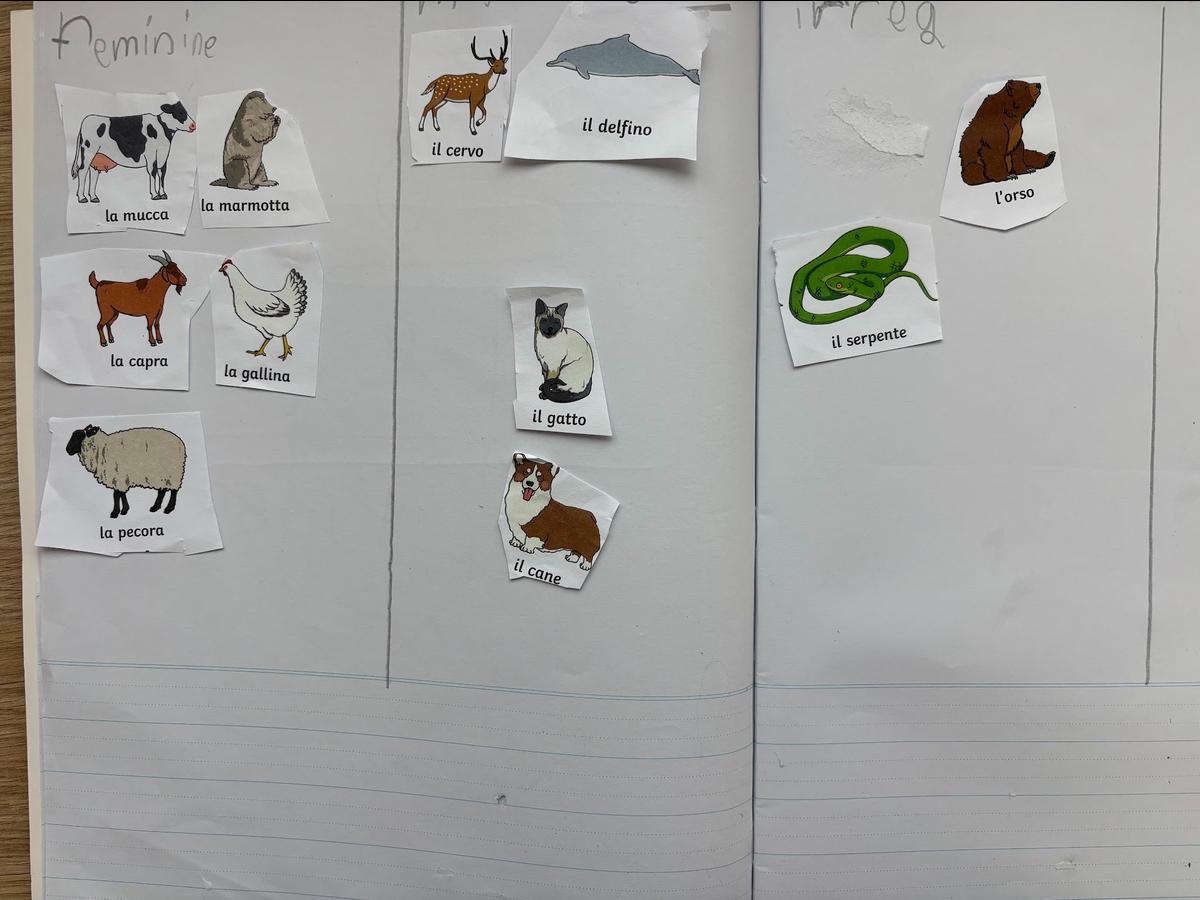
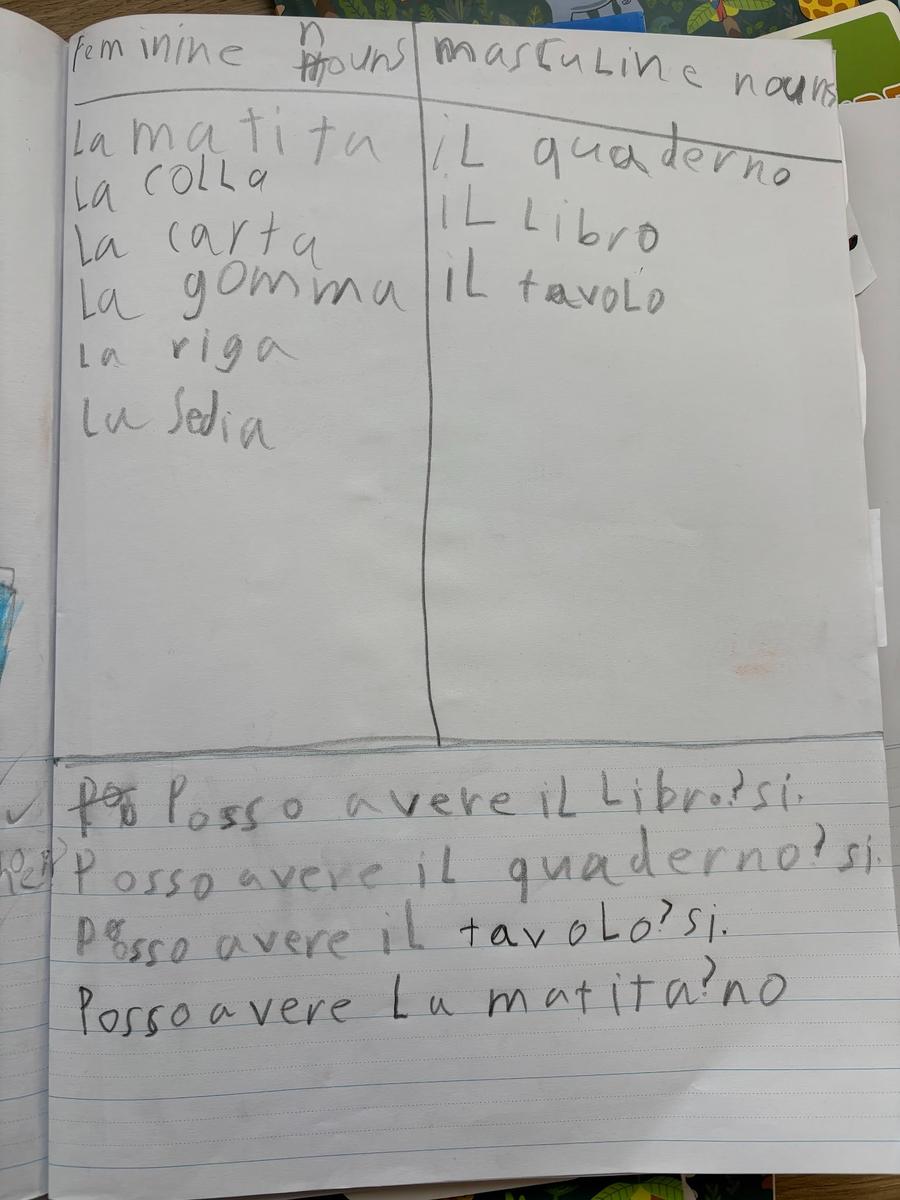
Children have also been exploring the concept of grammatical gender in Italian and how it applies to singular nouns. They learnt the names of common classroom objects and noticed that la and Il represent both gender and singularity. They also developed an understanding that the final letter of a singular noun is most commonly a and o, and these are tied to their grammatical gender also. These grammatical rules are important to understand as they will allow children to build grammatically correct sentences and explore the concept of plurality.
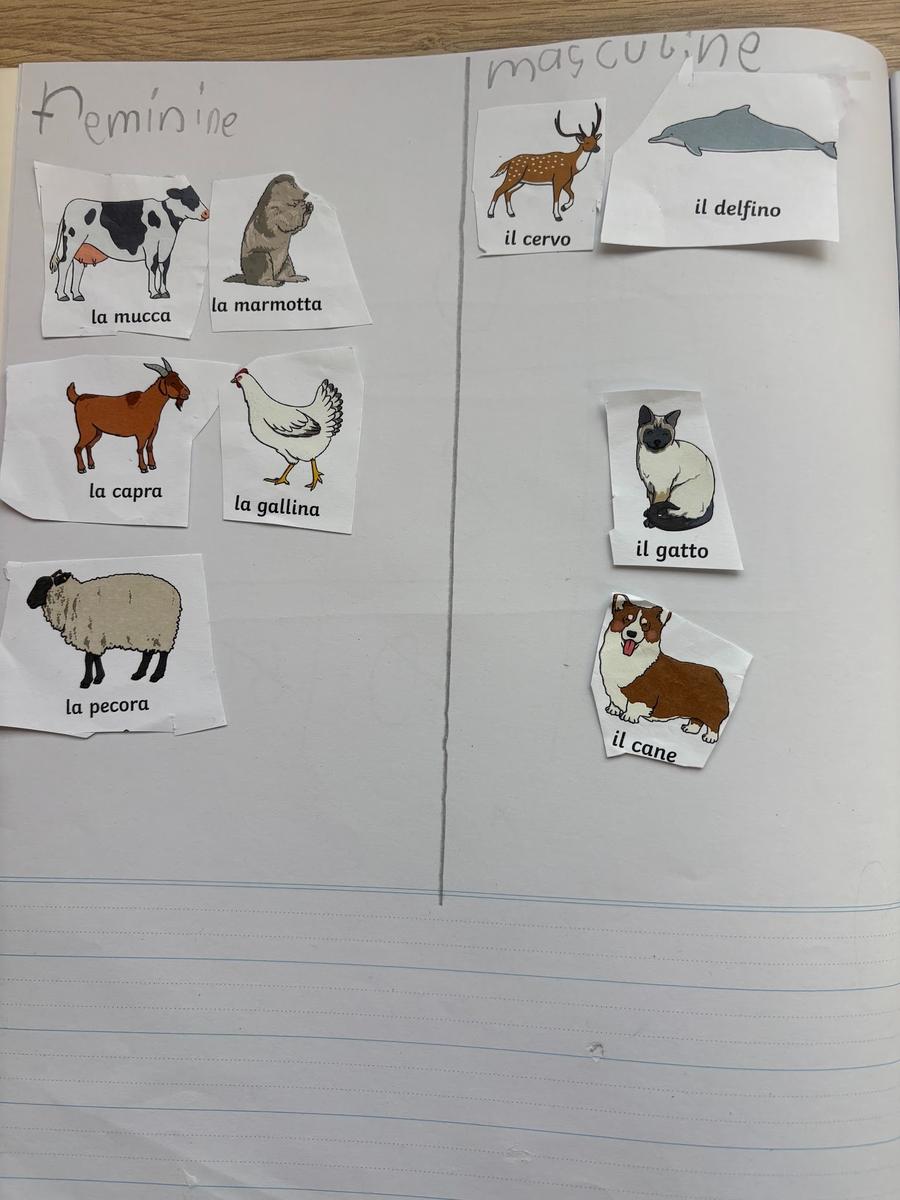
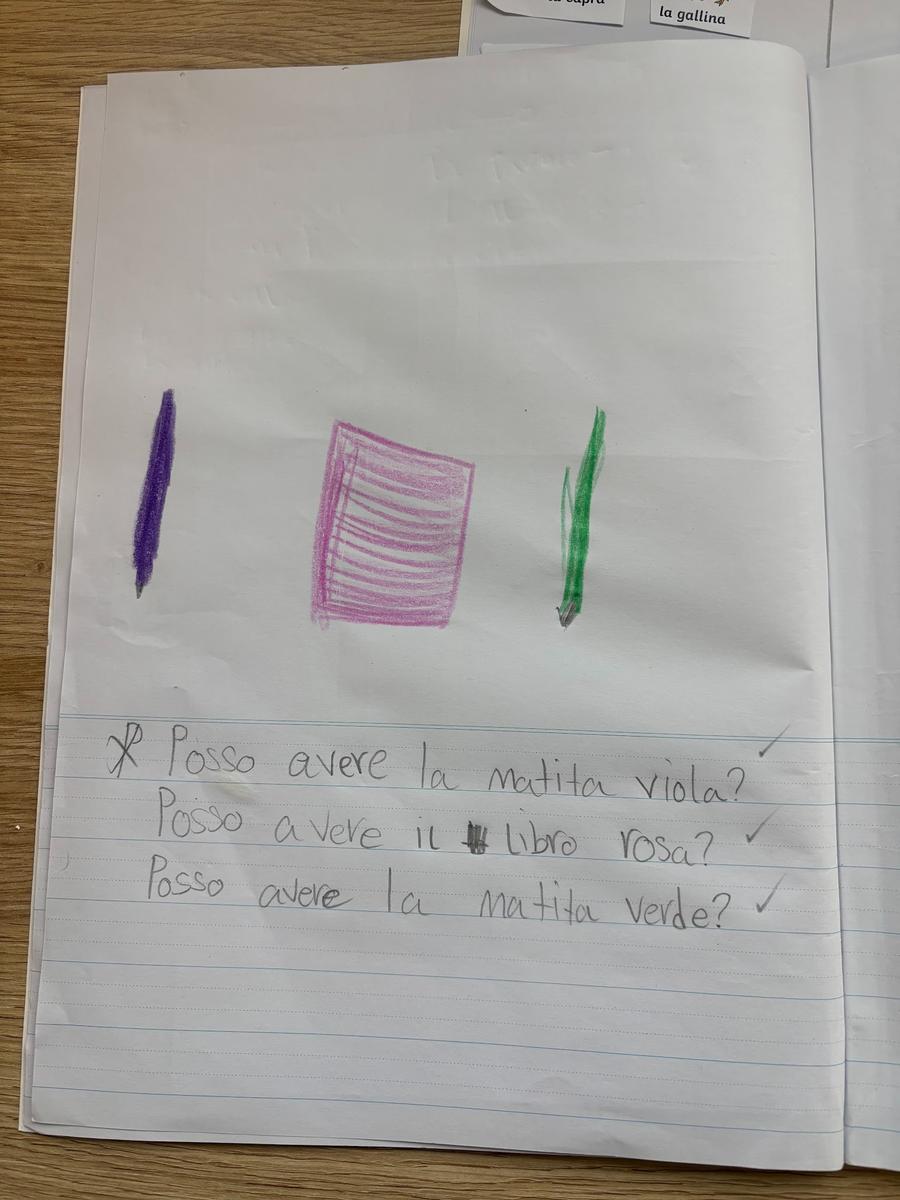
To apply this knowledge, the children sorted classroom items into feminine and masculine nouns and then went on to do the same with animals, and in doing so discovered a new article l’!They also practiced matching adjectives to nouns and recognised that descriptive words need to agree with the noun they are describing.
Grade 3/4:
This term, the Grade 3/4 children continued to build their confidence as Italian language learners. Through games, discussions, and both independent and collaborative tasks, students strengthened their understanding of Italian vocabulary, pronunciation and sentence structure.
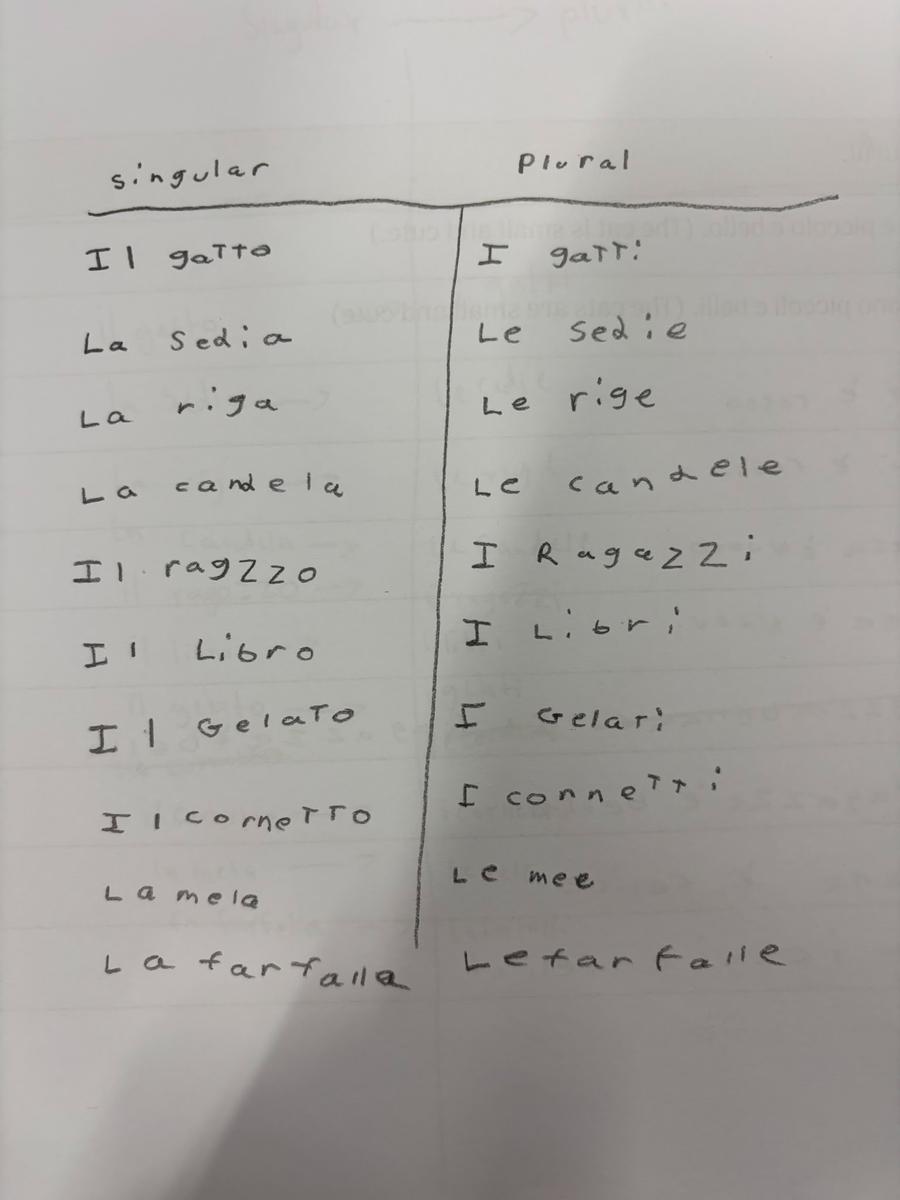
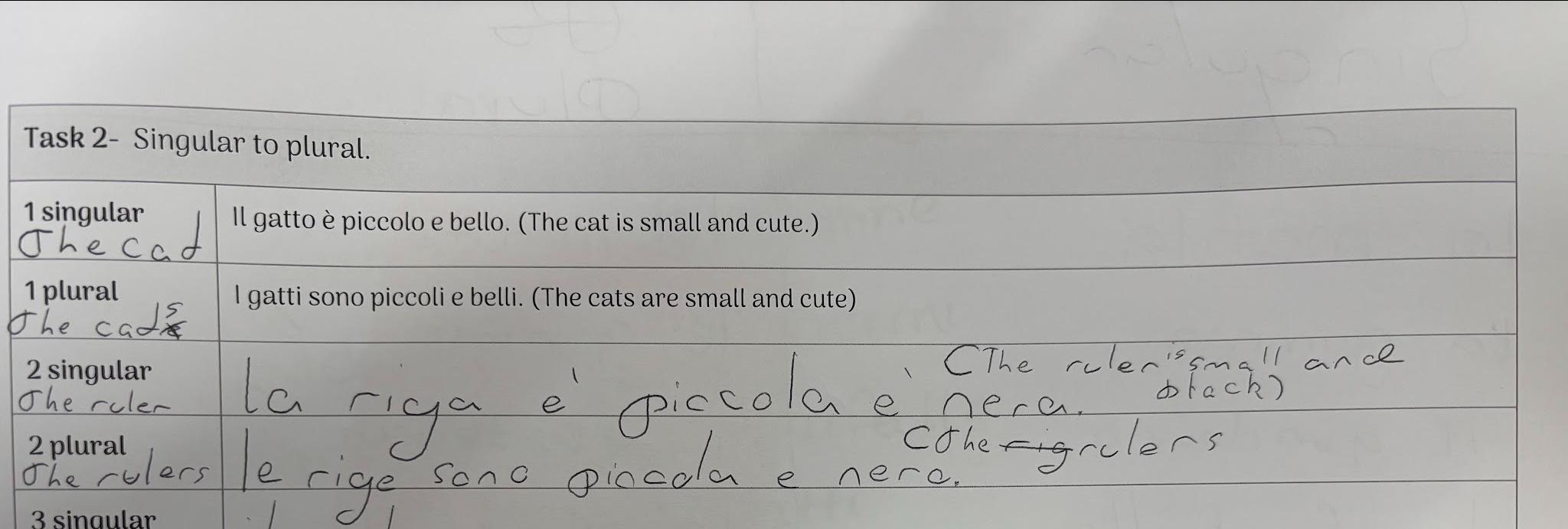
A major focus this term has been understanding how grammatical rules change between singular and plural. Students explored singular and plural nouns and learned how articles and noun endings change depending on whether a word is considered grammatically feminine, masculine or irregular, and singular or plural. With practice, they have become increasingly confident in identifying these patterns and applying them when reading short passages in Italian and writing their own short sentences. They practiced constructing both singular and plural sentences, carefully selecting the correct articles, noun endings and adjective agreements. This has allowed them to develop a deeper understanding of how Italian sentences are formed and how words work together to convey meaning.
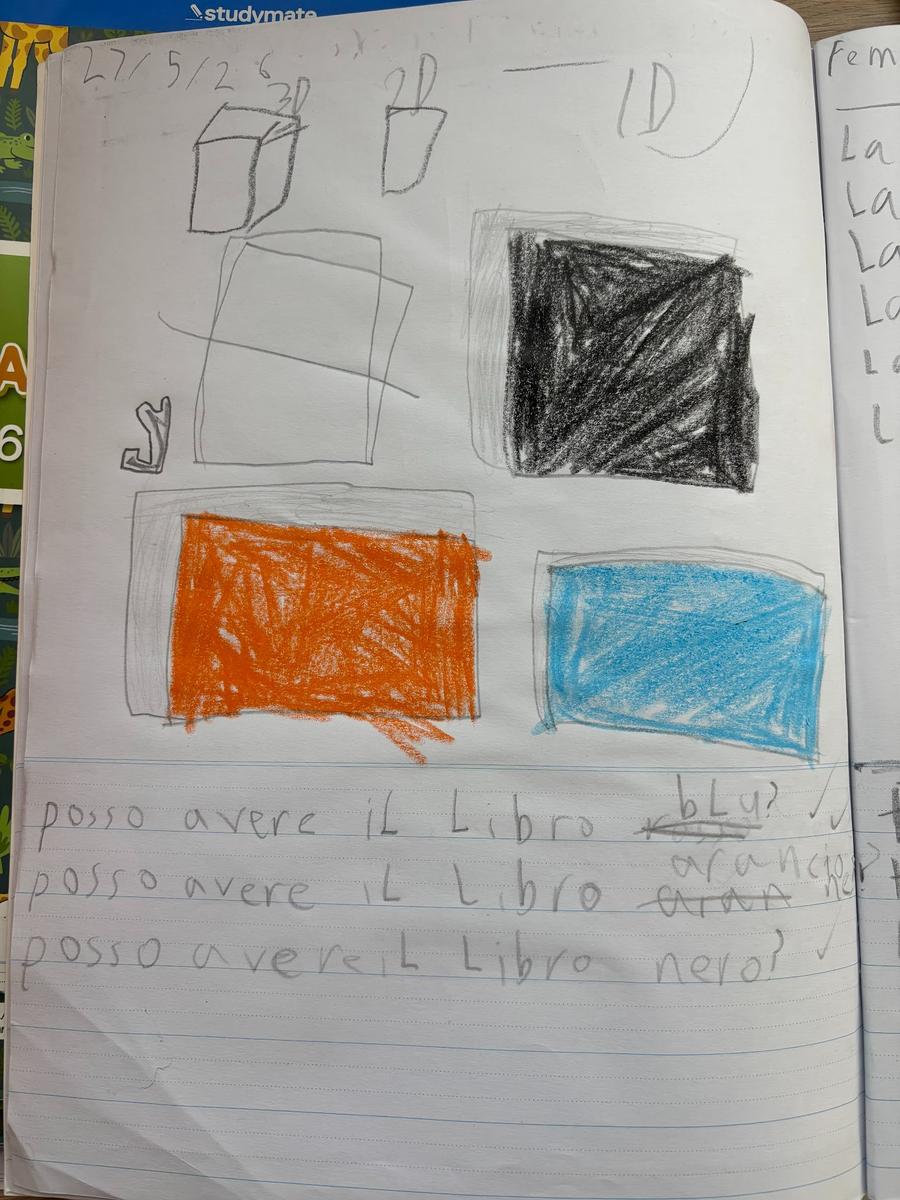
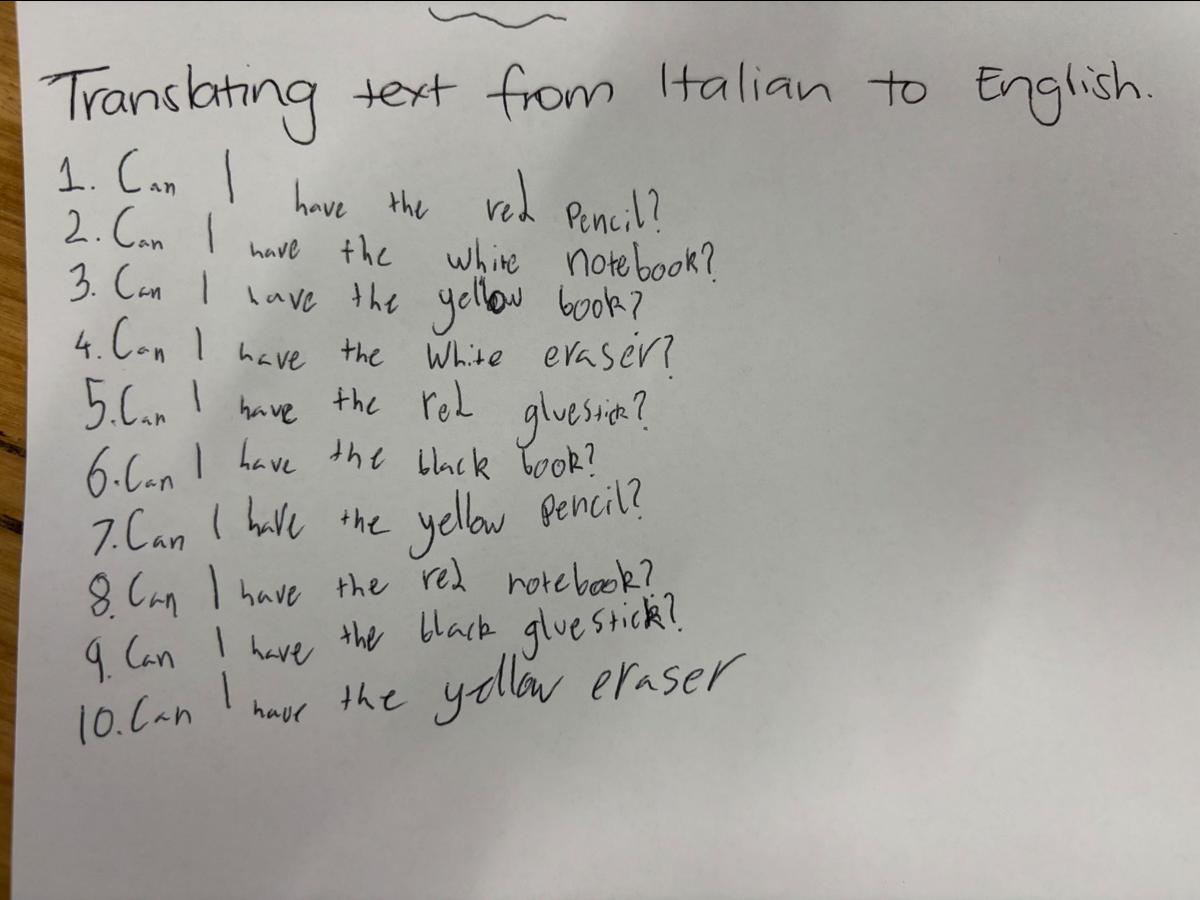
The children continued to expand their vocabulary, learning the numbers to 20, revisiting colours and expanding their knowledge of the names of classroom objects. They practiced asking for classroom items using the phrase Posso avere…? And using the linking word e (and) to request multiple items.
Children developed their conversational skills through simple question and answer activities, and practiced replying using both informal and formal language. They have also continued to express their preferences using the phrases Mi piace and Non mi piace and are beginning to articulate the perche (why) they like something in Italian also.
Grade 5/6:
This term, the Grade 5/6 children have continued to build their confidence and independence in Italian through a variety of engaging learning activities.
Students designed and conducted surveys on topics of their choice, asking and answering questions in Italian and then analyzing their findings. They've strengthened the understanding of nouns and definite articles, with a particular focus on how these change from singular to plural forms. Throughout the term, children practiced requesting classroom items using the phrase “Posso avere… e …” (Can I have… and …).
They also reinforce their knowledge of numbers through a range of interactive games and activities. Their reading and comprehension skills have been developed by engaging with short Italian texts, where the children translated information into English and identified important details.
They've also enjoyed sharing their likes and dislikes using simple Italian sentences.
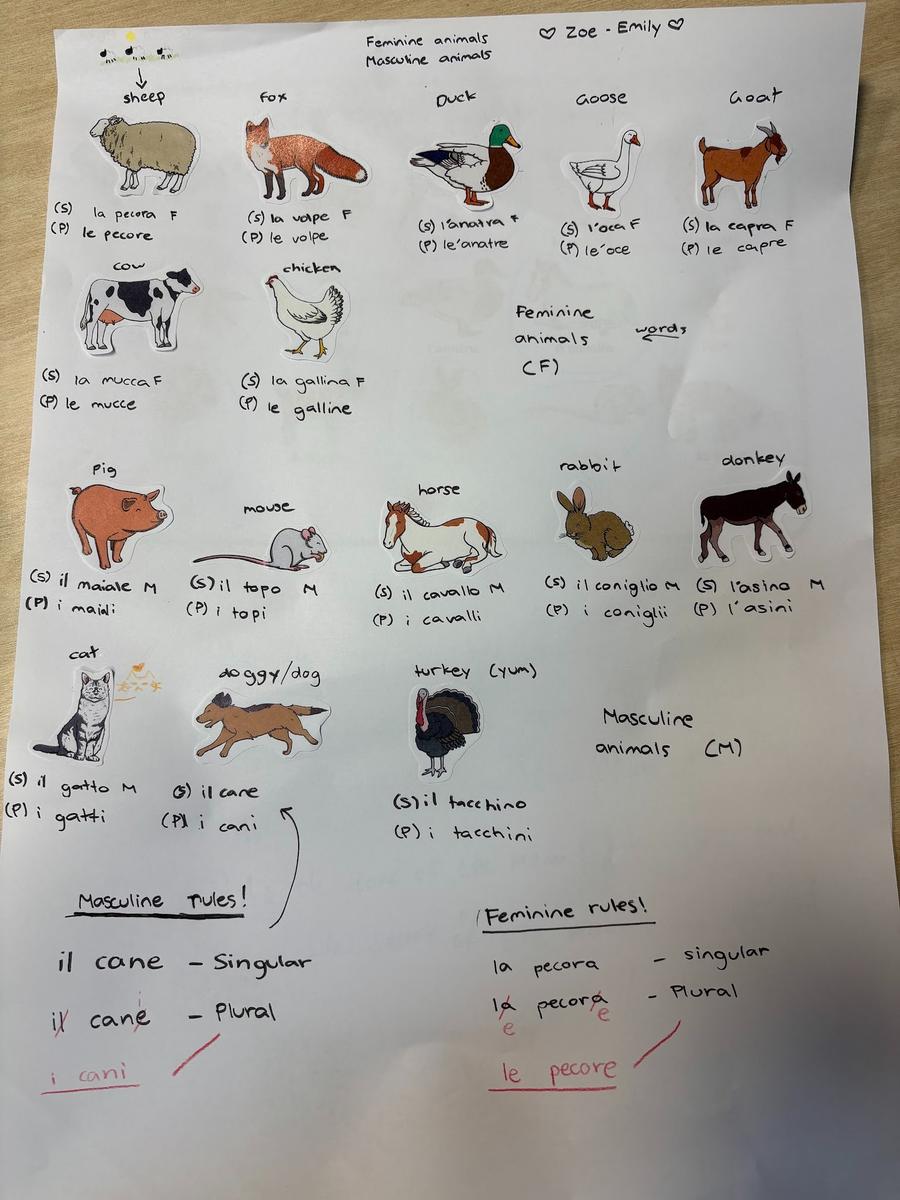
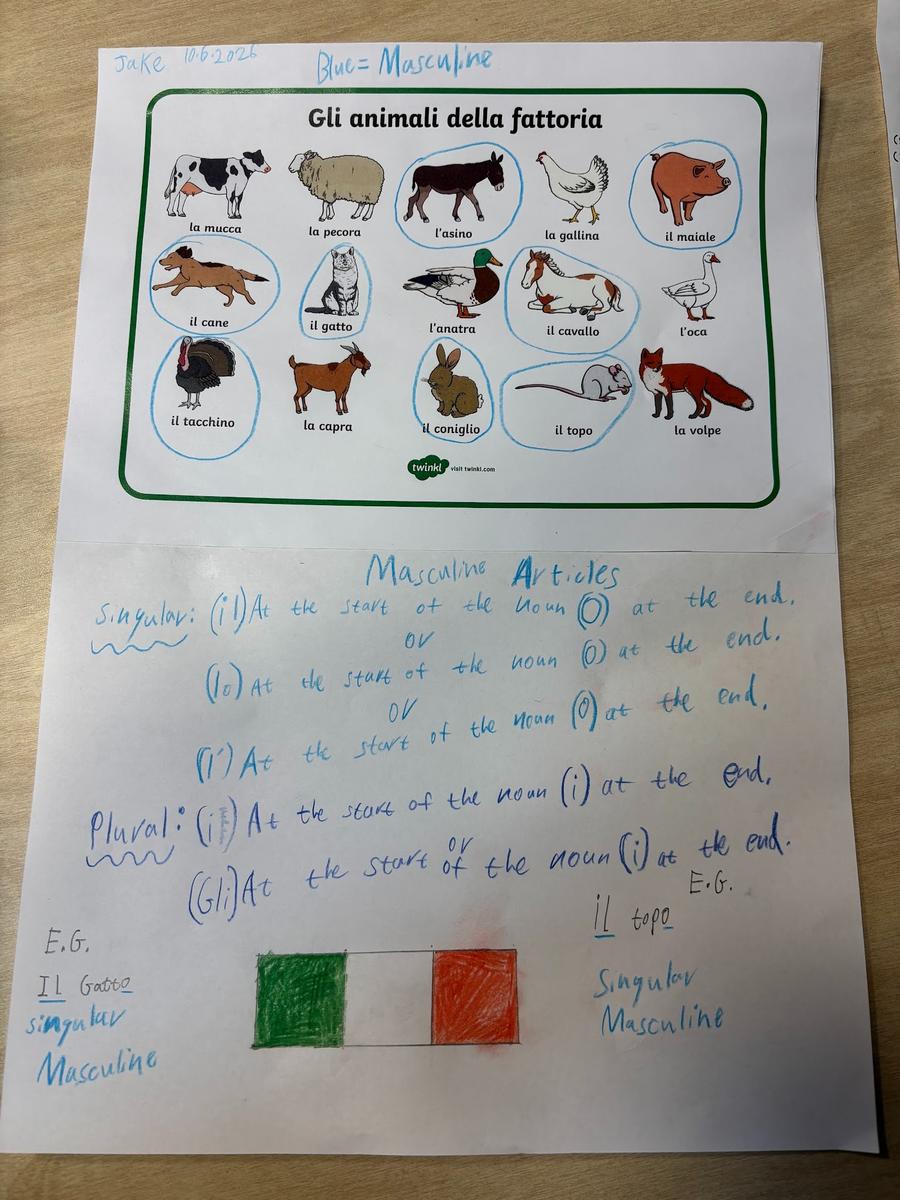
More recently, children have focused on writing short Italian texts, applying their knowledge of grammar rules to create their own singular and plural sentences. As a culminating activity, they created informative posters about definite articles for both singular and plural nouns, using animals as a new context to demonstrate their understanding and apply the learning independently.