Learning & Teaching
Learning About Shapes (Preps)
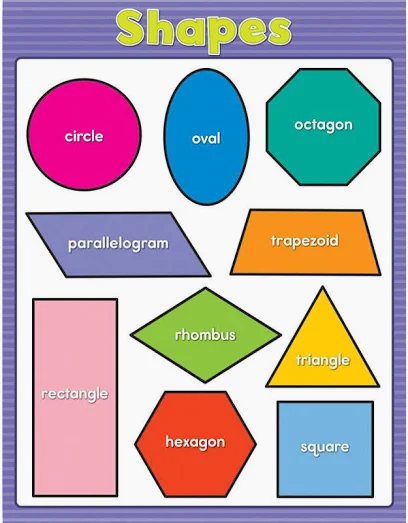
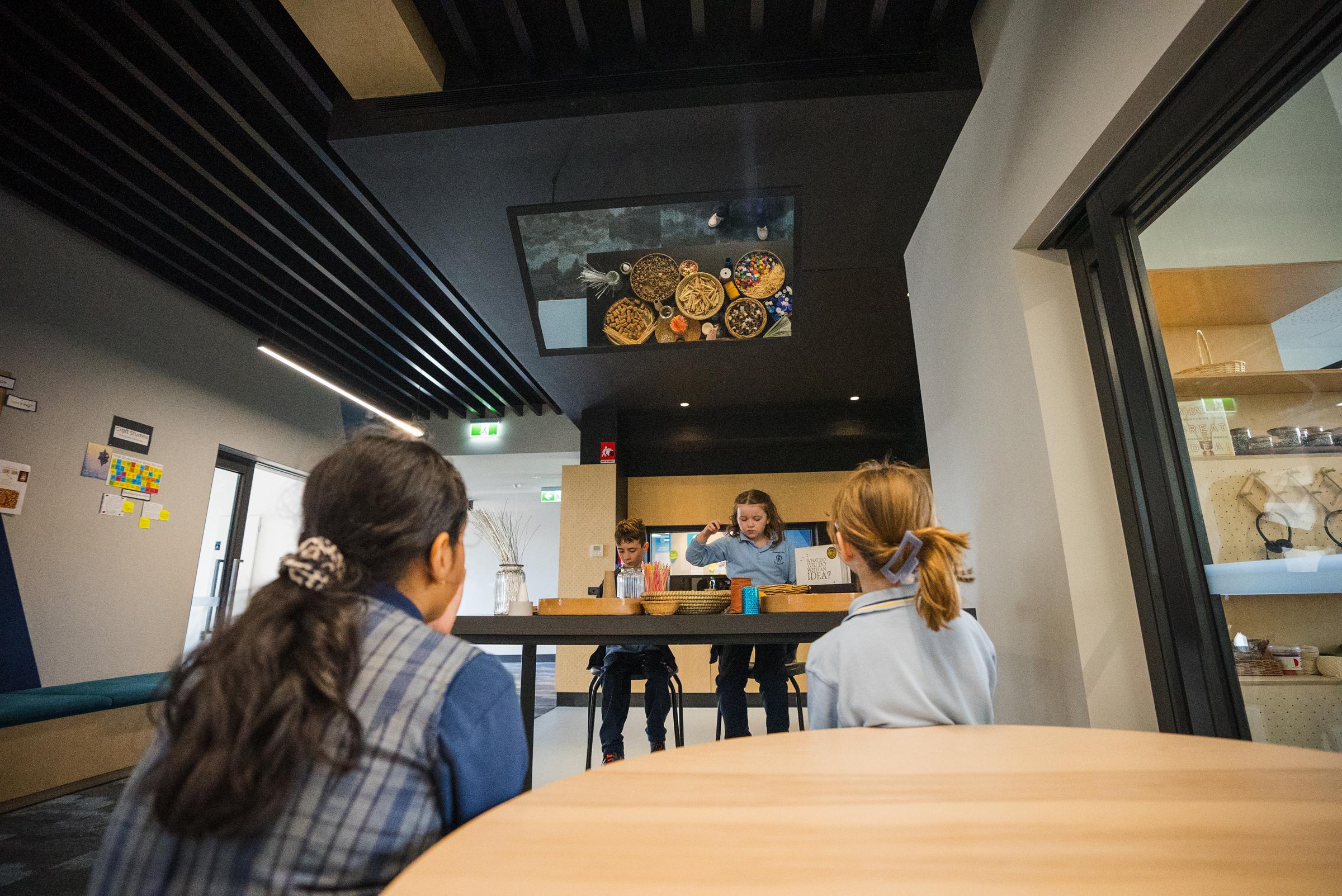
In Maths, the Prep children have been learning all about shapes. They have been exploring both 2D shapes.
Through hands-on activities, the children have been:
- Naming different shapes
- Describing their features
Home Activities:
Shape Hunt
To continue learning at home, we invite you to go on a Shape Hunt together. This is a fun way to help children notice shapes in their environment.
Ask your child to find:
- 🔺 Triangles – Can you find anything shaped like a triangle?
- 🟦 Rectangles – What objects have a rectangle shape?
- ⬡ Shapes with 6 flat sides (Hexagons) – Can you spot any hexagon shapes?
- 🟠 Circles / Round shapes – What things are round?
Eye Spy – Shape Edition
Play a game of “I Spy” but with shapes!
Try these clues:
- I spy something that is round
- I spy something with more than 3 straight sides
- I spy something with 8 corners
- I spy something with curved edges
- I spy something with flat faces
Exploring Patterns in Mathematics (1–2)
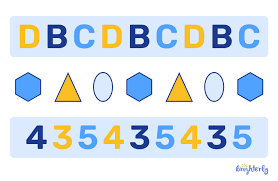
In Mathematics, children in Year 1-2 are developing their understanding of patterns.
Recognising, Copying, Continuing, and Creating Patterns
Children are learning to:
- Identify repeating patterns using objects, shapes, symbols, and numbers
- Copy and continue simple patterns
- Create their own patterns
- Understand the “core” or repeating part of a pattern
- Represent patterns in different ways (e.g. shapes, colours, numbers, or letters)
How you can support at home:
You can help by using everyday materials such as:
- Toys
- Buttons
- Blocks
- Beads
Encourage your child to:
- Make and extend repeating patterns (e.g. red-blue-red-blue)
- Explain their pattern out loud (“What is repeating?”)
- Find patterns around the house or outdoors (tiles, clothing, nature)
- Play simple pattern games like “What comes next?”
Working with Number Patterns and Skip Counting
Children are learning to:
- Recognise number patterns
- Count in 2s, 5s, and 10s
- Extend number sequences
- Understand how numbers grow in regular steps
How you can support at home:
Try fun, everyday activities such as:
- Skip counting aloud while walking, jumping, or clapping
- Using Australian coins to count in 5s and 10s
- Filling in missing numbers in sequences (e.g. 2, 4, __, 8, 10)
- Counting objects in groups (pairs of socks, sets of toys)
Creating and Identifying Additive Patterns
Children are learning to:
- Recognise patterns where numbers increase or decrease by the same amount
- Continue additive patterns (e.g. +2, +5, +10)
- Create their own number patterns
- Identify missing numbers in sequences
How you can support at home:
Support your child by:
- Building number patterns using objects (e.g. 1 block, 2 blocks, 3 blocks…)
- Using coins or counters to show growing patterns
- Asking “What is the rule?” in a number sequence
- Creating simple “missing number” puzzles together
Year 3- 4 Mathematics: Addition and Subtraction
In Mathematics, children in Year 3-45 are learning about Addition and Subtraction.
Children focused on solving addition and subtraction problems using a range of mental and written strategies. These included partitioning numbers, rearranging parts, and regrouping to make calculations more efficient and accurate.
Children also recognised and explained the relationship between addition and subtraction as inverse operations. They explored how one operation can be used to undo the other, which supported them to partition numbers, check their answers, and find unknown values in number sentences.
As part of this learning, children developed problem-solving strategies and used digital tools to model, solve and check addition and subtraction problems. They were encouraged to explain their thinking and select strategies that best suited the problem.
How Families Can Support Learning at Home
- Encouraging children to solve everyday addition and subtraction problems, such as working out totals, change, or differences.
- Asking children to explain which strategy they used and why, rather than focusing only on the answer.
- Practising mental maths using partitioning (e.g. breaking numbers into hundreds, tens and ones).
- Using addition to check subtraction answers, and vice versa, to reinforce inverse operations.
- Playing games that involve adding and subtracting larger numbers, such as scorekeeping or budgeting games.
- Using digital tools or apps that allow children to practise addition and subtraction in engaging ways.
Mathematics Learning: Probability 5-6
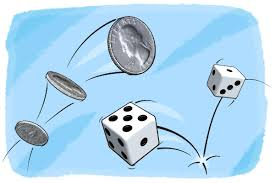
The children are exploring probability and developing their understanding of chance through investigations and real-world contexts. They are learning to describe and compare the likelihood of events occurring and to assign probabilities using fractions and decimals. The children are conducting chance experiments, collecting and analysing data, and using the results to make predictions and draw conclusions. They are also investigating whether events are equally likely, identifying possible outcomes and using evidence to justify their reasoning. Through these experiences, the children are developing their ability to think critically, interpret data and communicate their mathematical understanding using appropriate probability language.
Literacy News
Prep
Our Prep children are learning the following phonic sounds this month: ‘c, k, and ck, j & qu’. We will continue revising how to blend sounds together to read words. The tricky words we are learning are: to, his, no, of, into, has & go’. We use our knowledge of letters and sounds to spell cvc words and have a go at attempting new words when writing recounts of our weekend or creating a poem.
1-2
In Literacy this month, our grade 1-2 children are learning the phonics sounds: ar, or, ur, ow, oi/oy, ear, air, ure and er. The tricky words we are learning are: have, out, by, so, do, oh, there, said, your & one. They will use their phonics knowledge to read decodable books and passages as well as authentic texts in the form of digital print. Children’s learning needs will continue being met through their Reading Target groups. Children will continue learning about non fiction text features and identify and label contents pages, glossary, captions and diagrams.
In writing, children will experiment with poetry starting with rhyming words at the end of sentences, moving towards lantern poems and acrostic poems.
3-4
In Literacy this month, we will be learning about poetry. We have begun reading poems such as The Ant Explorer by C. J. Dennis and Mulga Bill’s Bicycle by A. B. ‘Banjo’ Paterson. We have begun unpacking these poems and understanding the themes, messages and literary features that the author used when constructing the poem.
5-6
We have begun learning about poetry this month. The poem we are studying is called: I Wandered Lonely as a Cloud by William Wordsworth. We are learning about how historical and cultural contexts influence authors and their writing style. We will use this knowledge to have a go at constructing our own poems which include different stanzas.
As the holidays begin to approach, you may want to support Literacy learning in the following ways:
- Keeping a diary.
- Daily Reading using readers, Sunshine Online or a book from the library.
- Tricky word hunt -where can you see tricky words in the environment
- Answer Literal and Inferential comprehension questions about the text you read by asking who, what, when, where and why questions.