
Chaplain's Reflection
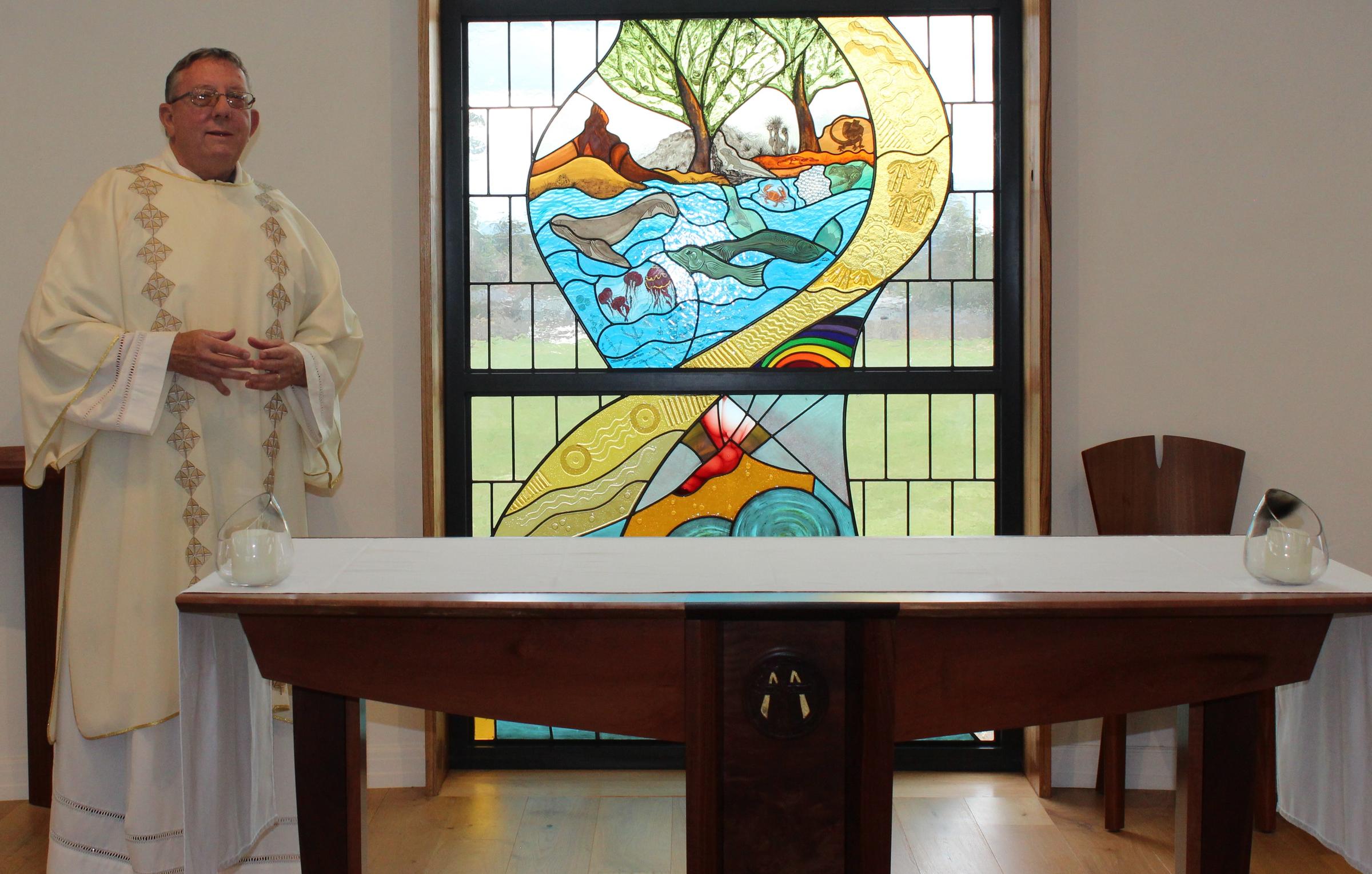
Go Team!
Pentecost Jesus is the Super-Coach. He appears to a scared and motley mob of wannabe disciples, goodhearted but confused, still unsure about the game plan; gives them a pep talk, breathes the Holy Spirit into them and they burst out, transformed into Christ’s church.
(Acts 2:1-11/ 1 Cor 12:3-13/ Jn 20:19-23)
“Peace be with you,” he says, sending his team out, not to rest on a quiet, palm fringed, beach, but to bold, courageous proclamation of the Word. His is a deeper, more lasting peace. Peace in the surety of God’s love and the ability to deal with whatever the world throws at them. Jesus’ directive spreads the apostles to the corners of the known world and beyond. They and many of the first followers of the Way (Christians) will be despised, persecuted, tortured, and executed, but we are believers today because of them.
Jesus has a mission for them, and the Holy Spirit empowers them with authority, equipment, and a plan of action. They enthusiastically erupt out of the “change room”, preaching fearlessly as they begin their mission!
Pope Francis encapsulates the experience: “Spirit-filled evangelisers means evangelisers fearlessly open to the working of the Holy Spirit. At Pentecost, the Spirit made the apostles go forth from themselves and turned them into heralds of God’s wondrous deeds, capable of speaking to each person in his or her own language. The Holy Spirit also grants the courage to proclaim the newness of the Gospel with boldness in every time and place, even when it meets with opposition.
Let us call upon him today, firmly rooted in prayer, for without prayer all our activity risks being fruitless and our message empty. Jesus wants evangelisers who proclaim the good news not only with words, but, above all, by a life transfigured by God’s presence.” (Evangelii Gaudium p183).
Feast of St Marcellin Champagnat
Thursday June 6 2024
God said "Let there be light"

Marcellin Champagnat was born in France at a time of darkness and trouble. The country was in upheaval. Crops failed. Poor people went hungry. As for the King of France and his Queen, Marie Antoinette, the hourglass of their lives was running out of sand. Soon, the royal couple, who were just 15 and 14 years old respectively when they were married, would lose not only their grandiose and opulent palace of Versailles, but their heads at the guillotine as crowds wildly cheered their demise.
Students educated in the great university cities like Paris had longed for light and the knowledge that could make people happy and free. But the “Age of Enlightenment” was ending. Revolutionary fervour now swept the land. A simple loaf of bread cost more than a labourer’s daily wage. People longed for justice. Many were angry. Some French citizens were prepared to kill. Indeed, Marcellin’s birth in 1789 coincided with the year of the French Revolution. But Champagnat was a man of peace and of love.
Young Marcellin grew up when violence seemed the order of the day, and a long shadow hung over France. Even in classrooms, a student could be beaten by his own teacher. Yet, the Champagnat family had hopes for a brighter future, for their family, for France, and for the world. Marcellin and his brothers and sisters were blessed with loving parents. When the parish priest paid the Champagnat family a visit, the teenaged Marcellin put his hand up as a candidate to be a future Catholic priest.
Out of the darkest of times in his country, light and love and laughter would prevail in the classrooms where Marcellin and his fellow teachers taught their young students. For, not only did Marcellin Champagnat become a priest,
but he also became a schoolteacher, and the leader of a group of teachers, the Marist Brothers. It was if a wonderful explosion of light shone from the hills of the French villages as the classrooms of the Marist Brothers filled with eager learners, many from families anything but rich.
One hundred and five years after Marcellin was born, a baby boy in Belgium first saw the light of day. Georges Lemaître grew up next to the France of Champagnat. He was interested in science and in theology (the study of God and religion). In George’s day, most people believed in God, and many were religious. No one, however, had ever heard of the Big Bang Theory. Georges Lemaître became both a cosmologist (a scientist who studies the universe), and a Catholic priest. His theory is famous today. Before George developed his theory, he saw the horrors of war. World War I had interrupted his studies. Lemaître became an artillery officer in WWI. He was a witness to the first poison gas attack in history.
According to the theory he later developed, the Big Bang, the universe is expanding. The scientific belief in an expanding universe, and that the observable universe began with the explosion of a single particle at a definite point in time, was a totally unorthodox view amongst scientists in the early 1930’s.
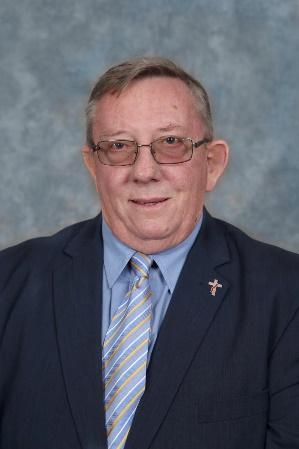
Deacon Mark Kelly
College Chaplain