Art
What an exciting start to Term Two! I hope the holidays gave you time to relax, recharge, and enjoy special moments with family and friends. This term, we’re diving back into a creative journey, exploring a wide range of materials, techniques, and processes. Students will experiment with expressive brushstrokes, oil pastel blends, soft watercolour washes, and the tactile possibilities of clay. It’s set to be a term full of creativity, curiosity, and artistic growth.
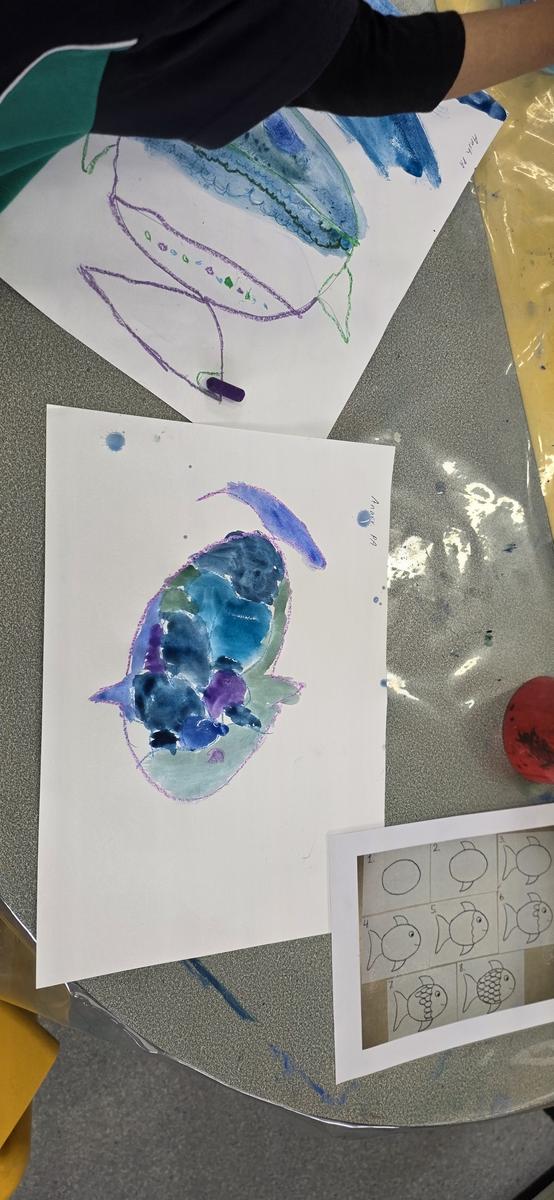
Prep
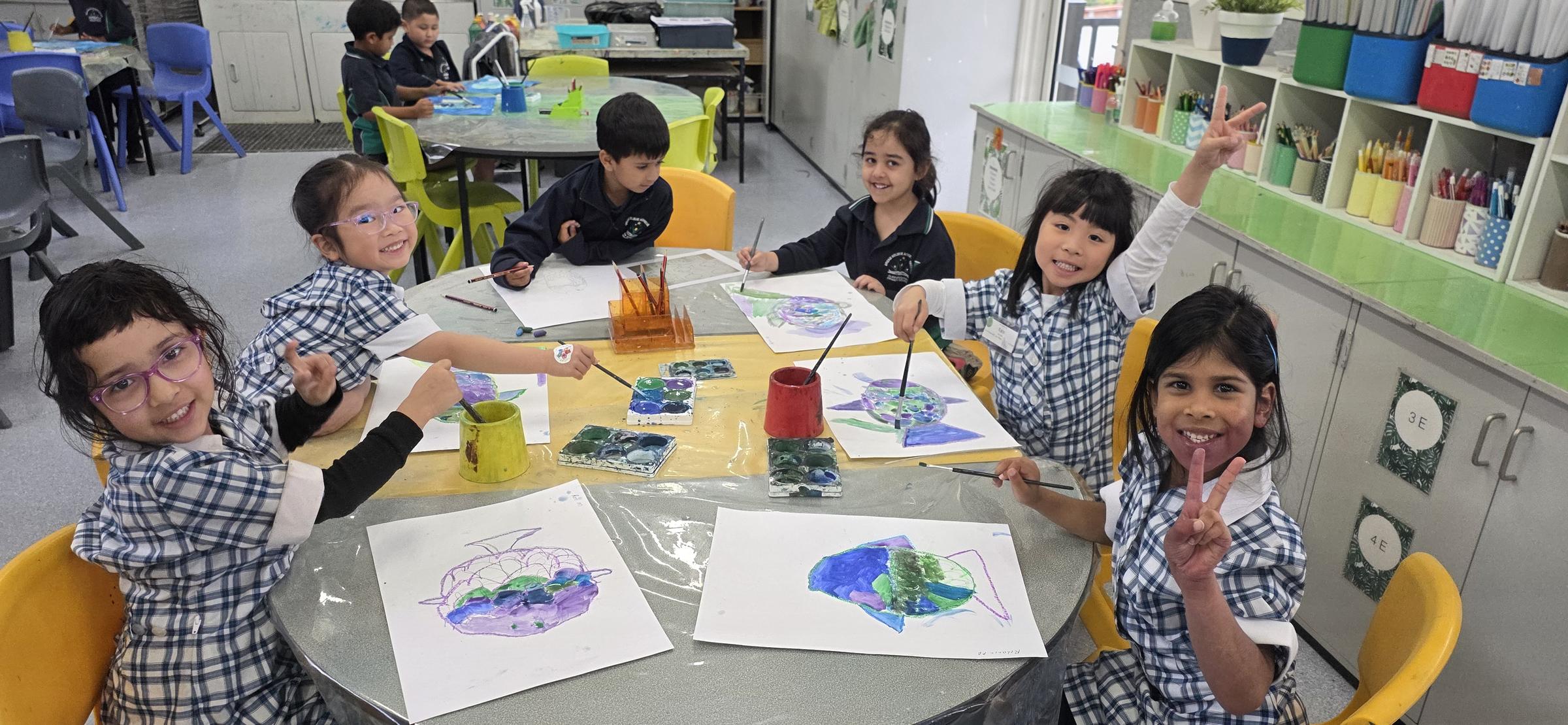
In Term Two, our Prep students will continue delving into the world of watercolour art, applying their understanding of warm and cool colours from term one to create an artwork inspired by Marcus Pfister’s picture story book, ‘The Rainbow Fish’. In the process, they will further refine their fine motor skills and hand-eye coordination through the use of cutting techniques while also exploring the creative potential of collage making. Additionally, students will learn the use of the art element of line, using it to add intricate details and textures to their artwork.
Curriculum Links:
- Explore how and why the visual arts are important for people and communities VC2AVAFE01
- Use play, imagination, experimentation, materials and processes to discover possibilities and develop ideas VC2AVAFD01
- Create artworks that communicate experiences, ideas and observations and explore meaning VC2AVAFC01
Key Vocabulary: watercolour resist, line, detail, texture
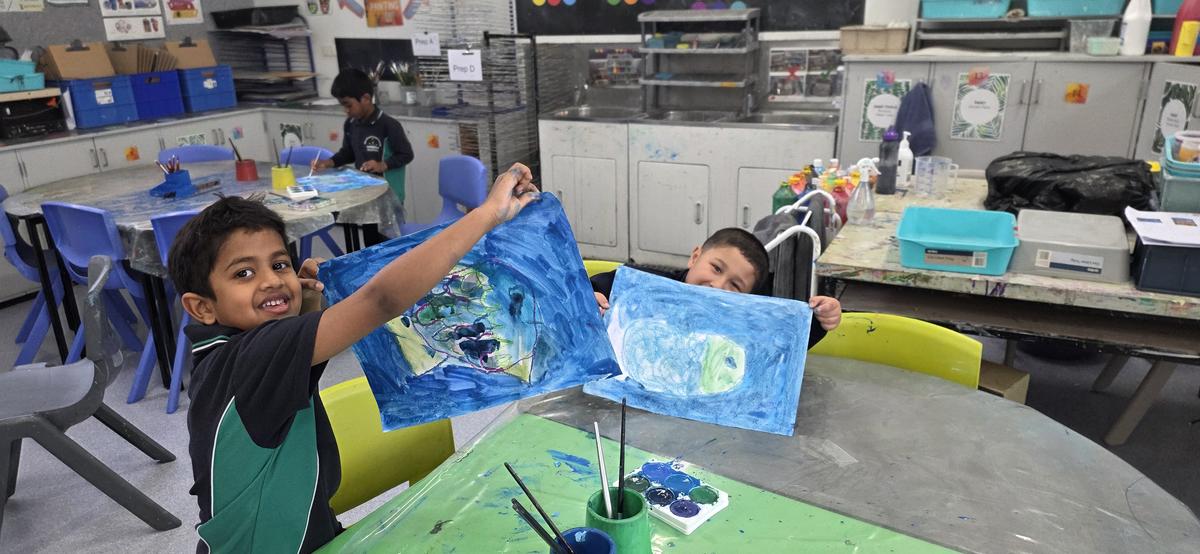
Year 1
This term, Year 1 students are deepening their understanding of Aboriginal and Torres Strait Islander cultures through visual storytelling. They will complete their narrative artworks by exploring the use of traditional Indigenous symbols, lines, and shapes—learning how these elements are used to share stories about people, animals, and Country. Students will consider how artists use pattern and repetition to communicate meaning and will be supported to create their own story-based artworks using paint markers. This unit also includes a focus on colour theory, where students will identify and mix primary, secondary, and tertiary colours to enhance their creative work.
Curriculum Links:
- Explore ways of using visual conventions, visual arts processes and materials VC2AVA2D01
- Explore where, when, why and how people across cultures, communities, times, places and/or other contexts experience visual arts, including artworks created by Aboriginal and Torres Strait Islander Peoples VC2AVA2E01
Key Vocabulary: pattern, Aboriginal and Torres Strait Islander Peoples, primary colours, secondary colours, tertiary colours
Year 2
This term, students will begin by painting their clay sculptures, adding colour and detail to complete their creations. They will then move into a new unit exploring colour blending through the medium of oil pastels. Students will learn a variety of blending techniques and develop their understanding of complementary colours—experimenting with how these bold pairings can be used effectively in their artwork. The focus will be on building confidence in colour choice and application, as well as refining control and technique with pastels to create smooth, expressive transitions.
Curriculum Links:
- Explore where, when, why and how people across cultures, communities, times, places and/or other contexts experience visual arts, including artworks created by Aboriginal and Torres Strait Islander Peoples VC2AVA2E01
- Explore ways of using visual conventions, visual arts processes and materials VC2AVA2D01
- Use visual conventions, visual arts processes and materials to create artworks that communicate ideas, experiences and observations VC2AVA2C01
Key Vocabulary: detail, oil pastel, complementary colours, blending
Year 3
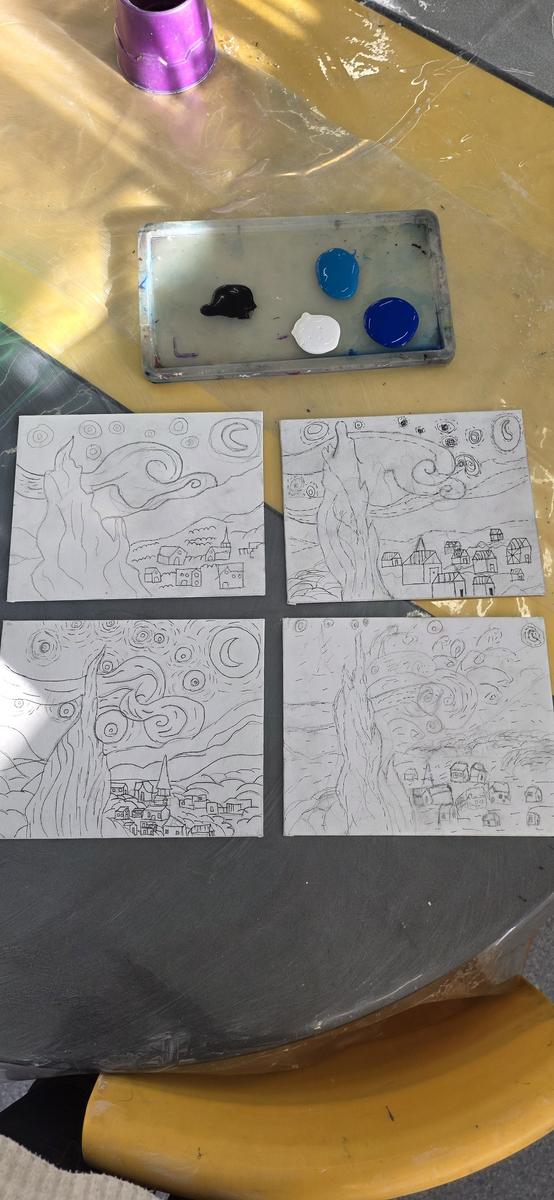
Students in Year Three, will be continuing with their canvas project, focusing on re-creating ‘The Starry Night’ by Vincent Van Gogh. Throughout this project, students will refine their understanding of spatial arrangement and further develop their skills in creating tints and shades. They'll also learn Van Gogh's distinctive brushstroke style in their own paintings. Through careful analysis of Van Gogh's work, students will explore how he used visual elements to convey specific emotions and meanings in his artwork.
Curriculum Links:
- Explore and describe artworks, and why, when and how visual arts are created and/or presented across cultures, times, places and other contexts VC2AVA4E01
- Develop visual arts practices by exploring and experimenting with visual conventions, visual arts processes and materials to create artworks VC2AVA4D01
- Use visual conventions, visual arts processes and materials to create artworks that communicate ideas, perspectives and meaning VC2AVA4C01
Key Vocabulary: Vincent Van Gogh, The Starry Night, brushstrokes, art elements, spatial arrangement
Year 4
This term, Year 4 students will begin by painting their completed Islamic-inspired clay tiles, focusing on applying the art elements of colour, line, and shape to enhance the traditional Islamic style. They will explore how decorative symmetry and geometric designs can be elevated through careful colour selection and detailed painting techniques. Students will then further develop their clay skills by exploring texture manipulation using techniques such as stippling, layering, impressing, and carving. This hands-on experience will help them understand how texture adds visual interest and meaning to three-dimensional artworks.
Curriculum Links:
- Explore and describe artworks, and why, when and how visual arts are created and/or presented across cultures, times, places and other contexts VC2AVA4E01
- Develop visual arts practices by exploring and experimenting with visual conventions, visual arts processes and materials to create artworks VC2AVA4D01
- Use visual conventions, visual arts processes and materials to create artworks that communicate ideas, perspectives and meaning VC2AVA4C01
Key Vocabulary: stippling, impressing, texture, art elements
Year 5
This term, Year 5 students will continue working on their landscape canvas paintings, based on their own chosen ideas. They will use a range of painting techniques and materials to add more detail to their work. Students will explore colour more deeply, learning about tints, shades, and value to create depth in their paintings. They will also experiment with texture and form to make their landscapes more realistic and engaging. In addition, students will develop their critical thinking by learning how to describe and reflect on different painting techniques.
Curriculum Links:
- Develop visual arts skills by experimenting with visual conventions, visual arts processes and materials VC2AVA6D01
- Plan and create artworks using visual conventions, visual arts processes and materials to communicate ideas, perspectives and meaning VC2AVA6C01
Key Vocabulary: blending, stippling, splattering, round brush, fan brush, flat brush
Year 6
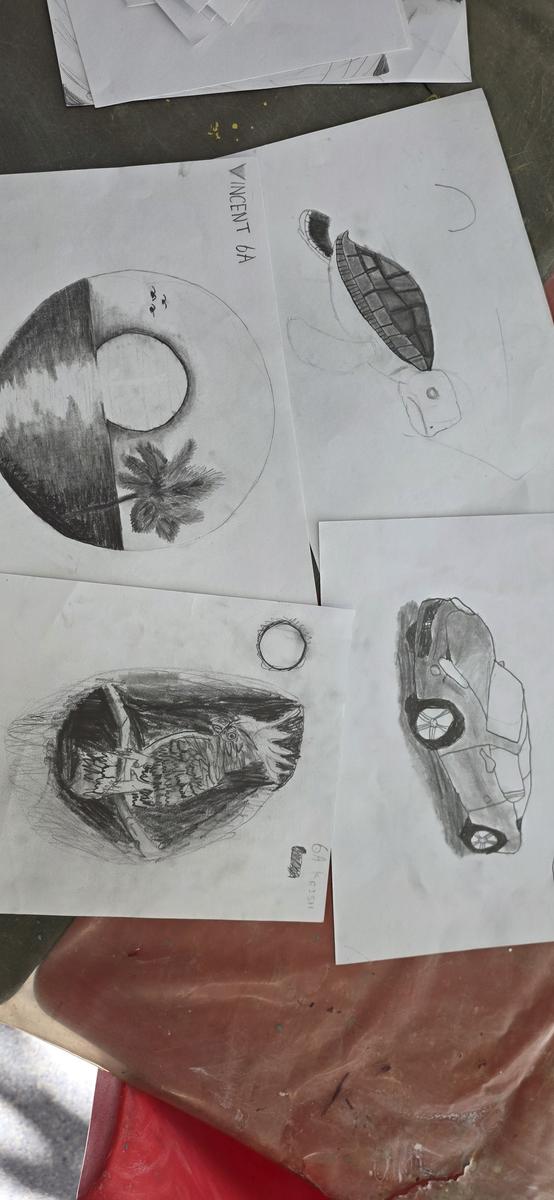
This term, Year 6 students will complete their artworks inspired by Aboriginal and Torres Strait Islander traditions, focusing on landscapes that express a strong connection to Country. Through these works, they will explore how careful placement of tone can create the illusion of light and enhance the depth and atmosphere of their compositions. Following this, students will embark on a student-led process project, where they will choose their own artistic theme and medium. They will begin by researching ideas and gathering inspiration from artists to inform and support their planning and creative development.
Curriculum Links:
- Explore ways that visual conventions, visual arts processes and materials are used to communicate ideas, perspectives and meaning in visual arts practices across cultures, times, places and other contexts, including from Aboriginal and Torres Strait Islander Peoples VC2AVA6E01
- Explore ways that Aboriginal and Torres Strait Islander Peoples use visual arts to continue and revitalise cultures VC2AVA6E02
- Develop visual arts skills by experimenting with visual conventions, visual arts processes and materials VC2AVA6D01
Key Vocabulary: highlight, middle tones, shadows, blending stump, studio process
How can you support your child’s art learning at home?
- Encourage your child to practise hand-building skills using clay or playdough. They can try making a slab, using the slip and score method to join pieces, and smoothing or polishing their work.
- Support your child to include different art elements in their artwork, such as line, texture, shape, colour, tone, form, and space. You can also help them practise identifying and describing these elements in artworks they see.
- Encourage your child to experiment with a variety of painting techniques and materials to build their skills. This could include blending, layering, dry brush, using a palette knife, or painting with a sponge.