Curriculum and Learning
Year 11 Assessment Block
The Year 11 Assessment Block will commence on Tuesday 28 April and will conclude on Thursday 7 May. Assessments may vary in type, structure, and format to written examinations.
It is the College’s expectation that all senior students conduct themselves in an exemplary and serious manner during the Assessment Block. Year 11 students are reminded to consult the document Assessment/Examination Block Rules for Senior Students on the Year 11 CANVAS page as any breach of the rules may incur a zero mark being awarded for the associated assessment.
The Assessment Block timetable has been distributed to Year 11 students and parents/carers.
Parents/carers and students of Year 11 are reminded, that in the event of absenteeism due to illness or misadventure during the Assessment Block, a telephone call to the Year Coordinator, Mrs Cesarano, must be made on the morning of the assessment. Where possible, an alternate task will be arranged within the Assessment Block period. Immediately, on the student’s return to school, a completed illness/misadventure form, with the related medical certificate or other official supporting evidence attached, must be personally given to Mrs Cesarano.
If illness or misadventure prevents a student from attending or submitting an assessment or affects their performance in an assessment, it is the student’s responsibility to complete and submit an illness/misadventure application, not a parent/carer or relative, unless the student is physically unable to do so.
It is important to note that illness/misadventure applications are for cases where an illness or misadventure:
occurred immediately before or during an assessment
was unexpected
was beyond the student’s control and prevented them from attending or diminished their performance in the assessment.
The College will not consider illness or misadventure applications for:
difficulty preparing or lost preparation time
alleged deficiencies in teaching
misreading the Assessment Block timetable
misreading assessment instructions
attempting the wrong assessment
long-term illness (e.g., glandular fever, asthma, or epilepsy), unless the student has suffered a flare-up of the condition during the assessment
conditions for which the student has been granted disability provisions, unless they have further unexpected difficulties
conditions for which a student should have applied for disability provisions
other commitments such as participation in work, sporting event, holiday, or attendance at tests conducted by other organisations.
Illness/misadventure applications must include advice or evidence from a relevant independent expert, not a parent/carer or relative, on the same day, either immediately before or after each assessment for the student. The medical certificate must be written by a practising medical doctor who is not a parent/carer or relative. A certificate from a dentist to cover an appointment will not be accepted unless sudden urgent or emergency treatment was required.
The student must provide documentation that is current, specific to the date and time of the assessment, and submitted with the illness/misadventure form. A medical certificate that merely states “illness” and/or “unfit for work/study” is unacceptable and the College will not consider an illness/misadventure application without sufficient evidence supporting a genuine reason.
Year 10 Academic Attainment Test
As per the College Calendar and Diary, the Academic Attainment Testing for Year 10 is scheduled for Tuesday 12 May. If a boy is absent, they will sit the tests on Monday 18 May.
The purpose of these tests is to provide the College with externally determined independent assessment data that will inform prospective Year 11 students and their parents/carers making appropriate subject selection choices for the senior years of secondary schooling.
The tests are administered by Academic Assessment Services (AAS), who are nationally renowned independent consultants specialising in the assessment and analysis of educational performance and progress.
It is important to note that the data from these attainment tests will contribute significantly to subject selection recommendations for Year 11 in 2027.
2026 HSC Written Examination Timetable, Languages Oral Timetable and Practical Examinations Timetable
On Friday 1 May, the 2026 HSC written examination timetable will be available for viewing online via the NESA website at:
HSC written exam timetable | NSW Education Standards.
The HSC written examinations will commence Tuesday 13 October and will conclude no later than Thursday 5 November 2026.
The 2026 HSC Languages oral examination timetable is now available. Scheduled timeframes for each language may be viewed at:
HSC languages oral exam timetable | NSW Education Standards.
Once bookings open, Ms D'Arcangeli will send students a personalised appointment time.
HSC practical examinations are for HSC subjects with projects, submitted works and performances. The schedule of the 2026 HSC practical examinations is available for viewing at:
HSC practical exams | NSW Government.
Students can access their personalised written examination timetable via Students Online.
James Martin
Director of Curriculum
Art on the Stake
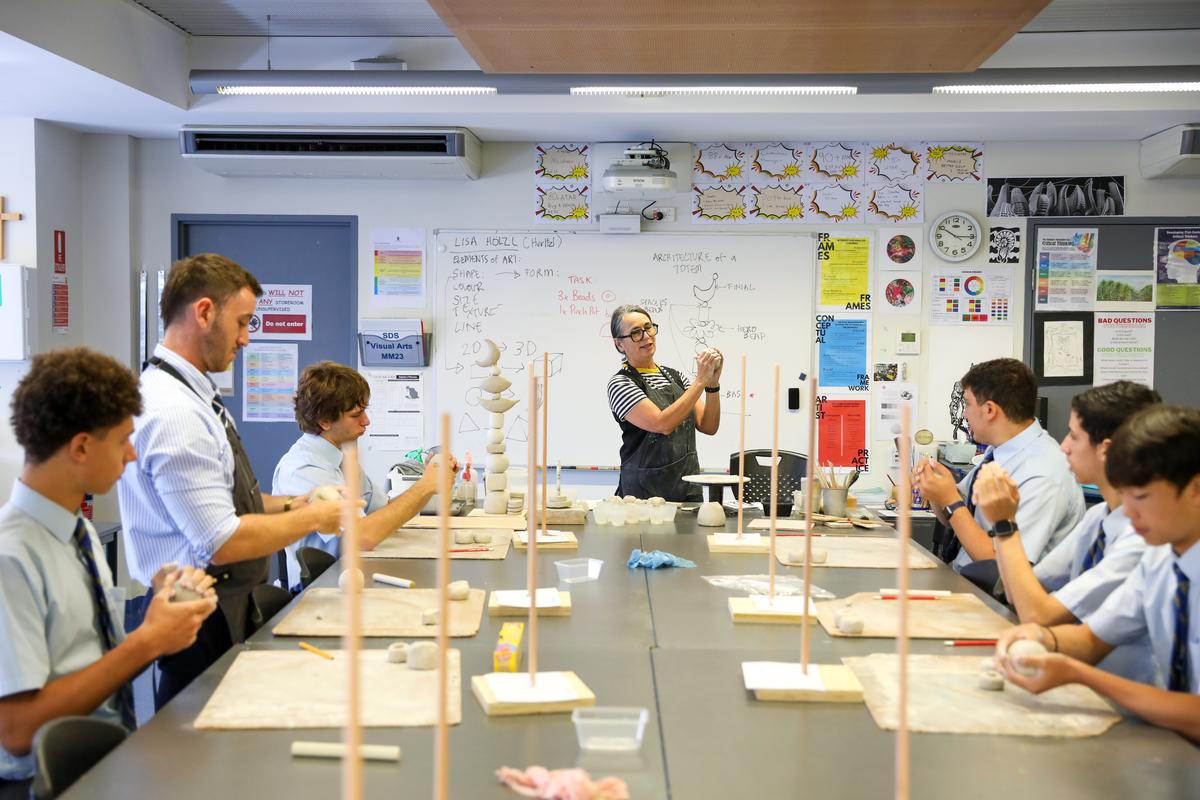
Over the course of Term 1, Year 10 Visual Arts students collaborated with ceramic artist Lisa Holzl to create a series of ceramic artworks in the form of totem poles. Lisa is a practicing ceramicist based in Marrickville whose work focuses on large-scale, totem-inspired forms. Her artworks are bold and vibrant, demonstrating a strong relationship between form, texture and pattern, and often reference natural sources such as seed pods, as well as the work of renowned artists of the art world.
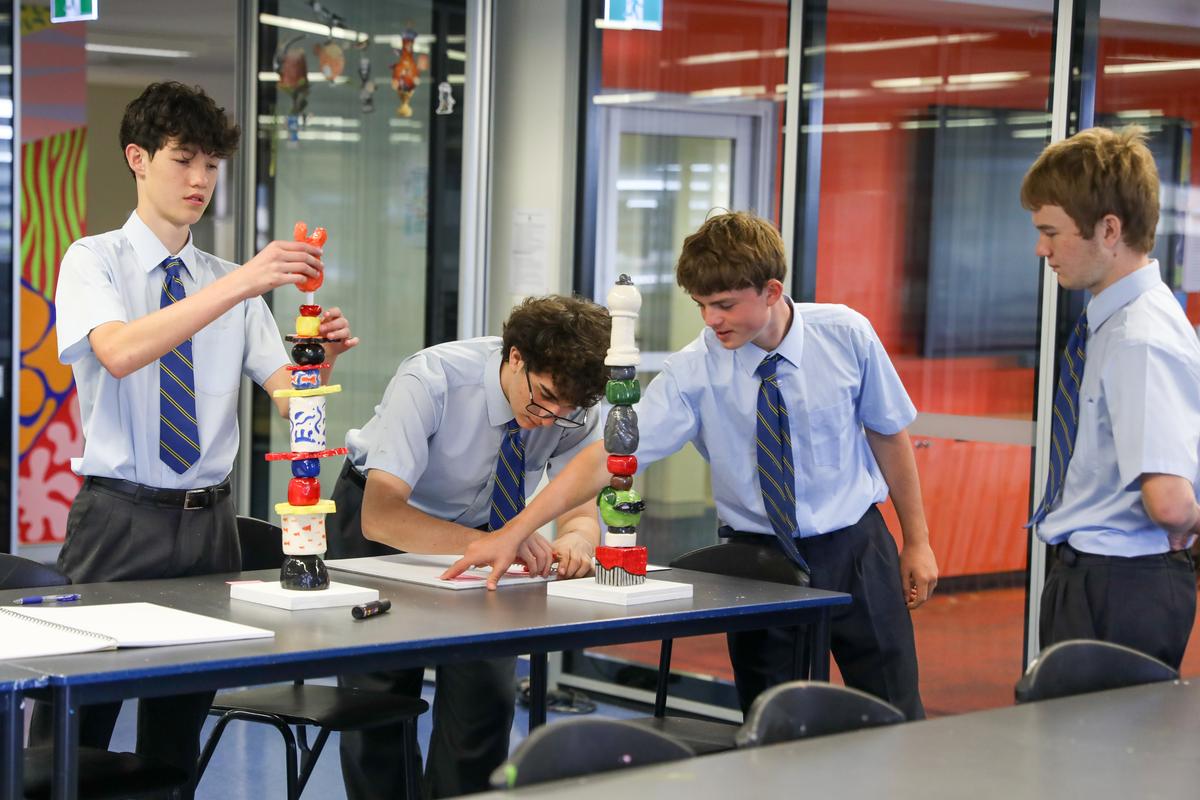
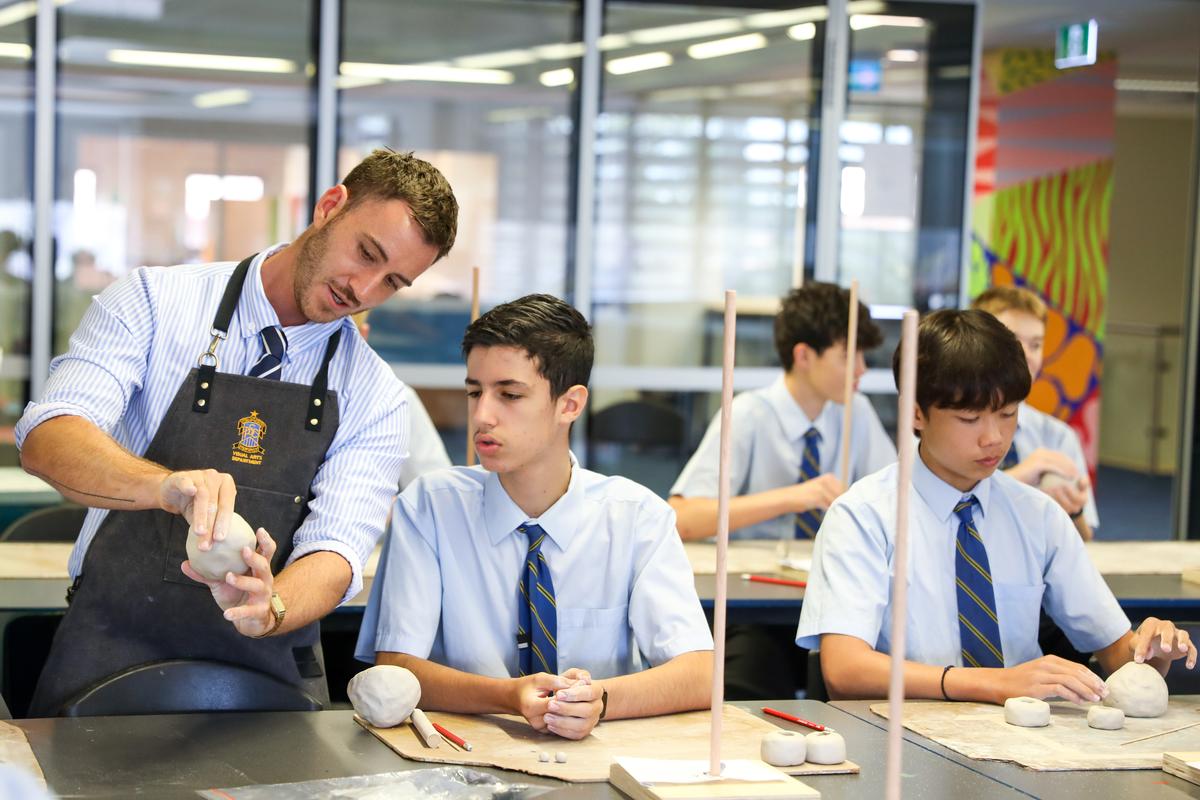
Students were challenged to design and construct a ceramic totem pole that paid tribute to a well-known artist and the art movement they championed. Artists studied included Andy Warhol, Henri Matisse, Vincent van Gogh, Salvador Dalí, Pablo Picasso and Yayoi Kusama. To successfully complete the task, students first undertook research into their chosen artist and associated art movement, before designing a totem pole that clearly referenced these influences. This was achieved through the inclusion of recognisable imagery, such as Warhol’s Campbell’s Soup Can, or through the use of distinctive colours, patterns and textures, such as the swirling blue brushstrokes seen in Van Gogh’s Starry Night.
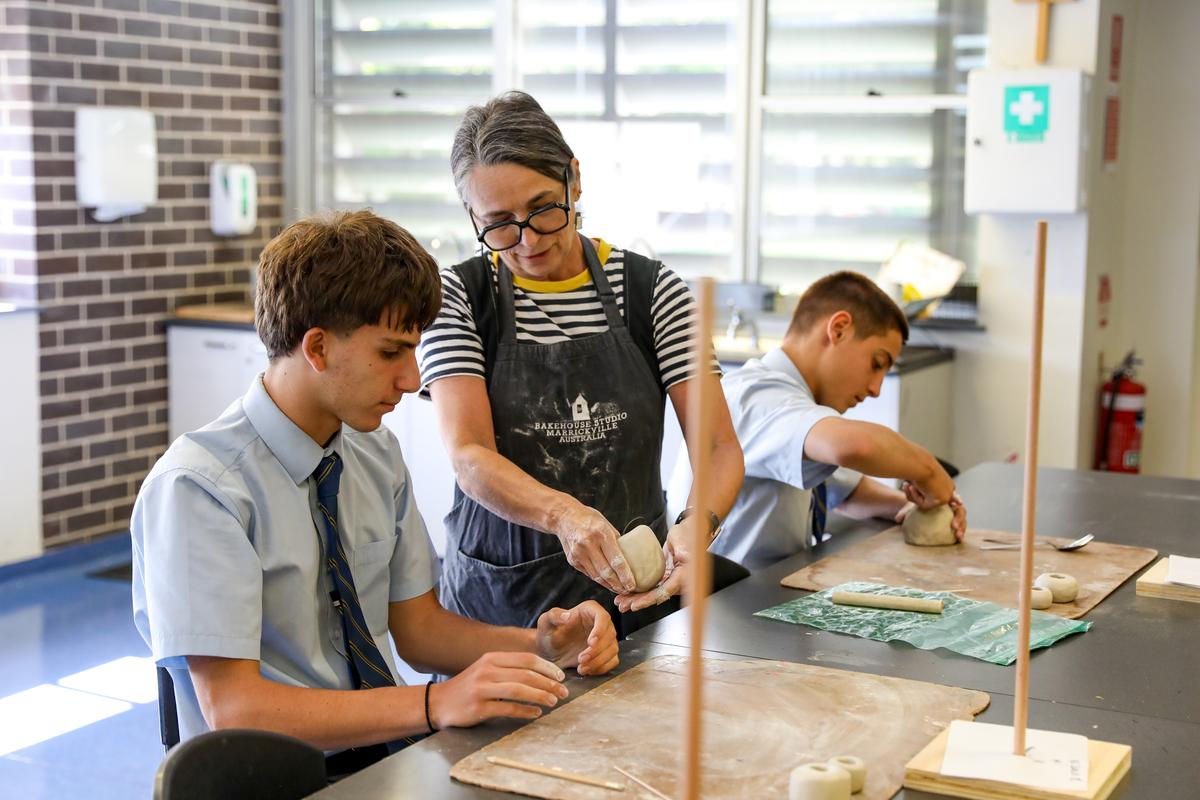
Throughout the term, Lisa and I worked closely with students to develop their knowledge of ceramic hand-building techniques, the firing process, and the complexities of underglazing finished works. Ongoing critical discussions focused on the strengths of each student’s work, as well as decisions around the sequencing and arrangement of individual elements (or ‘beads’) within each totem to create a cohesive final form.
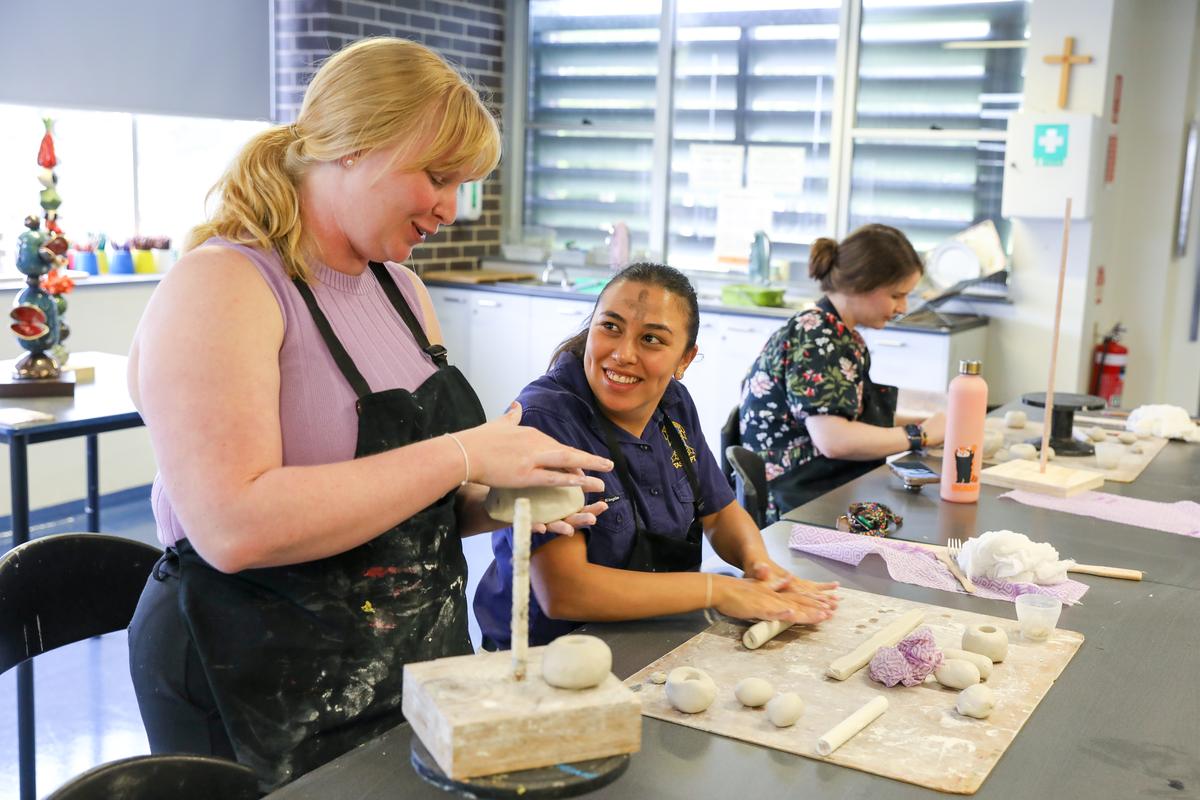
In addition to the student program, Lisa facilitated two collaborative workshops for staff, during which participants worked together to create a large-scale ceramic totem pole. In the first session, staff worked in pairs to construct banksia seed pod forms, before underglazing these pieces in the second session in preparation for firing. The completed staff totem pole is scheduled for permanent installation in the garden bed in front of the Hickey Building.
Overall, the program provided both students and staff with an invaluable opportunity to work alongside a practicing artist and to gain firsthand experience in ceramic artmaking. Lisa’s approach—working individually with students and offering constructive feedback supported by her extensive experience—helped build student confidence and deepen their understanding of ceramics. This experience has laid a strong foundation for continued success in students’ visual arts practice at SPC. We thank Lisa for her time spent at the College and applaud the students, and staff, for the excellent works that they produced over the term!
Anthony Porra
Head of Visual Arts