
Chaplain's Reflection
What a Man!
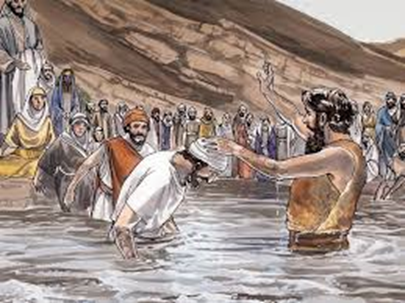
St John the Baptist, the son of Elizabeth and Zechariah, was born close to the birth of his cousin Jesus. As his father had prophesied, John went on to be the prophet of the Most High, preparing the way of his cousin, baptizing him and preaching repentance, salvation and the tender mercy of God. John was imprisoned and beheaded by Herod for his outspoken prophesies.
Jesus said of him, “Among those born of women there has not risen anyone greater than John the Baptist.” (Lk 7:24-28) Wow!
John, the gospel writer this week (John 1:6-8,19-28) underscores the character of John the Baptist. To the people of Israel, God sent prophets to proclaim his presence to them, to help them realise what God was saying to them in the events of their history. Last of the prophets was John the Baptist who, like Isaiah, was “sent”. His mission was to point out to the people of his time and country that God was operating in the world. As “witness to the Light” he showed them that the “light” was about to come into the world, announcing the presence of Christ and pointing to where he was by identifying him to the people.
Being commissioned as a witness, each Christian acts as a prophet. And, like the prophets who operated before the time of Christ, each Christian is given the Spirit of the Lord and is sent to a particular people, namely the people who are part of her life.
Her life should be one that proclaims the presence of Christ in the world. She should be sensitive to the Holy Spirit, hear his inspirations and be responsive to his power. And, by reading the signs of the times she should know what God is saying to herself and others, and what he is asking of them, in the daily events of her life.
WISHING ALL A HAPPY AND HOLY CHRISTMAS AND NEW YEAR
Christmas and the power of love
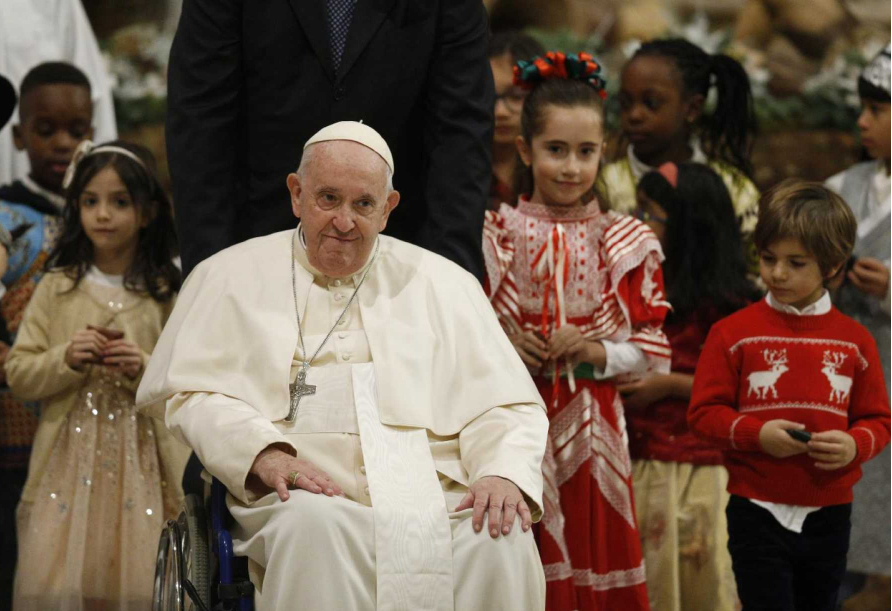
Preaching at the Christmas Vigil Mass last year, Pope Francis reminded us that:
“Christ was born to touch people's hearts and show that love is the power that changes the course of history.”
However, the faithful must ask themselves, "Do we want to stand at his side? Do we draw close to him? Do we love his poverty? Or do we prefer to remain comfortably ensconced in our own interests and concerns?"
"We are called to be a church that worships a Jesus who is poor and that serves him in the poor," the pope said, calling for a renewed commitment to charitable action and concrete change.
"The church supports and blesses efforts to change the structures of injustice and sets down but one condition: that social, economic and political change truly benefit the poor," the pope said, quoting St. Oscar Romero.
In his homily, the pope reflected on the danger of a Christmas filled only with "decorations and gifts, after so much consumerism that has packaged the mystery we celebrate."
"How do we rediscover the meaning of Christmas?" the pope asked. "We need to look to the manger."
"In the manger of rejection and discomfort, God makes himself present."
"He comes there because there we see the problem of our humanity: the indifference produced by the greedy rush to possess and consume," he said.
It is there that people can discover Jesus' closeness to humanity, his choice to be present in the poor and marginalized, and his demand for "a concrete faith, made up of adoration and charity, not empty words and superficiality," Pope Francis said.
The manger, as a feeding trough, can also symbolize a hunger for wealth and power, and people willing to consume "even their neighbours, their brothers and sisters," he said.
"How many wars have we seen," the pope asked, and how many places treat human dignity and freedom with contempt?
"This Christmas, too, as in the case of Jesus, a world ravenous for money, power and pleasure does not make room for the little ones, for so many unborn, poor and forgotten children," especially those "devoured by war, poverty and injustice," he said.
In Jesus, "every child is present. And we ourselves are invited to view life, politics and history through the eyes of children," Pope Francis said.
With Jesus -- born in a manger -- he can become "our food," feeding a hungry humanity "with his tender love," he said.
Deacon Mark Kelly
College Chaplain