Lessons in Humanity: Holocaust Museum Experience
Holocaust education is mandatory for all Victorian government school students in Years 9 and 10, integrated into the History curriculum to address and combat rising anti-Semitism and prejudice. The Department of Education (DoE) requires schools to deliver a comprehensive, and engaging curriculum, utilising validated, evidence-based resources from partners like the Melbourne Holocaust Museum and Yad Vashem.
Belinda Kemp
Head of Learning - Humanities
As part of the Victorian Curriculum, Year 10 students have been studying the Holocaust to develop their understanding of this significant historical event and its impact on individuals and societies. In Week 3, students attended an excursion to the Melbourne Holocaust Museum to support and extend their classroom learning.
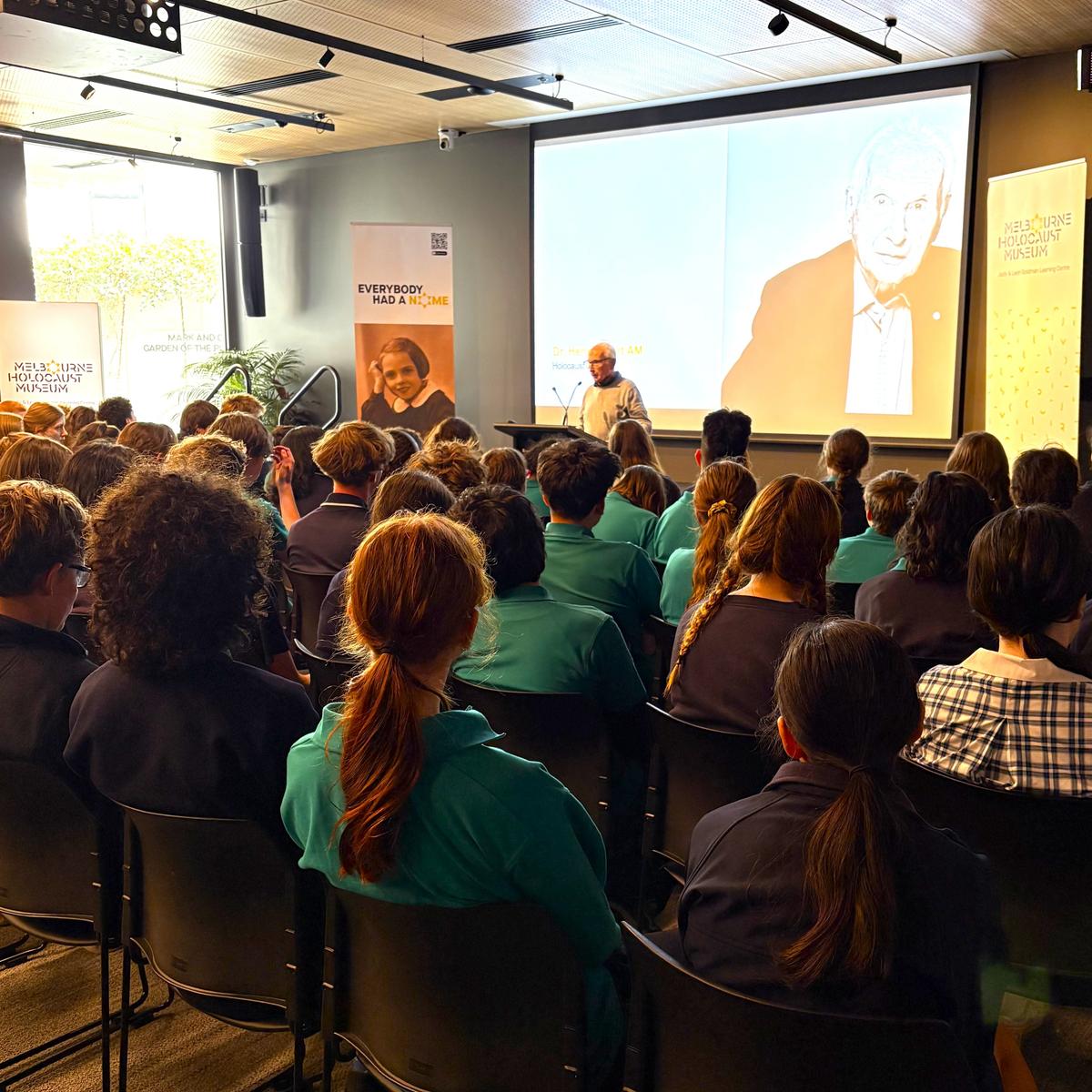
During their visit, students had the opportunity to explore the museum’s exhibitions, which present personal stories, historical artefacts, photographs and multimedia displays. Students also engaged in tactile learning experiences through the handling of replica artefacts, including examples of wartime propaganda. These activities helped students to better understand how historical sources can provide insight into people’s lived experiences during this period.
A particularly meaningful part of the visit was the opportunity for students to hear directly from Holocaust survivors, including Dr Henry Ekert AM and Peter Gaspar OAM. Listening to survivor testimony allowed students to engage with personal perspectives and reflect on the importance of preserving and sharing historical memories.
Learning about the Holocaust supports students in developing historical understanding, empathy and critical thinking skills.
Through studying significant events of the past, students build knowledge and analytical skills that assist them in understanding the complexities of events and challenges we face in the modern world.
Maxine Steel - Year 10
The best part of the excursion was listening to Dr Henry Ekert's story.
Dr Ekert experienced the Holocaust as a child in Poland; he spoke passionately about how he survived - being moved between the houses of selfless citizens. Listening to his story made the history feel real — it reminded us how lucky we are to be able learn from survivors in person - and to connect the statistics we study in class with someone’s lived experience.
Lucy Breese - Year 10
The visit to the museum was an eye-opening experience - seeing and hearing evidence of what exactly happened to the Jews in the Holocaust. Our speaker, a holocaust survivor, told us about his story, and how he and his family escaped the Germans. It was so hard to believe that what he told us had actually happened to him. The exhibits were amazing, I just wish that we had a bit more time to look at them. Our guide was from Poland and he did an amazing job.
Nam-Son Dumont - Year 10
We looked at some primary sources of the dehumanisation and loss of culture the Jewish population of Poland suffered at the hands of the Nazis. The ration cards provided insight on the limited amount of food the Jewish people living in the ghetto had access to, and seeing the propaganda the Nazi party spread increased my understanding of the discrimination and prejudice the Jews faced during the war. Our tour guides helped us to understand the context behind the artifacts that were pulled from the ghettos in Poland, giving touching stories of little children who fought against the Nazis. We also spoke to a holocaust survivor, who told us troubling and heart breaking stories of what he endured to survive - forced to live in hiding and not being able to live an ordinary childhood.
Callum Martin - Year 10
We saw a lot of artifacts, and evidence of the holocaust. Dr. Ekert told us his amazing story - how he escaped the ghetto and being killed.
His was a story of sorrow and loss, but also a message to appreciate what you do have.
He left us with an heartfelt message: “Do good instead of bad."