
Wellbeing and Inclusion

What is Co-Regulation and Why Does it Matter?
You may have heard the term co-regulation used at school, but what does it actually mean, and how does it show up in your child's everyday life?
Simply put, co-regulation is when a calm, caring adult helps a child manage big emotions.
Young children are not born knowing how to handle frustration, disappointment, or anxiety, that part of the brain is still developing well into the teenage years. Co-regulation is the process where a trusted adult steps in to provide the warmth, support, and calm presence that helps a child settle, think more clearly, and eventually learn to manage those feelings on their own.
Think of it like this: when your child is overwhelmed, their brain is in "alarm mode." Your steady, calm presence acts like a reset button, helping their nervous system settle so they can begin to problem-solve and communicate again.
Why is it so important?
Research tells us that children who experience consistent co-regulation from the adults around them go on to develop stronger self-regulation skills, the ability to manage their own emotions and behaviour independently. In other words, the more supported children feel during difficult moments now, the better equipped they will be to handle challenges on their own as they grow.
Co-regulation also strengthens the relationship between a child and their trusted adults, which is one of the most powerful protective factors for children's long-term mental health and wellbeing.
When is co-regulation most helpful?
Co-regulation is particularly valuable in moments such as:
- When emotions are running high -a meltdown, a moment of frustration, or feeling overwhelmed by a task
- During transitions - moving between activities, arriving at school, or navigating a change in routine
- After something difficult - a conflict with a friend, a disappointing result, or an upsetting experience
- When a child is tired or unwell - capacity for self-control is much lower when children are physically depleted
What does it look like in practice?
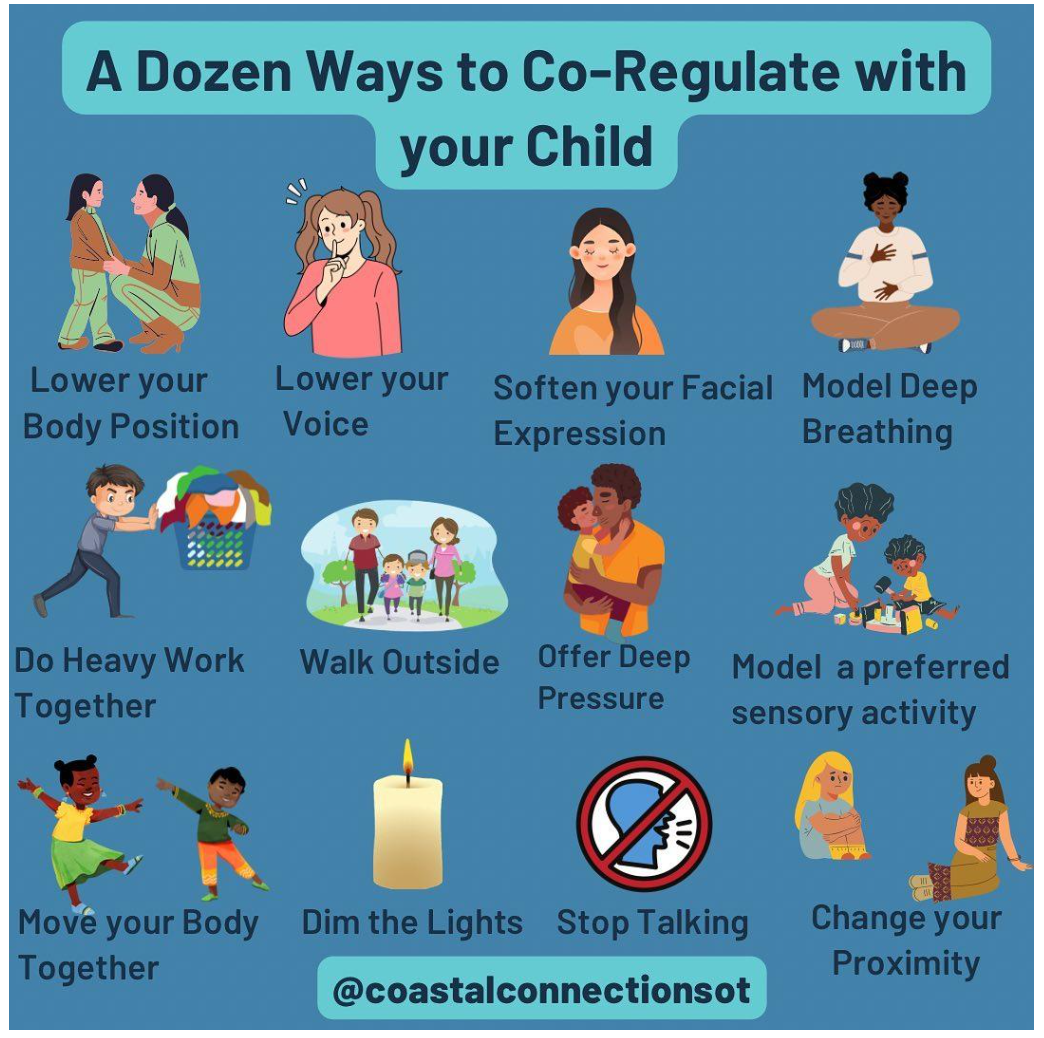
Co-regulation doesn't mean fixing the problem or telling a child to calm down, in fact, saying "calm down" rarely helps! Instead, it might look like:
- Getting down to your child's level and speaking in a slow, quiet voice
- Sitting nearby without pressure to talk
- Acknowledging their feelings: "I can see you're really upset right now"
- Offering a hug or gentle physical comfort if they want it
- Waiting calmly until they are regulated before trying to problem-solve or discuss what happened
At school, we use co-regulation strategies every day as part of our commitment to student wellbeing. We believe that when children feel safe and supported, they are better able to learn, connect, and thrive.

Foundation
People we are grateful for
Foundation students will explore family/carers or people in their lives that care for them and express gratitude towards them.
Years 1 and 2
Strengths in my heart
Students will explore and identify their character and personal strengths. Through guided practice and self-reflection, students will build their understanding of appreciating their own strengths, and the importance of noticing and expressing appreciation for the positive strengths of others.
Years 3 and 4
What is gratitude?
Students will explore the definition of gratitude. Students will record things they’re grateful for and reflect on the different emotions they experience when they focus on what they have or don’t have.
Years 5 and 6
Grateful for my friends
Students will explore the role of gratitude in building and strengthening friendships. Students will explore the qualities of a good friend and build connections with classmates through a game.