
Indo Info
Ibu Kas

Indo Info
Ibu Kas
SOME MIND BENDERS
Ibu-Ibu dan Bapak-Bapak (Ladies and Gentlemen),
We have known for a while now that learning languages is a great work out for our brains. MRI scans and other techniques have shown physical changes in the brains of people who are bi/multi lingual: more neurons, more neuron connections , and greater connectivity between different regions of the brain. But do you know why? Here are some examples from just this week of how your children’s brains were stretched so that they have begun to lay down some new neural pathways.
Seniors: Indonesian’s don’t use an ‘s’ to show plural or a possessive “ …’s” to show possession. Plural nouns are doubled {kucing = cat, kacing-kucing = cats} unless it’s obvious from the context that something is plural then you don’t need to do anything { banyak kucing = a lot of cats}. Word order is used to show possession, so … Alice kucing = Alice is a cat, but Kucing Alice = Alice’s cat. When seniors are writing their own cartoons and stories, remembering to override their already strong neural pathways telling them to add an ‘s’ to make plural and “ ‘s” to show possession takes a huge amount of brain power but every time they self/peer/ or teacher edit to do it the Indonesian way, they are helping to lay down a new pathway.
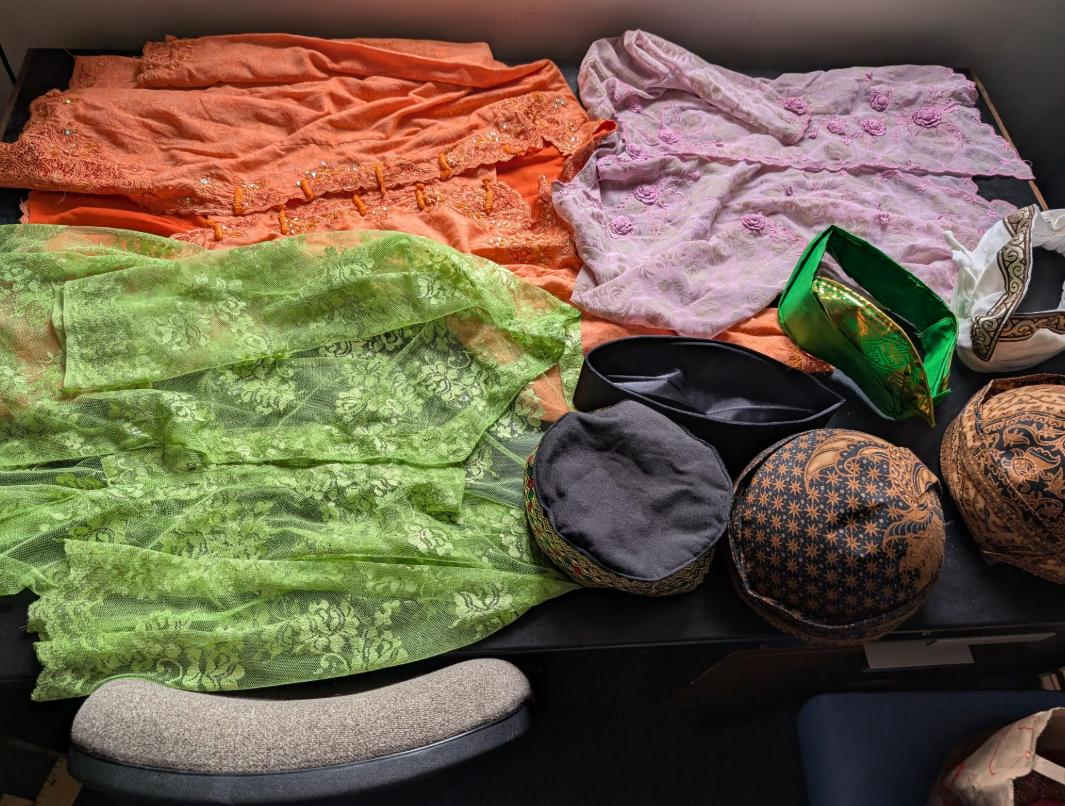
Middles: Have been practicing using the possessive pronoun ‘my’ to introduce members of their families. They need to remember that when “saya” come first it means “I” but when it follows a noun it means ‘my”. I have seen them perform some very amusing role plays where one partner uses some traditional clothing to dress up as an Ibu or Bapak and the other plays the role of a child introducing them.
{Child: Ini bapak saya. (this is my dad)
Dad: Saya bapak. (I am dad)
Child: Nama bapak saya John. (my dad’s name is John).
Dad: Nama saya John. (My name is john.) } {the names some of our child actors gave our grown ups weren’t always as sedate as John 😉 }
Juniors: If you translated the question “How old are you?” literally into Indonesian, if asking a young child it would sound amusing (a child isn’t old!- they are young) or an adult rude (why are you calling me old??) Indonesian’s would instead ask: How much is your age? But that sound’s a bit funny in English! So translations are not literal and word order can be different!
Foundation: Foundation students don’t know it yet, but in teaching them the phrase “boleh minta….” To ask politely for something they want, I am setting them up to learn the literal translation when they are in middles/seniors and discover that it means “may ask” – when the pronoun is obvious in Indonesian – you are allowed to leave it out. The article I have posted below helps to explain why you might want to leave pronouns out – choosing the correct pronoun in Indonesian is not as straight forward as you might think! Which links back to last week’s Indo Info about the many meanings of Ibu and Bapak and how they are often used in place of the pronouns “you, he, or she” (Kakak would be used to replace they singular). If you are interested, the link below leads to an article that gives more information on the use of honorifics and pronouns – it’s a mind bender!)
I hope you enjoy 😊
https://medium.com/curious/the-curious-case-of-indonesian-honorifics-7e75cb02b7e4