Assistant Principal's Message

Sue Gorden

A message from our Assistant Principal
MPPS Engagement Pillars & Teaching Guide
Tim, Simone and myself, were invited to present our pedagogical model, as an example of exemplar practice, with our Beachside Network this week. The Beachside Network is made up of all the beachside schools from Port Melbourne to Beaumaris. Tim and I meet twice per term with the other beachside Principals and Assistant Principals along with the Principals’ conferences we attend in semester one and two. Rachel George, our Senior Education Improvement Leader (SEIL) and network leader, provides many other opportunities for our schools to work together on leading school improvement. The opportunities to collaborate and learn from one another is invaluable.
Our pedagogical model has been redefined and enhanced in recent years through our work with the staff and the development of our MPPS Teaching Guide. This teaching guide is the culmination of our work in 2024 through our whole school inquiry into ‘What is engagement?’.
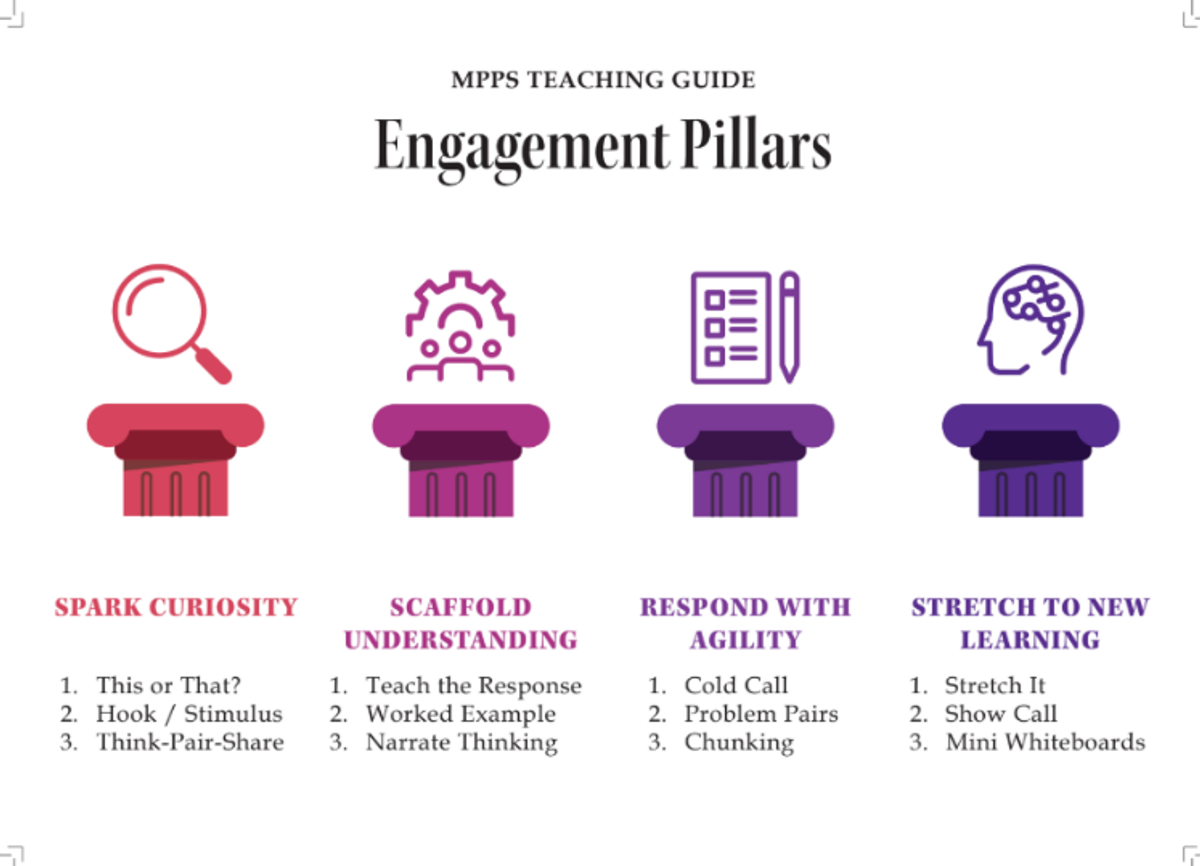
We have defined engagement by our four Engagement Pillars – Spark Curiosity; Scaffold Understanding; Respond with Agility; Stretch to New Learning.
Within our teaching guide, we have nominated three teaching techniques for each Engagement Pillar. In 2025, we have focused on the Engagement Pillar: Stretch to New Learning. The staff have worked collaboratively to embed and master the following two techniques within their classrooms: mini whiteboards and show call. These techniques have strengthened classroom engagement and created authentic opportunities for learning stretch for our students. Congratulations and thank you to our staff who have dedicated their professional learning and peer observation and feedback experiences to embedding these techniques to a mastery level.
Play spaces during our building works
As we discussed at a recent assembly, the building works are an exciting opportunity for MPPS to update their facilities and for us to learn about and observe the building process. Some of our classes, with a birds eye view overlooking the building site, are documenting the progress of the project through their time lapsed photography.
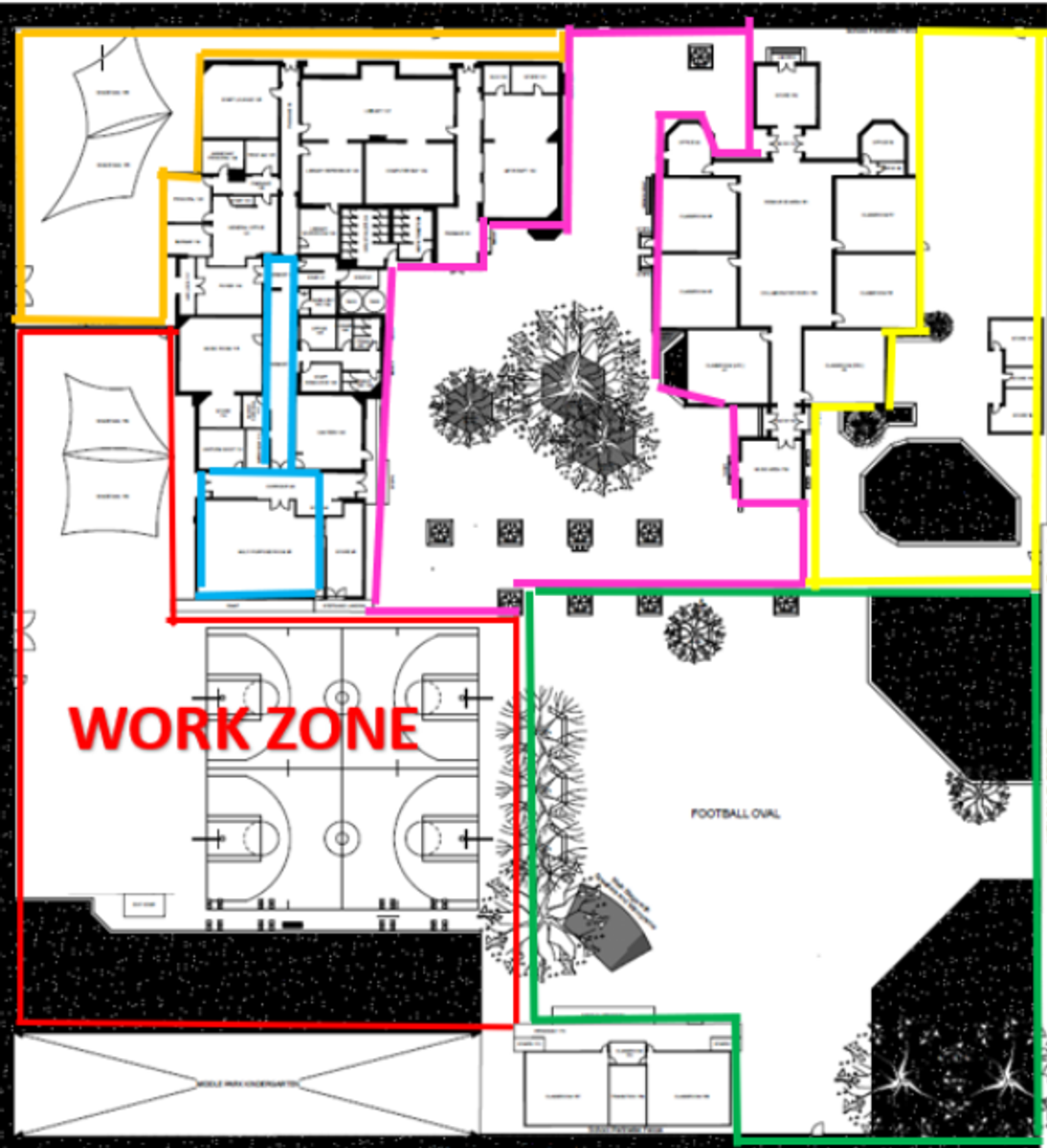
For the duration of the project, we have adjusted our play spaces around the school and supervision of these spaces. During each break time, students may play in: the multipurpose room and library corridor; outdoor classroom and along Richardson Street frontage; around the olive tree and surrounding area; in the Prep area and on the oval and accompanying playgrounds. Each area has at least one adult supervising with numerous areas often having two adults within those spaces to support the children.
Please see the accompanying image for a visual representation.
Diwali Festival
We were very privileged to have two of our senior students, Gopinath and Chaitanya, share the story of their culture’s Diwali festival. Diwali is celebrated on the new-moon day (Amavasya) in the Hindu calendar, which in 2025 fell between October 20 at 3:44 pm and October 21 at 5:54 pm.
Please enjoy reading their speech:
“You may have noticed over the week, that many Indian families have been decorating their homes with beautiful lights, lamps, and colourful rangolis. That’s because we’re celebrating Diwali, also known as the Festival of Lights.
Diwali is one of the most special festivals in India, and it has a beautiful story behind it. It celebrates the return of Lord Rama to his kingdom, Ayodhya, after 14 years of exile. During that time, his wife, Sita, was kidnapped by the demon king, Ravana, and with the help of his brother, Lakshmana, and his loyal devotee, Hanuman, Rama fought a great battle to rescue her.
After finally defeating Ravana, Lord Rama, Sita and Lakshmana began their journey back home. But the night they returned there was a no moon night, completely dark. To welcome them and light their path, the people of Ayodhya decorated the entire city with rows of oil lamps, filling the city with light and happiness. That’s how the tradition of lighting diyas on Diwali began.
Today, Diwali reminds us to celebrate joy, love and unity. In the end, the true message of Diwali is that light wins over darkness, and good always triumphs over evil.
Thank you, and Happy Diwali!!”
Looking forward to seeing you around school.
Kind regards,
Sue Gordon