
Principal's Address
Mr Gregory Miller - Principal
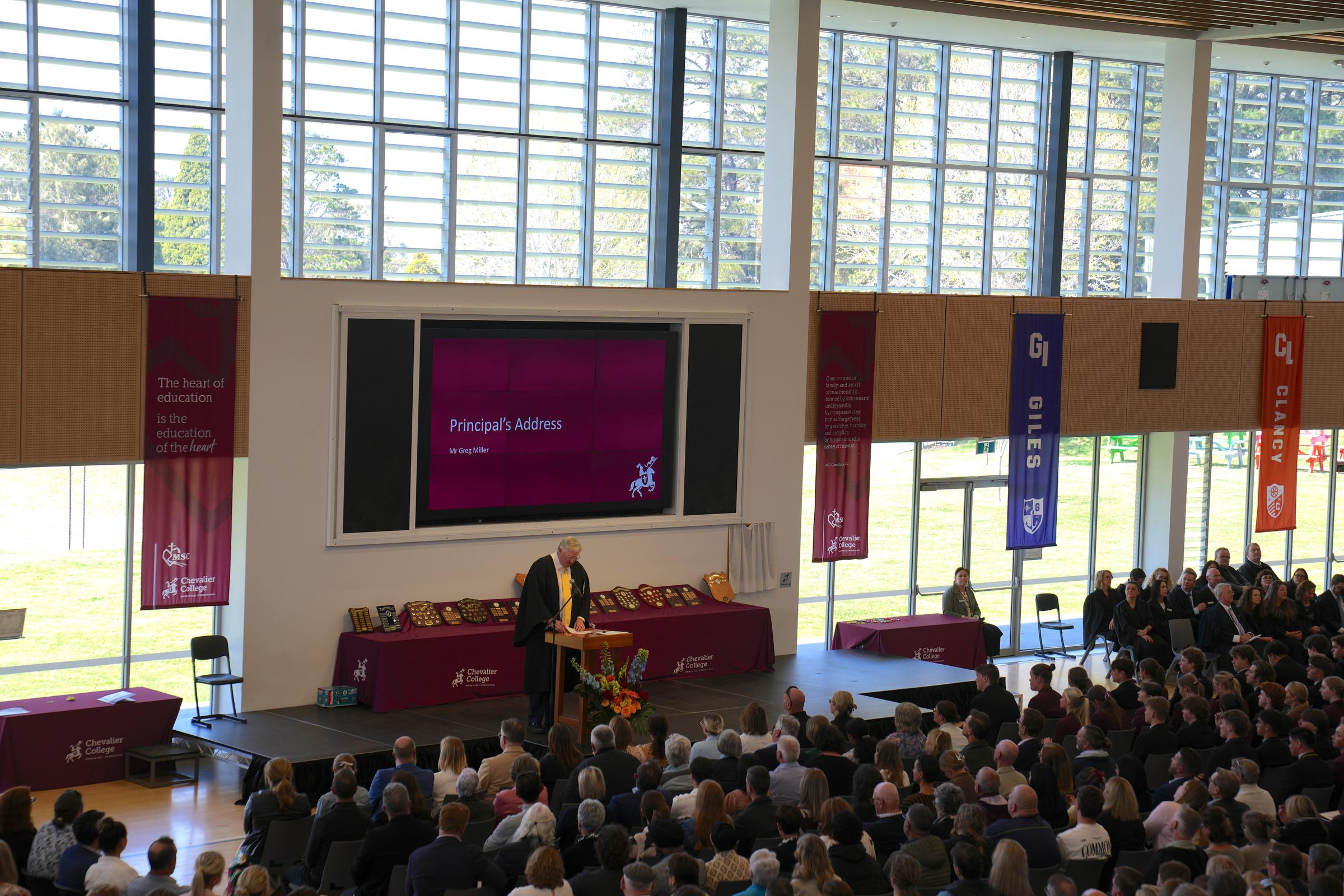
Principal's Address
Mr Gregory Miller - Principal
Dear Parents and Carers,
I trust you are well as we reach the mid-point of Term 4.
This week I attended and presented at EduTech Asia, a leading conference exploring the impact of artificial intelligence (AI) on education. While the event certainly showcased much cutting-edge technology, I was continually reminded that in an increasingly digital world, it is our humanity that will sustain us.
The conference opened with Atima Joshi, Executive Principal and Head of Pedagogy at Eton House International Group, posing powerful questions: Are we being replaced by AI? Will AI take our jobs? What does it mean to be human? She reminded us that cognition, the process of acquiring knowledge and understanding through thought and experience, was once our greatest superpower. Whilst it is still important, in an age of instant access to information, knowledge alone is no longer king.
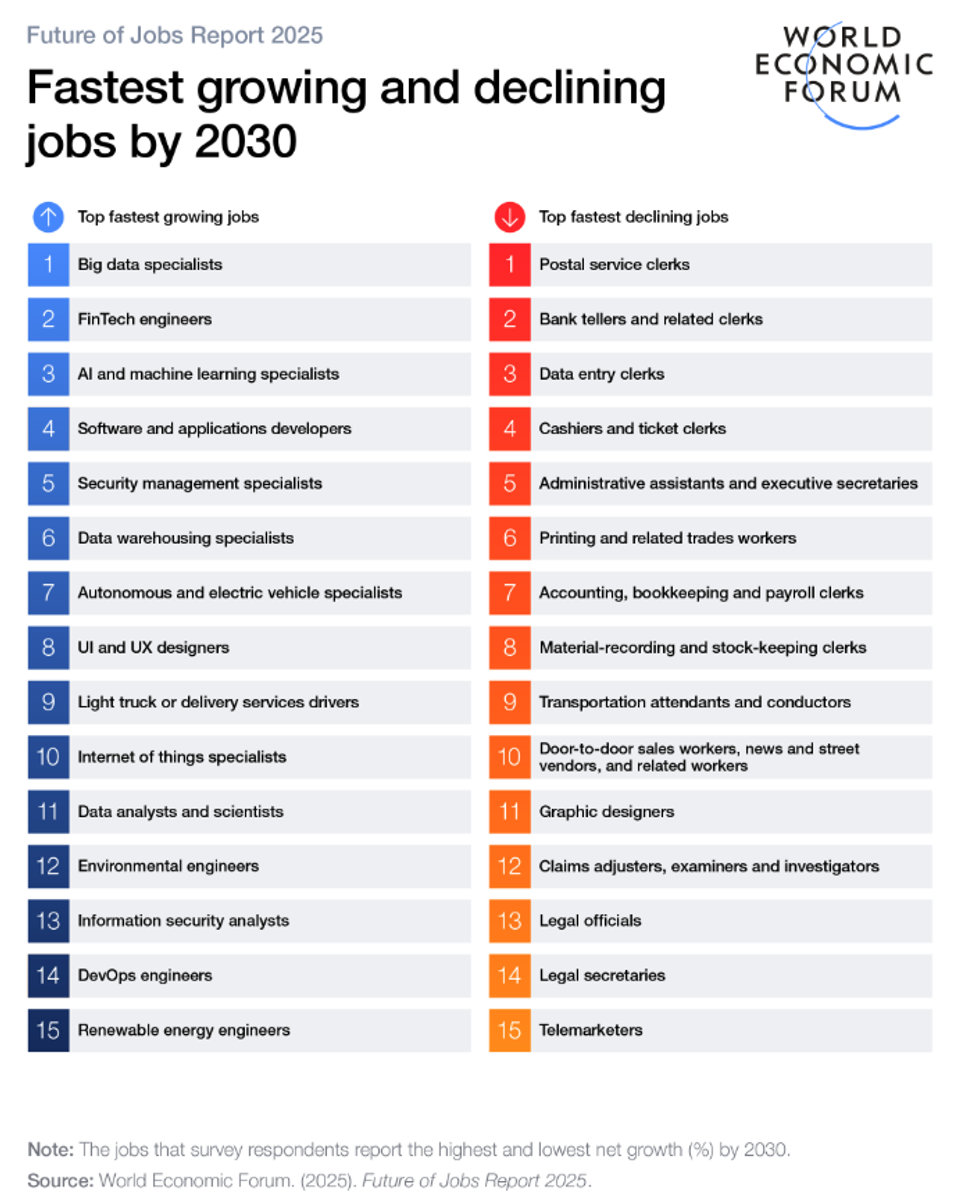
Eddie Ang from Lenovo offered a stark warning: “The people who know AI will be replacing those who don’t,” referencing recent WEC 2030 jobs outlook data which appears below.
And whilst it cannot be disputed that knowing how to use and apply AI among other advanced technologies will assist students in the world of future work, it was pleasing to hear Australian-based Finnish educator Professor Pasi Sahlberg provide this sobering reminder: the economic purpose of education must never outweigh its human purpose. The best way to prioritise the humanity of learning is to honour those for whom the system is meant to serve – the students! Pasi implored all educators to authentically pursue student agency, asking, “What do young people want to know?”, a question that challenges some traditional approaches to learning which simply tell students what they need to know.
Of course, we are bound by a mandated curriculum that outlines the content, skills and knowledge required to be learnt by students across eight subject disciplines. Disciplinary knowledge remains essential to learning. At Chevalier, we ensure that all curriculum requirements are met each week; however, we also make time for students to explore who they are and what they can do through our SIM (Strengths, Interests and Motivations) course, a unique opportunity for students to connect with their human side.
In addition to SIM, we offer extracurricular activities, and assess Year 7 students against the University of Melbourne’s New Metrics capabilities. These initiatives reflect our commitment to balancing academic rigour with personal growth. Most importantly, we continue to educate in the MSC way, a way that values the development of the whole child, recognising each student as made in the image and likeness of God. Kindness, compassion and strong relationships remain central to our mission, and as Professor Sahlberg noted, “Relationships will determine how well students use AI.”
As the adults, the role of parents, carers and staff is not to resist change, but to guide it. As such, we must collectively empower our students, your children, to adopt AI responsibly and inspire them to harness its power to play its role in seeking solutions to real word problems.
We also must remember, the more technology we embrace, the more we must nurture the foundational capabilities that define us and differentiate us from AI and other advanced technologies. The University of Melbourne’s New Metrics Program identifies these as complex competencies. They are the capabilities essential for thriving in a future shaped by AI:
These are not just educational ideals; they are the human capabilities our young people need in order to find their place in the world so they can live lives of contentment and fulfilment.
As I reflect on the themes emerging from EduTech Asia, I am affirmed by our commitment to nurture ‘heart-centred, future-facing students’ who are equipped not only for the workforce, but for life, and I thank parents and carers for playing your leading role in that aspiration for each student at the College.
Warm regards,
Greg Miller
Principal