
Year 1 News
Learning Celebrations
Literacy
Over the past two weeks in our Phonics sessions, students have been focusing on the GPCs ‘ck’, ‘th’ and ‘wh’. GPC stands for grapheme–phoneme correspondence, which means the relationship between letters and the sounds they represent. Understanding these patterns helps students read and spell words more confidently.
Students have been manipulating letter tiles and practising reading and spelling simple words that include these patterns.
We have also been exploring rhyming words (words that have the same ending sound) such as vest–chest, wept–kept and guide–bride, and alliteration where words begin with the same sound such as rain–rider, sit–sing and pen–puck. These activities help students develop their awareness of sounds in words, which is an important early reading skill.
Students have also been revising lowercase and capital letters, focusing on correct letter formation, sizing and direction. It has been wonderful to see them applying these skills when writing simple dictation sentences. We have also been working on reading fluency, encouraging students to read with expression and confidence. This is a time the students particularly enjoy, as they track the text and follow along while their partner reads.
Text Study
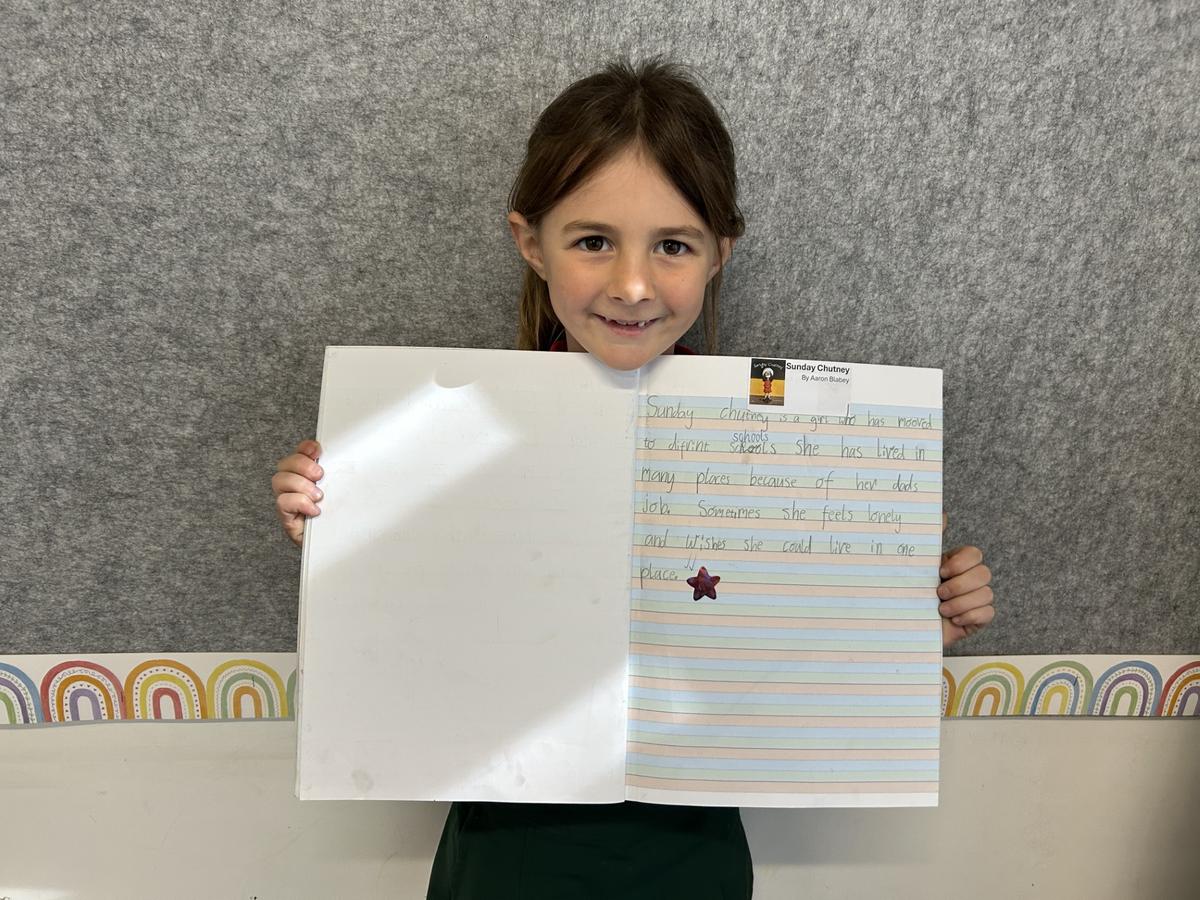
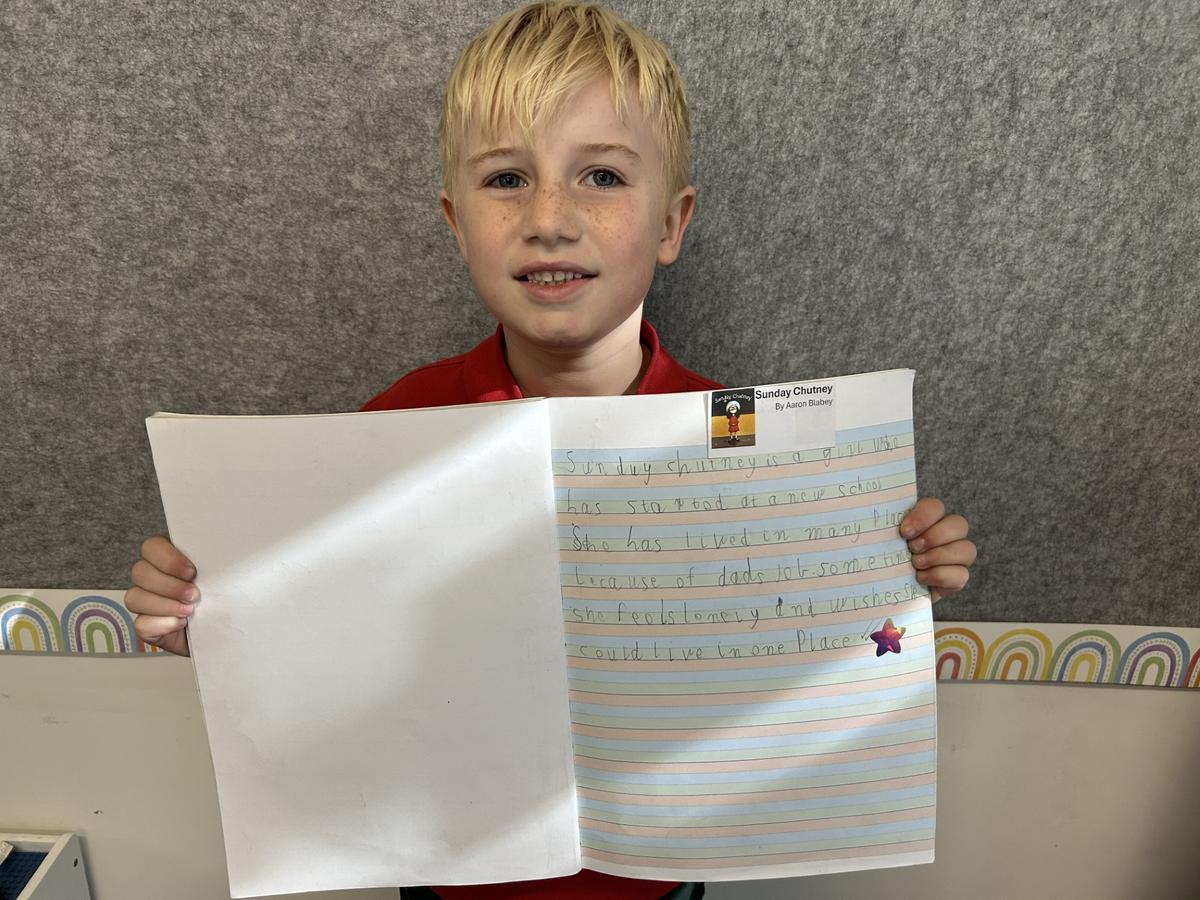
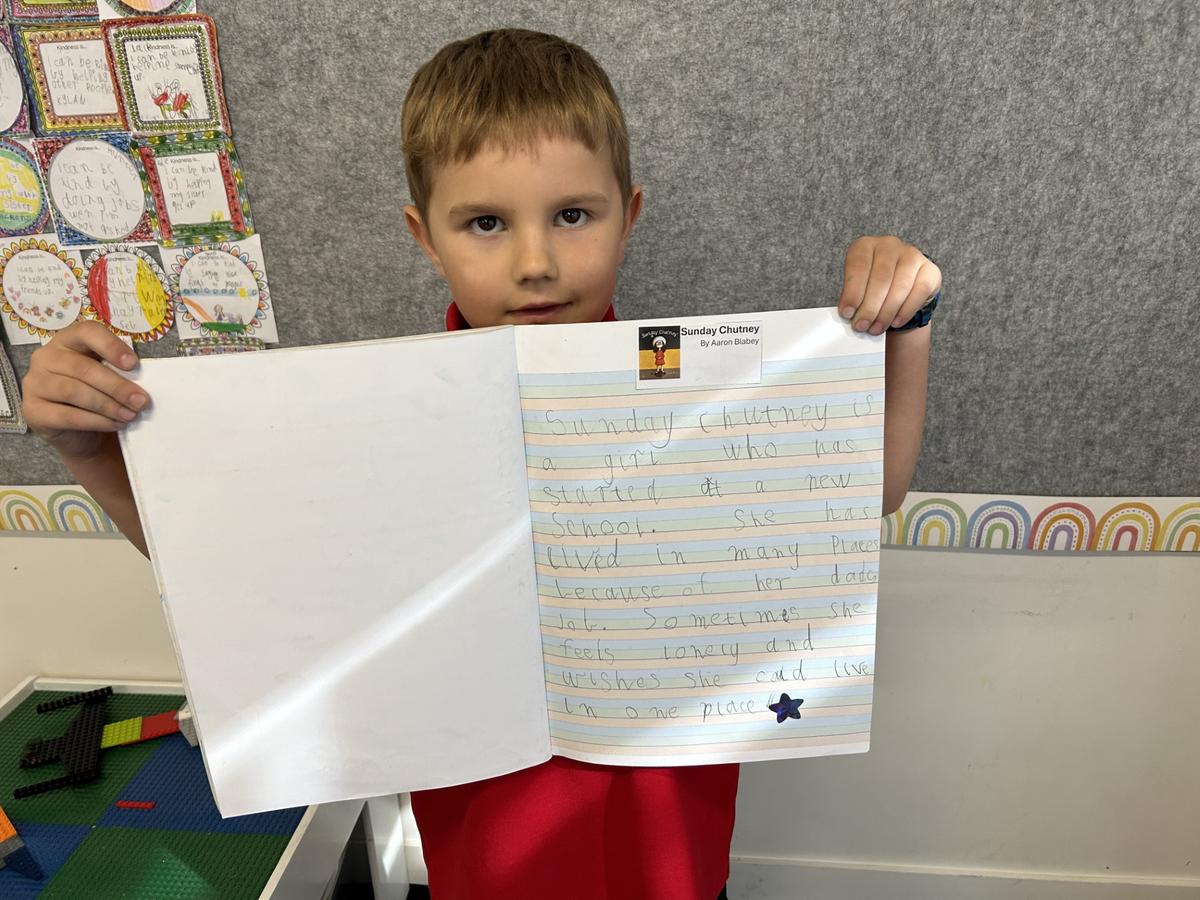
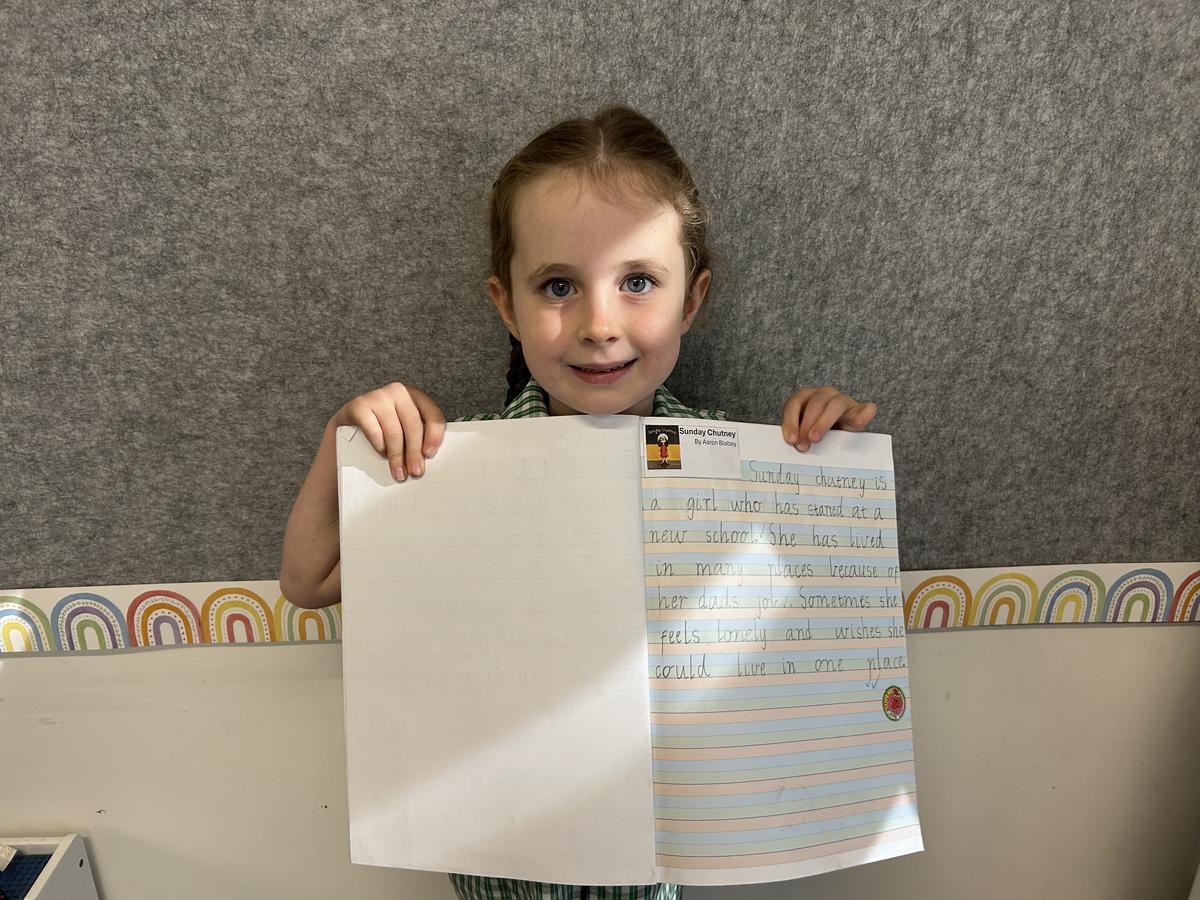
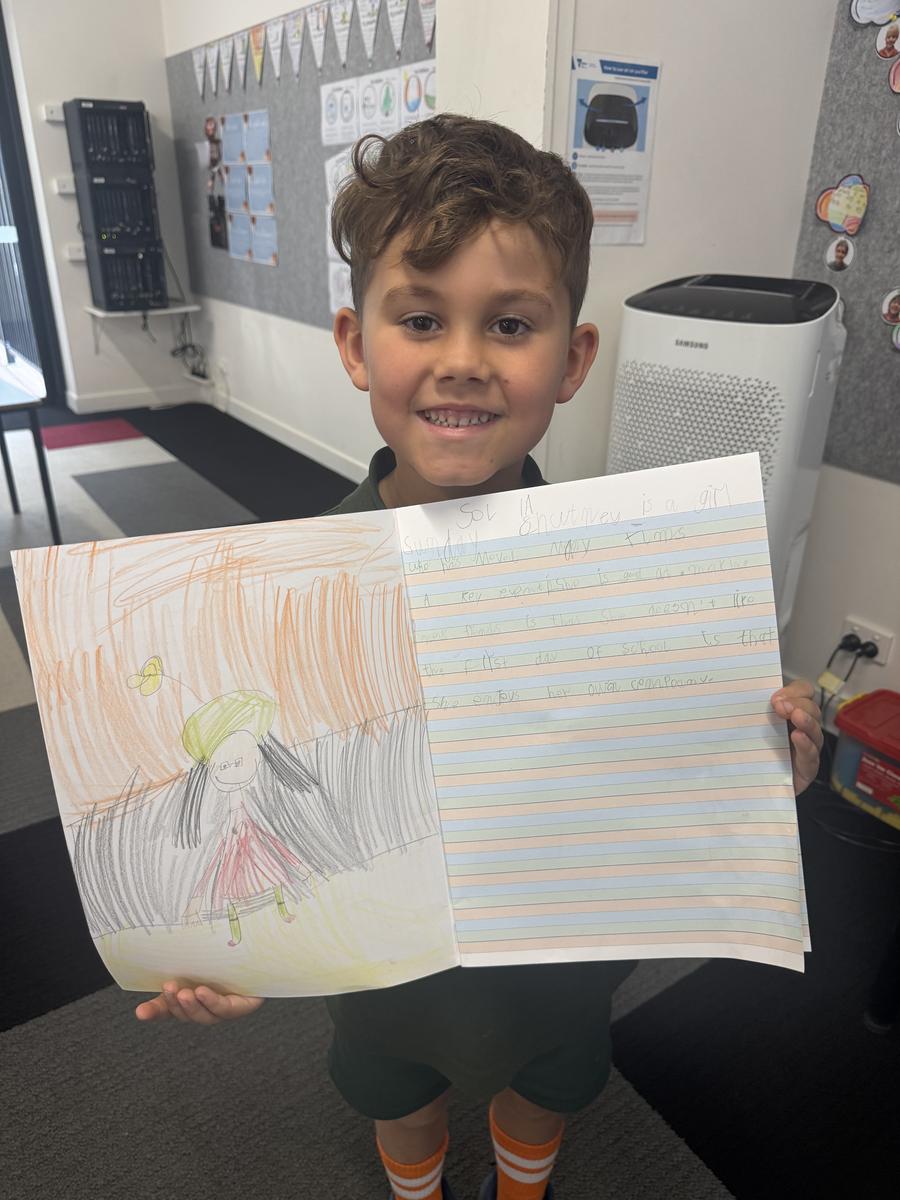
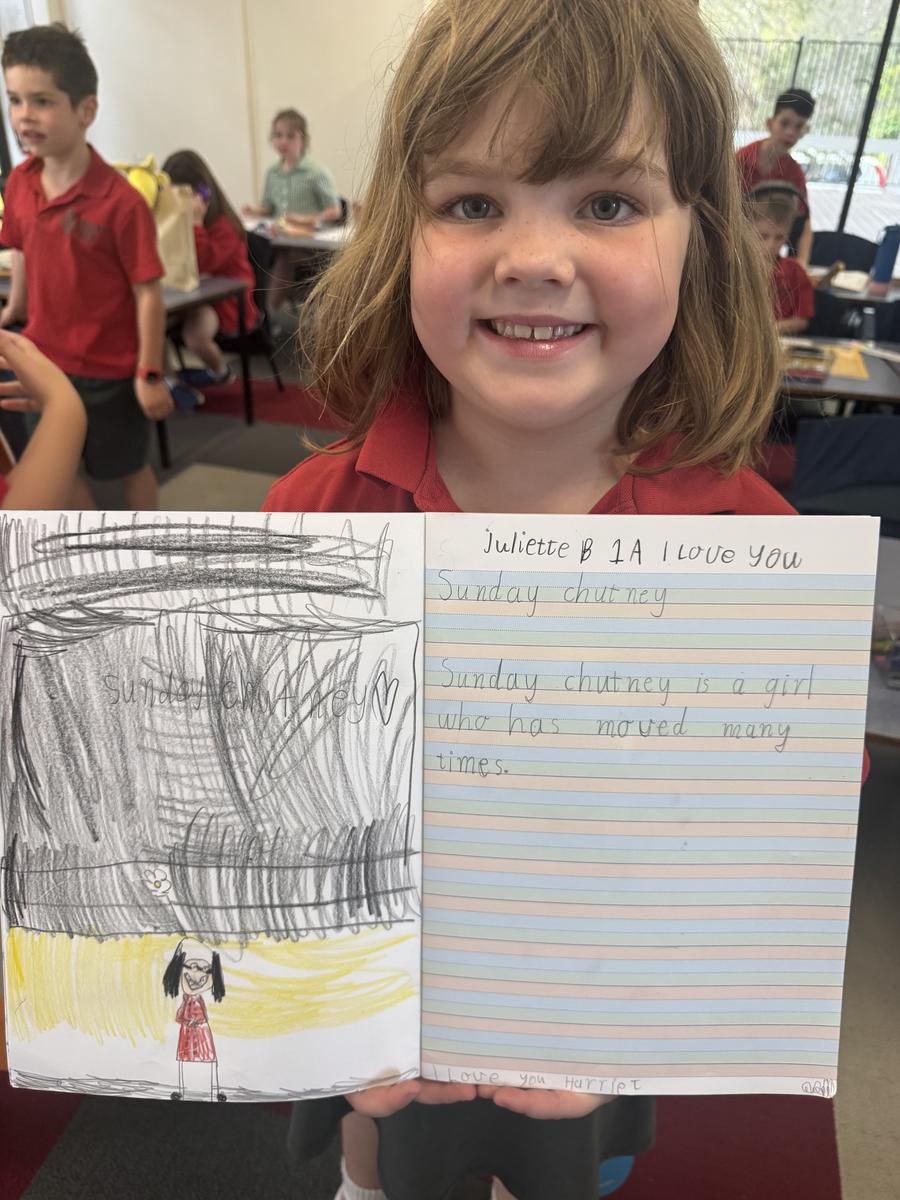
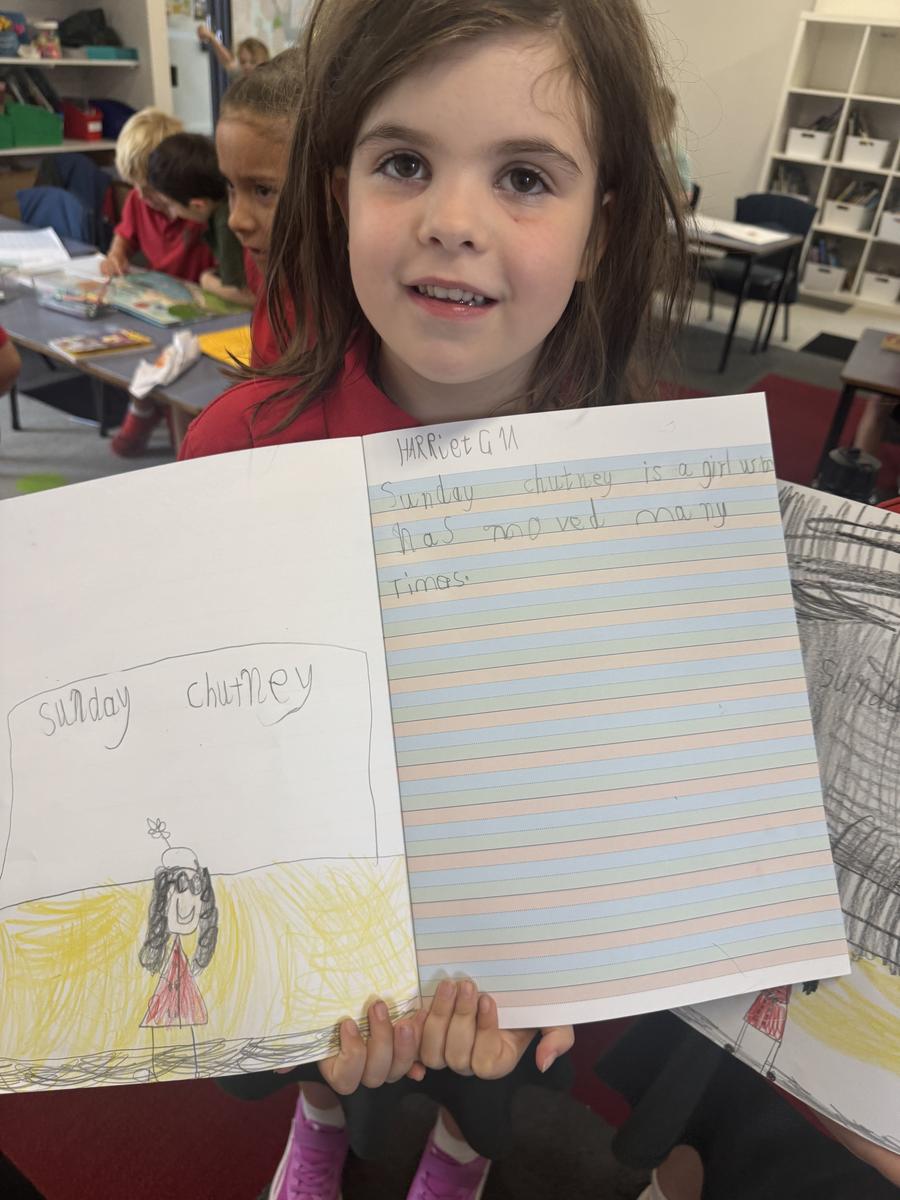
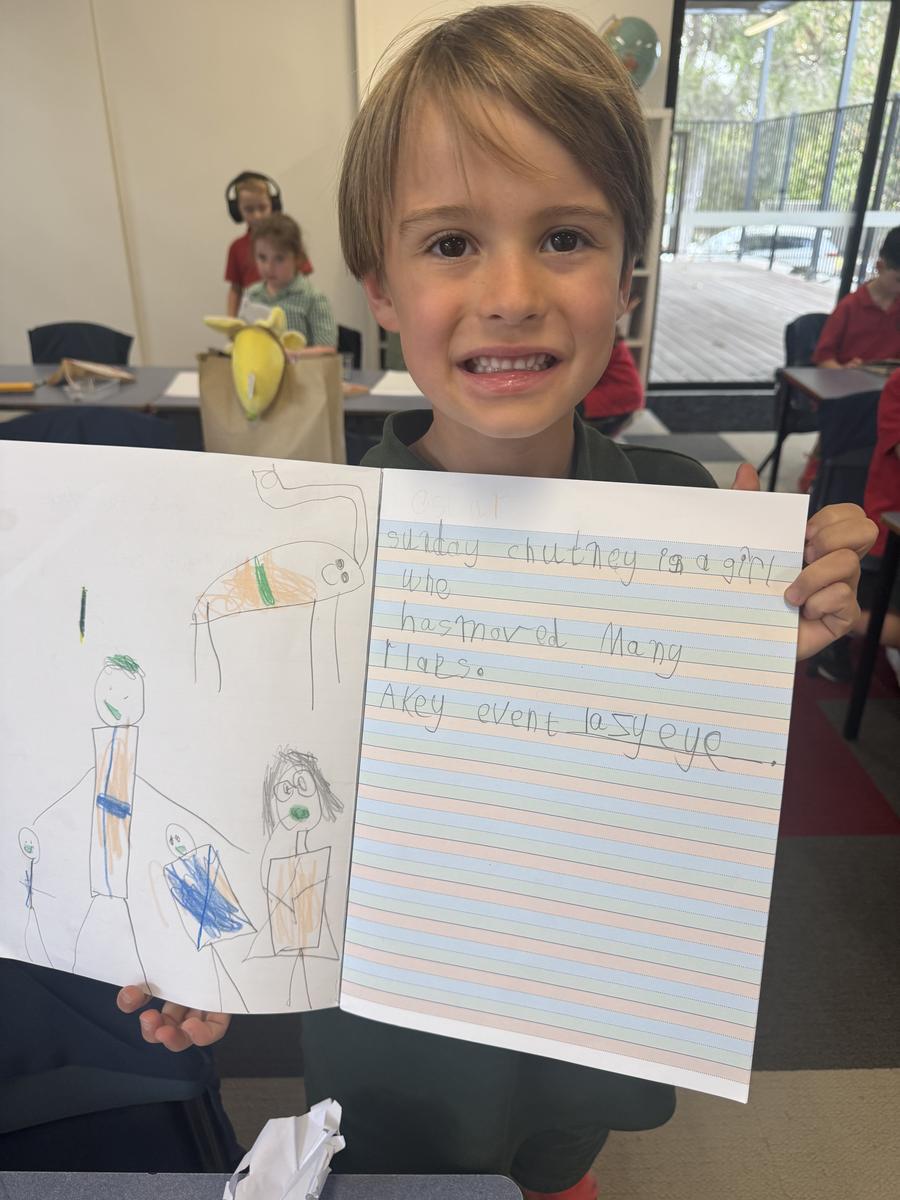
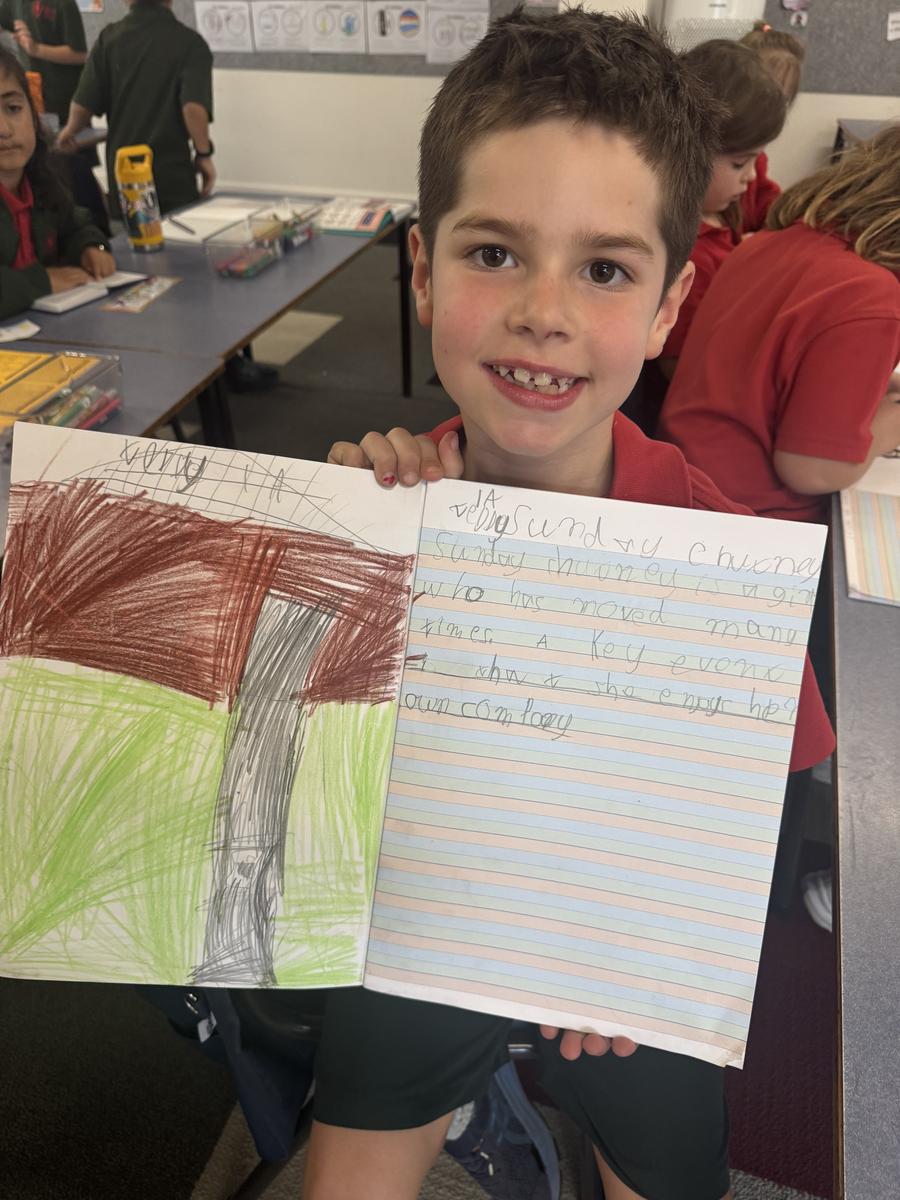
This week we have introduced the book Sunday Chutney by Aaron Blabey.
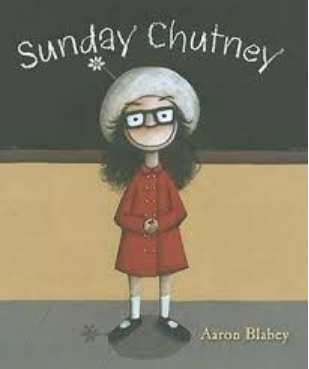
Sunday Chutney by Aaron Blabey is a beautifully written picture book about a girl with a vivid imagination who travels the world and frequently starts at new schools. As she navigates the challenges of being the “new kid,” she learns to embrace her individuality, manage feelings of loneliness, and respond to social pressures. Ultimately, the story celebrates self-reliance and the comfort of family.
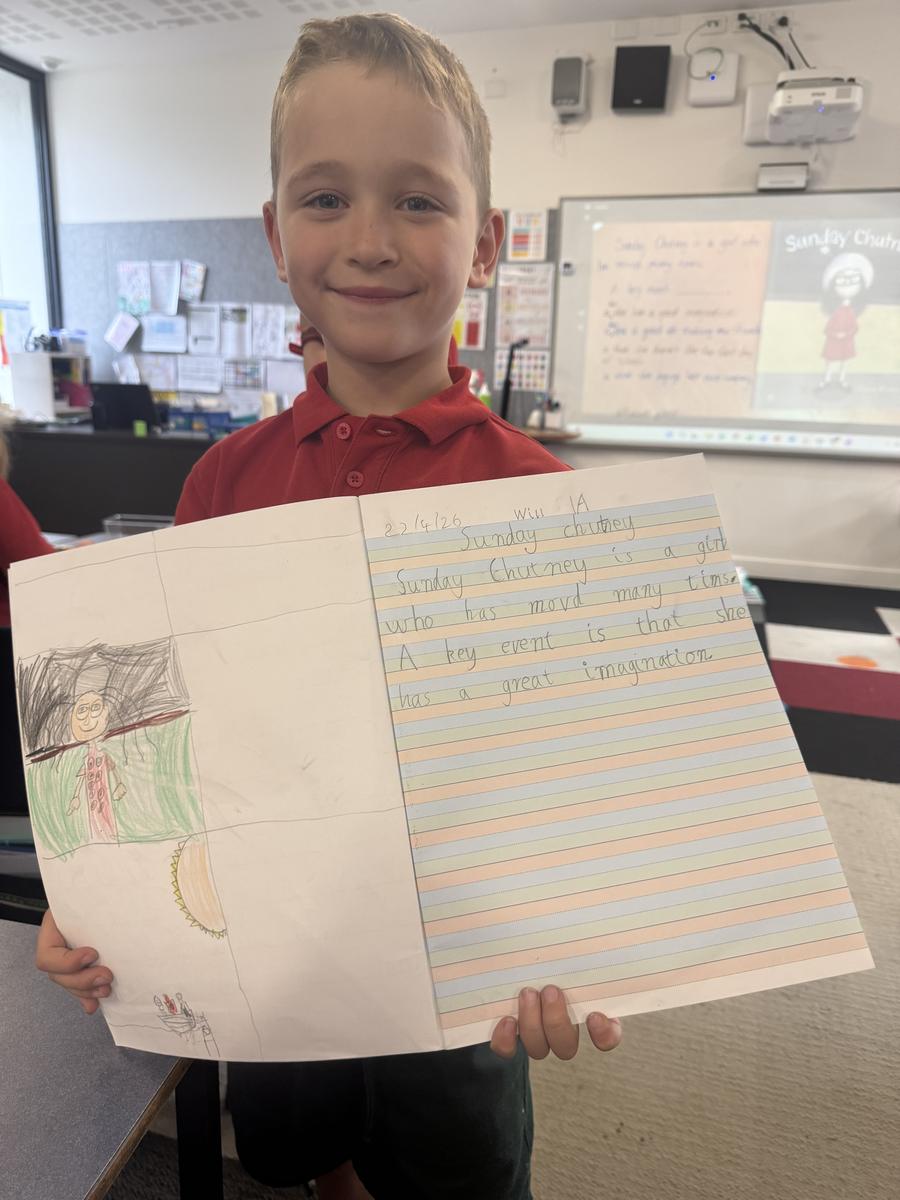
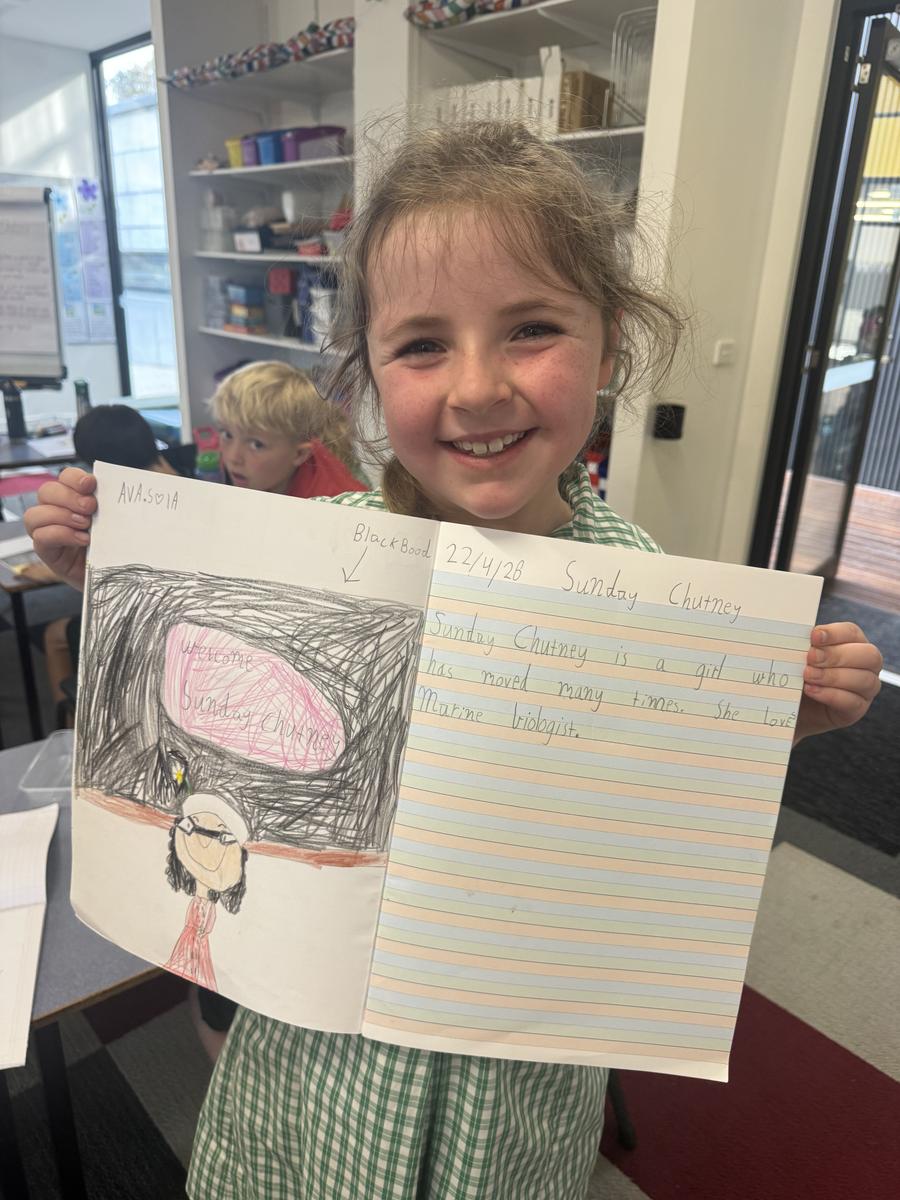
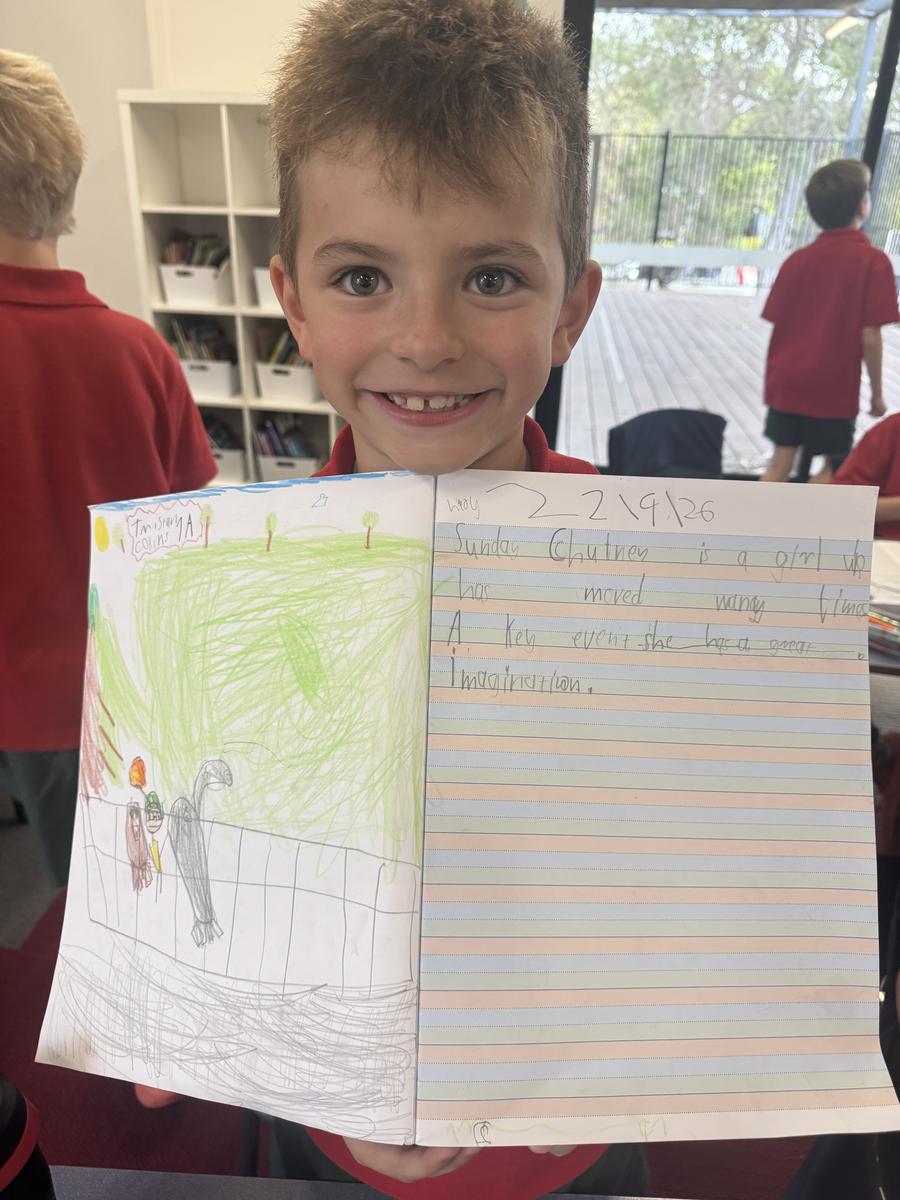
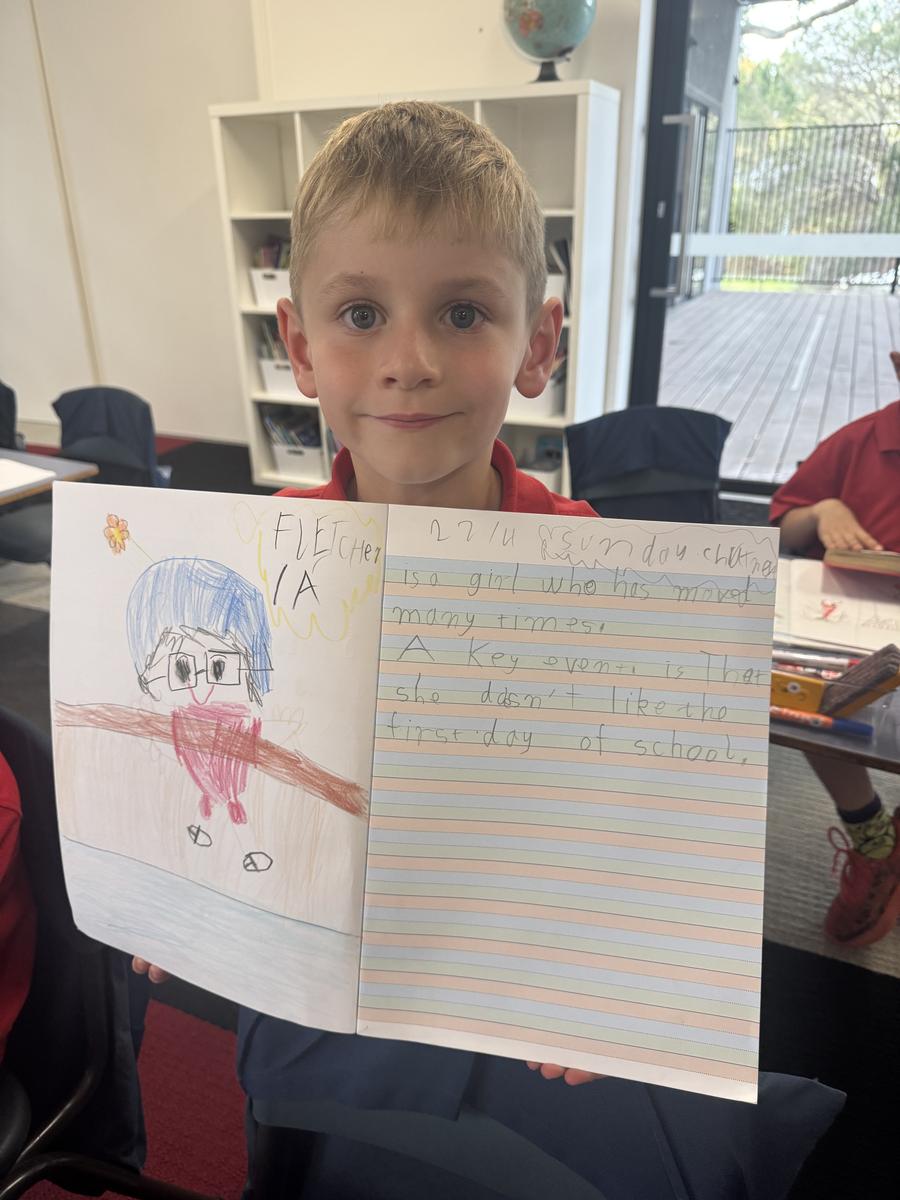
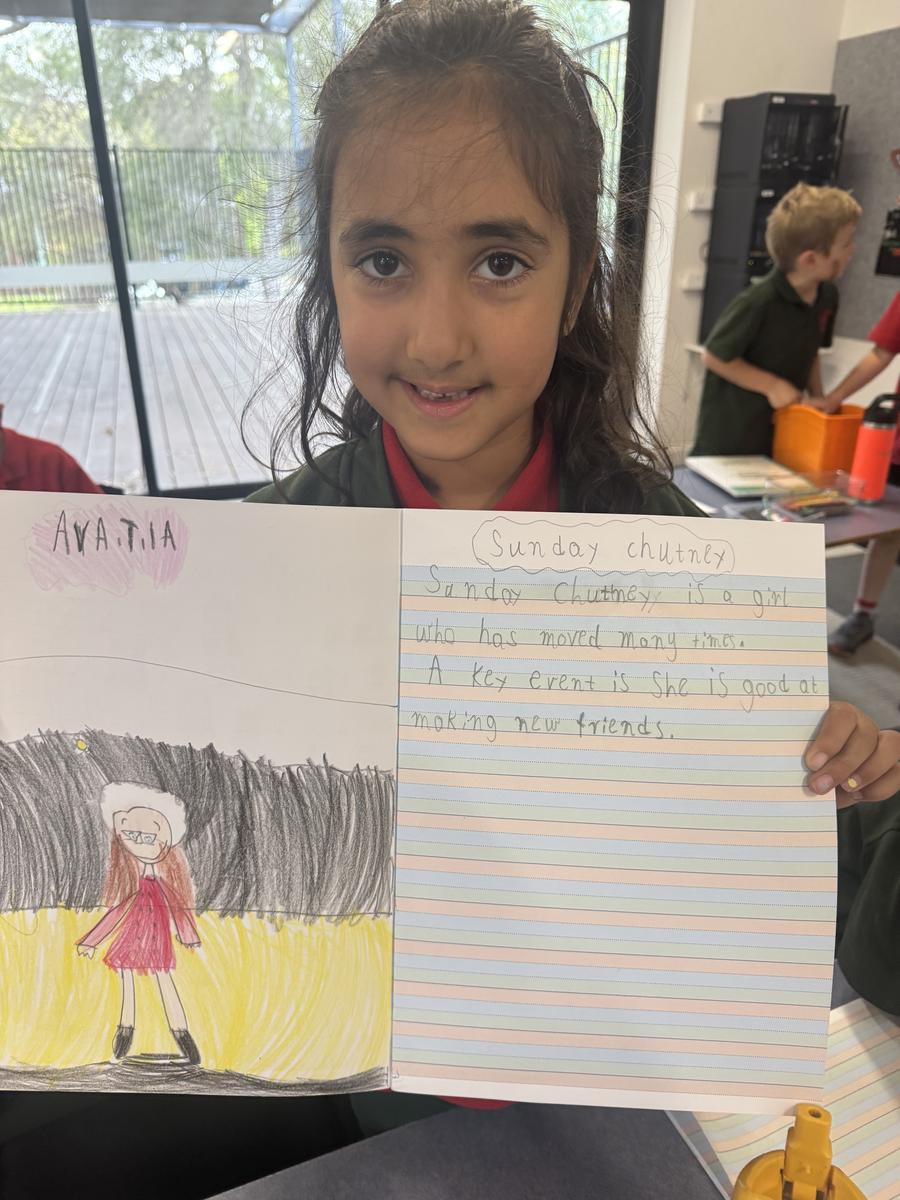
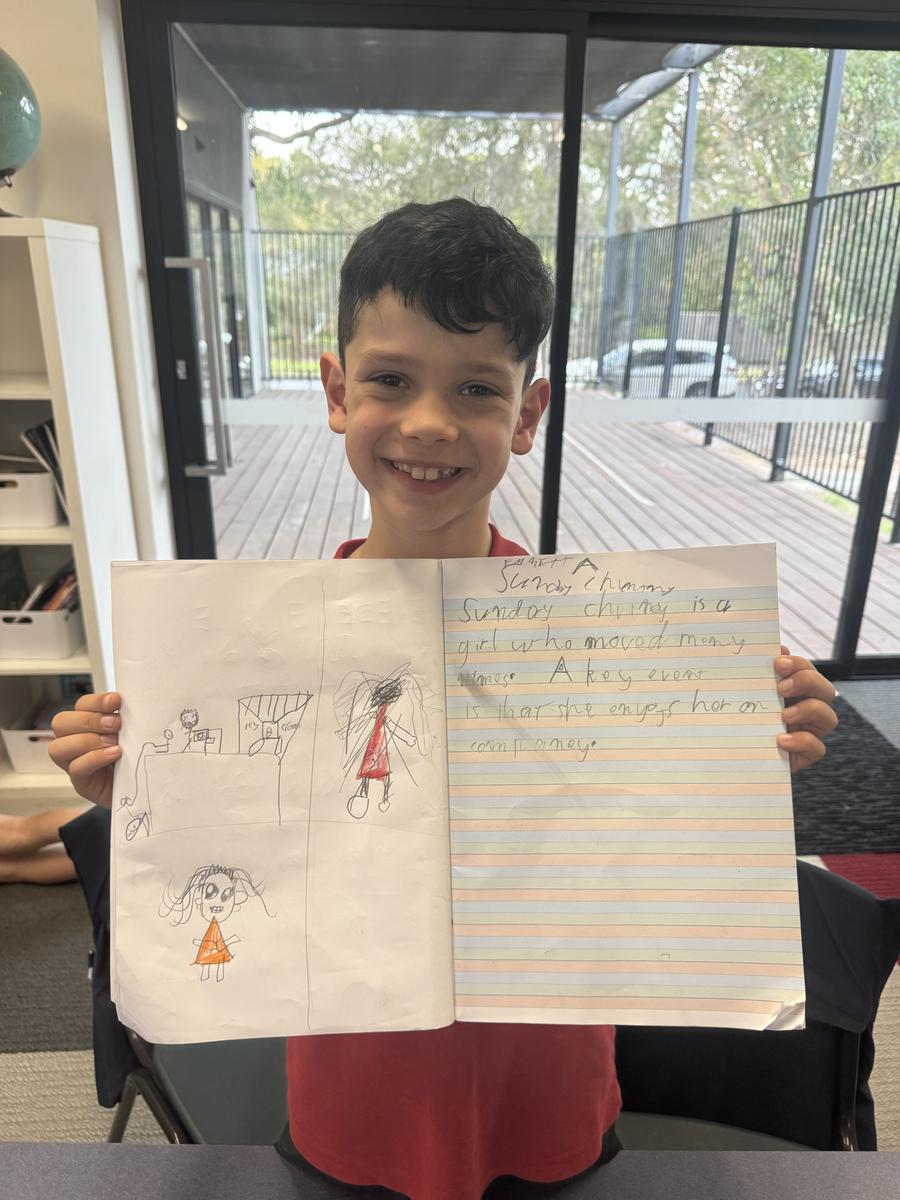
Over the next two weeks, students will explore this text in greater depth through a variety of discussions and learning activities. These will support them to think about personality and character traits, make meaningful text-to-self connections, and reflect on what it means to feel comfortable in their own identity.
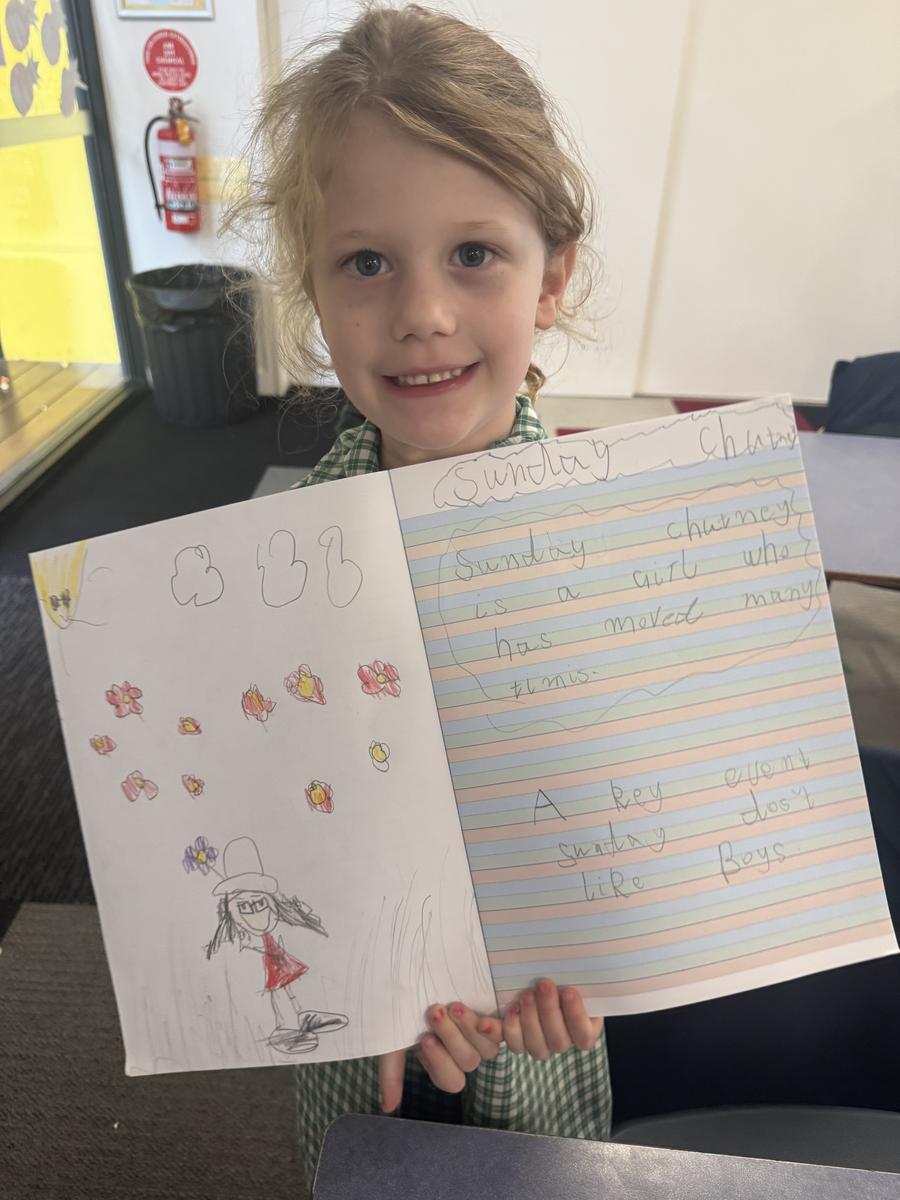
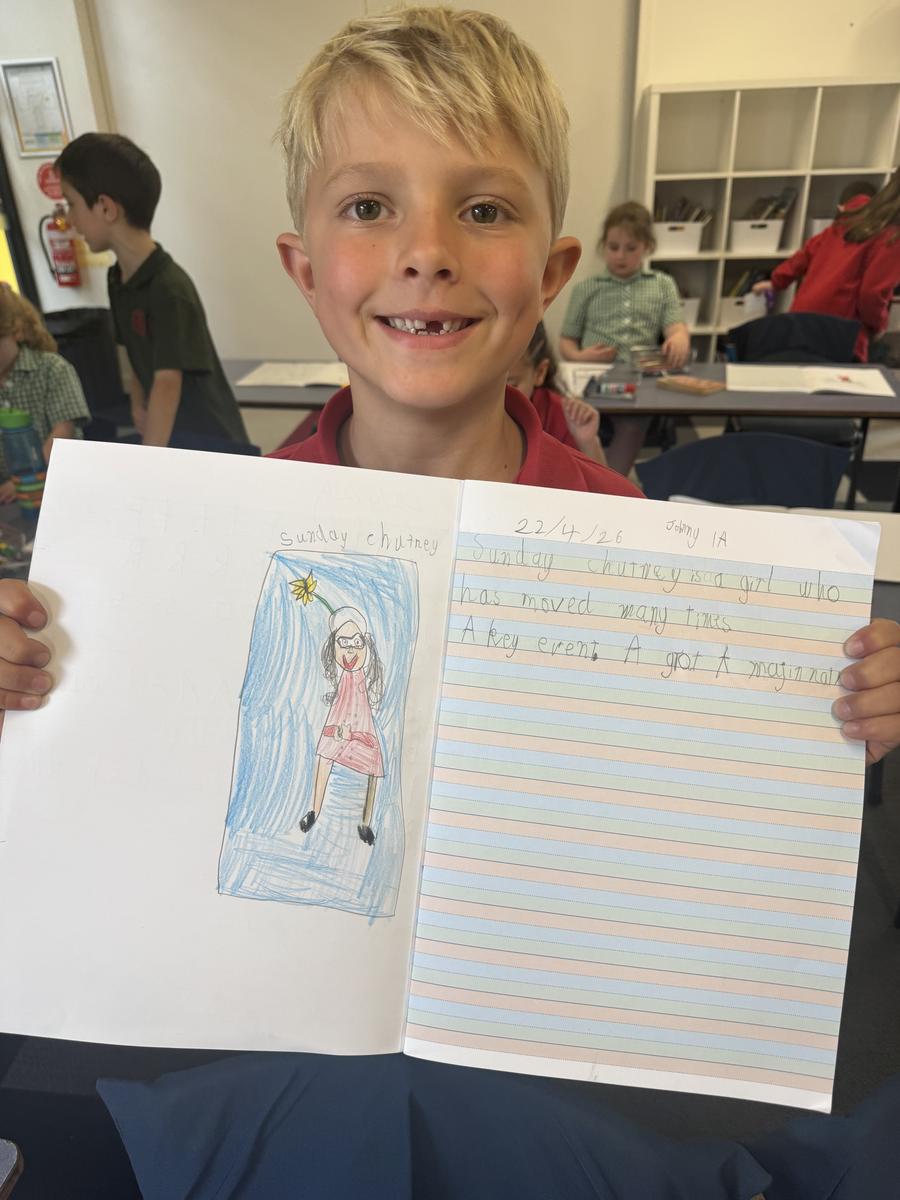
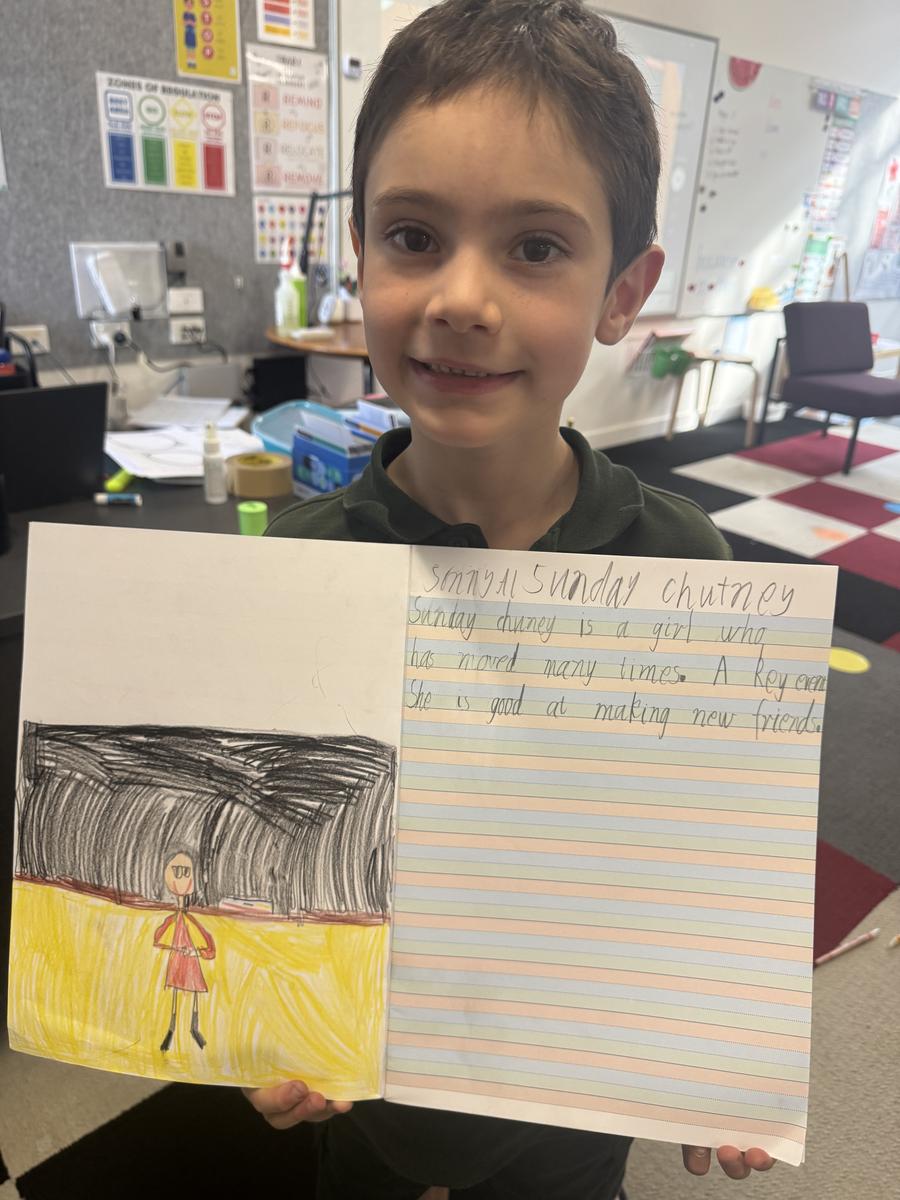
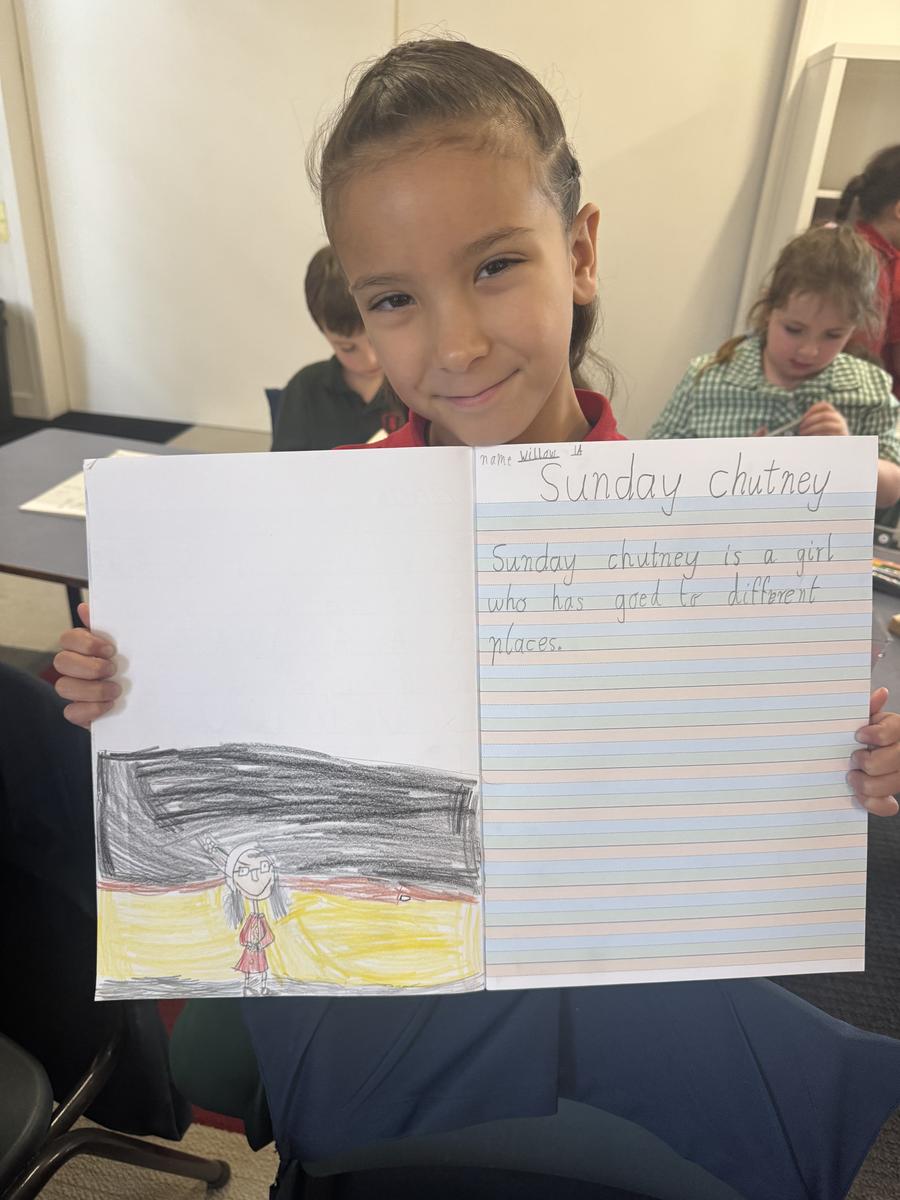
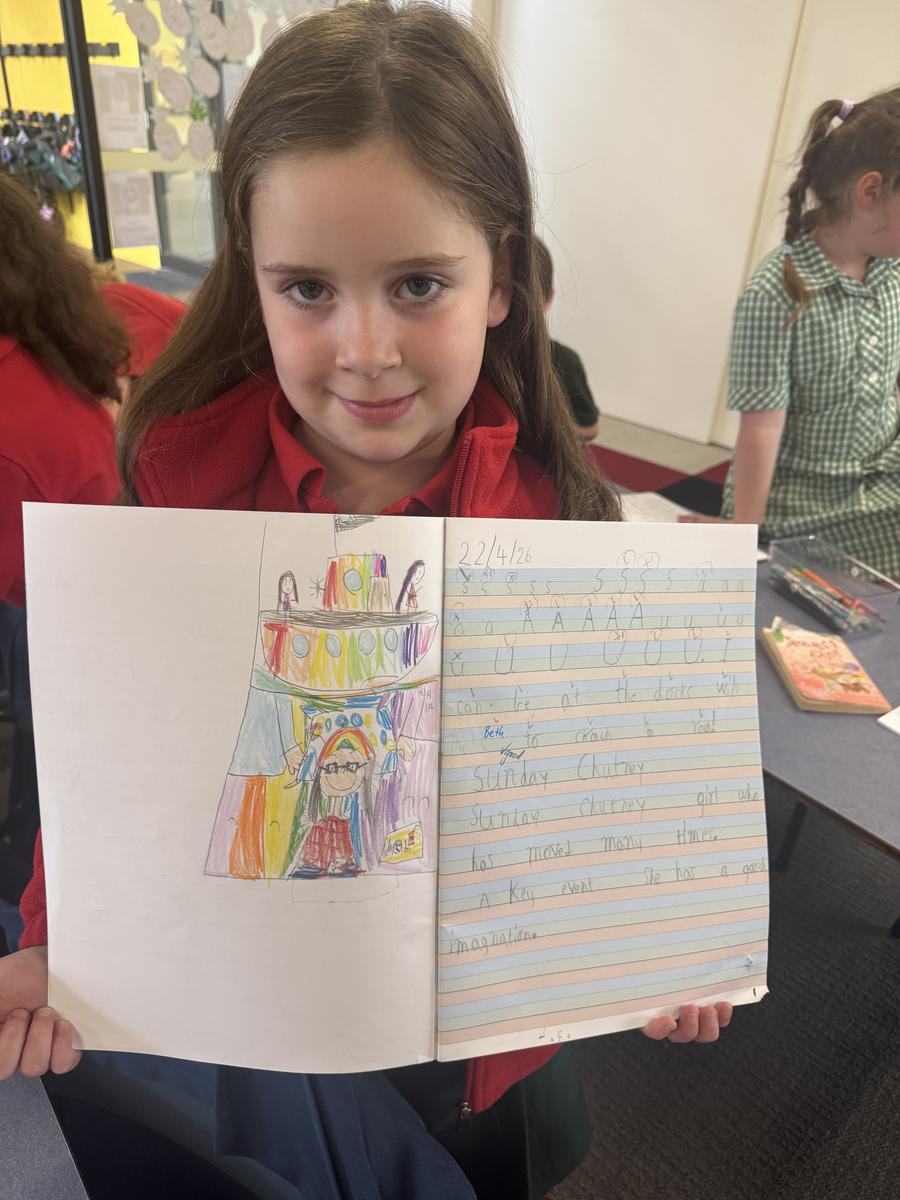
Students will also consider how being new can be both challenging and an opportunity for growth. The story provides a relatable perspective on loneliness, reinforcing that such feelings are valid while highlighting the importance and joy of being oneself.
Maths
In Year One, students have continued participating in a daily review of previously taught concepts, as well as pre-loading ideas for upcoming topics. During these reviews, we have been focusing on identifying the number before and after and counting on by holding a number and using our fingers to continue the count. Students are also becoming proficient in reading calendars and identifying 2D shapes.
Students have been practising counting on and counting back during our daily maths fluency sessions. In these sessions, they are given two minutes to complete as many simple addition and subtraction equations as possible. It has been wonderful to see how focused and engaged the students have been, with many challenging themselves to complete more equations than they did the day before.
We have also introduced counting by 5’s and 10’s, and breaking 2-digit numbers into tens and ones that add together. We are so pleased to see so many students applying their knowledge of place value to break a number into tens and ones. Eg. 45=40+5
In addition, we have continued to develop students’ understanding of direction. Students have practised following step-by-step instructions to move through a grid, using directional language such as left, right, forward, and backward. They have also created their own sets of directions to guide others through a grid, helping to strengthen their spatial awareness, sequencing skills, and clarity in communication. It has been wonderful to see the students growing in confidence and enthusiasm as they develop their mathematical understanding.
How the World Works
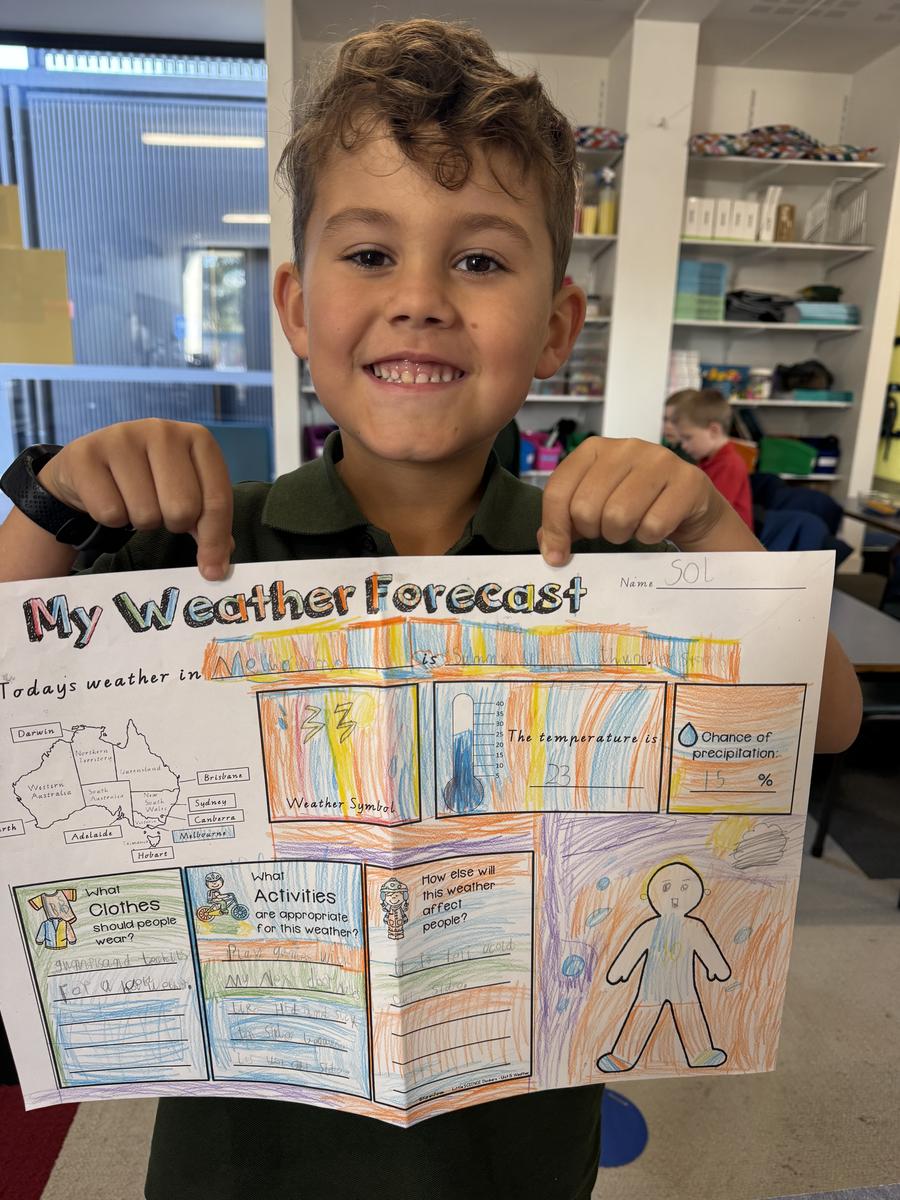
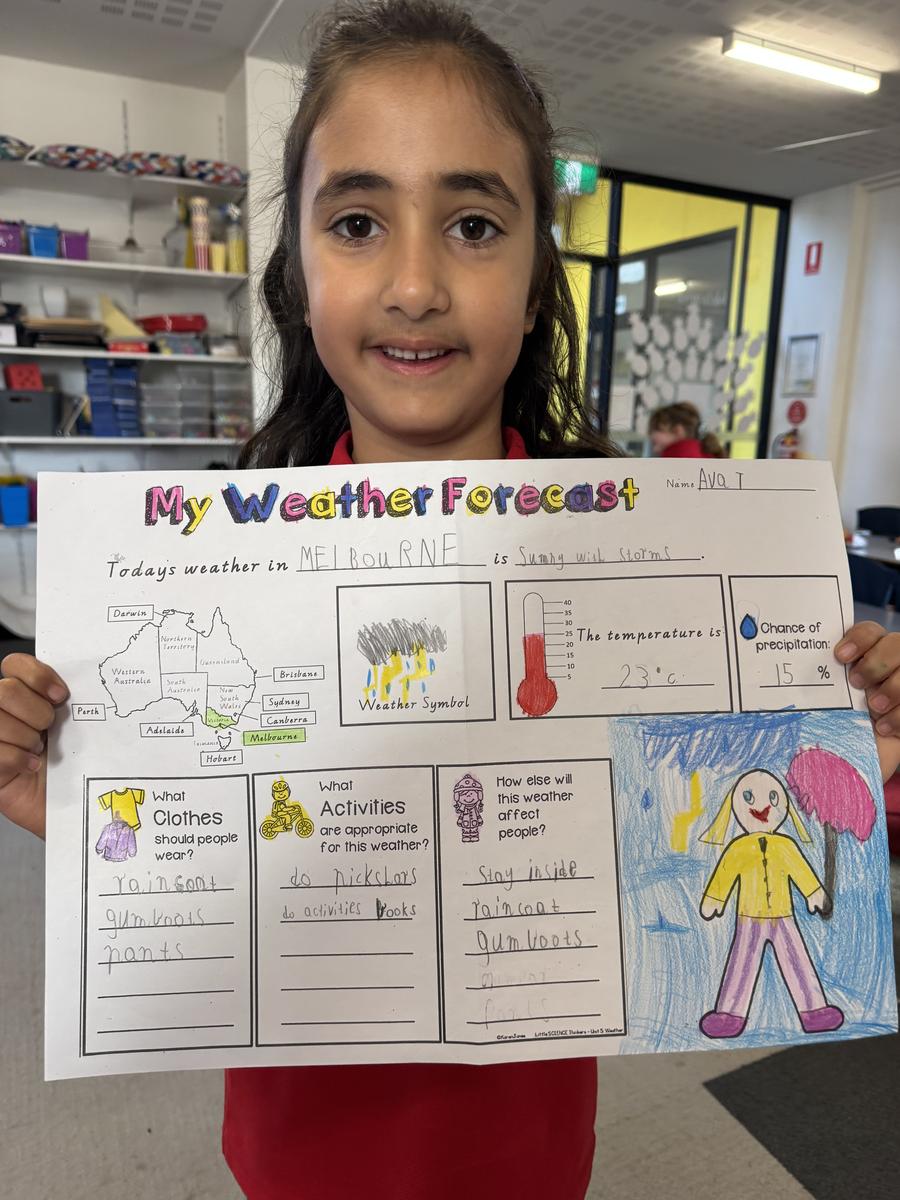
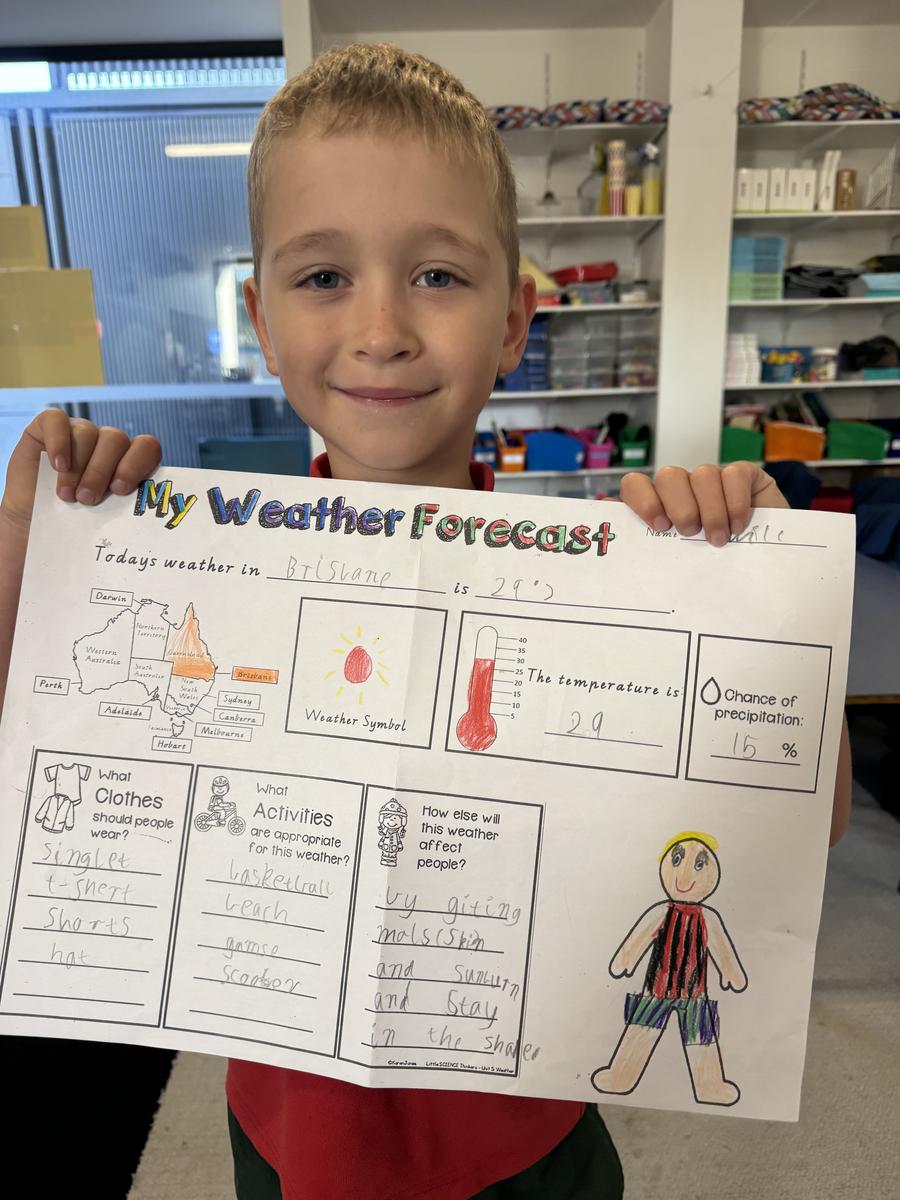
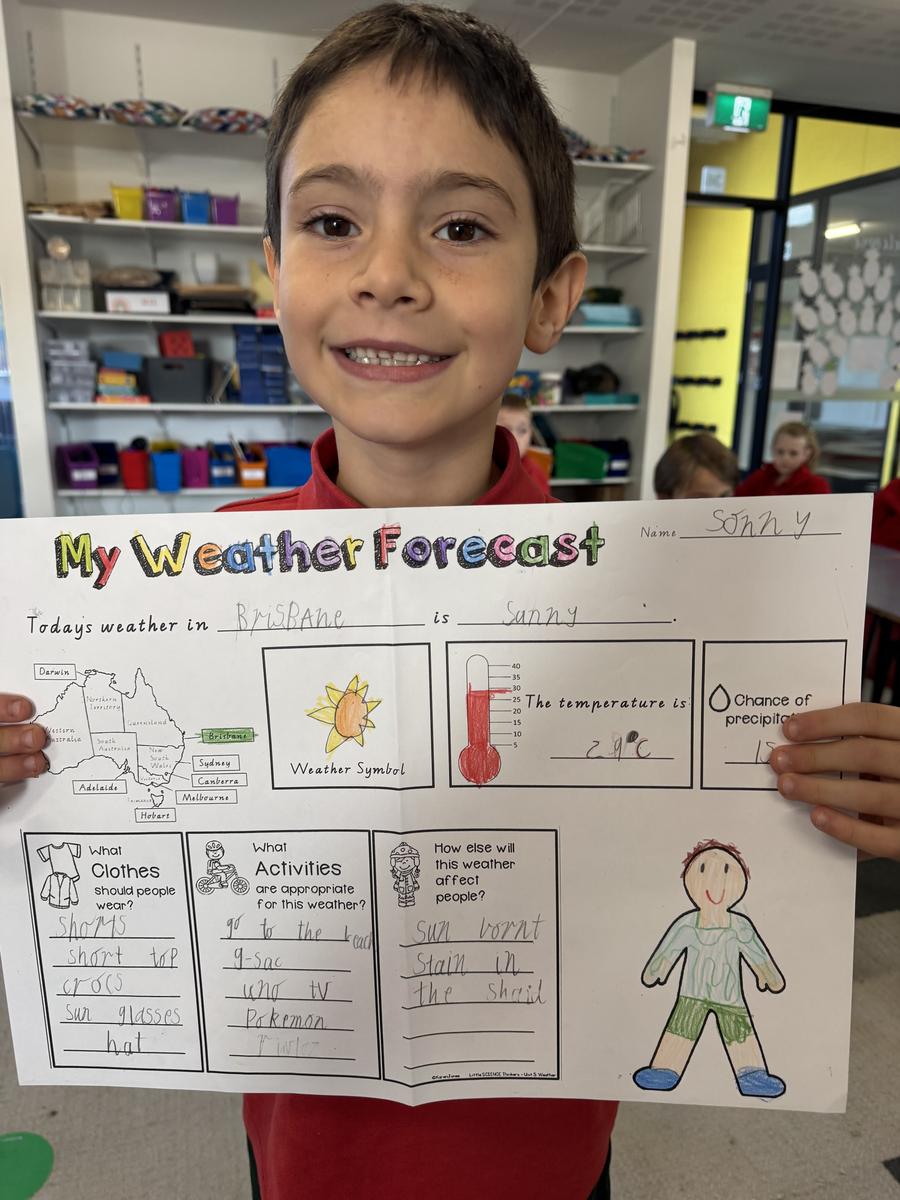
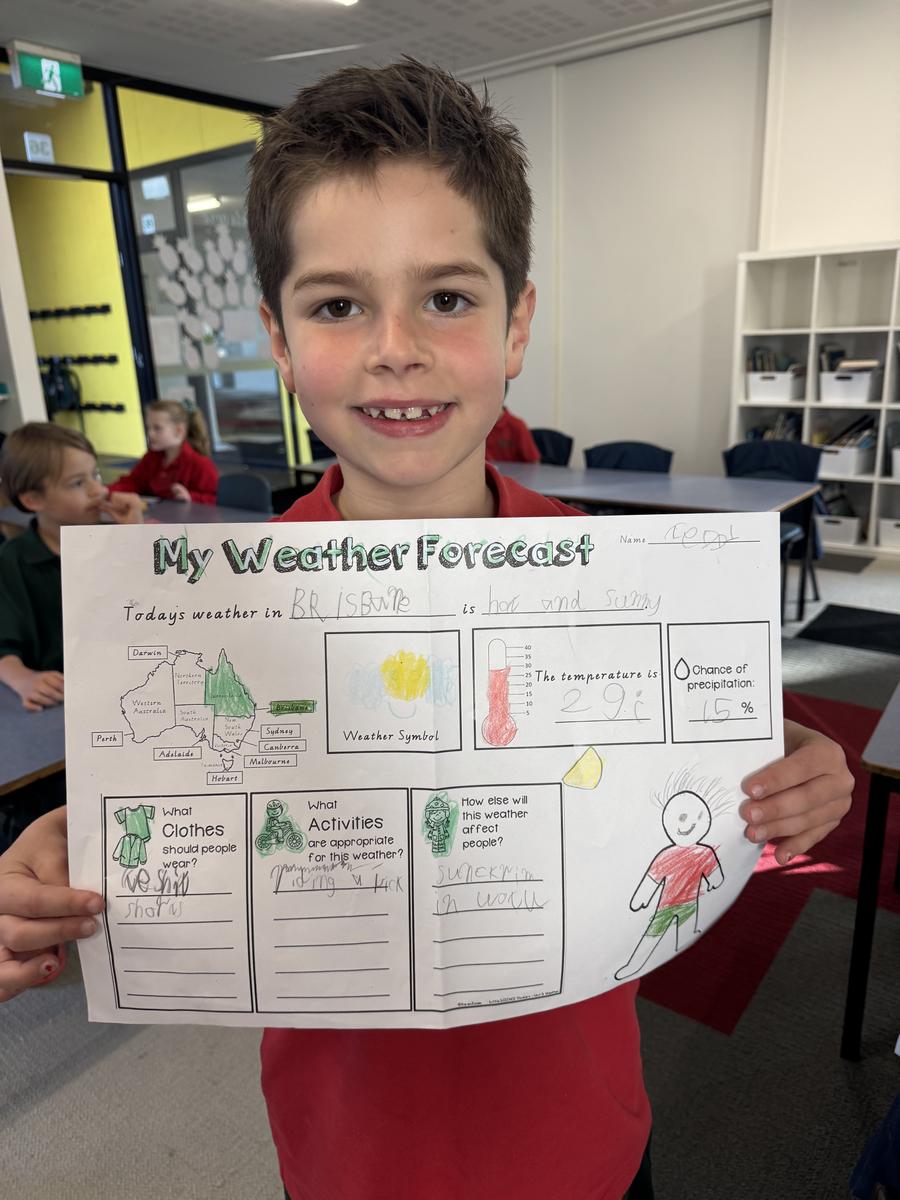
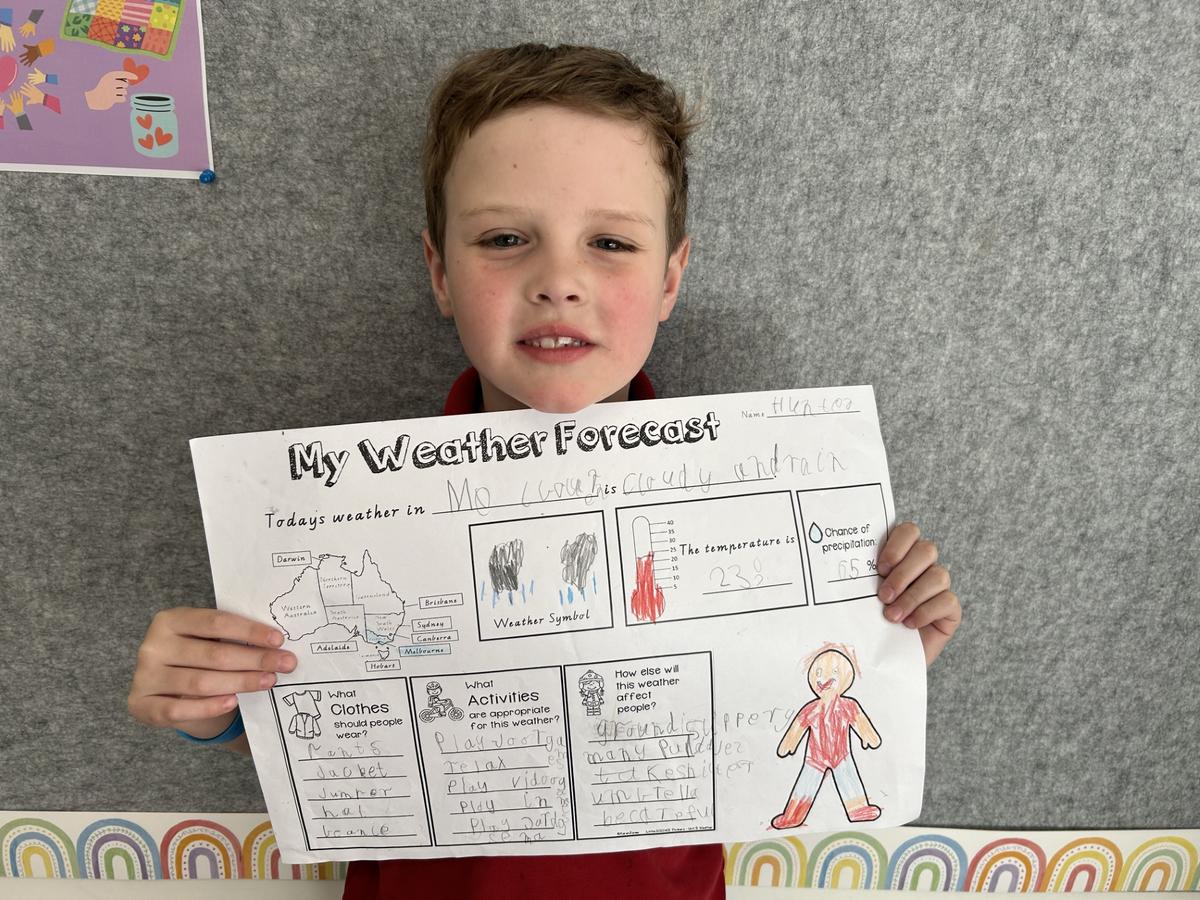
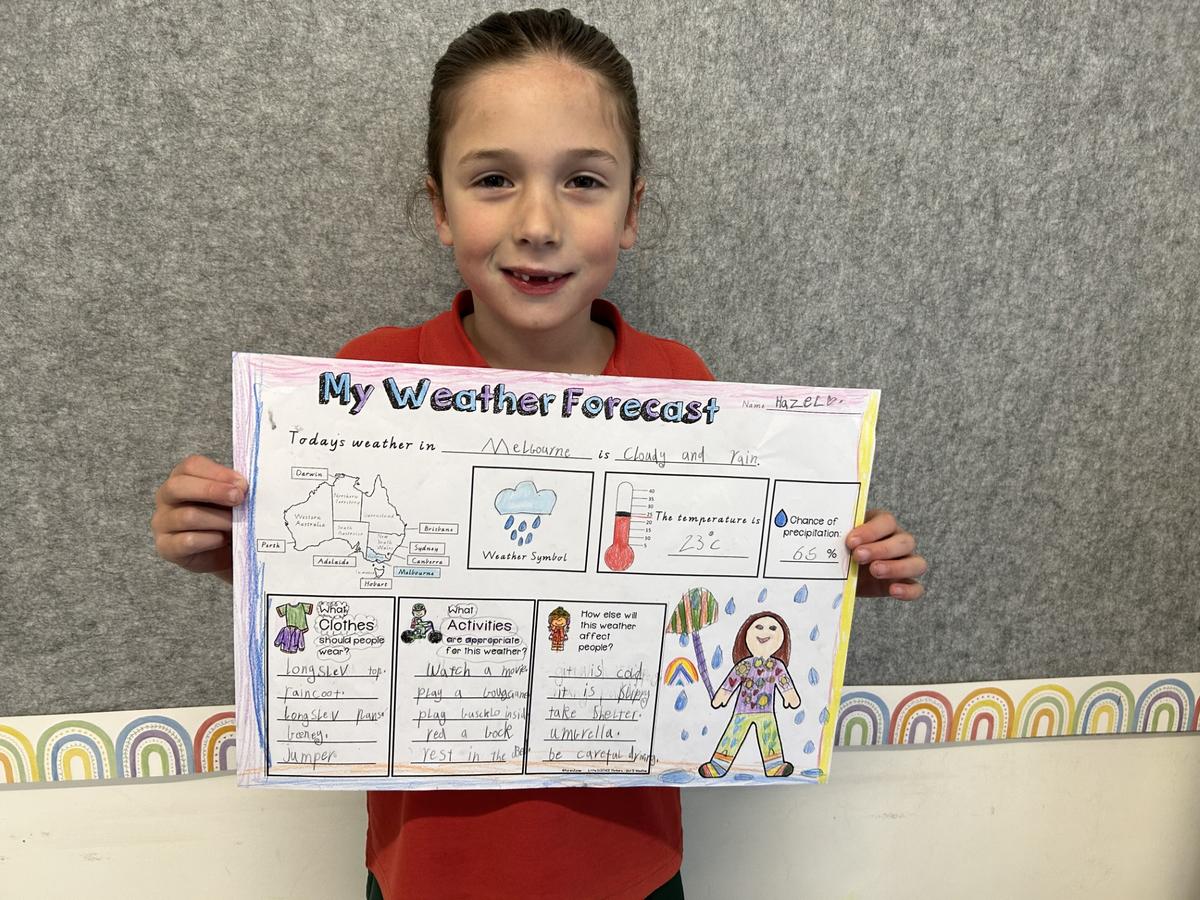
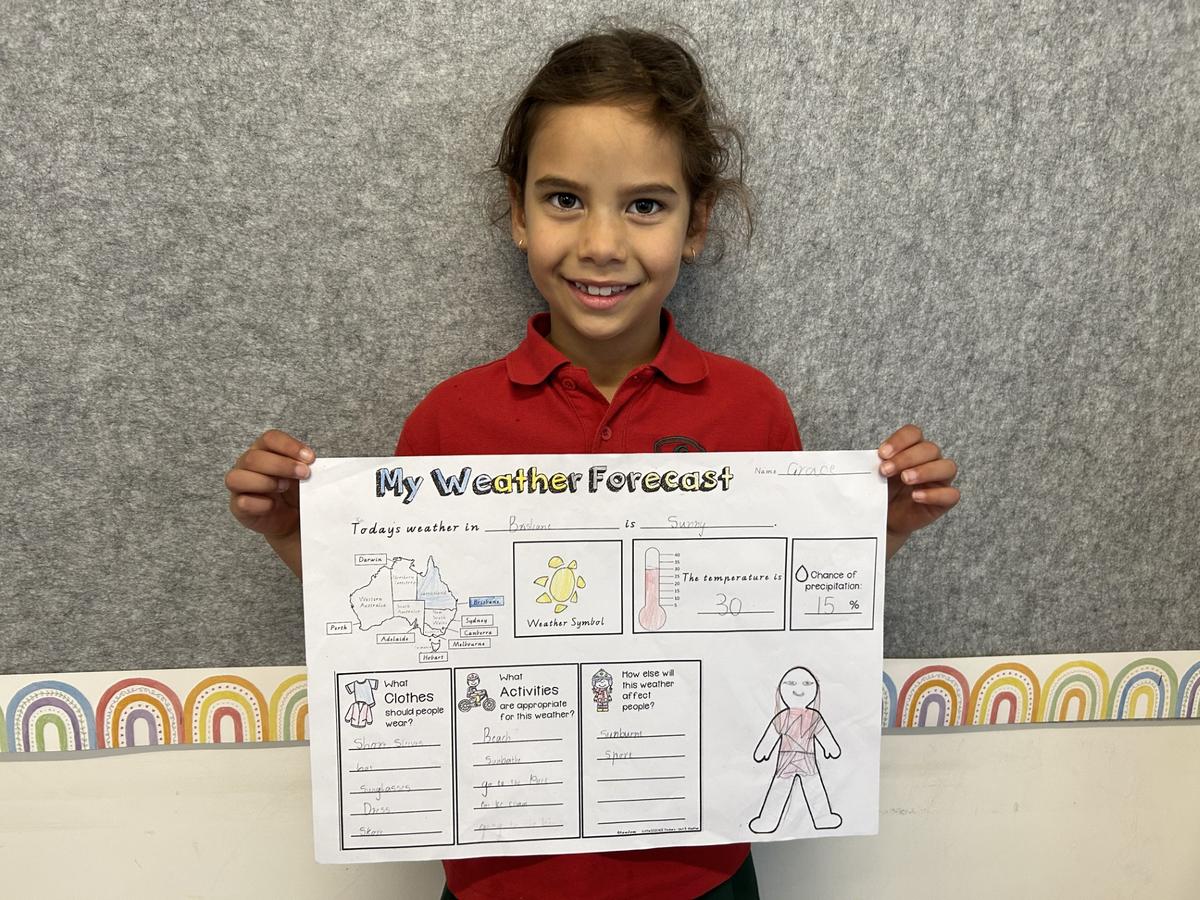
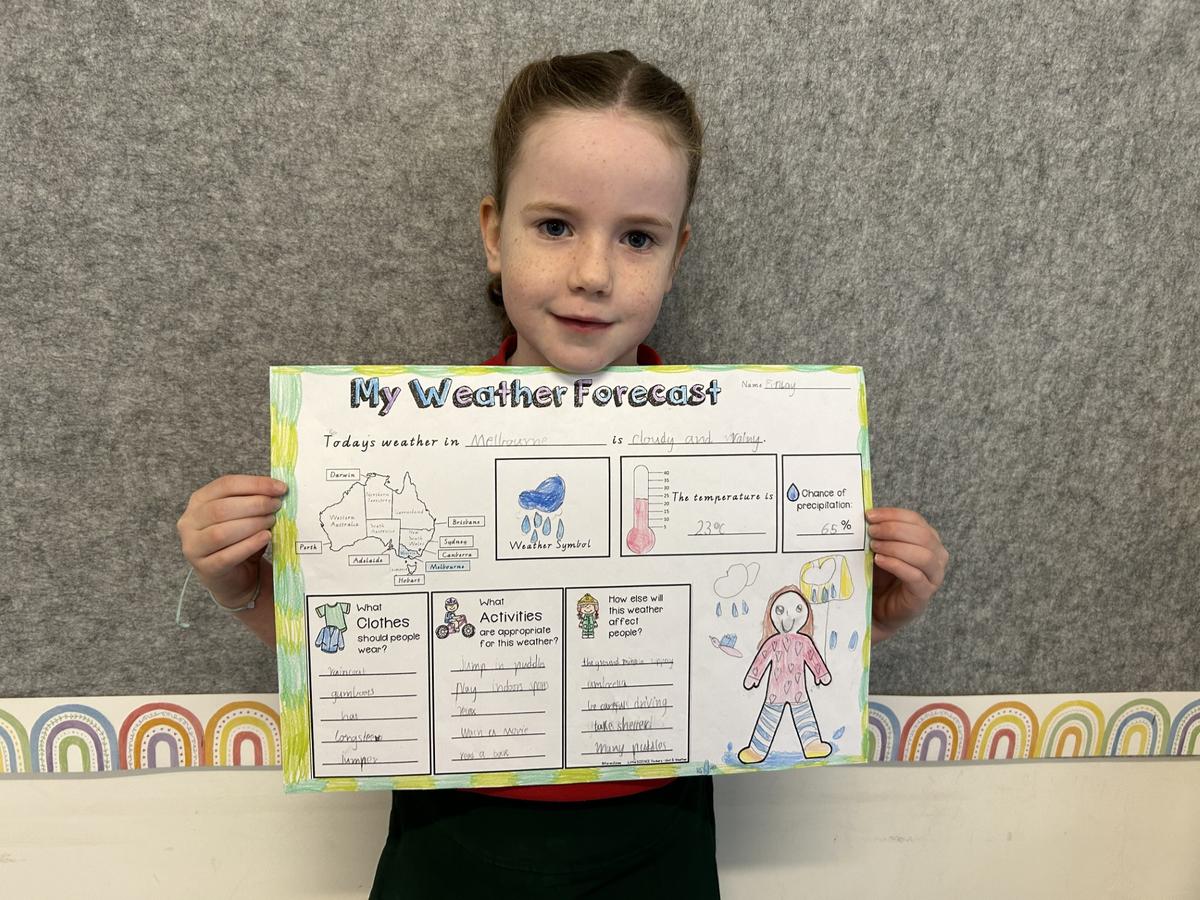
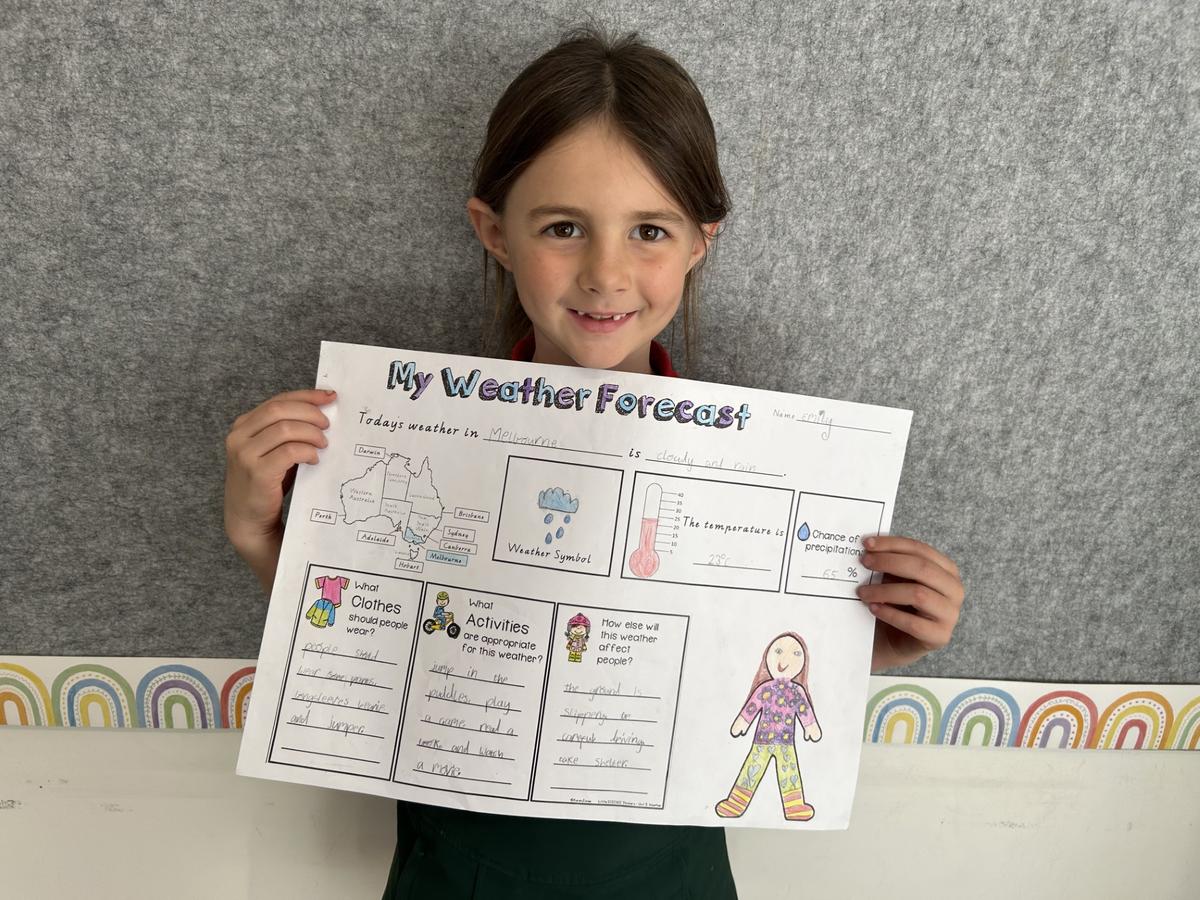
Year 1 students have now completed their unit on How the World Works. Throughout this unit, they thoroughly enjoyed exploring different aspects of weather. They learned how to describe daily and seasonal weather, make predictions, observe changes, and identify the different seasons.
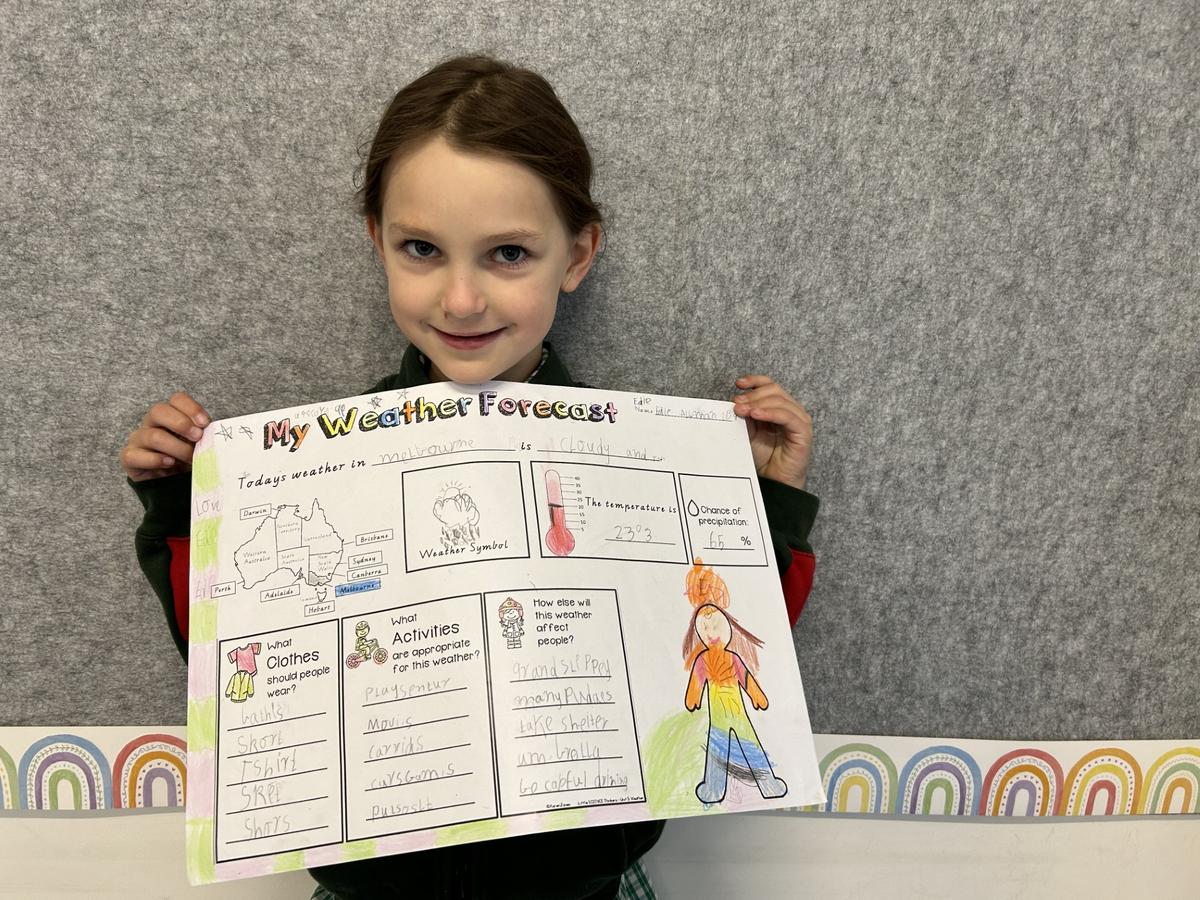
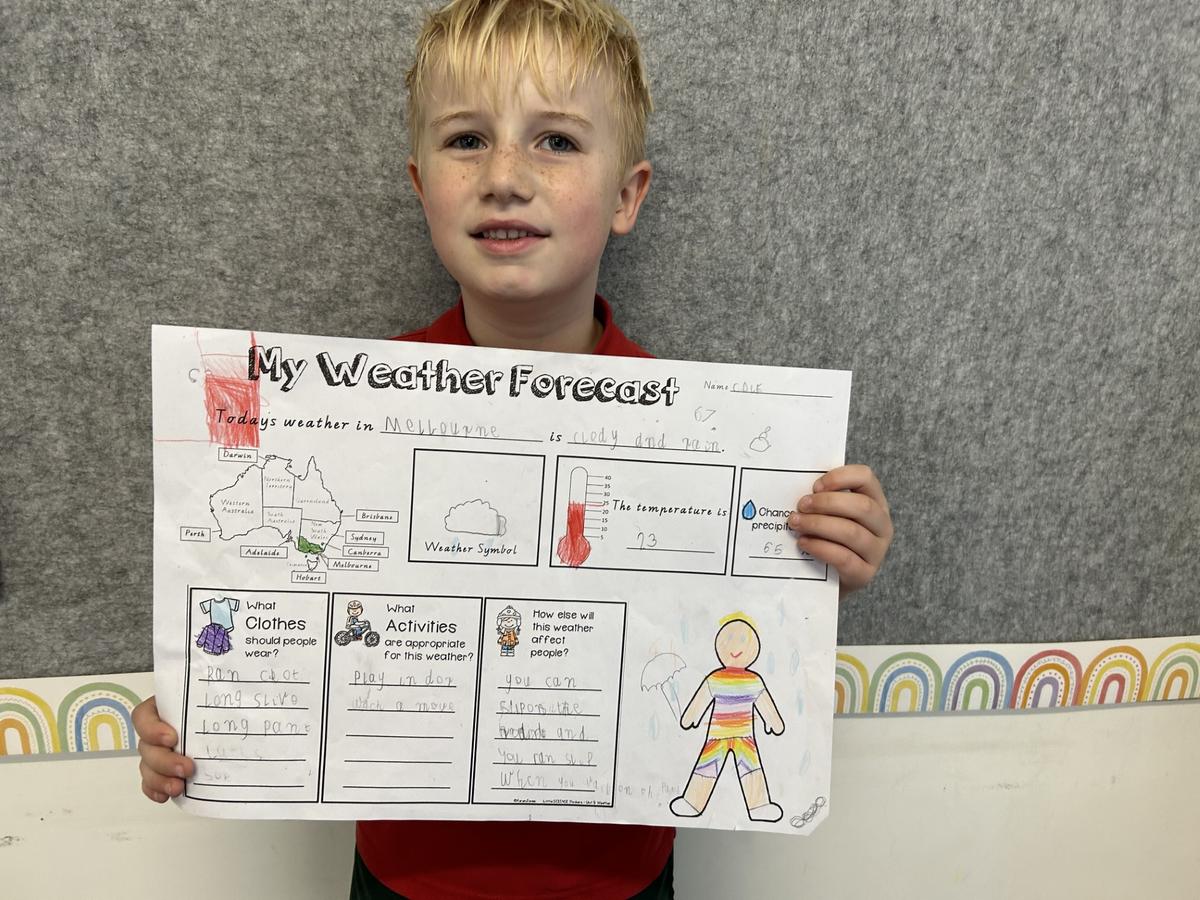
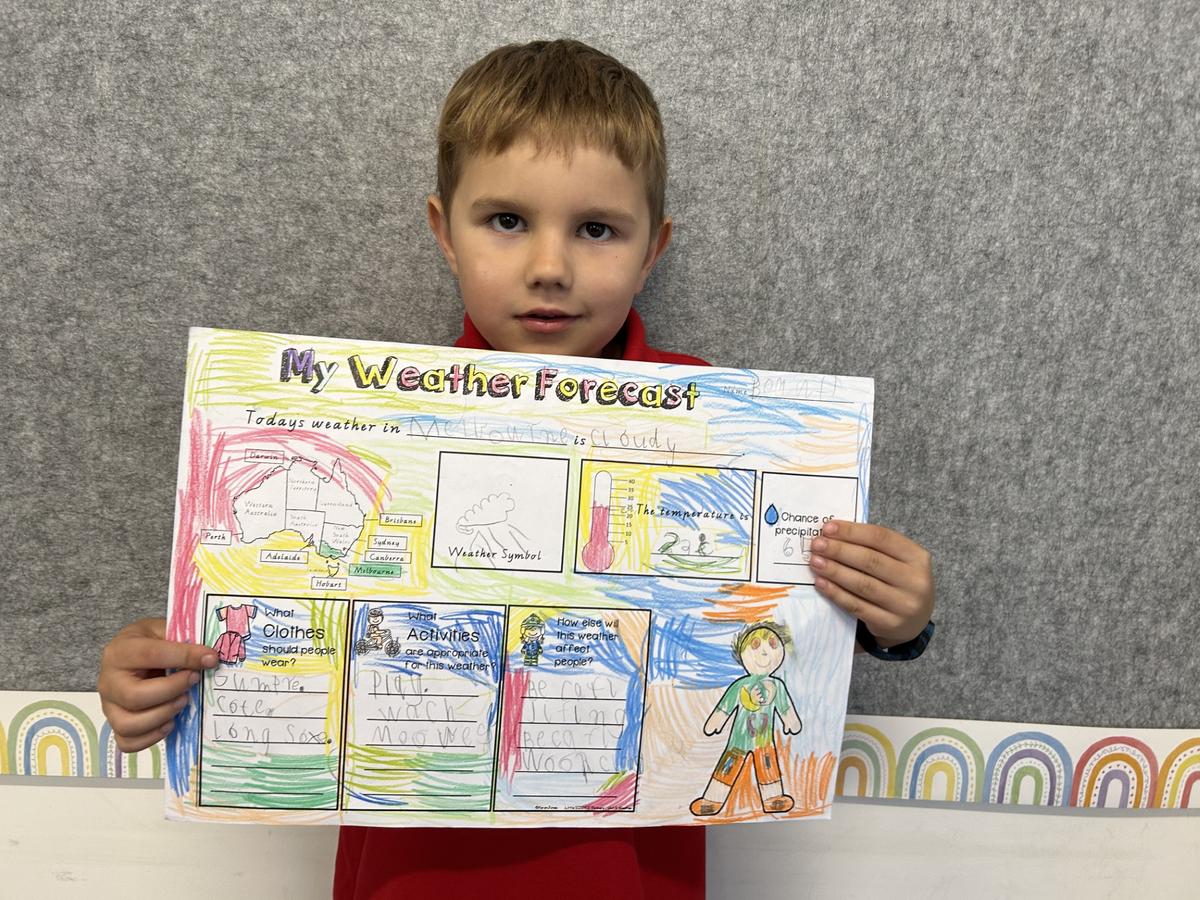
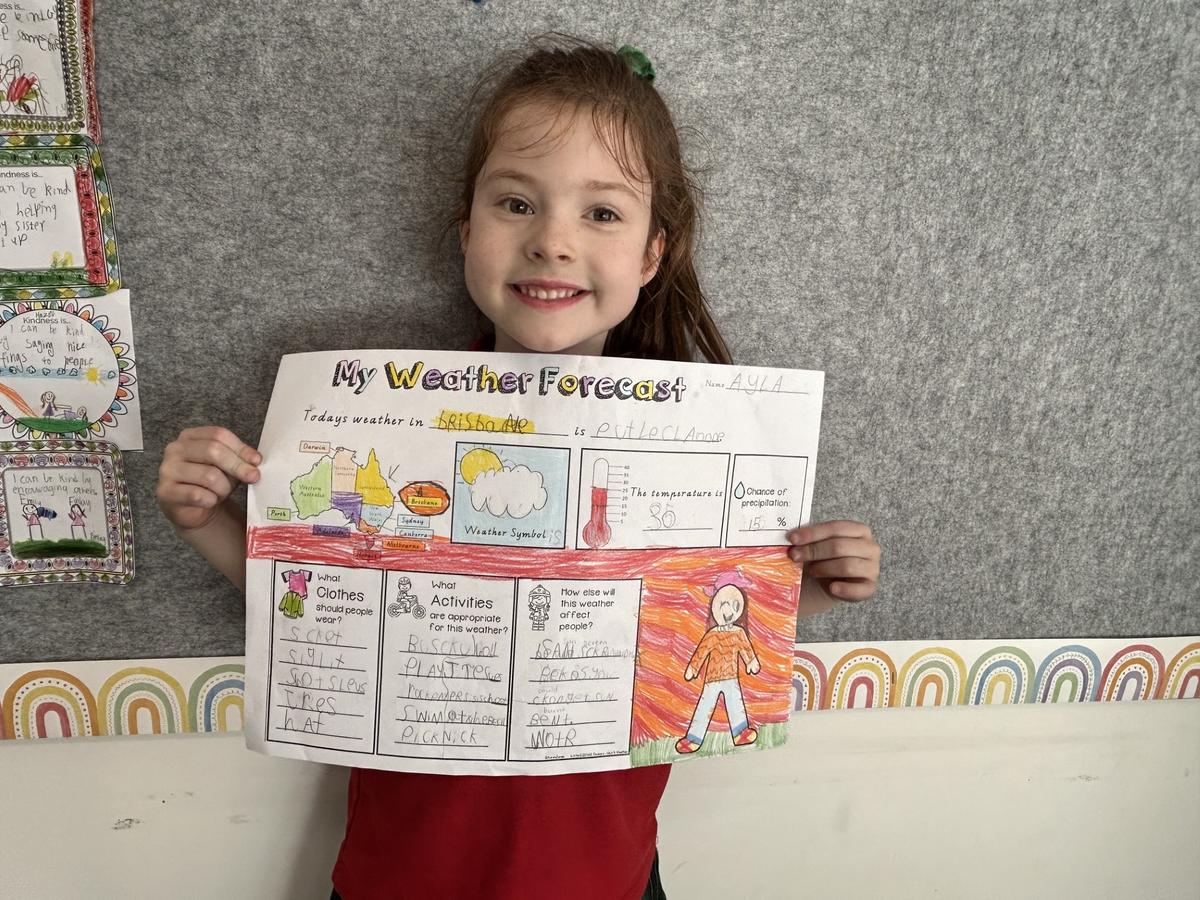
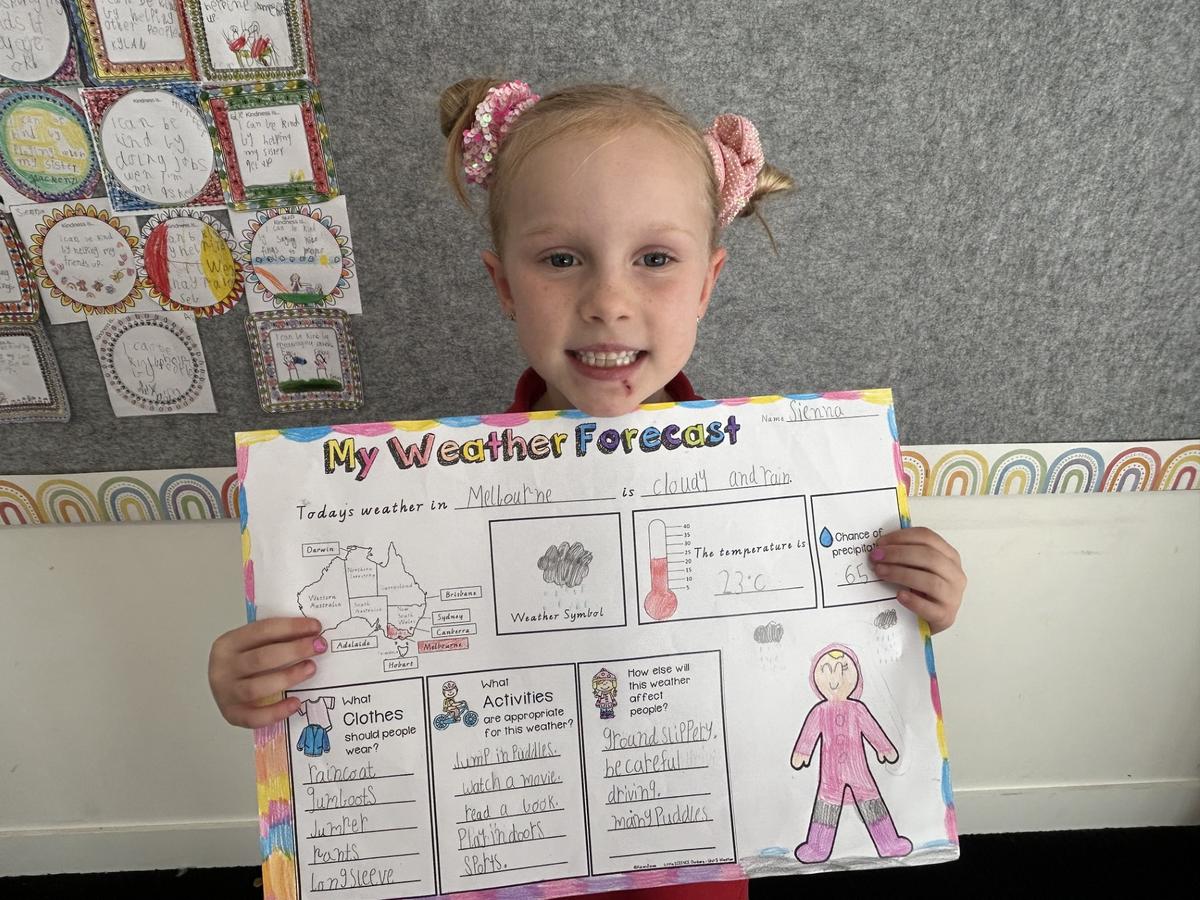
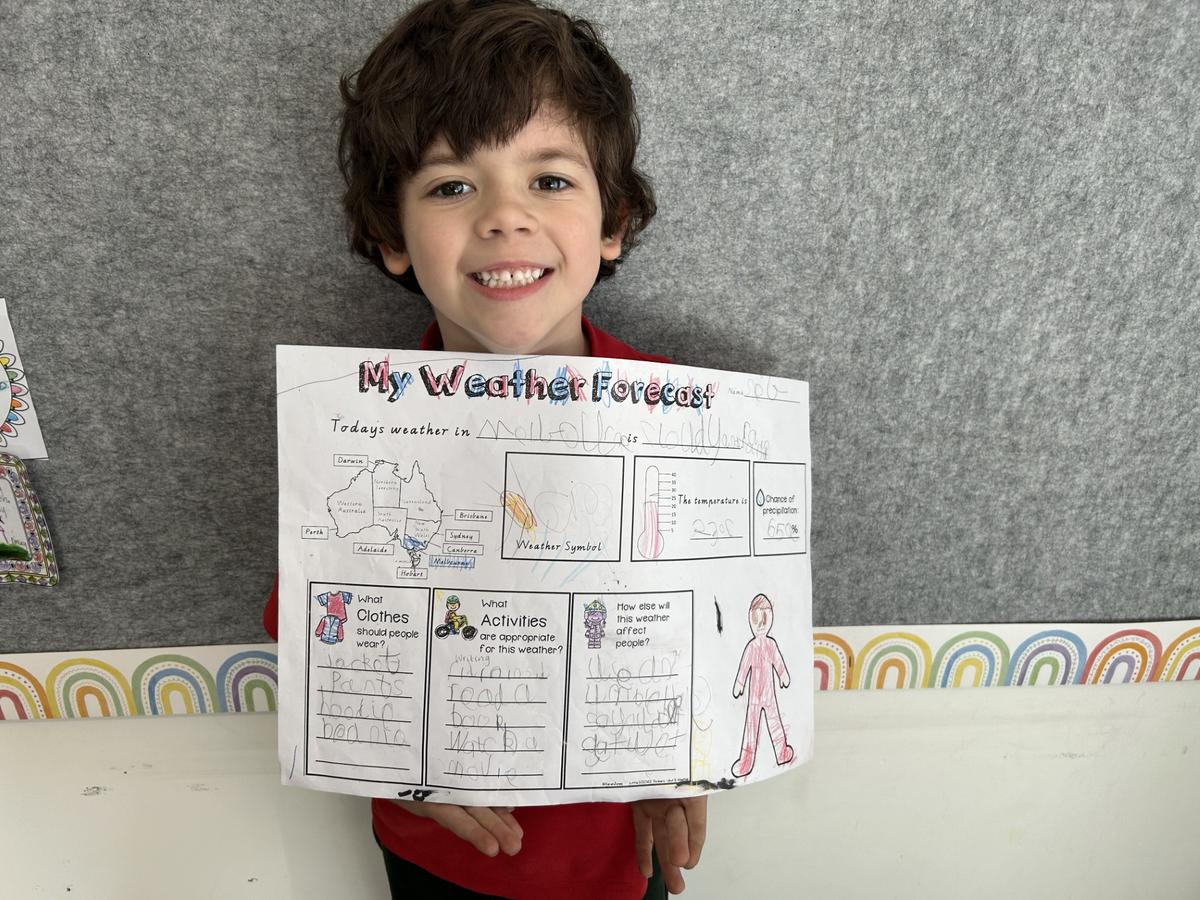
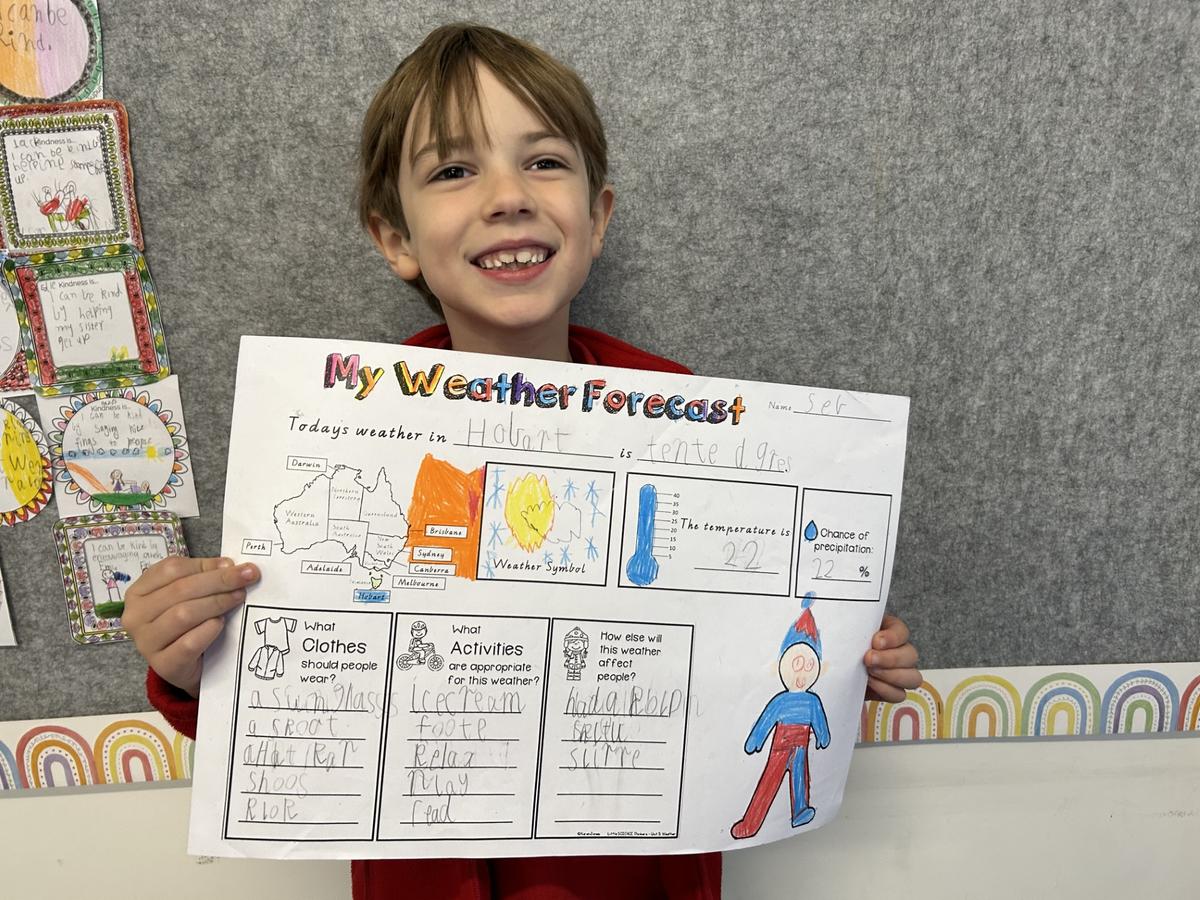
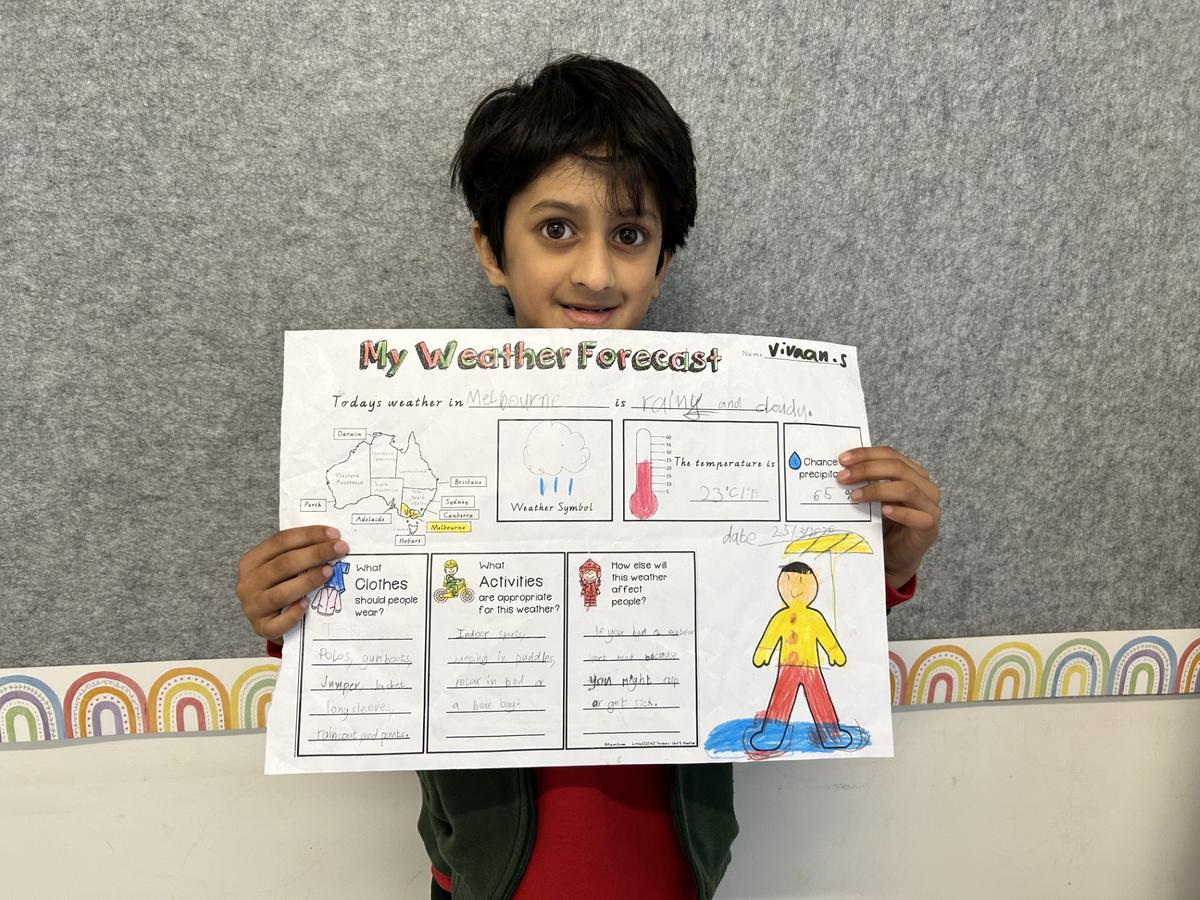
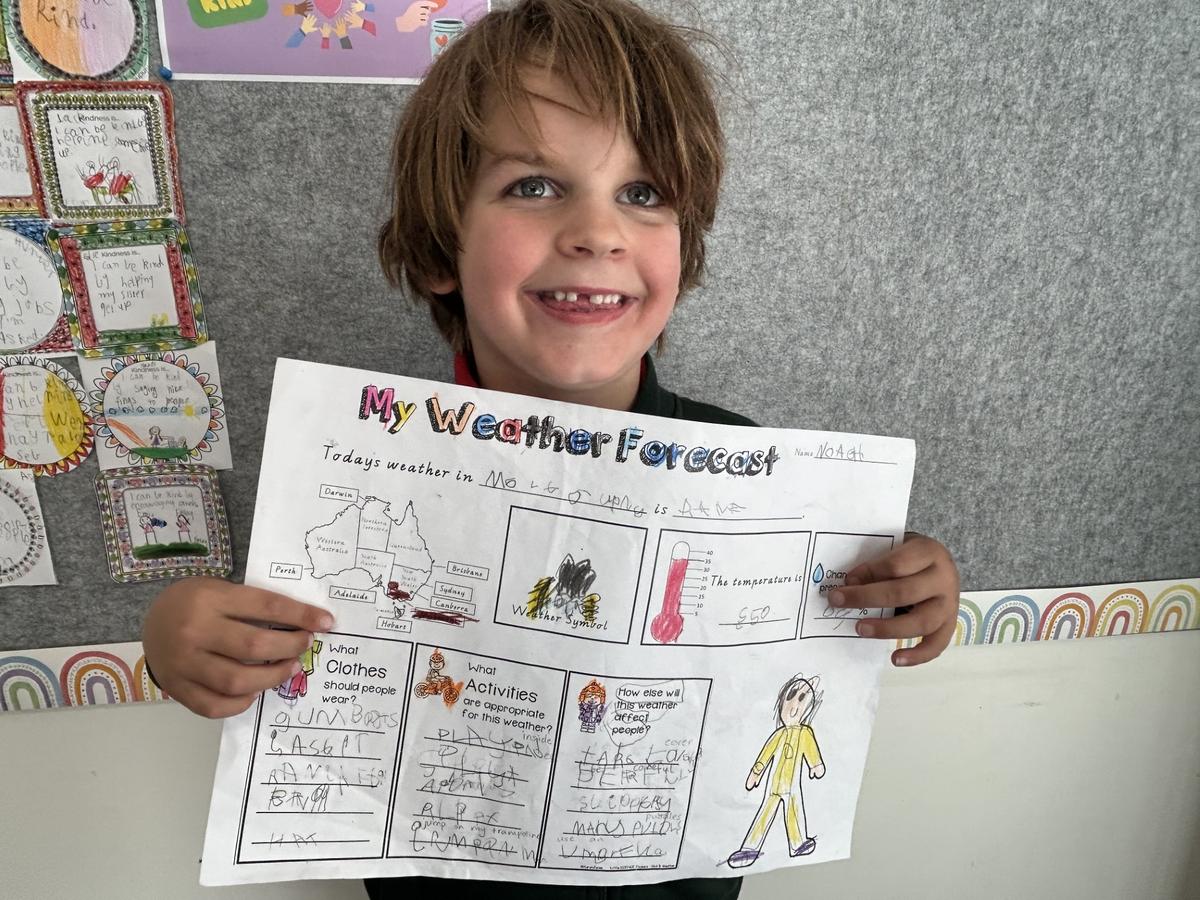
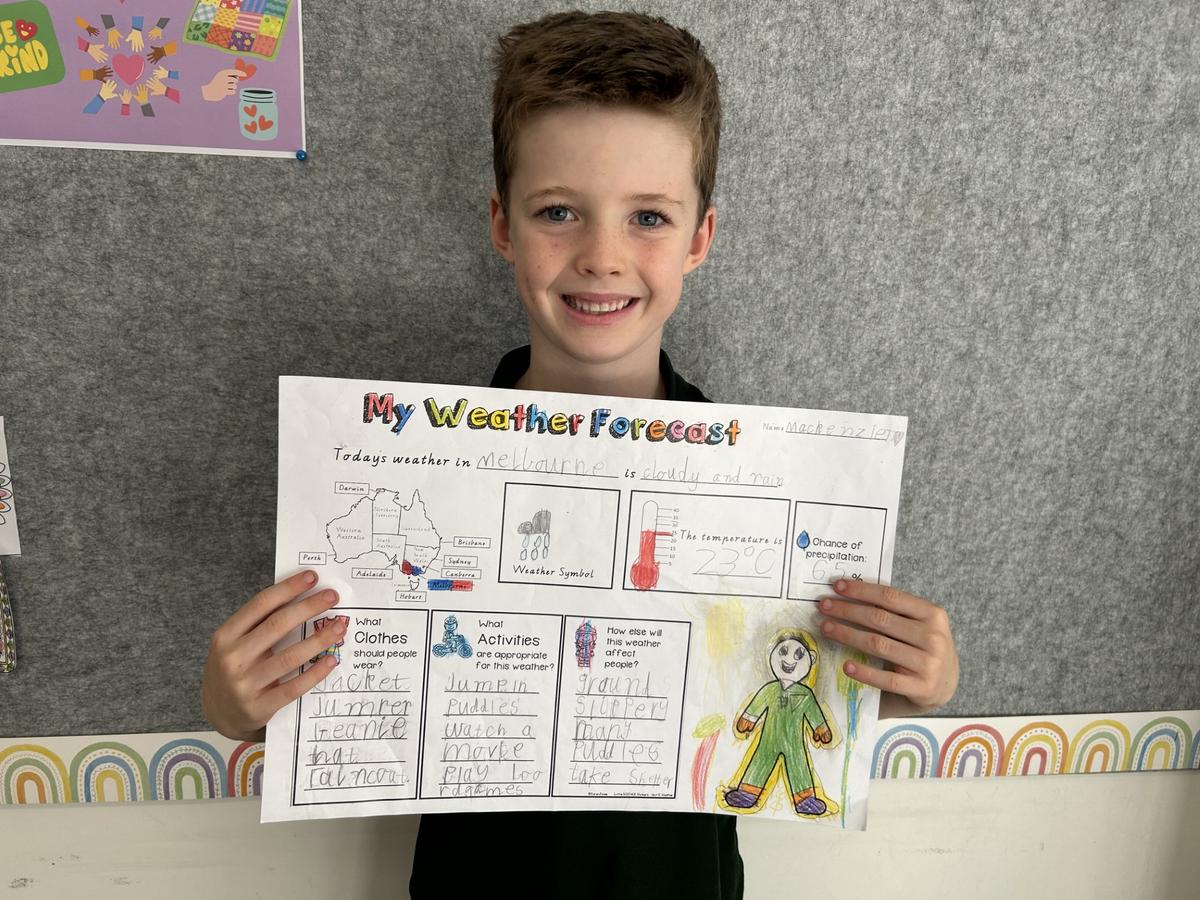
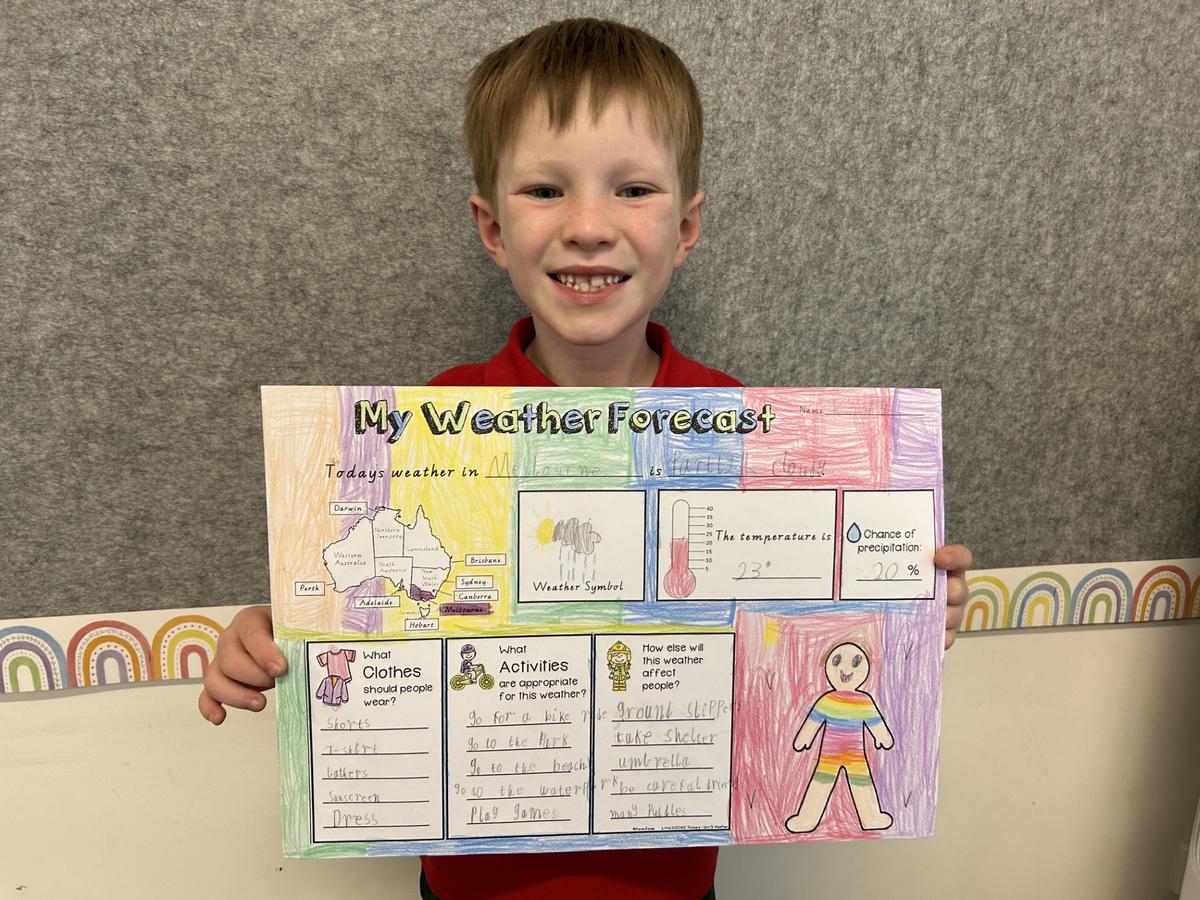
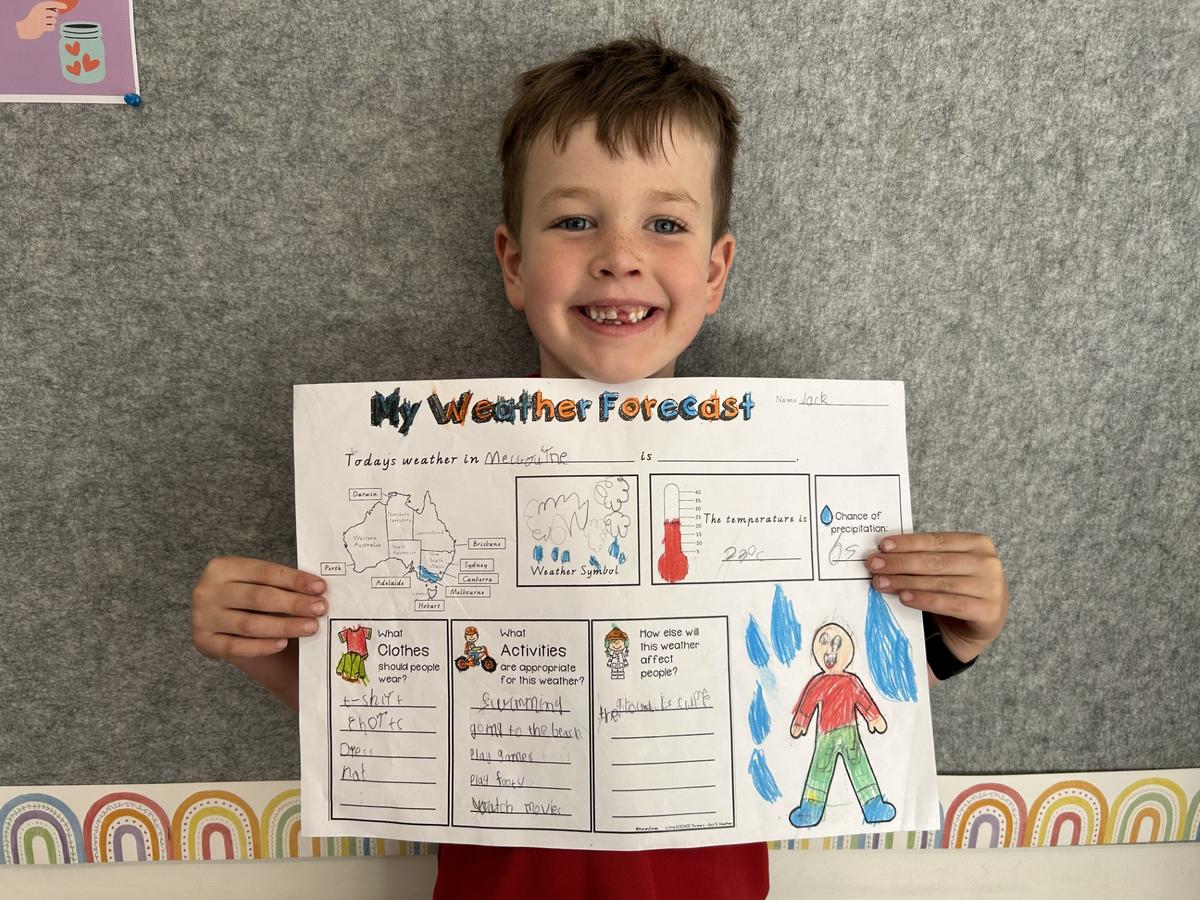
We were incredibly impressed with the depth of their understanding, which was clearly demonstrated through their weather presentations. The students worked hard to write and design their weather report posters, carefully prepared what they wanted to say, and confidently presented their work to the class.
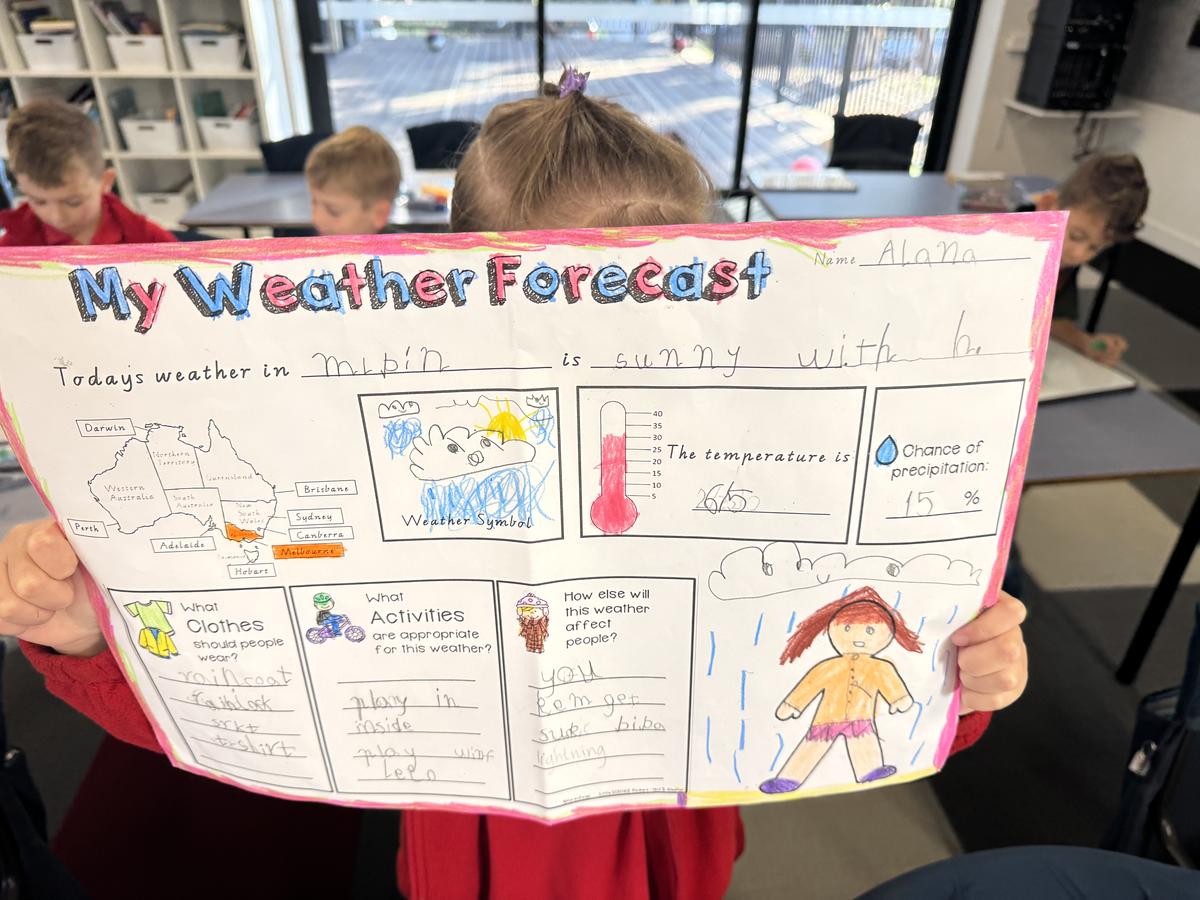
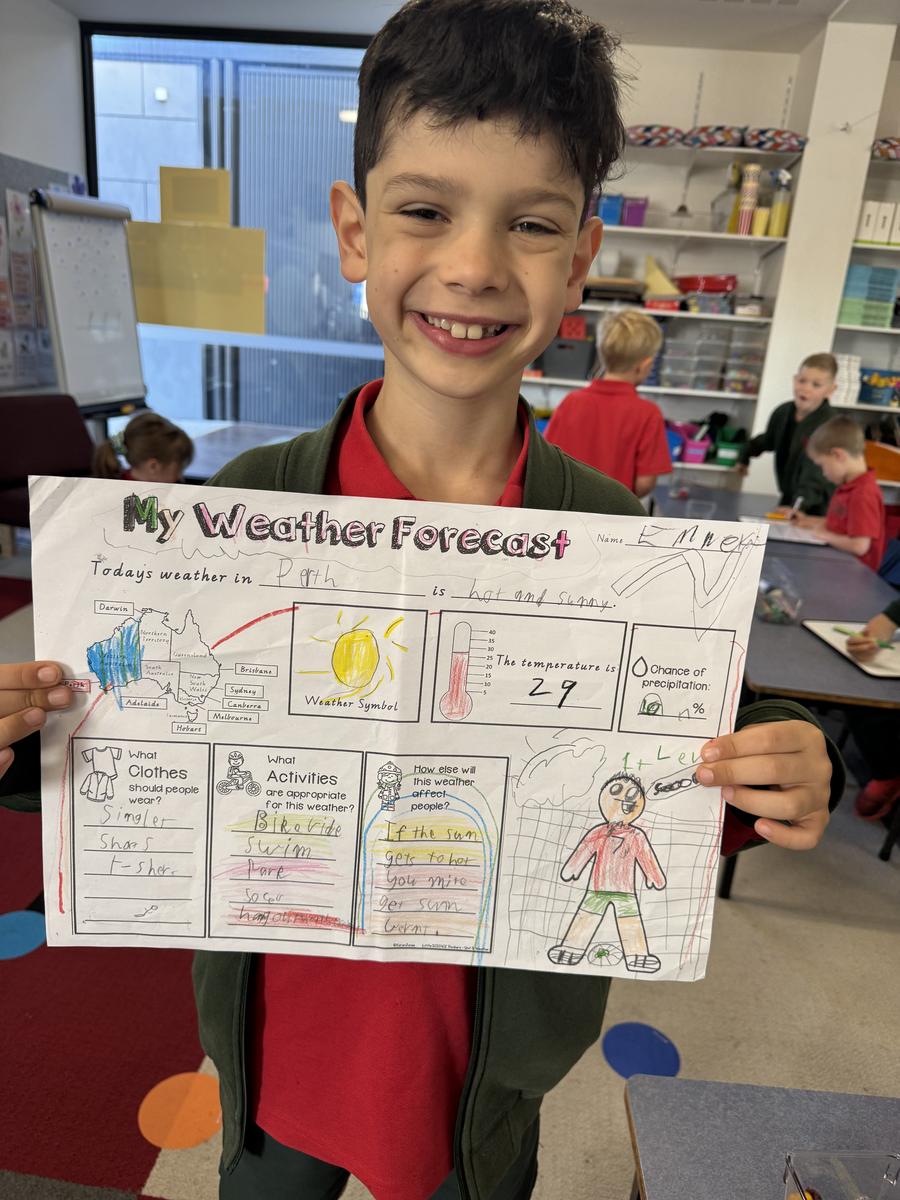
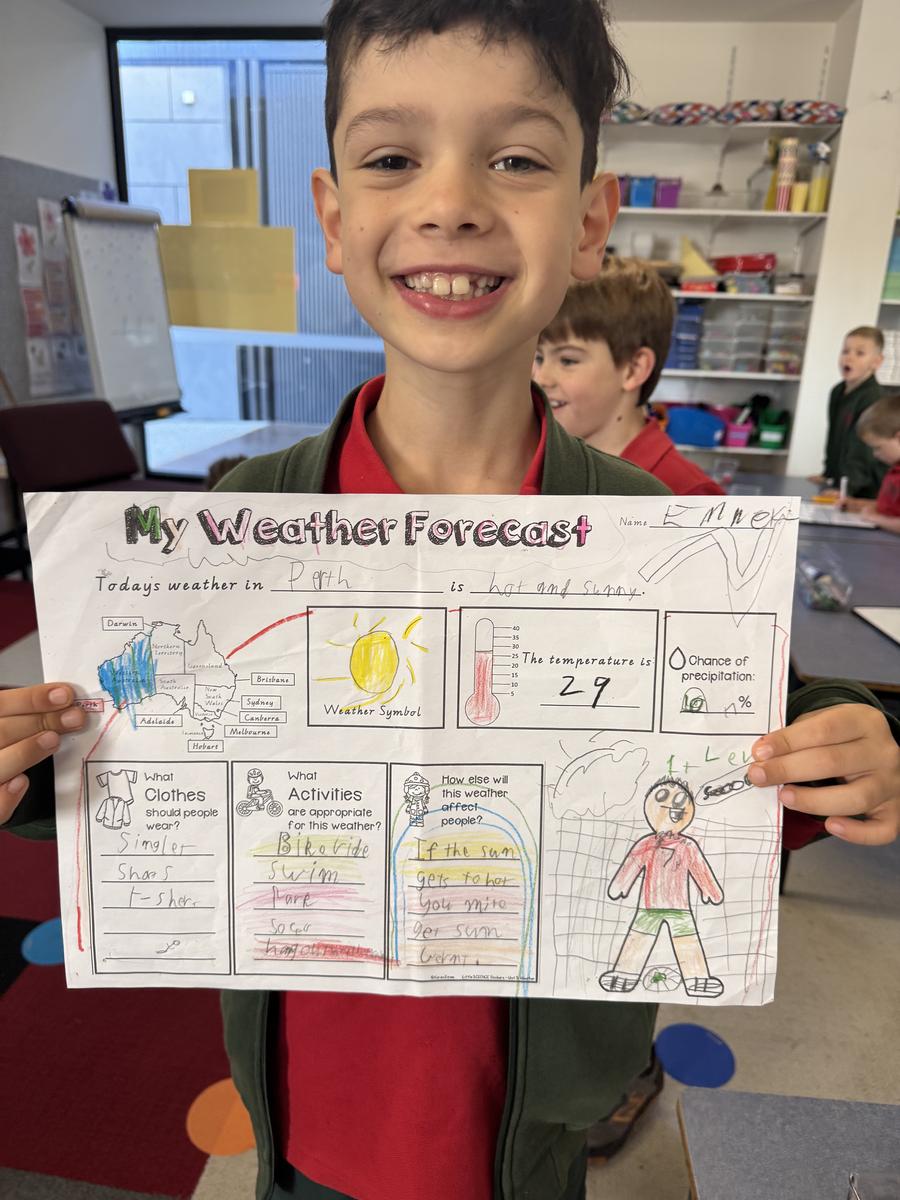
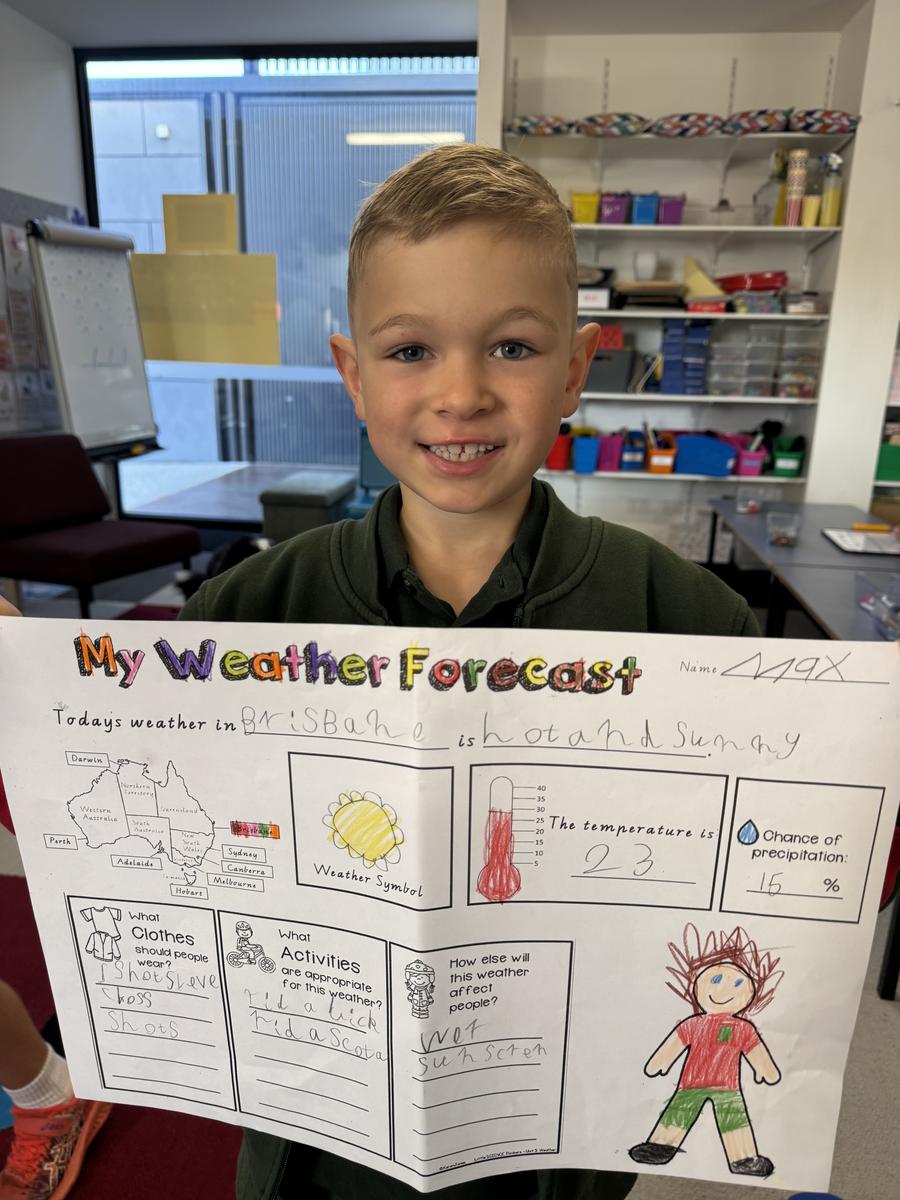
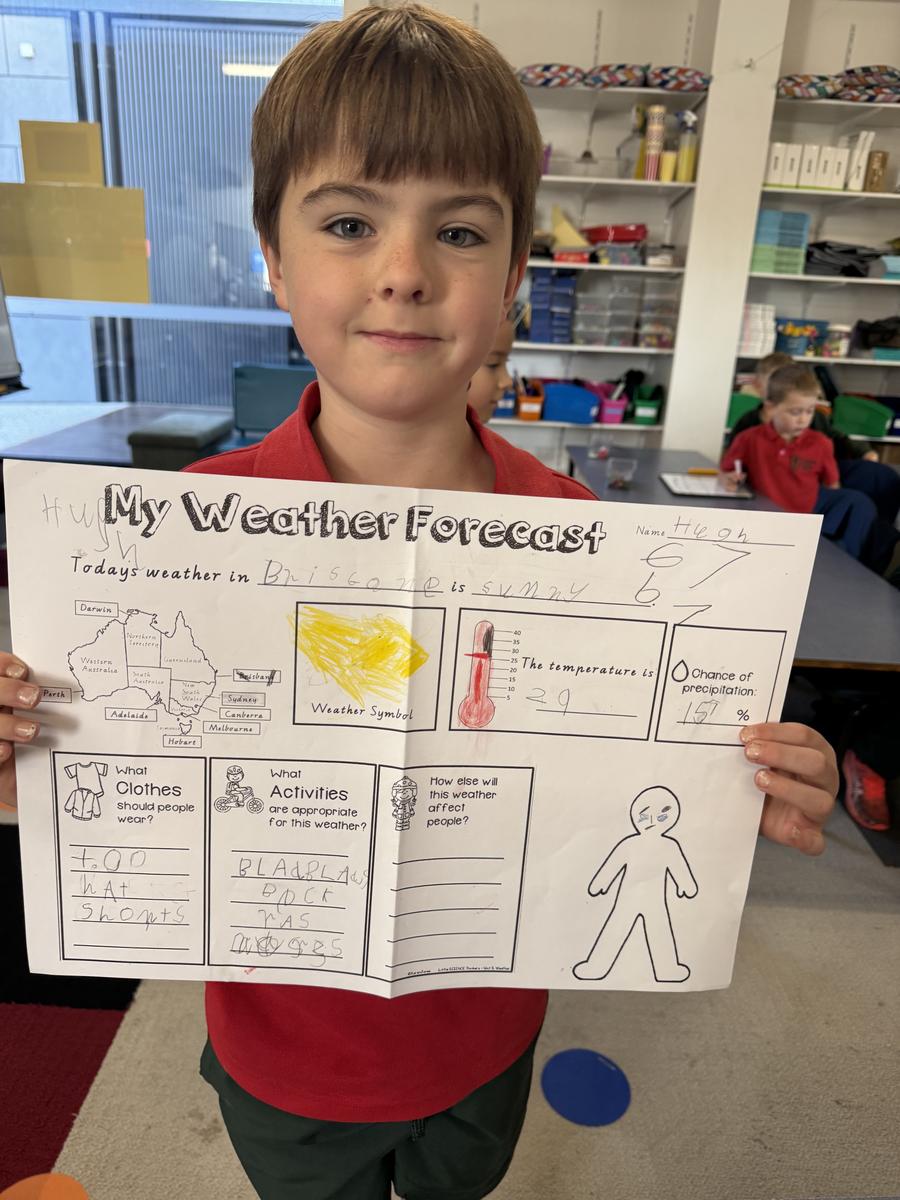
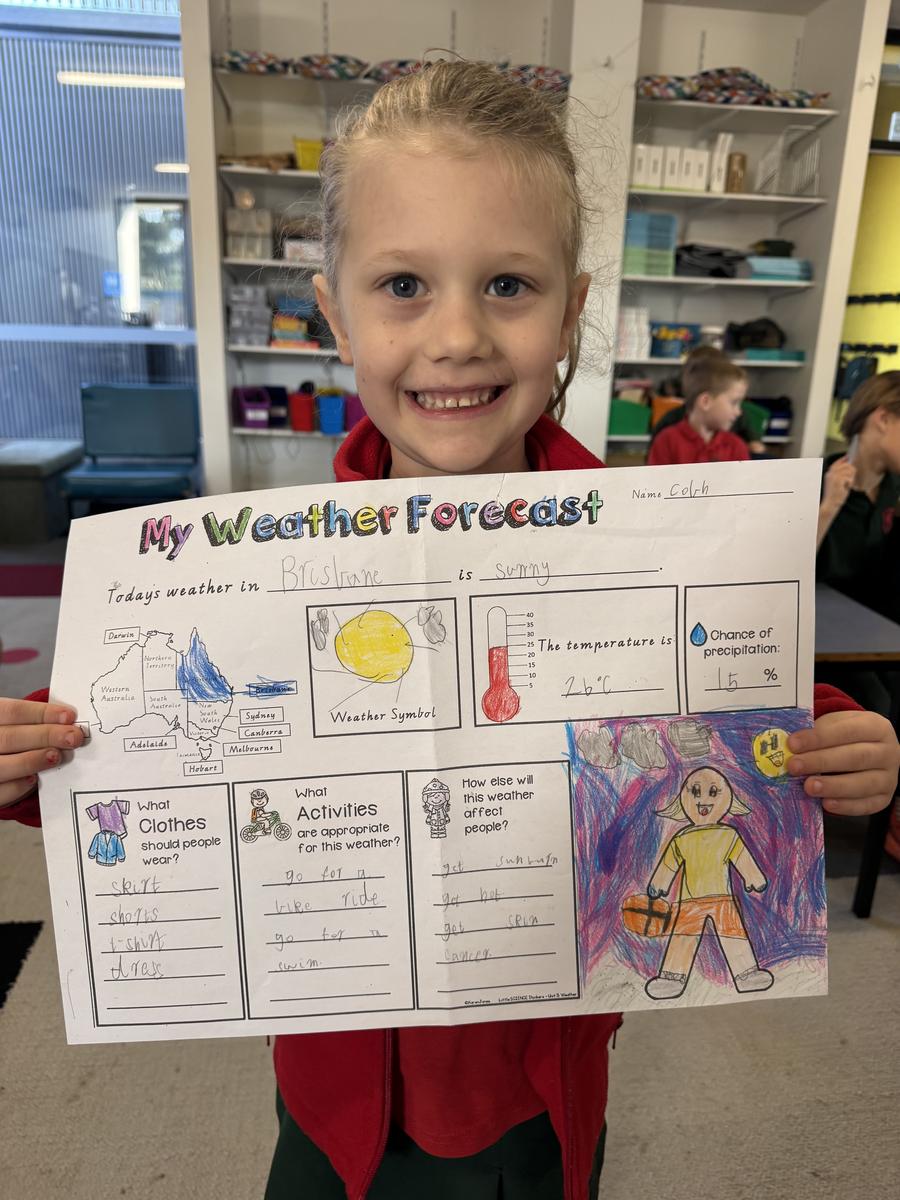
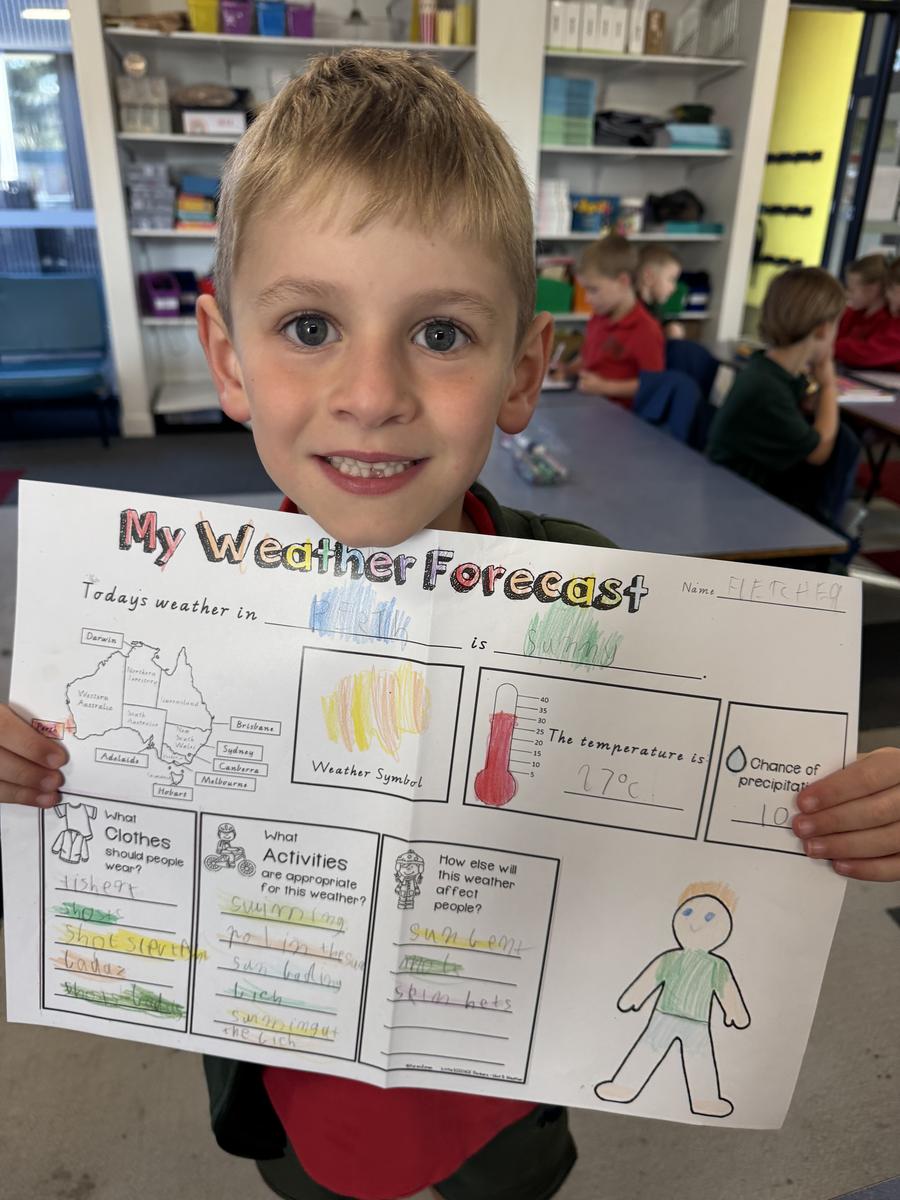
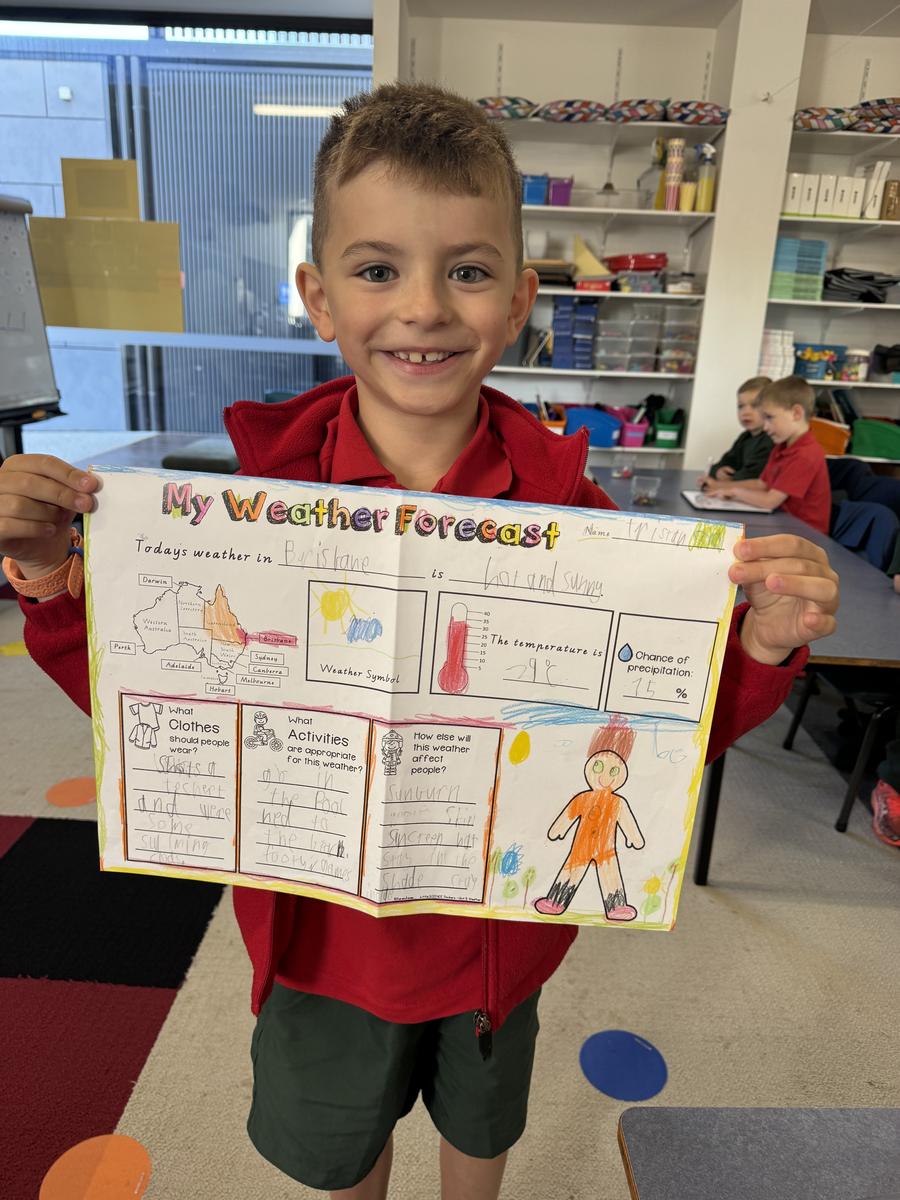
Each student showed great courage as a risk-taker when speaking in front of their peers, and every one of them did an outstanding job. We are very proud of the effort they put into both the preparation and presentation of their work - there may even be a few future meteorologists among them!
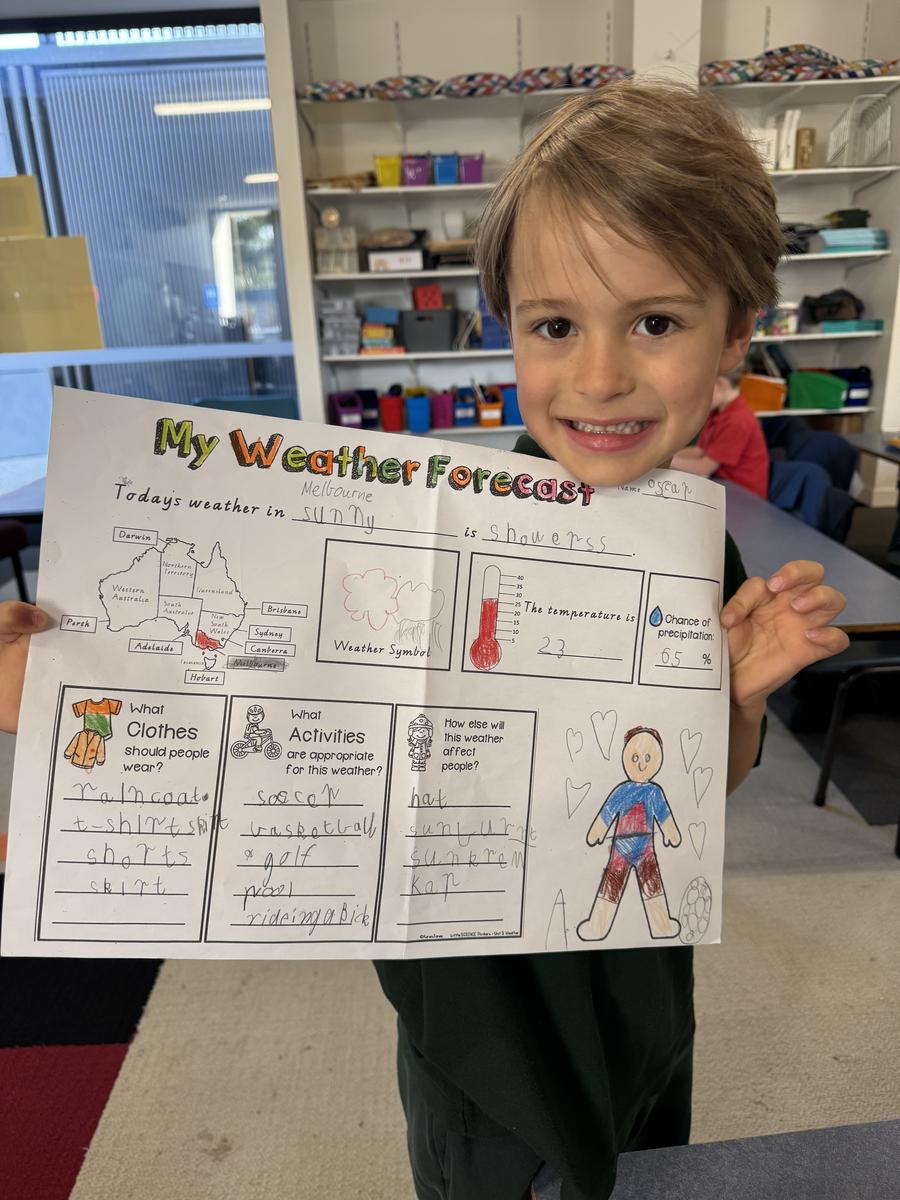
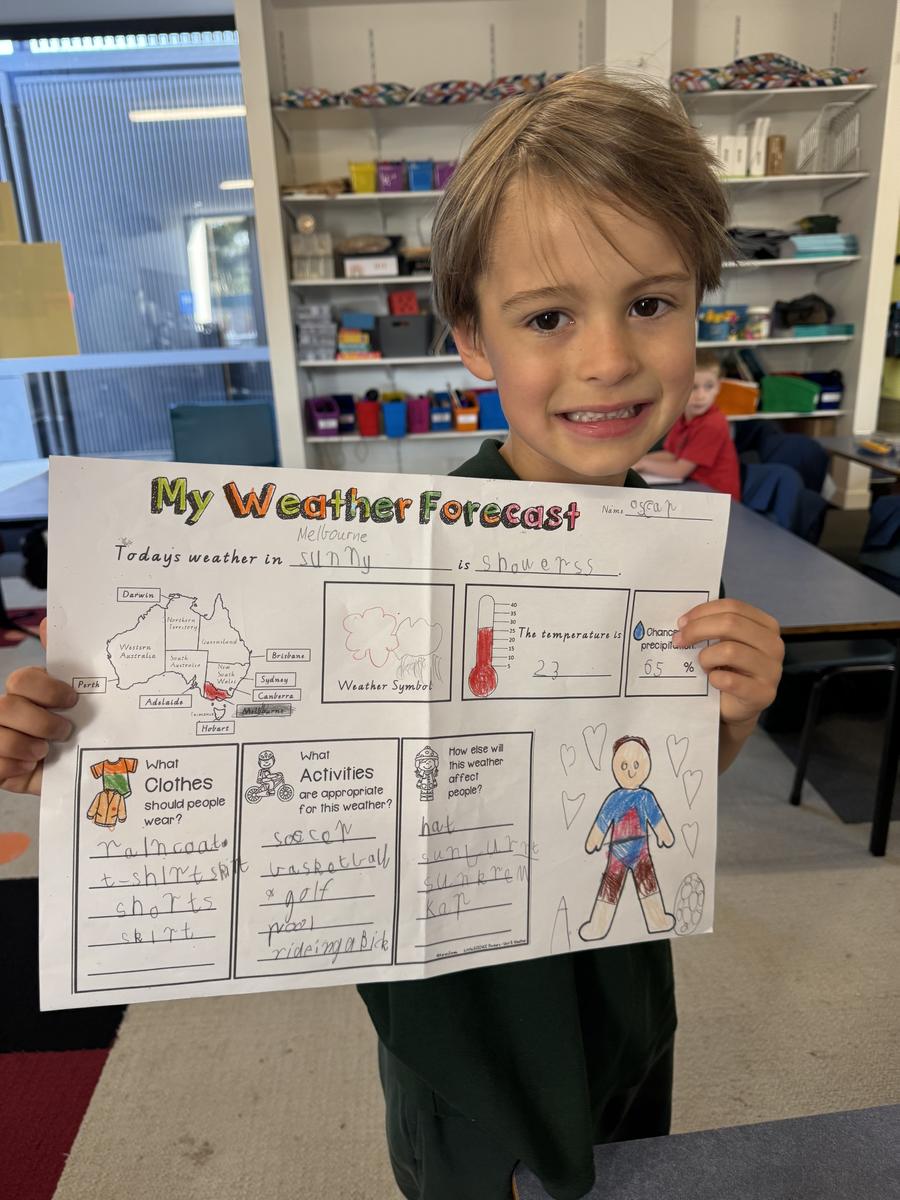
Social Skills
In Year 1, students have been actively participating in a range of social skills activities designed to support positive interactions and build confidence in the classroom. Through structured games, group construction activities, role-play and group discussions, students are learning how to take turns, listen to others, use kind words, and work cooperatively and inclusively with their peers.
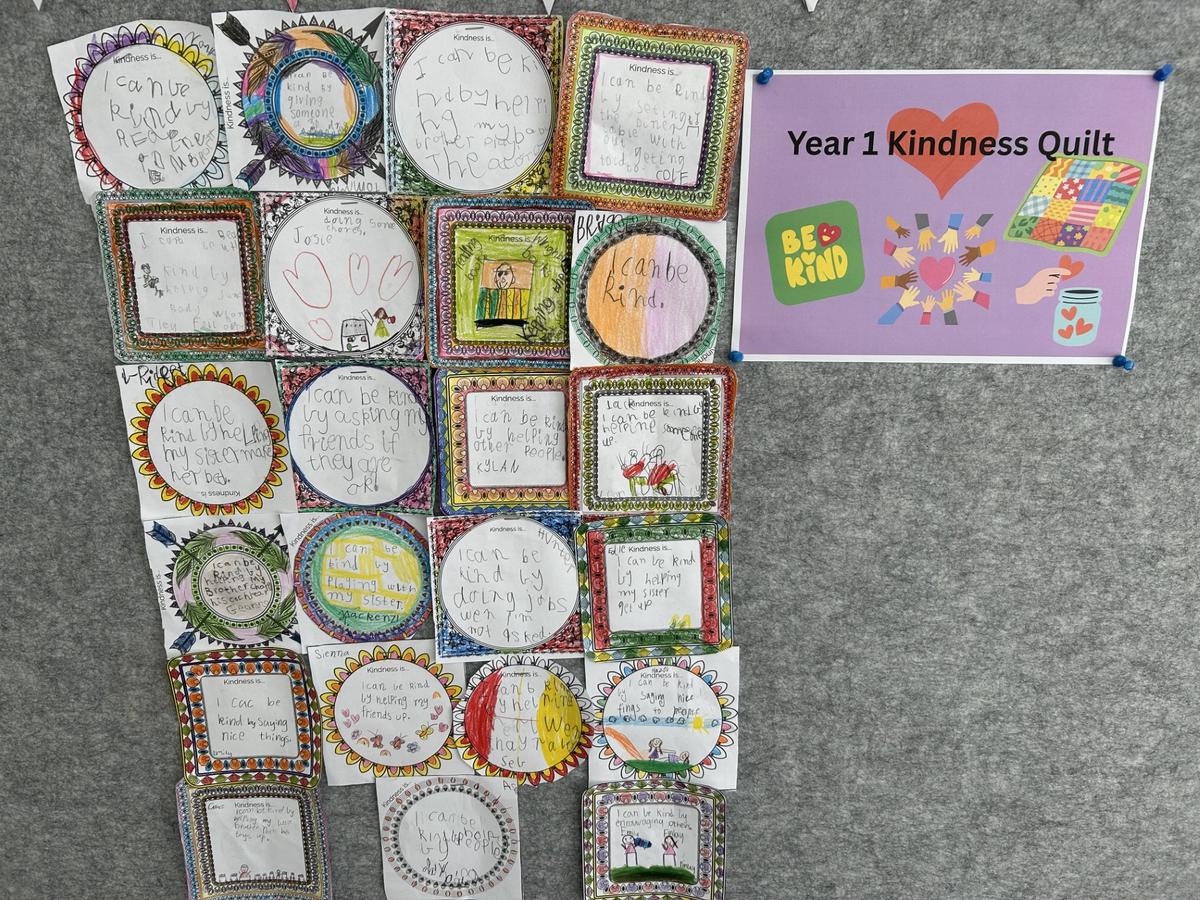
We have also been focusing on recognising what kindness looks like, sounds like, and feels like. Students have been excited to identify many ways to show kindness to others and have contributed to a “kindness quilt,” a year-level project where they share their acts of kindness through writing and drawing.
Future Learning
Literacy
Phonics Plus
Introduction of new Grapheme-Phoneme Correspondences (GPC’s):
We are continuing to focus on teaching double consonant grapheme–phoneme correspondences (GPCs): ‘ll’, ‘ss’, ‘ff’, and ‘zz’. Students will practise decoding and spelling words such as doll, less, huff, jazz and will.
There will also be a continued focus on developing reading fluency, handwriting skills, and learning high-frequency words.
Students will continue to explore rhyme, alliteration, and syllables, and practise manipulating sounds in words by changing the beginning, middle, or ending sounds. For example: bell → night → moss → mess → back → fly.
Students who are ready will be extended by reading and writing longer words and sentences that include these spelling patterns, as well as applying their phonics knowledge when composing their own simple texts.
Grammar and Punctuation
Expanding simple sentences with ‘when’, ‘who’ and ‘where’
Expanding simple sentences with adjectives
Commas separating adjectives
Maths
Comparing 2-digit numbers
Place Value facts for 2-digit numbers
Crossing decades
2D shapes