
Teens & Screens
Digital Habits - tips for parents/carers
Teens & Screens
Digital Habits - tips for parents/carers
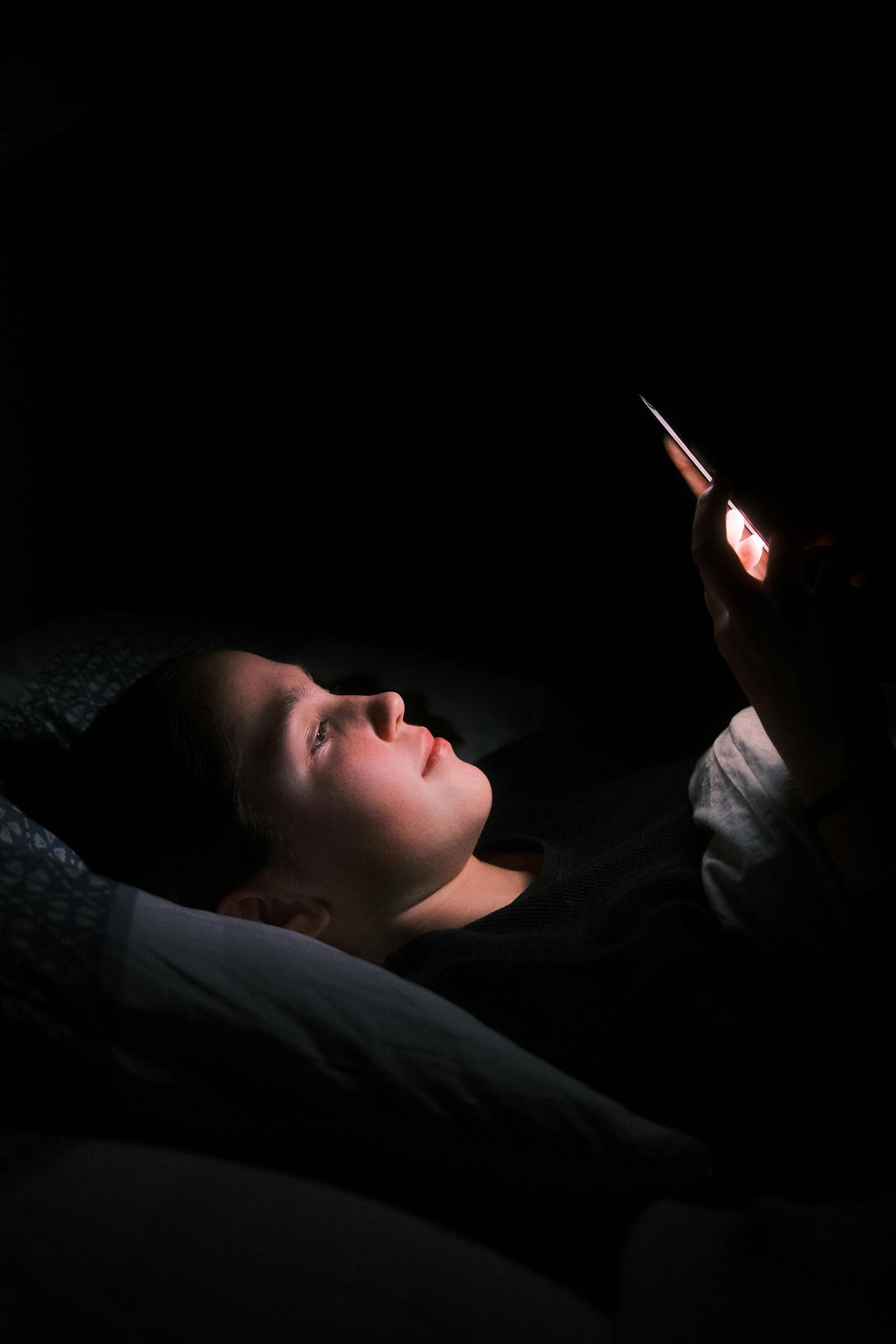
Revenge bedtime procrastination is when people intentionally stay up late to enjoy personal time, even when they know it will negatively affect their sleep. It often happens when individuals feel they have little control over their daily schedules.
Does this sound familiar? You know you’re exhausted, but somehow, one more episode, one more scroll, one more chapter feels like reclaiming your life. That’s called revenge bedtime procrastination. Although it’s tempting in the moment, late nights followed by early mornings can lead to sleep deprivation and negatively impact your mental and physical health in both the short and long term.
People often put off going to bed the same way they postpone homework or household chores, but sleep procrastination feels different because the trade-off is usually something fun - another episode of your favorite TV show, one more level of a video game, or a late-night chat with friends.
The addition of the word revenge to the concept of bedtime procrastination became popular on social media. The English term “revenge bedtime procrastination” emerged from a translation of an expression in Chinese that reflected frustration tied to long, stressful work hours that left little time for personal enjoyment.
In this way, bedtime procrastination is seen as a way of getting “revenge” on daytime hours with little or no free time. The idea has resonated across the globe and gained additional traction through social media platforms largely as a response to stress and screen time from working and learning at home during the COVID-19 pandemic.
The Science of a Tired Teen Brain
When we talk about helping teens’ sleep, we mean more than helping them rest. During sleep, the brain flushes out toxins and moves memories into storage which is essential for developing knowledge through long-term memory. When a teen stays up late, they miss out on the deep REM sleep that helps them regulate their emotions. This can lead to a dangerous double whammy for teens:
Physical stress: Lack of sleep spikes cortisol (the stress hormone).
Emotional fragility: Without sleep, the part of the brain that handles logic (the prefrontal cortex) goes offline, while the emotional center (the amygdala) becomes hyperactive.
This is why mental health and sleep often go hand-in-hand. A teen who is running on four hours of sleep isn’t just tired; they are biologically primed to have a meltdown over a small mistake or a text from a friend. Over time, this chronic lack of rest can mimic the symptoms of clinical anxiety or depression.
Is it a Habit or a Mental Health Warning Sign?
For a parent, it is important to differentiate between a teen who likes to stay up late and a teen who is using the night to hide from their life. Look for these red flags:
Avoidance: Are they staying up late specifically to avoid thinking about school the next day?
The “zombified” morning: Do they seem physically unable to function before noon on weekends?
Irritability: Are they snapping at family members over tiny things?
Academic drop: Are their grades falling because they are too tired to focus in class?
If your teen is staying up late because they feel worthless during the day or because they are too anxious to close their eyes, the issue may be deeper than poor teen sleep habits and professional advice may be essential.
Causes
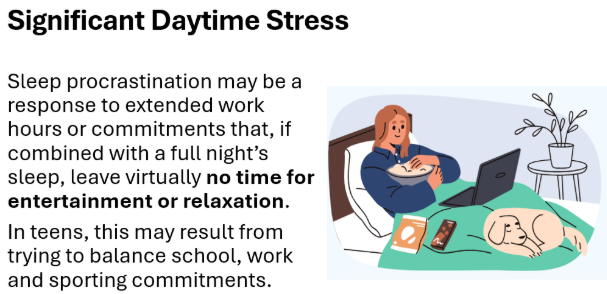
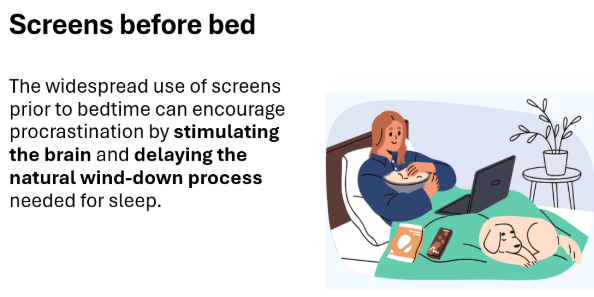
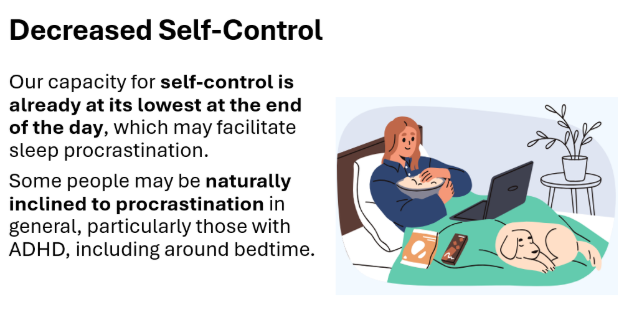
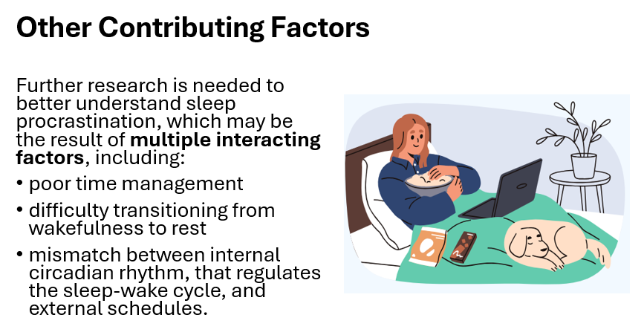
Sleep procrastination is still an emerging concept in sleep science. As a result, there are ongoing debates about the psychology behind, and causes of, this voluntary sleep reduction. What is known includes:
Consequences
Ultimately, consistent bedtime procrastination can cause:
Sleep deprivation – limiting the ability for the mind and body to recharge, leading to wider health consequences
Degradation of thinking, memory, and decision-making - raising the risk of daytime sleepiness, which can harm productivity and academic achievement while heightening the risks of drowsy driving
Mental health disorders - such as depression and anxiety from difficulties in regulating emotions
Risks to physical health - more susceptible to cardiovascular problems and metabolic disorders, like diabetes as well as erosion of immune function and reduction to the effectiveness of vaccines
Prevention:
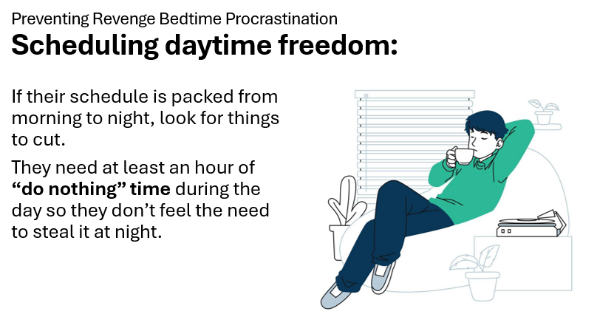
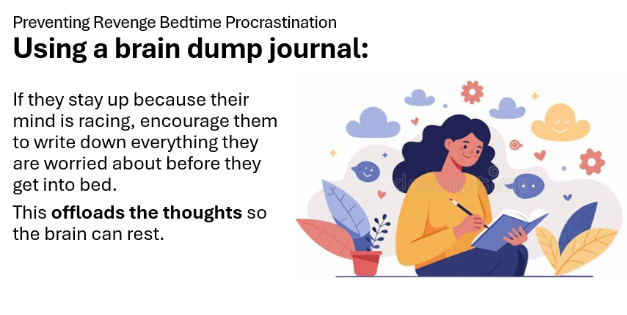
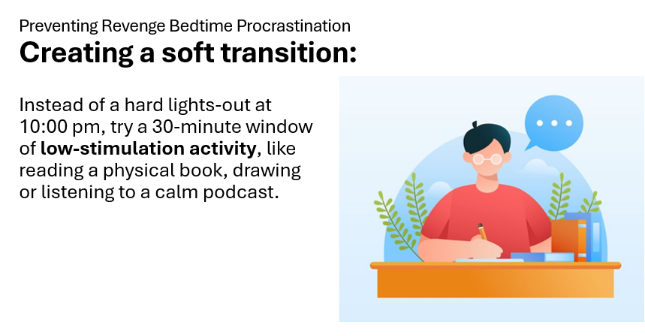
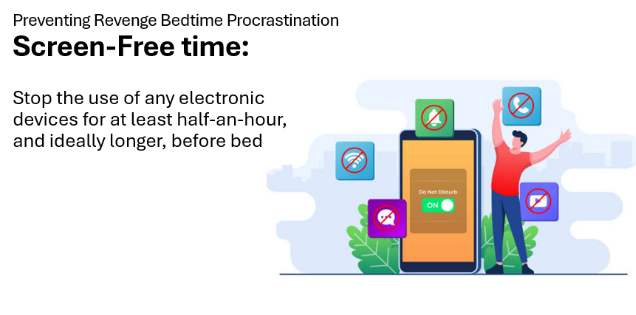
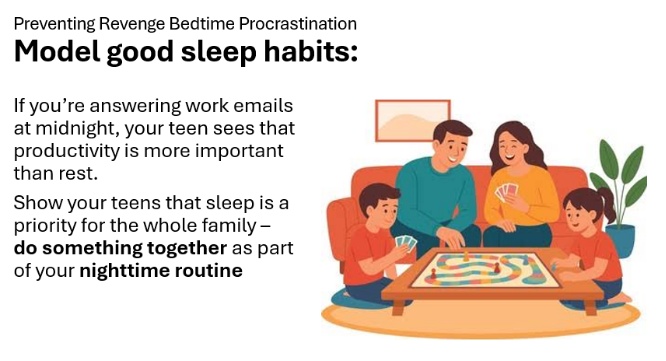
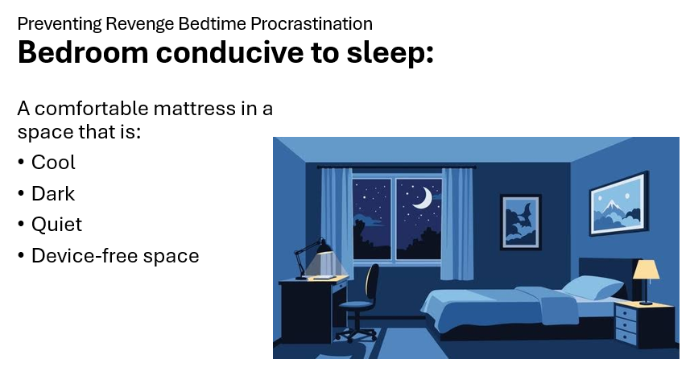
Creating good sleep habits and an environment conducive to sleep through:
Tanya Moran
Leader of Professional Practice
Combined excerpts above are taken from:
https://www.sleepfoundation.org/sleep-hygiene/revenge-bedtime-procrastination
https://www.averyshouse.com/revenge-bedtime-procrastination-in-teens/