
Wellbeing Update
Week 6, Term 2
Wellbeing Update
Week 6, Term 2

In Week 9, we’re inviting parents and carers to have a cup of tea and a chat.
In an earlier Wellbeing update (Issue 10, 1 April 2026), I included two models that guide our work here in the mental health and wellbeing space - Bronfenbrenner’s Ecological Systems Theory of Development, and Social and Emotional Wellbeing (SEWB) by Gee et al., 2004. Both models identify connections between the student’s environments as key for wellbeing and development.
This is a simple way to foster these connections, while ensuring parents and carers have opportunities to develop connections beyond the quick drop-off and pick-up greetings! RSVPs are requested by 9 June, in order to ensure appropriate space and to organise some refreshments.
Whether you’re new to the school or you’ve been here a while, you’re welcome to join us directly after the first bell. We look forward to seeing you then!
As a school, we’ve noticed an increase in ‘rough and tumble play’, particularly in our junior years. Rough and tumble play is physical play, like chasing, wrestling or play fighting between children.
There are some benefits to rough and tumble play when practised in a safe and supported manner. These include:
While these skills are important in a child’s development, we are, at times, seeing it cross from play to aggression. The first sign of this is negative facial expressions (frowning), crying, or evident fear or anger.
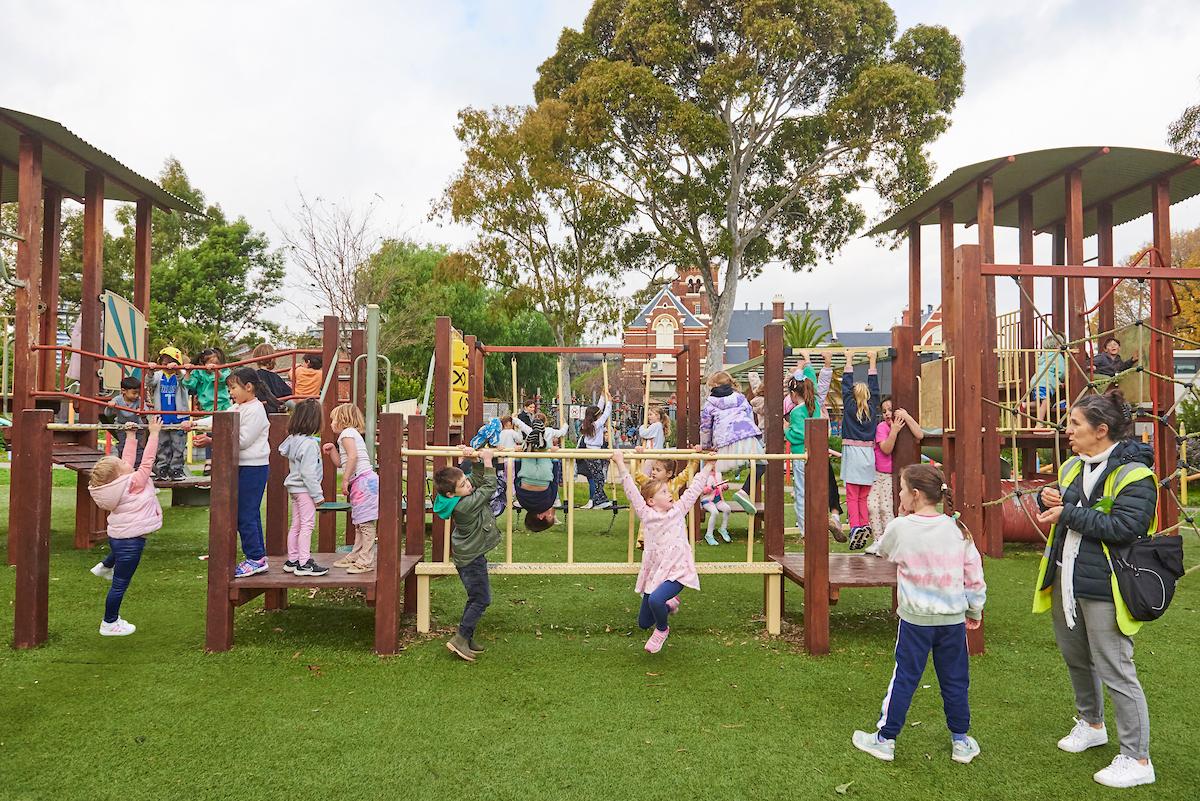
In order to address this, we have put in place a number of proactive and responsive measures, including:
Furthermore, SKiPPS is involved in SWPBS (school wide positive behaviour support) for the first time in 2026 to ensure consistently embedded positive behaviour management strategies. There will be further updates in the newsletter as the initiative progresses this year.
We really appreciate your support at home with reinforcing some key messaging. A really important step is to involve your child in discussions around boundary-setting and establishing rules. Engage them in discussions about their safety and ask them what they’re learning about safe and respectful play at school. Students can be reminded of the below:
You can reassure your child the school is working closely with families to support students to develop skills - it’s important that students know their environments are connected and working together.
We’re also working with our students to reframe some language:
If you’d like to read more, below are two helpful articles:
See you all soon!
Louisa Di Pietro
Learning Specialist - Wellbeing