Grade 6 News
Upcoming Dates
- Wednesday 27th May: Division Cross Country
- Friday 29th May: Winter Round Robin Day 2
- Monday 8th June: King's Birthday Public Holiday
Reminders
- We continue to sell icypoles on Monday and Tuesday in front of the Senior School building at the commencement of the lunch break.
Learning in Action
Reading
Can You See Me?
In our reading of 'Can You See Me?,' students followed Tally’s journey, deepening their understanding of her experiences, challenges, and relationships.
Across these chapters, Tally continues to navigate the complexities of friendships and school life, whilst also managing the impact of her autism with how she interprets and responds to social situations. Students observed how misunderstandings between Tally and her peers can sometimes lead to frustration and confusion, particularly when intentions are misread.
As the story progresses, Tally begins to develop a stronger awareness of herself and how she communicates with others. Her relationships are tested, but also strengthened, as she learns more about trust, empathy, and belonging. Students noted how important small moments of support and understanding are in helping Tally feel included and valued.
Through guided discussions, students explored how the author uses Tally’s experiences to highlight the importance of acceptance, perspective-taking, and kindness in everyday interactions. These chapters encouraged rich conversation about difference, inclusion, and the power of understanding others.
Preview:
In the next two chapters, students will follow Tally as she navigates increasing challenges in her friendships and school life. The focus will be on how misunderstandings continue to impact her relationships, and how she begins to respond with greater self-awareness. Students will explore key moments that highlight empathy, perspective-taking, and the importance of clear communication.
Writing
Persuasive Letters
This term, Year 6 students are beginning a new unit focused on writing persuasive letters. Students will be applying their knowledge to an engaging real-world topic: the introduction of therapy dogs in schools.
To build their understanding, students have been reading a range of supplementary texts that explore both the benefits and challenges of therapy dogs in educational settings. These texts have helped students develop balanced viewpoints by considering how therapy dogs can support student wellbeing, reduce anxiety, and improve classroom engagement, as well as some of the practical considerations schools need to manage.
As part of this unit, students are also learning how therapy dogs are trained and introduced into schools, and the positive impact they can have on learning environments.
Alongside content knowledge, students are strengthening their writing craft skills, with a focus on sentence structure. This includes revising and applying:
- simple sentences
- compound sentences
- complex sentences
Students are also developing their use of cohesive devices, particularly connectives of contrast, such as however, although, on the other hand, and despite this, to help strengthen the balance and flow of their arguments.
This unit is supporting students to become more confident, informed, and persuasive writers who can present and justify their ideas clearly and effectively.
Vocabulary
Bleak - Cold or harsh
Spiteful - Someone who has or shows a desire to harm, annoy, or offend others
Preview
Students will use the PEPS structure to help plan and structure their body paragraphs, ensuring their ideas are clearly organised and well-supported with evidence and explanation. This will support them to develop more effective and persuasive writing as they continue to build their persuasive letters, strengthening their ability to present balanced arguments, justify their opinions, and communicate their ideas clearly and confidently.
PEPS is a paragraph structure that helps students organise their ideas clearly and write more persuasive and well-developed body paragraphs.
- P – Point: State your main idea clearly.
- E – Explanation: Explain your point in more detail and provide reasons.
- P – Purpose: Explain why this point is important or how it supports your argument.
- S – Summary: Conclude the paragraph by briefly reinforcing the main idea.
Maths
3D Objects and Cross-Sections
In Mathematics, students explored an engaging unit focused on 3D objects, including right prisms, and how their properties can be used to describe and classify them.
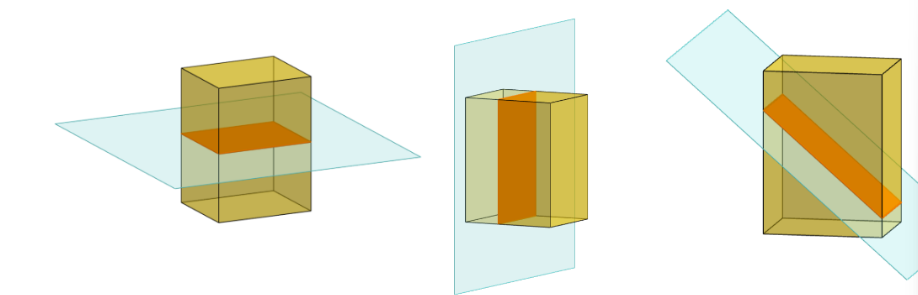
A key concept in this unit was the idea of a cross-section. A cross-section is the 2D shape formed when a 3D object is cut along a flat surface (a plane). Students investigated how different cuts produced different shapes depending on the direction and position of the slice.
Learning began with simple examples in which students explored cross-sections parallel to the base of a shape. They then progressed to investigating cuts that were perpendicular to the base, before extending their understanding to cross-sections made at a variety of other angles.
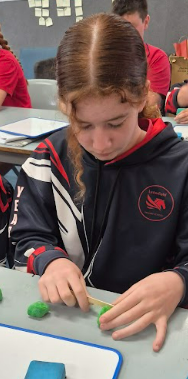
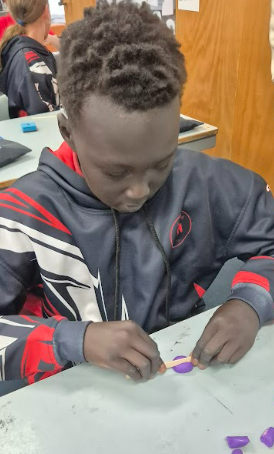
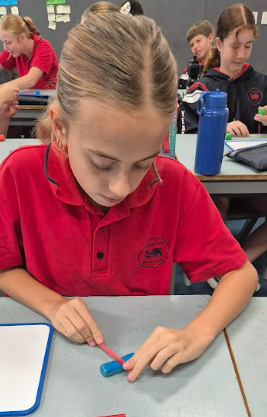
To support hands-on learning, students used materials such as plasticine. These resources allowed students to physically manipulate and ‘cut’ shapes to better understand how cross-sections changed from one object to another.
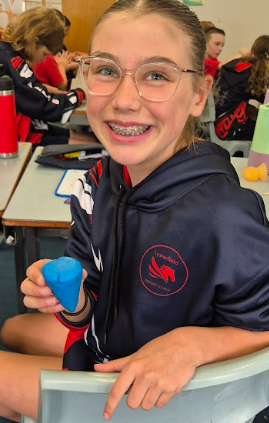
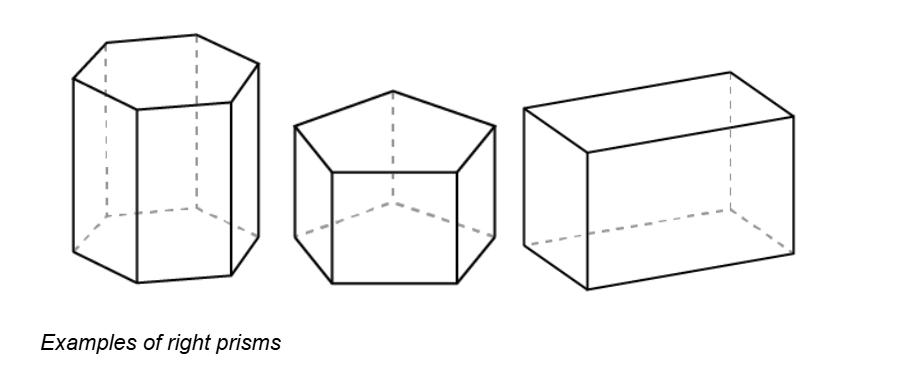
Students also explored right prisms, which are 3D objects with two identical, parallel bases connected by rectangular faces. These side faces met the base at right angles, which is why they are called right prisms. Examples included cubes, rectangular prisms, and triangular prisms.
Preview
Decimals
The base ten place value system can be extended to include decimals, such as tenths, hundredths, and thousandths, to represent parts of whole numbers. Students will build their understanding of how decimals are used in real-world contexts and how they connect to whole number knowledge.
They will also explore how familiar calculation strategies can be applied to the addition and subtraction of decimal numbers, helping them to develop accuracy, confidence, and flexibility when working with more complex number problems.
Knowledge Rich
Immigration and International Interaction
Students have been learning about how immigration changed Australia after World War II and how Australia experienced a major increase in immigration during this time. They explored the government’s ‘Populate or Perish,’ policy, which encouraged people from overseas to move to Australia to help grow the population and workforce.
Students also investigated the well-known ‘Ten Pound Pom,’ migration scheme, where British citizens could move to Australia for just £10. Thousands of families took this opportunity to start a new life in Australia.
Students learnt that many migrants also arrived from countries across Europe, including Italy, Greece, the Netherlands, and Germany. In later years, people migrated from Asia and the Middle East, helping Australia become a more multicultural nation.
Through their learning, students discovered the significant impact immigration had on Australia’s culture, food, language, and traditions. They also explored how migrants helped build roads, houses, and major projects such as the Snowy Mountains Hydro-Electric Scheme. Today, Australia is known for its diversity, with people from many different backgrounds contributing to communities across the country.
Preview
Next, students will begin exploring the topic 'Australia, a Place of Asylum and Refuge.' Students will investigate why people seek asylum, the challenges refugees may face when leaving their home countries, and how Australia has responded to people seeking safety and a new beginning. Through discussions and inquiry tasks, students will develop empathy and a deeper understanding of the experiences of refugees and asylum seekers.
The Grade 6 Team:
Melissa Adams, Caillin Ibbotson, Craig McKenzie, Chloe McElroy, Lisa Dealy