
The Resilience Project At Home
This year, our school is continuing to work with The Resilience Project, an evidence-based wellbeing program that supports students to build resilience, develop healthy coping strategies and improve overall happiness. With 50% of mental health challenges beginning before age 15, it has never been more important to give young people the tools they need to understand and manage their emotions.
The Resilience Project focuses on the key principles of Gratitude, Empathy, Mindfulness (GEM) and Emotional Literacy. These skills help children (and adults!) to manage stress, improve friendships, build confidence and develop a positive mindset for the future. Research shows that when wellbeing is taught explicitly in schools, students experience improved emotional regulation, stronger relationships, better academic engagement and reduced challenging behaviours.
A key part of the program is building a shared language around mental health between schools, families and the wider community. Throughout the year, families will receive resources and simple practices you can use at home to continue supporting your child’s wellbeing.
We also recommend The Imperfects Podcast for parents and carers looking to learn more about resilience and emotional wellbeing in an accessible, relatable way.
Try one of these two wellbeing family activities at home!
Activity 1- GEM: Gratitude, Empathy & Mindfulness Jar
What you need:– A jar, cup or container– Small pieces of paper– Pens or pencils
How to do it:
- Each evening, every family member writes one short reflection to place in the jar:
- Gratitude: Something you are thankful for today.
- Empathy: Something kind you did, or something kind someone did for you.
- Mindfulness: A moment when you felt calm or really noticed what was happening around you.
- Place all reflections into the jar.
- At the end of each week, choose a time to open the jar and read a few together.
This routine helps children recognise positive moments, build empathy and develop calming strategies—small habits that make a big difference over time.
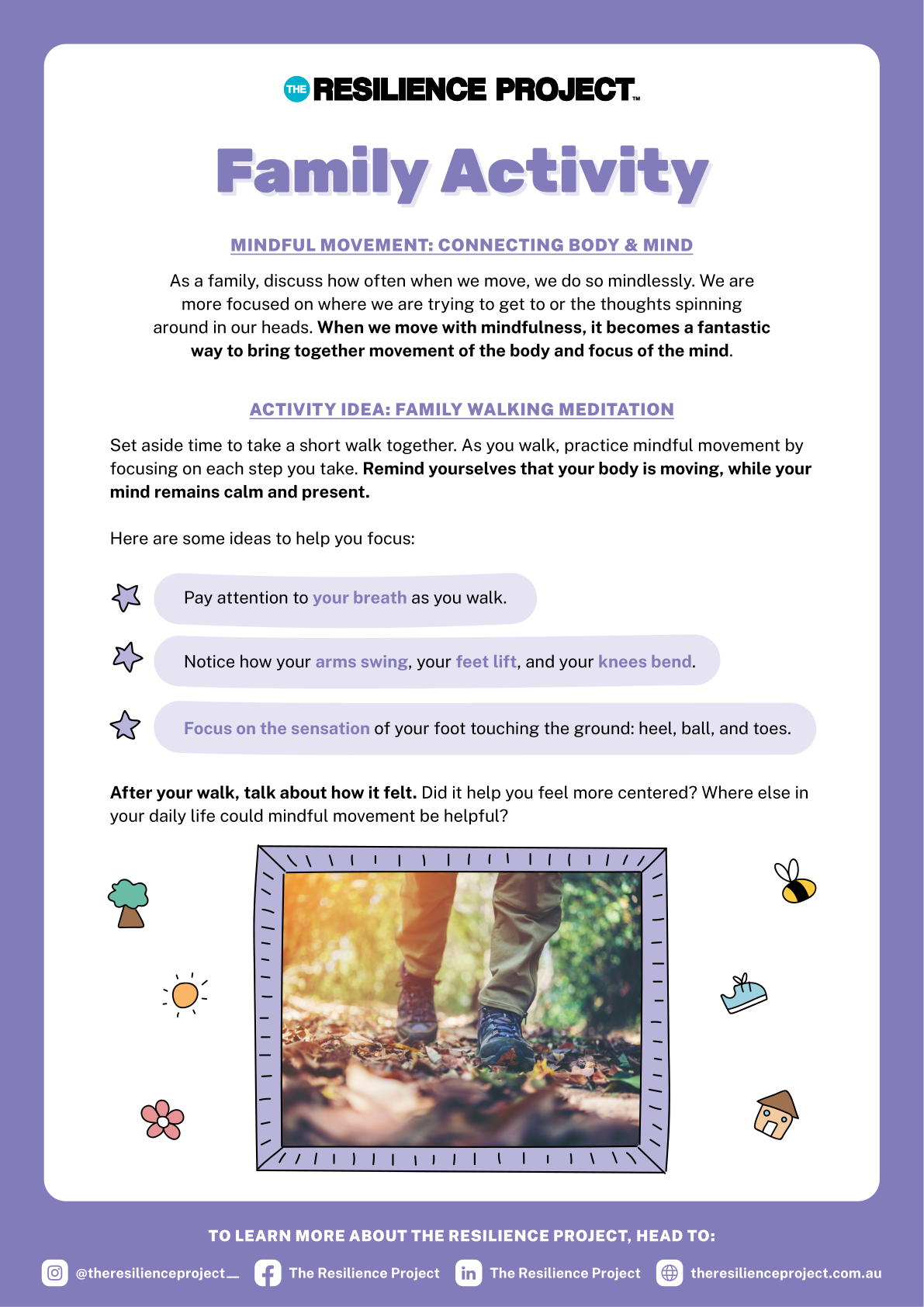
Activity 2- Mindful Movement: Family Walking Meditation

Eve Millar
Student Voice and Leadership