
Reflections from Lorne

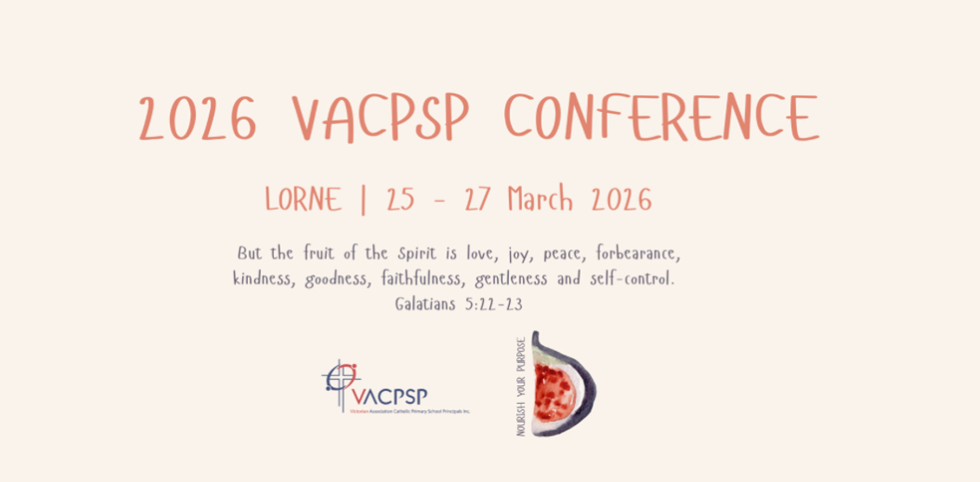
The Victorian Association of Catholic Primary School Principals conference provided a valuable opportunity for principals to reflect on our shared purpose as educators of our committment to nurturing the whole child. Insights from three inspiring speakers encouraged deep reflection on faith, culture, relationships, and student wellbeing, and their role in building safe, inclusive, and flourishing school communities. Together, their messages reinforced the importance of leading with intention, strengthening connections, and empowering young people to grow as confident, compassionate, and engaged learners.
One of the conference speakers, Raymond Friel OBE, spoke about the vital role of Catholic education in forming students who contribute to a society built on trust and solidarity. He emphasised nurturing young people as agents of change who lead with head, heart, and hands—bringing together intellect, compassion, and action. Grounded in Catholic Social Teaching, this approach affirms human dignity, promotes the common good, and calls schools to empower students and families to build communities marked by justice, compassion, and shared responsibility.
We also heard from Marlee Silva, an emerging voice in Australian media and digital storytelling, who spoke powerfully about the importance of building strong relationships through respect for difference and culture. She emphasised that deepening understanding of First Nations cultures, traditions, and stories fosters inclusive school environments where all students feel safe, valued, and confident to be themselves. This understanding strengthens connection and belonging for First Nations students and aligns with Child Safe Standard 1 and our commitment to culturally safe school communities.
Dr Justin Coulson, parenting expert, co‑host and founder of happyfamilies.com.au, who spoke to us about the importance of fostering intrinsic motivation in students ensuring that learning is driven by enjoyment, purpose, and meaning. He explained that supporting students’ sense of competence, connectedness, and autonomy leads to deeper engagement and more meaningful learning.
Dr Coulson highlighted that clear policies, consistent expectations, and firm but caring boundaries help students feel safe and secure, enabling them to move beyond surface confidence to sustained motivation. He also cautioned that an overreliance on rewards can undermine creativity, learning, and relationships.
Together, these messages reinforced that the strength of a school lies in the collective efforts of all who work within it—staff, students, families, and the wider community. When we lead with shared purpose, uphold consistent and caring expectations, and nurture strong relationships built on trust, dignity, and respect, we create environments where every child feels safe, valued, and supported to flourish. Just as importantly, we continue to foster a school community that is a positive, supportive, and rewarding place for all of us to work, collaborate, and grow together.