
Nurse's Notes

Sleep – it’s over rated. Or is it?
How much sleep do you really need?
The amount of sleep you need can vary depending on age, lifestyle, genetics and individual factors.
How does our sleep needs change with age?
It is well known that as children get older, they need less sleep. Different people have different sleep needs. The advice in the table below is only a guide.
You can make a good guess if a person is sleeping enough at night - observe how they act and function during the day.
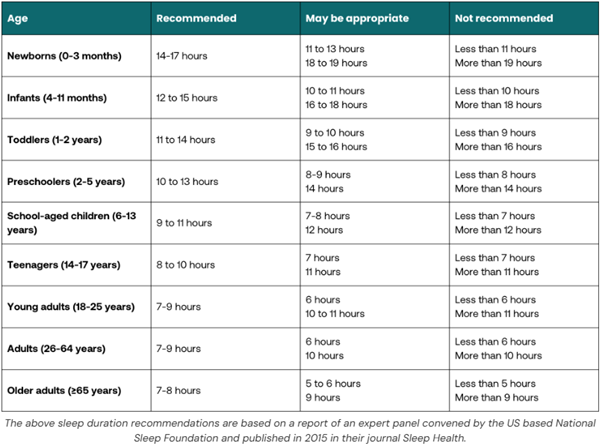
Things you should know:
- Sleep needs get less with age until around 20 years old when it stabilises.
- How much and how fast this happens depends on the person.
- It is normal for children to have daytime naps until 3 to 5 years old.
- If a child takes naps often past this age, he or she might not be sleeping enough at night.
- Teenagers will tend to want to go to bed later and sleep in.
We see a lot of students in sick bay daily who are not getting enough sleep, from the foundation students’ right up to year 12.
Is my child getting enough sleep?
If your child has good energy levels, feels refreshed, wakes independently in the morning at a reasonable time, isn’t grumpy and doesn’t complain of tiredness or sleepiness, your child is probably getting enough sleep.
Why do teenagers want to stay up later?
In this age group, there is a change in the timing of sleep. It is natural for them to want to go to bed later at night and to sleep in, especially on the weekend.
However, this needs to be within reason and teenagers often need to be taught good sleep habits.
They need to know that they won't function as well during the day if they miss sleep and fail to catch up on it.
How do I get my child to sleep before midnight?
Here are some ideas to help your child get to sleep earlier:
- Encourage your child to go to bed and get up around the same time every day, even on the weekend. This can help your child’s internal body clock get into a regular rhythm.
- Discourage late-night eating, and encourage your child to have a healthy breakfast.
- Allow plenty of time – for example, an hour – for your child to wind down before lights out. Encourage quiet activities like reading a book or magazine, drawing, writing or doing puzzles.
- Avoid digital technology use in the hour before bedtime. This includes mobile phones, tablets, computer screens and TV. Charge electronic devices out of the bedroom.
During puberty, children start to secrete melatonin later at night than they did in earlier childhood. This affects their circadian rhythm. It means that your child will want to go to bed later at night and get up later in the morning.
Your teenage child will probably sleep better and function better during the day with a set bedtime for school nights. You can find more here:
Some babies and toddlers struggle to have settled sleep and support is available.
Please reach out to services, as lack of sleep affects everyone in the house, and it’s
hard for mum and dad to work, manage the household and function day to day.
For further reading, hints and tips, see below links.

Ms. Lois Foster, Senior College Nurse