
Wellbeing

Mental Health in Primary Schools
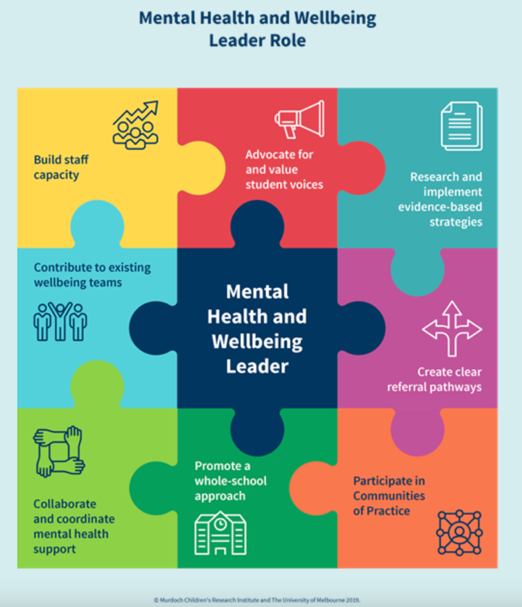
This week, Bern, Mental Health and Wellbeing Leader (MHWL) and Natalie attended the introduction session of the government funded Mental Health in Primary Schools (MHiPS) initiative. This valuable session gave us deeper insight into what the framework will look like for our school community. Throughout the year, Bern will share more information and may invite feedback as we continue to shape how MHiPS is implemented. Your voice is important as we work together to continue to strengthen our whole school approach to mental health and wellbeing.
Bern will be supporting the staff to build capacity in this space, while also working closely with classroom teachers, students and families. As we learn more about the framework and training, we will continue our current wellbeing practices, including:
- Respectful Relationships
- peer mediators
- Peaceful Kids
- Circle Time
- Lunch time clubs
- Buddy program
- St Columba’s Kids
Raising Can-Do Kids: 5 Habits That Turn Dependency into Competence
How to step back so your child can step up.

Jan 22, 2025

Most parenting advice is about how to keep our children close; I want to talk about how to let them go—one micro-habit at a time.
As parents, our greatest success isn’t in what we do for our children, but in what they can eventually do without us.
That means we need to make ourselves redundant (not irrelevant) as early as possible so kids can have agency over their own lives, relationships and emotions.
This is a strategic shift from being a manager who controls to a leader who mentors.
It’s about building the Triple C: Confidence, Competence, and Capacity.
- Confidence: Building self-belief by reducing anxiety and celebrating “glorious failures.”
- Competence: Equipping children with the technical and life skills to act independently.
- Capacity: Strengthening the emotional “muscles” required to navigate struggle and social complexity.
The easiest way to raise “can-do” kids is to follow the Redundancy Roadmap.
To get there, I encourage parents to develop these five essential habits:
1. Practice the “Never Do” Rule to Encourage Self-sufficiency
This is the cornerstone of the Redundancy Roadmap.
It’s simple but difficult to execute: Never do for a child what they can do for themselves.
When we tie the shoes of a child who is capable of doing it, we aren’t being “helpful we are communicating that we don’t trust their competence.
Every time you hold back and let them struggle through a task, you are depositing into their “Confidence” account.
“What are you routinely doing for your child that they can do for themselves?”
2. Use The 10-Second Pause to Build Capacity
When life gets busy, expediency takes over. We often take the path of least resistance.
When a child fumbles for a word, struggles with a zipper, or hits a snag in a sibling game, our instinct is to dive in.
Problem solved. Move on with life.
Well-intentioned, but not doing kids any favours in the long run.
Instead, count to ten.
That ten-second gap is where a child’s Capacity grows.
It gives them the space to think, “I can handle this,” before you offer a scaffold of support.
If you want your child to be resourceful, you need to give them opportunities to develop their own resources. That means stepping back rather than rushing in when difficulties emerge.
3. Point Your Feet to Build Connection
Parenting is about presence, not just verbal commands.
When your child comes to you, stop what you are doing and physically point your feet toward them.
This tiny shift in body language moves the relationship from a transactional “management” exchange to a deep “leadership” connection.
It tells them they are heard, which is the foundational soil where Confidence grows.
This simple skill enables you to listen, guide, mentor, suggest- whatever your child needs.
Giving your child space to solve their own problems is different to emotional distance. Maintaining a strong bond is reassuring when they struggle, so that they know they aren’t alone.
4. Move to “Consultant” Language to Promote Resourcefulness
Do you constantly give orders to your kids?
If so, reduce the number of orders and start asking for plans.
Instead of saying, “Put your coat on, it’s cold,” try asking, “It’s raining outside—what’s your plan for staying dry on the way to soccer?”
By using consultant language, you are handing the “cognitive load” back to the child.
Yes, you're inviting them to solve their own problems and develop vital agency over their own lives.
They tackle their own problems, rather than giving them to you to solve.
Step back from being the manager of their life; step up to the role of mentor, helping them navigate their own way.
5. Use Side-by-Side Communication to Build Emotional Capacity
One of the most difficult parts of family life is talking to kids on a deeper, emotional level.
Much of our language with kids is transactional -” What do you want for dinner? How was your day? Time for bed.”
If you want kids to open up about what they’re thinking and feeling, you need to use specific tools.
One of the best ways to have deeper conversations with kids, especially boys, is to speak with them while they are engaged with you.
Side-by-side. Shoulder-to shoulder. Doing things together.
Wash the car together, go for a walk, or shoot some hoops.
When their hands are busy and their eyes are focused on the activity, their tongues often loosen.
The pressure is off, and the real conversation begins. It’s where you find out what your child thinks and feels.
This simple activity builds their Capacity to articulate their internal world without feeling under a microscope.
It builds their self-knowledge and self-regulation, which are essential to their future success.
The Long Road to Redundancy
Raising “can-do” kids doesn’t happen by accident.
It happens when we intentionally work ourselves out of a job.
It’s about stepping back, so they have the room to step up.
Yes, it’s about becoming redundant as a parent, but not in one step.
It’s a gradual process, one problem, one process and one piece of personal power at a time.
Finally…….
My challenge to you. Pick just one area where you are currently “over-servicing” your child. Maybe it’s making their bed, packing their sports bag, or resolving a recurring argument for them.
Apply the Redundancy Roadmap.
Step back, use the 10-Second Pause, and watch what happens. You might be surprised at just how capable your “can-do” kid actually is when given the space to lead.