Junior School Bulletin


Thank you to parents and caregivers for your engagement in this week’s Parent–Teacher Conferences. We greatly value the open, positive conversations that took place and the shared commitment to supporting each child’s learning and wellbeing.
Strong partnerships between home and school are central to student success. Your insights, questions and collaboration help us better understand each child and ensure consistent support between school and home. We sincerely appreciate the time you take to work alongside us in supporting your child’s growth and development.
Please see the key notices for this week and beyond below.
Harmony Day
Week 9 Tuesday 24 March | 10:40am to12:50pm | PE Centre | Prep to 12
On Tuesday 24 March, Clayfield College will recognise Harmony Day as a Prep to Year 12 community, celebrating inclusion, respect and belonging, and acknowledging the rich cultural diversity within our College.
Students will participate in a range of age‑appropriate activities throughout the morning, culminating in a whole‑school Harmony Day procession in the PE Centre from 10:30am–12:50pm.
Students are asked to attend school in their full school uniform and will have the opportunity to change into national or cultural dress at Morning Tea. Following the procession, students will change back into their uniforms for afternoon lessons.
If you feel your child may find changing difficult, you are very welcome to sign in at Reception from 10:10am to collect them from their classroom and assist with changing.
Thank you in advance for your support in helping students engage respectfully and meaningfully with the day. Harmony Day is an important opportunity to reinforce the values of care, understanding and belonging that underpin our Clayfield community.

Clayfield College will celebrate Harmony Day, recognising Australian identity and the many cultures that make up our College community. The day is an opportunity to reflect on inclusivity, respect and belonging, and to celebrate the diversity that enriches our school. Students who are interested in processing under their nation/region please submit relevant information via the link below.
Lost Property
Tuesday 24 March to Thursday 26 March
Lost property will be available for collection on Tuesday 24 March through to Thursday 26 March, with a table set up outside the Junior Administration Office at the following times:
8:00am–8:30am
3:00pm–3:30pm
A reminder to please clearly label all items with your child’s full name. When items are named, we can return them directly to students without needing to hold them in lost property. Unfortunately, when items are not labelled, or labels are no longer visible, this is not possible.
Thank you for your support in helping us return lost items promptly.
Last Day of Term 1 - Wednesday 1 April
Please note that the last day of Term 1 for students is Wednesday 1 April, with dismissal at the usual time of 3:10pm.
Thank you, as always, for your continued support and partnership. We look forward to finishing the term together on a positive note.

Swimming Is More Than a Sport -It’s a Life Skill
Did you know that around one in four Australian children finish primary school without the swimming and survival skills needed to stay safe in the water?
Here in Queensland, water is part of everyday life. From backyard pools to beach holidays and weekends by rivers and lakes, our children are surrounded by aquatic environments from a very young age. Because of this, being able to swim confidently is not just a hobby; it is a genuine life skill.
Recent national research from the Royal Life Saving Society Australia shows that drowning remains a significant concern. Many incidents involve children who were playing, wading, or simply standing near the water before unexpectedly getting into difficulty. For schools and families alike, this highlights the importance of ensuring children develop not only confidence in the water but also practical survival skills.
Why School Swimming Is Valuable but Not Always Sufficient
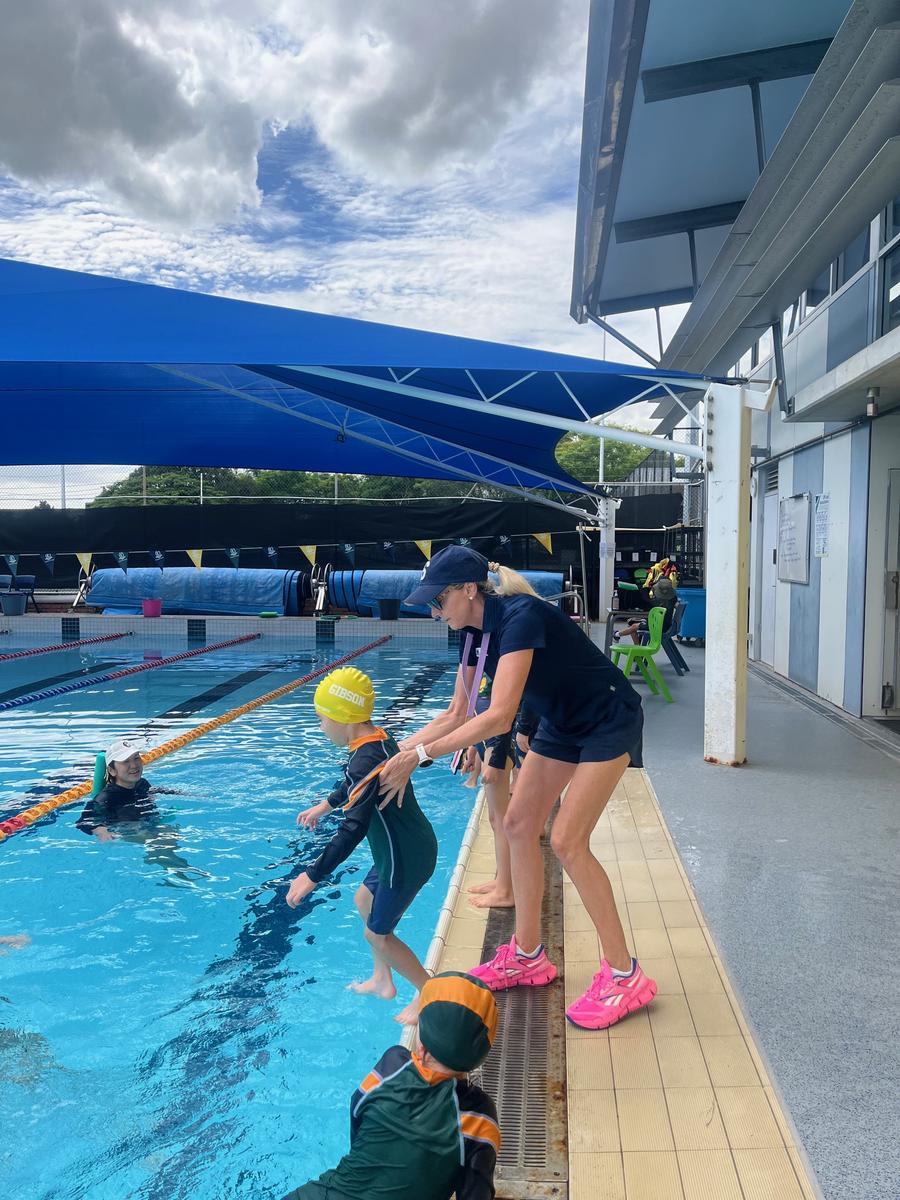
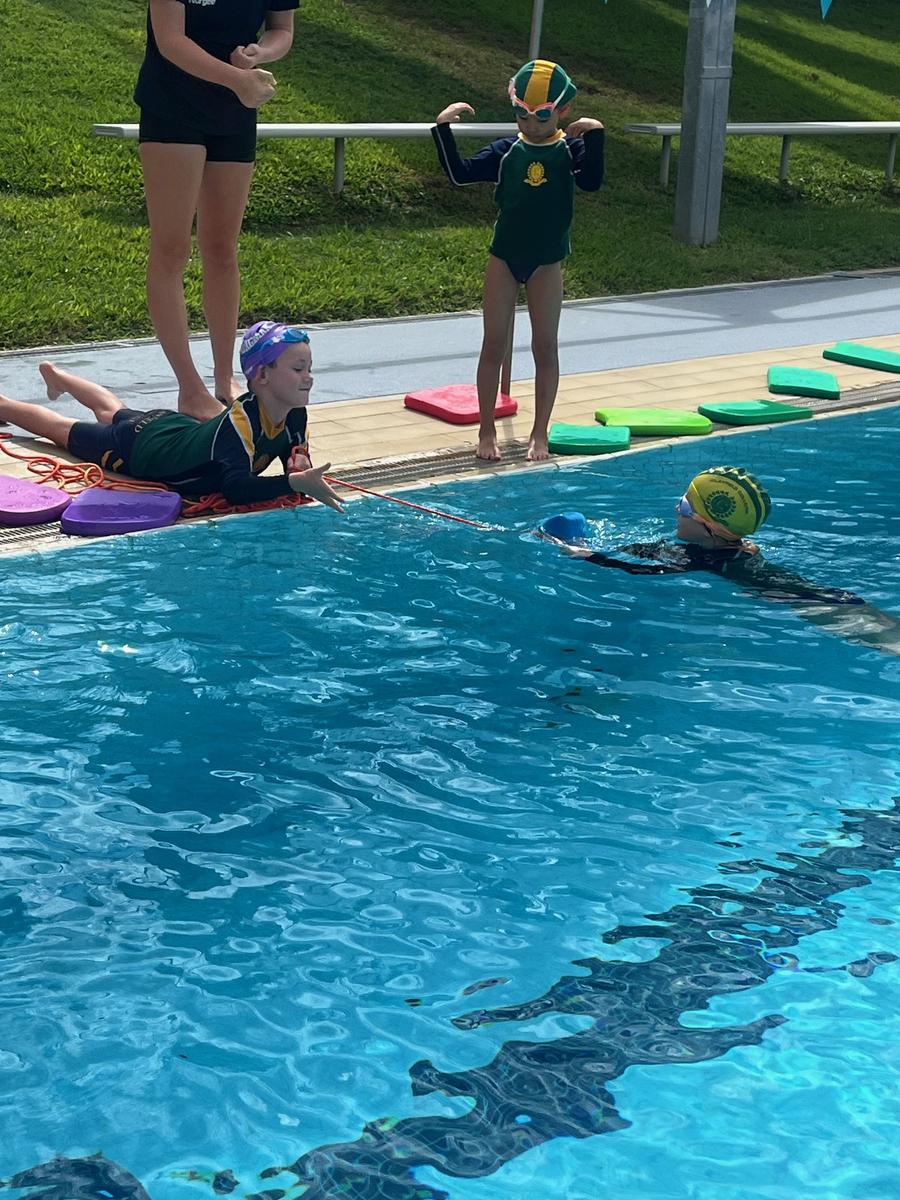
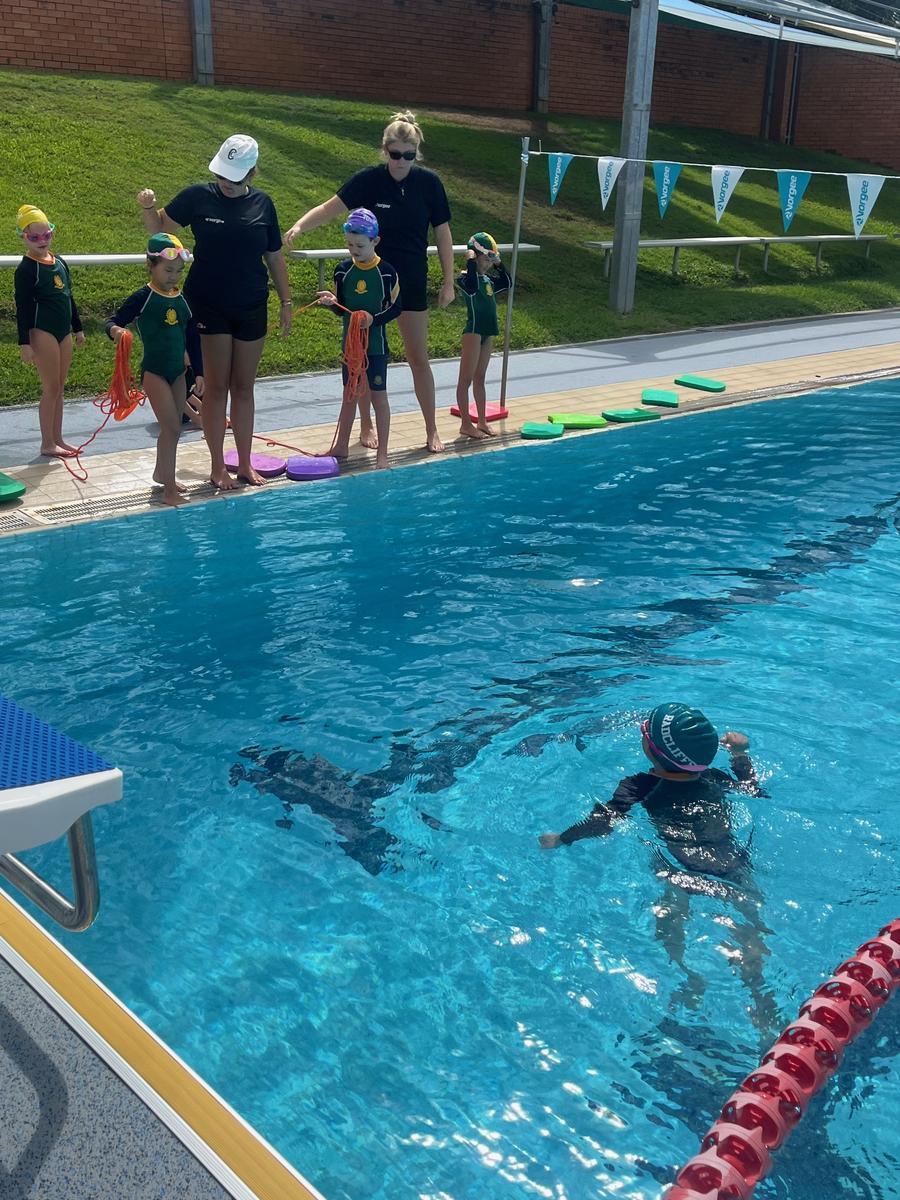
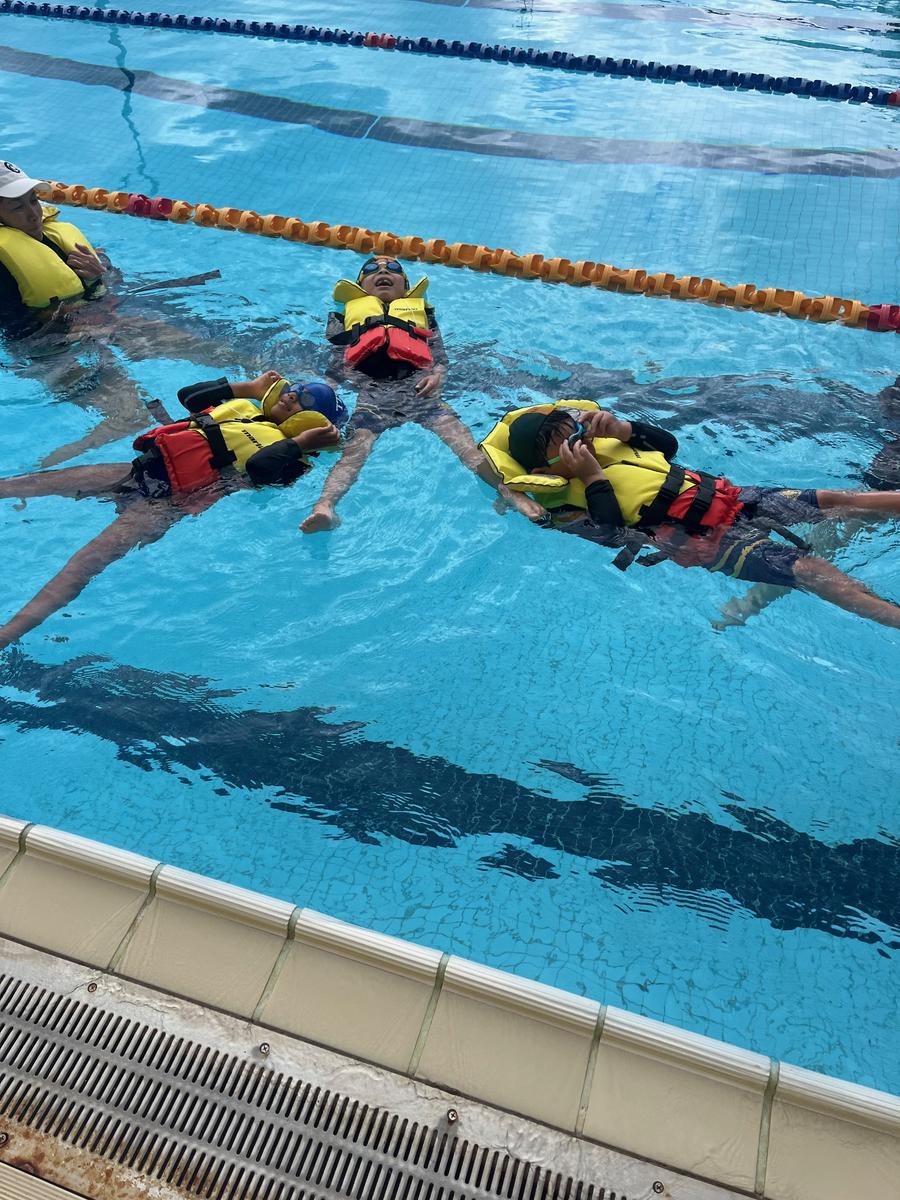
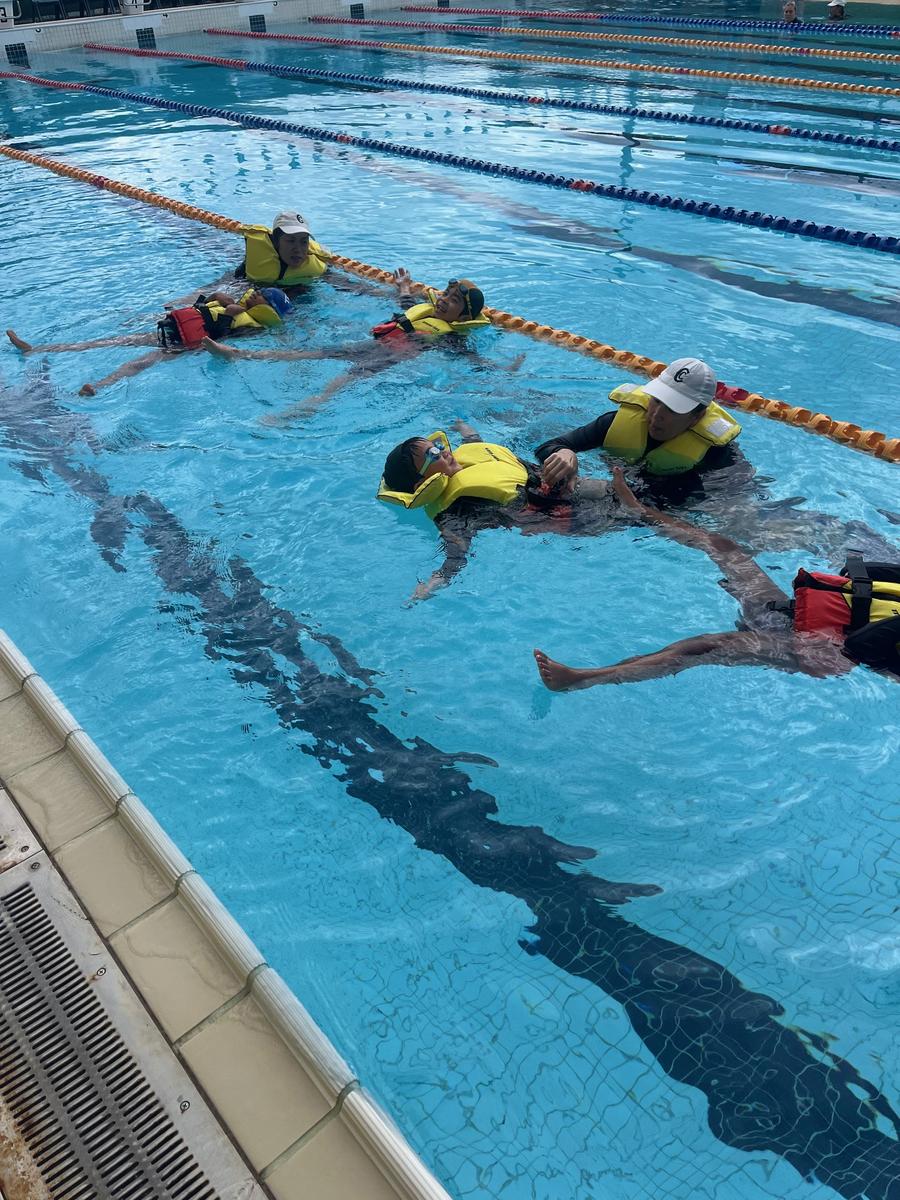
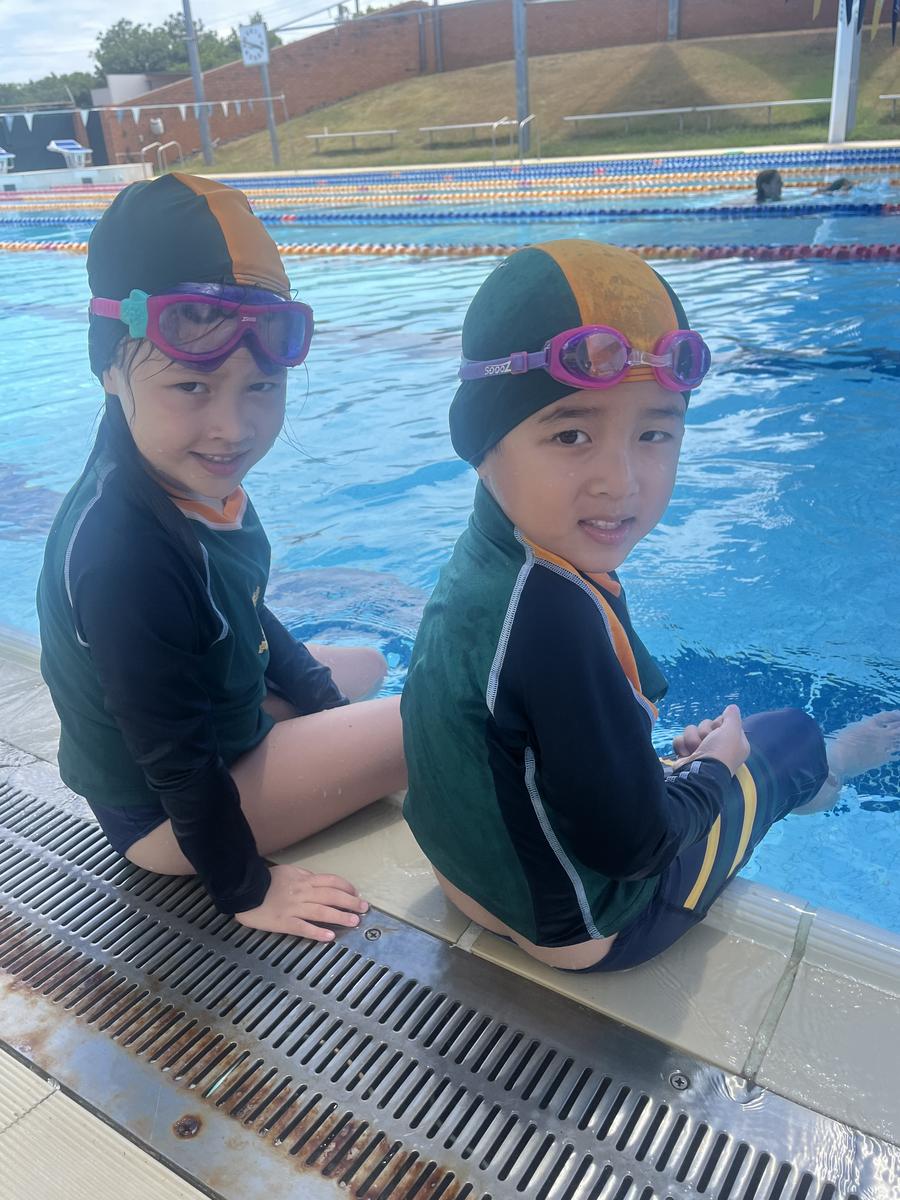
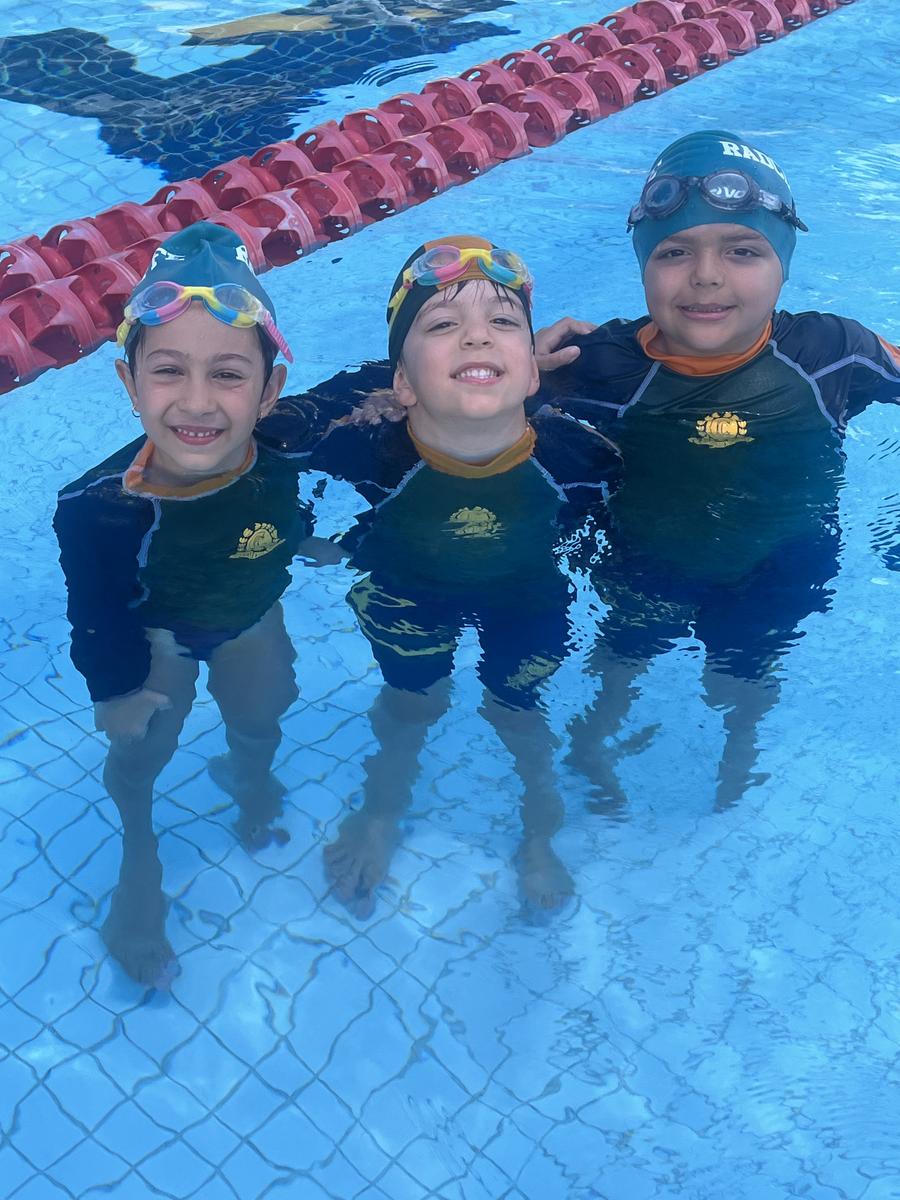
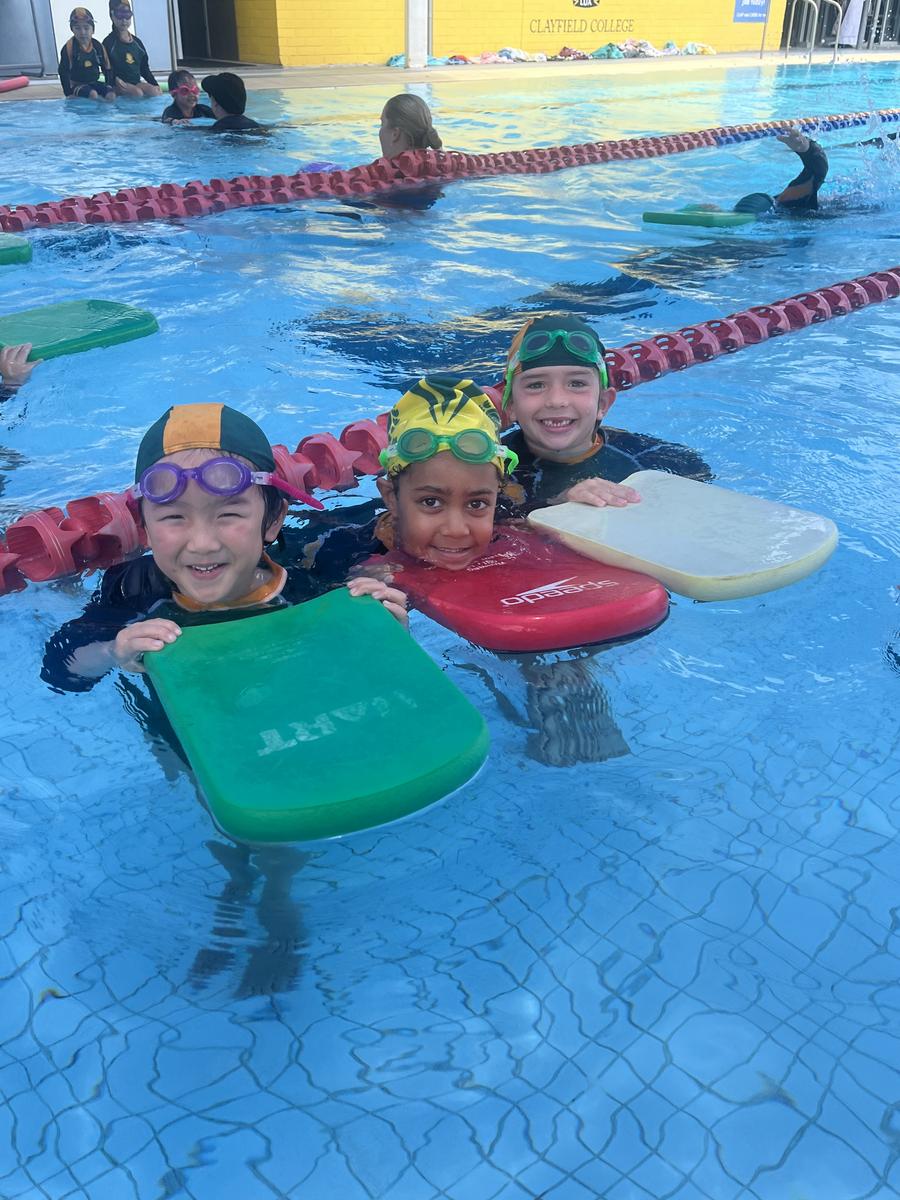
We are extremely fortunate at Clayfield College that our Health and Physical Education program provides two full terms of swimming and lifesaving instruction for our Primary students each year. Our lessons introduce important skills and help children feel more confident and capable in the water.
A key aim of our HPE program is to teach children that swimming is not about being the fastest; it is about knowing how to stay calm, stay afloat, and stay alive. This focus on safety and survival helps students develop the confidence and practical skills they need in a wide range of aquatic environments.
However, it is important for parents to understand that short blocks of lessons, or two sessions per week, can only take a child so far. Swimming is a complex physical skill that develops gradually and requires consistent practice.
Much like reading or mathematics, children progress at different rates. A child who swims only during school sessions may spend each lesson regaining confidence and revisiting previously learned skills, rather than extending their abilities. This is why organisations such as the Royal Life Saving Society Australia encourage families to view swimming as an ongoing learning journey rather than a seasonal activity.
What Does “Being Able to Swim” Actually Mean?
Clayfield College aligns its aquatic program with the Swim and Survive benchmarks developed by the Royal Life Saving Society Australia. These nationally recognised standards focus on confidence, survival skills, and decision-making, rather than competition.
Around 6 Years of Age (Early Primary)
By this age, children should typically be able to:
- Enter the water safely and recover after falling in unassisted
- Float on their back for at least 30 seconds
- Tread water for 30 seconds
- Swim 10 metres freestyle with breathing
- Swim 5 metres backstroke
- Complete a simple survival sequence and recognise basic water safety rules
These skills give children the confidence to stay calm and regain control if something unexpected happens.
Around 12 Years of Age (End of Primary School)
By the end of Year 6, children should ideally be able to:
- Swim at least 50 metres continuously
- Float or tread water for two minutes
- Use survival backstroke to conserve energy
- Complete a survival sequence after an accidental entry while wearing light clothing
Understand and apply water safety rules across different aquatic environments
This benchmark represents the minimum level of aquatic competence needed to significantly reduce drowning risk.
Why Extra Lessons Can Make a Difference
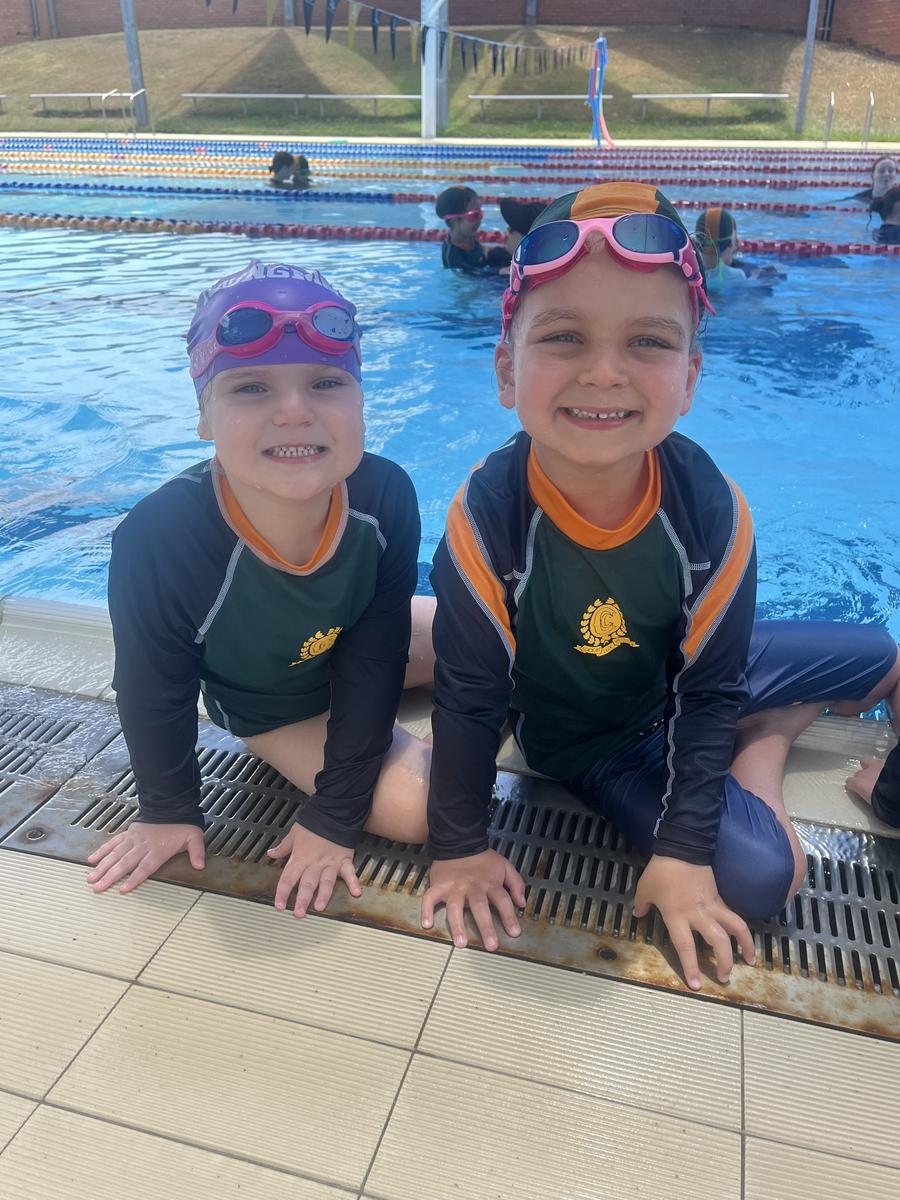
Skills such as floating, treading water, controlling breathing, and swimming longer distances require regular and repeated practice. Children who only swim during school programs often spend valuable lesson time rebuilding confidence rather than extending their skills. Additional lessons outside school help children develop stronger technique, endurance, and calm responses in deeper water, all essential for safety.
Many families choose to support their child’s swimming development with regular lessons outside of school. Additional practice helps children consolidate the skills introduced during school swimming programs and build the endurance and confidence required for real-life aquatic situations. Families may access lessons through a range of community providers, including the Clayfield College Swim School, which offers programs designed to complement the skills students learn during their school swimming lessons.
At Clayfield College, our swimming and lifesaving program is carefully designed to build skills progressively across the primary years, ensuring students develop both confidence in the water and the practical survival skills needed to stay safe.
Our goal is that every student leaves Primary School not only able to swim, but confident, capable, and safe in a wide range of aquatic environments. Developing these
skills is a shared effort between school and home, and together we can ensure that every child has the opportunity to enjoy a lifetime of safe fun in the water.

The Power of Outdoor Education
Outdoor Education is much more than time spent outside - it is a purposeful extension of the classroom. Learning in natural environments builds confidence, independence, resilience and curiosity. Our program is carefully designed to encourage measured risk‑taking, collaboration and deep engagement with the environment, supporting students’ growth both academically and personally.
Physical Development: A Cornerstone of Learning and Wellbeing
In the Junior School years, movement‑rich experiences are not just beneficial - they are essential. They help children develop the motor skills, confidence and focus needed to thrive both inside and outside the classroom. Children are wired to move, which is why physical activity is intentionally woven throughout the school day.
Movement activates neural pathways, increases blood flow to the brain and supports memory and attention. Even short bursts of activity can help reset focus and prepare students for deeper learning. Whether through outdoor play, brain breaks, team games or structured sport, these experiences strengthen the mind–body connection and develop executive functioning skills that underpin successful learning.
Importantly, because these activities involve shared goals, turn‑taking and compromise, they also provide natural opportunities for students to practise the interpersonal skills that support wellbeing and positive classroom relationships.
Outdoor Education in the Upper Junior Years
For our Upper Junior students, Outdoor Education camps represent a powerful extension of learning and a formative milestone in their development. These experiences provide opportunities to practise real‑world skills such as problem‑solving, communication, critical thinking and independence, all within a supportive, nature‑rich environment.
Camps encourage students to take measured risks, collaborate closely with peers and discover personal strengths they may not yet recognise. Time spent in the hinterland or along the coast exposes students to sensory‑rich environments that nurture wellbeing, reduce stress and strengthen resilience. Students return to school with increased confidence, deeper friendships and a renewed sense of capability - outcomes that positively influence both academic learning and social development.
A rich Junior School experience balances indoor learning with outdoor exploration. By valuing movement, encouraging hands‑on experiences and providing opportunities to learn in natural environments, we help cultivate resilient, capable learners who are ready to engage meaningfully with the world around them.
Junior School Camps – 2026 Dates
We look forward to taking our students away on camps this year. Please save the following dates:
Year 6 Outdoor Education Camp
Where: Total Adventures - Noosa North Shore
When: 3 to 5 June 2026
Years 4 and 5 Outdoor Education Camp
Where: QCCC – Mapleton
When: 22 to 24 July 2026
Year 3 Twilight Experience
Where: Clayfield College
When: 16 October 2026
Time: 3:10pm to 8:00pm
Assembly Calendar
Please find below the link to the Semester 1 Assembly Performance Calendar, which outlines the classes presenting at assemblies up until the mid‑year break. The Semester 2 calendar, featuring the remaining classes, will be shared in May.
We would love for you to join us on the day of your child’s performance. Please find below Week 9 Class performance date for Junior School Assembly.
Tuesday 31 March: Junior School Assembly (3H and Year 3 Strings performing)

Pre-Prep to Year 1 Easter Bonnet Parade
In Week 10 on Wednesday 1 April, Pre-Prep to Year 1 students will participate in their much-loved Easter Bonnet Parade. Bonnets will be prepared in class with no requirements from home. We welcome parents and carers to join us for this event which will be held in the Chapel commencing at 2:15pm. You are welcome to take your child home at the end of the parade.

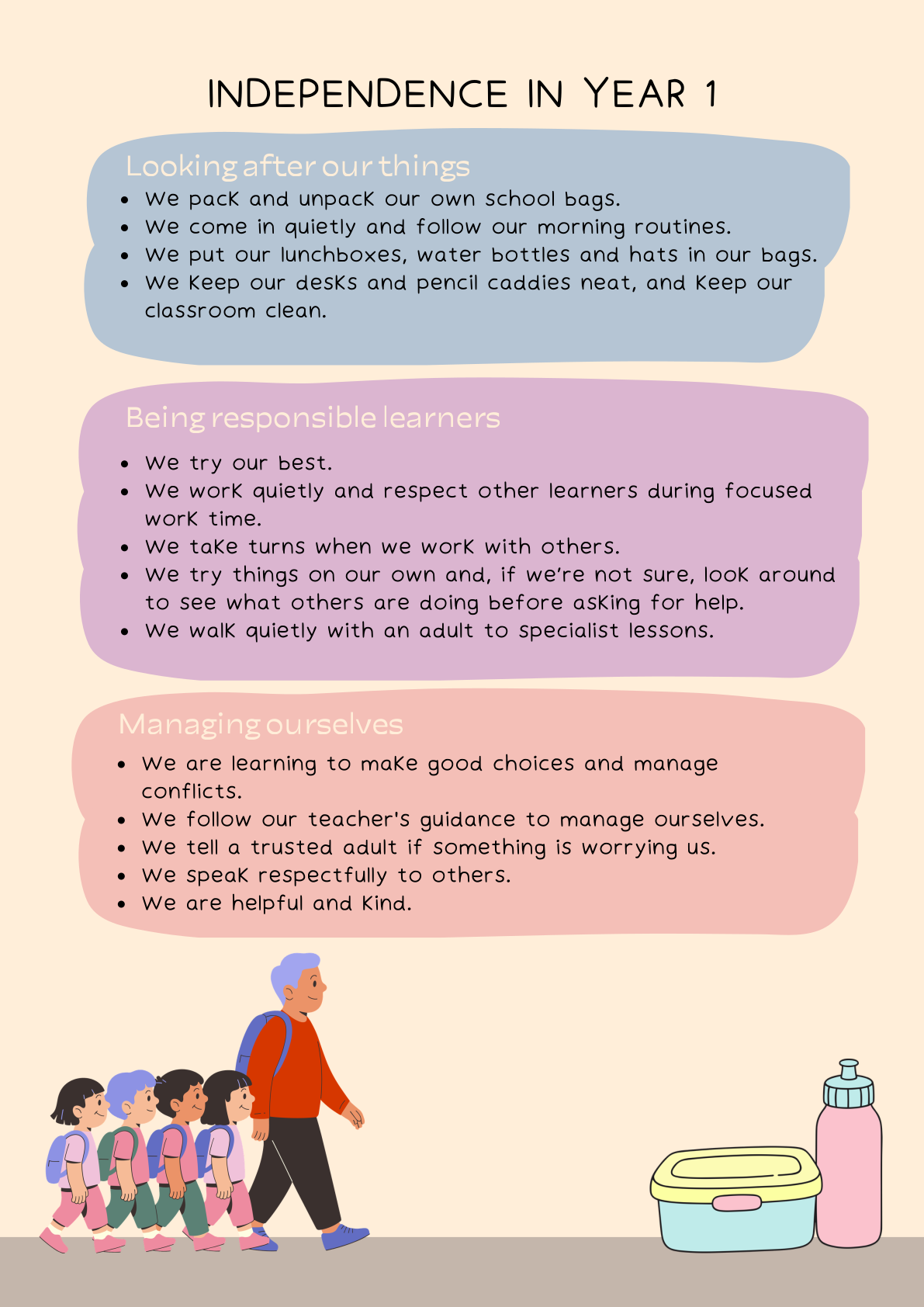
What does independence look like?
Our Pre-Prep to Year 2 team has been talking about what independence looks like for each year level. This week our spotlight is on Year 1. Please find below a helpful website to support families.

Life Education Visit and Parenting Resources
Our partnership with Life Education (Life Ed) allows us access to some excellent parenting resources. Please use the link below to read more about: Cyber safety, Mental Health in pre-adolescence, Puberty and Drug Awareness:
Life Ed are visiting next term on 27 and 28 April. Year 4 will complete the Body Safety, Body Changes program and the Year 5 will explore Evolving Friendships. A more detailed letter will come out to Year 4 and 5 parents at the end of this term.
Importance of Sleep
Sleep plays a vital role in supporting the healthy development of pre‑adolescent children. It is closely linked to physical growth, emotional regulation, cognitive functioning, and overall wellbeing. Children aged 6 to 12 years are recommended to have 9 to 12 hours of sleep per night to promote optimal health and learning outcomes. Insufficient sleep has been associated with attention difficulties, reduced memory consolidation and increased irritability. Studies also suggest that children who do not meet recommended sleep levels may experience challenges in mood, behaviour, decision‑making, and academic performance at school.
Practical steps such as limiting evening screen time, keeping bedtimes consistent throughout the week, and supporting calm, predictable routines can strengthen overall sleep quality. Prioritising sleep helps children arrive at school ready to learn, stay focused, and confidently engage with their peers and the world around them.
(Summary of a Life Ed Resource)

Message from the Finance Team
Back to School Boost – Parent Account Credit
Eligible families will receive a $100 credit applied to their parent account as part of the Back to School Boost government initiative.
This credit applies to parents of children in Prep to Year 6 and will be automatically issued before the end of term. No action is required from families who are eligible.
If you have any questions regarding your parent account, please contact the Finance Office.

| Date | Event |
|---|---|
| Tuesday 24 March | Harmony Day |
| Wednesday 1 April | Term 1 Ends 'When I Grow Up' Free Dress Fundraiser Pre-Prep to Year 2 Easter Bonnet Parade |
| Thursday 2 April | Student Free Day/ Boarders Travel Day |
| Friday 3 April | Good Friday |