
Student Wellbeing

Our eyes are a light unto our bodies
“The eye is the lamp of the body. If your eyes are healthy, your whole body will be full of light.” Matthew 6:22–23
As someone who has experienced addiction, I’ve learned that the small things we take in, what we watch, listen to, and think about, shape our habits more than we realise.
Those choices can quietly pull us into unhealthy patterns, or gently lead us back toward actions that reflect our values.
Neuroscience realises what Jesus has taught us: what we focus on, forms us.
Teenagers feel this even more intensely.
Their brains are in a major phase of rewiring. Reward systems are hypersensitive to novelty and feedback, while the prefrontal cortex, our decision‑making and impulse‑control centre, won’t fully mature until the mid‑twenties.
This makes teens more vulnerable to habit‑forming environments, but also incredibly open to guidance, boundaries, and positive modelling.
What young people are navigating right now
- Social media: Almost all older teens use social media daily, and around four out ten teens spend over three hours a day online. Heavy use is linked with increased distress, while moderate use can support a healthy connection. Government restrictions are now in place, but it’s too early to see their impact.
- Screen time: Around a quarter of children now spend over 20 hours a week on screens, up from a sixth just a few years ago.
- Sleep: Screens before bed suppresses melatonin and disrupts healthy sleep. Experts say the hour before bedtime is key; going screen‑free here benefits kids, teens, and adults alike.
- Vaping: Nationally, about three in ten high‑schoolers have tried vaping, and one in six vaped in the past month.
- Vaping in SA: Locally, 15% of 12–17‑year‑olds reported vaping in the past month (and 31% among 16–17s). Encouragingly, 2024 data show youth vaping in SA has dropped by about a third since new laws were introduced.
- Alcohol: Risky drinking is highest among 18–24‑year‑olds, with roughly 42% at risk.
- Gaming: Many popular games now include loot boxes and gambling‑style features linked with harm. It’s worth checking parental controls and in‑game spending.
A simple tool that helps: the CBT Triangle
The CBT Triangle reminds us that Thoughts, Feelings, and Behaviours all influence one another. Change one, and the others shift.
For example: “I’ll just play one more game” (thought) → feeling wound up (feeling) → losing track of time and gaming far longer than intended (behaviour).
And here’s some loving truth for parents: you must stay in charge of the tech in your home.
Children need boundaries long before they can set them for themselves. They learn healthy patterns by watching us, and by having structure to rely on.
Pair this with Philippians 4:8: help your children practise noticing and choosing what is “true, noble, pure, and lovely.”
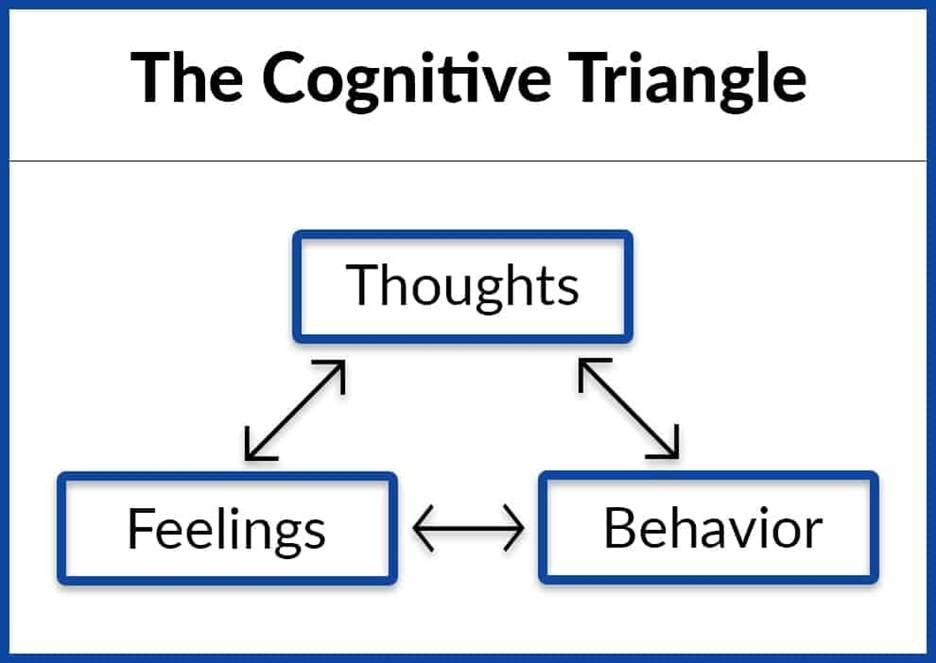
CBT Image: https://ashevillerecoverycenter.com/opioid-addiction-therapy/
Small Steps This Week
- Protect sleep: Last hour before bed screen‑free; devices charged outside bedrooms; warm/dim lights.
- Shape the environment: Turn off non‑essential notifications, set app timers, disable in‑app purchases and loot boxes. (And stop paying kids in gaming currency!)
- Talk early and often: Set clear family expectations about vaping and alcohol. Explain brain development and God’s care for our bodies.
- Use the CBT Triangle: Notice the trigger → name thought/feeling → choose one wise action (pray, text a safe adult, take a break).
- Seek support: headspace, Quitline (13 78 48), and eSafety all offer practical help for families.
At Emmaus, we want our young people to be “full of light”, taking in what strengthens them, building resilient habits, and leaning on God’s grace as they grow. Together, home, school, and church, we can guide them toward a healthy, hope‑filled future.
Jordan Wheatcroft
Student Wellbeing Counsellor