Science and Engineering News
Ms Wendy Macdonald - Curriculum Leader - Science and Engineering
Science and Engineering News
Ms Wendy Macdonald - Curriculum Leader - Science and Engineering
By Lachlan Chandler (Year 11 UQ Science Ambassador)
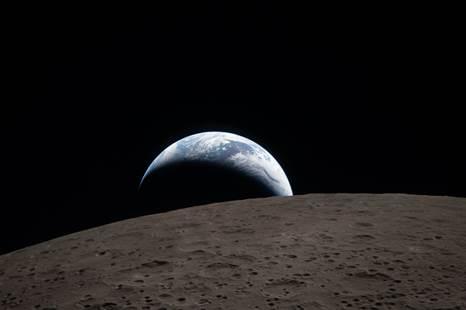
Over the break, much of the public discussion surrounding space exploration centred on humans returning to deep space during NASA’s Artemis II mission. However, beyond the headlines and excitement, the mission also represented a major scientific milestone, with a wide range of research and observations carried out that only became more widely appreciated once details of the mission outcomes were shared.
These findings have drawn attention to the broader scientific context of Artemis II and its role in modern space research. The mission formed part of NASA’s Artemis program, which aims to expand scientific understanding of the Moon while laying the groundwork for long‑term human exploration beyond Earth. Unlike Artemis I, which was uncrewed, Artemis II carried astronauts beyond low Earth orbit, making it the first crewed deep‑space mission in more than five decades.
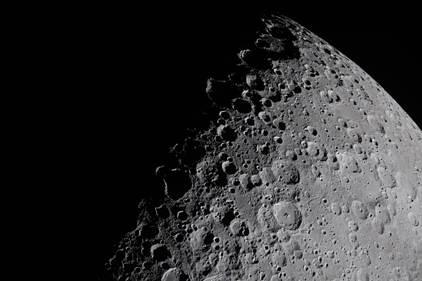
During the mission’s lunar flyby, the crew collected a range of observational data as the spacecraft travelled thousands of kilometres beyond the Moon. High‑resolution images of the lunar surface were captured and have since been analysed by scientists, offering new perspectives on regions that are ordinarily difficult to study using satellites alone. These images became a key focus of post‑mission research discussions.
One of the most widely reported scientific outcomes involved the study of meteoroid impacts on the Moon. Because the Moon lacks an atmosphere, meteoroids regularly strike its surface and leave behind well‑preserved impact craters. Images taken during Artemis II allowed scientists to examine crater distribution, size, and impact debris, providing insight into the frequency of meteoroid collisions in the Earth–Moon system. This information is especially valuable for understanding both the Moon’s geological history and potential hazards for future lunar missions.
In addition to lunar observations, Artemis II contributed to ongoing research into how the human body responds to deep‑space environments. As the astronauts travelled beyond Earth’s protective magnetic field, scientists monitored radiation exposure alongside changes in muscle function, bone density, cardiovascular health, and sleep patterns. These findings have since been incorporated into broader discussions about the biological challenges of long‑duration spaceflight.
While Artemis II did not involve a lunar landing, the scientific knowledge gained was substantial. The mission expanded our understanding of both the Moon and the challenges of human spaceflight, marking an important step forward in humanity’s continued exploration of deep space.
Junior Physics Odyssey (JPhO)
Monday 6 - Thursday 9 July. JPhO is a four-day non-residential program held at UQ St Lucia for Year 10 students with an interest in physics, science and mathematics.
Applications close Wednesday 13 May 2026. Learn more and apply for JPhO now.
Year 11 Queensland Chemistry Winter School (QCWS)
Monday 29 June - Tuesday 30 June
Monday 6 July - Tuesday 7 July
Are you a Year 11 student eager to dive into the world of chemistry? The Queensland Chemistry Winter School at UQ offers hands-on experiments, expert-led lectures, and interactive workshops covering equilibrium, redox reactions, acids and bases, chromatography, and more! Applications close Friday 1 May 2026 Learn more and apply for QCWS now.
Year 11 Queensland Biology Winter School (11QBWS)
Thursday 2 July- Friday 3 July The UQ Year 11 Queensland Biology Winter School (11QBWS) explores contemporary biology topics, including biodiversity, cell, animal, and plant physiology, biophysics, and how diverse biological disciplines are interconnected. Applications close Sunday 24 May 2026. Learn more and apply for QBWS11
SPARQ-ed Senior Research Immersion Program 2026.
Registrations for Group 2 close 3 May 2026 Learn more and submit an EOIThe Senior program is open to students in Years 10, 11 and 12 from across Queensland who are passionate about STEM. This unique opportunity offers students the chance to explore hands-on introductory biomedical research using the latest equipment and technology in a fully equipped PC2 research lab environment. Across the 5 days, students will work on a real live research project, alongside teachers and research scientists at the Translational Research Institute, where they will examine, test and analyse your results and develop their communication and research skills.
National Youth Science Forum (NYSF) Year 12 Program
Applications open in April 2026. The NYSF Year 12 Program is designed for students entering Year 12 in 2027, offering a unique opportunity to explore and gain a broader understanding of the many study and career pathways available in science, technology, engineering and mathematics (STEM). Learn more about NSYF Year 12 Program.