
From the Director of Teaching and Learning K–12
Mrs Ali Canning
From the Director of Teaching and Learning K–12
Mrs Ali Canning
Building confidence through maths fluency
Research consistently shows that many girls experience higher levels of maths anxiety and lower confidence in their mathematical ability compared to boys. Dr Sarah Buckley's 2016 report, Gender and Sex Differences in Student Participation, Achievement and Engagement in Mathematics, notes that girls "report lower confidence in their capability and that they can succeed in maths, and higher levels of maths anxiety than boys." Unsurprisingly, she notes that “if girls are less engaged and more anxious about maths, we can expect them to be less likely to pursue maths courses or choose career pathways that involve maths.”
This is why fostering positive attitudes towards mathematics, both at school and at home, is essential. Maths is everywhere: in cooking, shopping, travel, sport and problem‑solving of all kinds. When families talk about maths as it appears in everyday life, model a growth mindset and treat mistakes as opportunities to learn, students begin to view maths as something they can do, rather than something to fear or avoid because it's "too hard."
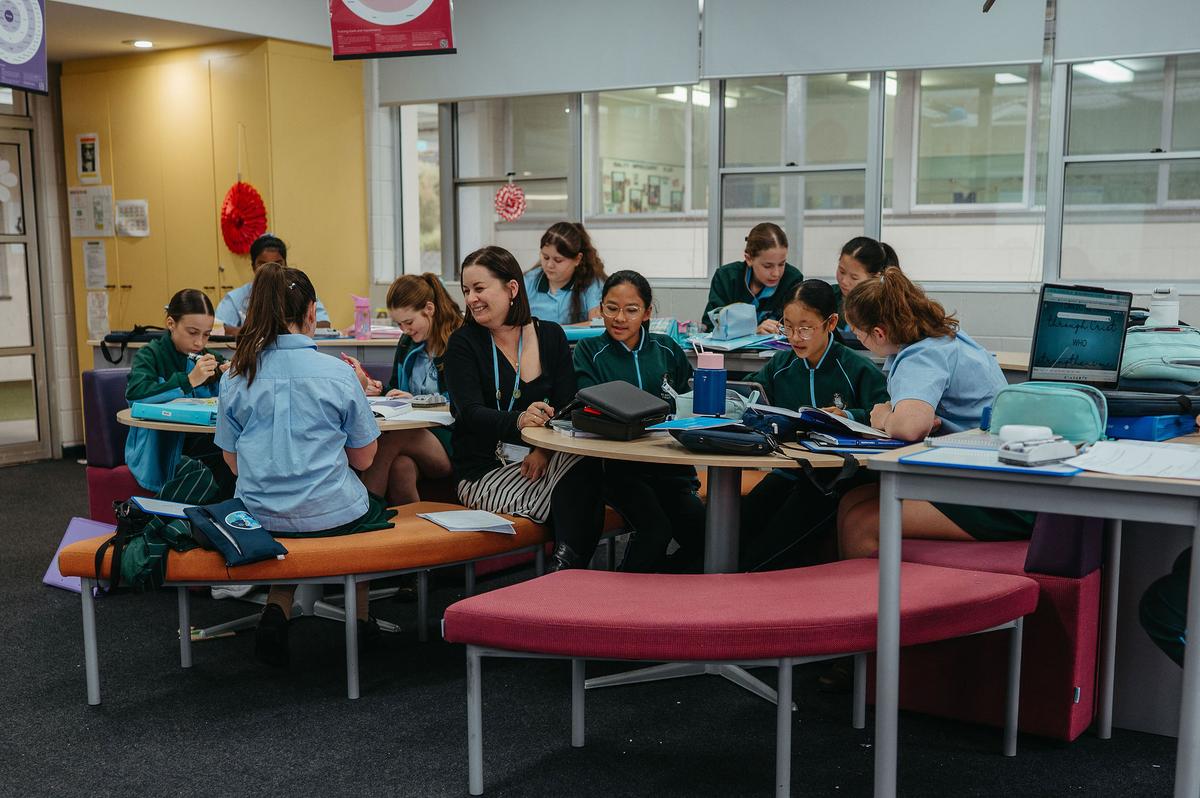
Simple shifts in language and behaviour make a difference. Showing a 'can‑do' attitude, avoiding comments like “I was never good at maths" and involving children in everyday tasks such as measuring ingredients or counting change all help build confidence. Asking open questions like "How did you figure that out"? or "Can you show me what you mean?" encourages students to explain their thinking and strengthens their reasoning.
A key foundation for reducing maths anxiety is maths fluency: the ability to recall basic facts and perform procedures accurately, efficiently and flexibly. When students are fluent, they free up mental space for deeper thinking and more complex problem-solving. Fluency helps to build confidence, reduce frustration and support long‑term success.
At SMC, we invest in programs that help students develop this fluency in engaging, accessible ways.


Families are encouraged to contact their child’s teacher for home login details if they do not already have them.
Maths fluency remains just as important in the senior years as well. To support students as they progress, we offer:
homework designed to assist consolidation, providing the repetition needed to move concepts from short‑term to long‑term memory.
By working together, we can help every student build confidence, develop fluency and see themselves as capable in mathematics.