School Wide Positive Behaviour Support

School Breakfast Club
Days: Monday, Tuesday Friday. Times: 08:25 - 08:45. Room: SAKG Kitchen
Opportunities to Respond - Supporting Positive Behaviour Through Active Learning
As part of our School-Wide Positive Behaviour Support (SWPBS) rollout, our school is continuing to introduce evidence-based practices that help students feel successful, engaged and supported in their learning. One strategy teachers are focusing on is called “Opportunities to Respond.”
This approach helps students stay actively involved in lessons and supports positive behaviour by ensuring that all students regularly participate during learning time. When students are actively thinking, responding and sharing ideas, they are more engaged in the lesson and less likely to become distracted or disengaged.
What are “Opportunities to Respond”?
Opportunities to Respond occur when a teacher asks a question, gives a prompt, or provides an activity that encourages students to actively respond. These responses might be verbal, written or shown through a signal or movement. Rather than only a few students answering questions, this strategy helps ensure that all students are involved in learning throughout the lesson.
Research shows that when teachers increase opportunities for students to respond:
Student engagement increases
Learning improves
Students stay on task more often
Disruptive behaviour decreases
What might this look like in the classroom?
Teachers use a range of strategies so that every student has the chance to participate.
These might include:
Partner discussions:
- Students share ideas with a classmate before discussing them as a whole class.
Quick written responses:
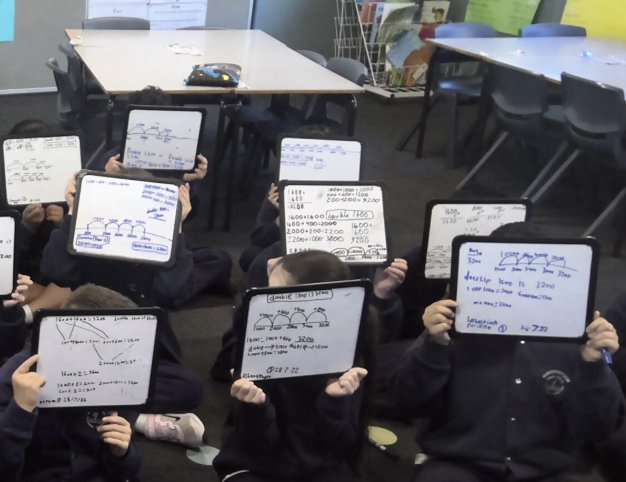
- Students may write short answers or solve problems on mini whiteboards and hold them up for the teacher to see.
Group responses:
- Sometimes students respond together to a question or prompt, helping build confidence and participation.
Signals or movement:
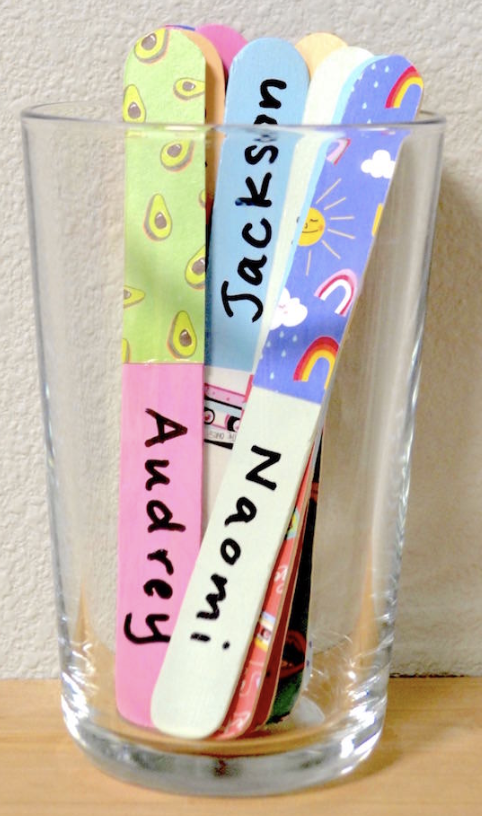
- Students might show thumbs up or thumbs down, move to different areas of the classroom, or use response cards to show their thinking.
These strategies help teachers quickly see how students are understanding the lesson and provide support or feedback straight away.

Working together as teachers
Our year level teams are working in Professional Learning Communities (PLCs) to explore and strengthen the use of Opportunities to Respond across the school. In these collaborative teams, teachers share strategies, reflect on student engagement and ensure that classrooms provide consistent opportunities for students to participate in their learning.
Why this matters
When students are actively involved in lessons, they feel more confident, motivated and connected to their learning. This supports both academic success and positive behaviour, which are key goals of our SWPBS approach.
By continuing to develop teaching practices such as Opportunities to Respond, we are working to create classrooms where every student is engaged, supported and able to succeed.
Thank you for supporting us as we continue building a positive learning environment for all students.
Wellbeing Team