
Director of Learning and Teaching
Heather Balkin
Director of Learning and Teaching
Heather Balkin
This term sees our students preparing and sitting their semester examinations. Our Learning & Teaching team wants to ensure every student feels prepared, confident, and well-supported. Over the next three newsletter editions, we will be sharing a focused series of practical study skills — one topic at a time — so families can work through these ideas together at home. This first edition focuses on the foundation of all good exam preparation: getting organised and building a study plan.
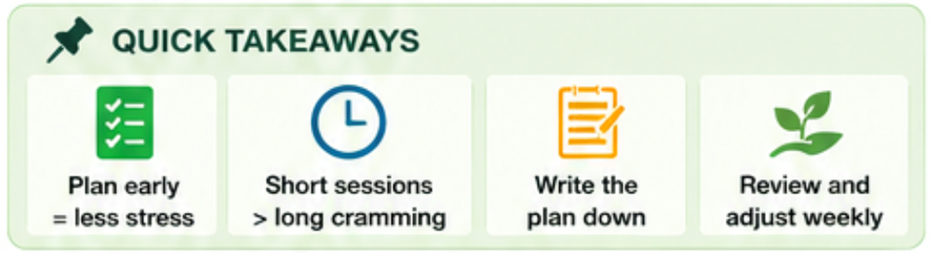
Research tells us that students who plan their study time consistently outperform those who rely on last-minute cramming — not because they study for longer, but because they study more strategically. The first and most important step is simply knowing what needs to be covered and when.
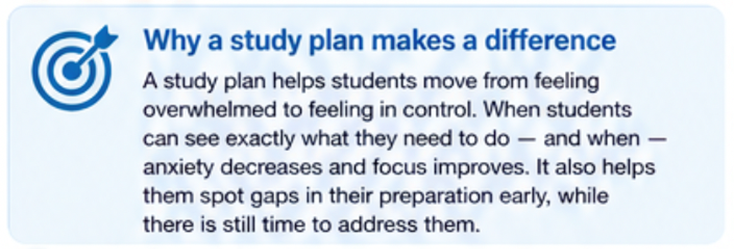
How to build a simple study plan at home
Encourage your child to work through these steps with you:
What a study plan might look like
Here is an example of a simple two-week study plan for a student with five subjects. Notice how each session is short and focused, weekends allow for catch-up, and Wednesday lunchtime is kept free for Thrive Together peer tutoring:
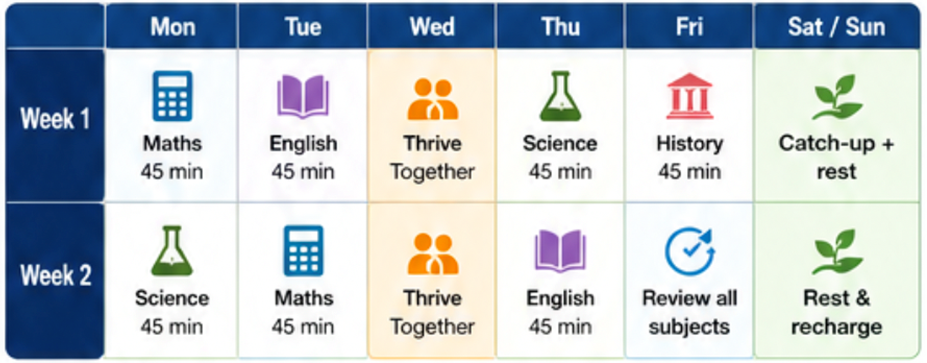
Of course, every student’s timetable will look different depending on their subjects and exam schedule. The key is to have a plan written down — even a simple one — rather than leaving it to chance.

Students who would like help getting started are welcome to bring their timetable to Thrive Together (Wednesdays at lunchtime, Silent Study Room), where our Year 12 tutors can help them map out their plan.
We have noticed some improvement in the way students are using their laptops since our last newsletter, and we appreciate the support families have shown in reinforcing this at home. There is still room to grow, and we will continue to work with students on getting this right. Thank you for your patience and your partnership as we do.
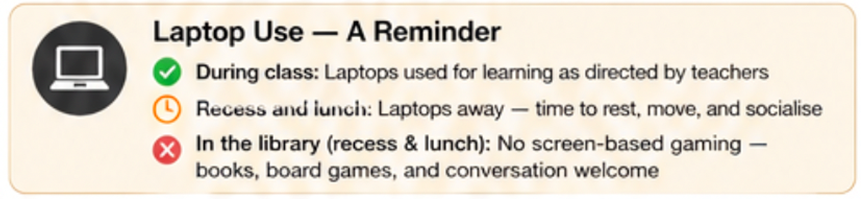
Laptops and screens at recess and lunch
We want to be clear about an expectation that applies throughout the school day: students are not to use laptops or other devices to play games during recess or lunch — including in the library. Break times are an important part of the day, and screen-based gaming does not give students the genuine rest they need before returning to class.
Why breaks away from screens matter
Students spend a significant part of the school day looking at screens for learning, and their eyes and minds need genuine time off. Break times are when students have the chance to:
Rest their eyes — looking at screens all day without a break can cause fatigue and discomfort that affects learning in the afternoon
Recharge mentally after periods of concentrated effort
Get outside, move around, and stay physically active
Connect with friends and classmates face-to-face
What’s available in the library
For students who prefer a quieter break indoors, the library is open at recess and lunch. Please note that during recess and lunch, laptops and devices are not to be used for games in the library. Instead, students are welcome to enjoy:
Books — a wide selection of fiction, non-fiction, and graphic novels
Board games and card games — a fun, social way to spend break time with friends
More options to come — we are looking at additional activities and will share these as they become available
We wish to advise families of the following examination schedule for the end of term. Please note a change to the original calendar for Years 7–10.

Please update your family calendars accordingly. Further details about the examination timetable, including specific subjects and rooms, will be communicated to students and families closer to the date.
Questions about Learning & Teaching? Contact our Learning & Teaching team via the school office.
Mrs Heather Balkin
Director of Learning and Teaching