
Mental Health & Wellbeing
Challenging Conversations
Mental Health & Wellbeing
Challenging Conversations

As parents and care givers, there can be challenges communicating with our young people at the best of times as they navigate the teen years. But what about the times when there may be additional challenges that they may be face in their own experiences, or distressing situations that they may be exposed to in their wider community?
A general “Are you ok?” can be a good place to start, but what if there is a minimal response with no further dialogue? A “yes” may genuinely reflect that they are ok, but it is important for the young person to know, that if they are not ok, that support is available. What if the response is a “no” but your young person is not open to engaging further in the conversation?
It may be that they do not want to talk to a parent or caregiver, or they may not be ready to communicate, so providing additional information regarding other support networks is important.
Effective communication with your young person, as with any age group or relationship, is far easier if there is a good healthy relationship. Headspace website is a valuable resource that highlights the importance of establishing healthy relationships with your young person.
Thinking about the where, when and how you approach the conversation can positively influence the outcome.
There is no perfect way to start a conversation. Sometimes it can be helpful to begin with general and open questions such as:
When focusing on more specific thoughts and feelings, ‘I’ statements are important such as:
How you talk with your young person will depend on their age and understanding. The language you use should feel natural. If your young person opens up about their mental health, reassure them early on that you’re glad and relieved that they’re talking to you.
Please see the Headspace website link for further information:
Headspace information for parents and caregivers for helpful communication, HERE
In the event of a young person being aware of the loss of someone in the community to suicide (whether they were personally known to the young person or not) it is an important time to engage in dialogue with our young people. They may have questions, frustrations, opinions and concerns that need to be heard and addressed. They may need someone to check on their own mental health or safety.

Wellways Australia Limited is a leading not-for-profit mental health and disability support organisation with support services in mental health, disability and community care. Please see below for useful tips on talking with young people about suicide:
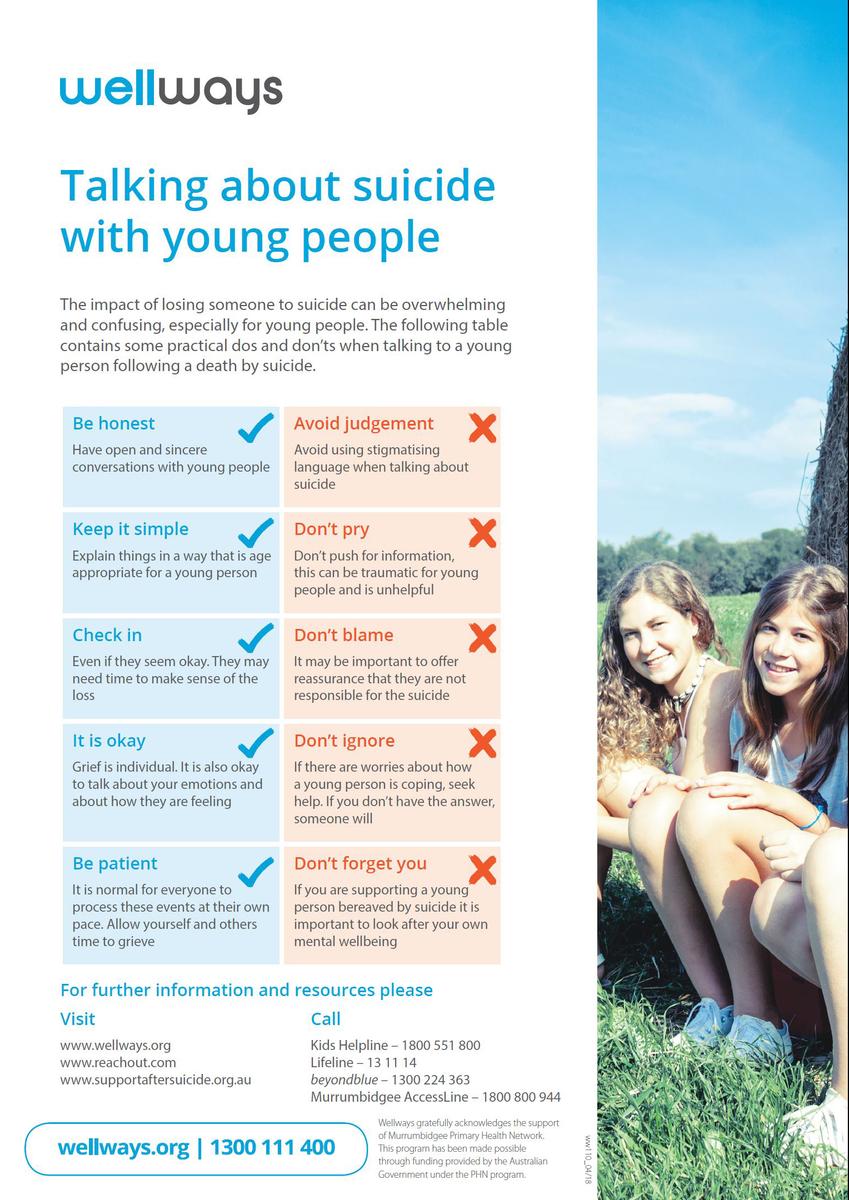
PDF Poster below:
These conversations can be confronting and difficult, but it is important that we normalise and role model help seeking and healthy communication behaviours for our young people.
Students at the College are reminded, if needing to access support, information or to have a voice, appropriate avenues include:
There are other helpful services available in the community that are also there for support:
Rachel Smith | College Counsellor