
From the School Psychologists
Mrs Bec Campey and Mrs Emily Reed

From the School Psychologists
Mrs Bec Campey and Mrs Emily Reed
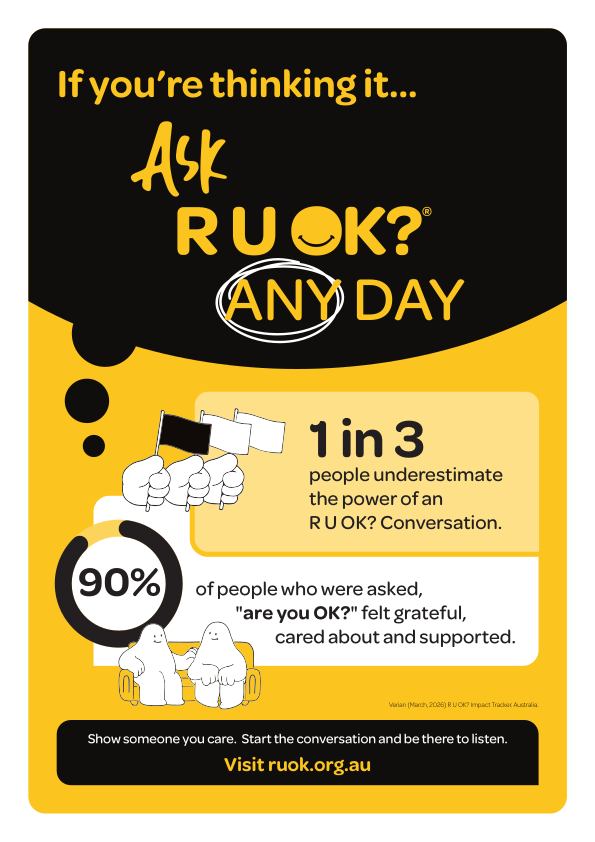
R U OK? Day will be held on 10 September and is a reminder to stay connected and check in with the people around us. The message behind R U OK? is that a simple conversation can make a meaningful difference to someone who may be struggling.
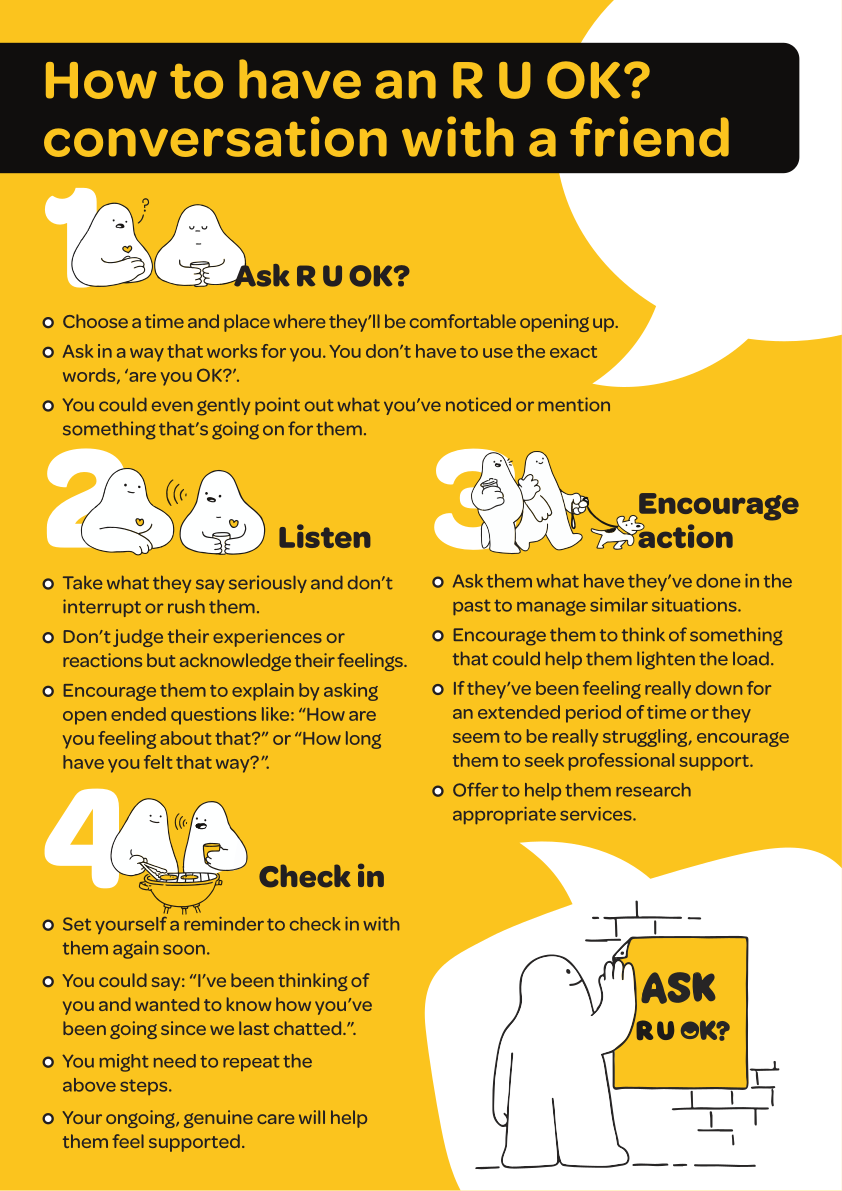
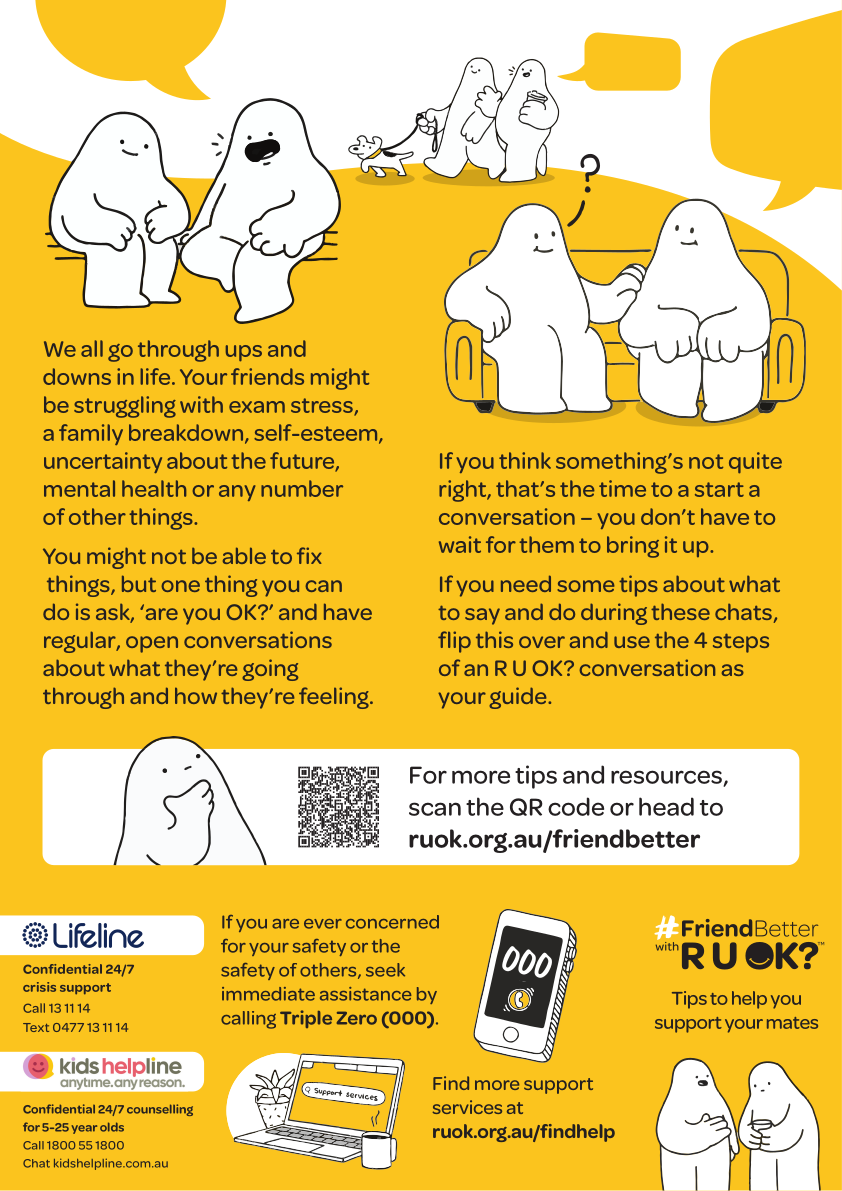
You may like to watch the short Ask R U OK? Any Day video
(https://vimeo.com/976180726?fl=pl&fe=sh), which explores how we can support friends, classmates, family members, and colleagues through life's ups and downs. Whether someone is experiencing stress, friendship difficulties, family changes, low self-esteem, or mental health challenges, a caring conversation can help them feel less alone. Talking openly about feelings can help children and young people feel heard, understood, and more comfortable seeking help when needed.
R U OK? encourages four simple steps:
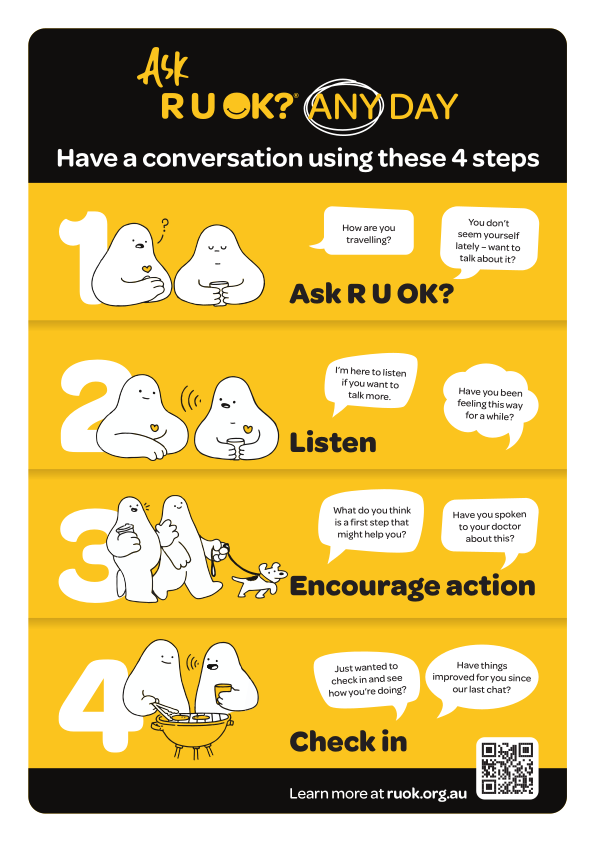
These conversations do not need to be perfect. Showing genuine care and making time to listen are often the most important things we can do and can make a real difference. You might like to have a look at the attached resources or the R U OK? website for more information (A conversation could change a life | R U OK?)
If you have concerns about your child’s wellbeing, support is available through your GP, the school wellbeing team or School Psychologists, Kids Helpline (1800 55 1800), Headspace, or Lifeline (13 11 14).
You can also call the NSW Mental Health Line (1800 011 511) for advice, connection to services or risk assessments. If there are immediate safety concerns, call Triple Zero (000).
Reaching out for support is a sign of strength, and help is available for children, young people, and parents alike.
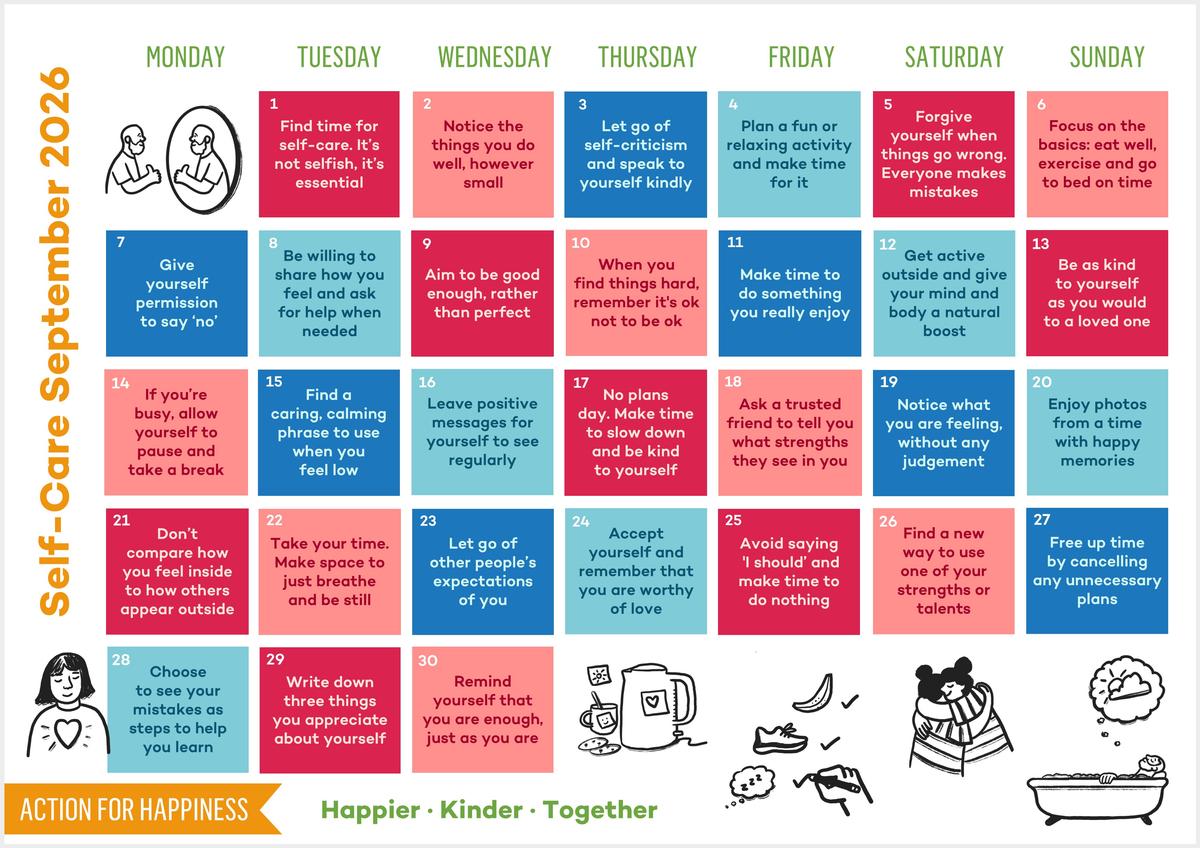
Action for Happiness has released their September calendar, Self-Care September, filled with simple daily ideas to help nurture wellbeing. This month’s theme encourages us to slow down, show ourselves kindness, and prioritise healthy habits that support both mental and physical health. From taking time to rest and recharge to appreciating personal strengths and practising self-compassion, the calendar offers achievable ways to build resilience and emotional wellbeing.
Why not choose a few activities to try together as a family? Small, consistent acts of self-care can help children and adults feel happier, calmer, and better equipped to manage life’s challenges.
Emily Reed and Bec Campey