
Leadership Report

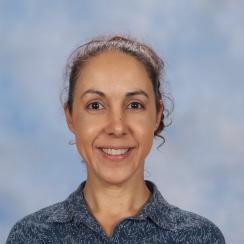
It’s been another big, busy Term 1 at Magill School, and I’m very happy to report that my first term this year has been full of students and teachers getting almost as excited about maths as I am (which is saying something).
Across the school, I’ve seen students' books full of maths problem-solving practice, and hearing them confidently explaining the “what” and “why” behind their thinking as they tackle increasingly tricky problems. One of the real joys this term has been hearing students talk through their strategies. They are not simply following steps, they are building understanding. That’s where the maths magic happens.
After a wonderfully maths filled Term 1, I’ll be taking a short break during the first half of Term 2 (Weeks 1–5). During this time, we are very fortunate to have Maria Colarusso joining the leadership team in the Assistant Principal role. Maria brings leadership experience along with a genuine love of mathematics to the position. She has also successfully coached Maths Olympiad teams in the past, so our students will be learning with someone who understands both the challenge and the joy of mathematical problem solving. We also welcome Kamal Poudel back to Magill School, who will be teaching Maria’s class while she is in the office.
We also have some very happy news to share from M5. Olivia Hutchings will be taking leave from early next term to welcome a new baby to the family. This means Mr Shortt will also take some leave during part of Term 2. We are delighted for them both. Mrs Hutchings will take leave for the remainder of the year, and we welcome Nicholas Davenport, who will be teaching M5 for the rest of 2026. Mr Davenport will be onsite from the beginning of Term 2, giving him time to get to know the class and the Magill community before stepping in full-time when Mrs Hutchings begins her leave.
This week, we farewell Daniela Lawlor, who has been our Deputy Principal for nearly five years. Along with leading our wonderful OSHC program, Mrs Lawlor has guided our Inclusion programs with dedication, supporting many students with additional needs across the school. Daniela has made a significant contribution to our school community, and we are very grateful for the care, commitment and leadership she has shown during her time here. She will be greatly missed, and we wish her every success as she steps into a principal role at Wallaroo Mines Primary School.
We would also like to congratulate Mike Shortt, who has been appointed to the Deputy Principal role for the remainder of the 2026. Many families already know Mr Shortt, and we are looking forward to having him step into this role. Balancing a new role while also becoming a new dad is no small task, and we wish him all the best as he takes on both new opportunities.
And now, some maths to finish things up. If you look closely at numbers, they often reveal interesting patterns. Here’s a pattern worth noticing involving the number 9:
Any number that is a multiple of 9, will always have a digit sum that is a multiple of 9 (or if you keep adding the digit sum, you will eventually get 9).
Here are some examples:
729: 7 + 2 + 9 = 18, and 18 is divisible by 9. That means 729 is divisible by 9.
45: 4 + 5 = 9, and 9 is divisible by 9. So 45 is also divisible by 9.
456318: 4 + 5 + 6 + 3 + 1 + 8 = 27 which is divisible by 9. You can also add the final digits: 2 + 7 = 9, which ends up back at 9.
How does it work:
Our number system is based on place value (ones, tens, hundreds etc.). When we are checking for divisibility by 9, something interesting happens with these place values. A ten can be written as 9 + 1, a hundred as 99 + 1, and a thousand as 999 + 1. Each place value is therefore made from many groups of 9 and one extra 1.
When we write a number like 243, it means 2 hundreds + 4 tens + 3 ones. Each hundred and each ten contributes one extra 1 when we think about it this way. So the number gives us 2 extra ones from the hundreds, 4 extra ones from the tens, and 3 ones, which makes 2 + 4 + 3. Therefore, if this total is a multiple of 9, then the whole number must also be a multiple of 9. That is why adding the digits of a number tells us whether it is divisible by 9.
Give it a try at home. Choose a number, add the digits, and see what patterns you notice.
Divisibility rules like this one can make solving maths problems more efficient. They allow students to check whether a number can be divided by another number without needing to complete a full calculation. This can be especially helpful when simplifying fractions, checking answers, or working through more complex problems.
Rules like this also highlight an important aspect of mathematics: noticing patterns. When students begin to recognise patterns in numbers, they deepen their understanding of how our number system works. Pattern recognition supports flexible thinking, helps students make connections between ideas, and strengthens their overall mathematical reasoning.
Happy maths learning.
Sonia Magon
Assistant Principal