Grade 3 Community News

Dear Year 3 Families,
We can’t quite believe we are heading into the final weeks of Year 3! It has been a busy and exciting term, and we are so proud of the effort, kindness and resilience the students continue to show in their learning and friendships each day.
Knowledge Building Unit
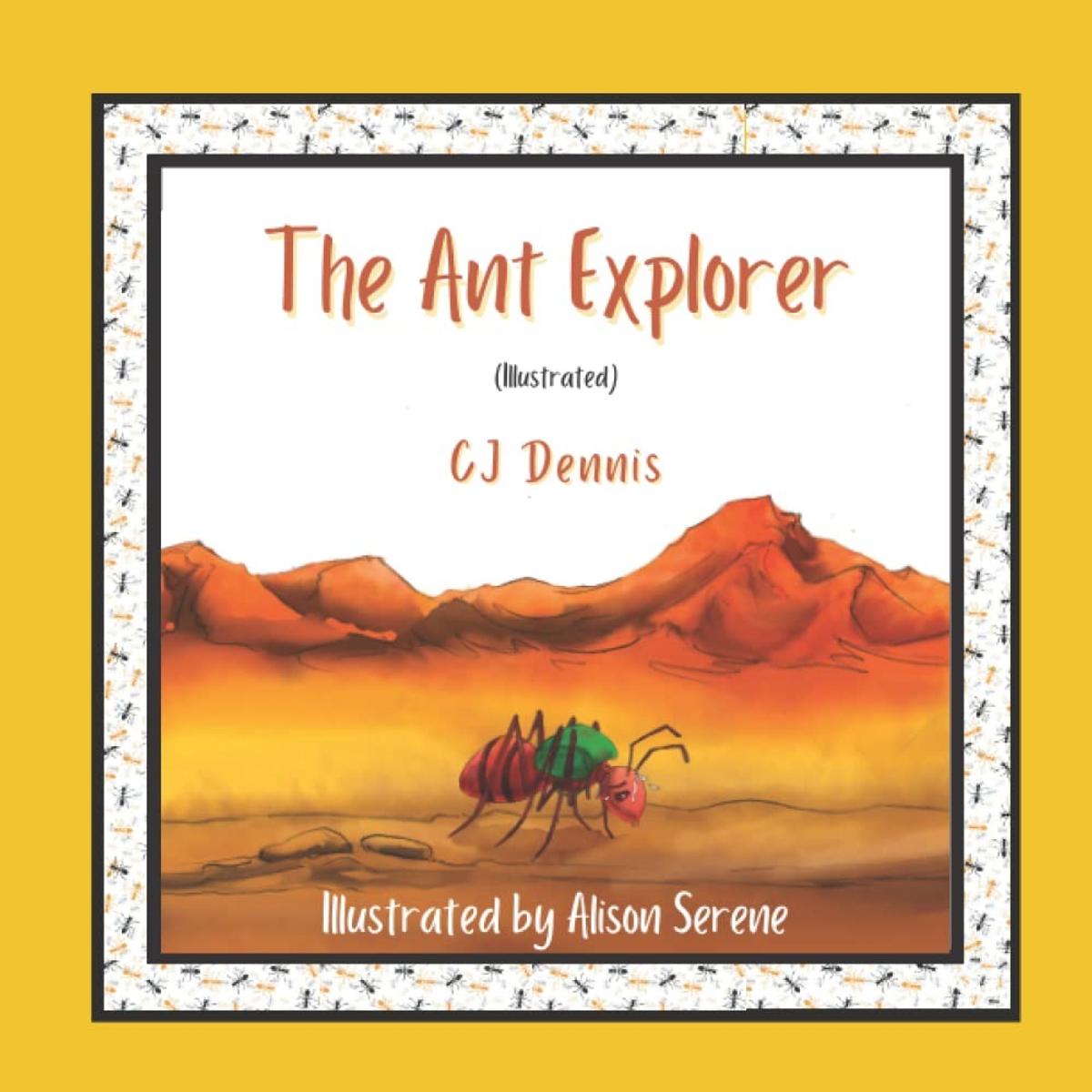
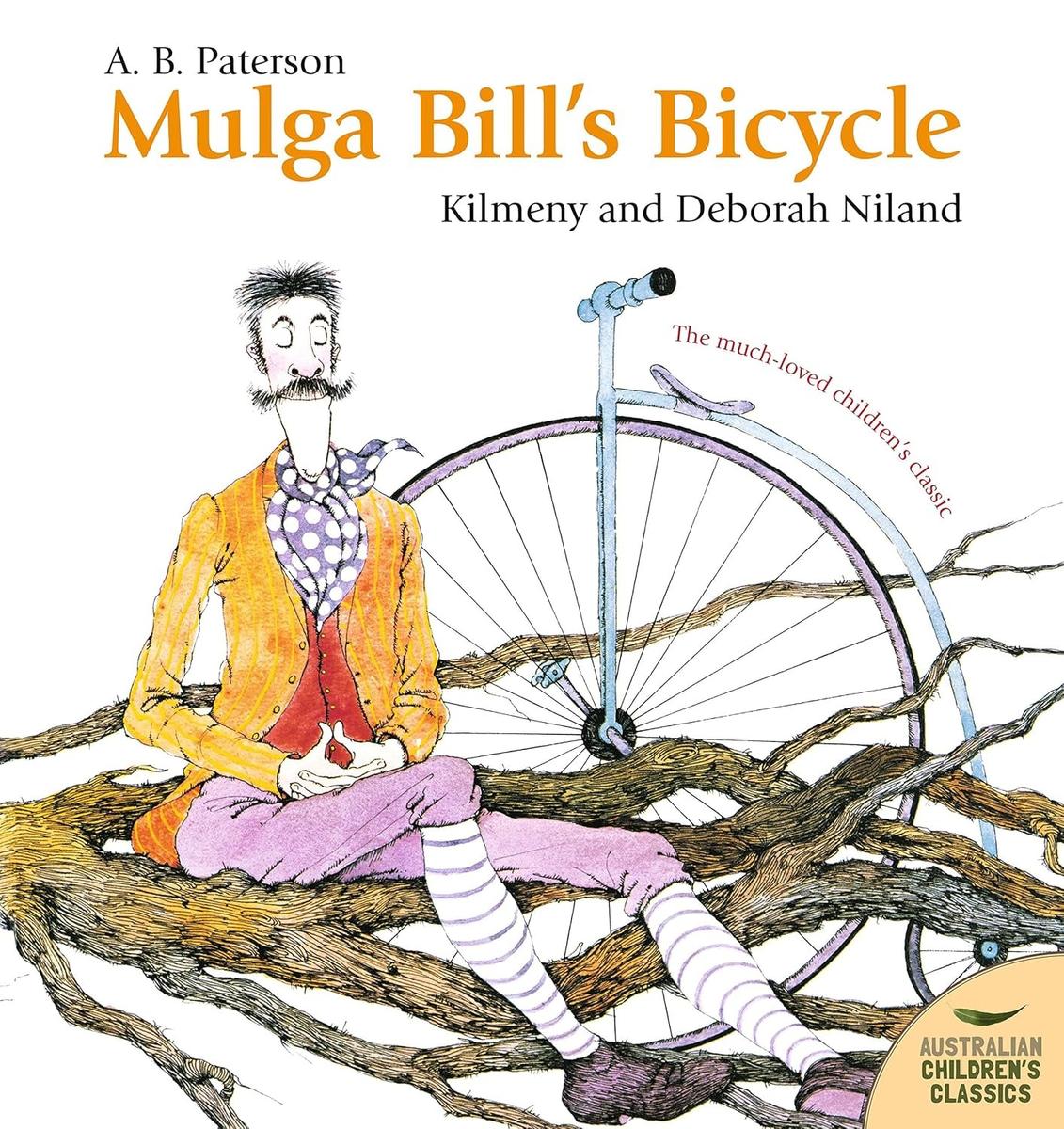
Over Weeks 9 and 10, our Knowledge Building focus moves to Australian poetry. Students will be reading, performing and discussing two classic Australian poems, The Ant Explorer by C. J. Dennis and Mulga Bill’s Bicycle by A. B. “Banjo” Paterson. These poems are being used as examples to help students notice how poets create humour, rhythm and a sense of adventure, and to support them in understanding what makes a poem sound and look different from other kinds of texts.
Alongside their reading, students are continuing to strengthen their writing at the sentence level. They are practising expanding simple sentences by adding information about who, what, where, when, and why; using “because”, “but” and “so” to explain reasons, contrasts and consequences; experimenting with subordinating conjunctions such as when, if, although and because; and combining shorter ideas into more interesting, complex sentences. These skills are then used in their poetry writing to help them express ideas clearly and in engaging ways.
At the text level, students are planning and drafting their own poems inspired by the mentors we have shared in class. Some children are imagining further adventures for the ant, while others are exploring what Mulga Bill might have learned from his wild bicycle ride. These ideas are offered as starting points only, and students are encouraged to adapt them or develop their own creative responses while still using key poetry features such as stanzas, rhyme, and careful attention to syllables and rhythm. There are also strong links to Science and History as students think about animal habitats and environments, and how bicycles, transport, and daily life have changed over time.
Numeracy
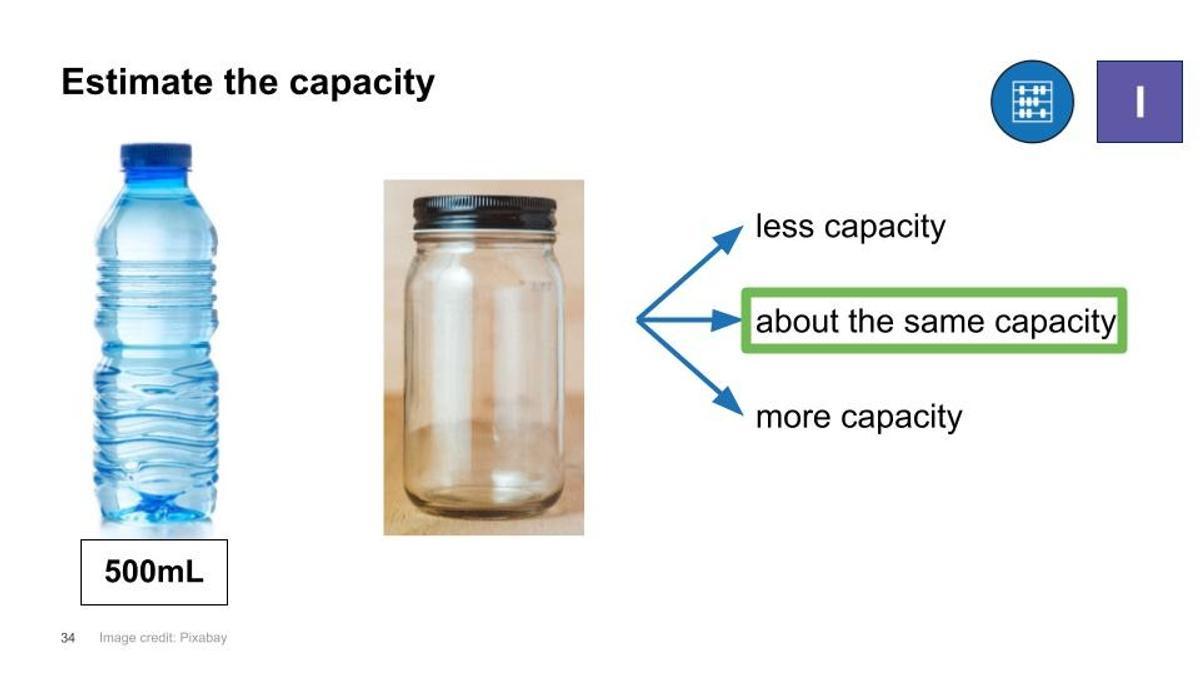
In Week 9, we are continuing our Mass and Capacity unit. For capacity, students are working with a range of containers, bottles, jugs, and measuring jugs to compare how much different containers can hold and to see how capacity is shown on measuring jugs. Having concrete materials in front of them helps students to see and talk about the differences in capacity in a very hands-on way.
For mass, students are building on earlier lessons where they read mass scales in both grams and kilograms and used analogue scales to measure, compare, and order the mass of different objects. They are now moving into estimating the mass of classroom and household items by comparing them to known masses, and then checking these estimates using the scales. A selection of small but heavy objects and large but light objects allows students to pick items up, feel the difference in mass, and refine their sense of what different masses “feel like”.
In Week 10, our focus shifts to consolidation. Students will revisit and apply key ideas from across the term and year, including mass and capacity, number and place value, the four operations, and other important skills. This revision will be supported through a mixture of problem-solving tasks, practice activities, and games, with the aim of helping students feel confident in using a range of strategies and ready to build on this learning in Year 4.
Vocabulary
Our target words for week 9 are from our class text, The Ant Explorer: gloomy, loathe, fearful, dreadful, dreary, and weary. Our week 10 words are from our other class text, Mulga Bill’s Bicycle: pride, fright, bolted, scrambling, awful and encounter.
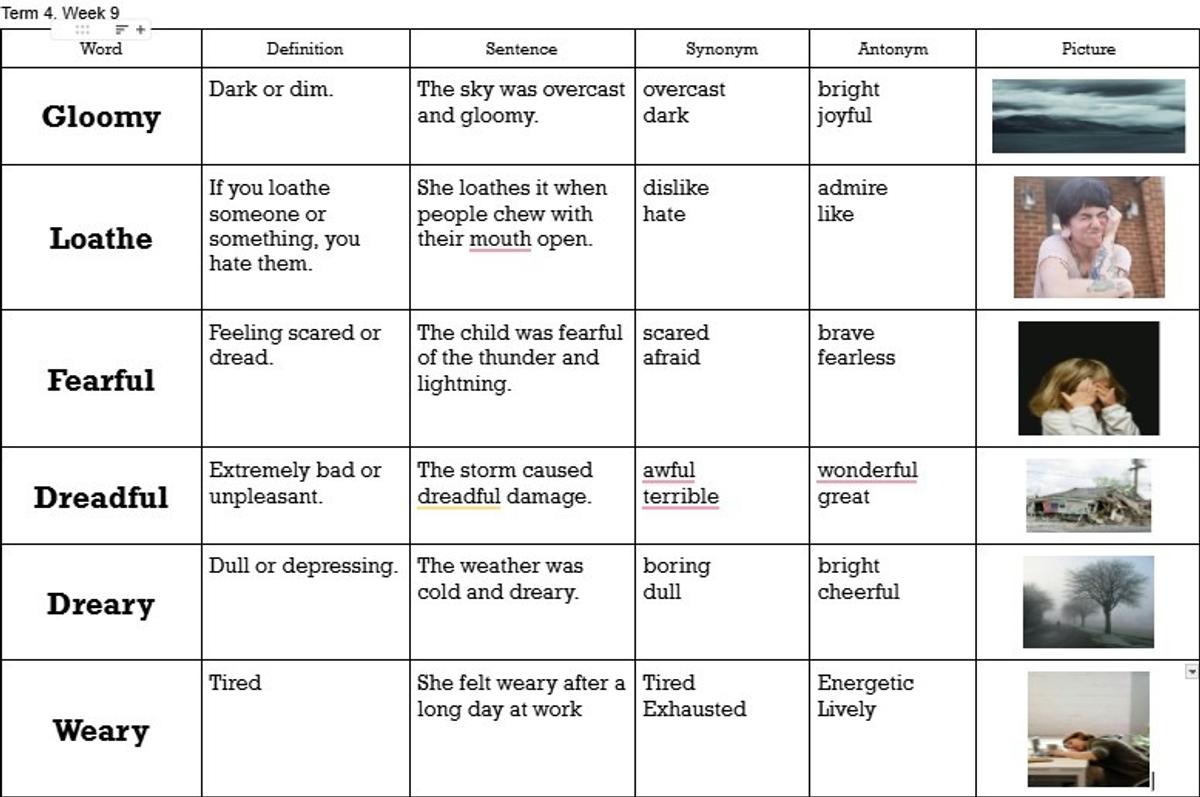
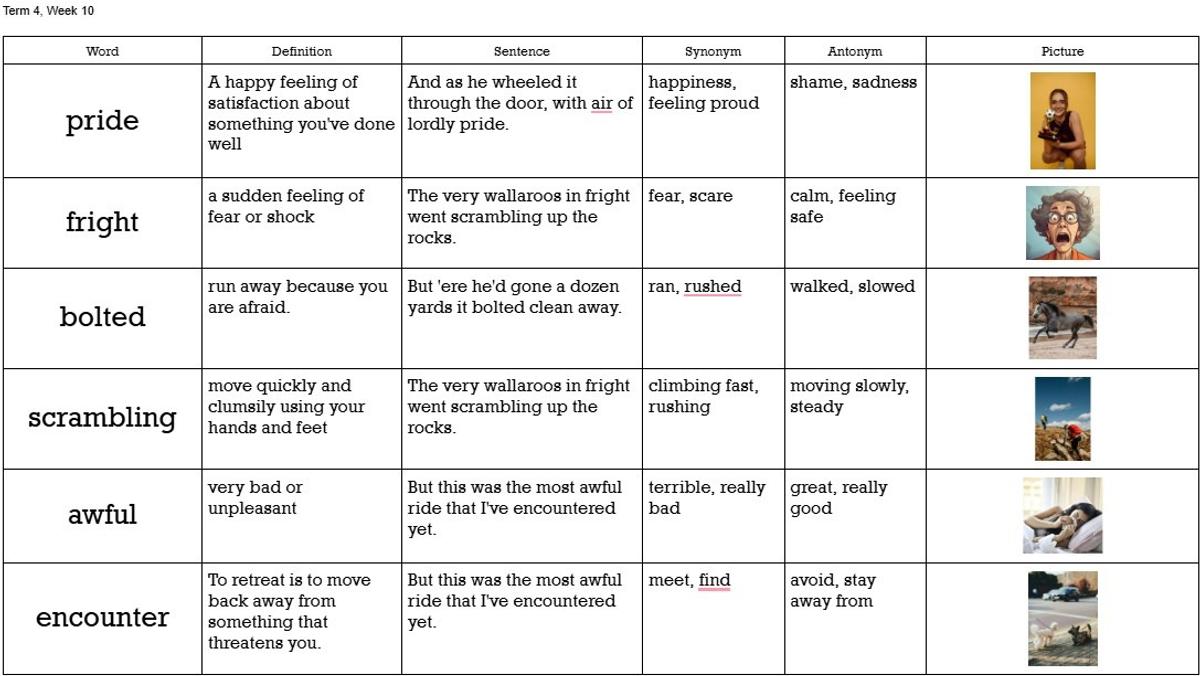
In class, students are exploring each word by discussing its meaning, using it in spoken and written sentences, and making connections to synonyms, antonyms, and real-life examples.
They enjoy sharing the new vocabulary they have learned, and we encourage families to notice and use these words when they arise naturally in stories or everyday conversations, as this helps to reinforce and deepen their understanding.
Friendly Reminders
- We encourage students to read for 20 minutes each school day. Their regular reading helps to build fluency, vocabulary, and comprehension, and we will continue to use reading journals at school to keep track of their reading habits.
- Please continue to support your child by ensuring their iPad is fully charged each morning and that they bring their headphones to school. A reminder that iPads should remain in bags before and after school in line with our school expectations.
- Our SUP (Stand Up Project) leaders taught our Grade 3 students this term. Sessions ran on Friday, 5th December (Week 9) from 1:10–2:10 pm and Monday, 8th December (Week 10) from 2:10–3:10 pm. Students were very excited about learning from these leaders and sharing their knowledge.
- Our PLC3 Open Day will be held in Week 11 on Monday, 15th December from 2:10–3:00 pm. Families are warmly invited to visit the classrooms during this time. Students’ poetry books will be used and shared at the open afternoon to showcase the published pieces they have created during our Australian poetry unit. Further information will be shared closer to the date.