
Teaching & Learning Page:

Web Pages:
https://www.youtube.com/watch?v=HZRdKlOHogk
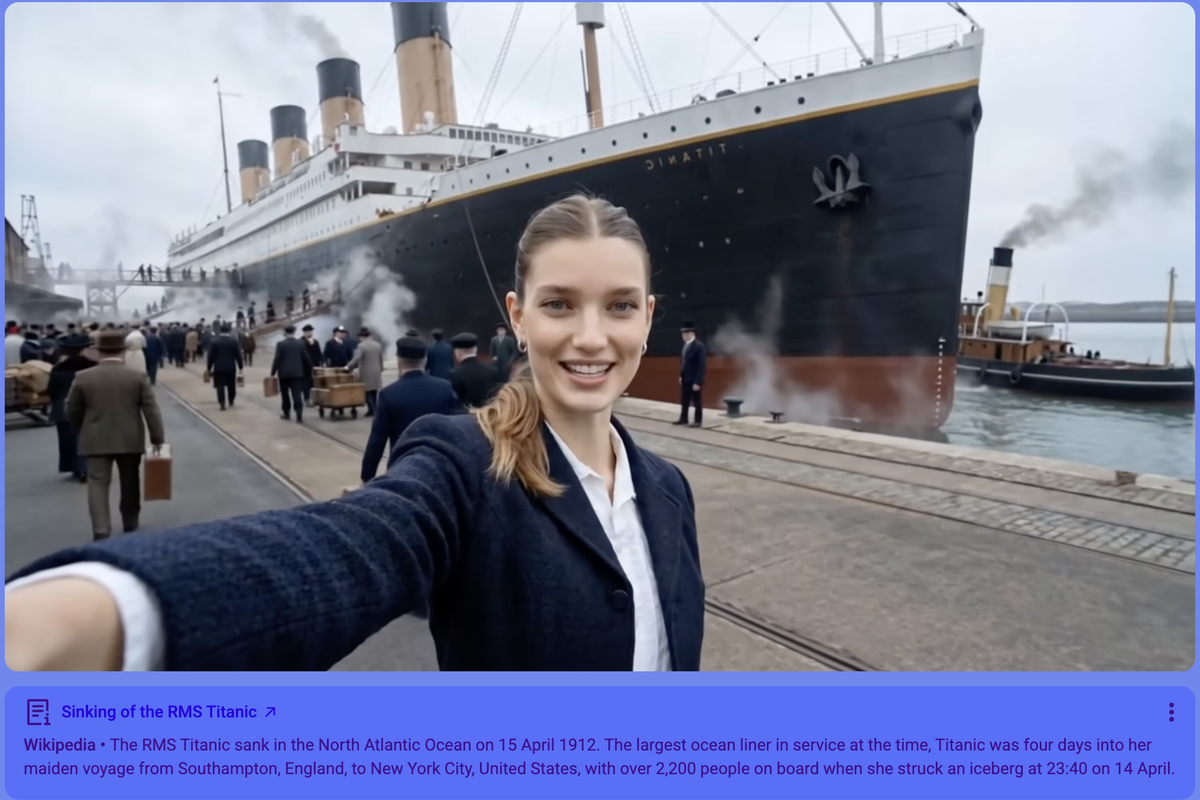
🚢 AI Titanic:
This is a video by Chloe, a creator who uses AI to time-travel by recreating historical moments from actual references. She boards the Titanic as a third-class passenger, sneaks into first class, and tries to warn the captain about the iceberg. It can feel AI-ish at times, but it still has a charm to it.
Techie Tips:
Editing Text
⌥⌫ (Option + Delete): Delete the previous word.
Instead of holding delete and watching characters disappear one at a time, this removes the entire previous word in one keystroke.
⌥← and ⌥→ (Option + Arrow Keys): Jump word by word. Hold Option and tap the left or right arrow to move your cursor one word at a time instead of one character at a time.
Add Shift to the mix (⌥⇧← or ⌥⇧→) and you're selecting word by word, which is even more useful.
#1 Ask Siri to set a countdown to a specific time
Siri is decent at setting alarms and timers.
I’m sure that most people only set alarms using Siri in one particular way, by saying, “Hey Siri, set an alarm for 5:00 p.m.” or “Set a timer for 10 minutes.” There is actually a better way to do this: say, “Hey Siri, set a timer to end at 5:00 p.m.” What happens now is that Siri will start counting down the time left until the time you specified, so you have a live countdown for whatever time you set.
This is incredibly useful, especially when you’re trying to do focused study or a work session and want to know how much time is left. It’s much better than setting a normal alarm. This timer has an expiry time, which forces you to concentrate because you know how much time you have left to finish what you’re working on.
To use this, simply say “Siri, set a timer to end at 5 p.m.” The timer will start counting down.
Sketches:
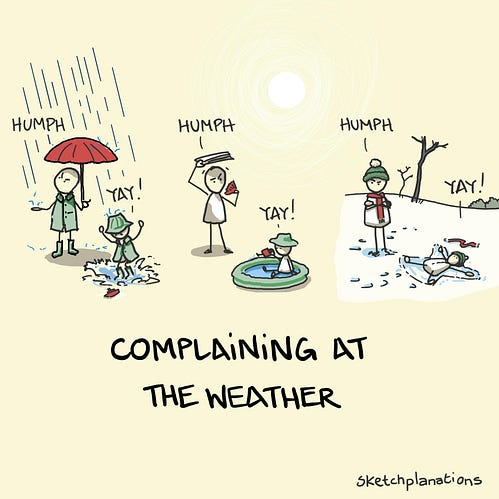
As Norwegians say: Det finnes ikke dårlig vær, bare dårlig klær, which loosely translates as, “There’s no such thing as bad weather, only bad clothes.”...
Article: This is Worth The Read!
Life is all about your perspective. And society as a whole is constantly trying to influence your perspective.
That’s why everyone’s out for your attention. They’re not just after your money, but also your mind.
It’s no wonder that so many people have a screwed-up view of reality.
We think that a simple setback is the end of the world. We’re constantly living in fear because the world feels scary.
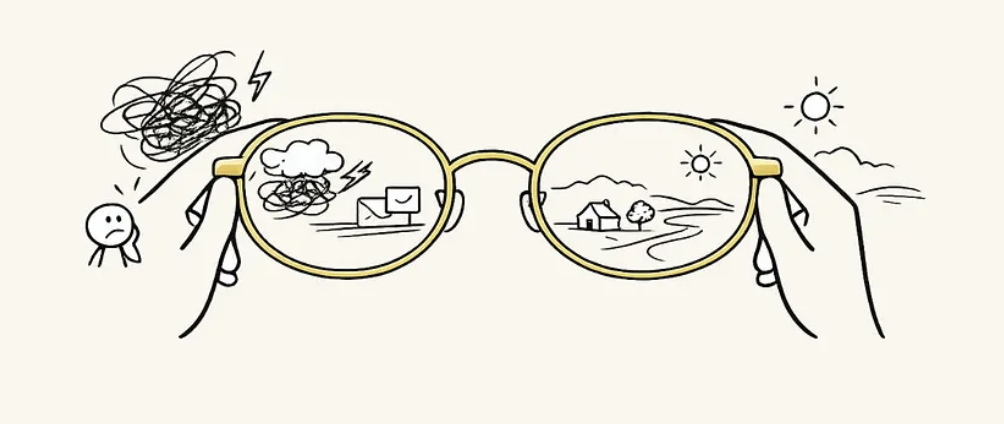
That’s because we all have a pair of glasses that determines the way we see the world.
The question is: What type of glasses are you wearing?
Whether you like it or not, you already have one. Most of us never consciously decide how we look at the world. We inherit it from our upbringing, our environment, our fears, and the stories we keep telling ourselves.
Until I was about 28, I wasn’t aware of this at all. I just lived. And I assumed the way I saw things was fixed. Like eye colour. Like height. Something you don’t touch.
I was wrong.
When I started taking philosophy seriously, I realised something that sounds obvious once you see it: you and I can change our lens. You can literally decide how you want to interpret your life.
I can’t stress enough how important that is.
Your happiness, career, wealth, and relationships are all filtered through the glasses you put on every morning.
Let me explain.
The glasses of life
Most people’s worldview is shaped before they’re even old enough to understand what a worldview is.
If you grew up around stress, you normalise stress. If you grew up around scarcity, you learn to hold on, even when it hurts you. If you grew up around criticism, you assume you’re always one mistake away from being rejected.
That lens becomes your default setting.
Then you grow up, and life gives you more freedom. You can choose your work. Choose your friends. Choose what you consume. Choose what you believe. But here’s the weird part.
Most people never update their lenses.
They still see the world through childhood glasses, only now they call it “personality.” They call it “how I am.” They call it “being realistic.”
No. It’s just unexamined. What they don’t realise is that they are constantly influenced by external factors such as the media, culture, and people in their lives.
The hard truth is that adulthood comes with a responsibility most people avoid: you have to decide what kind of mind you want to live with.
Because you’re going to live with it every day.
Will this matter in a week, a year, or a decade?
This is the mental model that changed my life. It’s simply a mental shortcut I use on a daily basis.
When something feels heavy, urgent, overwhelming, or personal, I ask myself:
- Will this matter in a week?
- In a year?
- In ten years?
That’s it.
This question does two things at once.
First, it slows you down. Most bad decisions are speed decisions. You react. You fire back. You buy, sell, quit, post, or blow up the relationship because the emotion feels like truth.
Second, it forces perspective. It moves you from “what I feel right now” to “what this actually is.”
Psychologists call this temporal distancing, and the idea is simple: when you view a problem from the future, it loses some of its emotional grip.
Studies suggest it can reduce distress by changing the way you appraise the event. You stop treating it like the end of the world and start treating it like a moment that will pass.
There’s also construal level theory, which is a fancy name for a basic human pattern: the farther something is (in time, distance, or social proximity), the more you think in bigger concepts.
More “why,” less “noise.” More meaning, less drama.
And then there’s future-self continuity. The more connected you feel to your future self, the less you sabotage yourself in the present. You stop treating tomorrow’s you like a stranger who can deal with the consequences.
Put simply, when you can feel the future, you make choices that benefit yourself later.
That’s why this model works so well.
The view from above
I just talked about some modern research. But the Stoics were already obsessed with this perspective 2000 years ago.
Perspective is power. It’s the difference between being ruled by your emotions and using your emotions as data.
Marcus Aurelius had a line I often come back to. In Meditations, he reminds himself that he could die at any moment:
“You could leave life right now. Let that determine what you do and say and think.”
That sounds dark. People read it and think that nothing matters.
That’s not the point.
The point is to stop acting like every little thing deserves your whole life.
Most of what steals your peace is not important. It’s just loud.
But there’s a trap here too. If you take the longest possible time filter, the death filter, you can slide into nihilism. If you zoom out far enough, everything becomes dust. Careers, money, arguments, success, failure. Gone.
That perspective is useful for humility, but it’s useless for living.
You don’t need a lens that makes you numb. You need a lens that makes you effective.
So the real skill is this:
Use the longest time filter that still produces action.
The ladder of lenses
Here’s a practical way to use it. Think of time horizons as tools, not philosophies.
- 10 minutes lens: prevents impulsive replies.
- 1 week lens: prevents spirals.
- 1 year lens: forces you to think in systems (skills, habits, relationships).
- 10 year lens: clarifies identity and trajectory.
Eternity/death lens: only for humility, not decision-making.
Now let’s make that real.
10 minutes: You get a rude email. Your ego wants to win. Your pride wants to respond fast. Ask: “Will I be proud of this reply in 10 minutes?” Most of the time, the best move is to wait, breathe, and write a calmer draft you might never send.
1 week: You have a bad day, and your mind starts making it a bad week. You know the pattern. One setback becomes a story: “This always happens. I’m behind. I’m failing.” Ask: “Will this matter next week?” Often, the answer is no, and the spiral collapses.
1 year: This is where adults separate themselves from children. A one-year lens forces you to stop obsessing over single events and start obsessing over repeatable behaviours. One great workout means nothing. One good article means nothing. One good trade means nothing. What matters is whether you can do it consistently.
10 years: How do you see your life in one or two decades from now? Is that the same as now? Or is it drastically different? And if you’re not living the life right now that you want to live in the future, what’s holding you back?
This lens is all about identity. Whether you call this the 5-year, 10-year, or 20-year lens, the goal is to think about your trajectory.
When you think in decades, you stop asking, “What do I want right now?” and you start asking, “What kind of person am I becoming?” That question changes everything.
Eternity/death: Use it sparingly. Use it to drop pettiness. Use it to forgive. Use it to stop taking yourself so seriously. But don’t use it to decide whether you should build something meaningful. The fact that life ends does not make life pointless. It makes it precious.
Why this model changes your life
Because most of your suffering is time-horizon suffering.
You’re not crushed by facts. You’re crushed by interpretation. You’re crushed by the belief that the thing in front of you is permanent, defining, and catastrophic.
It usually isn’t.
Let’s say you lose a bunch of money on a bad purchase. You can get stuck in the moment and think about how hard you’ve worked for that money, and now it’s gone. Losing money sucks, no matter how you look at it.
However, what’s that money in the grand scheme of things? Is it worth beating yourself up for? Will you still remember it in 10 years? Or are you better off collecting your emotions and getting on with your work?
Most of your problems will get solved if you give yourself enough time.
Not because time is magic, but because time lets you respond instead of react. Time lets you see patterns. Time lets you learn. Time lets you calm down, which is when you make your best decisions.
That’s what this mental model gives you.
Not comfort, but clarity.
And once you have clarity, you become hard to stop.
Book Recommendation:
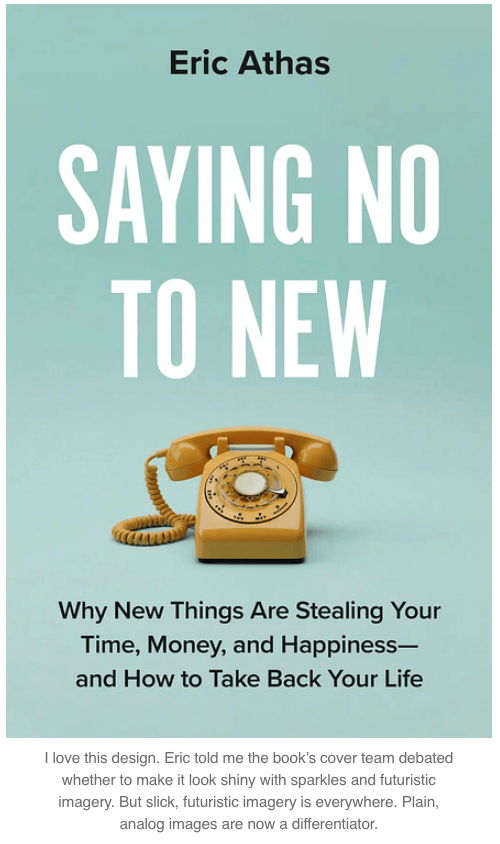
Our Brains Chase Seductive Novelty 🧠Eric’s new book is grounded in neuroscience. When we encounter something new, we get a dopamine hit. That neurological response evolved to help our ancestors survive. New food sources, new paths, new shelter: those discoveries were rewarding.
But sometimes novelty seduces us without offering anything meaningful. In one study, Eric described, rats repeatedly crossed an electrified grid just to explore an unfamiliar area. They chose pain plus novelty over a known food source. Humans do something similar. We covet a new phone partly for its camera, but partly just because it’s new. Then we do it all over again. Even if we can’t afford it. That’s one reason why so many Americans are in debt.
I recently read Dopamine Nation, a surprisingly engrossing book by Dr Anna Lembke, about how our brains are so readily seduced by pleasure.
What results is an unfortunate cycle. We get something new, enjoy it briefly, and soon we’re scanning for the next new thing. My college advisor, Daniel Kahneman, studied and wrote about this “hedonic treadmill” effect.
His research showed that we overestimate how much a new purchase will improve how we feel. And novelty tends to wear off quickly. He called it “hedonic adaptation.”
That doesn’t mean we should avoid all new things. But it does mean we should think carefully about whether there’s something genuinely meaningful behind the new shine.
I love this design. Eric told me the book’s cover team debated whether to make it look shiny with sparkles and futuristic imagery. But slick, futuristic imagery is everywhere. Plain, analog images are now a differentiator.