
Wellbeing and Engagement
Wellbeing and Engagement at BEPS in 2026
Burwood East Primary School prides itself on a strong commitment to and the importance of a focus on wellbeing and engagement for our students and community. My role is a broad one, encompassing wellbeing, engagement and disability inclusion. This year, we will continue our implementation of the Stand Up Project (more about that below) and focus strongly on building our shared understanding of our school values and what that actually looks like at BEPS. We are also in the second year of the rollout for our area of the Disability Inclusion model, which replaced the previous Program for Students with Disabilities.
For those who don’t know me, I’m Katie and I am responsible for leading Wellbeing and Engagement at BEPS. This area is very broad, including initiatives at the curriculum level, working with staff to plan and implement lessons relating to different social-emotional areas in the classrooms, but also things like supporting individual students or a small group of students with a specific support need, such as navigating changing friendships or strategies to speak up in the yard. I also work with families and other stakeholders, in what is known as Student Support Groups, where tailored supports, goals and strategies are discussed for individual students.
My role is not a counselling role, however, assisting families to access that sort of targeted, individual or family support is certainly something I can assist with.
This year, Aiesha (classroom teacher in 5A) and I are supporting the Stand Up Project student leaders and will get them started very shortly on some new projects to teach students and the community about being an upstander. Our Year 5 leaders from last year, now in Year 6, will work with us this term and then later in the year when new Year 5 leaders are selected they will move into a supportive mentoring role.
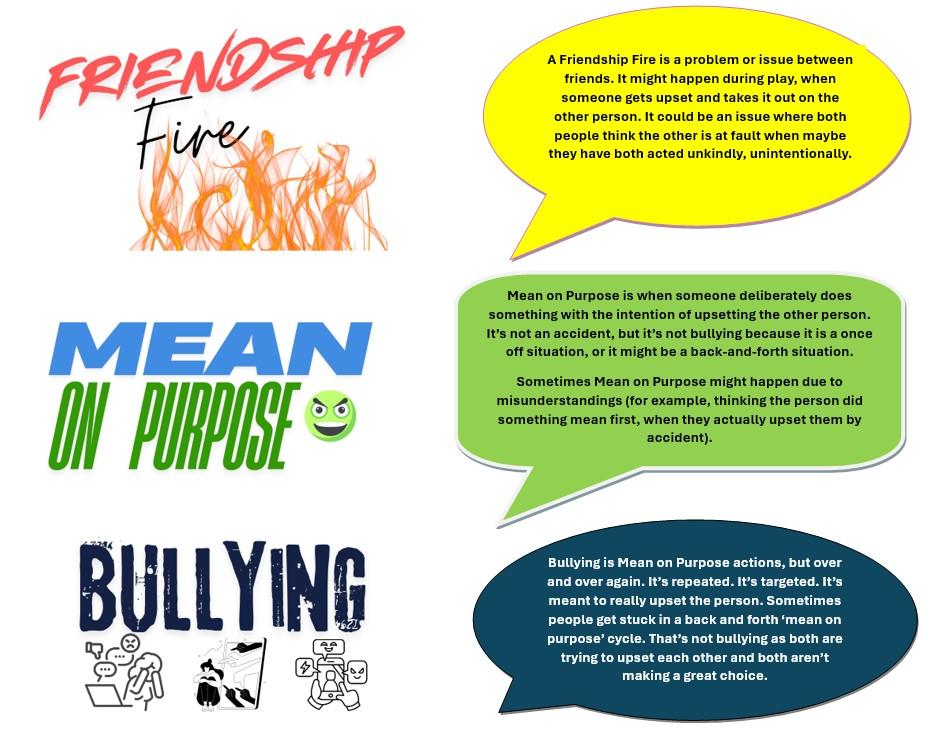
For new families, the Stand Up Project is a student voice driven initiative that aims to:
-Teach students about the different types of conflicts- they are Friendship Fires and Mean on Purpose (then, when Mean on Purpose is repeated and targeted over and over, it is deemed Bullying).
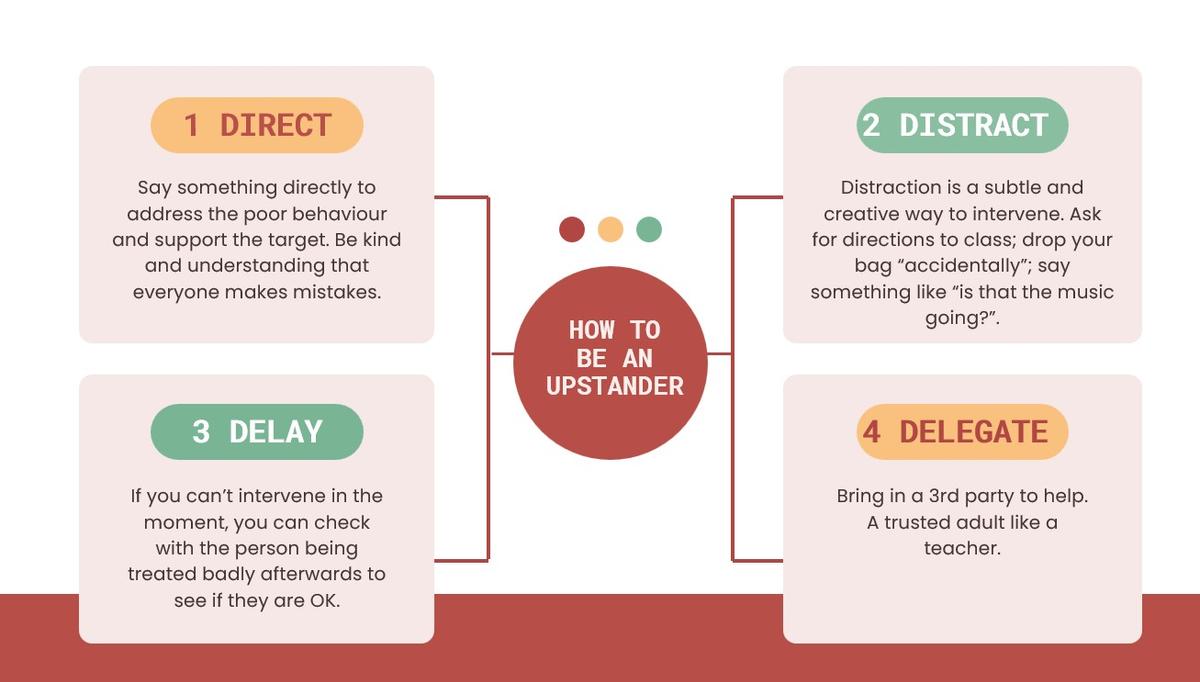
-Share strategies for students to use to be an Upstander when they see unkind behaviour. Being an Upstander doesn’t always mean directly calling out unkind behaviour, there are several strategies they can use, depending on the situation and their confidence. The main strategies are the 4Ds- direct, delay, distract and delegate.
-Promote an overall culture across the community of respect. Mean on Purpose and Bullying behaviours occur partly because students incorrectly believe that its accepted by the wider peer group- this misconception is due to bystander behaviour.
-Empower our students to feel confident to manage smaller issues, such as Friendship Fires and to try using some of the 4Ds when faced with bigger issues, and of course seeking help from trusted adults if necessary.
I move around the school and can be anywhere at any time, but people might find me in the Wellbeing Room (in the main building, down from the office, next to the turtles). The Wellbeing Room is a flexible space, where students might come at lunch time if they are feeling overwhelmed in the yard or if they are feeling like a chat or a quiet activity. Parents are also able to pop down and see me if they need to, or can contact me via phone or email katie.abbott@education.vic.gov.au