
Year 1 News
Learning Celebrations
Literacy
In our Phonics lessons, students have been working hard on reading and spelling CCVC (consonant-consonant-vowel-consonant) words.
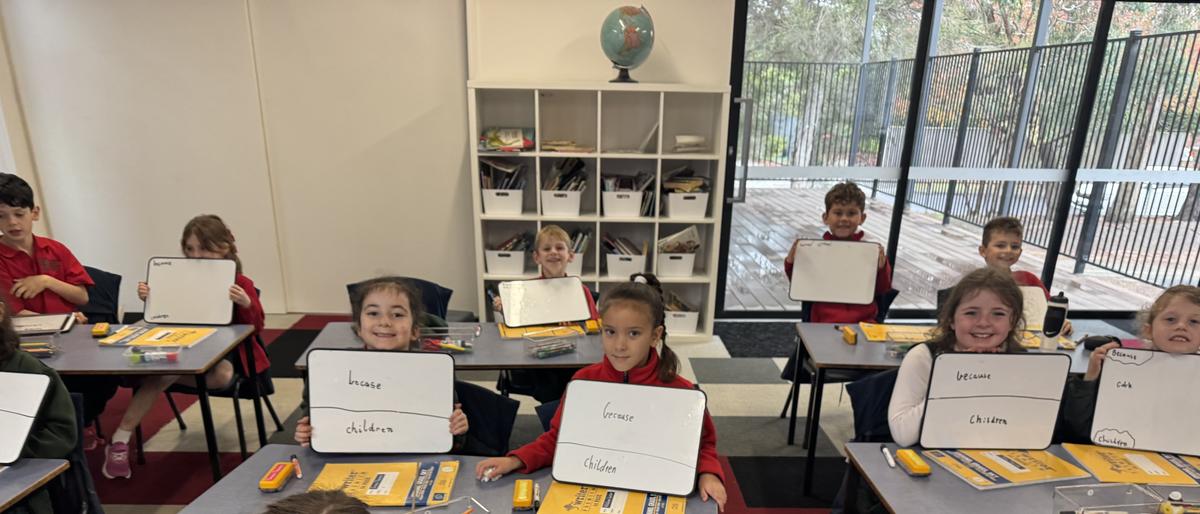
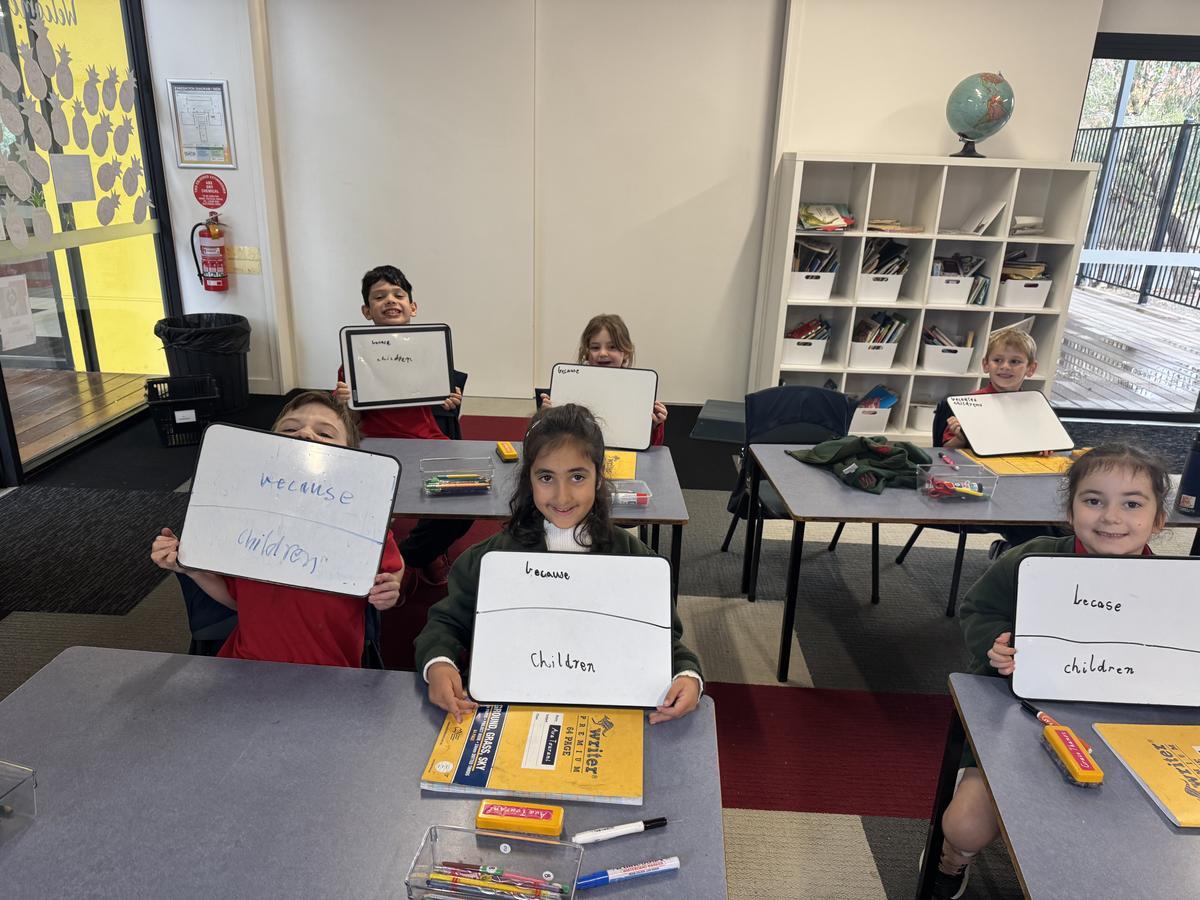
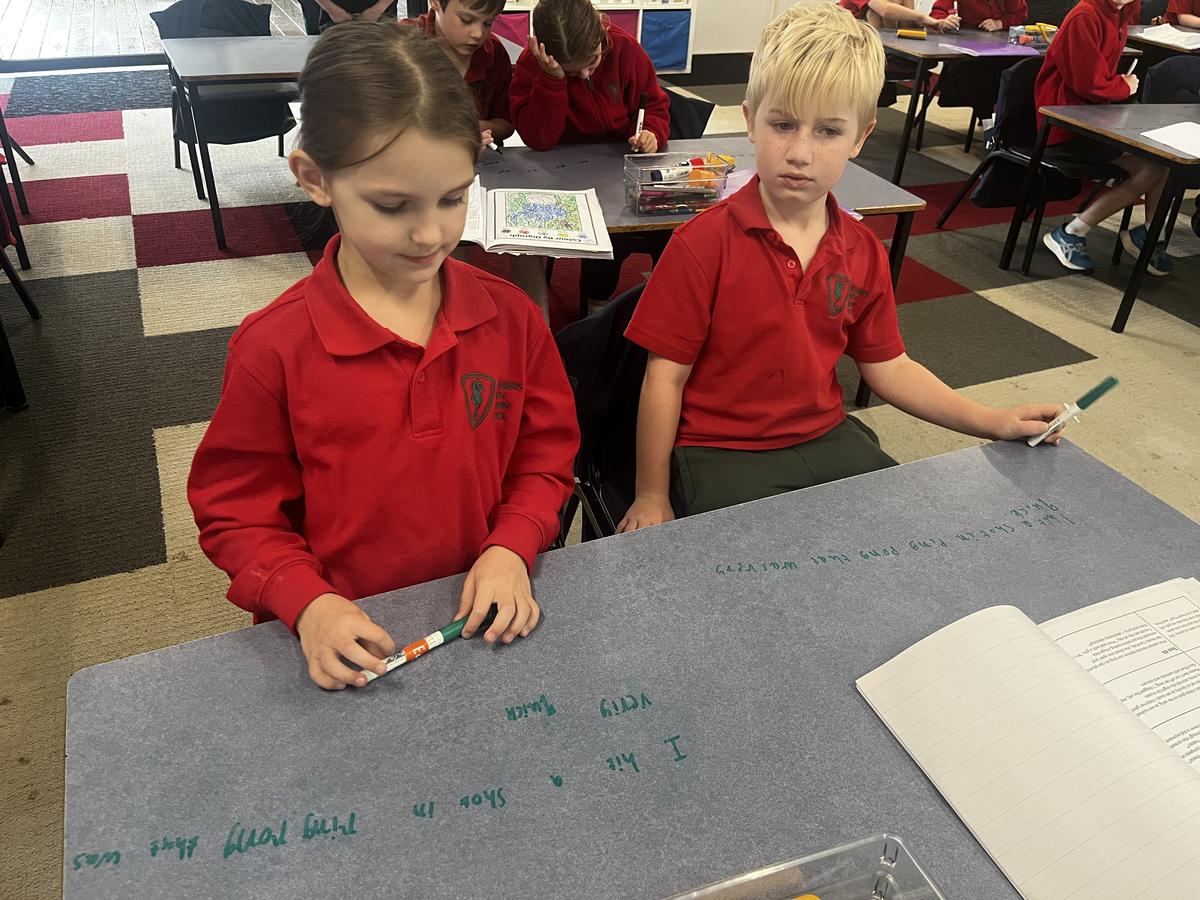
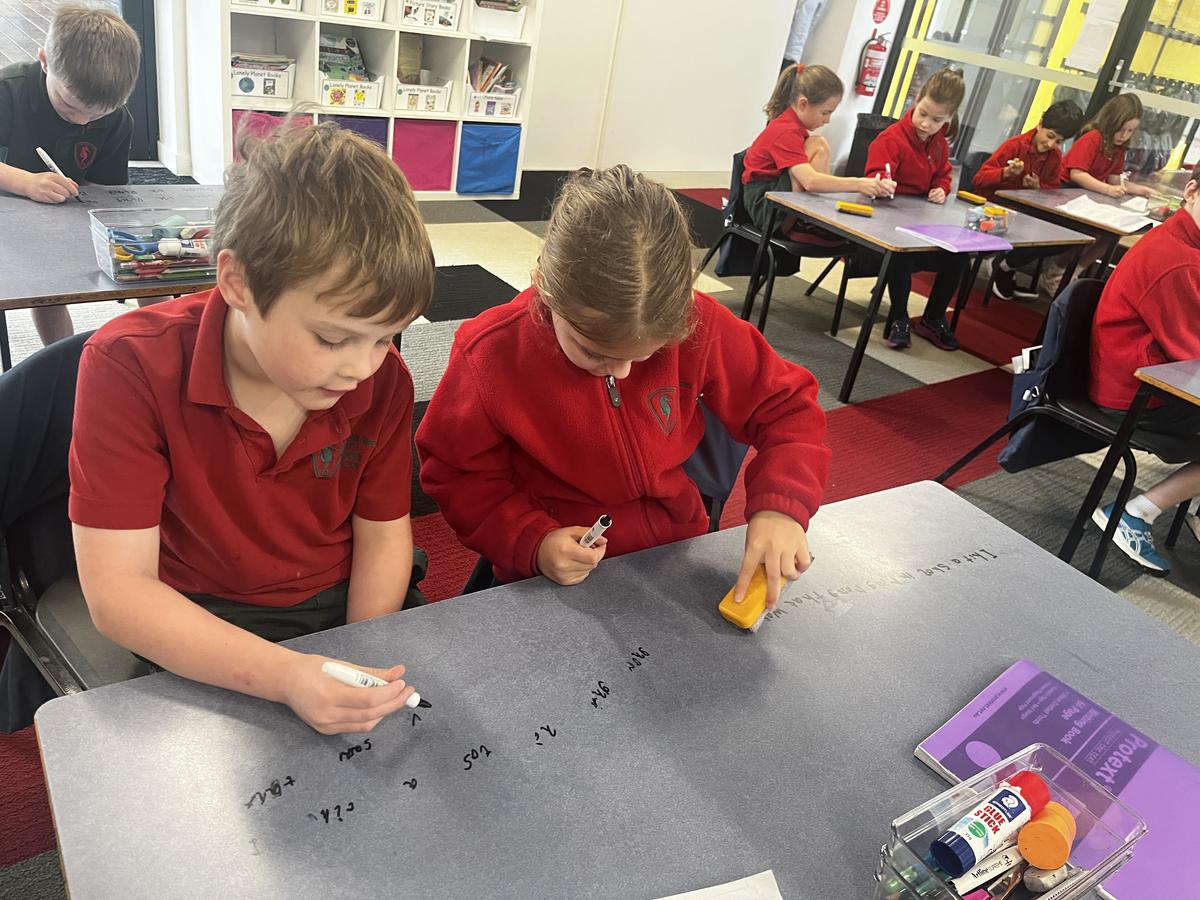
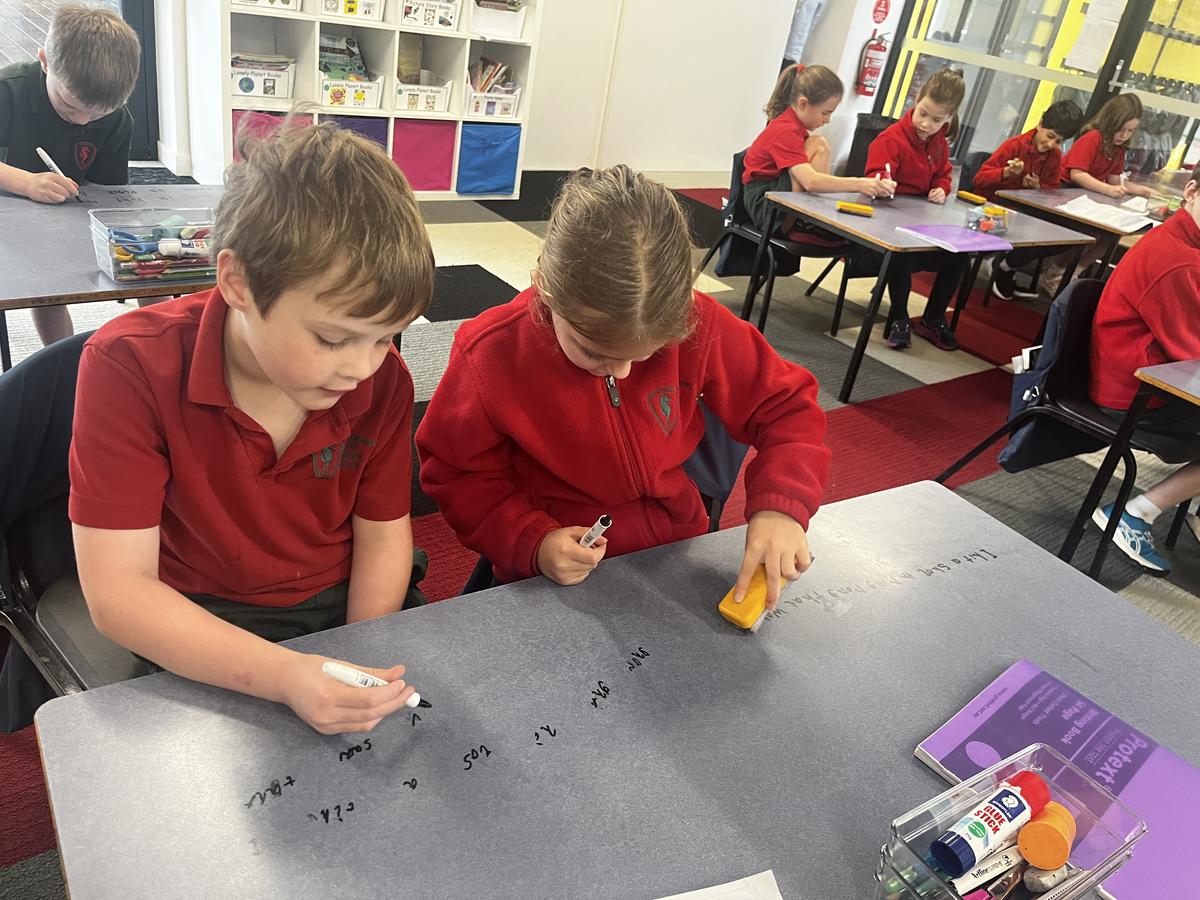
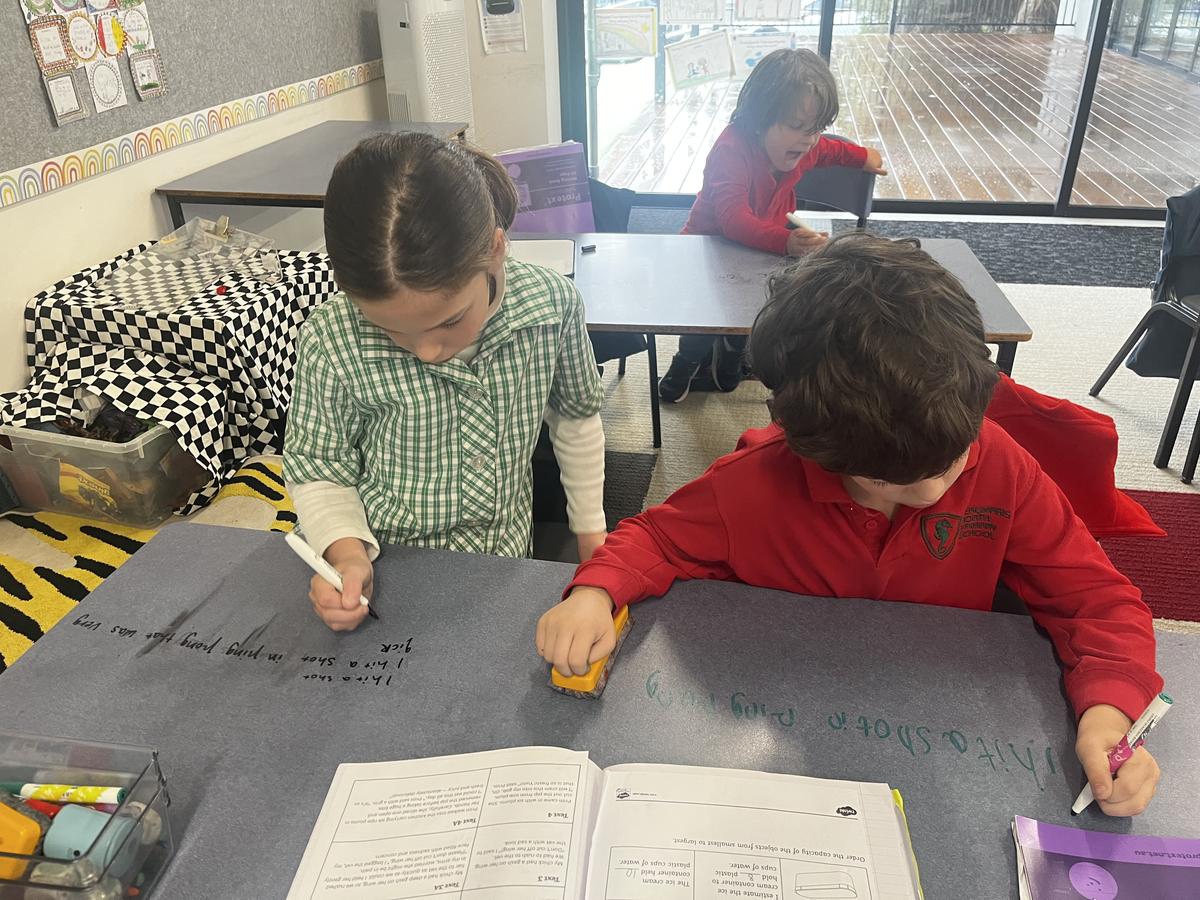
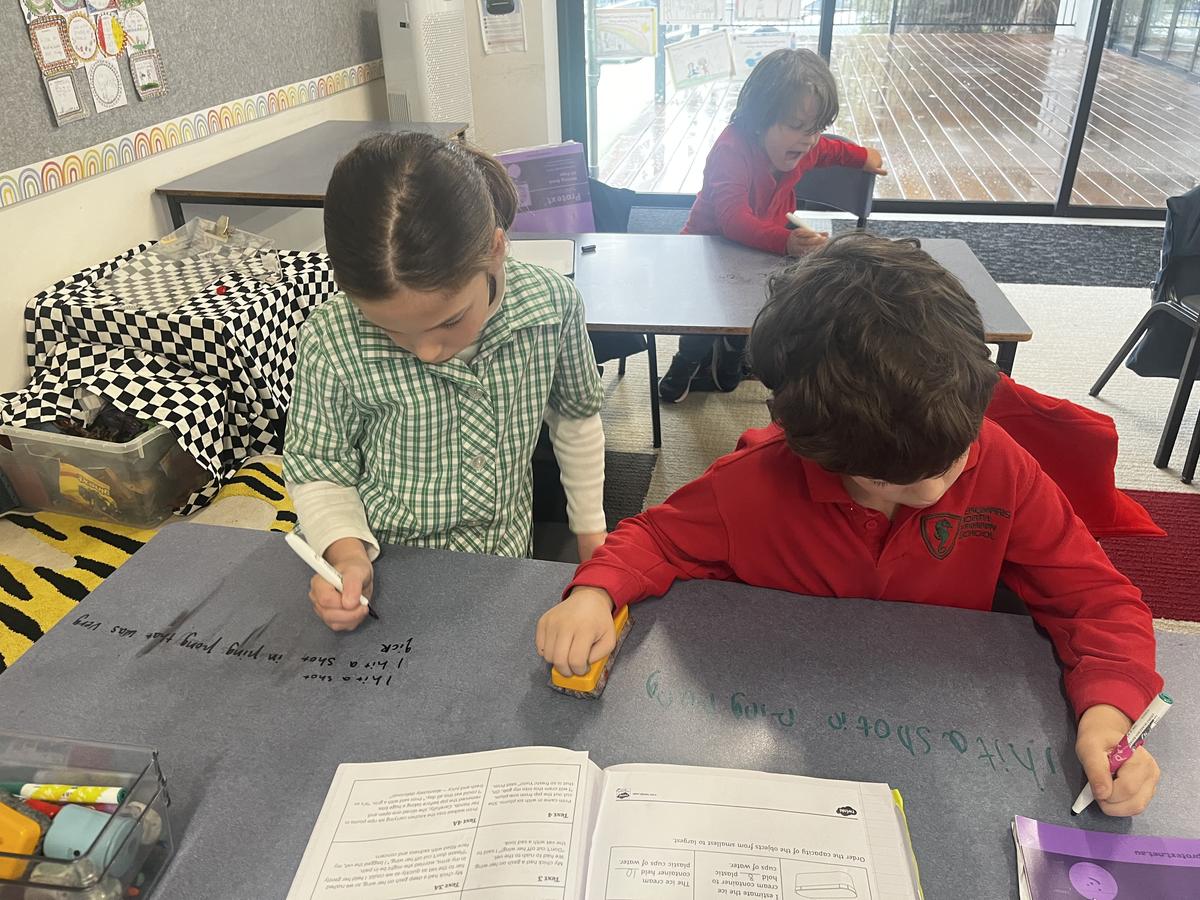
Over the next two weeks, we will begin focusing on CVCC (consonant-vowel-consonant-consonant) words as students continue to strengthen their blending and segmenting skills.
We have also been reviewing important spelling concepts, including the floss rule and when to use the digraphs ‘ck’, ‘sh’ and ‘ng’. Students are developing confidence blending and reading words containing these sounds and patterns.
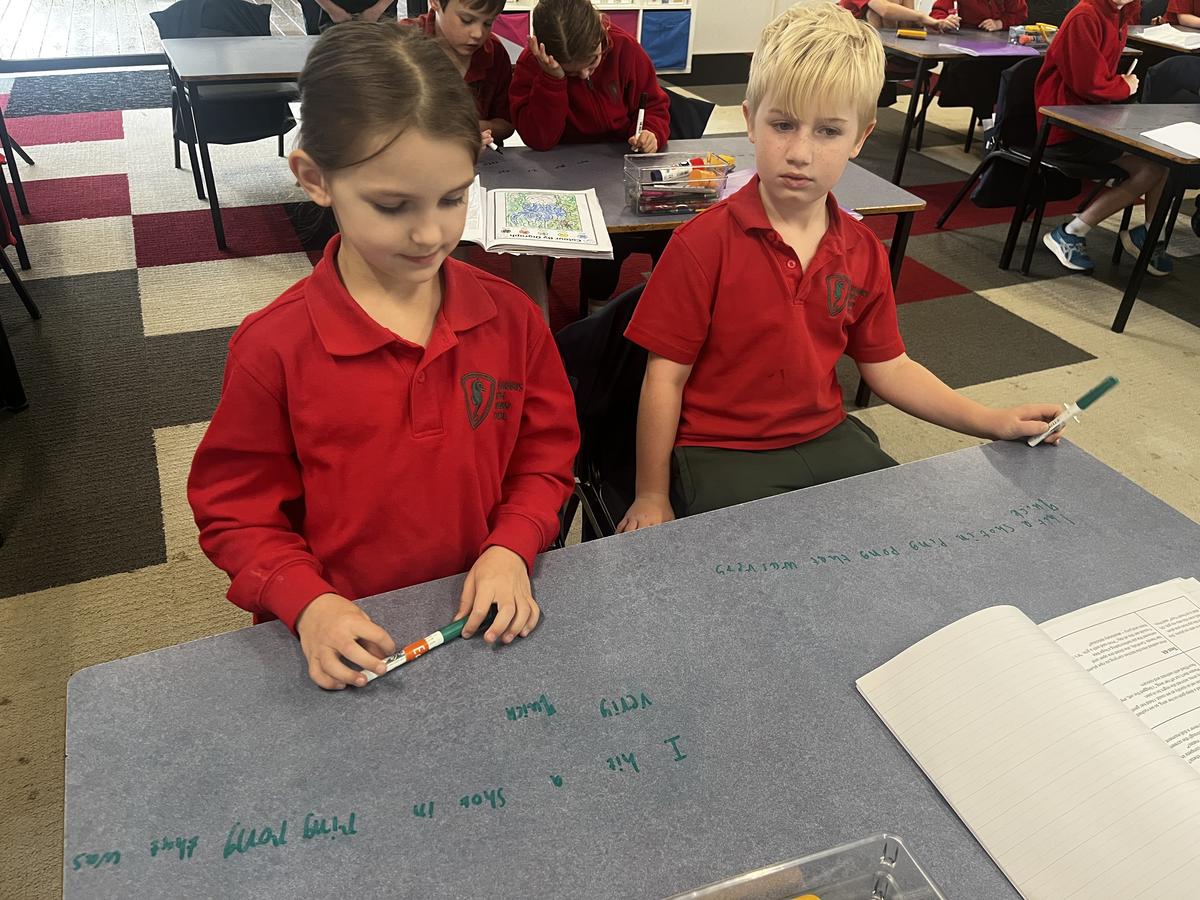
Throughout our lessons, students are given multiple opportunities to actively participate and respond in a variety of ways. This includes using mini whiteboards, choral responses, solo responses, turn-and-talk discussions, body gestures, air writing and handwriting in their books. To extend learning, students are also offered challenge words and sentences.
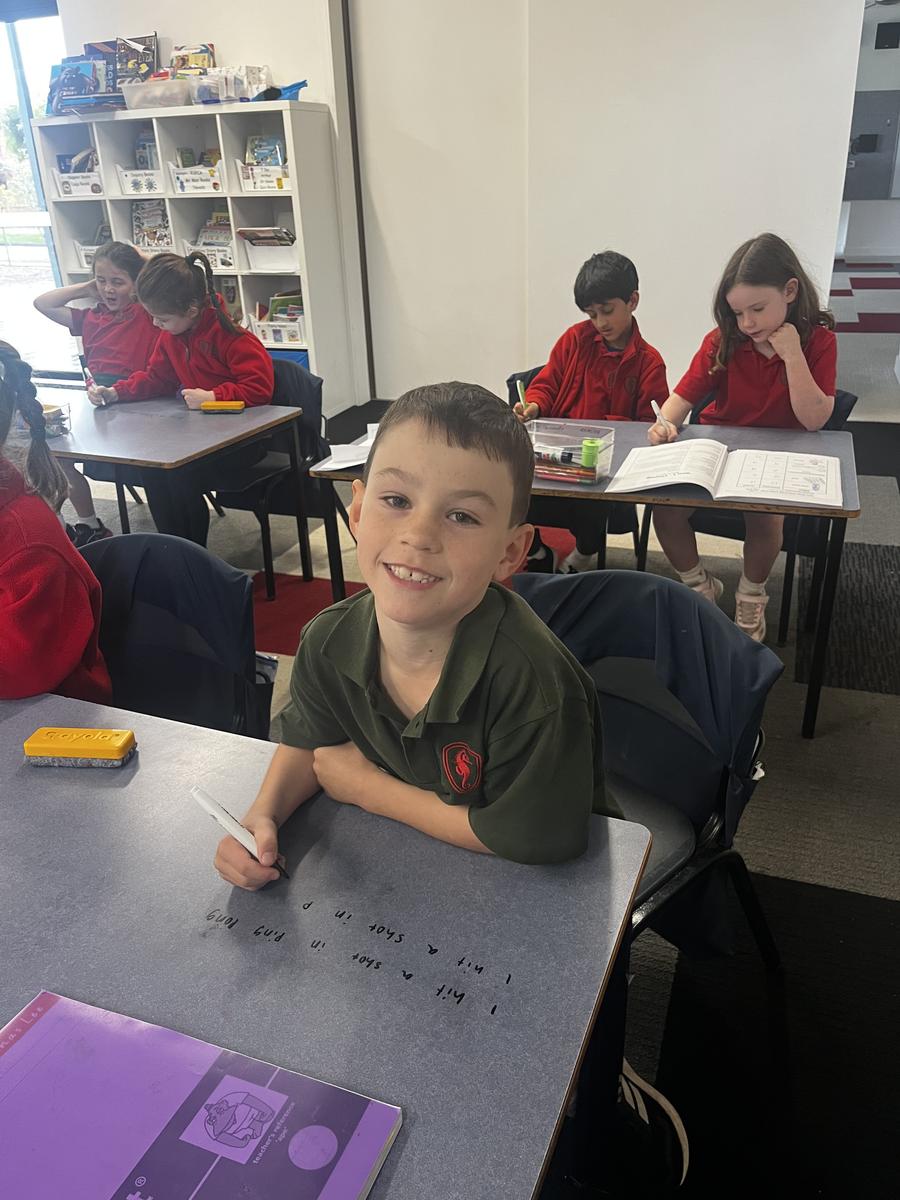
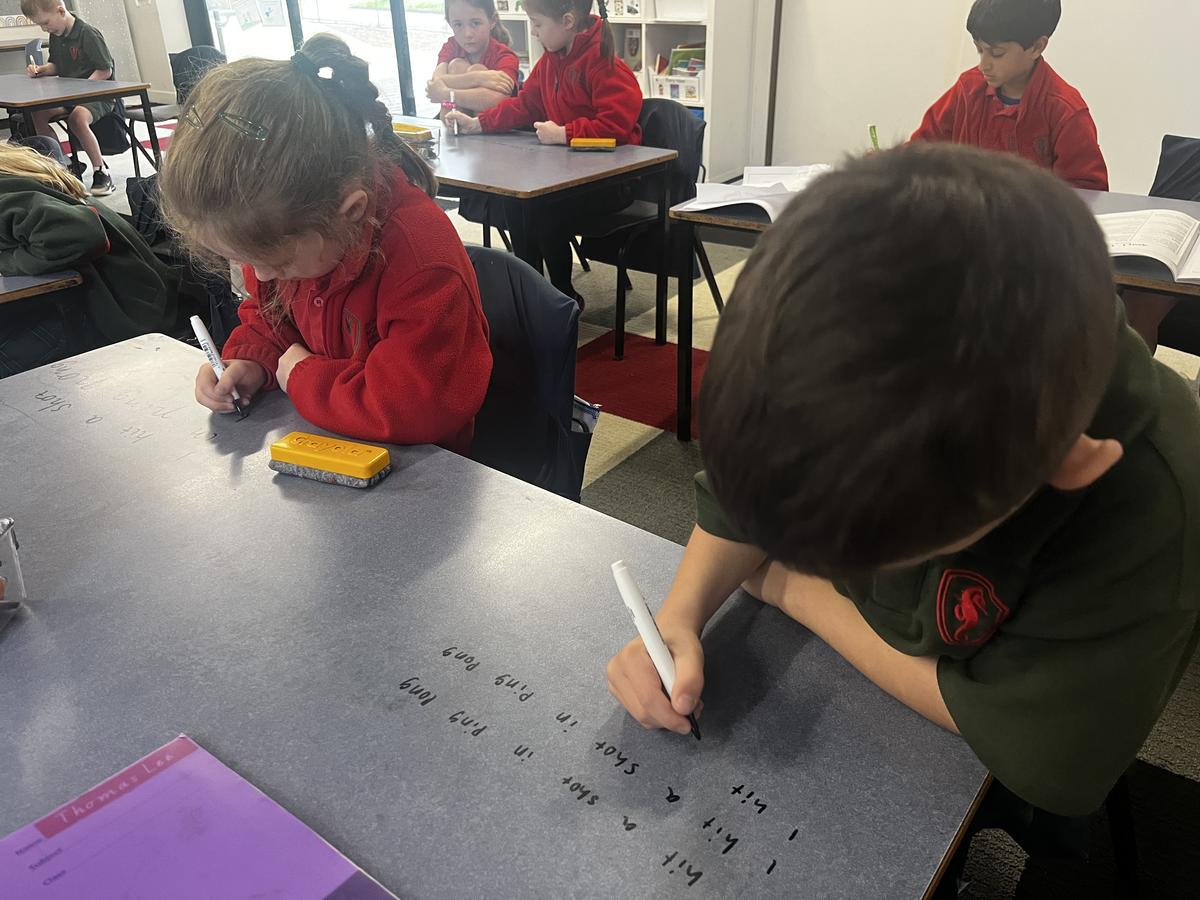
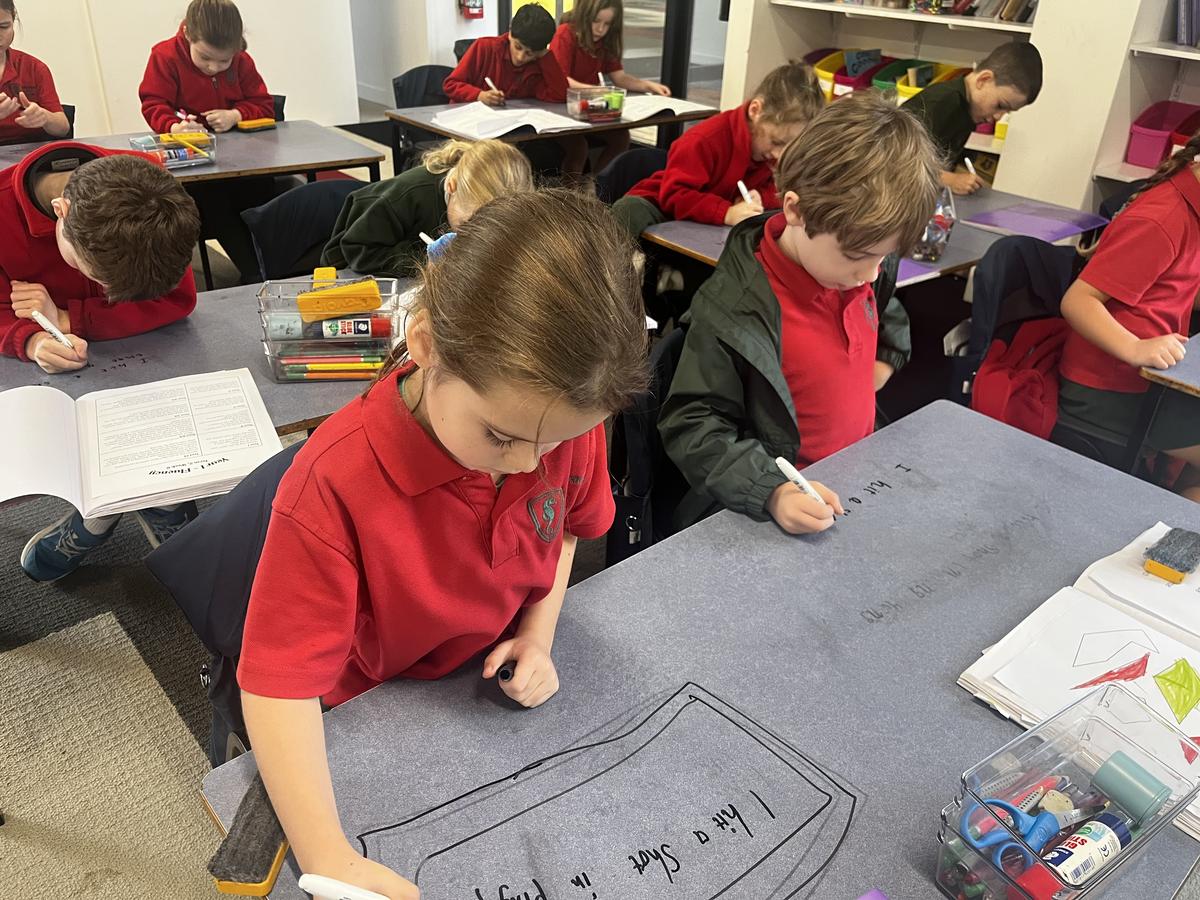
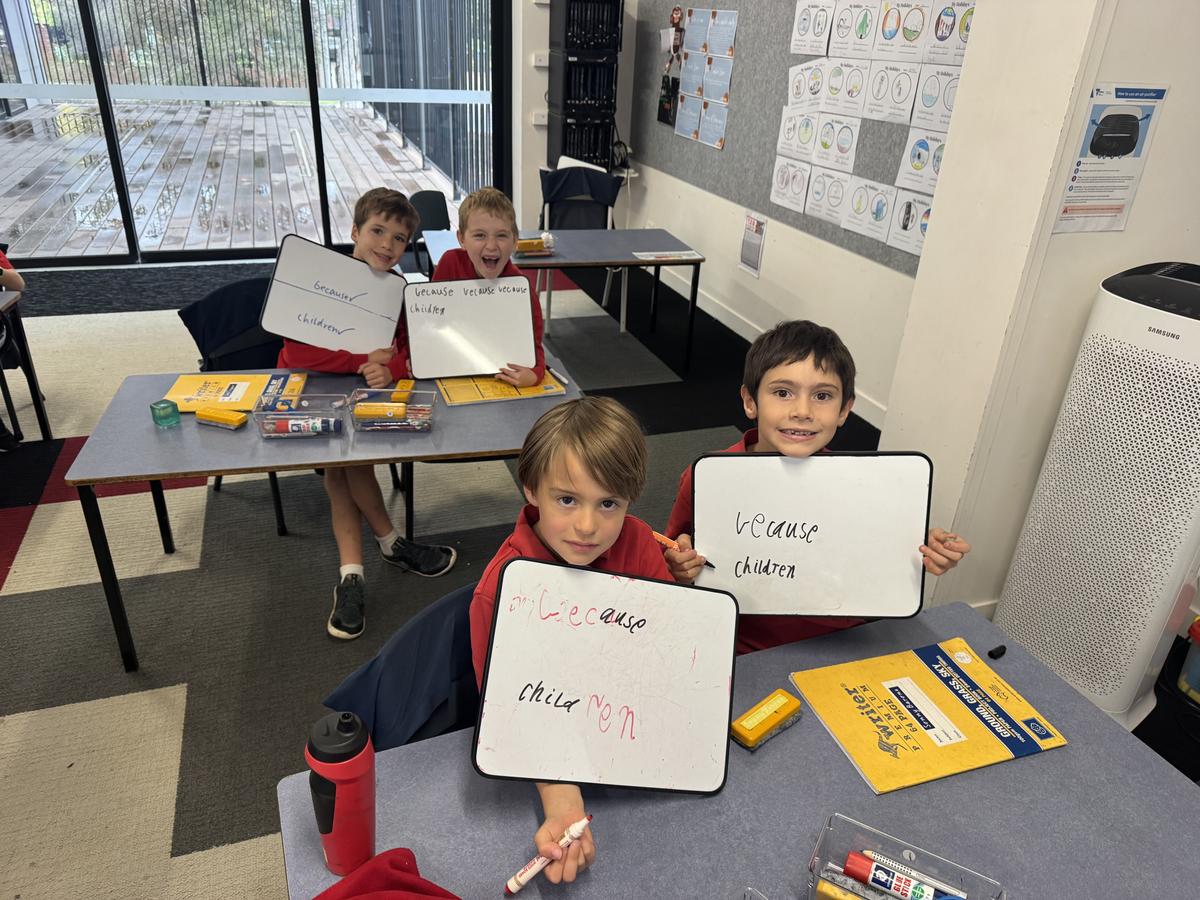
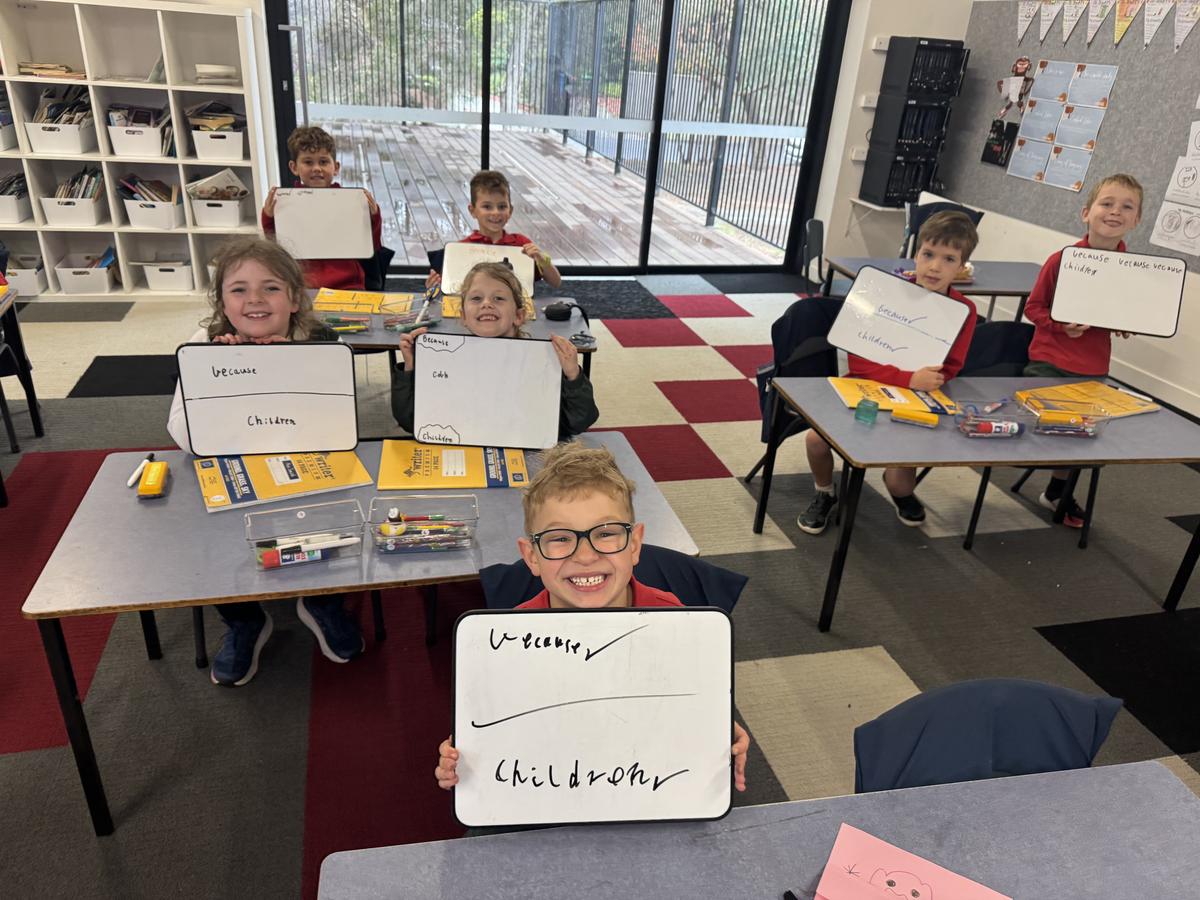
Students continue to practise dictation sentences and fluency passages to build automaticity and confidence when reading. Reading fluency is extremely important, as it is one of the biggest predictors of reading comprehension. Re-reading the same passage or familiar book multiple times is highly beneficial and supports students in becoming smooth, expressive and confident readers.
Multiple exposures to High Frequency Words (HFW) are essential for students to develop automatic recognition and reading fluency.
Families can greatly support this learning at home by regularly reviewing the focus High Frequency Words together. Simple activities such as reading the words aloud, practising them with flashcards, finding them in books, writing them in sentences, or playing quick word games can make a significant difference in helping students retain and apply these words with confidence.
Our current High Frequency Words (HFW) focus includes into, now, came, oh, about, their, these, people, put, could, house, too, by, and day.
As part of the monopoly component of our Phonics instruction, students have been introduced to and reviewed the suffixes:
-s (showing more than one)
-ed (showing past tense)
Students also continue to refine their handwriting using the “sky, grass, dirt” dotted thirds to support correct letter formation, sizing and placement.
Text Study
This week we have introduced the book Can you teach a fish to climb a tree? by Jane Goodwin and Terry Denton.
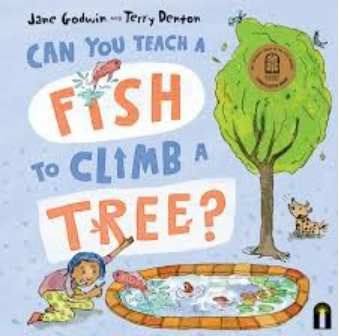
‘Everybody is a genius. But if you judge a fish by its ability to climb a tree, it will live its whole life believing that it is stupid.’ —Albert Einstein (or not, as it turns out!) This is a book that not only encourages readers to accept their limitations, but to celebrate the differences that make us all unique.
By illustrating the things that various animals can do (and the things they absolutely cannot do), Jane Godwin and Terry Denton invite reflection on why we need to be good at the same things as everyone else.
Our Year 1 students have been thoroughly enjoying our new text study, Can You Teach a Fish to Climb a Tree? This beautiful and gentle story has sparked many thoughtful discussions and encouraged students to think deeply about individuality, strengths and acceptance.
Throughout the story, students have explored the important message that everyone learns, thinks and succeeds in different ways. The book celebrates the unique qualities that make each person special and reminds us that we all have different talents and abilities to share with the world.
Students have enthusiastically participated in sharing their own ideas about what makes them unique. The text has also provided wonderful opportunities to build comprehension skills, expand vocabulary and make meaningful personal connections.
Maths
Year 1 students have been busy building their confidence and mathematical understanding across a wide range of concepts this term.
A major focus has been revising addition and subtraction number bonds, with students participating in daily automaticity and fluency practise. This has become a real highlight of our Maths sessions, with many students excitedly tracking their growth in both pace and accuracy. Regular practise is helping students develop stronger number recall and greater confidence when solving problems mentally.
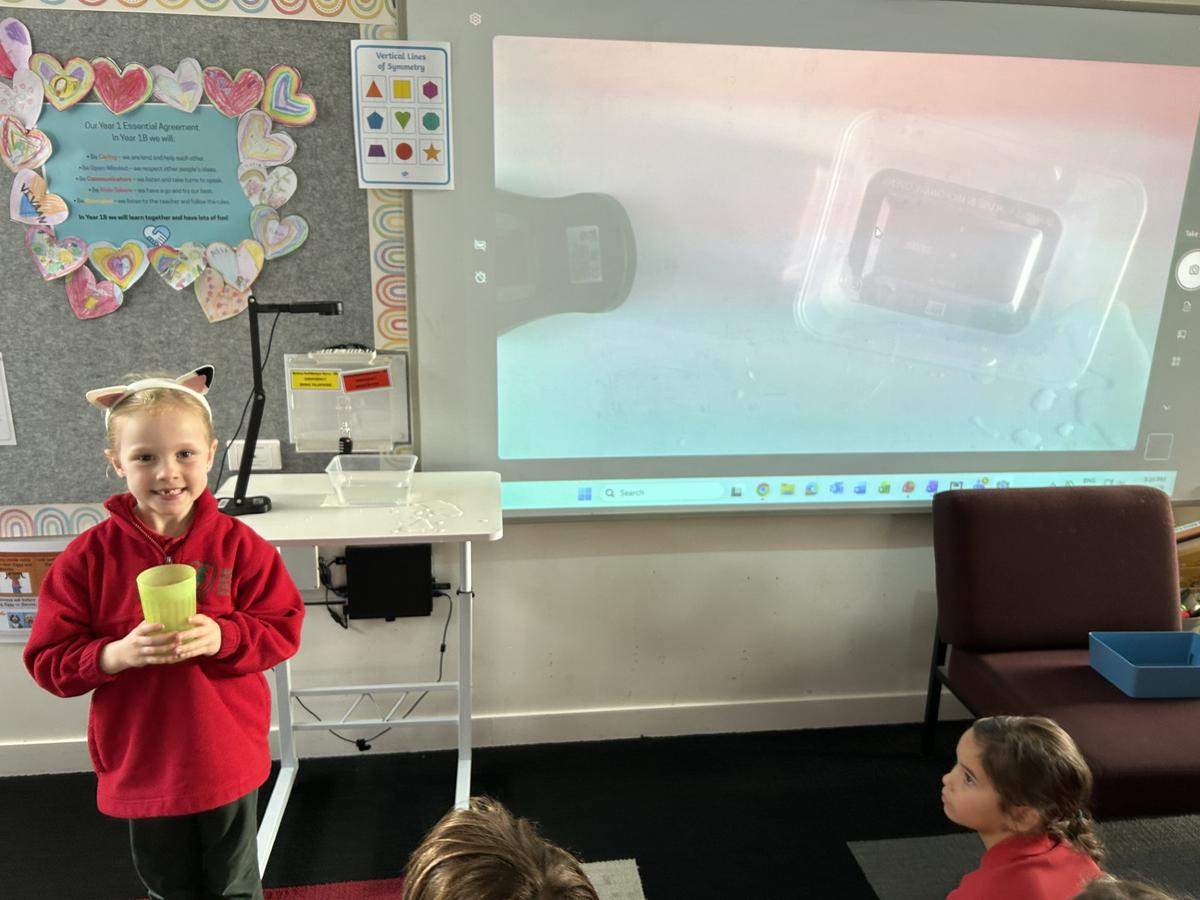
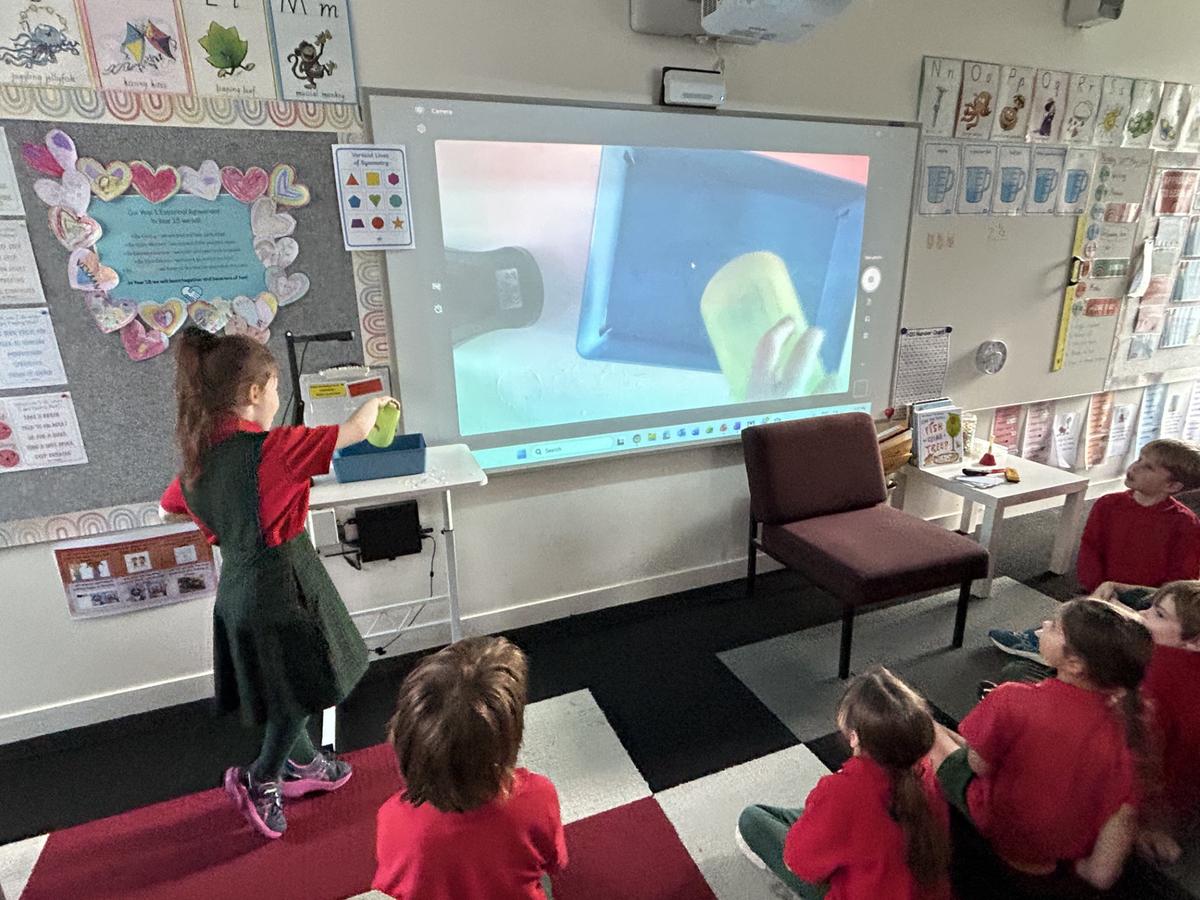
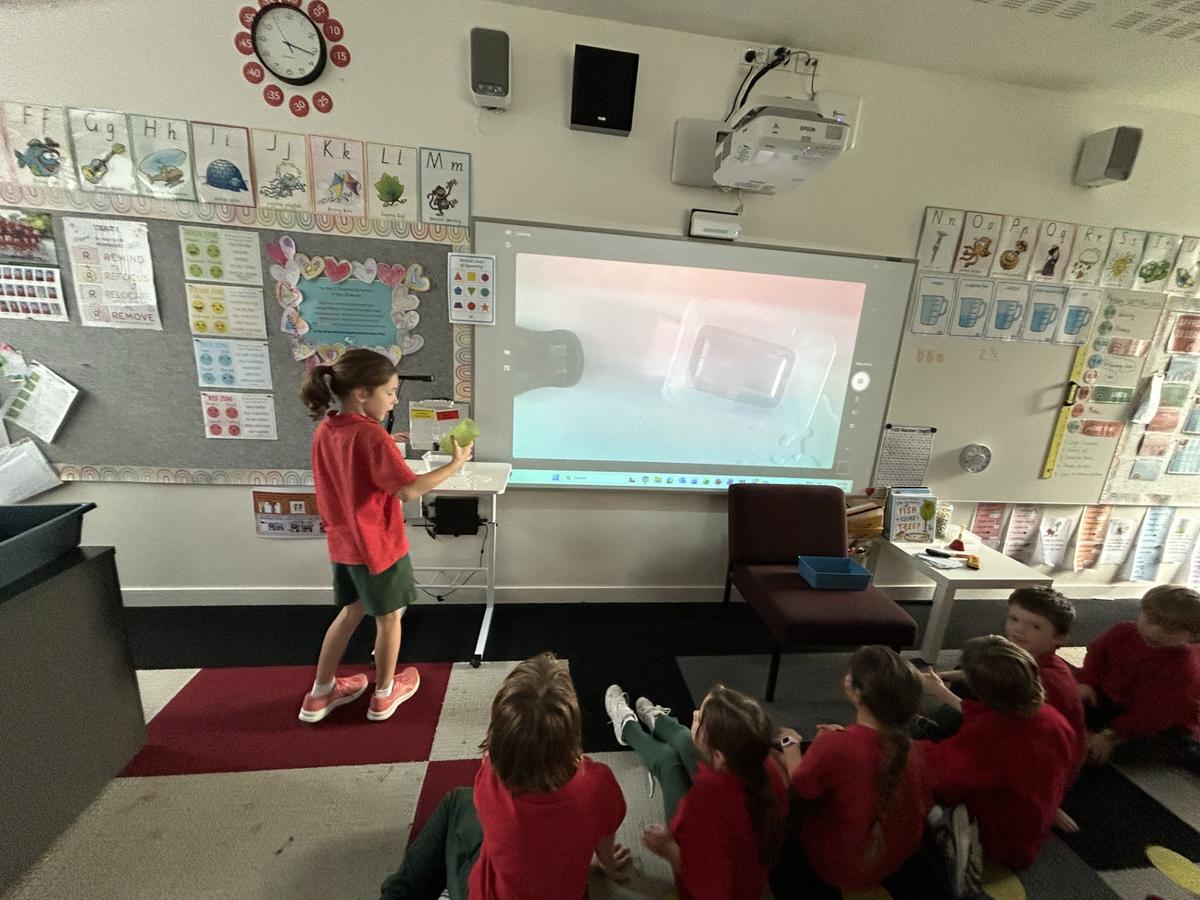
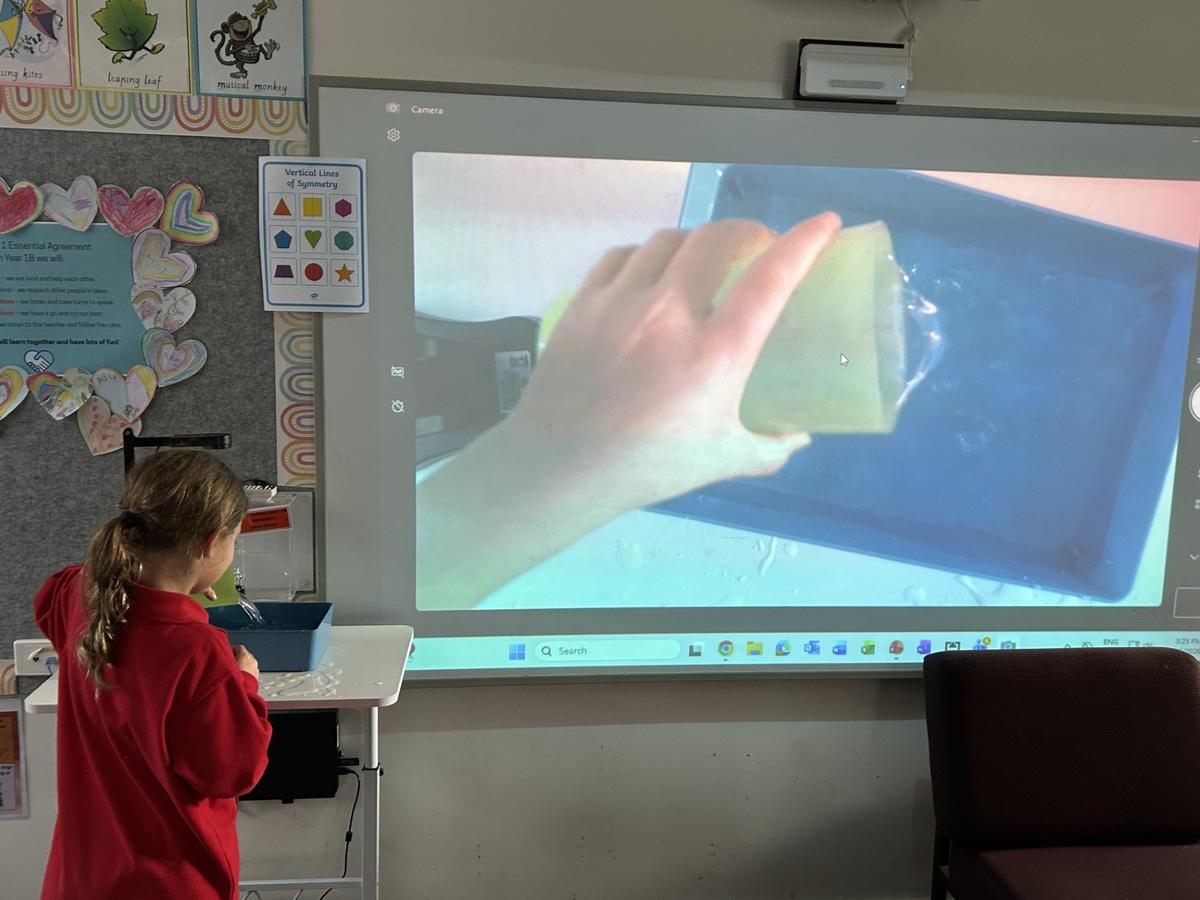
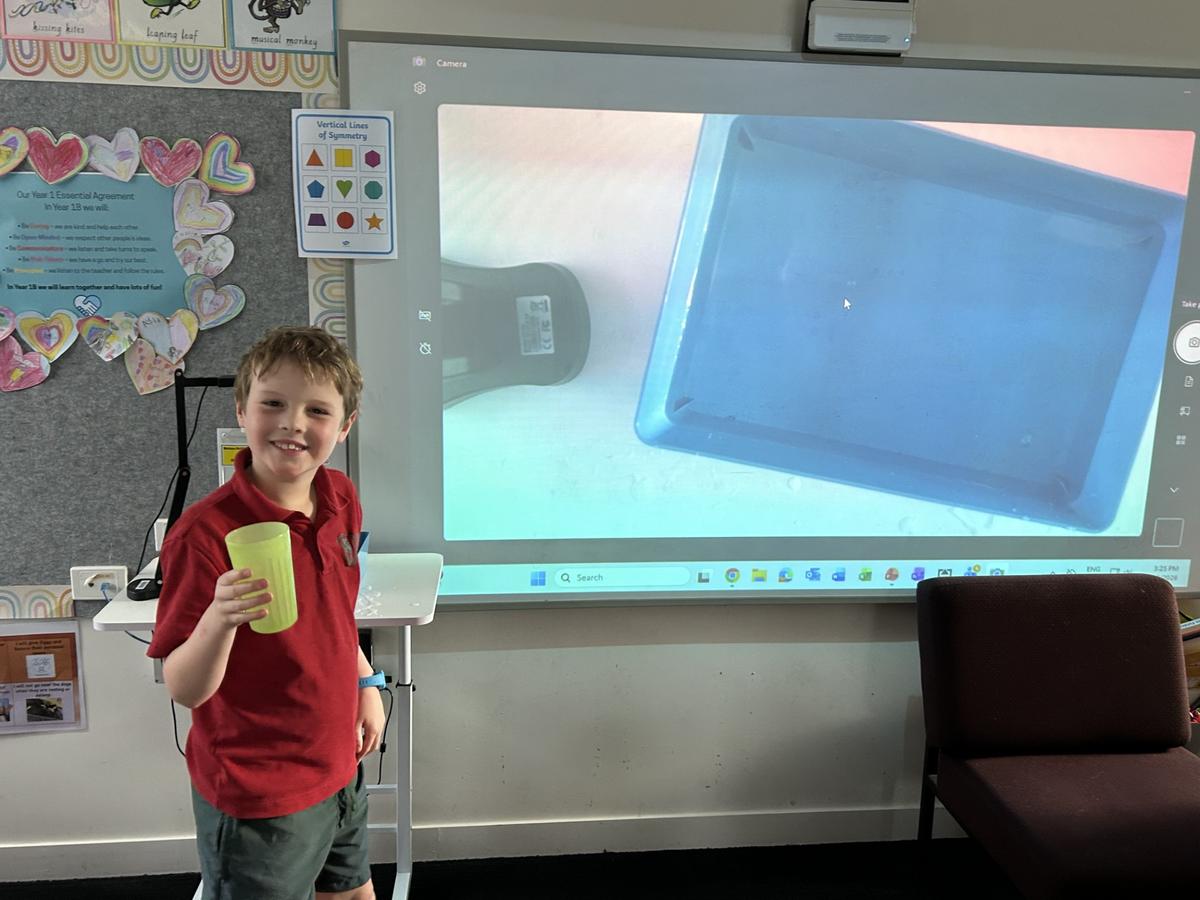
Students have also been developing their skip counting skills, which will support their understanding of multiplication facts in the future. We have explored counting patterns and practised counting forwards and backwards by different amounts.
In Place Value, students have been identifying, representing and manipulating 2-digit and 3-digit numbers. They have been learning how numbers are made up of hundreds, tens and ones, and have practised adding and subtracting 10 from 2-digit numbers using their understanding of place value patterns.
Students have also reviewed the months of the year and practised reading and interpreting calendars, including identifying dates and sequencing events.
In Geometry, we reviewed the properties of 2D shapes and explored transformations, including translation, reflection and rotation. Students also investigated lines of symmetry and enjoyed identifying symmetrical shapes and designs.
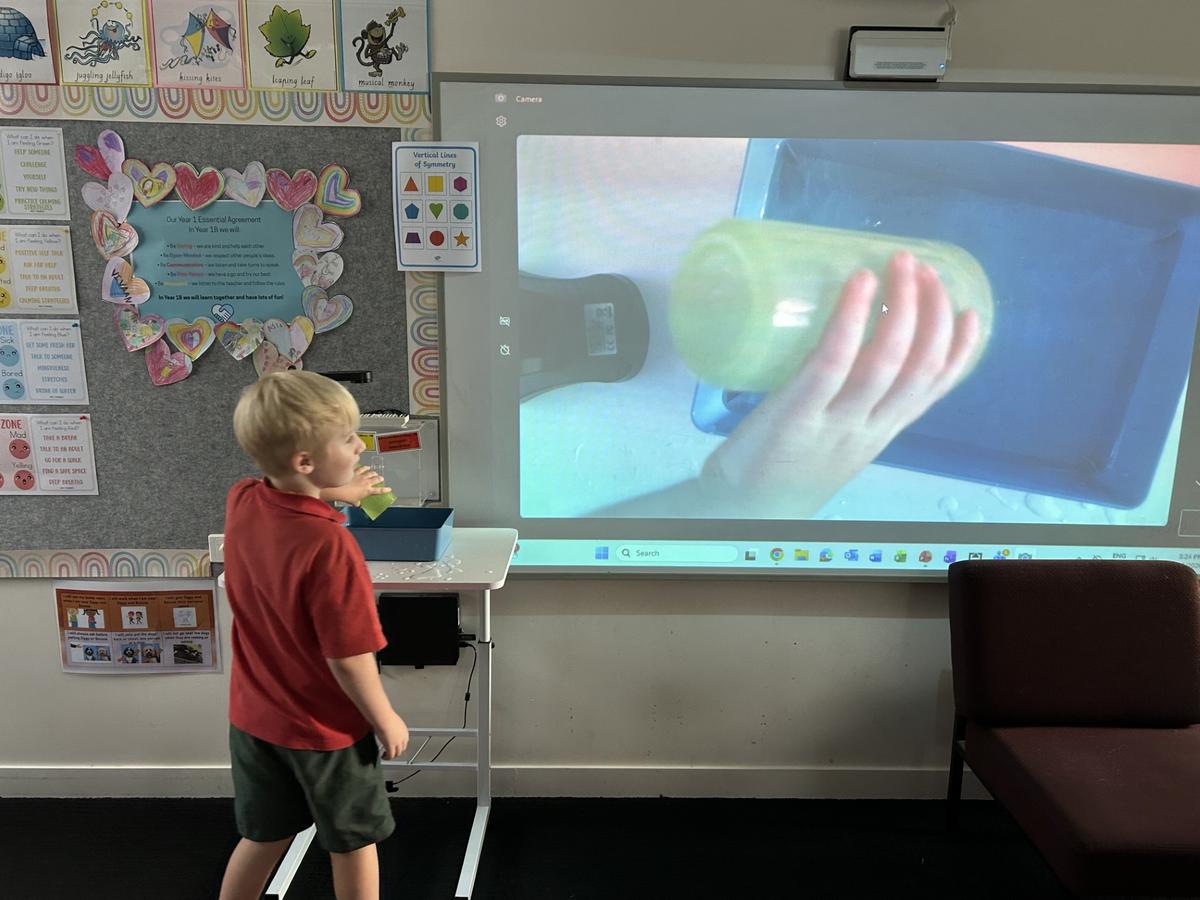
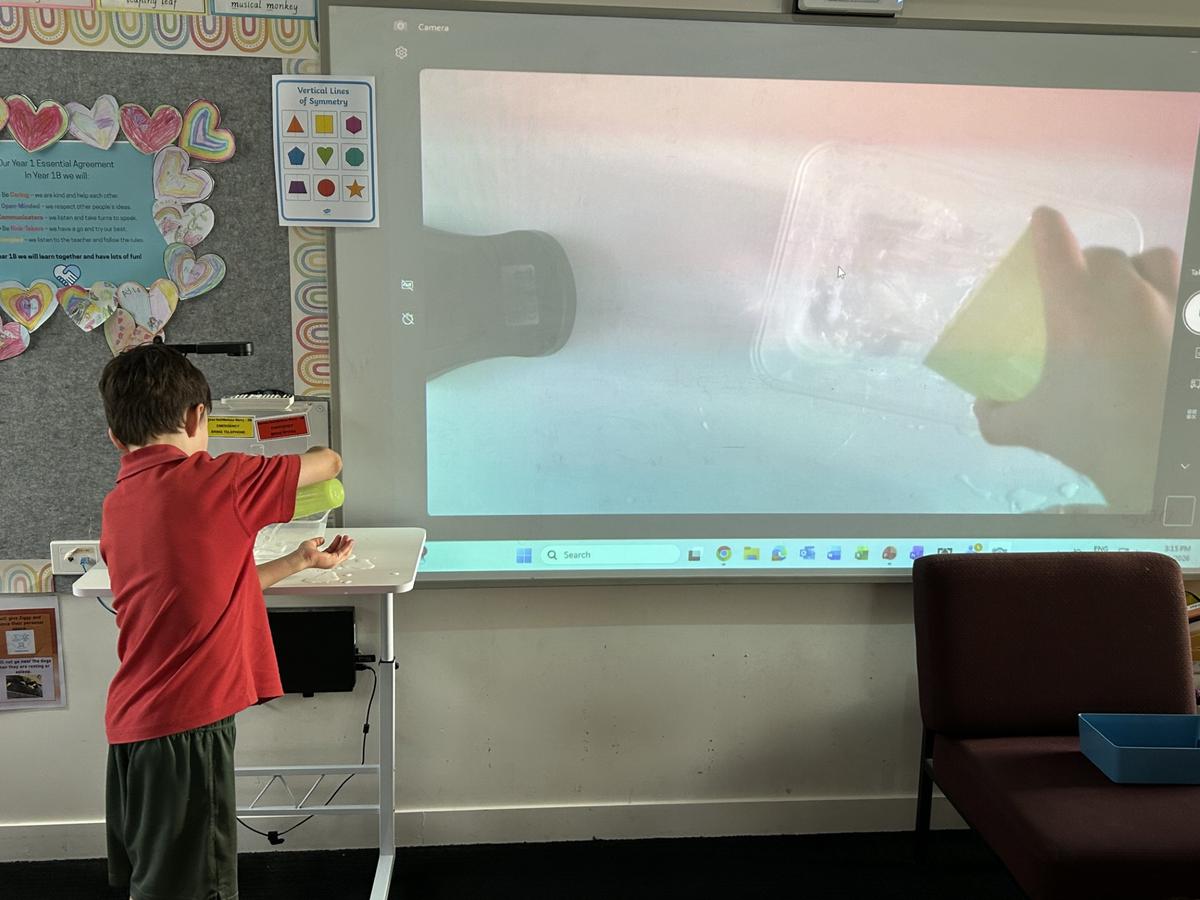
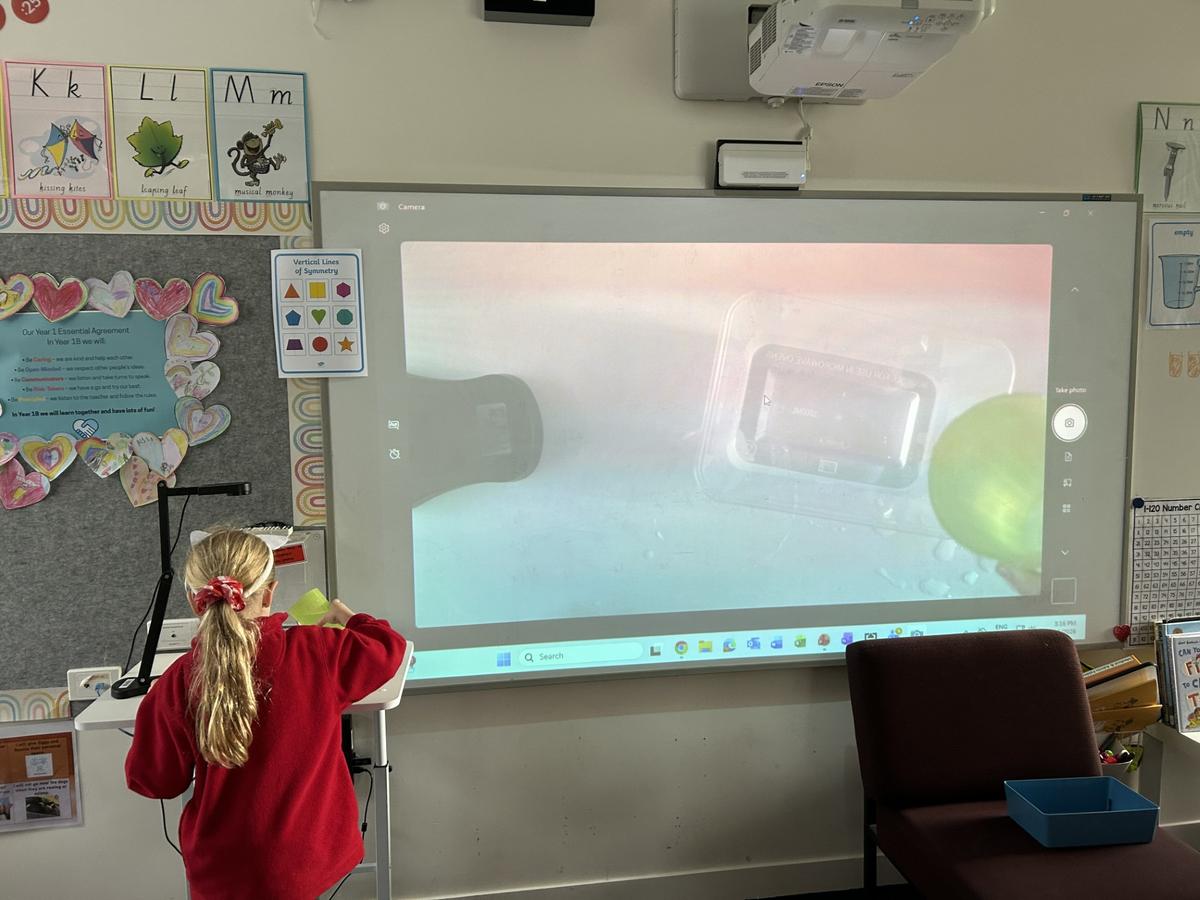
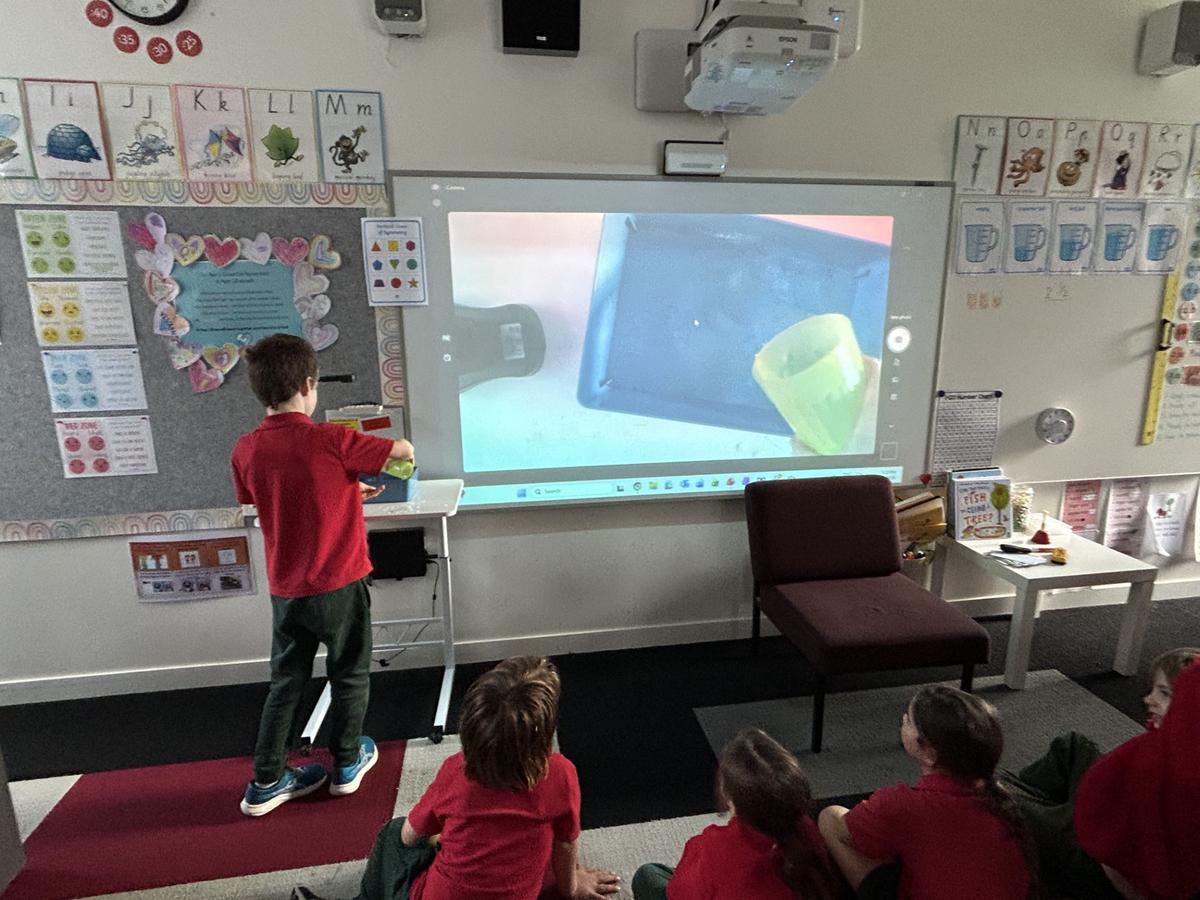
More recently, we have introduced the concepts of length and capacity. Students have been comparing, measuring and estimating using both informal and formal units, while also making predictions about different lengths and amounts.
Families can support number automaticity at home through short, regular practise opportunities. Quick games involving number bonds, flashcards, dice games, skip counting or practising simple mental maths questions can make a significant difference. Repeated exposure and practise help students build speed, accuracy and confidence with number facts, allowing them to focus more deeply on problem-solving and mathematical reasoning.
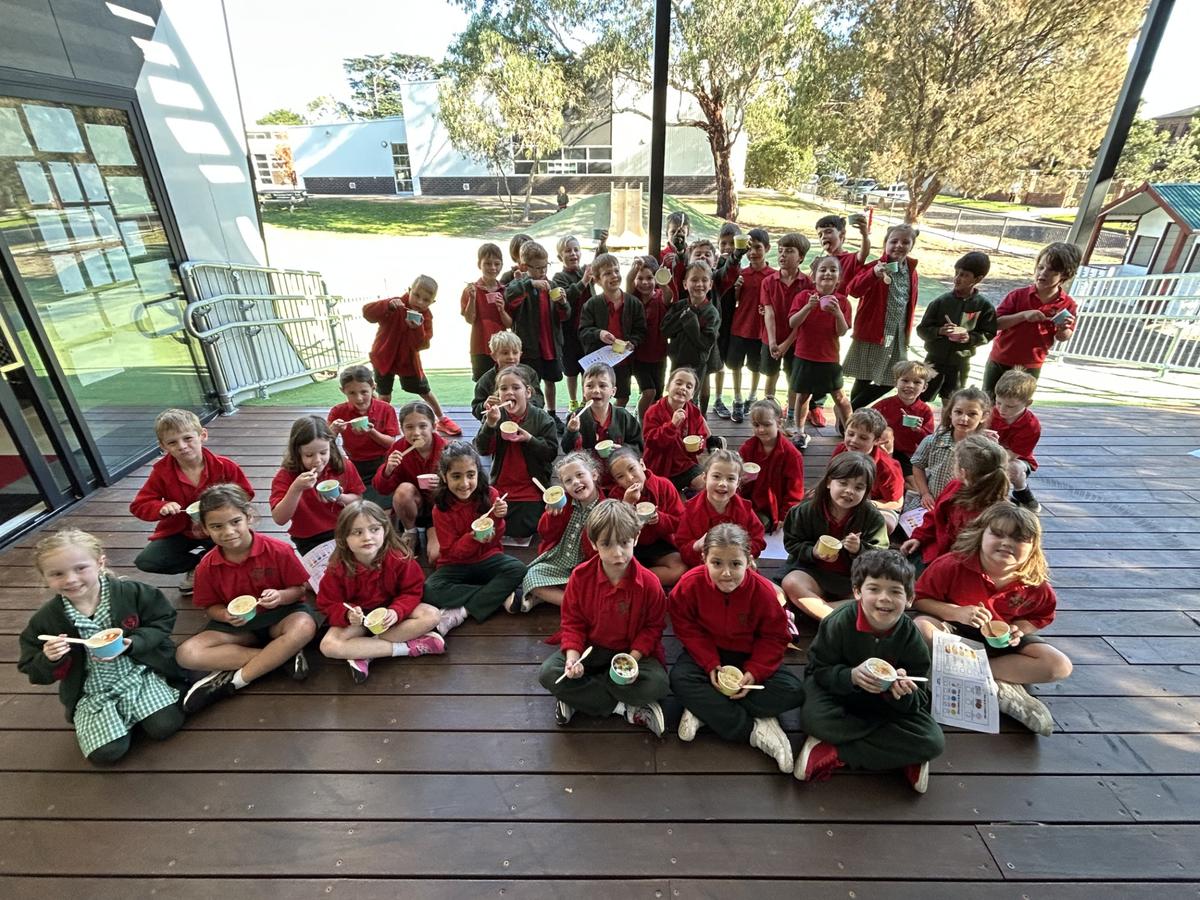
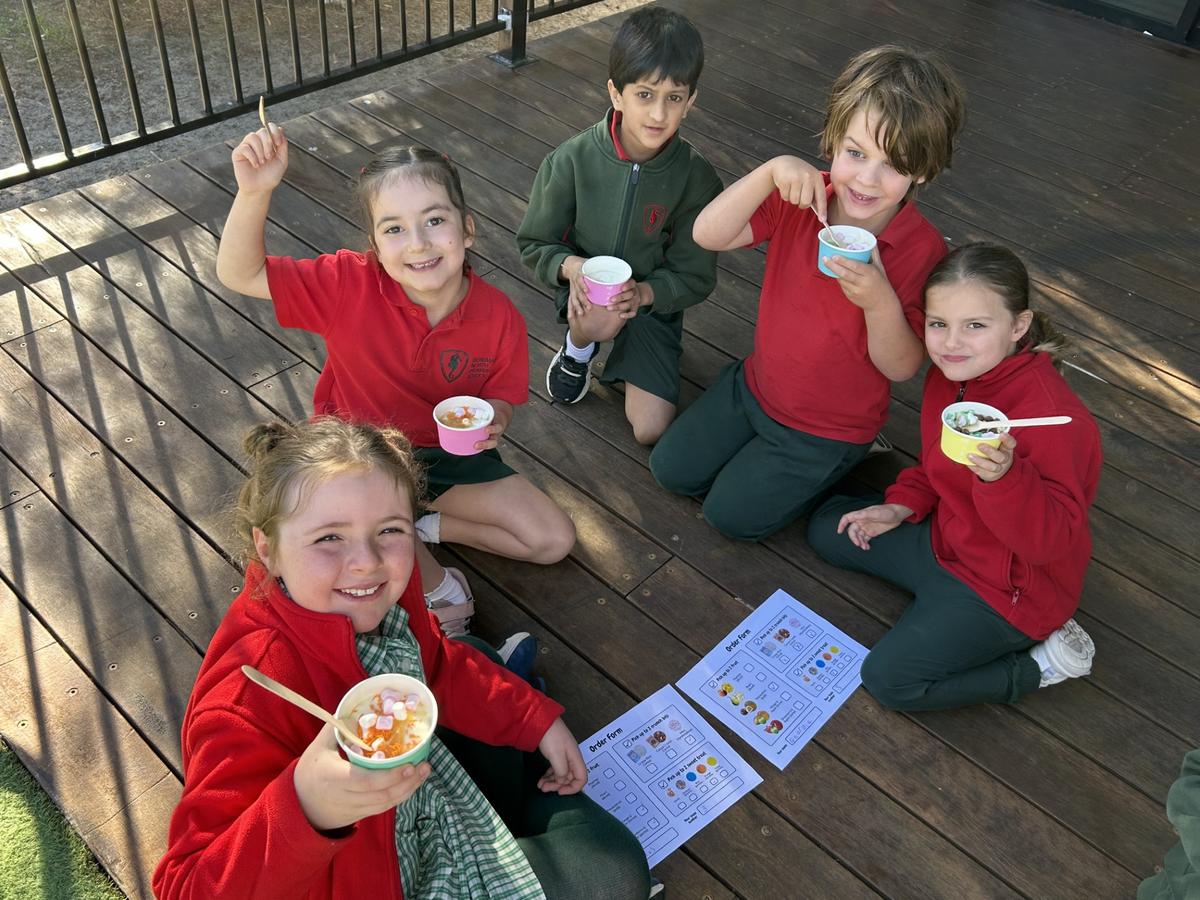
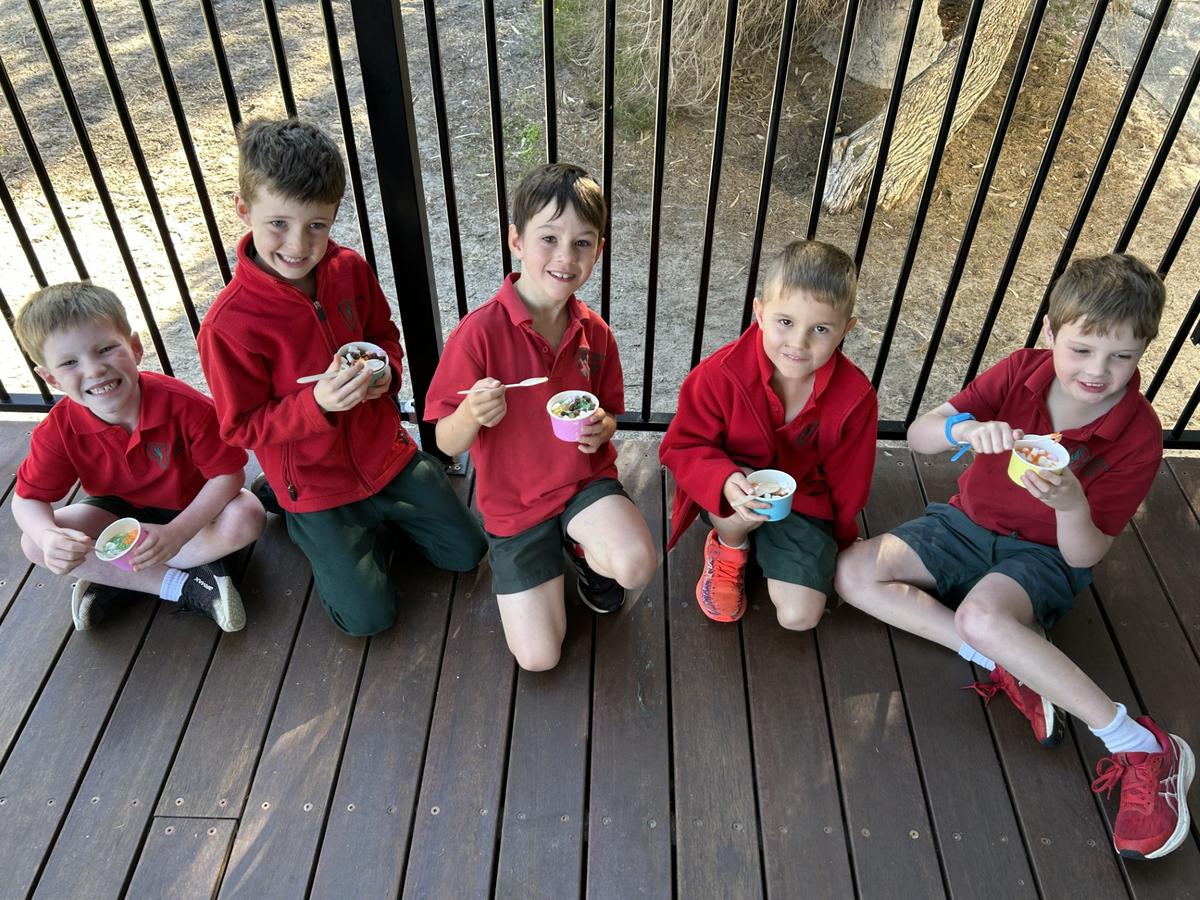
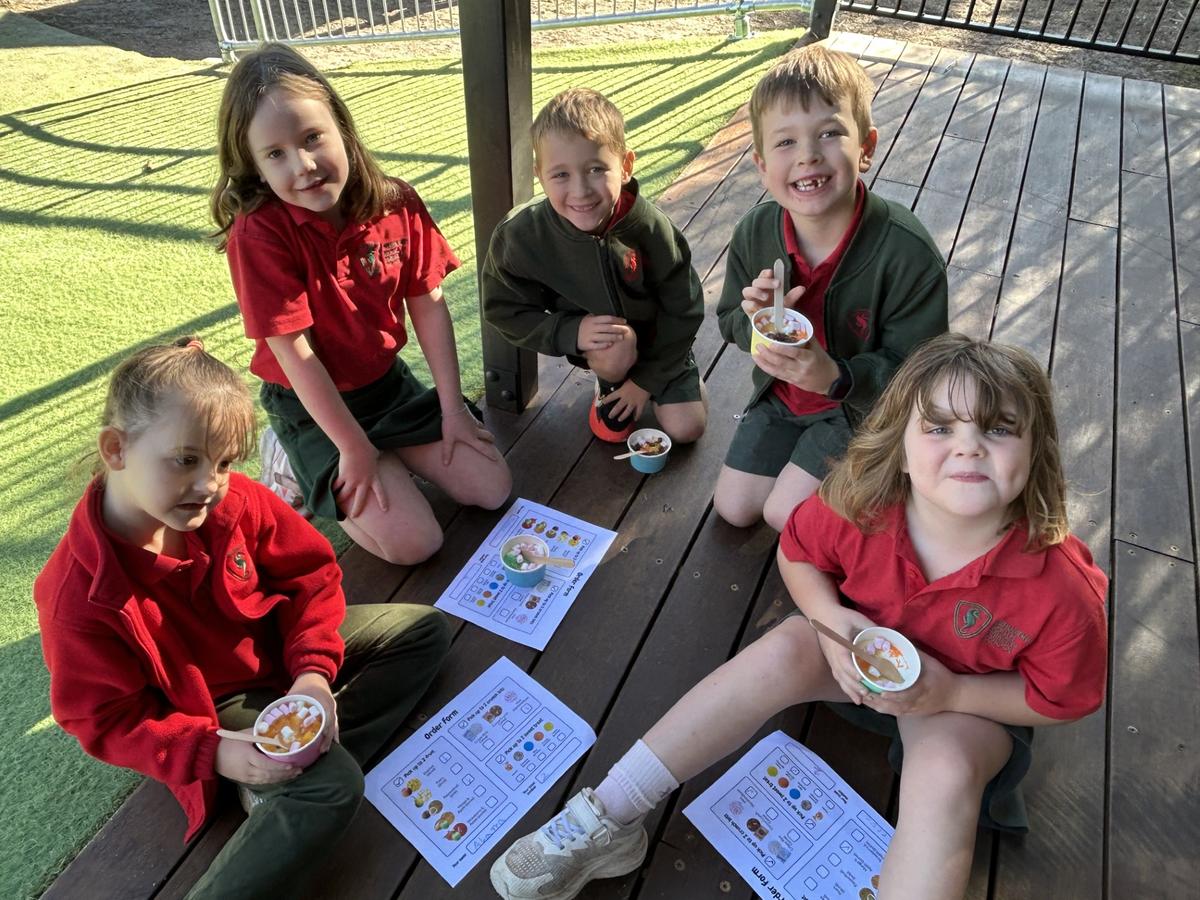
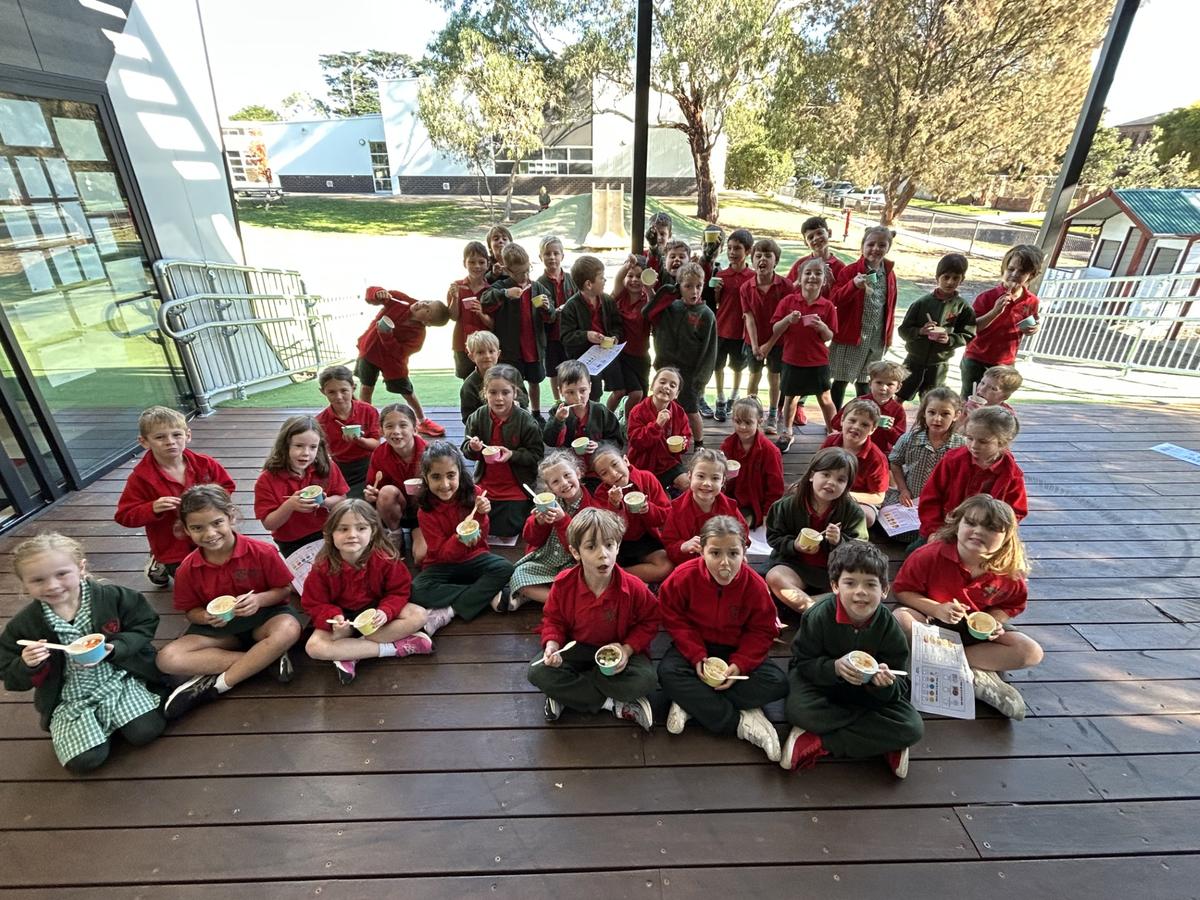
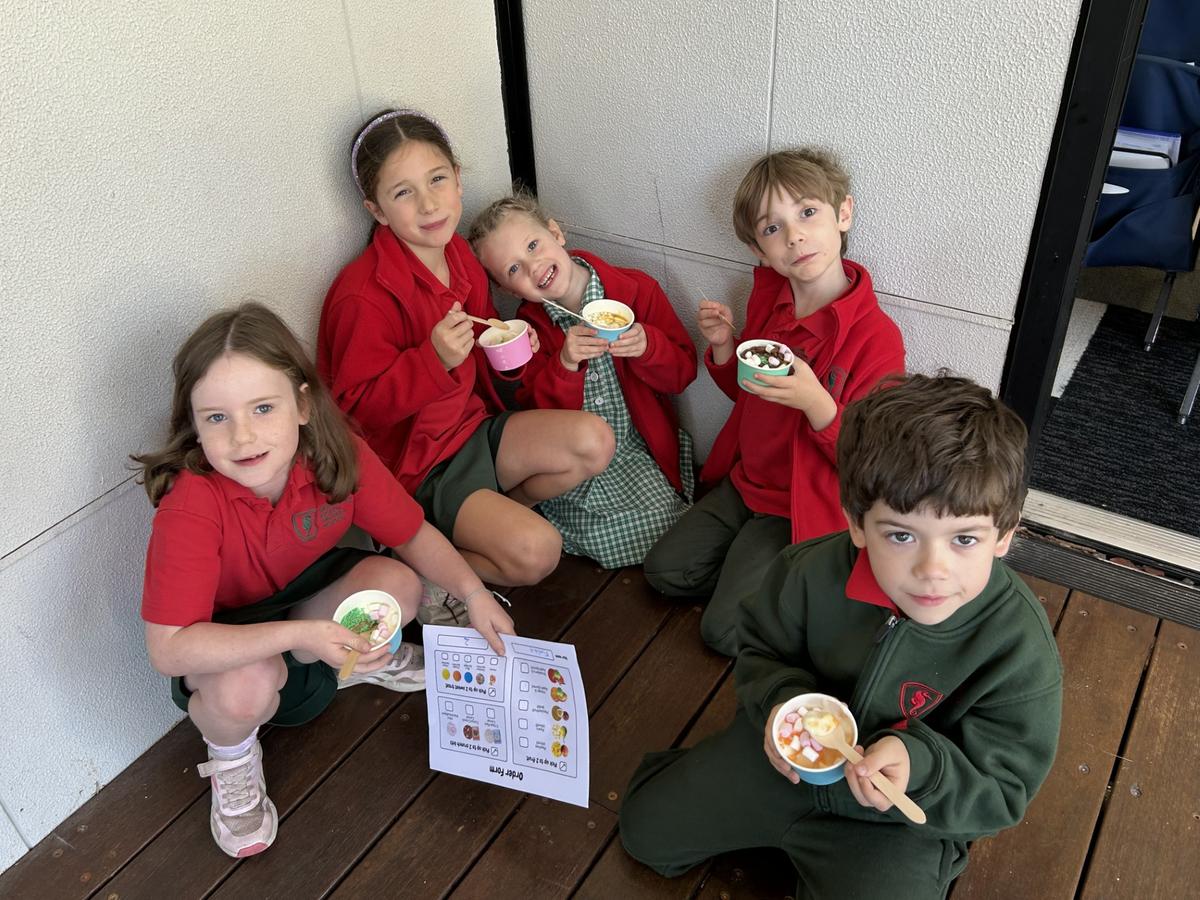
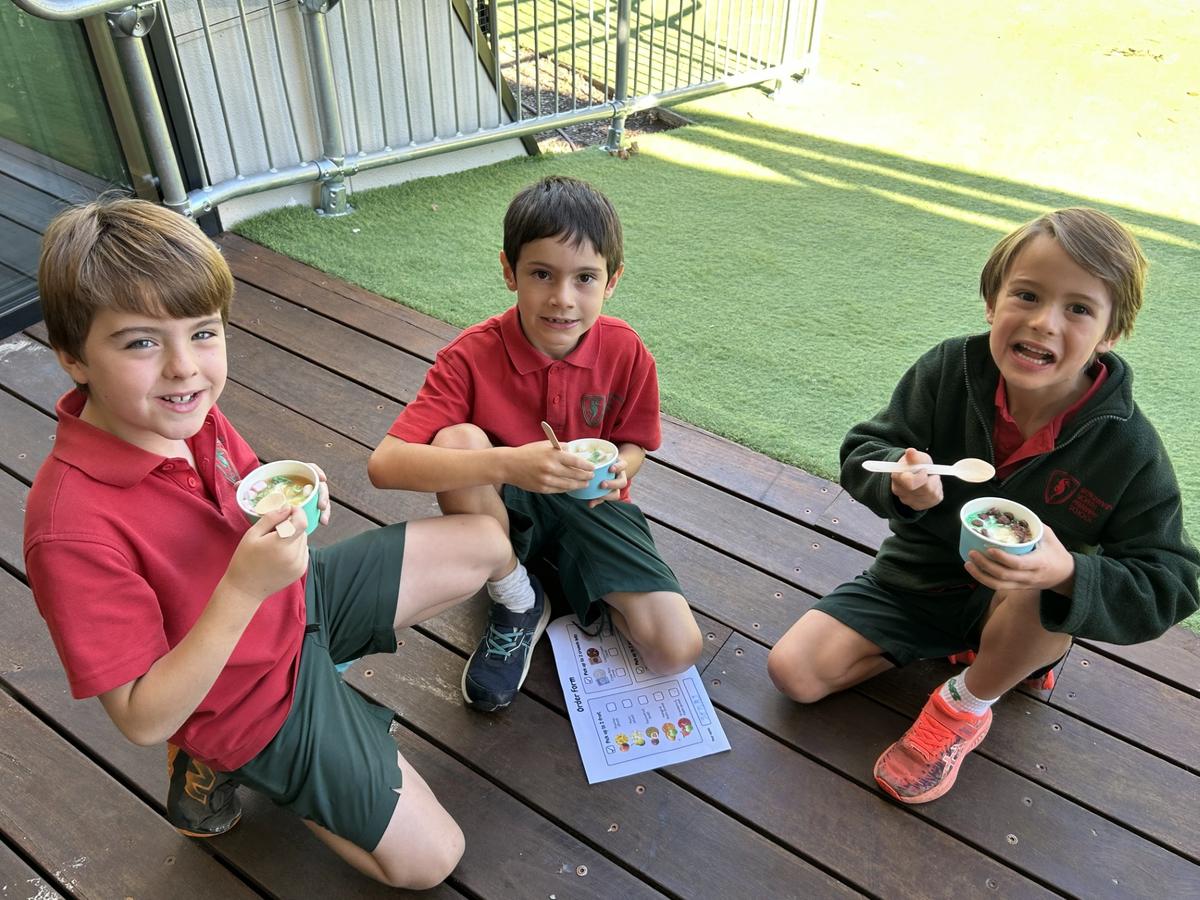
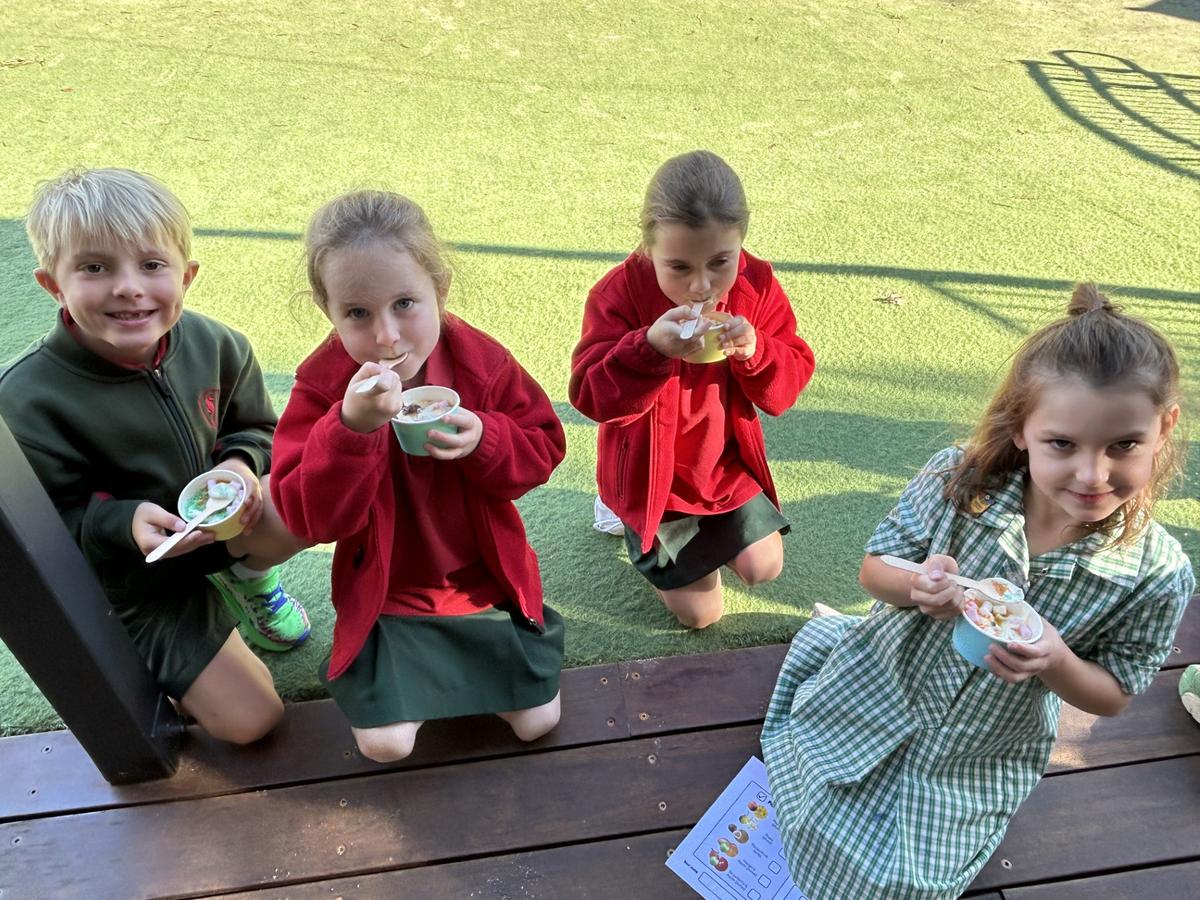
How we organise ourselves
In our current PYP Unit of Inquiry, How We Organise Ourselves, Year 1 students have been exploring the fascinating journey of food from farm to plate. Students are learning about the many different processes and people involved in getting food from its source to the supermarket shelves and ultimately into our homes.
As part of this unit, students recently completed a comprehension and procedural writing task focused on the process of honey production, tracing its journey from the farm to the factory, and finally to the shop. Students demonstrated wonderful curiosity and engagement as they explored the different stages involved in producing and packaging honey.
Over the coming weeks, students will continue investigating a variety of foods, including dairy products and breads, while also learning about healthy eating choices and the importance of balanced nutrition.
An exciting highlight coming up later this term will be our Pizza Making Day! Students will have the opportunity to make their own pizza dough, choose toppings, and watch their pizzas bake. We know this will be a memorable and engaging hands-on learning experience for our students. We would also greatly appreciate the support of a few parent helpers on the day, and further information will be sent home closer to the event.
Students have also been busy exploring how plants grow by germinating their own bean plants. This week, students will plant their beans and care for them in the classroom while observing and recording their growth over time.
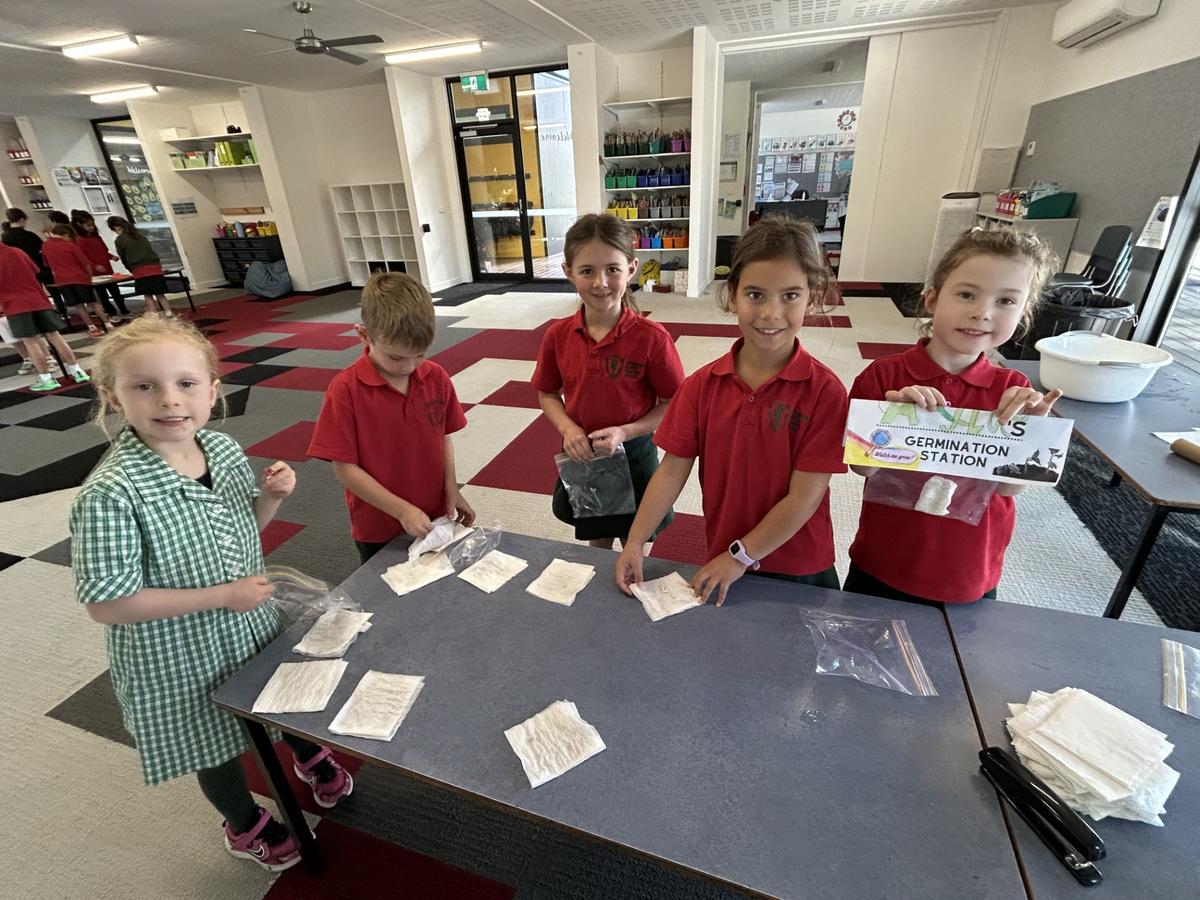
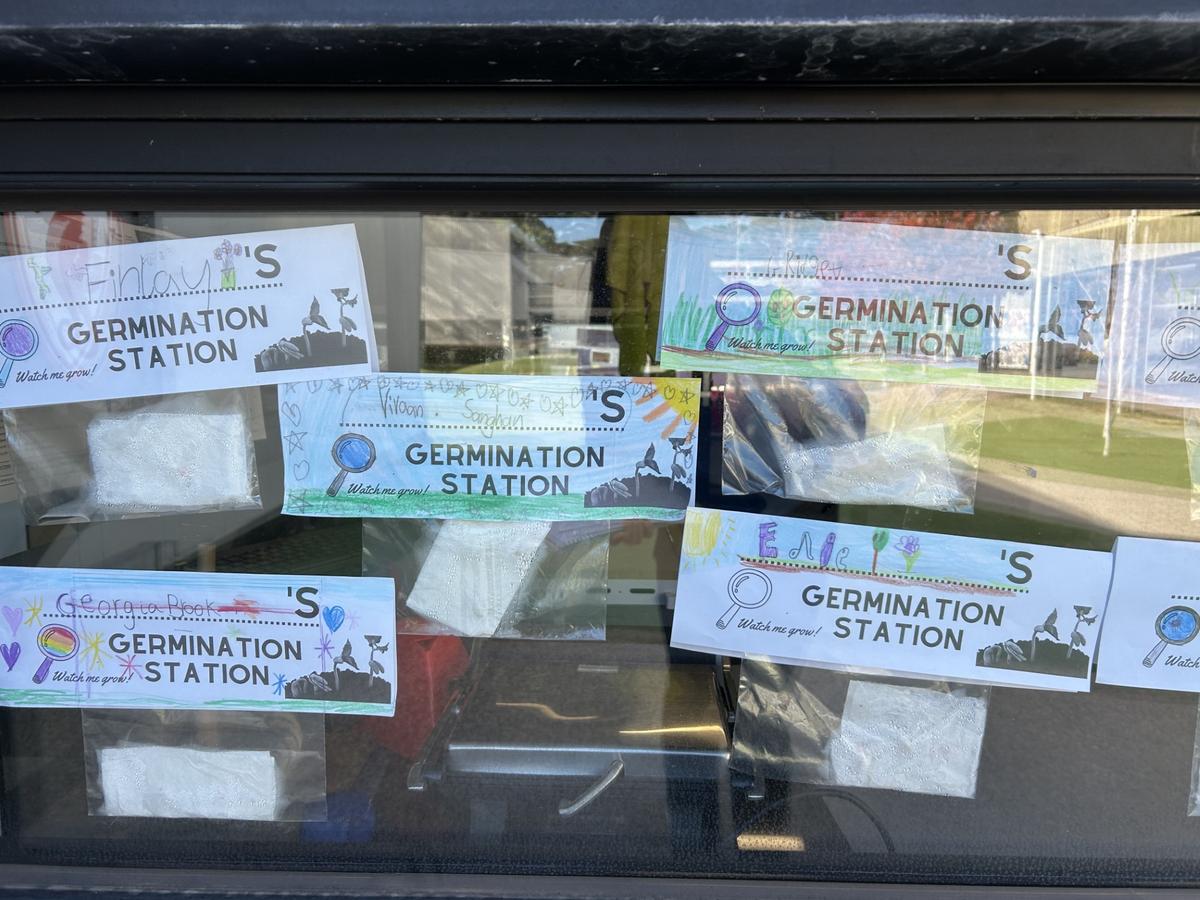
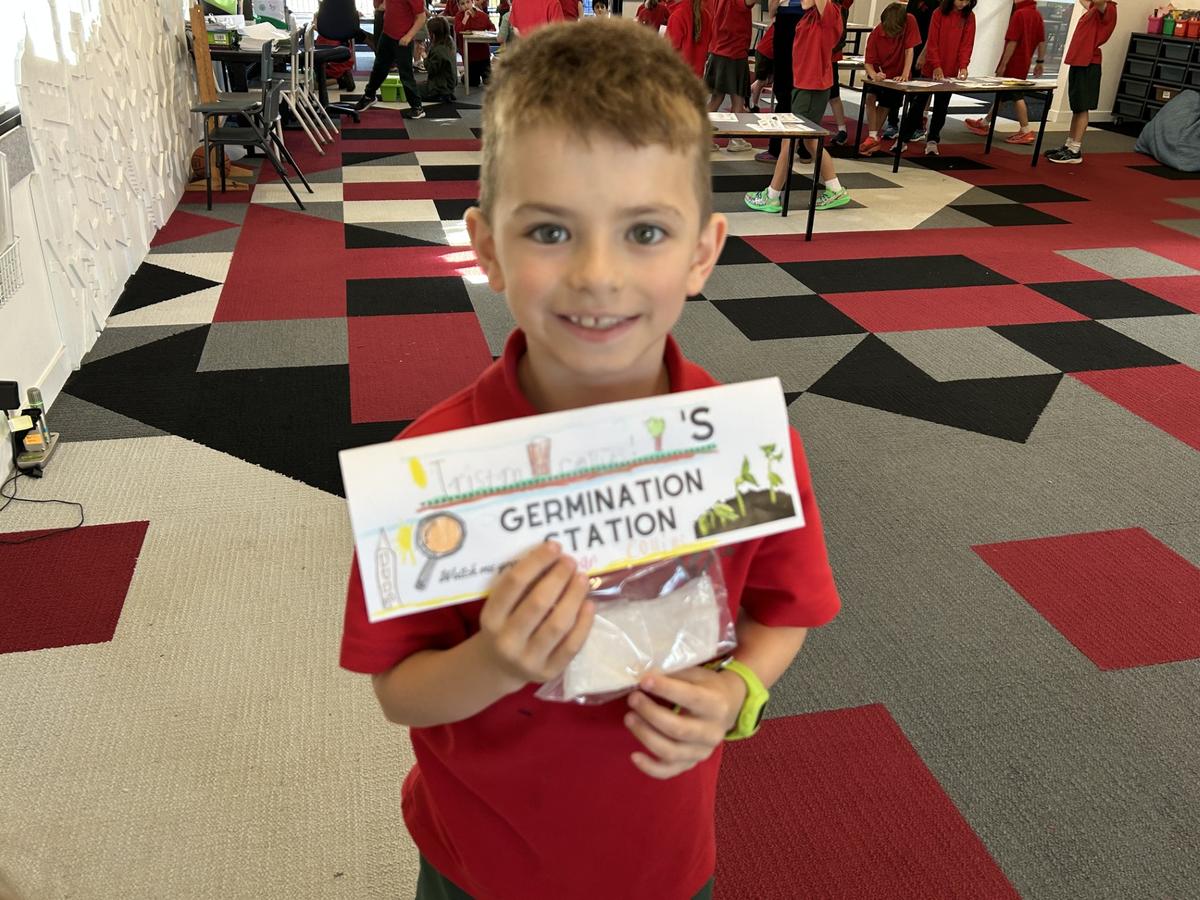
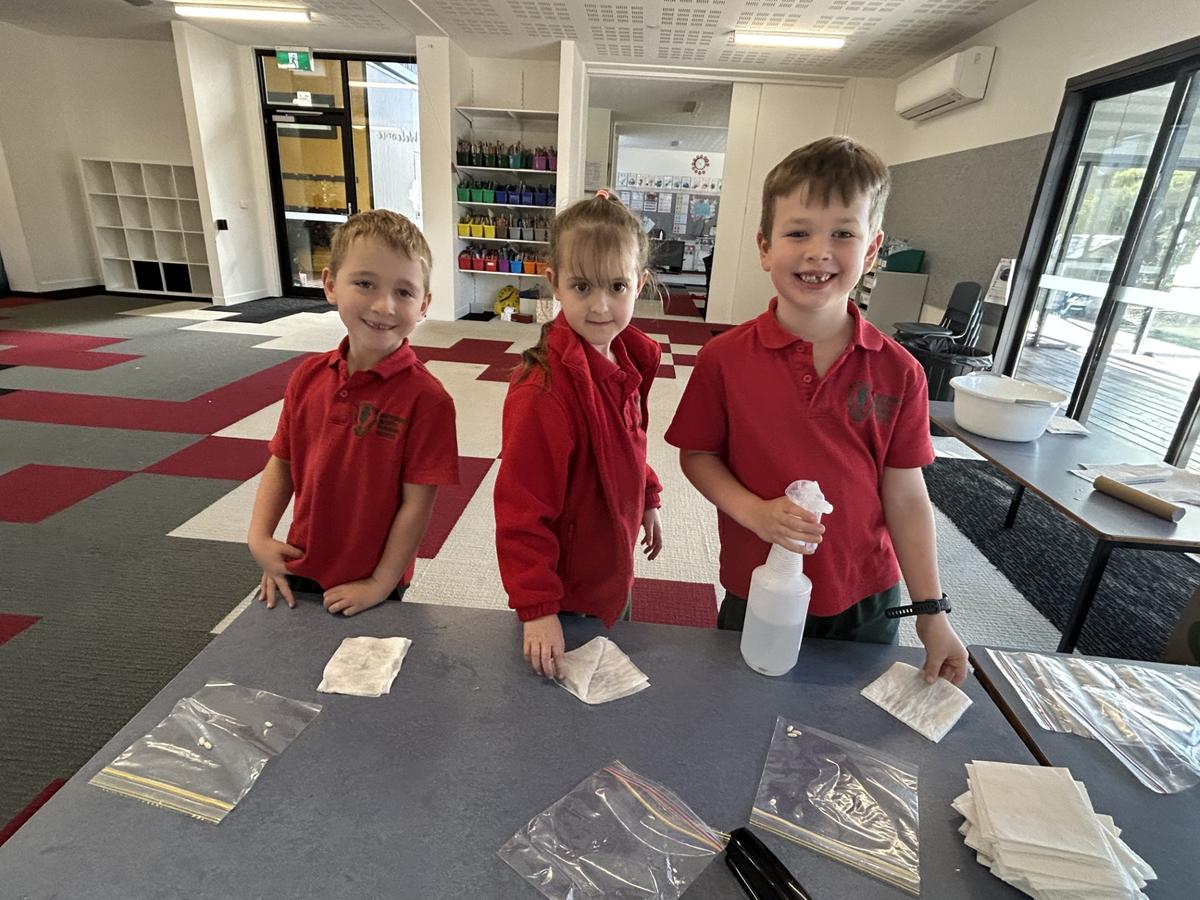
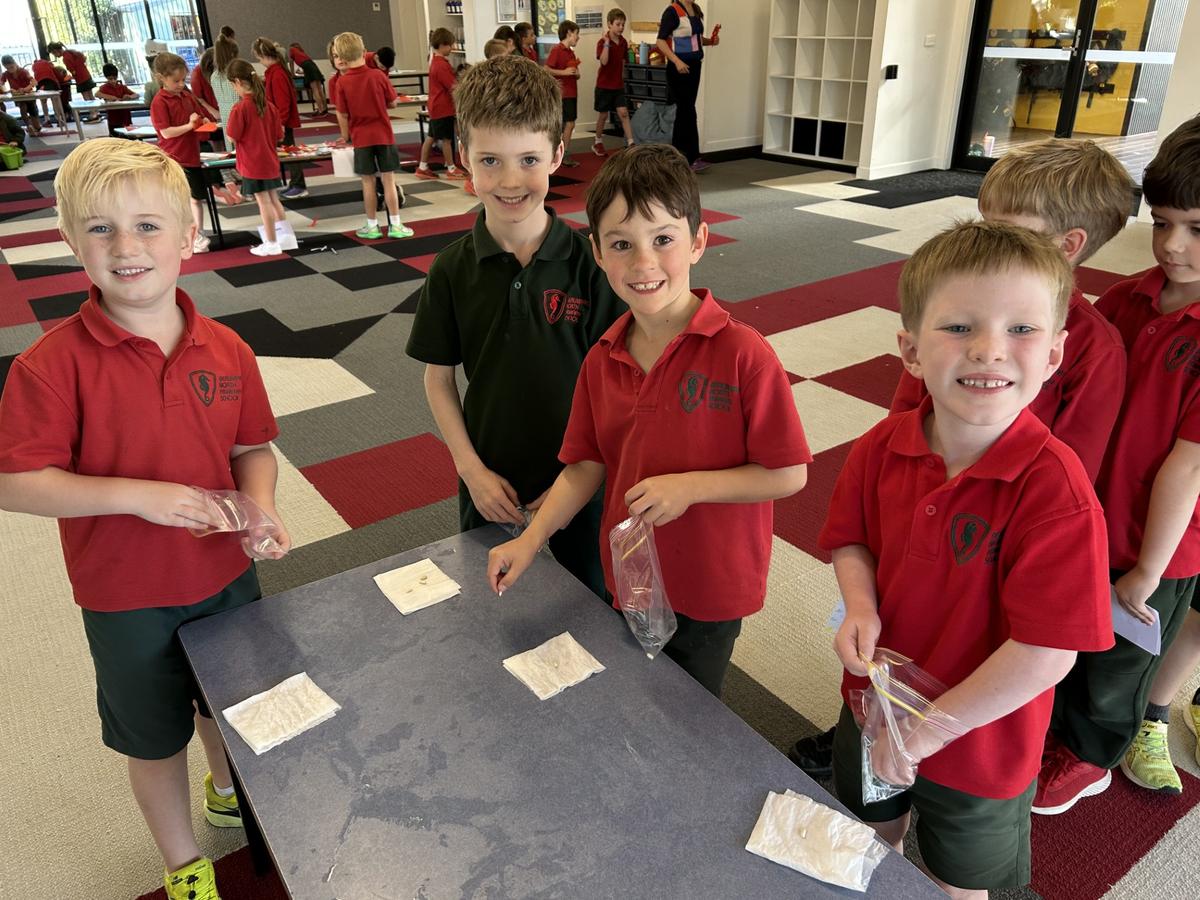
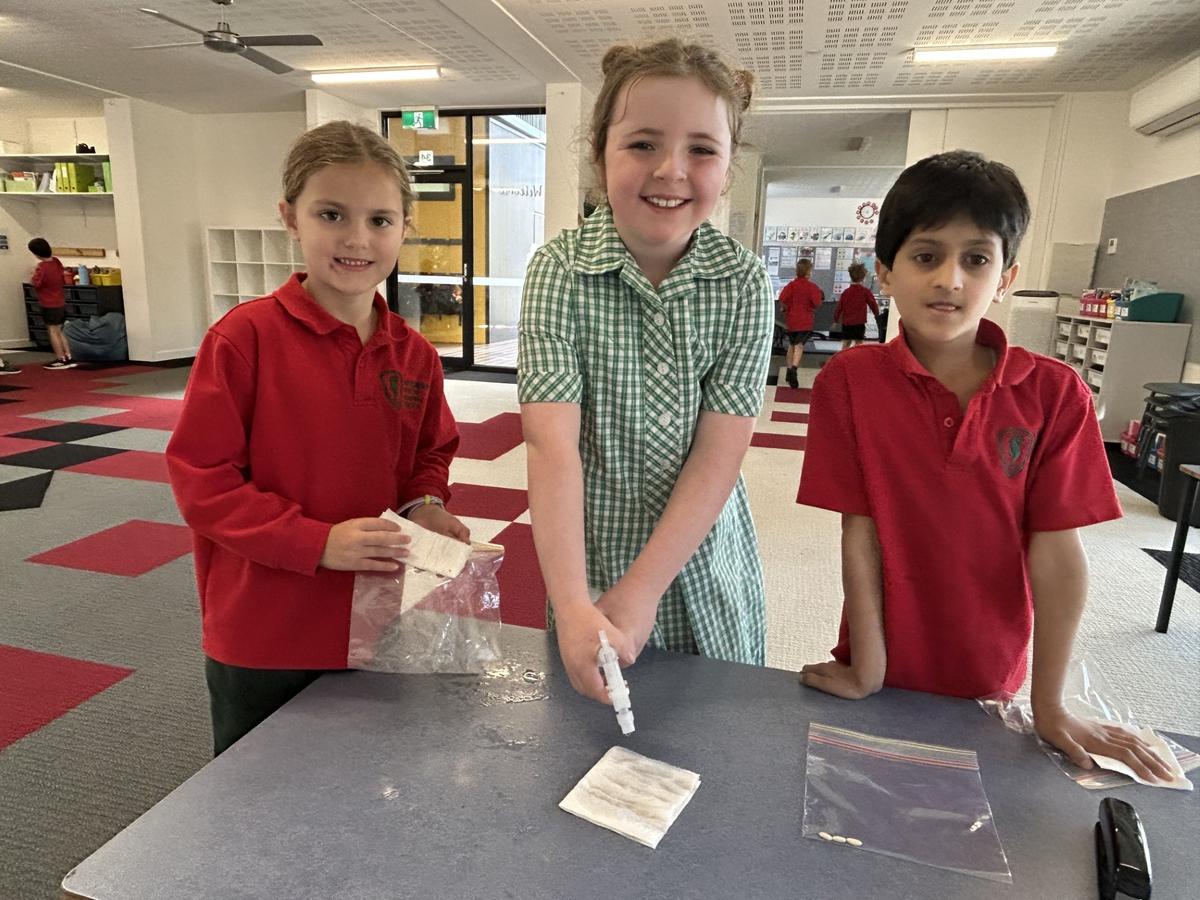
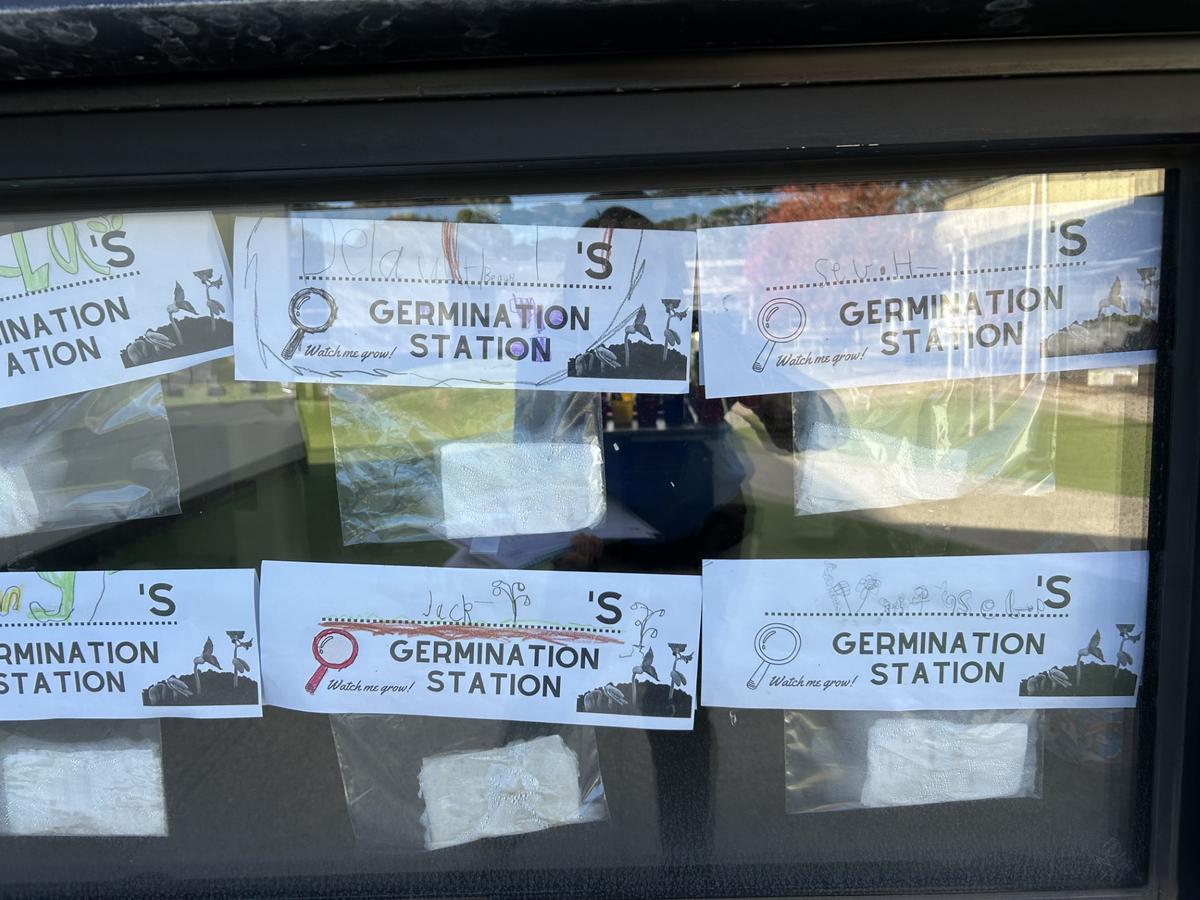
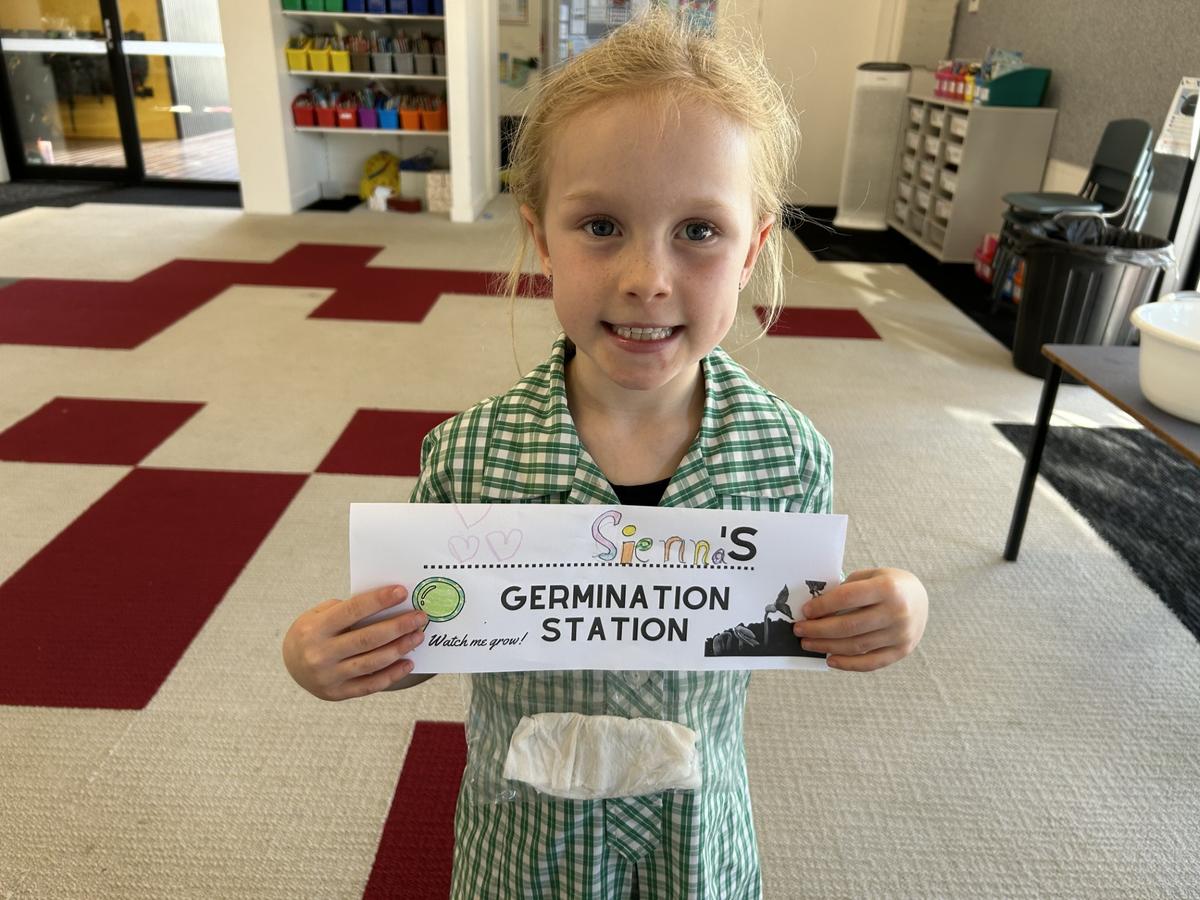
It has been wonderful to see students showing such enthusiasm, curiosity and excitement throughout this unit of inquiry.
Social Skills
Year 1 students have been developing their social skills through a range of collaborative learning experiences across the term. Working together in pairs and small groups has provided valuable opportunities for students to practise communication, teamwork, turn-taking and respectful listening.
As part of our How We Organise Ourselves inquiry, students recently worked together to sequence and write about the journey of bread from wheat farms to supermarket shelves. Through these shared tasks, students learnt how to contribute ideas, support one another and problem-solve as a team while building their understanding of how food is produced and transported.
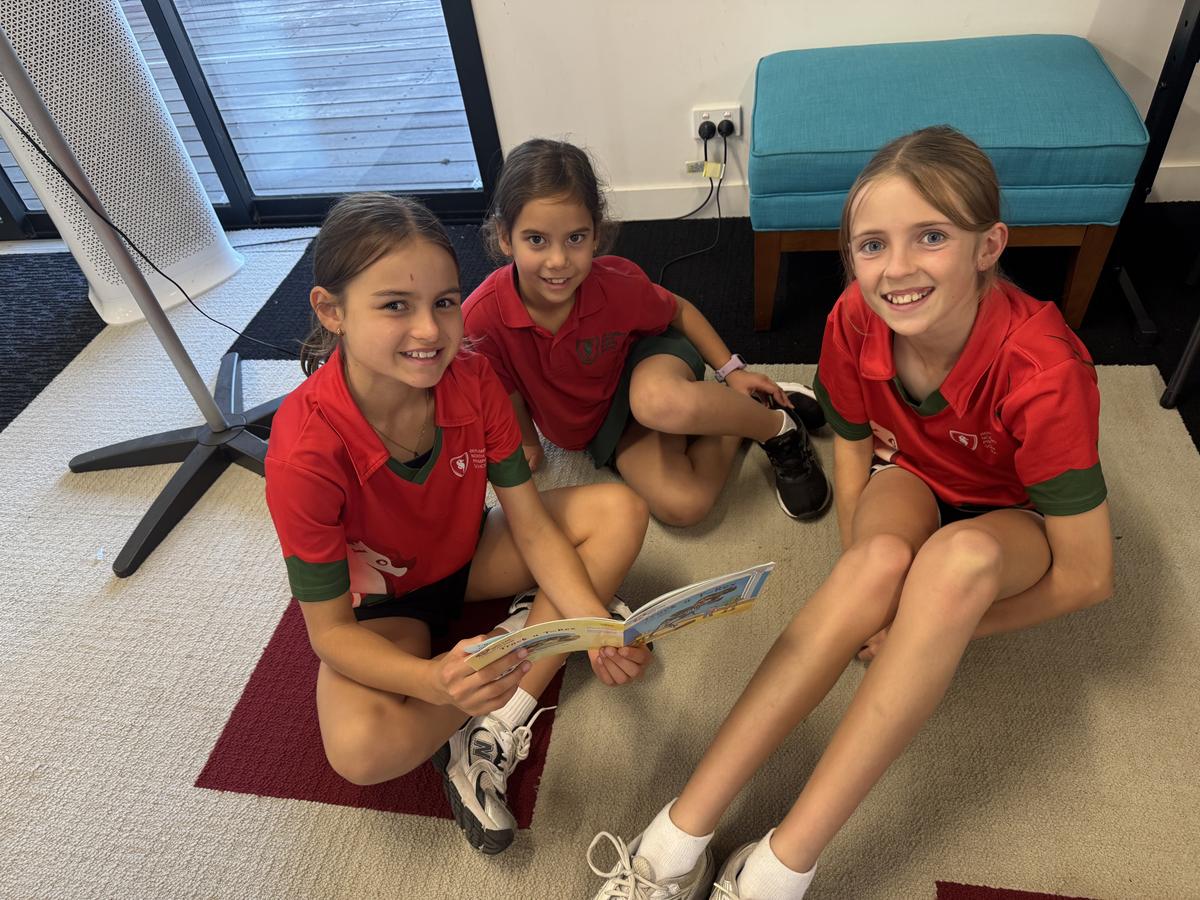
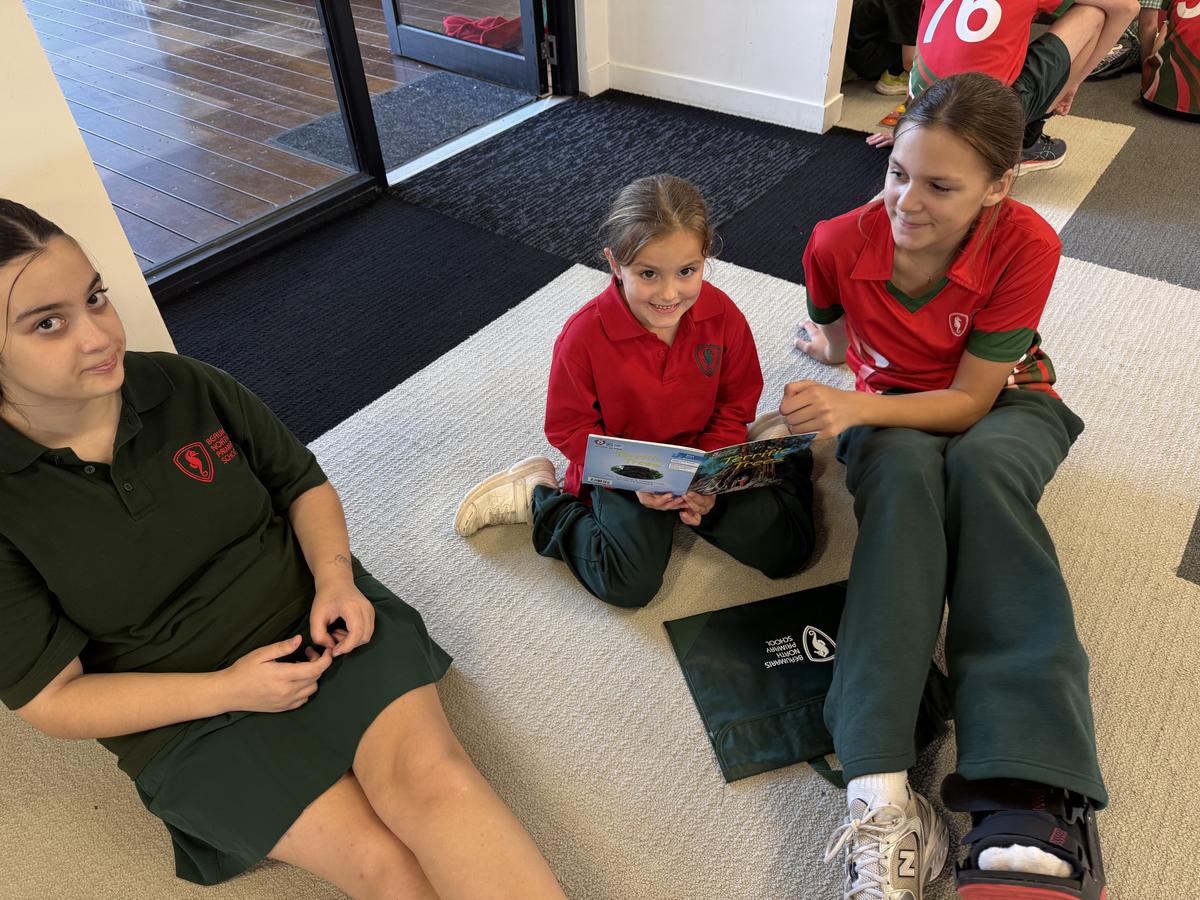
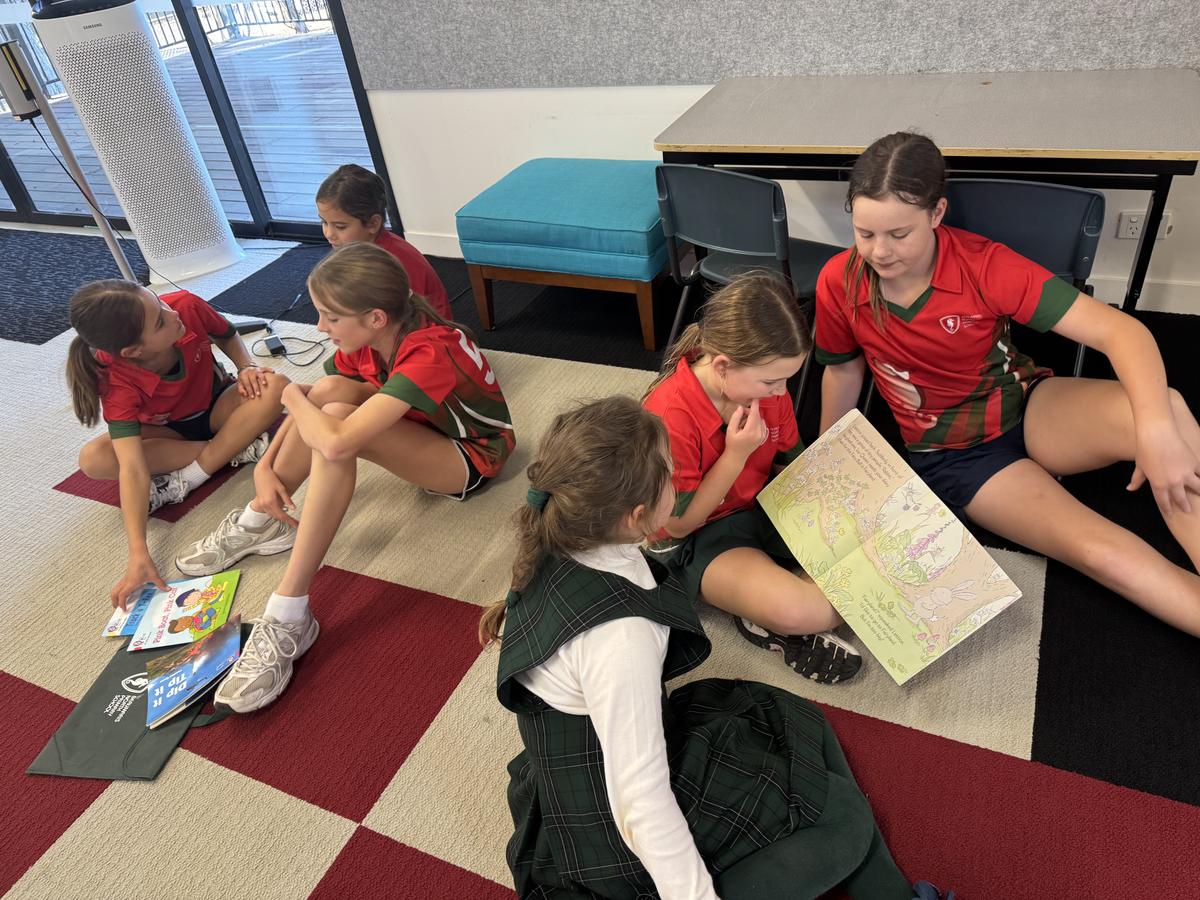
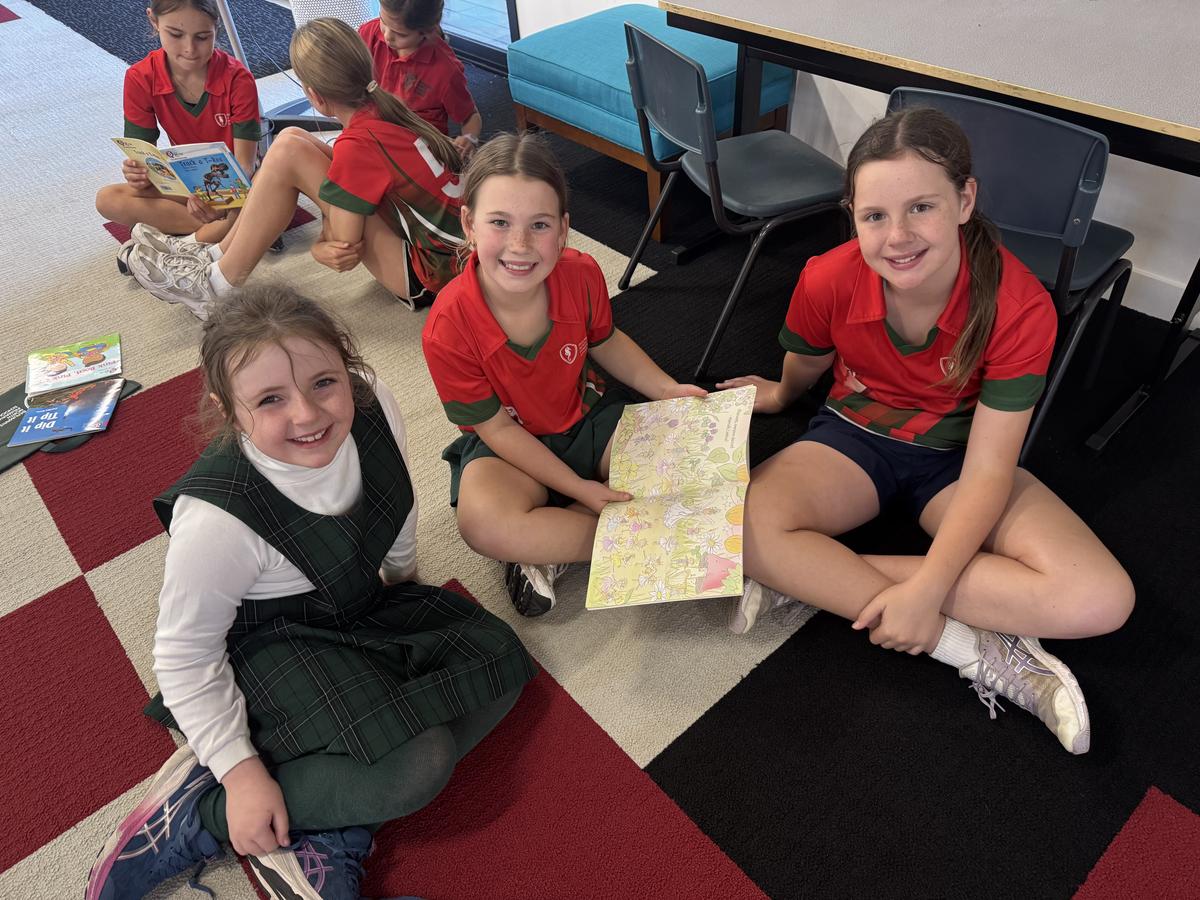
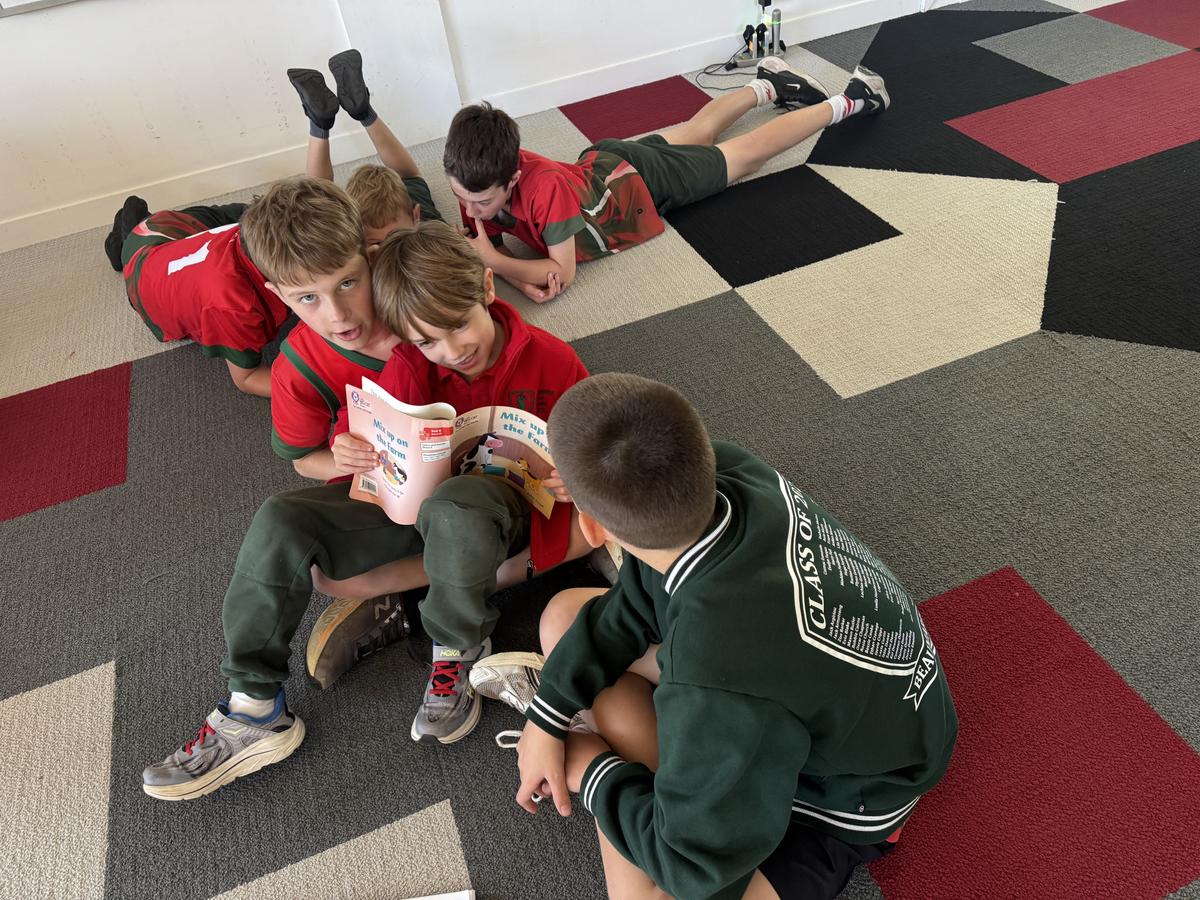
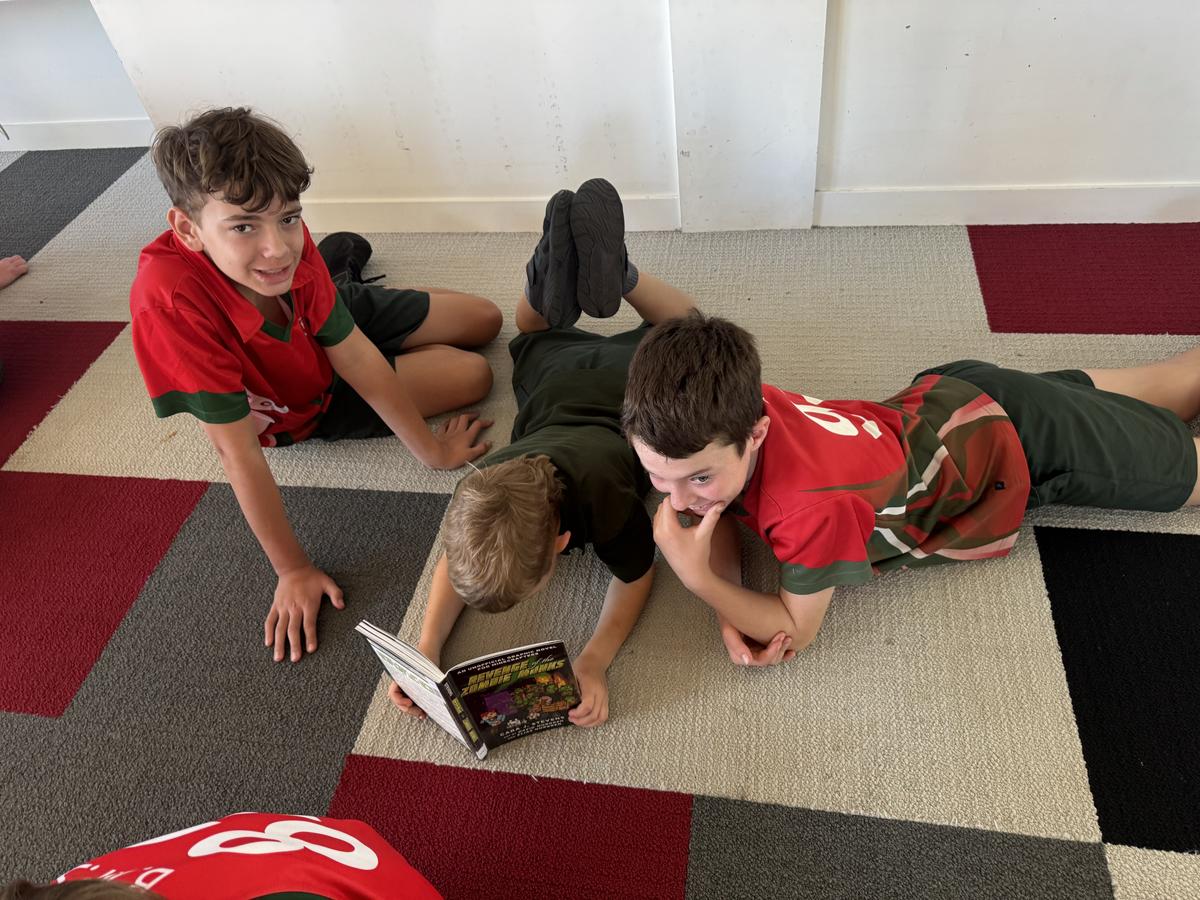
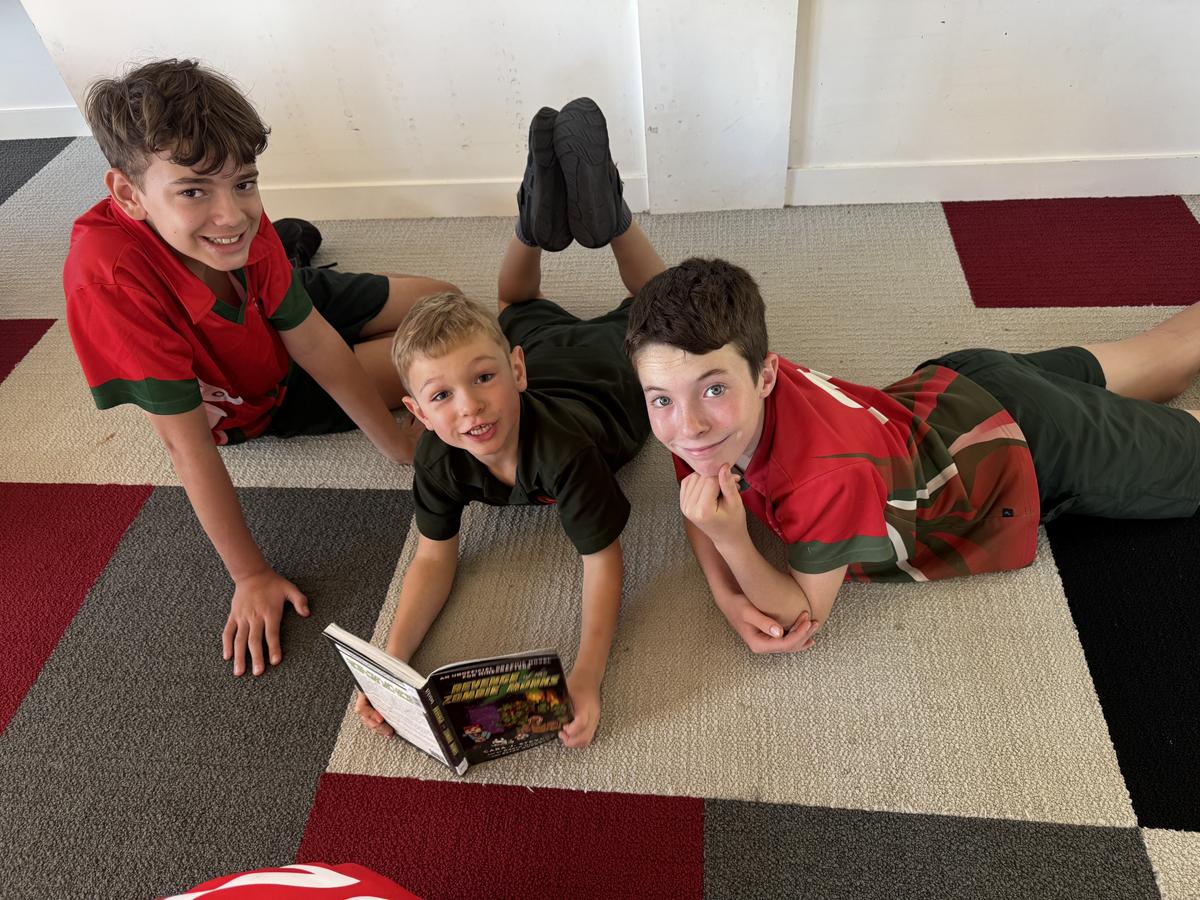
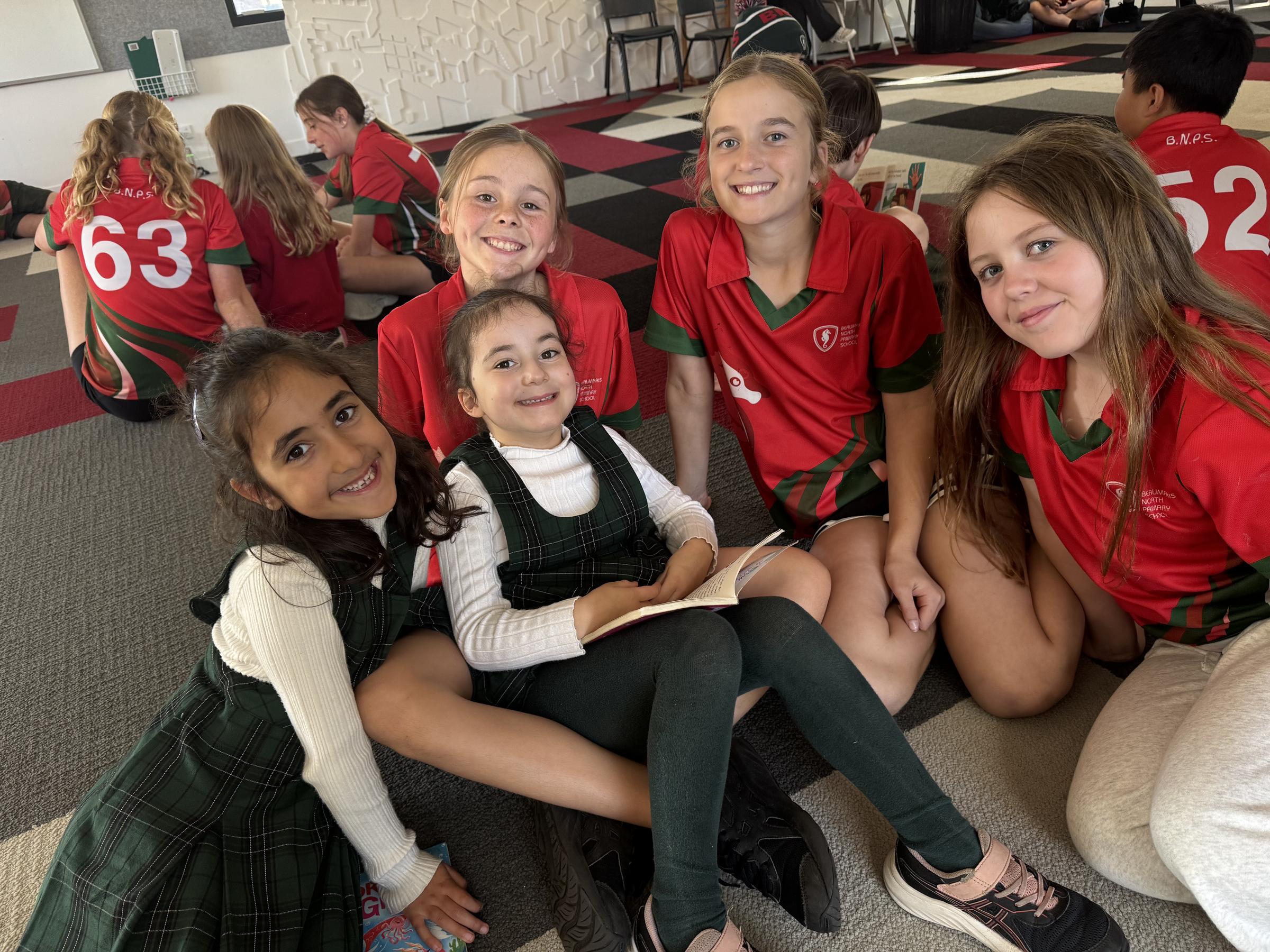
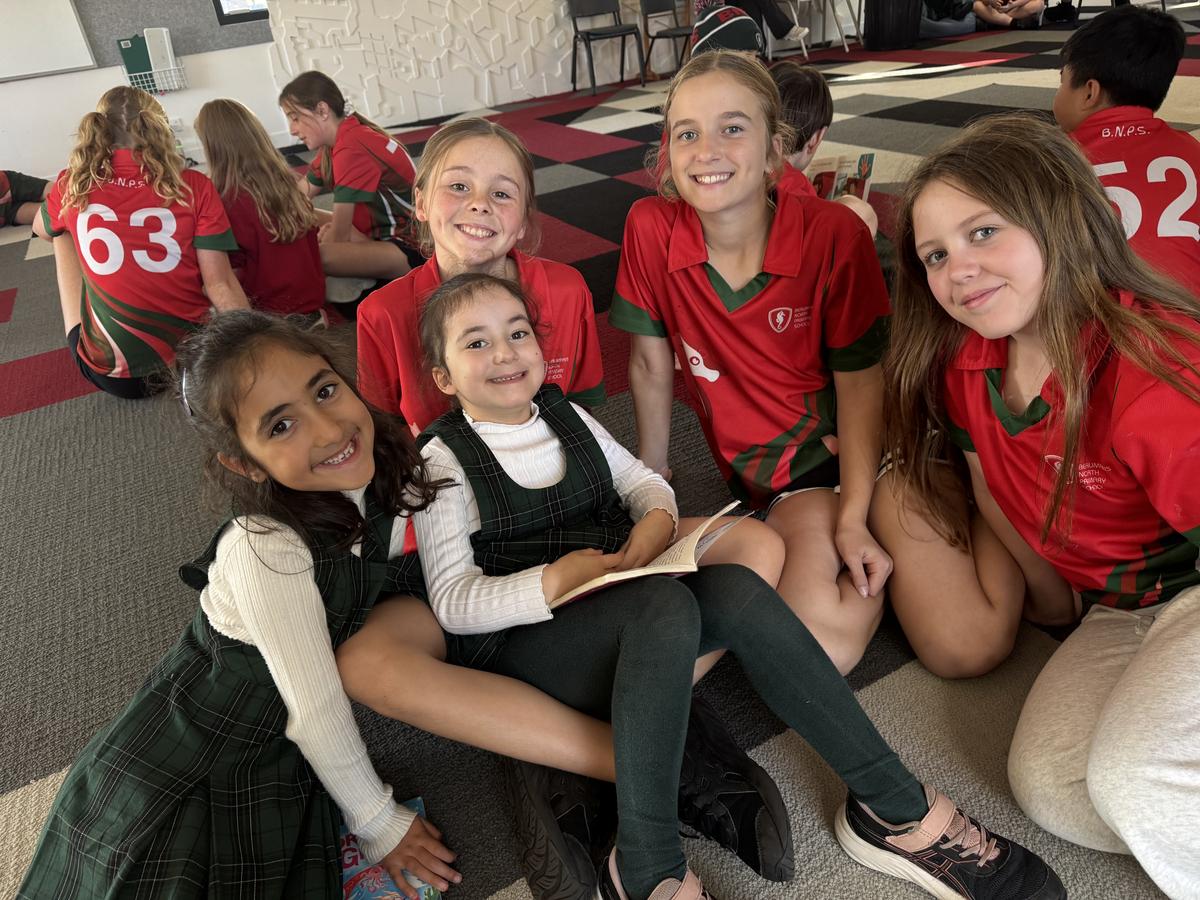
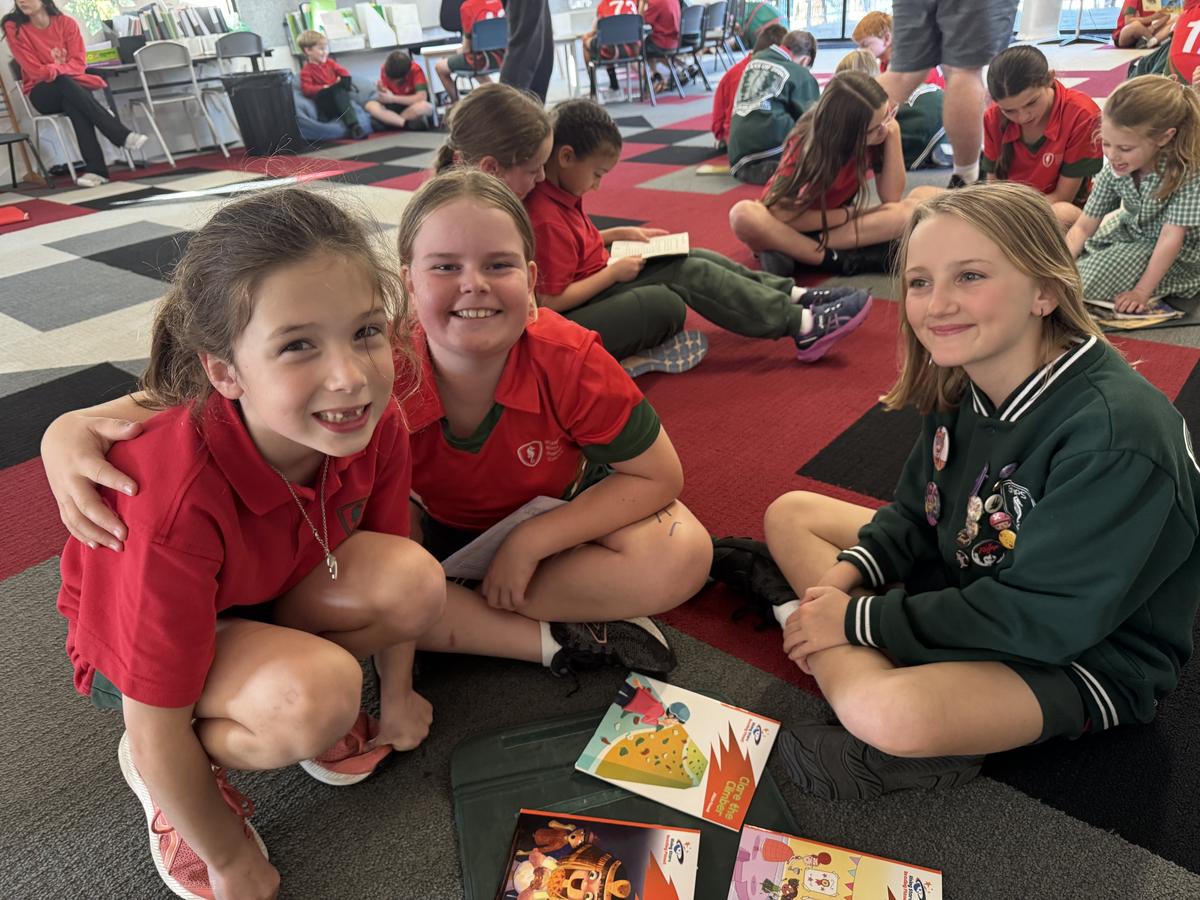
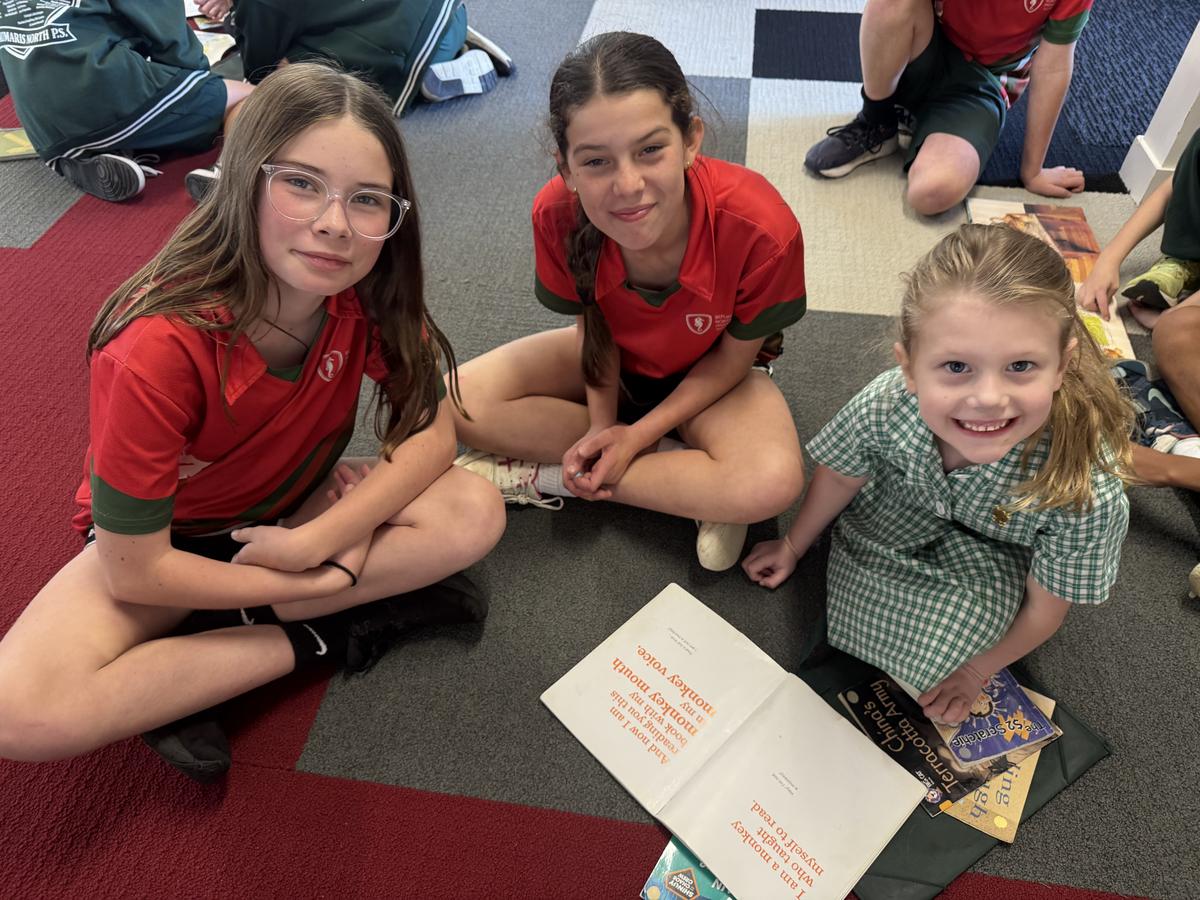
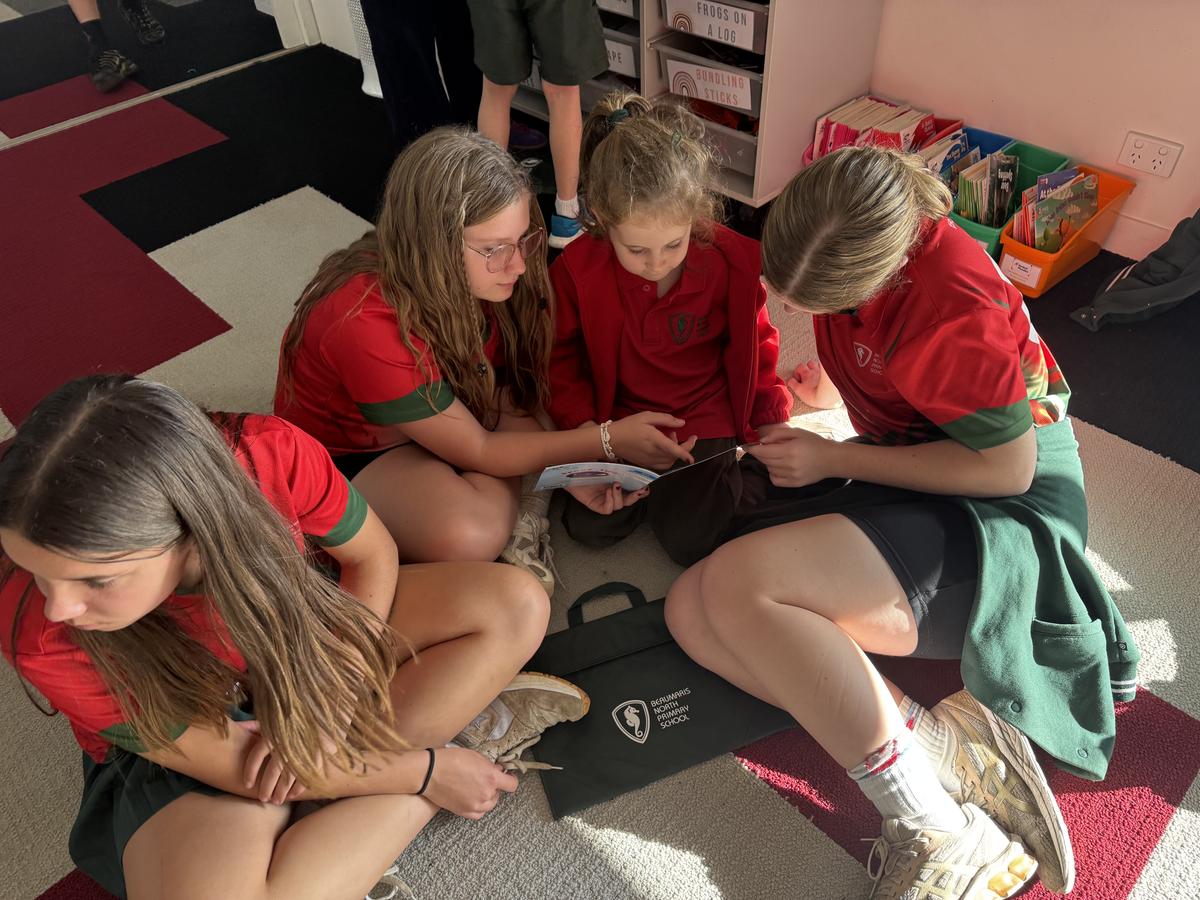
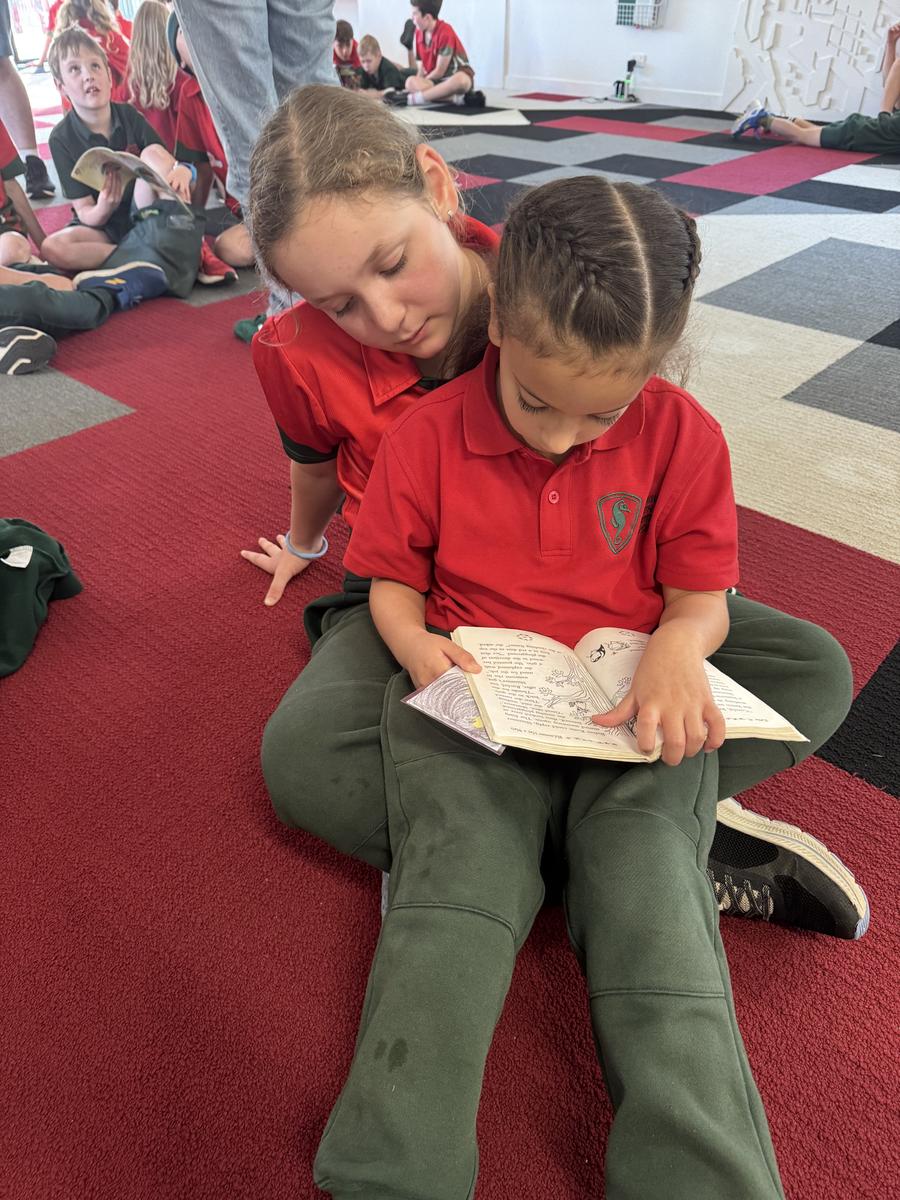
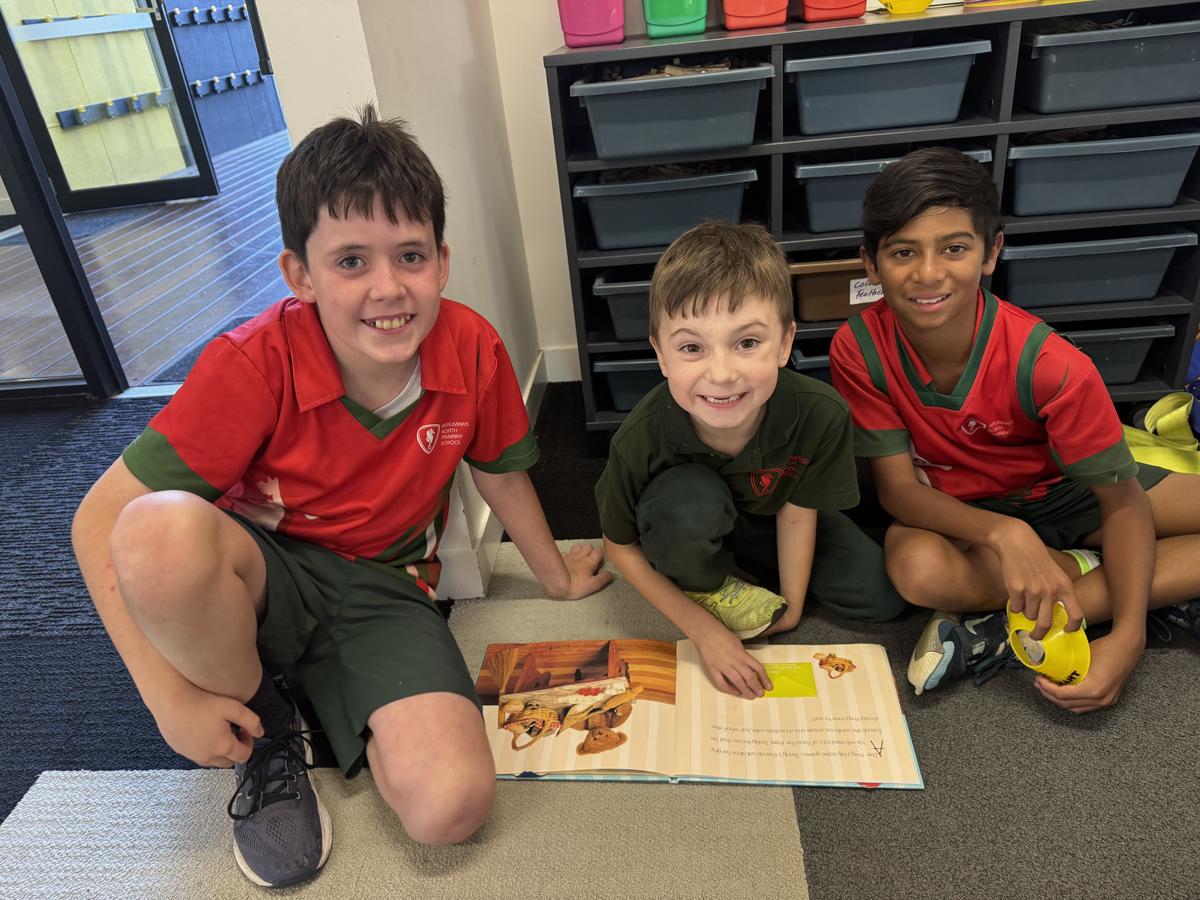
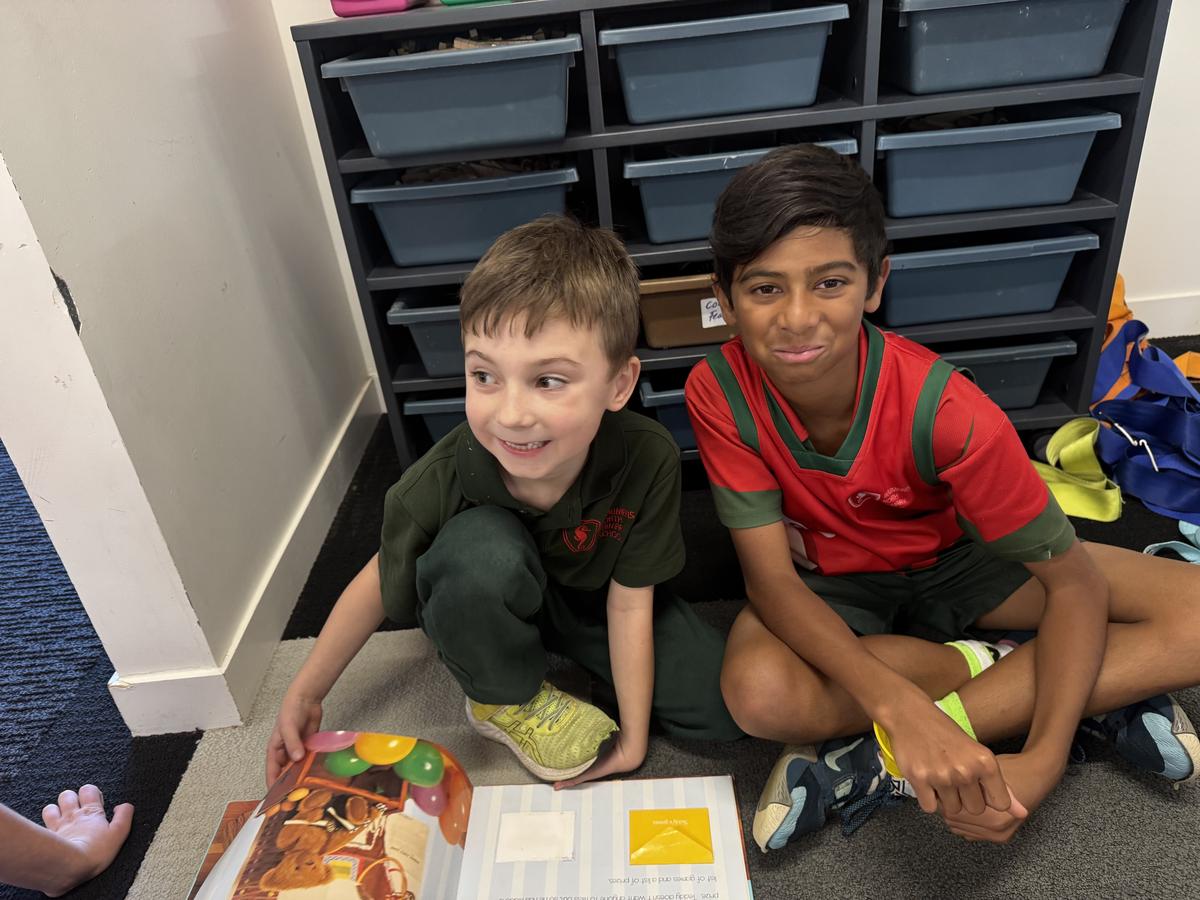
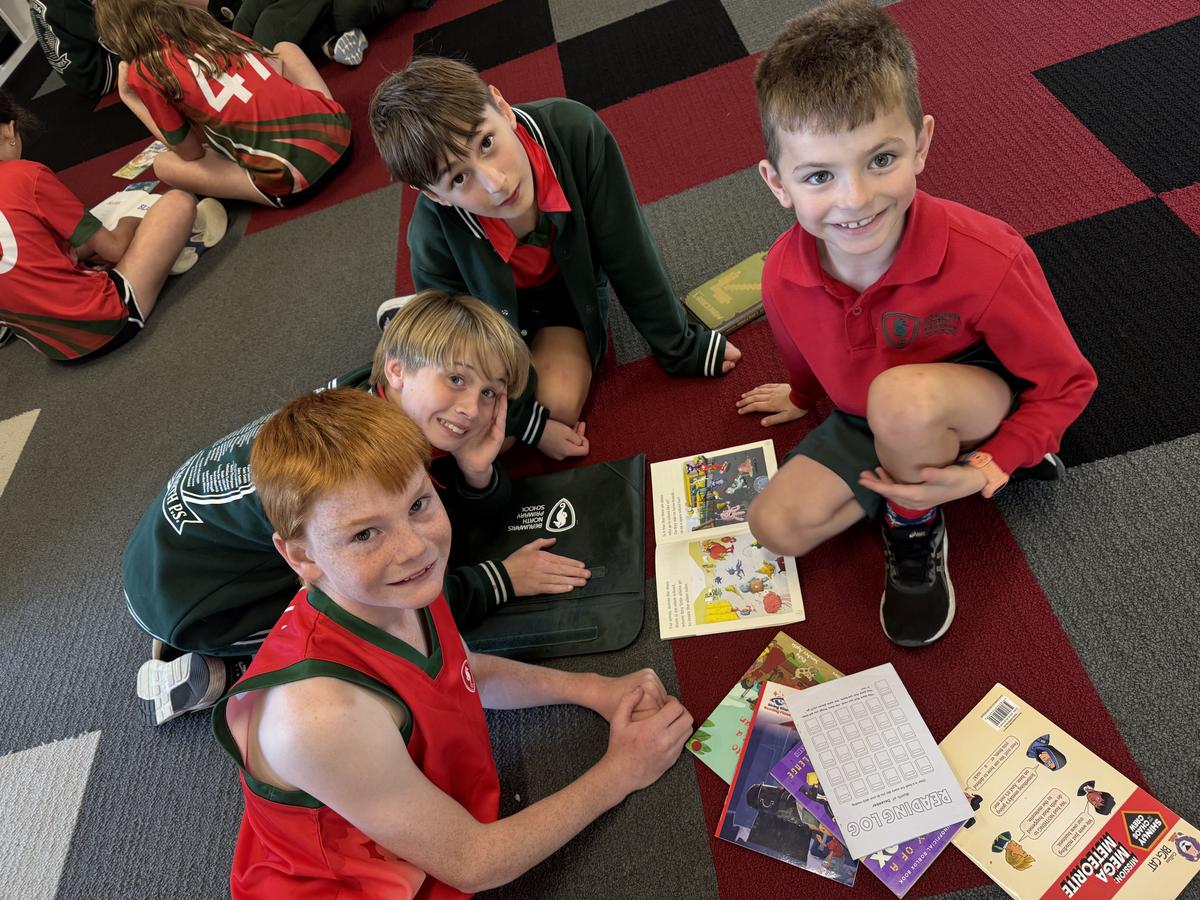
A special highlight for our Year 1 students continues to be the time spent with their Year 6 buddies. Every fortnight, buddies join us to share reading experiences, listen to students read aloud, and complete craft activities and drawings together. These sessions provide wonderful opportunities for our younger students to build confidence, develop positive relationships and learn through positive role modelling from the older students.
Future Learning
Literacy
Phonics Plus
Introduction of new Grapheme-Phoneme Correspondences (GPC’s):
Starting from next week we will be focusing on CVCC (consonant-vowel-consonant-consonant) words. Students will be practising decoding and spelling words such as munch, lost, jump, shelf, hand.
There will also be a continued focus on developing reading fluency, handwriting skills and learning high-frequency words including people, put, could, house, too, by, day.
Students will continue to explore rhyme, alliteration and syllables and practise manipulating sounds in words by changing the beginning, middle or ending sounds. For example: hold–told–fold–cold–colt
Students will also be learning about the suffix -ed and how it can make the sounds /t/, /d/, and /ed/ to show past tense. They will explore words such as kicked, rushed, packed, and missed for the /t/ sound, filled, banged, fizzed, and rolled for the /d/ sound, and rested, rented, landed, and folded for the /ed/ sound.
Students who are ready will be extended by reading and writing longer words and sentences that include these spelling patterns, as well as applying their phonics knowledge when composing their own simple texts.
Grammar and Punctuation
Using adjectives to describe nouns
To identify fragments and complete sentences
Expand simple sentences by adding details about when, who or what, and where.
Maths
Comparing 2-digit numbers
Place Value facts for 2-digit numbers
Crossing decades
2D shapes