
WELLBEING
MR JORGEN LESCHKE - DIRECTOR OF WELLBEING
WELLBEING
MR JORGEN LESCHKE - DIRECTOR OF WELLBEING

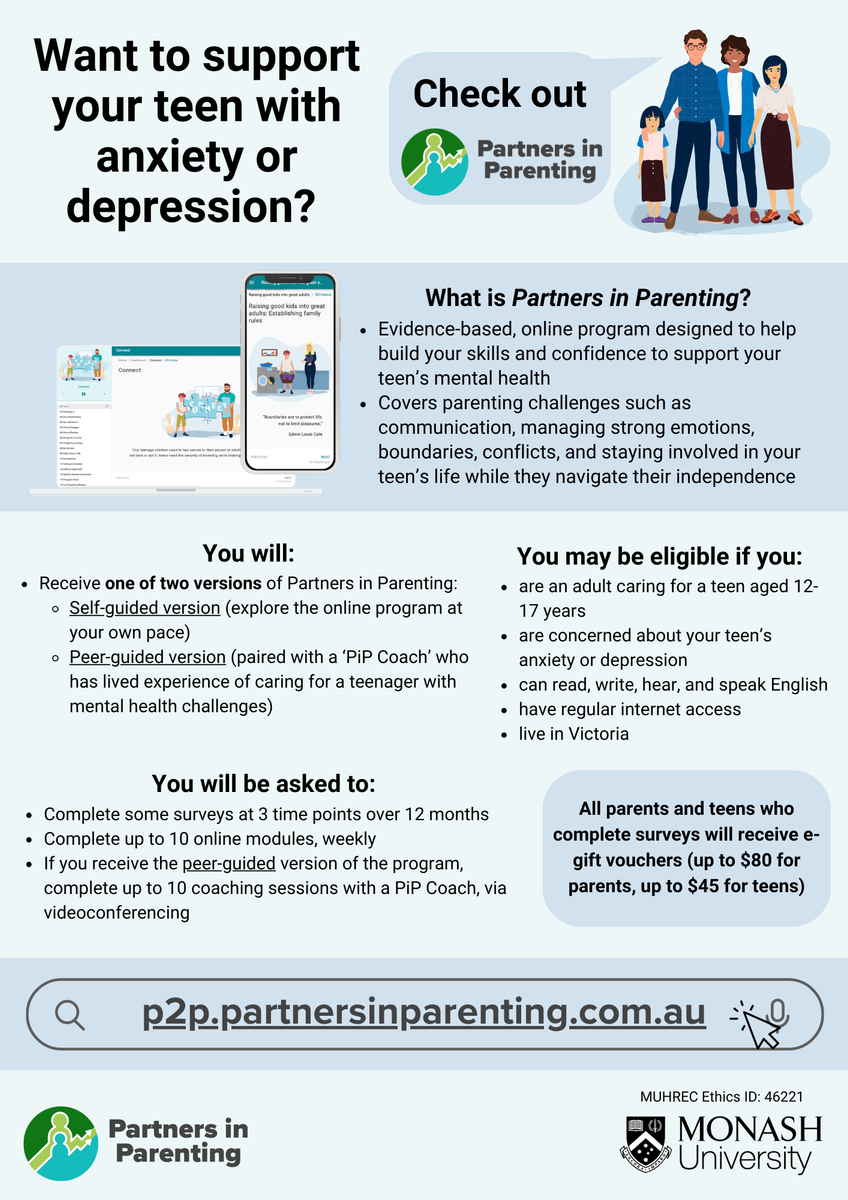
Partners in Parenting (PiP): Improving access to PiP in the community
Partners in Parenting team at Monash University has offered parents at our school the new opportunity to participate in a free online program for parents of teenagers (aged 12-17).
Partners in Parenting is an evidence-based, online program designed to help parents and carers build skills and confidence in supporting their teenager’s mental health. More than 5,000 families across Australia and the UK have already benefitted from the program. Monash University want to give more families in the community access to Partners in Parenting, and support parents who have concerns about their teen’s mental health. To do this, they’re conducting a research trial comparing two different versions of the program. Both versions include the same online program, providing parents with the same evidence-based parenting strategies. The program is free to join, and parents will receive e gift-vouchers for each follow-up survey they complete.
Learn more about PiP: https://p2p.partnersinparenting.com.au/
Understanding Adolescence
Adolescence is a critical stage of development that sits between childhood and early adulthood, typically spanning from ages 10 to 24. During this period, young people experience significant physical, cognitive and emotional changes as they move towards independence. It is a unique and often challenging time, where individuals begin to explore their identity, form relationships, and develop their own values and beliefs. While adolescence can be exciting and full of growth, it can also bring confusion, stress and uncertainty, making it an important stage for support and guidance from parents and caregivers.
One of the most noticeable aspects of adolescence is the range of developmental changes that occur. Physically, young people go through growth spurts, hormonal shifts and puberty, all of which can impact mood, confidence and self-esteem. Cognitively, they begin to think more critically, develop abstract reasoning, and question authority as they seek greater independence. At the same time, emotional changes become more pronounced, with mood swings, stress and anxiety often emerging alongside struggles with body image and self-worth. Adolescents are also working through identity development, experimenting with different values, attitudes and behaviours as they try to understand who they are and who they want to become.
Alongside these internal changes, adolescents are navigating a range of external pressures and influences. Relationships with peers, family and romantic partners become increasingly important, requiring guidance to ensure they are healthy and respectful. There can also be exposure to risk-taking behaviours, as well as the growing influence of technology and the digital world. Academic expectations often increase, adding further pressure, while family dynamics may shift as young people seek more independence and begin to challenge authority. In this context, consistent support and open communication are essential. Adolescents need to feel heard, understood and able to express themselves without judgement, and maintaining this connection is key to helping them move through this stage with confidence.
For more information on this topic, please visit SchoolTV: https://smmc.vic.schooltv.me/newsletter/understanding-adolescence
Jorgen Leschke
Director of Wellbeing