
Glen Education Murrumbeena
Celebrating our Growth, Community Partnership & New Beginnings
By The Glen Murrumbeena Team
As Term 4 draws to a close and we reflect on the year’s journey, this has been a season of meaningful growth, strengthened relationships, and remarkable achievements for our children, families, educators, and service community. This extended newsletter provides a detailed overview of the work we have collectively accomplished and the learning that has taken place across the service, with strong connections to the Early Years Learning Framework (EYLF), Children’s Rights, and the National Quality Standard (NQS).
This year, we set ambitious service goals:
- To develop closer connections with the community.
- To become more sustainable as a service.
- To extend the outdoor environment to offer diverse learning experiences.
- To work together as a team - Strengthen teamwork, open communication, and clear expectations within the staff team.
As you read through this newsletter, we invite you to celebrate these achievements with us and recognise the contributions of every family, child, and educator in making this term meaningful and memorable.
1. Strengthening Community Connections
Building Partnerships That Shape Children’s Learning and Belonging
A major focus this year has been on enhancing our connection with the local community. Strong community partnerships provide children with broader learning contexts, helping them understand the world around them and recognise their place within it. Throughout the year, we intentionally created experiences that foster a sense of belonging, cultural understanding, and continuity between home, service, and local community spaces.
Primary School Visits – A Bridge to New Beginnings
Our school-readiness group had the exciting opportunity to visit our local Hughesdale primary school. These visits are invaluable for children’s confidence and comfort as they take the big step toward formal schooling. They participated in classroom tours, experienced playground routines, met teachers, and explored literacy and numeracy corners. Children asked curious questions, engaged respectfully, and genuinely enjoyed seeing “big school” life.
These visits not only ease anxiety but also empower children with the knowledge and confidence they need to thrive.
Pet Incursion – Learning Through Connection with Living Things
This term, we welcomed an engaging Responsible Pet Ownership Education Program, giving an opportunity to learn about how to stay safe and be kind around pets.
This incursion supported children in:
- Show kindness and empathy towards pets.
- Build confidence and awareness around animals.
- Understand safe ways to approach and interact with dogs.
- Strengthening emotional regulation through calming sensory interactions.
For many children, this was a highlight of the term.
Family Participation and Cultural Sharing
We deeply value the contributions of our families. Throughout the term, families shared cultural stories, meals, art experiences, and family traditions, enriching children’s understanding of diversity and inclusion. This aligns with our commitment to creating a culturally safe and respectful environment for all families.
Embedding the Spanish Language into the Curriculum:
This year, we got a wonderful opportunity to incorporate the Spanish Language into the curriculum. The children have been learning through language, and they have enjoyed learning vocabulary through songs, games, a special puppet and stories from our wonderful Teacher, Maria-Paula. Weaving Spanish through the program creates a vibrant and meaningful language-learning environment for children. Songs help build vocabulary, rhythm, and confidence, while games make learning an active and engaging experience. Introducing greetings, colours and numbers in Spanish through daily routines supports repetition and natural language use. Storytelling exposes children to authentic words, phrases, and cultural elements, encouraging imagination and comprehension. By weaving Spanish into play and creative activities, educators promote communication skills, cultural awareness, and a positive attitude toward learning new languages. This holistic approach enables children to develop early literacy skills in a fun and supportive environment, while embracing bilingualism or, in many cases, multilingualism.
Embedding the Russian Language with Rachael Bordan.
One of our achievements with the children that I’m proud to see in terms 3 and 4, the children showed their interest in learning the Russian Language. Due to my family background, I’m fortunate to speak the language fluently and am passionate about incorporating it into the program. The children were taught how to say different words and phrases to remember and their meanings. This led to children asking thoughtful questions. How do you say, Shark in Russian? – Christopher. How to say Bye in Russian? – Jacob.
EYLF, NQS, Children’s Rights Links
- EYLF Outcome 2: Children are connected with and contribute to their world.
- NQS 6.1 & 6.2: Collaborative partnerships with families and community.
- Children’s Rights – Article 15 & Article 29: Community participation, learning through connection and collaboration.
2. Our Sustainability Journey
Cultivating Responsibility for the Earth Through Everyday Practice
Sustainability has been a top priority this year as we strive to create a service that is both environmentally responsible and educationally inspiring.
Recycling, Sorting & Waste Reduction
Children participated in routine recycling tasks such as sorting paper, plastics, food scraps, and reusing materials for creative play. They learned why recycling matters, how different materials break down, and how responsible choices support a healthy planet through videos and learning experiences.
Gardening and Nature Care
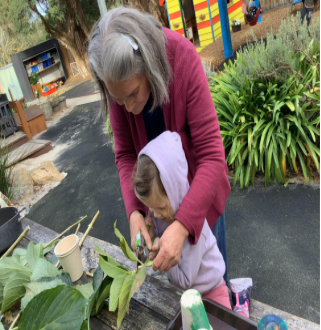
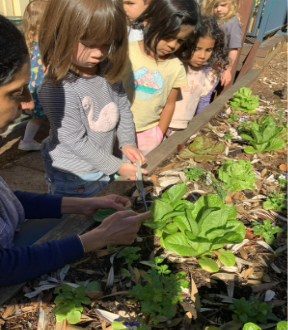
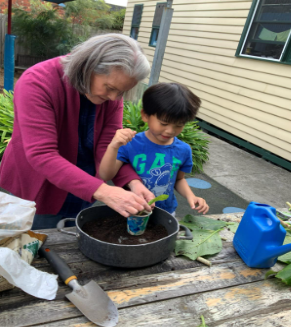
Our gardens flourished this term, and children helped plant the seeds, water the plants, pull the weeds, and care for new seedlings. They developed a deep appreciation for natural cycles and the importance of nurturing living things. Many became confident in identifying plant types, understanding growth stages, and recognising the importance of sunlight, water, and soil.
Creative Sustainability Projects
Children engaged in eco-friendly art projects using recyclable materials such as cardboard, bottle lids, natural loose parts and clay. These activities help children to explore creativity while learning that waste can be transformed into meaningful resources.
EYLF, NQS, Children’s Rights Links
- EYLF Outcome 2: Becoming socially responsible and respectful of the environment.
- NQS 3.2: Sustainable practices integrated into daily routines.
- Children’s Rights – Article 29: Education should support environmental respect.
3. Enhancing Our Outdoor Learning Spaces
Extending Environments to Inspire Curiosity and Discovery
Outdoor learning is central to early childhood education, fostering wellbeing, creativity, and exploration. This term, we worked hard to expand and improve our outdoor environment to support children’s holistic learning.
New Nature Areas
We introduced water play sections, imaginative play spaces, natural loose parts and A-frames. This allowed children to follow their curiosity, test ideas, and collaborate with peers in rich outdoor experiences.
Benefits We Observed
- Increased confidence in physical capabilities
- Enhanced problem-solving and negotiation skills
- Opportunities for risk-taking in safe, supported ways
- Calming sensory experiences that grounded children emotionally
Outdoor play also improved children’s gross-motor development, balance, spatial awareness, and resilience, all of which support school readiness.
EYLF, NQS, Children’s Rights Links
- EYLF Outcomes 3 & 4: Wellbeing, physical confidence, curiosity, and inquiry.
- NQS 3.1: Safe, inclusive, well-maintained environments.
- Children’s Rights – Article 31: Right to play and access diverse environments.
4. Teamwork, Communication & Professional Growth
Building a Stronger and More Collaborative Team Culture
Behind every quality early childhood program is a team of dedicated educators. This term, we focused strongly on strengthening teamwork, communication, and professional expectations across the service.
What We Implemented
- Regular team meetings
- Leaders Visit
- Shared planning sessions
- Open communication channels
- Collaborative reflection
- Clear role expectations
- Ongoing professional development
These improvements increased consistency for children, strengthened relationships among educators, and contributed to a more supportive workplace culture.
Impact on Children
- Predictable routines and transitions
- Consistent emotional support
- Better-planned learning experiences
- Stronger connections with educators
EYLF, NQS, Children’s Rights Links
- NQS 4.2 & 7.2: Professional collaboration and effective leadership.
- Children’s Rights – Article 3: Adults must act in the best interests of children.
This year, we also incorporated Gymnastics and Music into our Program.
Exploring Movement, Music, and Expression
Gymnastics Program
Children developed physical skills such as balance, coordination, strength, and body awareness. They demonstrated confidence trying new movements, navigating obstacles, and testing their physical limits safely.
Music & Movement Sessions
Children explored rhythm, beat, sound, and expressive movement. This supported:
- Language and communication skills
- Emotional expression
- Group coordination
- Listening and responding
- Creativity and imagination
These experiences enriched children’s self-confidence, cultural appreciation, and artistic expression.
Transition to School
Supporting Children as They Step into Their Next Chapter
We celebrated the achievements of our school-readiness group as they prepared to move into primary school. This transition was supported through:
- Literacy and numeracy experiences
- Independence routines
- School visits
- Peer collaboration
- Emotional-regulation discussions
- Social skill development
Children strengthened their abilities to:
- Follow instructions
- Communicate confidently
- Work in groups
- Manage belongings
- Develop persistence
NQS, EYLF, Rights Links
- NQS 1.2 & 6.2: Continuity of learning and smooth transitions.
- EYLF Outcome 1: Confident and involved learners.
- Children’s Rights – Article 28: Right to education.
Moving From Our Old Centre to Our New Centre – A New Chapter Begins Next Year
As we look ahead to next year, one of the most exciting developments for our service is the long-awaited move from our current centre to our brand-new, purpose-built facility. This transition marks a significant milestone in our service’s history and reflects our ongoing commitment to providing the highest-quality early learning environment for children, families, and educators.
Why This Move Matters
Our old centre has been a place of many memories — a warm, familiar space where children have played, learned, laughed, and grown. For many families, it holds sentimental value and marks the beginning of their child’s learning journey. While it has served us well, the new centre will allow us to offer even richer, safer, and more contemporary learning experiences.
The new facility has been thoughtfully designed to:
- Support children’s curiosity, creativity, and well-being
- Provide larger, light-filled learning spaces
- Offer modern indoor and outdoor environments tailored to early childhood development
- Ensure children experience nature-rich and sensory-friendly play opportunities
- Create more space for families to engage with the service.
- Provide educators with improved resources and collaborative spaces.
- Strengthen our long-term sustainability goals.
Celebrating Our Old Centre
Before we move, we will also take time to reflect on and celebrate the memories made in our current centre. This may include:
- Creating a memory wall or photo display
- Children drawing or writing about their favourite moments
- Holding a farewell celebration with families and educators
- Taking symbolic items to the new centre
This sense of closure helps children transition with confidence and positivity.
Children's Voices about the old centre:
Nina – I like playing with magnets and Legos.
Yuki – I like to play with all the toys.
Maxine – I like the swing.
Jordan – I like to play with puzzles and Swing. I am excited to see the new kinder.
Aneek – I am happy to come here. I like the swing and LEGO.
Farah – I like to play here. The cubby house is my favourite place.
Skye - I like to play with animals, and the sandpit is my favourite place.
Grace – I like to play in the swings.
Evie Meier – I like to play in the climbing frame.
Aoife – I love to play in the swing. I learnt about the stuff to get ready for school, and I got good friends.
Yuvaana – I learnt to be kind. I like the flowers and swings.
Evie Harley – I enjoy Swings. I love to do my favourite stuff here.
Kyle – I like to build in this kindergarten.
Christopher – I like the connectors, swings and the magic tyres.
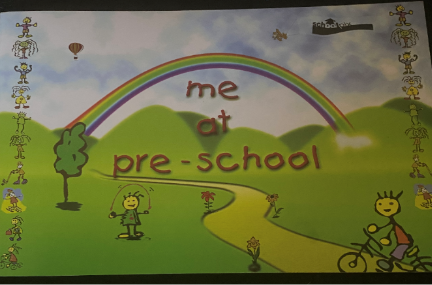
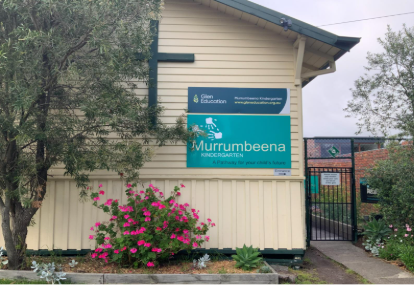
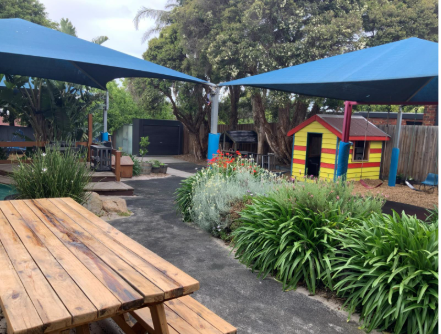
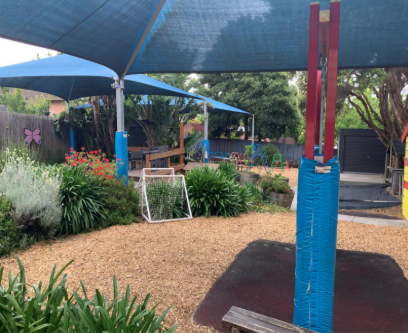
Reflections of previous preschoolers who attended Murrumbeena Kindergarten:
Will- 1995/1996
“I remember standing at the side window with the teacher and watching Mum leave. I was upset, and the teacher comforted me.” “After a little while, I was happy to play with the toys. My favourite things were playing outside and looking at the chickens. I named one of them William after me.”
Andrew- 1998/1999
“I met one of my best childhood friends in the sandpit at Murrumbeena Kindergarten. “We used buckets of water to make a sandcastle.”
Emily- 2001/2002
“When I was a child, I felt that the kinder hall was much larger than it is. I remember singing Christmas carols in front of my parents at the end of the year. We sang Rudolph the Red-Nosed Reindeer.” “I was always eager for group time to be over so that I could go off and play with farm animals or draw a picture.”
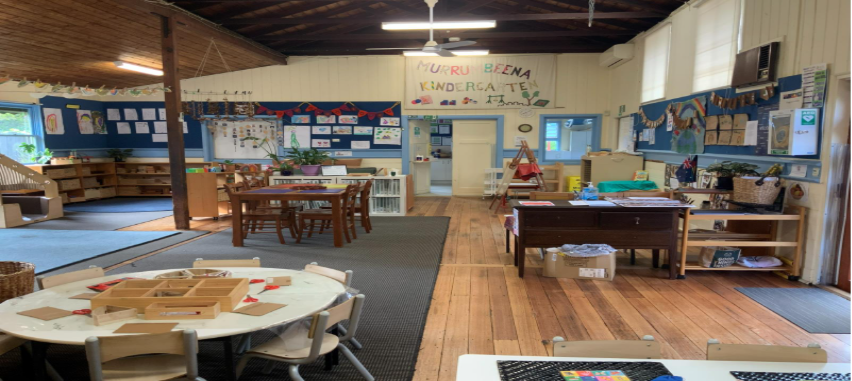
Educator’s reflections on Glen Education Murrumbeena Kindergarten
Vibha- “This kindergarten has been a nurturing place for more than 20 years. Beautiful memories were created over the years. It is difficult to say goodbye, but on the other hand, change is good. Relocating to a new place is also exciting. We will have a beautiful, big outdoor area and new learning spaces.”
Sally- “I have a long history with Murrumbeena Kindergarten because three of my children attended there. My children each had two wonderful years with the teacher, Carol Vassilou, and assistants Helen Haslem and Janine Henry. Now that early learning is part of the education system, Murrumbeena Kindergarten has evolved into a well-resourced, stimulating learning environment. I have enjoyed collaborating with the team and sharing ideas for children’s learning. In our team, teachers and educators from different cultural backgrounds bring unique perspectives, allowing teams to solve problems creatively and respectfully. Working together strengthens understanding, communication, and a sense of belonging for everyone. I have enjoyed the celebrations we have had over the years. We learnt about the importance of moon cakes for Chinese New Year, and I particularly love the beautiful saris which Madhu wears for Diwali.
Rachel- “I like that it feels warm and welcoming, and the team makes it feel this way, since I started in term 3. I’m really looking forward to moving with the team and settling into the new building. I’m very excited and happy that we have new resources.”
Madhu- “It holds a special place in my heart because it’s where I started with Glen. I like the feel of the old building and the character.”
Freeda- “I love the spacious inside building and the big outside yard. The outside yard is beautiful, where the children enjoy the swing, garden, cubby house and sandpit. We have a good team, working together and supporting each other.”
Family feedback about the new Glen Murrumbeena Road Kindergarten.
Charlotte’s family recently expressed:
“We drove past the building and Charlotte said,” Look, Mum, there’s my new kinder! There will be a sandpit here. We are excited and staying at Glen Murrumbeena Road Kindergarten because Charlotte’s happy and settled”.
Bright Future Ahead
Our move to the new centre next year is more than simply changing buildings — it is a step forward in our commitment to delivering high-quality early learning experiences, strengthening family partnerships, and creating a thriving learning environment for future generations.
We are deeply grateful for your ongoing trust and support. Together, we will make next year a successful, joyful, and exciting new beginning.
Conclusion – A Heartfelt Thank You
As we come to the end of Term 4, we proudly reflect on a year defined by growth, connection, resilience, and shared achievement. Our children have explored new ideas, strengthened friendships, developed confidence, and taken meaningful steps in their learning journeys. Families have partnered with us with generosity, trust, and open communication, and our educators have demonstrated dedication, teamwork, and a deep commitment to high-quality early childhood practice.
Next year brings an exciting new chapter as we prepare to transition from our old centre to our purpose-built new facility. This move symbolises progress, renewal, and our commitment to offering the very best learning environments for children. While we say goodbye to a space filled with memories, we look forward to creating new ones in a centre designed to inspire curiosity, belonging, creativity, and wellbeing.
We extend our sincerest gratitude to each family for being an essential part of our community. Together, we have created a place where children feel safe, respected, and empowered — a place where their voices, rights, and identities are valued.
We wish all families a safe, restful break and look forward to welcoming you back for another year of joyful learning and new beginnings.
Warm regards,
The Glen Murrumbeena Team