From the Prin and the AP

SWPBS: Classroom Matrix
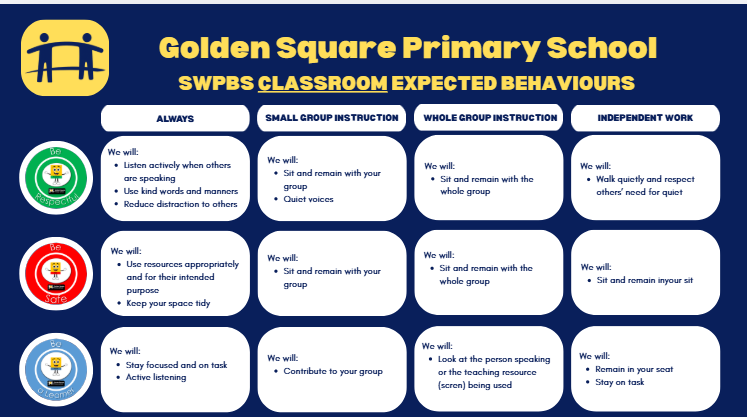
Last week we shared our updated whole-school Behaviour Matrix. The image above shows an example of a Classroom Matrix from one class. To ensure our expectations are practical and meaningful, each classroom and specialist area has their own version of the matrix. These versions are generally consistent across the school, but they are refined to reflect the learning structures and expectations used in that specific space.
While the whole-school matrix outlines our three expectations of Be Respectful, Be Safe and Be a Learner across the school, the Classroom Matrix breaks this down into what those expectations look like during learning time. This helps students understand how the same expectations apply in different situations, such as whole-class instruction, small group work, and independent learning.
For example, during whole-class teaching this might mean raising a hand and listening while others are speaking. In small group work it might mean taking turns and staying focused on the group task. During independent work it might mean staying on task and allowing others to concentrate on their learning.
Over the past few weeks, teachers have been working with their classes to teach and practise these expectations so students clearly understand what respectful, safe and learner behaviours look like during lessons.
You'll notice that the Classroom Matrix focuses specifically on learning behaviours. Classroom routines and procedures, such as entering the room, getting attention, transitions and packing up, are covered separately. We’ll share a bit more about these and why they matter in next week’s newsletter.
You might like to ask your child about the expectations in their classroom or specialist class, and how they show Be Respectful, Be Safe and Be a Learner during their learning time.