Wellbeing
Director of Wellbeing - Amy Walker

Wellbeing
Director of Wellbeing - Amy Walker

Article by Amy Walker, Head of Wellbeing
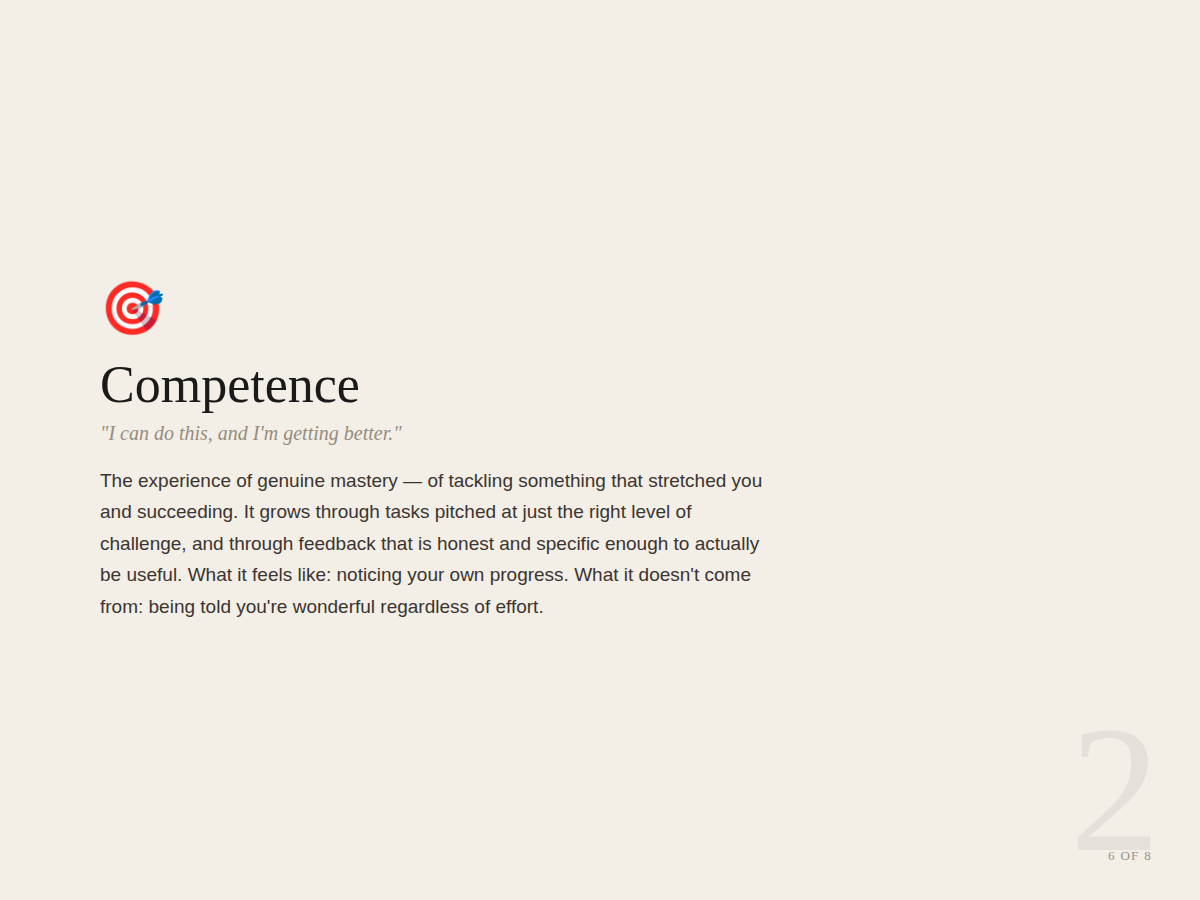
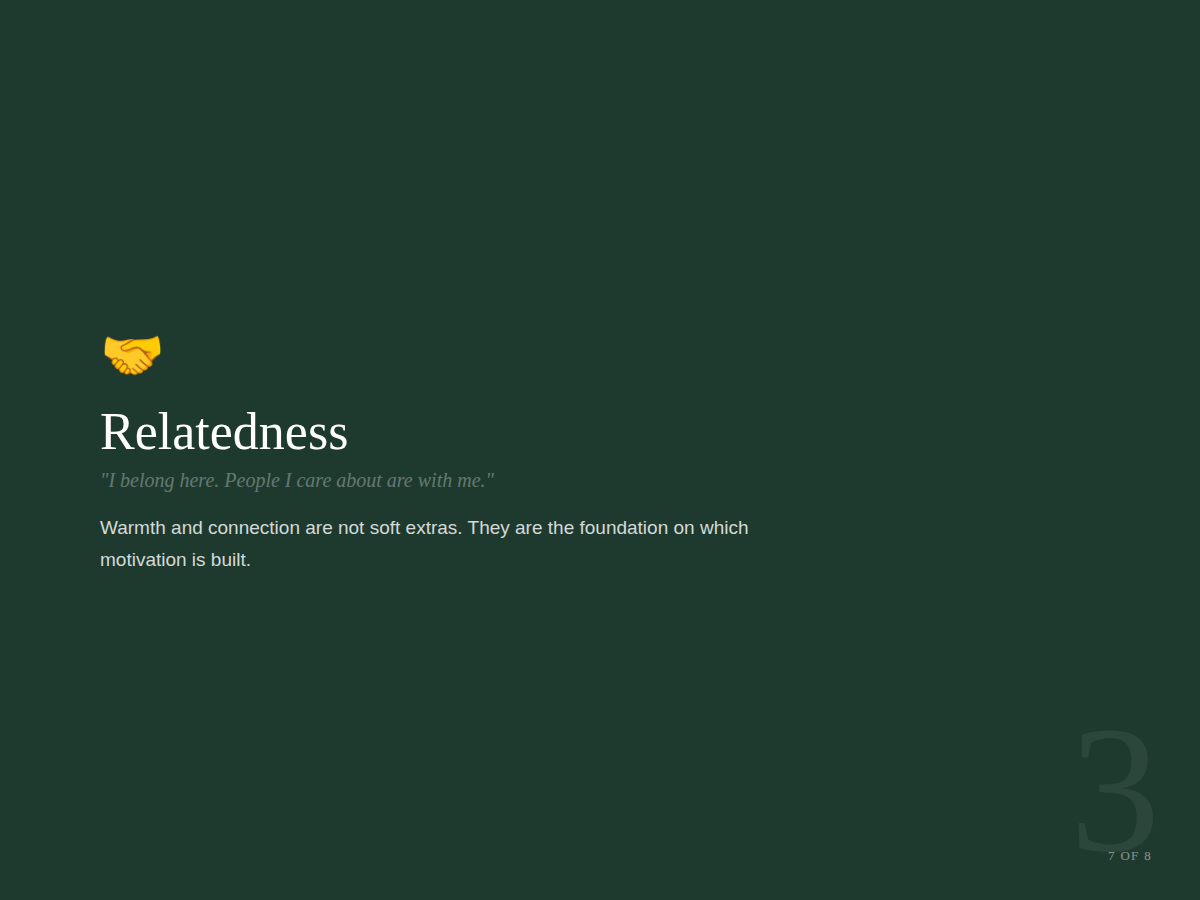
There are some theories and ideas that really stay with you after you learn about them. One I continue to return to is Self Determination Theory, both so that I can understand it better and as I continue to work on finding better ways to apply it.

Self Determination Theory is the work of researchers Edward Deci and Richard Ryan.
Ed Deci passed away in mid February at the age of 83. He leaves a remarkable legacy, not only one of the most influential theories in the history of psychology, but by all accounts, a way of engaging with people that embodied the very ideas he spent his career studying. Those who knew him described his patience, warmth, and his way of gently but effectively motivating those around him.
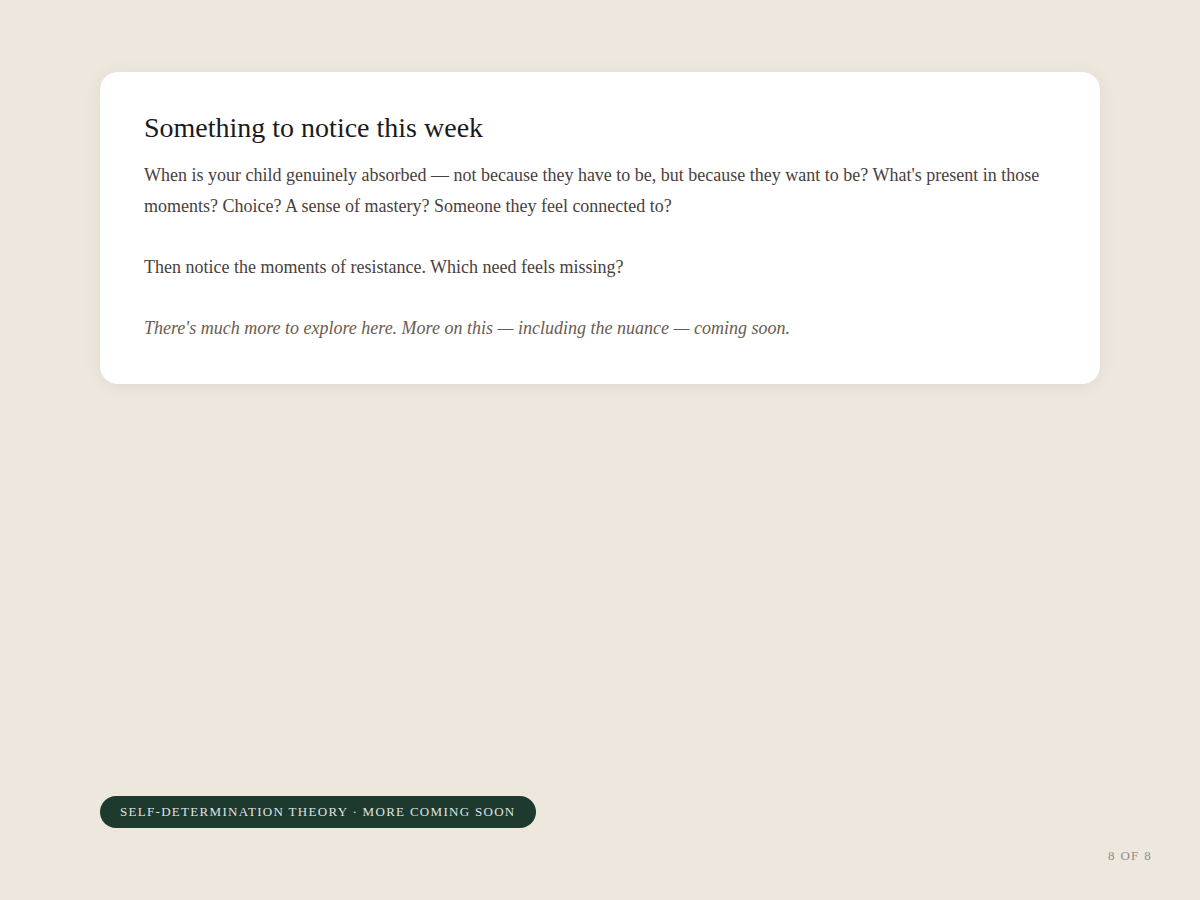
It feels like the good time to share a brief introduction to Self-Determination Theory, which we will share more about across the year, including what it might mean for our children.

In thinking through an example of this that exemplifies, to me, the difference we can notice in our children where motivation is concerned, I thought about them making potions or mud pies in the garden.
When my children are doing this, they are a flurry of activity – running all over the house, climbing on step stools etc., to collect jars, trays, bowls and all sorts of other implements they ‘need’ for their project. They don’t usually want or need help to find or reach these things. However, this is not necessarily the case when I ask them to get a bowl out to help me with some cooking, Instead, I might hear, “but it’s too high for me to reach!” or “Do I have to?”, even if it is for some banana bread they have requested.
Below are a few slides about Self-Determination Theory, which can help explain why this might be the case.