KLA News
TAS
Shaping the Future:

Getty Images
Embracing AI in TAS @ O’Connor
At O'Connor, our Technological and Applied Studies (TAS) department has always been at the forefront of innovation. As we navigate 2026, the integration of Generative AI (GenAI) into the HSC landscape is no longer a futuristic concept—it is a present-day tool that is fundamentally reshaping how our students design, code, and create.
From "Product" to "Process"
The most significant shift in our assessment approach this year is the move toward process-led evaluation. In the past, a high-quality final product (like a timber project, a textiles design or an engineering report) was the primary evidence of success. In the age of AI, the focus has shifted to the "Human-in-the-Loop"—how a student directs, critiques, and refines the technology. If you like: “how do we embrace AI as a tool to help our learning”.
- The Documentation Revolution: Students are now required to provide annotated designs & detailed portfolios using digital publishing. If a student uses AI to help write an engineering report or brainstorm a design concept in Design and Technology, they must document the specific prompts used and, more importantly, explain why they accepted or rejected the AI's suggestions.
- Verification Check-points: To ensure authenticity and "All My Own Work" compliance, students are being asked to verify their understanding of content through processes such an interview process. This allows students to demonstrate their deep understanding of the logic behind their findings, ensuring the AI is a co-pilot, not the driver.
An example of this is the incorporation of an interview section to the engineering studies HSC engineering report task on bicycle materials.
The task now includes the following:
One of the roles of a professional engineer is to be able to meet with clients and give them professional evidence based responses to their questions. This usually takes place in a business meeting format. Often these meetings have time frame requirements.(approx. 15 mins) In this case your client is looking to go into manufacturing bicycles for a specific group of cyclists. Your feedback during the meeting will be used in the decision making process. The client has already informed you that they regularly record the meeting so that they can go back & review your evidence based recommendations.
Students are encouraged to use AI as a tool to create a report, however how well they know the content will be demonstrated in the interview process.
Ethics and Integrity
Guided by the NESA 2026 AI Guidelines, our students are learning the critical skills of AI Literacy: identifying bias, verifying facts, and understanding the environmental impact of large-scale computing. We are not just teaching them how to use the tools of today, but how to be the ethical designers of tomorrow.
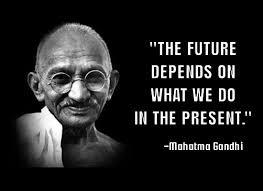
Mahatma Gandhi’s famous quote regarding the future is:
"The future depends on what you do today".
This message highlights that present actions, decisions, and efforts are the building blocks of tomorrow, encouraging proactive, conscious choices to create a better future.
NOTE: This article was written using AI as a tool. However, it was edited, content added, images sourced to assist the presentation.
If you are interested in further reading, this is an interesting article about AI in schools.
https://thehill.com/opinion/4515076-why-educators-should-embrace-artificial-intelligence/
Year 7 Food Tech Update
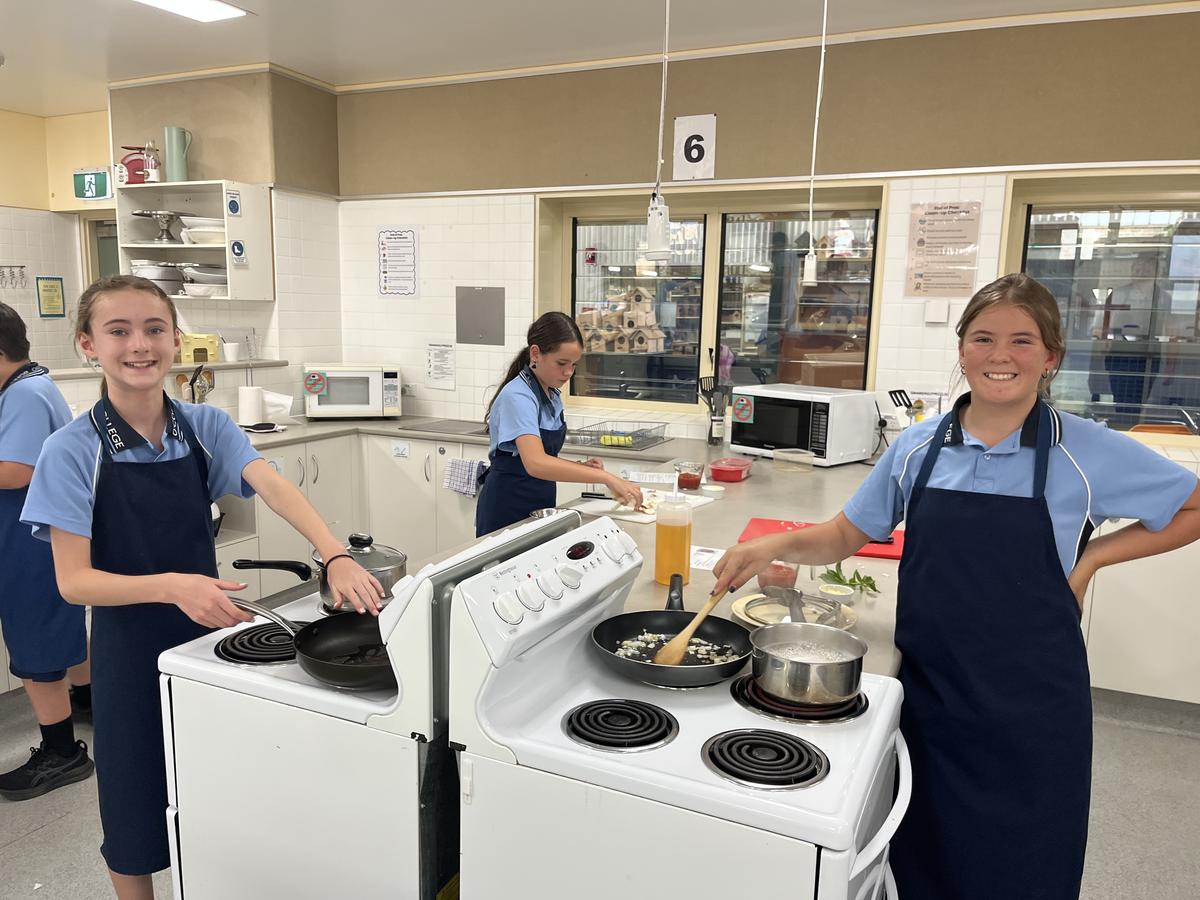
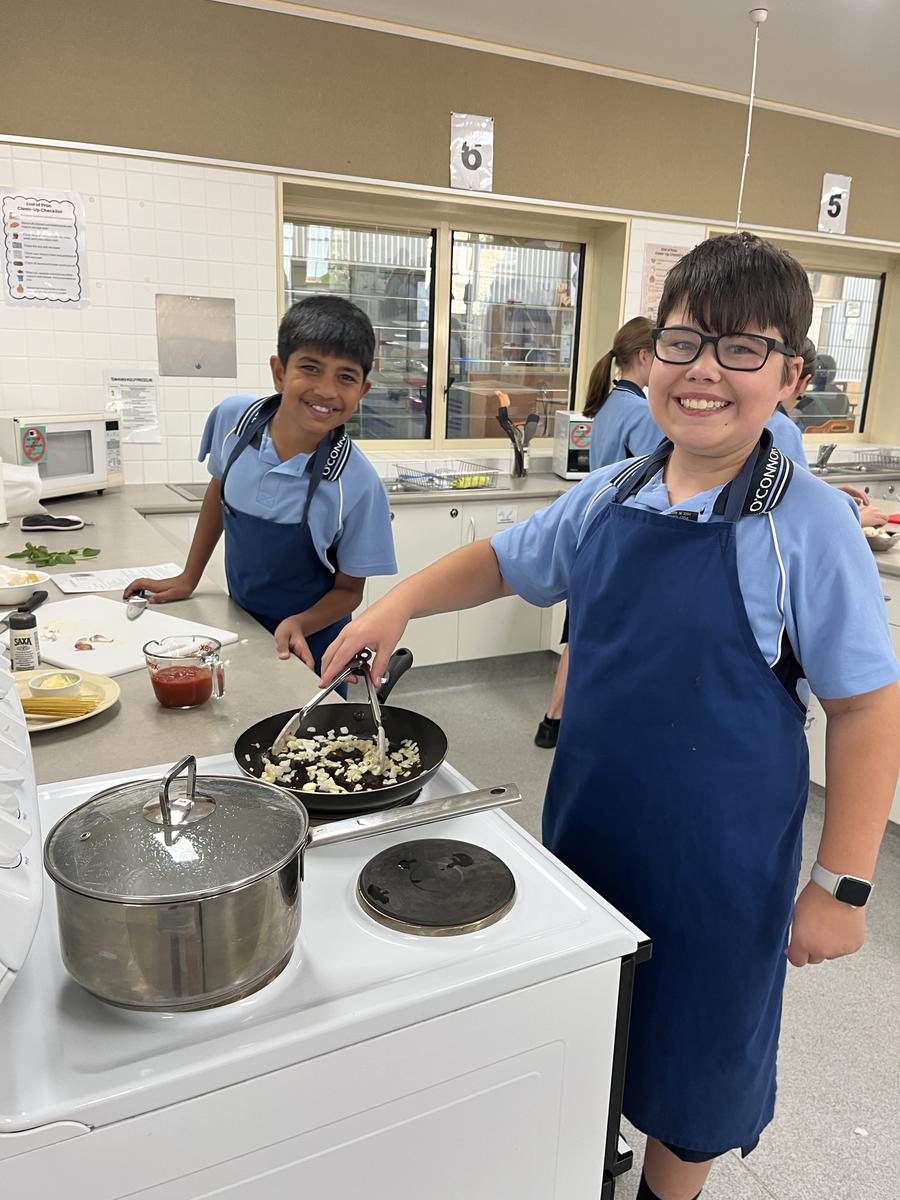
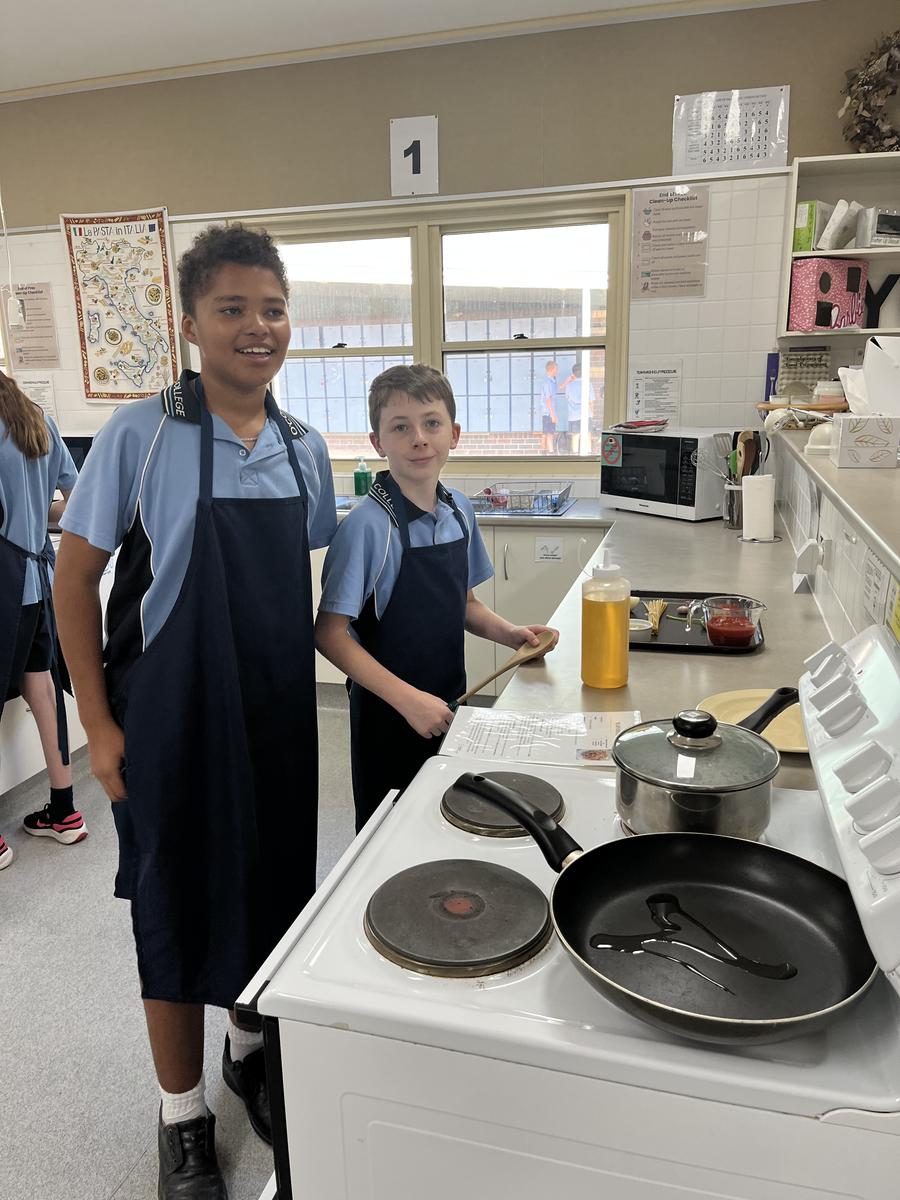
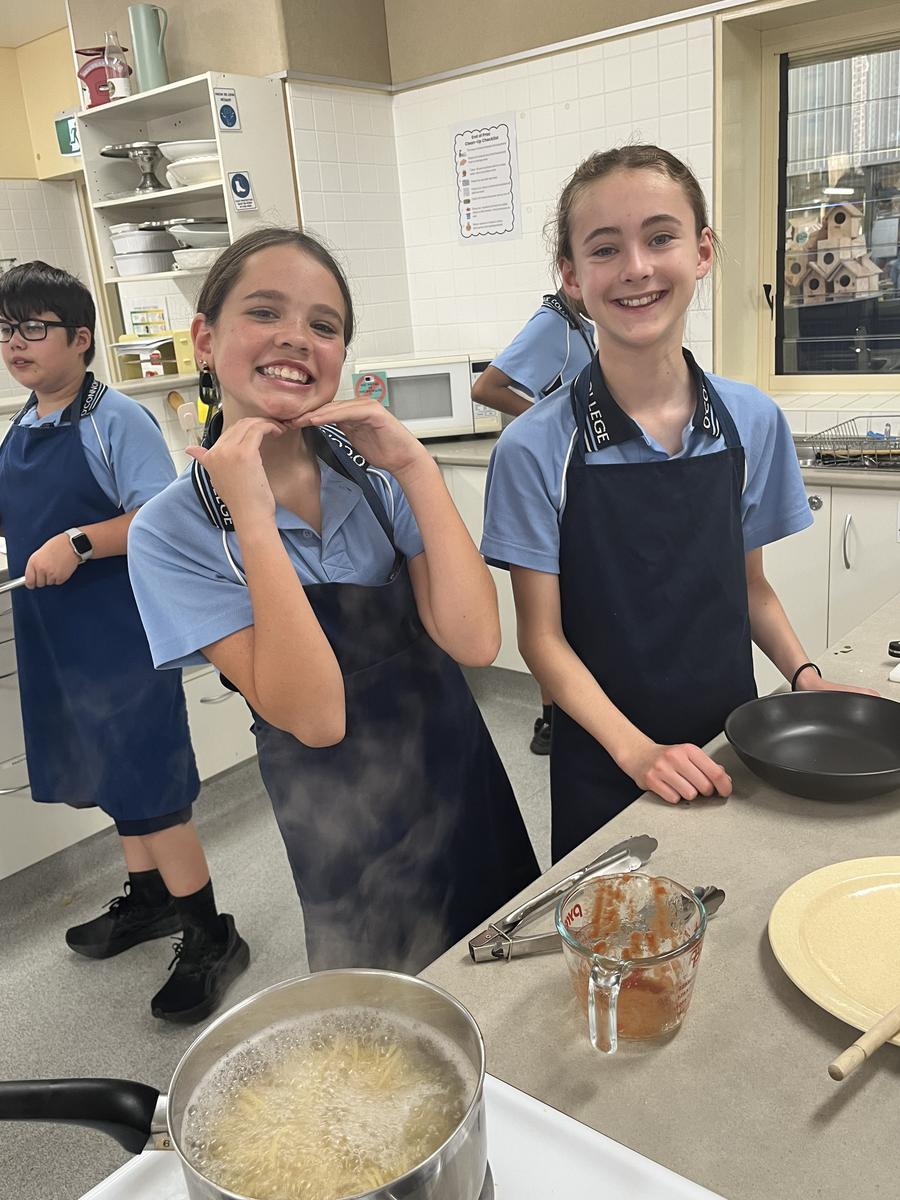
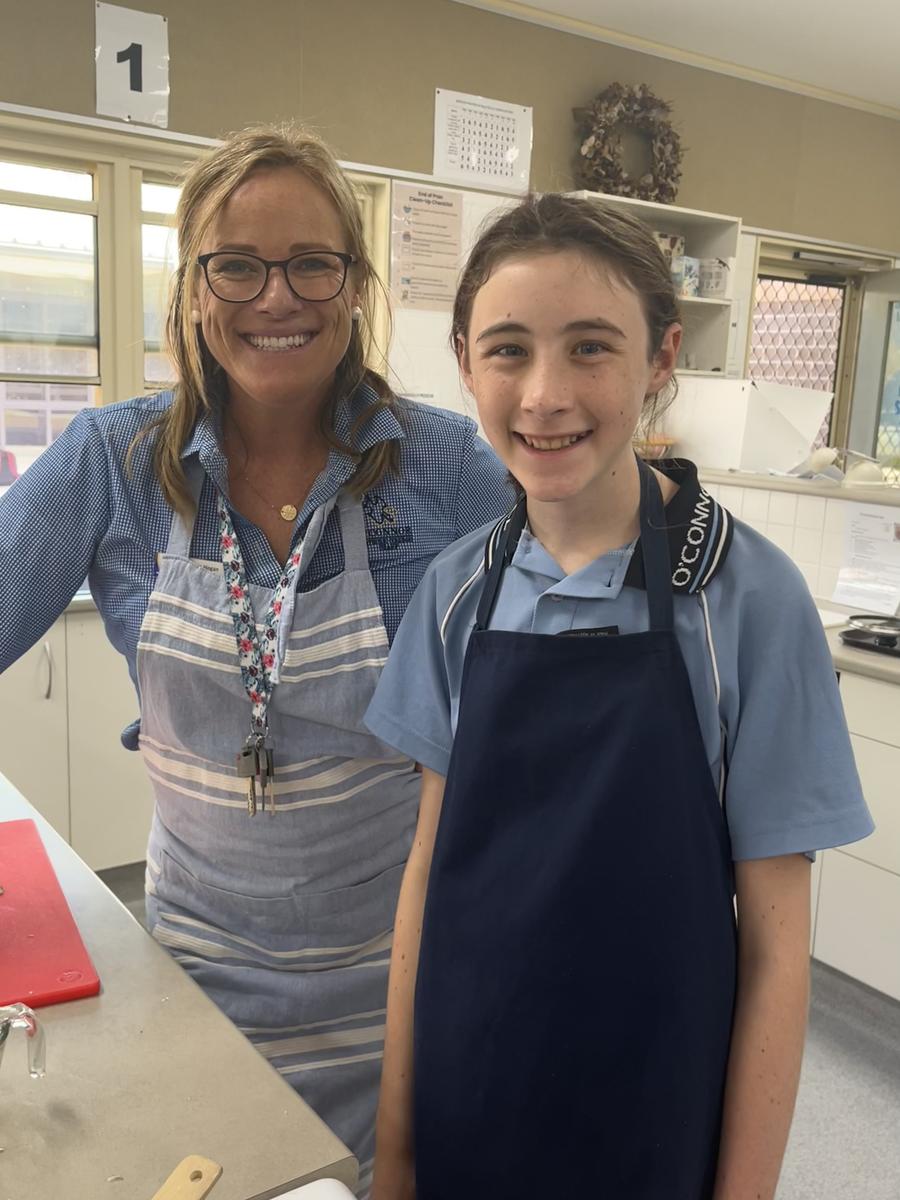
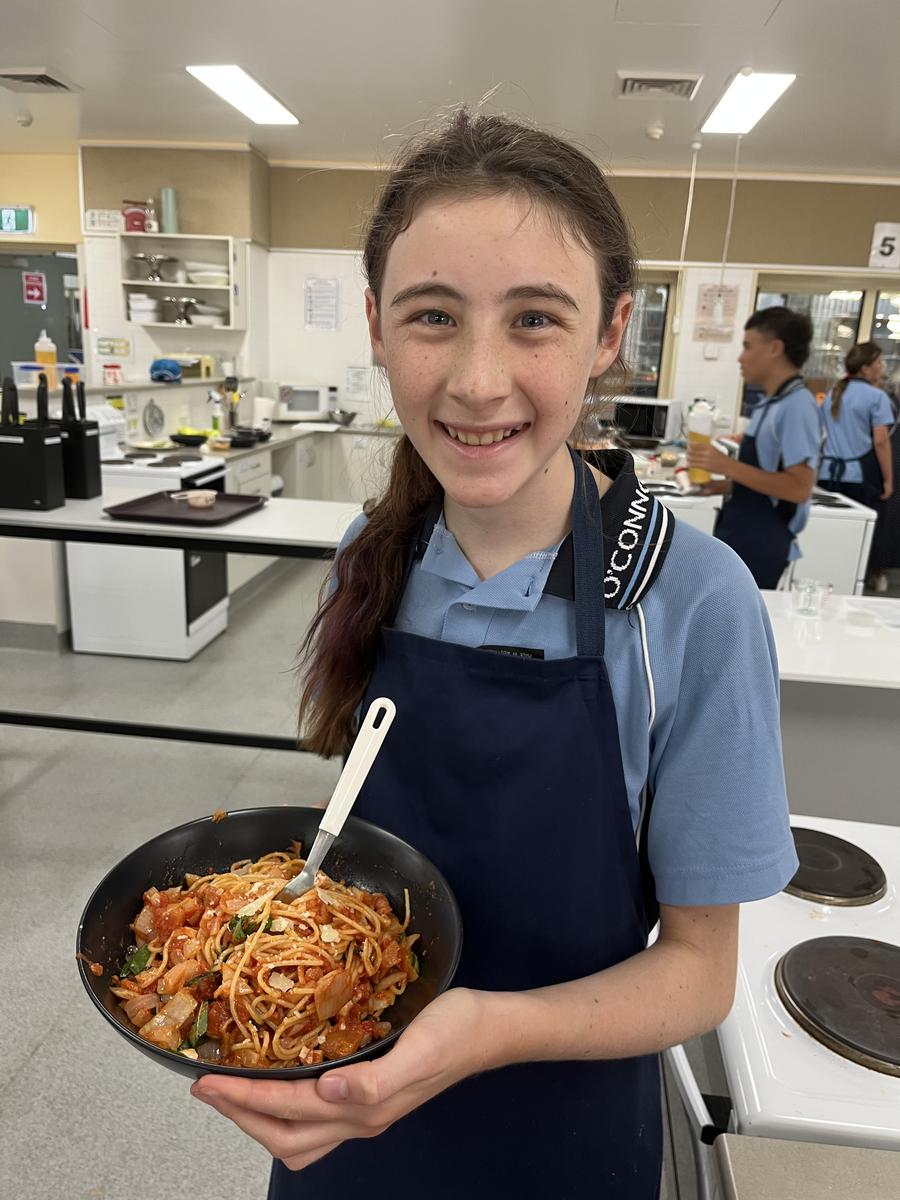
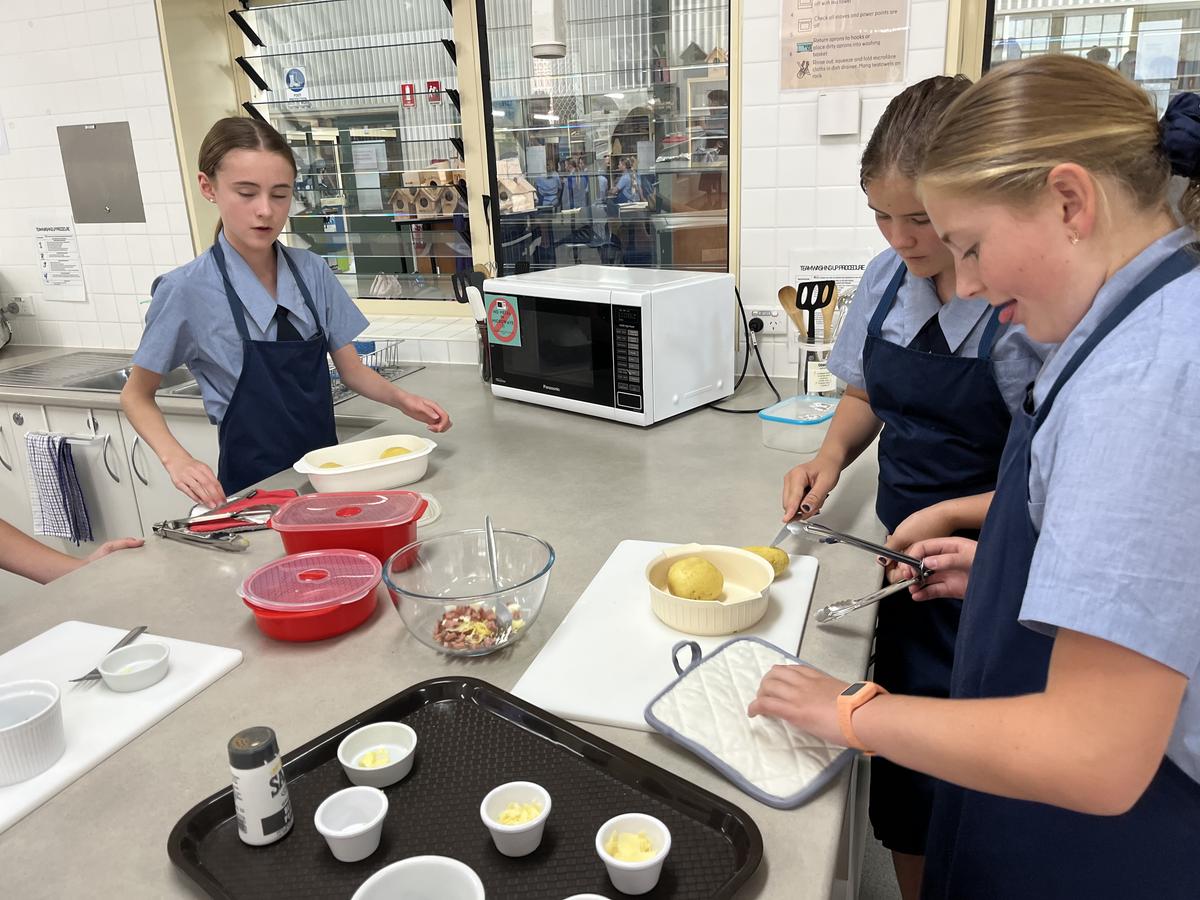
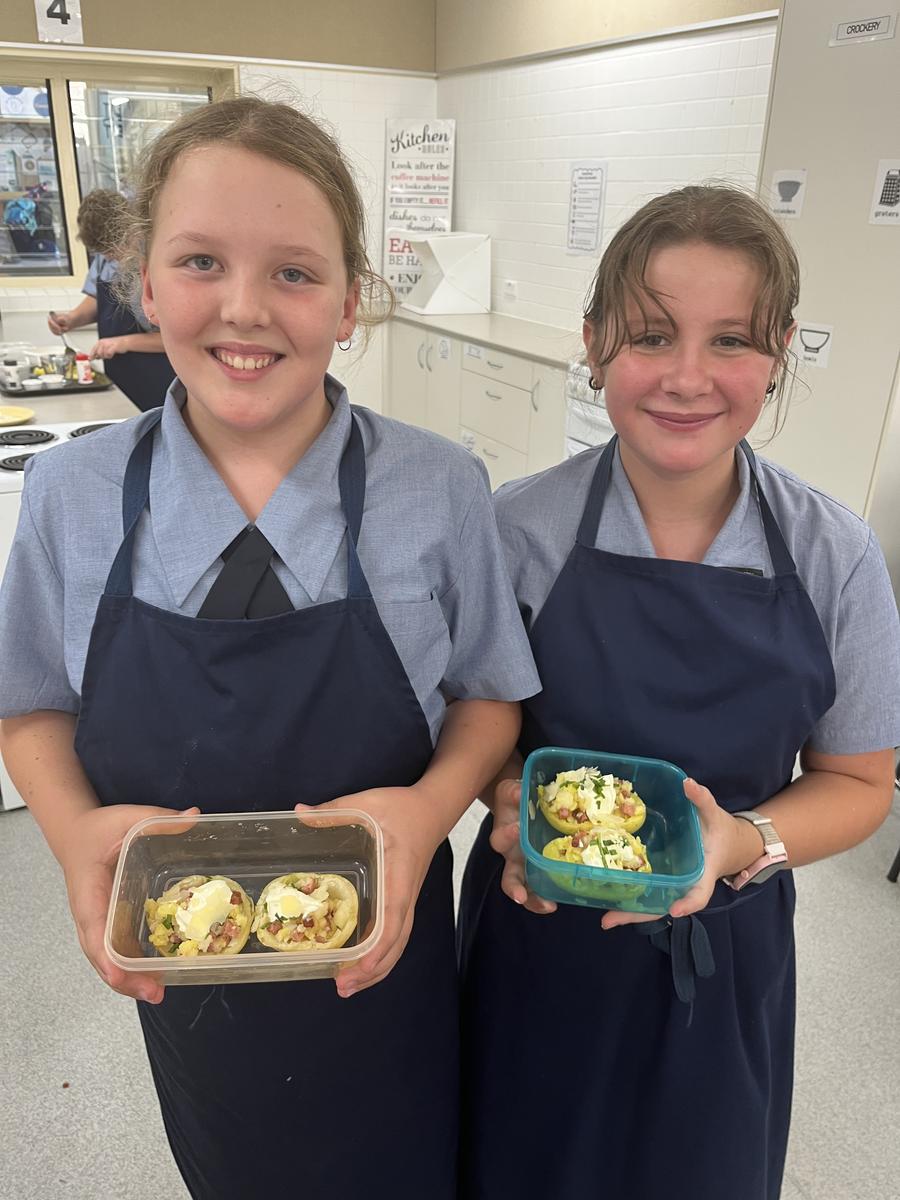
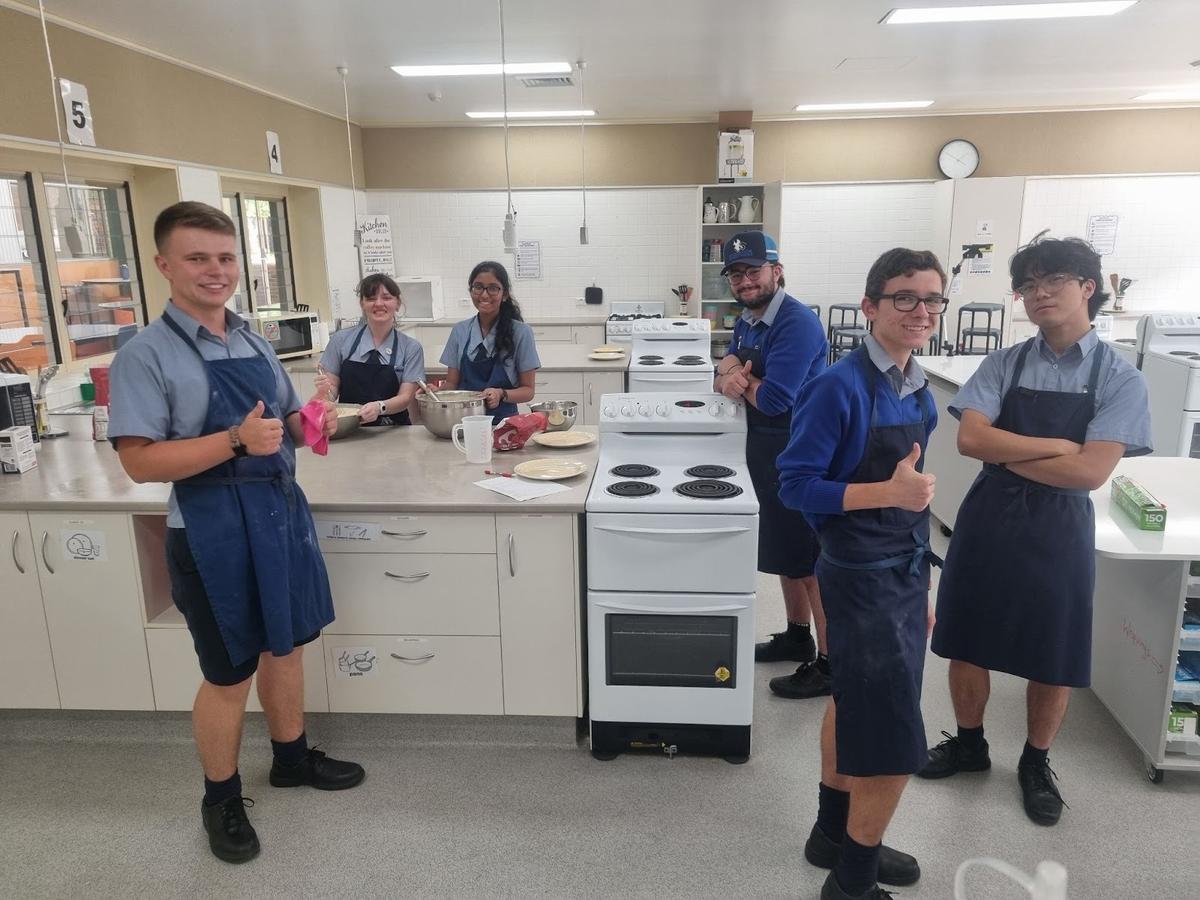
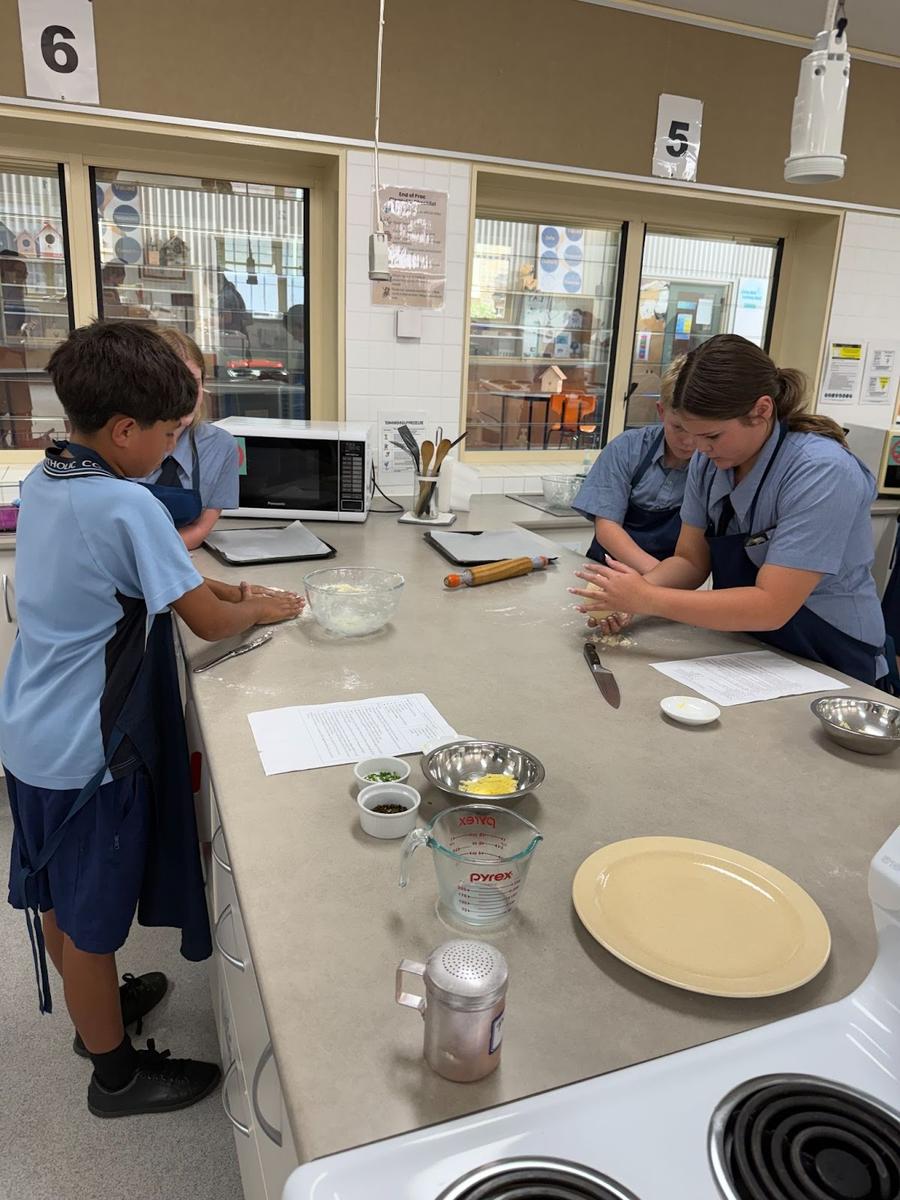
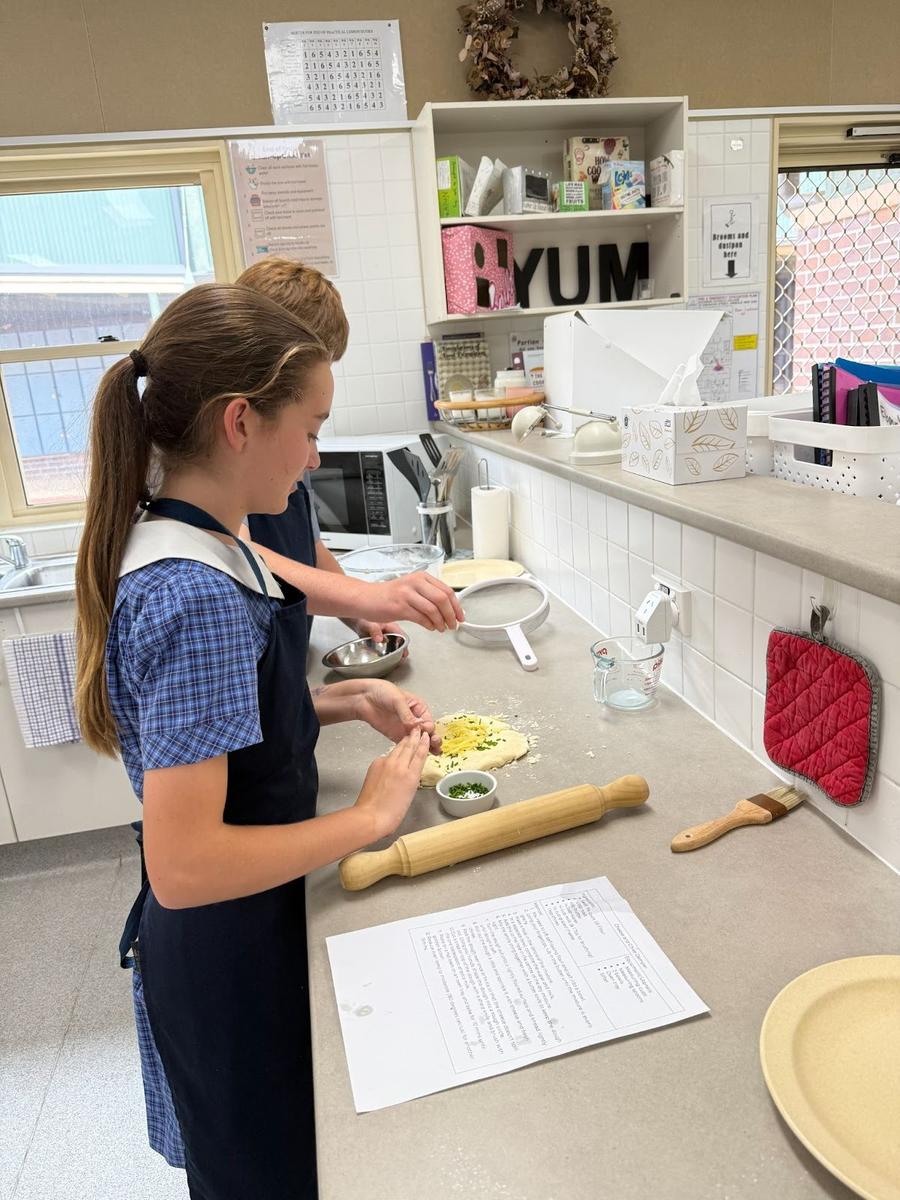
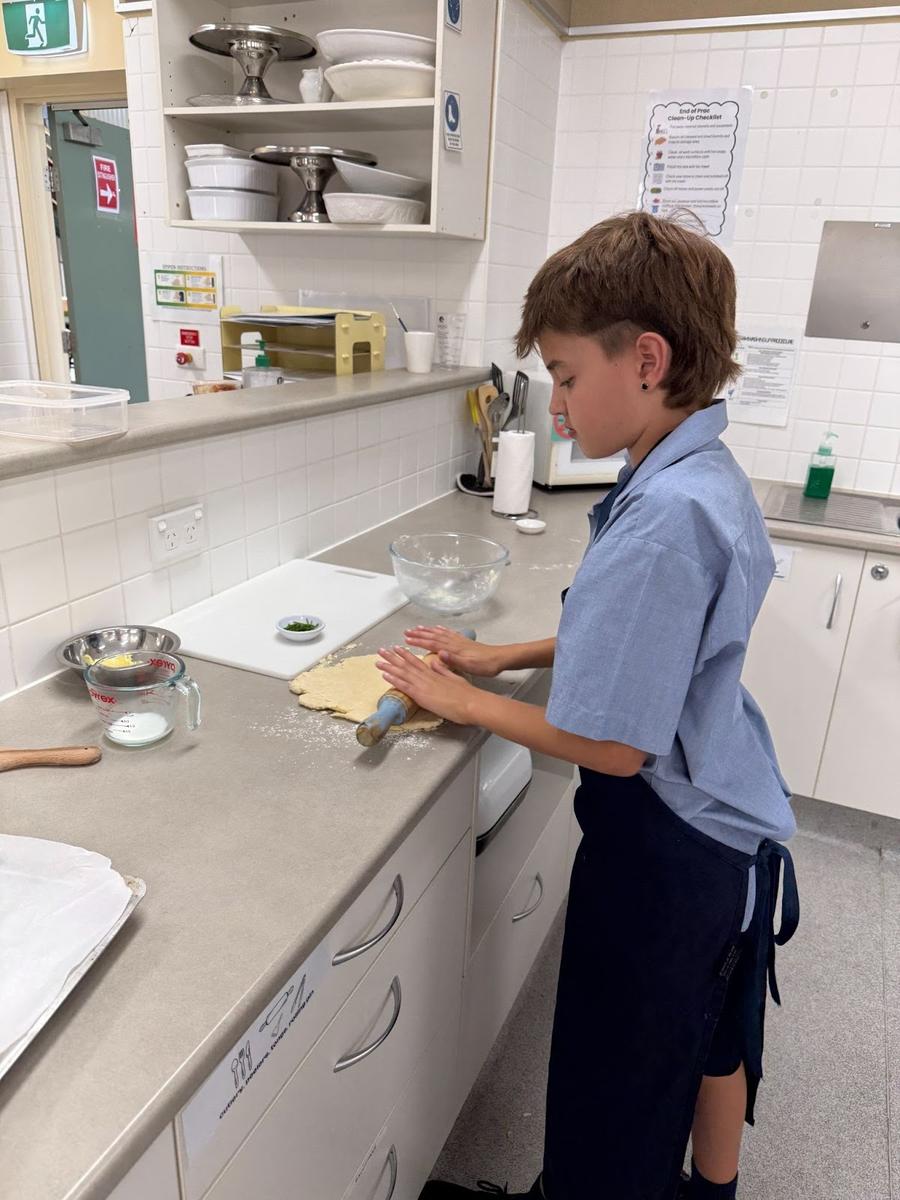
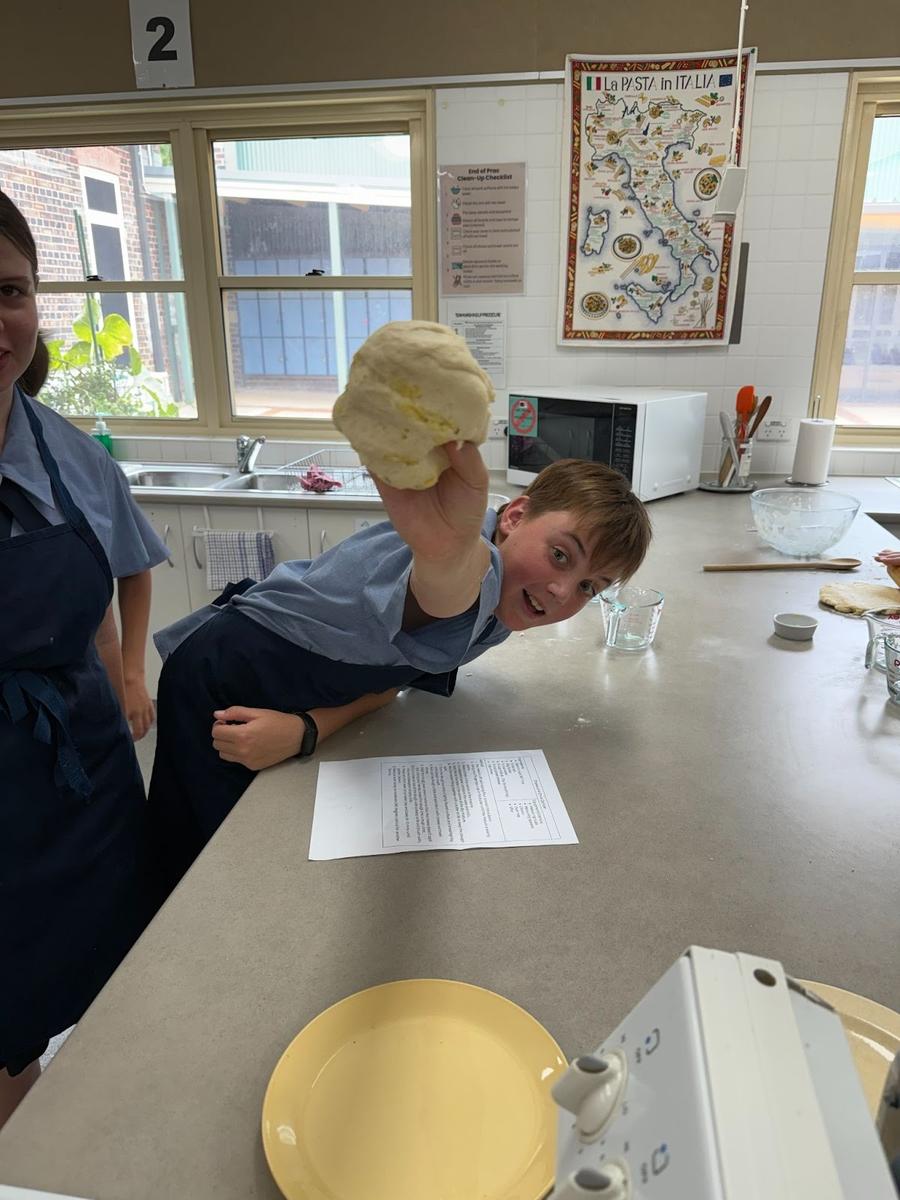
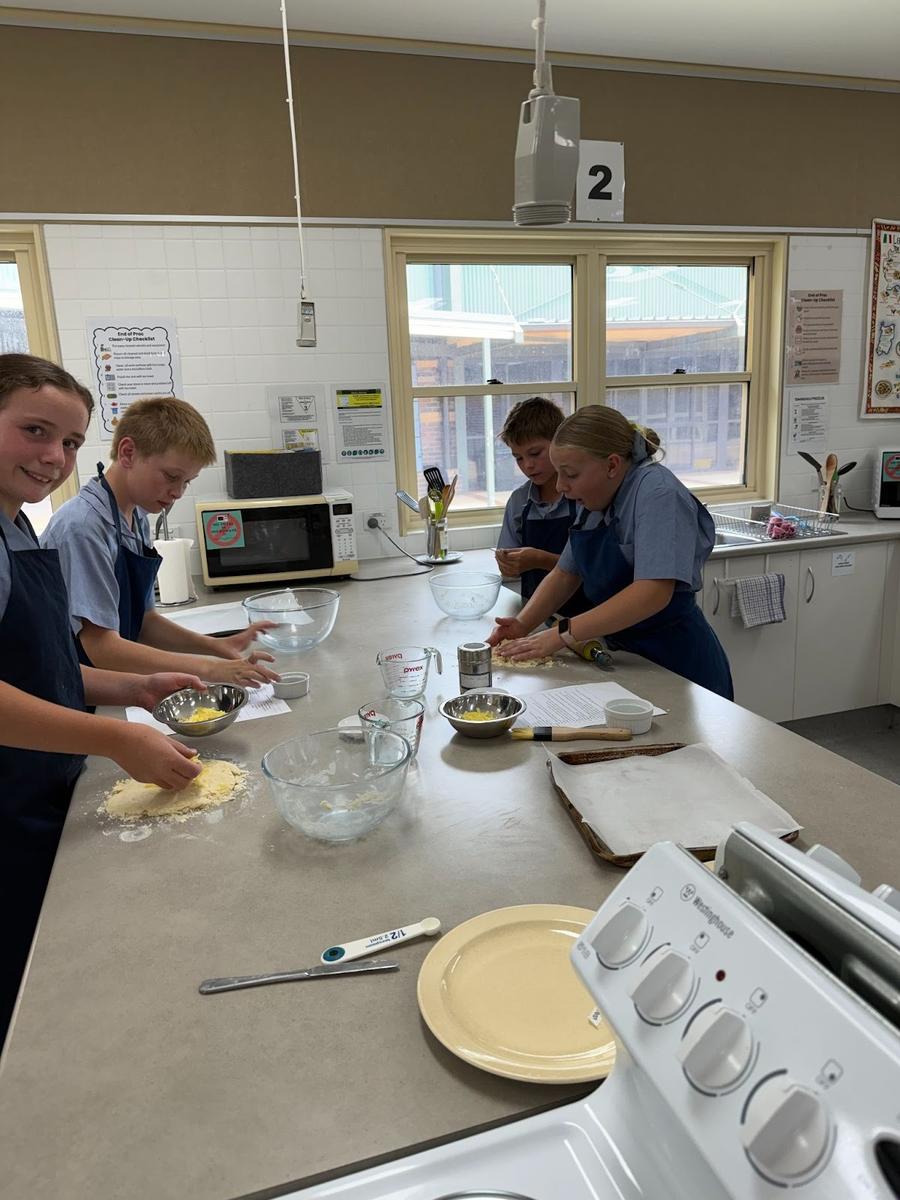
The Year 7 Tech_E students have had a fantastic start to their Food Technology unit this term, developing essential kitchen skills while learning about safety & hygiene, food preparation, and sustainable food choices.
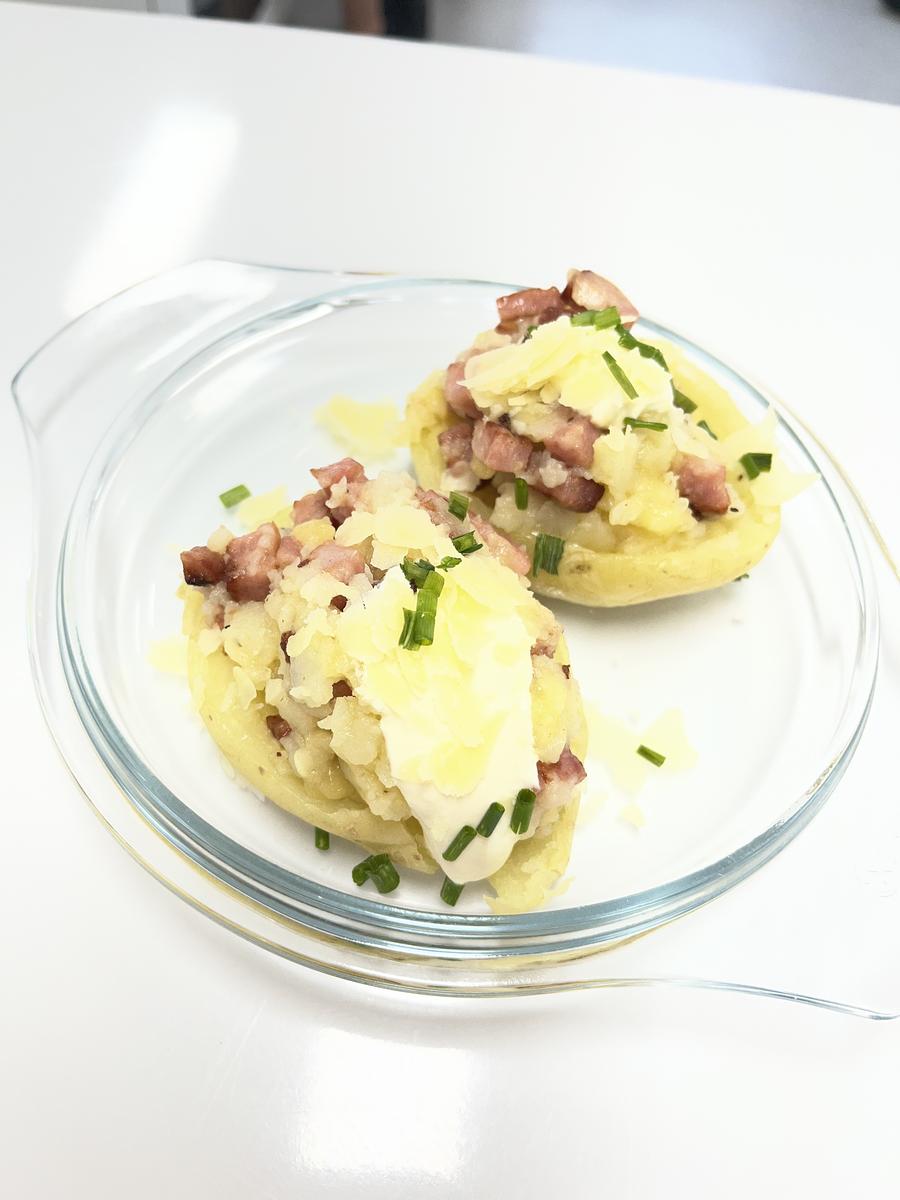
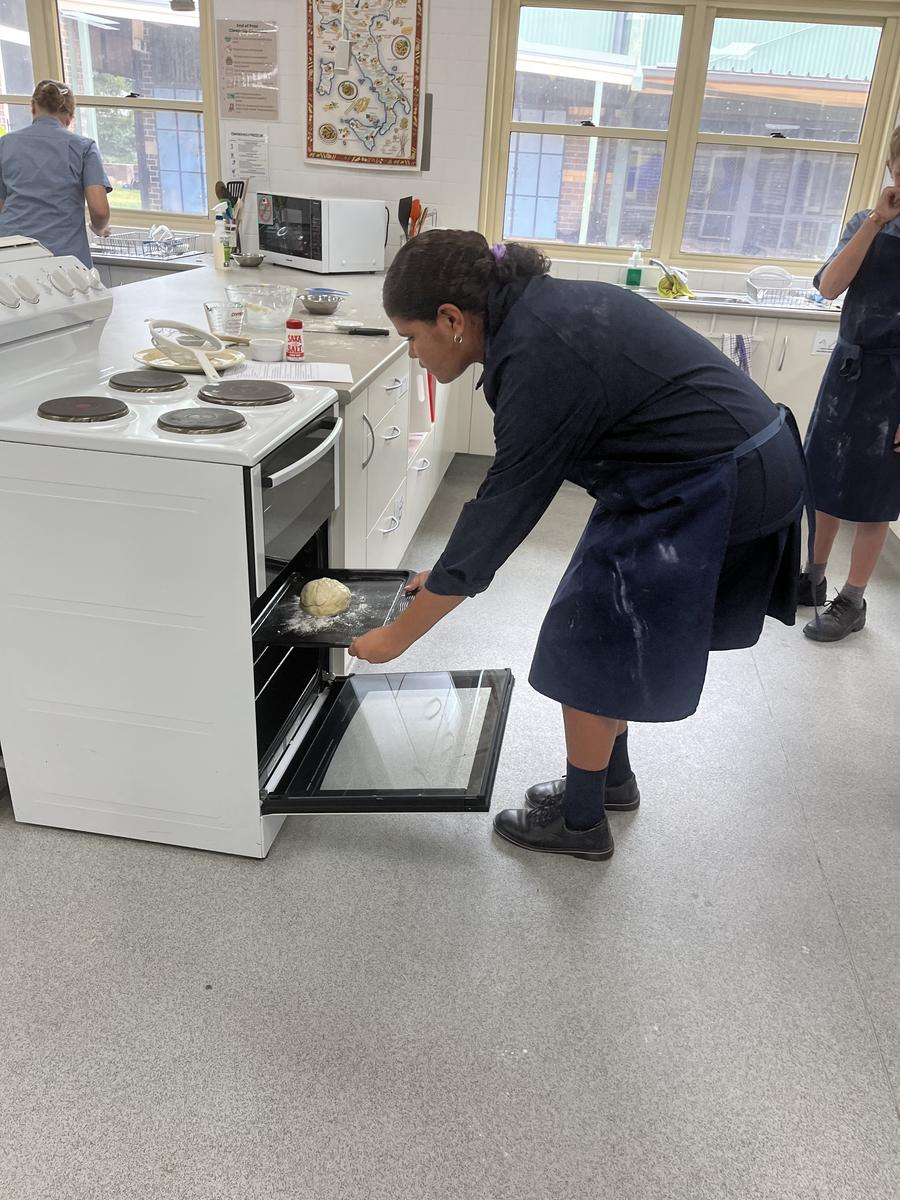
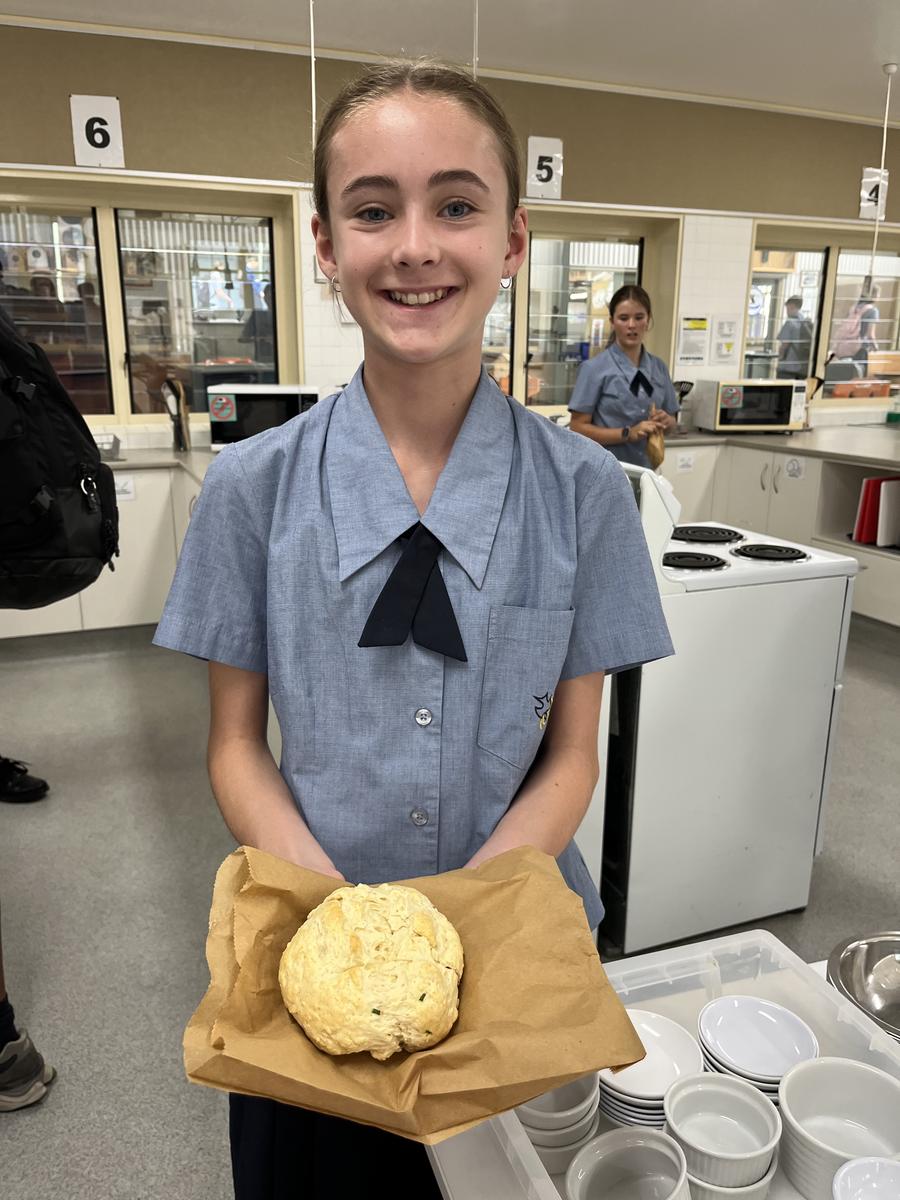
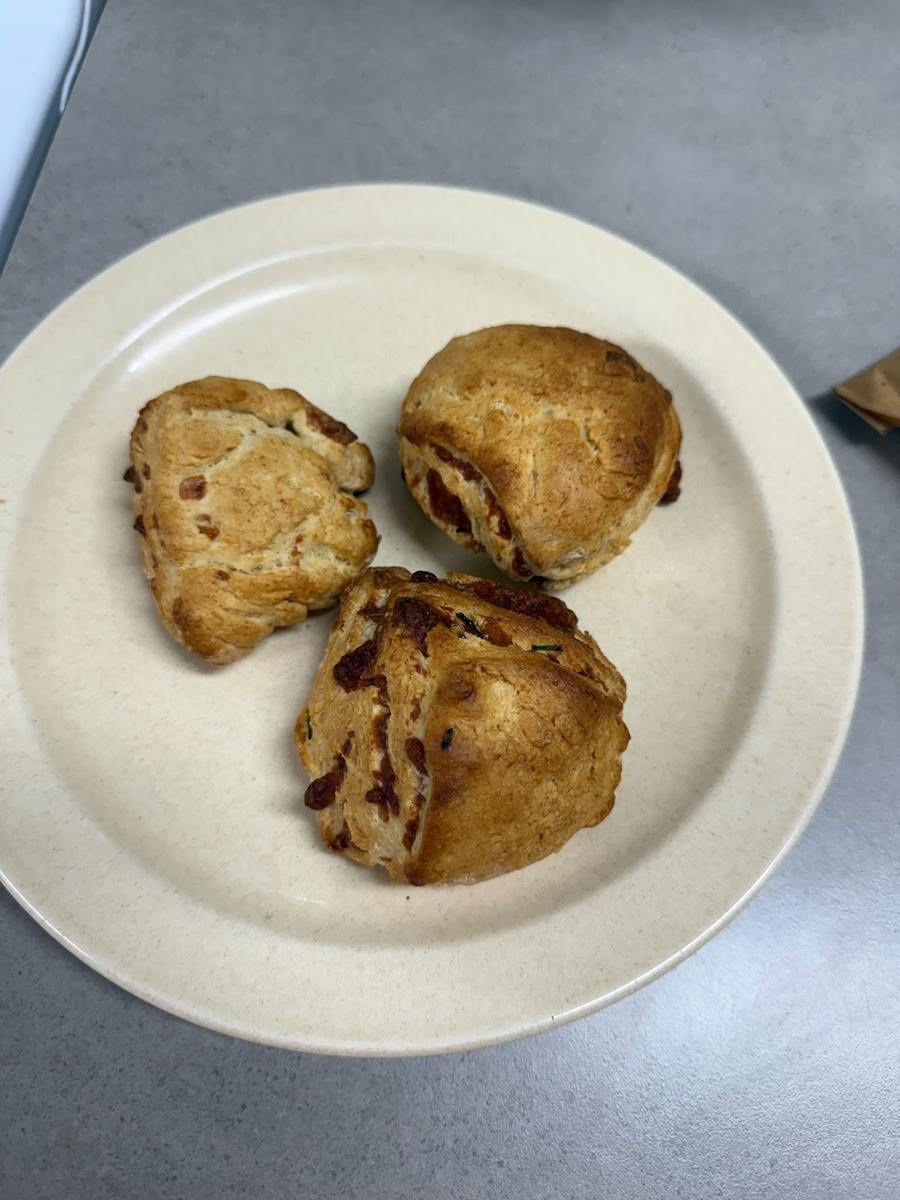
So far, students have successfully prepared pasta with napolitana sauce, sausage rolls, and most recently cheese and chive damper. Through these practical lessons, students have focused on safe food handling, correct measuring techniques, and working cooperatively in a kitchen environment. Making damper also provided an opportunity to explore traditional Australian cooking methods while developing baking skills.
In the coming weeks, students are looking forward to a range of exciting practical experiences, including making fried rice, microwave loaded potatoes, and the popular OCC Thank You Burger. Each activity is designed to strengthen cooking skills while encouraging creativity and independence in the kitchen.
As part of their learning task, students will become food designers by creating their own burger concept. They will be challenged to incorporate locally sourced ingredients, promoting an understanding of sustainability, food miles, and supporting local producers. Students will present their ideas by explaining their ingredient choices and how their burger meets design and nutrition considerations.
It has been wonderful to see students demonstrating enthusiasm, teamwork, and growing confidence as they develop lifelong food skills.
Well done to all our Year 7 cooks for their hard work and "can-do" attitude!
Year 11 Textiles
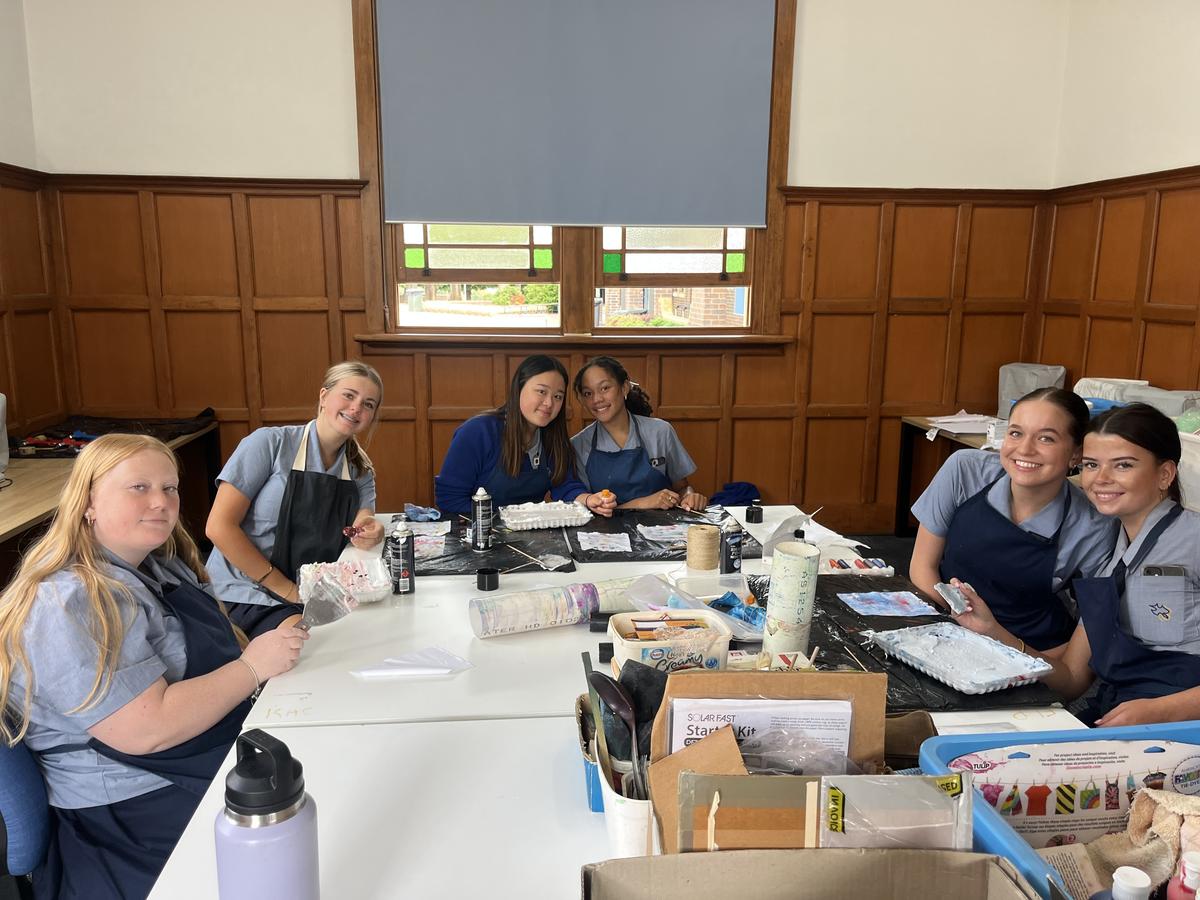
Year 11 Textiles students doing some work experiments on dyeing and printing.
Mr Jon Hawthorne
Leader of Learning - TAS
Mathematics
It has been a busy and productive start to the term in the Mathematics faculty at O’Connor Catholic College. Across all year groups, students have been engaging with new concepts, building problem-solving skills, and applying mathematics to real-world contexts.
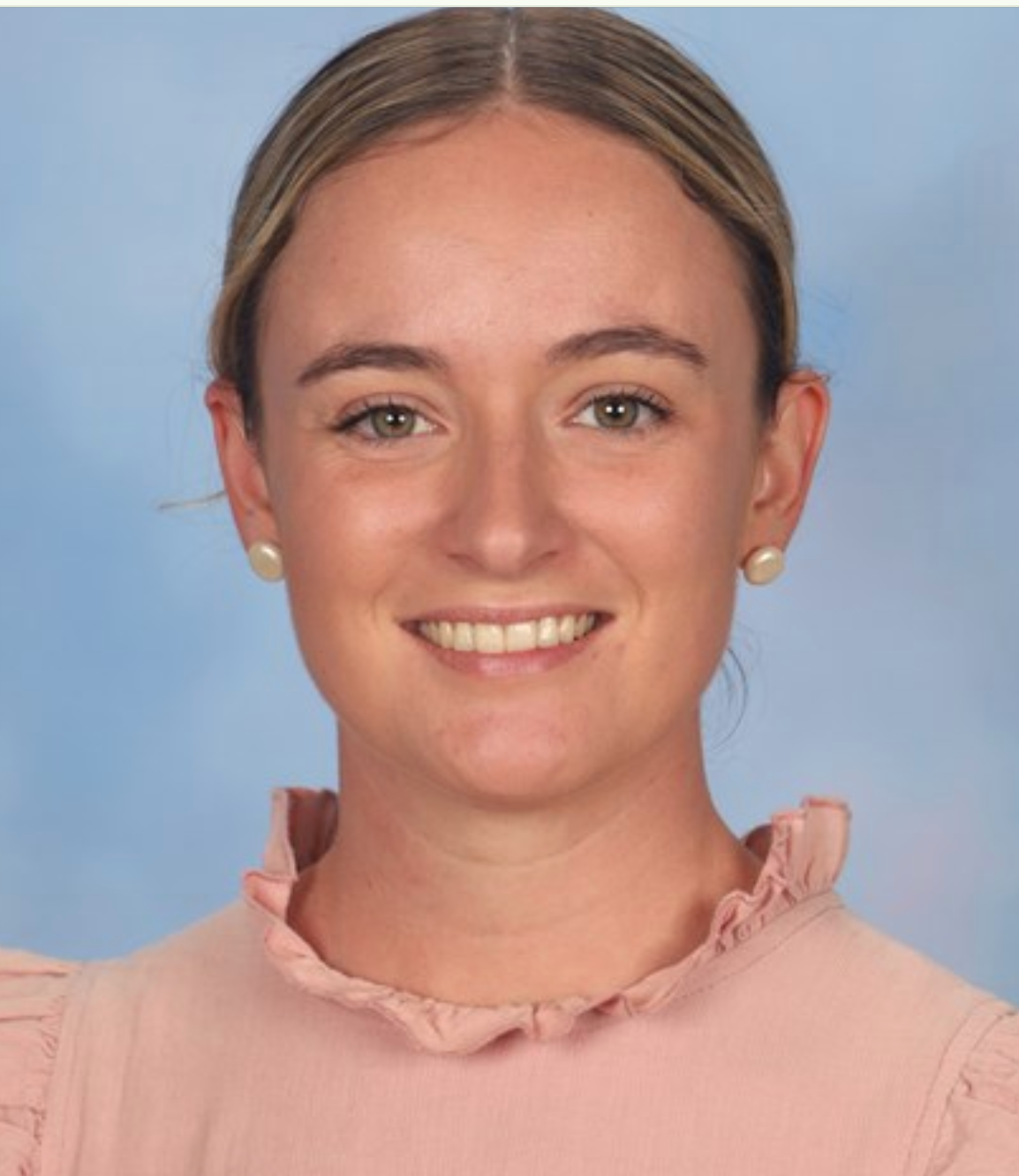
It is with great pleasure that we welcome Miss Lauren Spelleken to the Mathematics KLA this year. Miss Spelleken is a qualified Mathematics teacher and joins us from Ipswich Girls Grammar. She is working with classes from 7 - 10 this year and we are lucky to have acquired her services. Miss Spelleken has already had a big impact on the learning of her students in her Mathematics classes so far this term.
Year 7 students have been developing their foundational numeracy skills through work on computation with integers. They have also begun exploring directed numbers, learning how positive and negative numbers behave and how these ideas apply to everyday situations.
In Year 8, students have been strengthening their understanding of decimals, fractions, and percentages. These topics form an important bridge between basic arithmetic and more advanced mathematical applications, helping students confidently move between different numerical representations.
Year 9 students are currently studying financial mathematics, exploring practical topics such as interest, budgeting, and the mathematics behind everyday financial decisions. These skills are valuable for building financial literacy and understanding real-world applications of mathematics.
In Year 10, students are working along two pathways. Those in the advanced pathway are focusing on algebra, developing stronger algebraic manipulation skills and solving more complex expressions and equations. Students in the standard pathway are studying financial mathematics, applying mathematical thinking to practical financial situations.
Our Year 11 students are continuing their transition into senior mathematics. Year 11 Advanced Mathematics students are working on advanced algebra and equations, strengthening the algebraic skills that underpin much of senior mathematics. Meanwhile, Year 11 Extension Mathematics students have progressed further into equations and have recently begun exploring permutations, combinations, and the binomial theorem, key topics in counting techniques and algebraic expansion.
For our Year 12 students, the focus is firmly on preparation for the HSC. Year 12 Advanced Mathematics students are working through calculus, studying both derivatives and integrals and their applications. Year 12 Standard Mathematics students are currently studying trigonometry, including bearings, the sine rule, and other trigonometric relationships, which are essential for solving practical measurement problems. Year 12 extension 1 students are focused on Further integration and Extension 2 students are working on the further applications of complex numbers.
In addition, we are pleased to announce that we have opened up the Maths Challenge through the Australian Mathematics Trust (AMT). Students across multiple year groups have the opportunity to participate in this competition, which provides engaging and challenging problems designed to extend mathematical thinking. If you are interested please see Mr Harris, there is a fee of $30 per student to take part in this.
To further support our senior students, Senior Mathematics Study Help is available every Thursday afternoon from 3:30 pm to 4:45 pm in room U14. This session provides students with the opportunity to ask questions, receive extra support, and work through challenging problems with guidance from mathematics teachers. All senior mathematics students are encouraged to attend if they would like additional help or dedicated study time.
Across all classes, students are completing a range of tasks and activities designed to deepen their understanding and develop their confidence in mathematics. We encourage all students to continue working hard, practising regularly, and taking advantage of opportunities to challenge themselves.
Be ready, stay curious, and keep studying hard!
Mr Mark Harris
Leader of Learning - Mathematics
Science
Back-to-Back Champions: O’Connor Triumphs at UNE Science and Engineering Challenge!
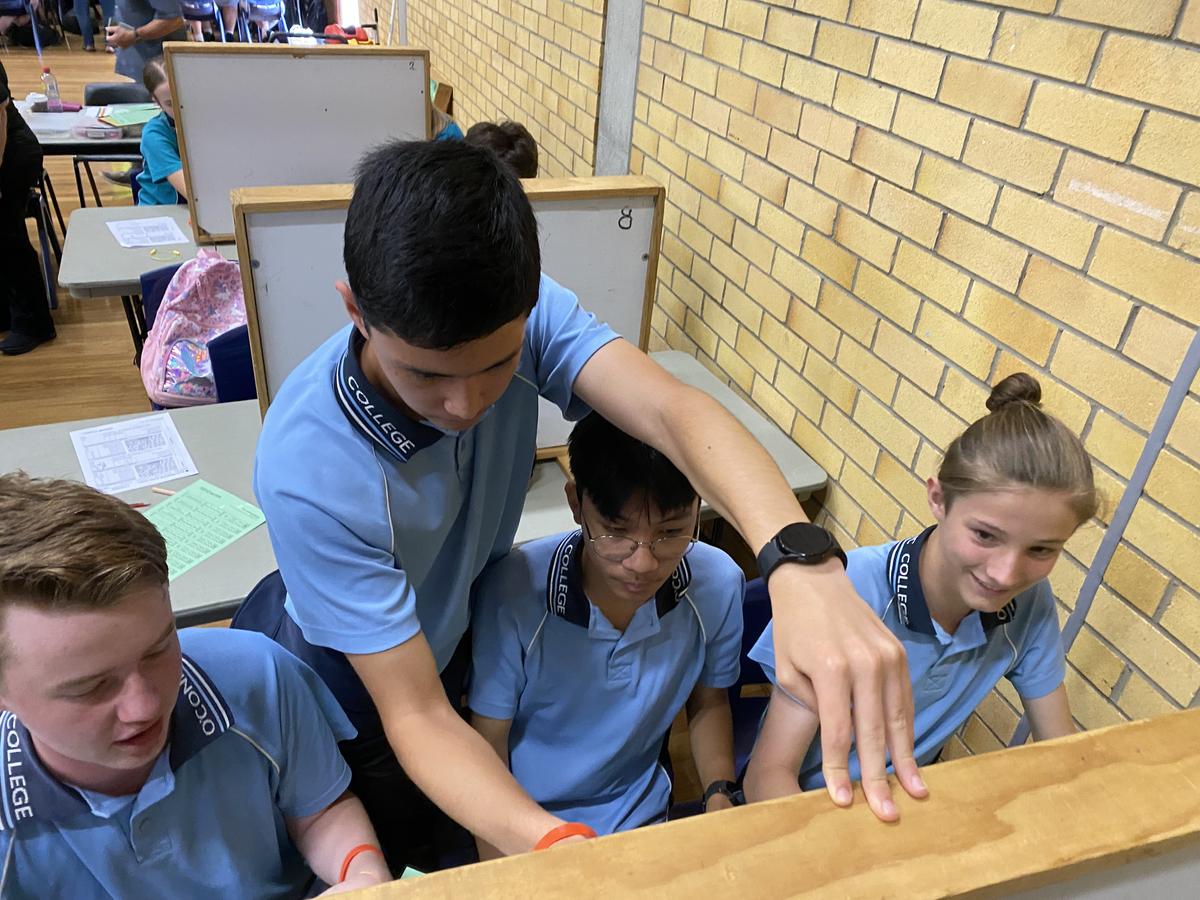
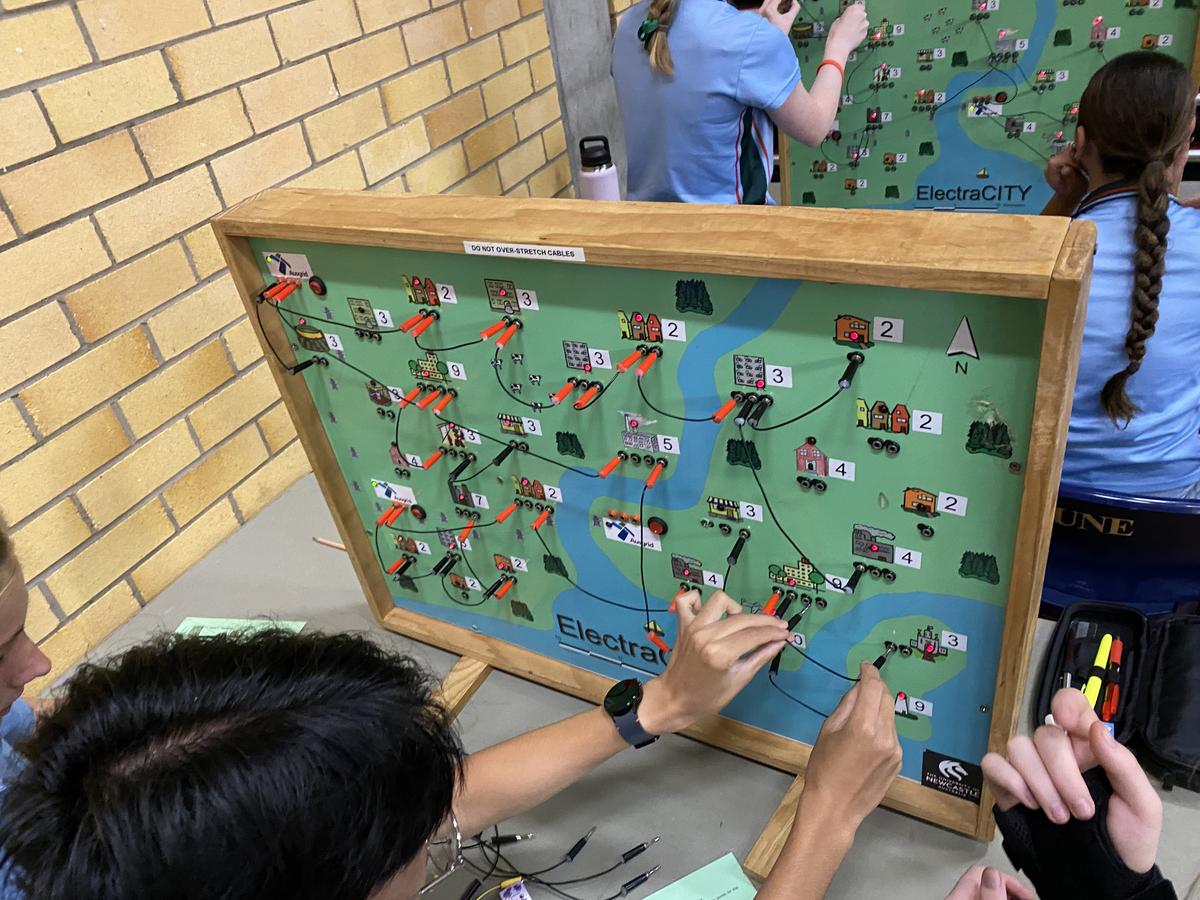
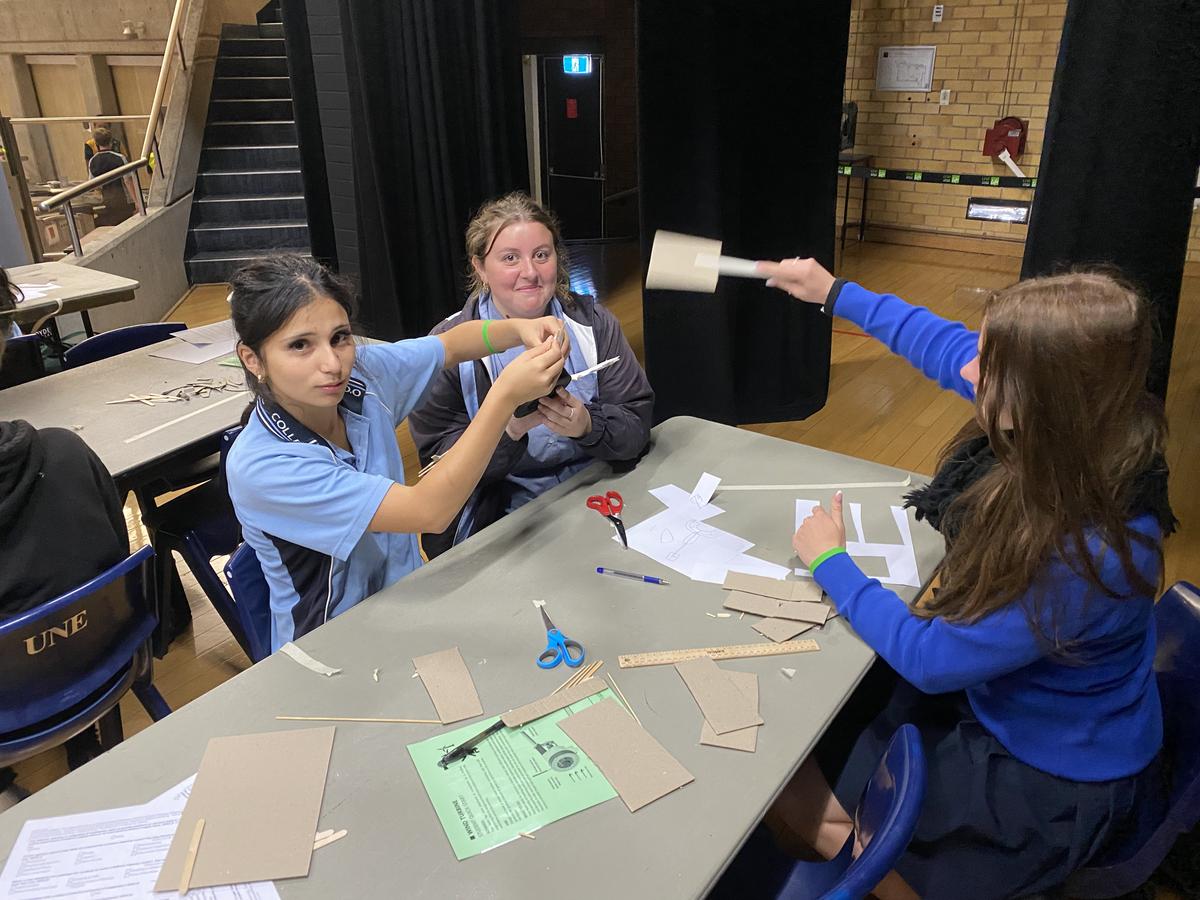
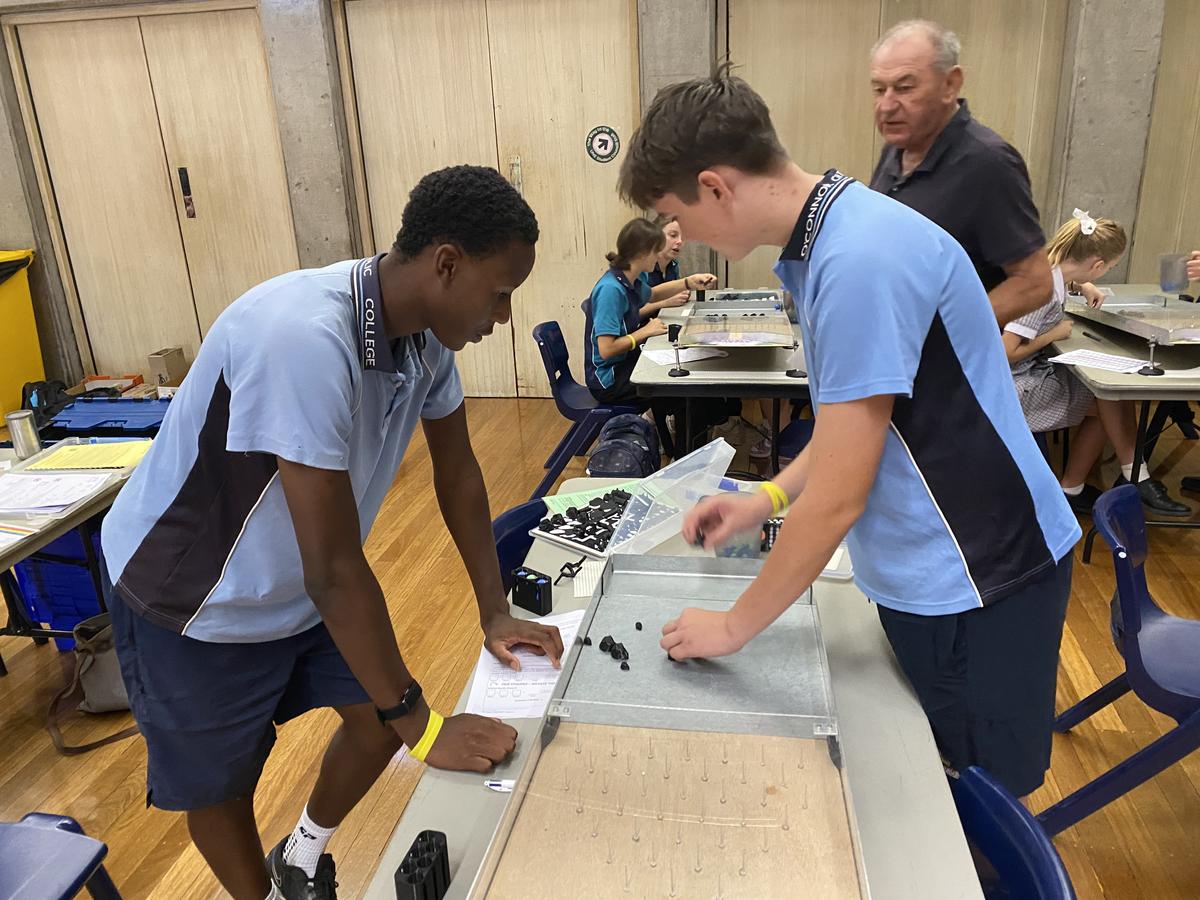
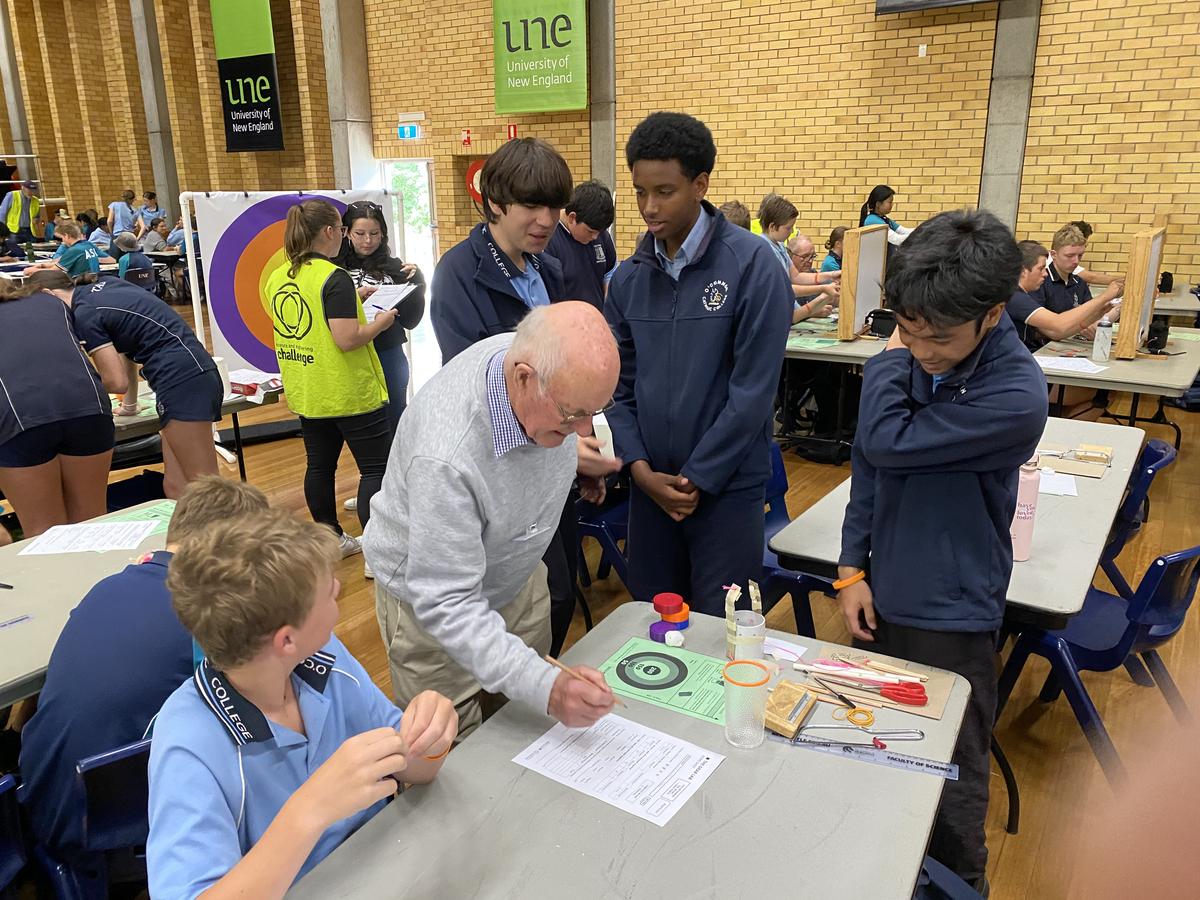
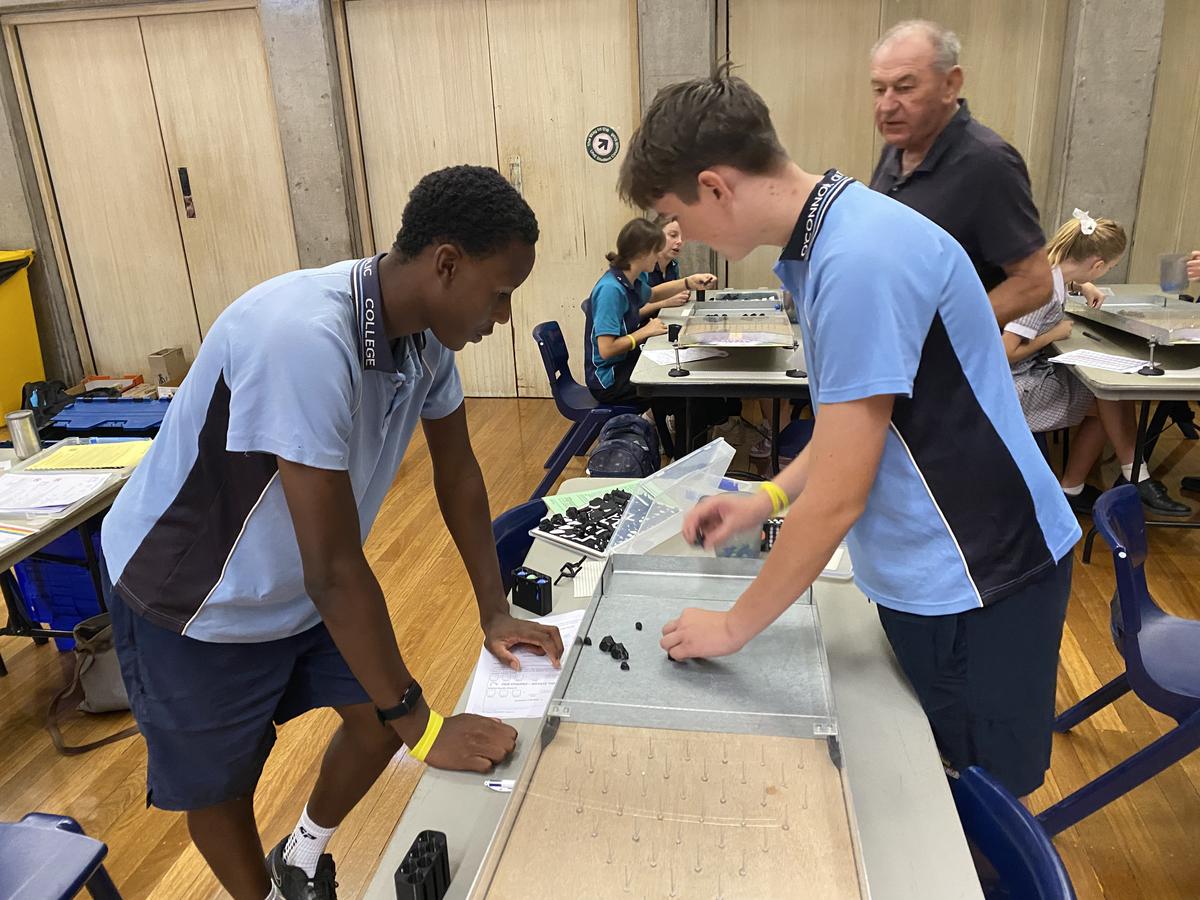
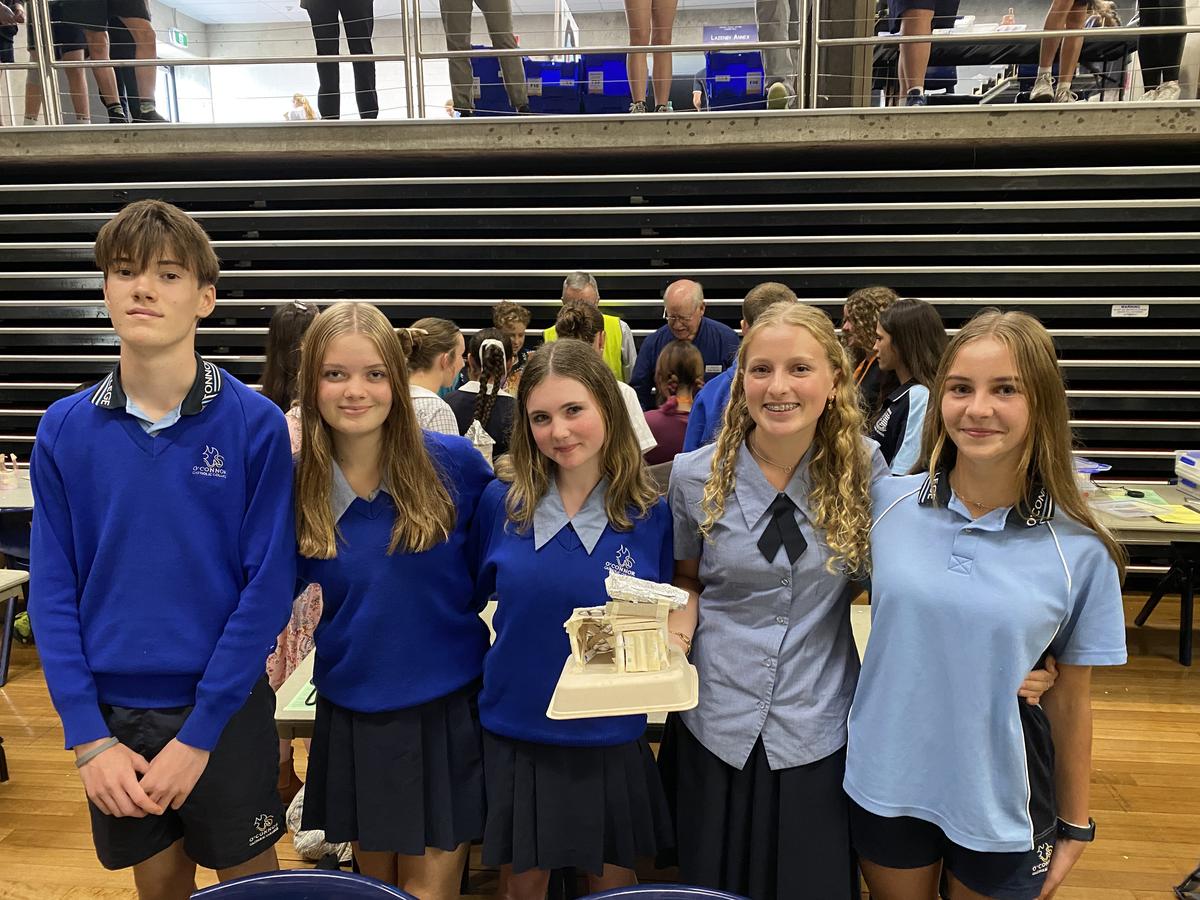
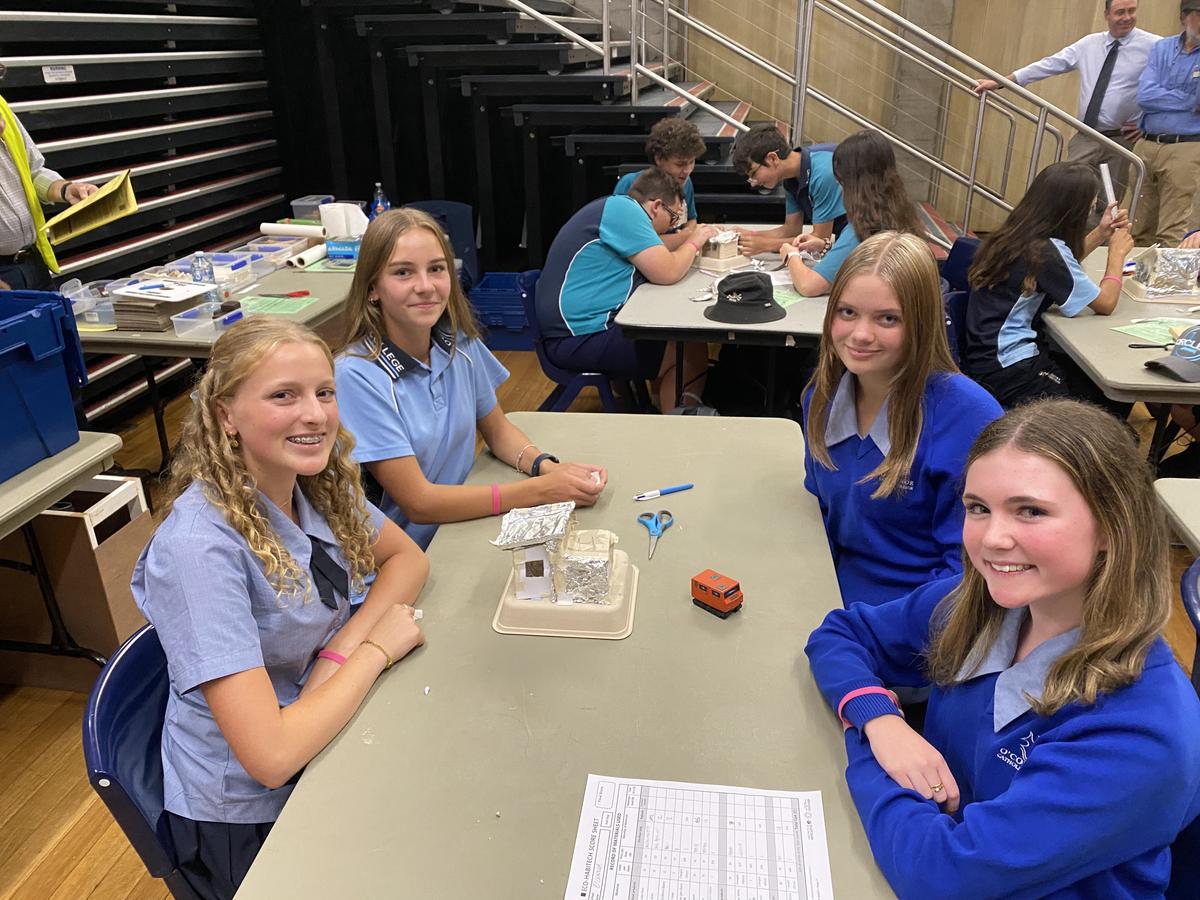
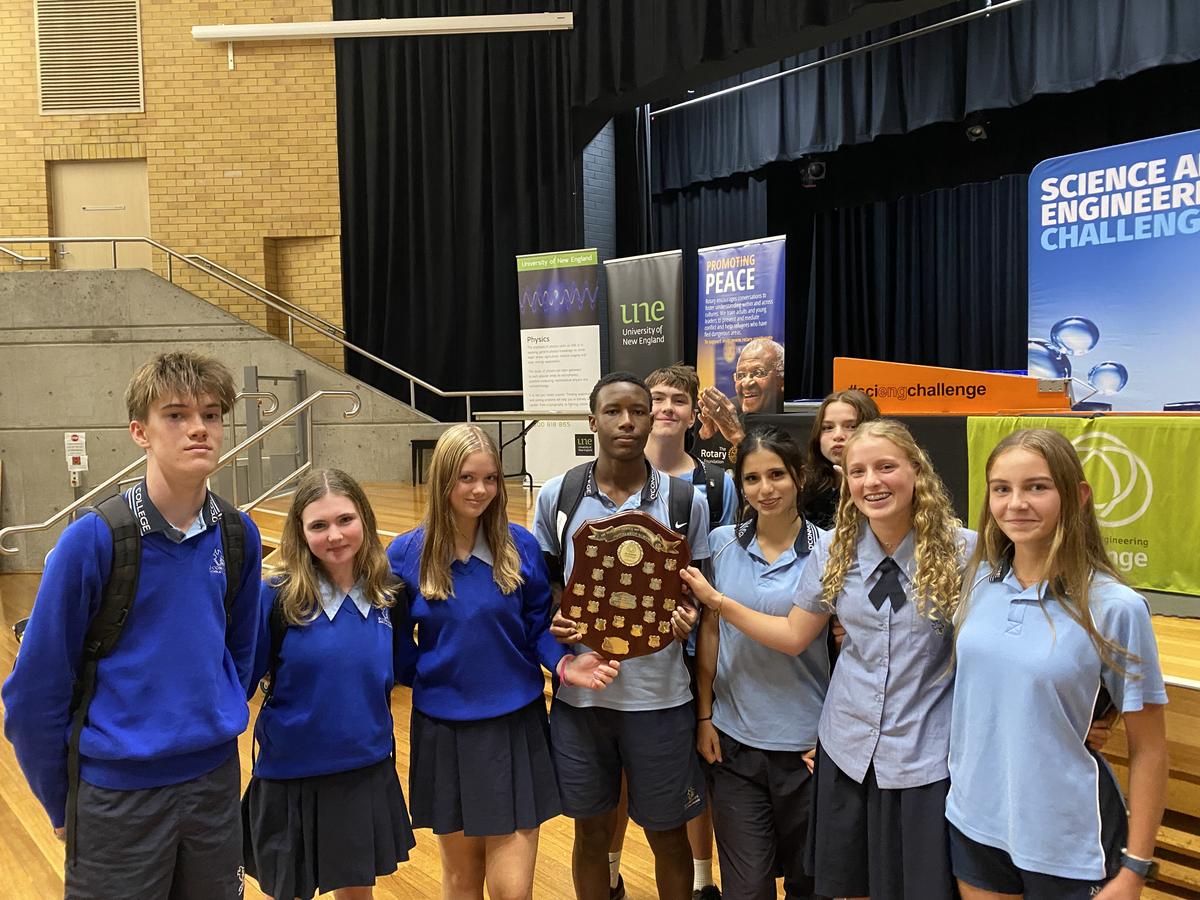
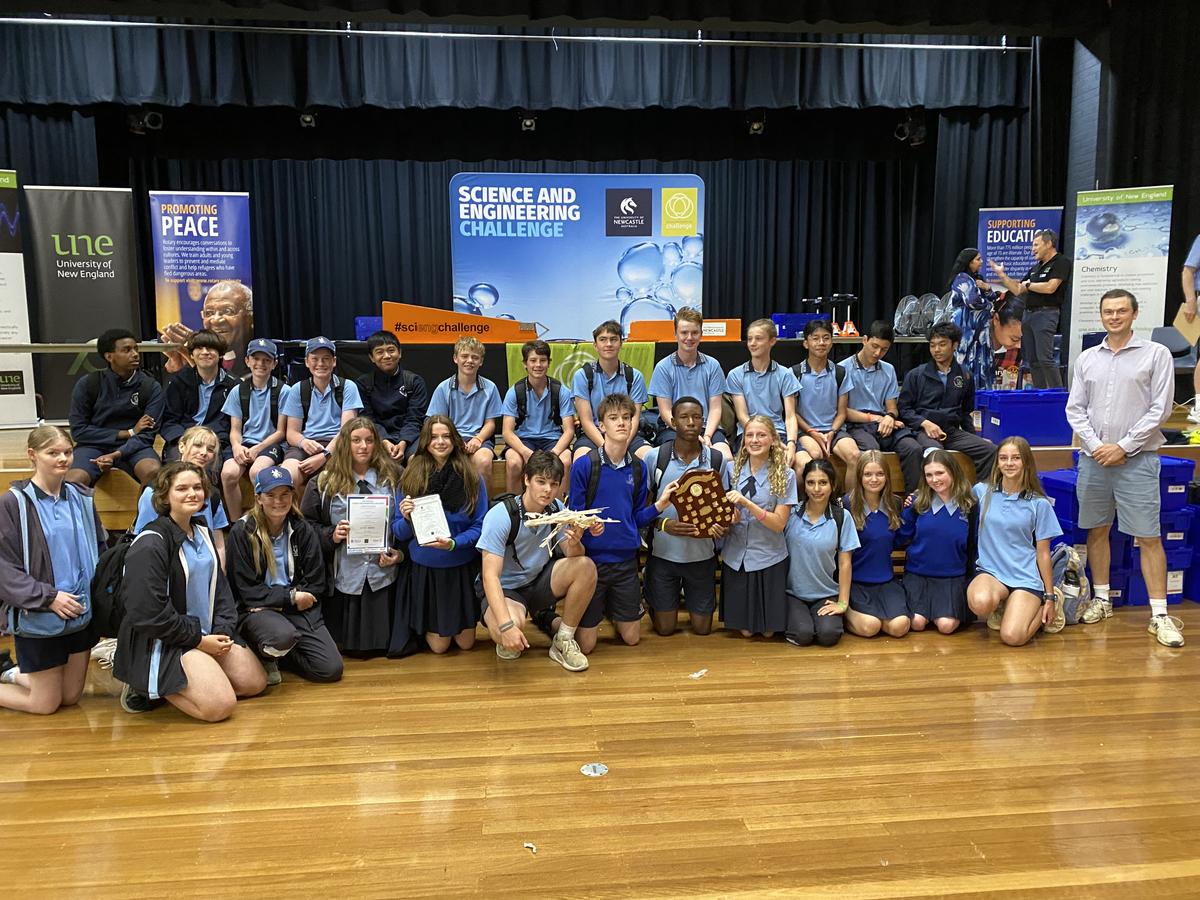
The streak continues! Yesterday, 28 of our brightest Year 9 and 10 students returned to UNE’s Lazenby Hall to defend our title at the Regional Science and Engineering Challenge. In a day filled with high-stakes problem-solving and intense competition against schools from across the region, O’Connor Catholic College emerged victorious once again.
The Competition
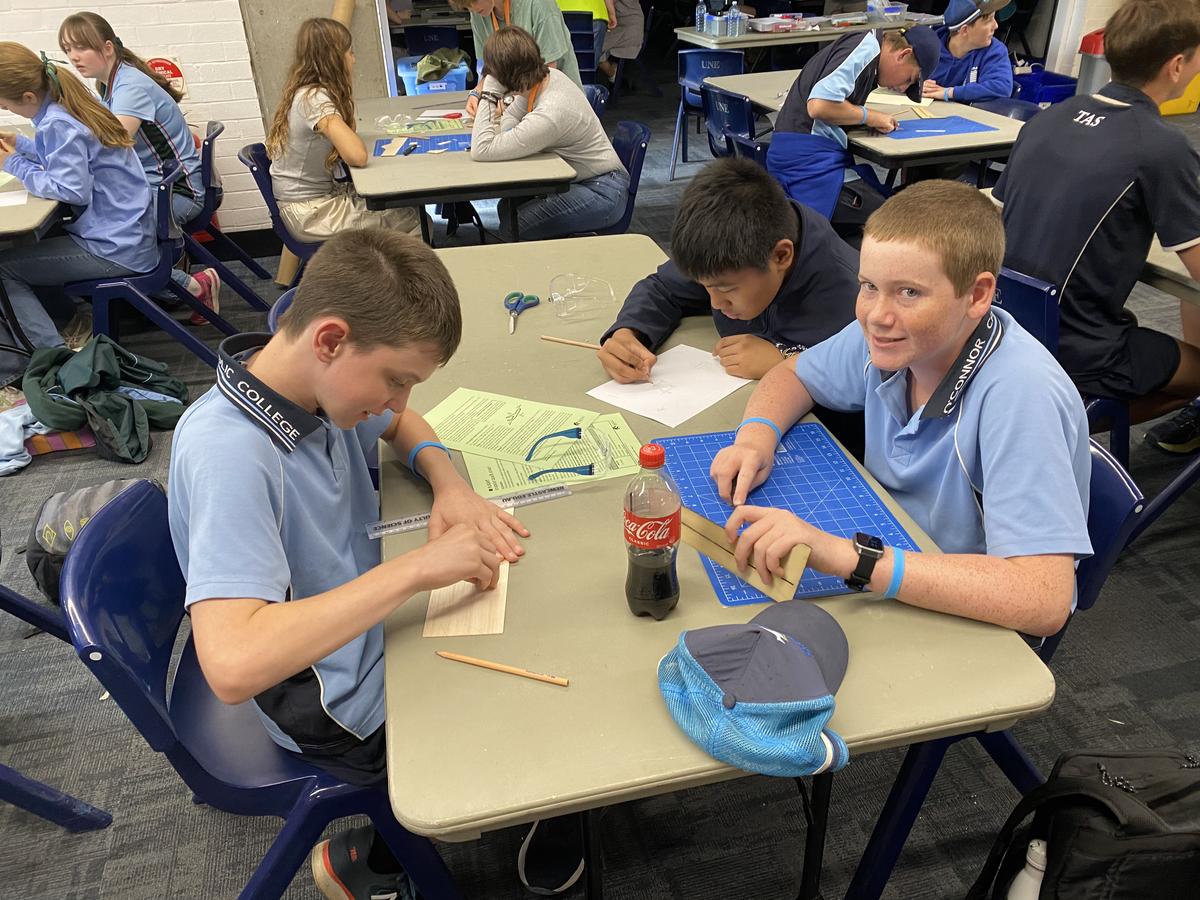
Our students tackled a diverse range of STEM-based hurdles, proving that their ingenuity knows no bounds. By applying physics, environmental science, and creative thinking, the team excelled in several hands-on challenges:
- Aerodynamics: Designing and launching balsa wood planes.
- Communication: Crafting Morse code systems using light.
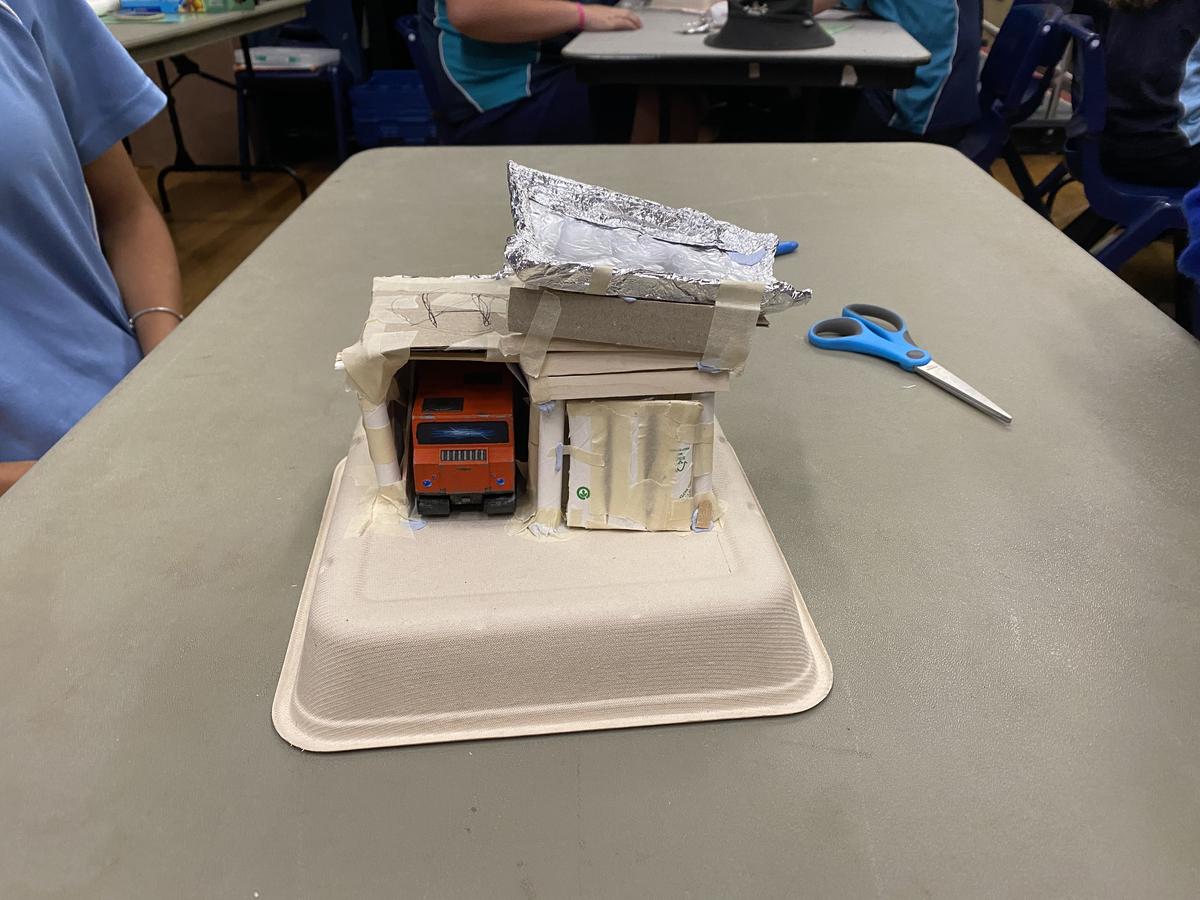
- Infrastructure: Building resilient electricity grids and sustainable housing.
- Sustainability: Designing clever fish traps and efficient wind turbines.
While we scored very highly across every single event, we truly dominated the field in two key areas. Our team took first place in the Eco-House challenge, creating a sustainable, cyclone-resistant dwelling that impressed the judges with its efficiency and durability.
The Final Showdown
As the afternoon arrived, all eyes turned to the main stage for the legendary Bridge Challenge. This event is the ultimate test of structural integrity, where teams use only balsa wood, masking tape, and paddle pop sticks to support a heavy rolling trolley.
In a display of world-class engineering, our bridge held firm under immense pressure. It was the second lightest bridge and had the highest carrying capacity, giving it the highest score of any bridge , securing the vital points needed to cement our lead.
The Results
The atmosphere was electric as the final standings were announced. After a day of consistent excellence and two major event wins, O’Connor was officially named the Regional Champion! This back-to-back victory earns our team the opportunity to compete at the State Finals in Newcastle this August.
A Note from the Faculty
While the trophy is a fantastic addition to our cabinet, our teachers were most impressed by the spirit of the team.
"Winning two years in a row is a testament to our students' dedication, but their sportsmanship and the way they collaborated under pressure was the real highlight of the day. They represented O’Connor with excellence and integrity."
Congratulations to all our student participants! We are incredibly proud of your achievement and look forward to seeing you take on the state's best in Newcastle.
Mr Daniel Fittler
Leader of Learning - Science
Creative and Performing Arts

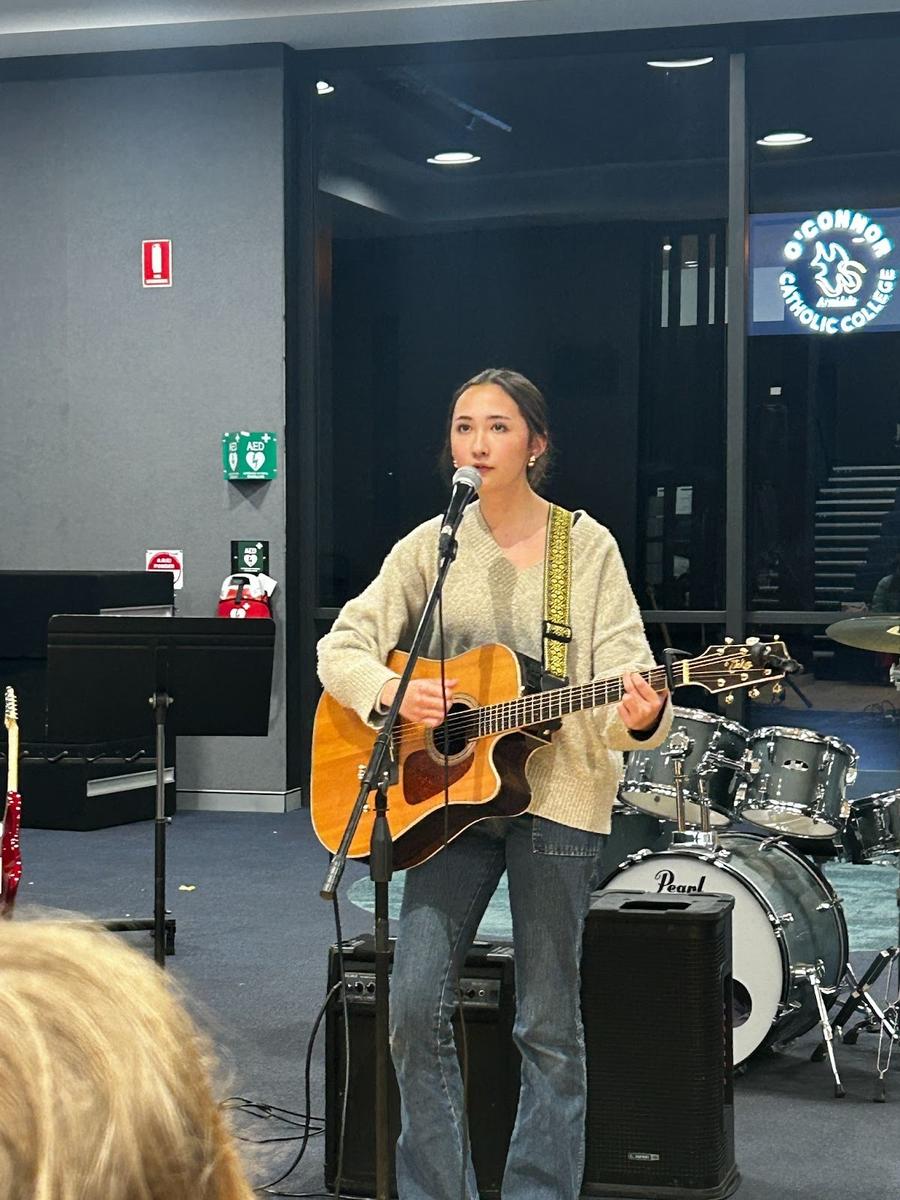
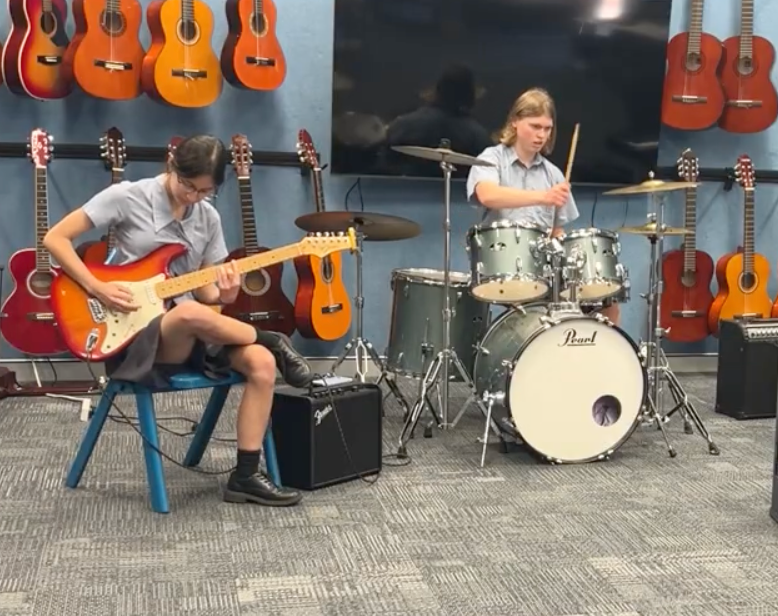
Music
Year 7
Year 7 have begun the term exploring rhythm through bucket drumming and are currently creating their own rhythmic compositions. This hands-on approach has helped students develop ensemble skills and confidence in performing. Later this term, they will move on to xylophones and begin learning about the instruments of the orchestra.
Year 8
8B have started the term studying the Blues. They have been learning to perform C Jam Blues and a walking bass line in small groups, developing their understanding of 12-bar blues structure and ensemble performance skills.
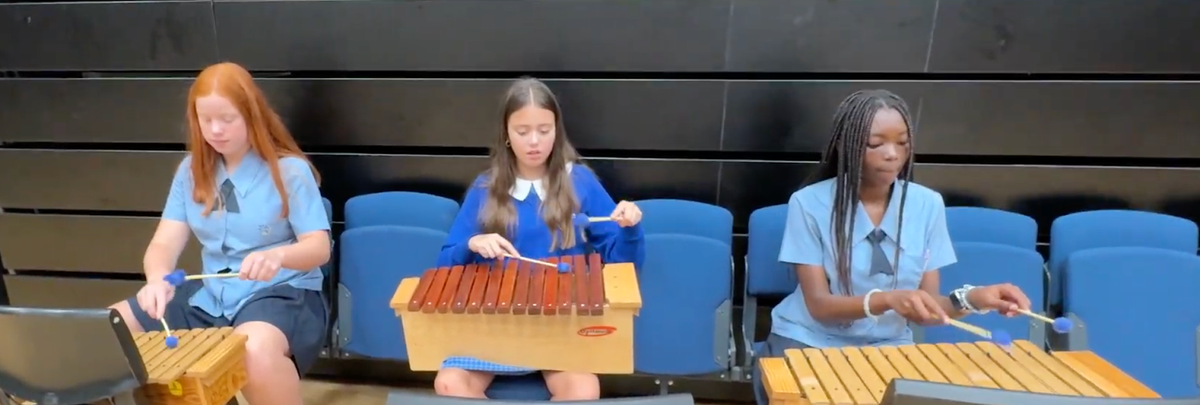
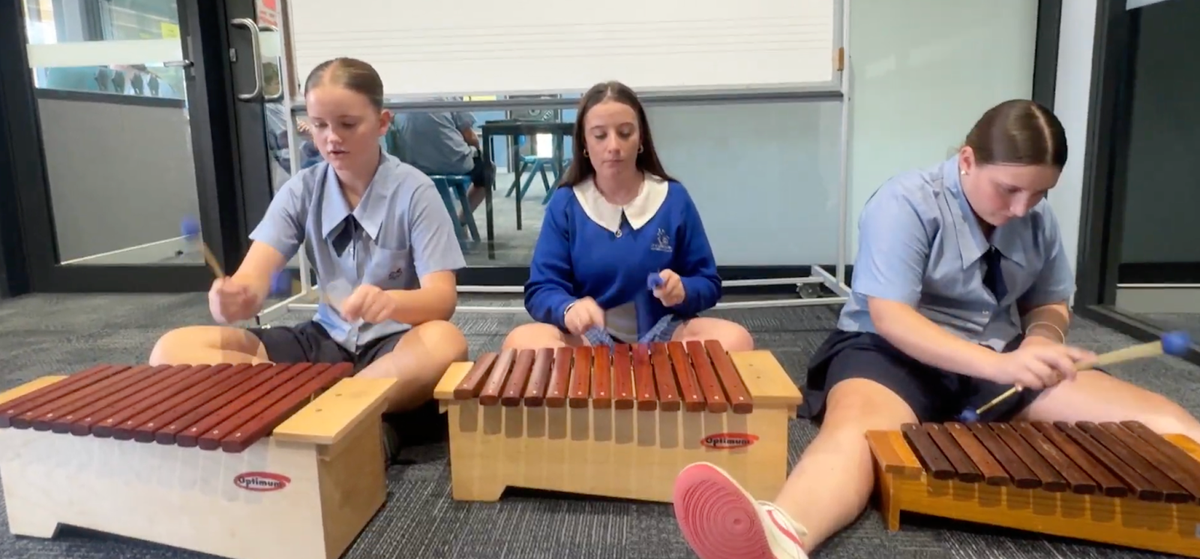
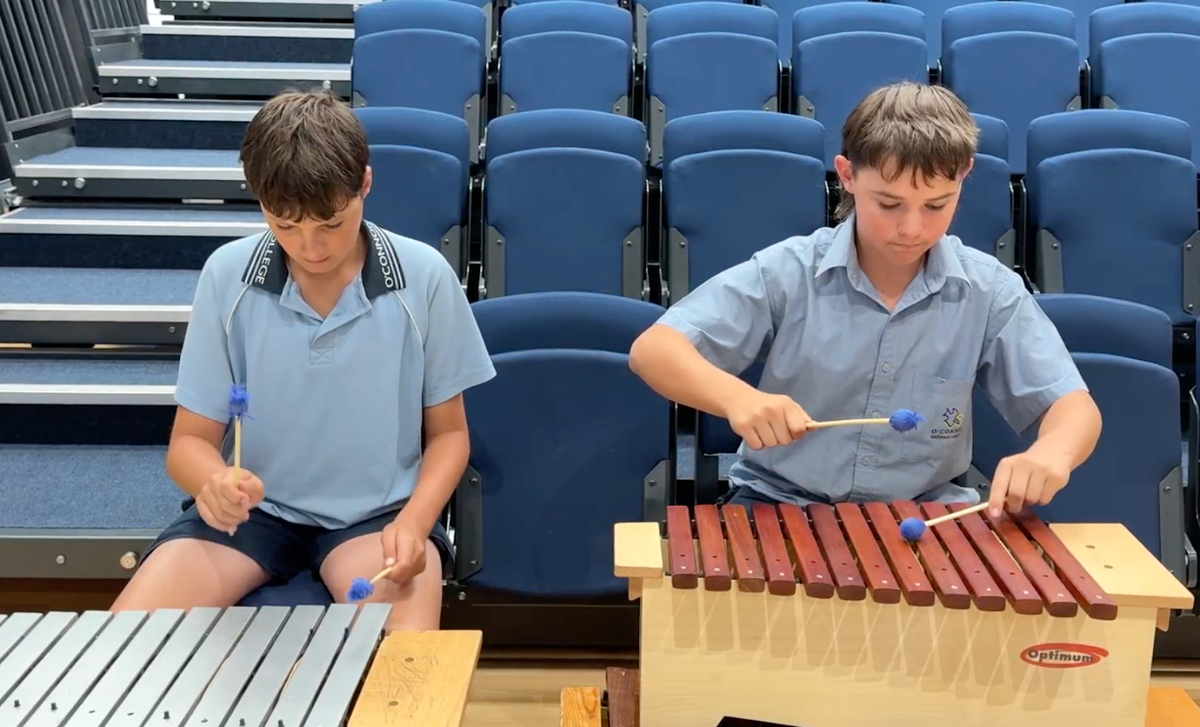
8D have begun their study of Western Art Music and are learning to perform classical repertoire on the keyboard. Through this, they are developing their reading skills and understanding of stylistic features of the period.
Year 10
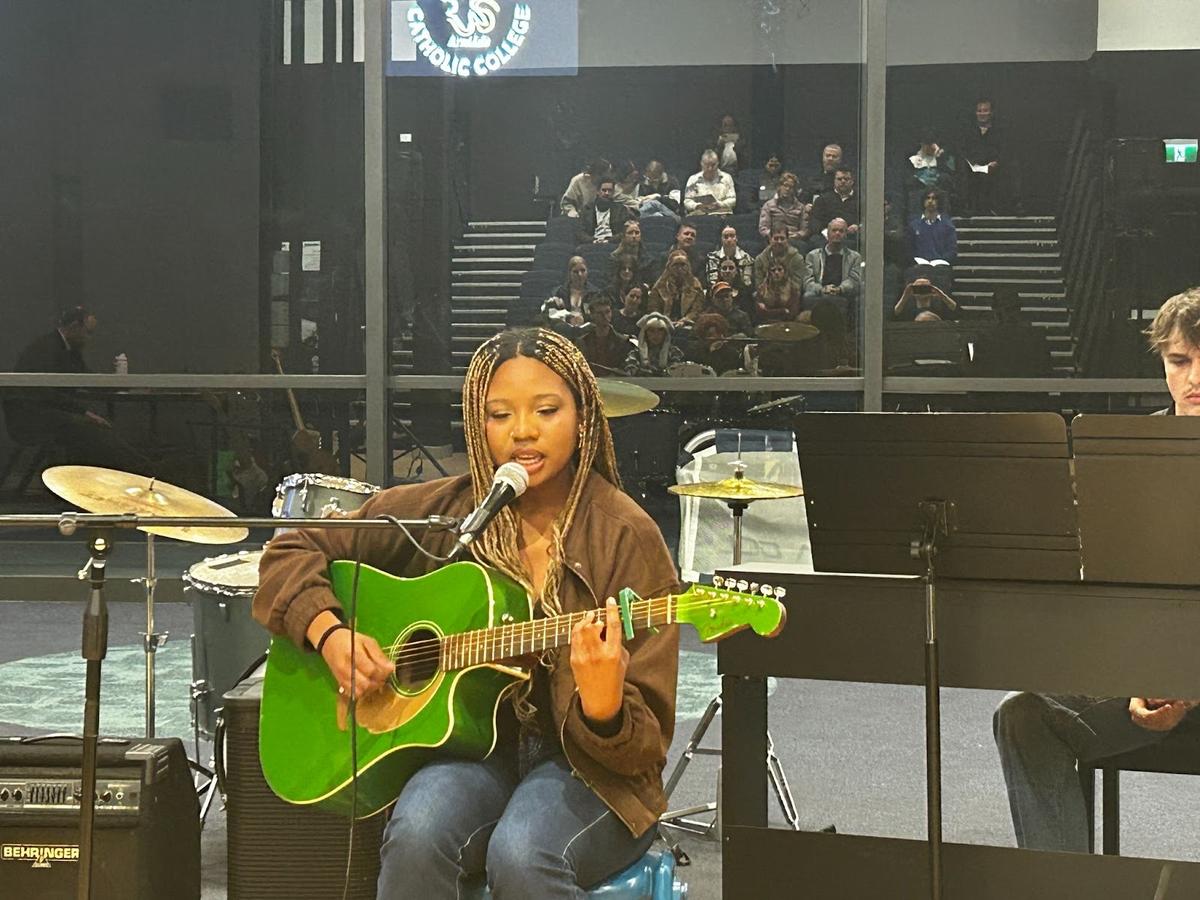
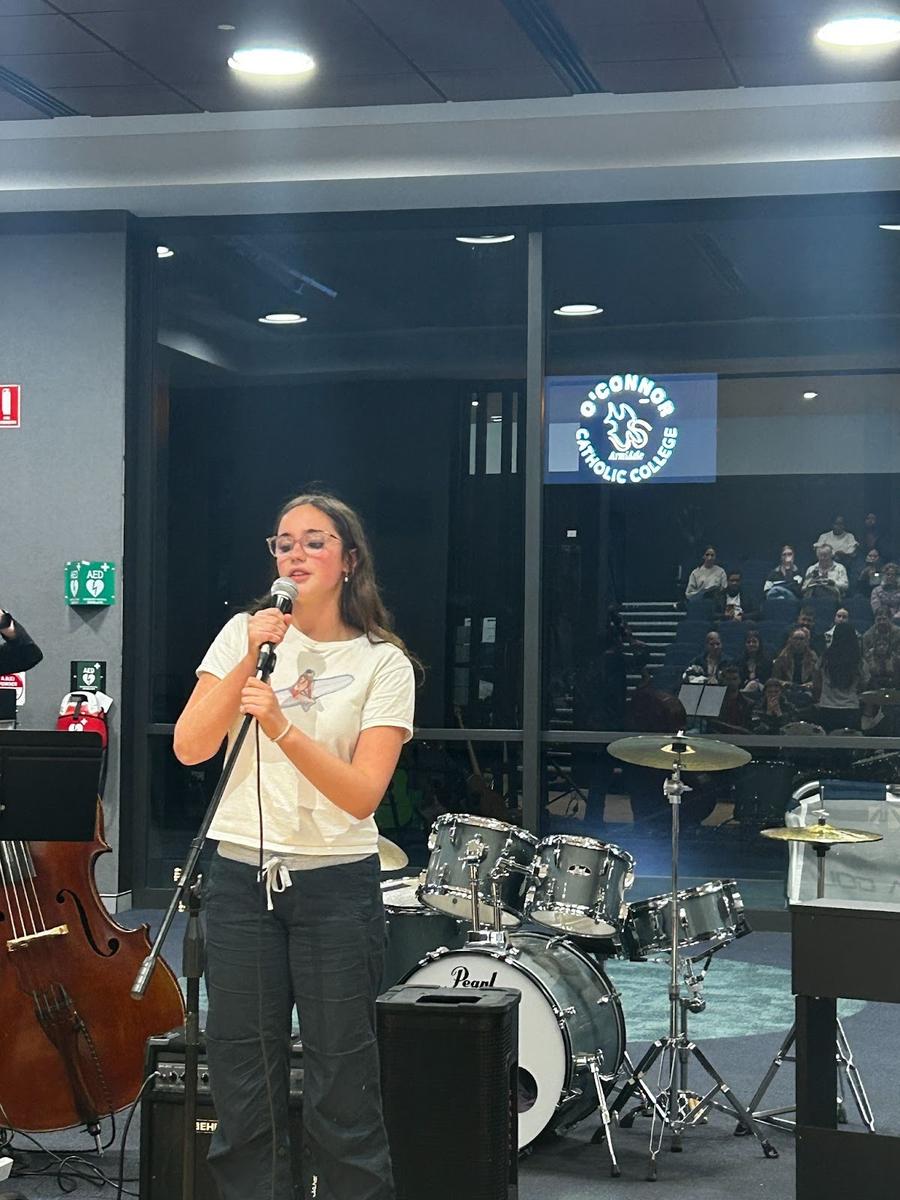
Year 10 music elective have been exploring the topic of Jazz. They have been rehearsing a range of jazz pieces in small ensembles and developing their improvisation skills. Students have also been analysing stylistic features of jazz across different works to strengthen their understanding of the genre.
Year 12
Year 12 are continuing to refine their performances skills in small ensembles while deepening their understanding of the concepts of music through aural analysis of a variety of works. Their focus remains on developing both technical proficiency and critical listening skills in preparation for their HSC examinations.

Visual Arts
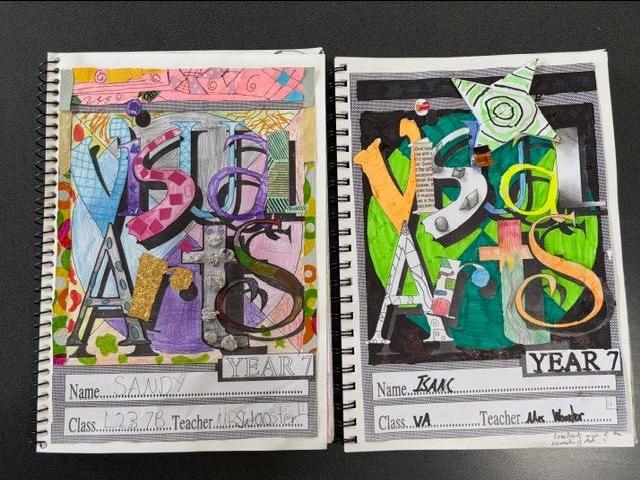
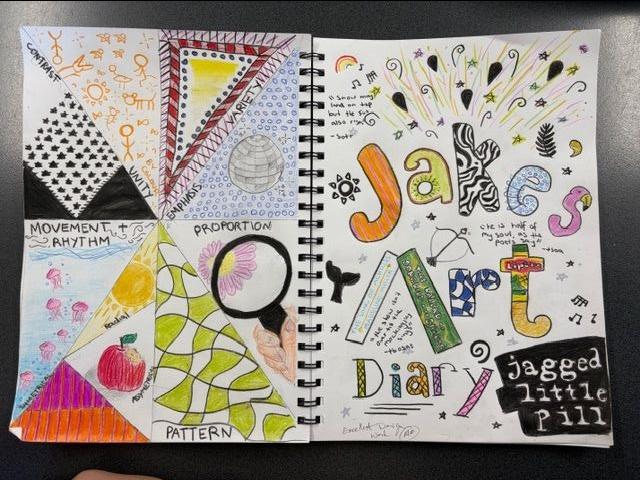
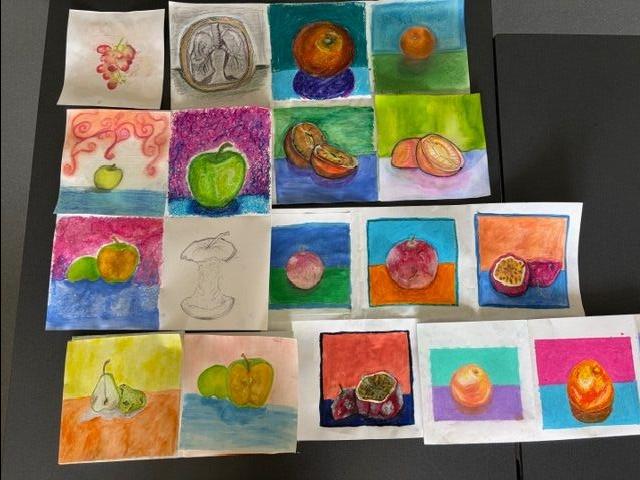
The art rooms are buzzing with students from year 7 -11 challenging their creative ideas and developing technical skills across a range of areas including the elements and principles of art, portrait drawing, functional design, painting, photography and mixed media works in both 2D and 3D
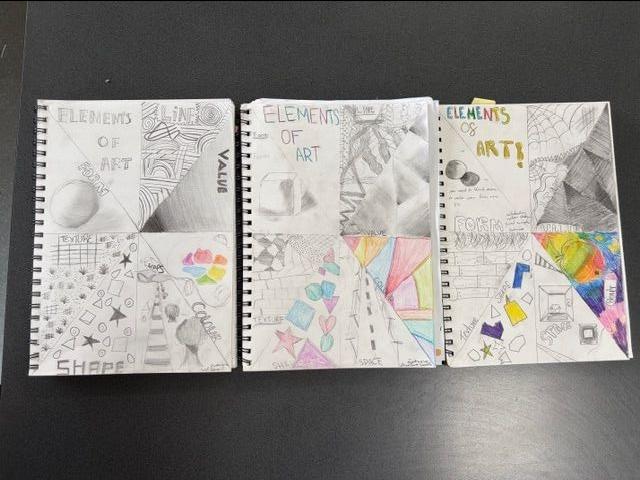
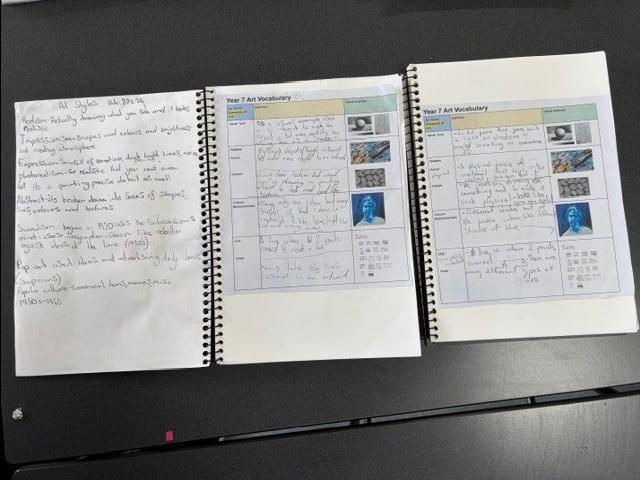
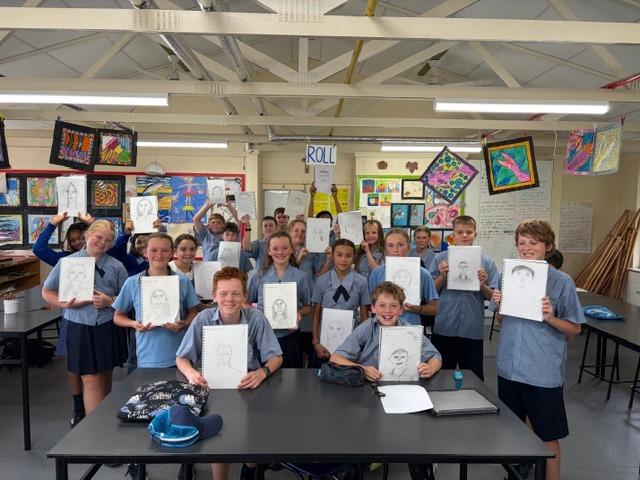
Year 7 Visual Arts
This term year 7 has been learning about the elements of art and applying this knowledge to their artworks. Including self portrait drawing in preparation to develop an individual 3D ceramic sculpture. They will also be completing an artist study on Australian portrait painter John Brack.
Year 8 Visual Arts
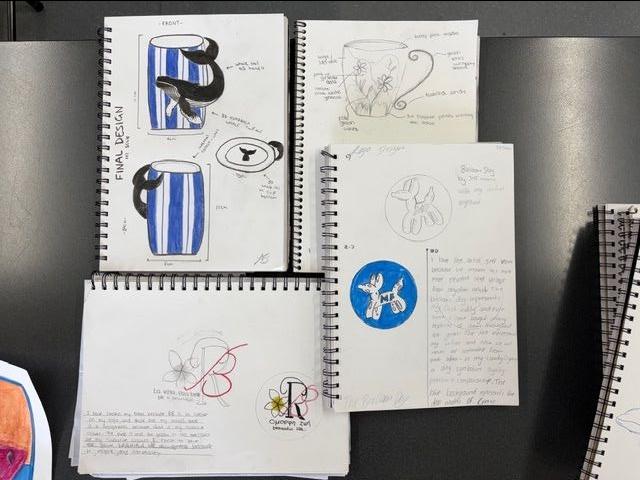
Have been building on their knowledge of functional design in art, using the principles of design and applying them to designed products including logos & planning for their ceramic mugs. This term they will also be completing an artist study on Pop Art artist Roy Lichtenstein.
Year 9 Photography - “My things”.
Our students have been focusing on producing photomontages with the concept of “My Things”. These photomontages are now being made into prints in the darkroom to produce high quality, contrasting black and white images.
Students are learning how to control light and time to produce images in the darkroom using test strips to determine the final exposure time. We are also practicing how to hand colour one print.
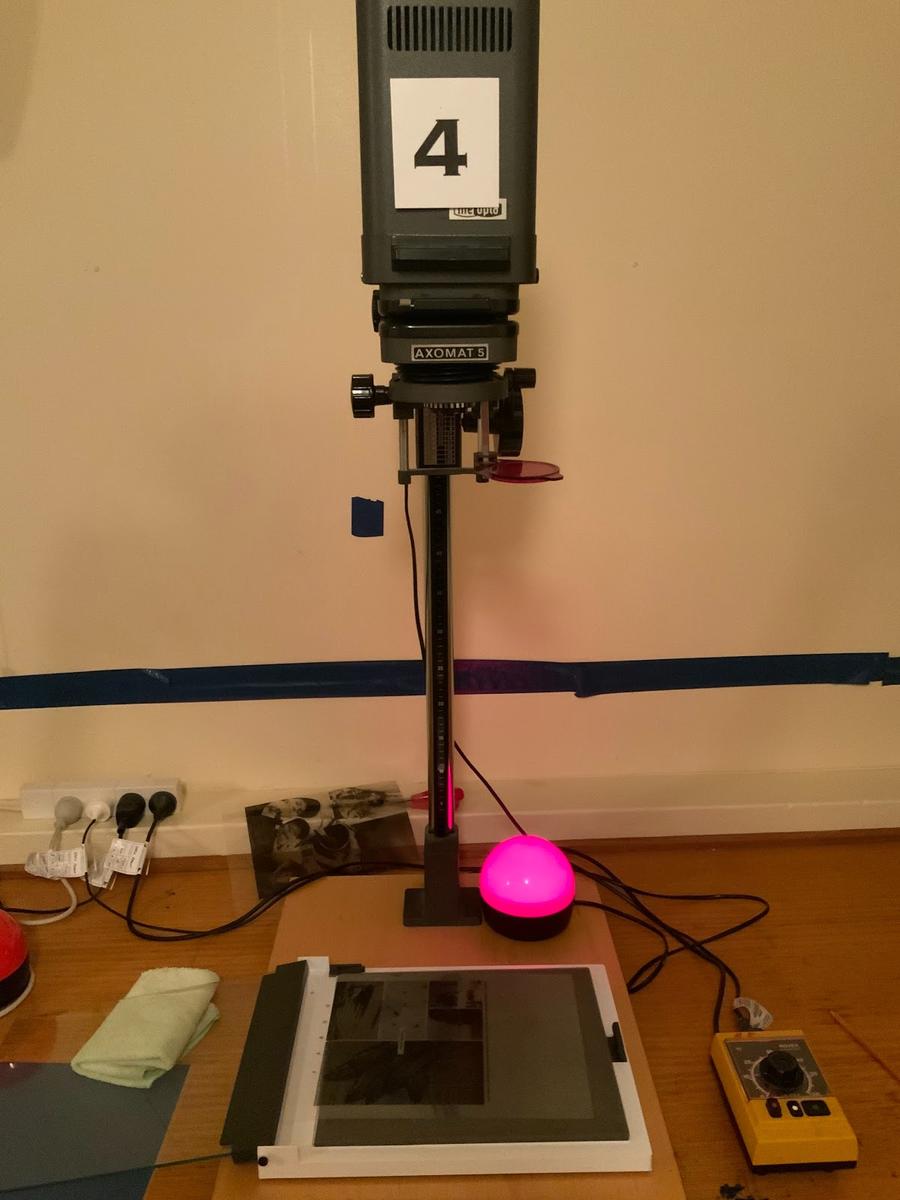
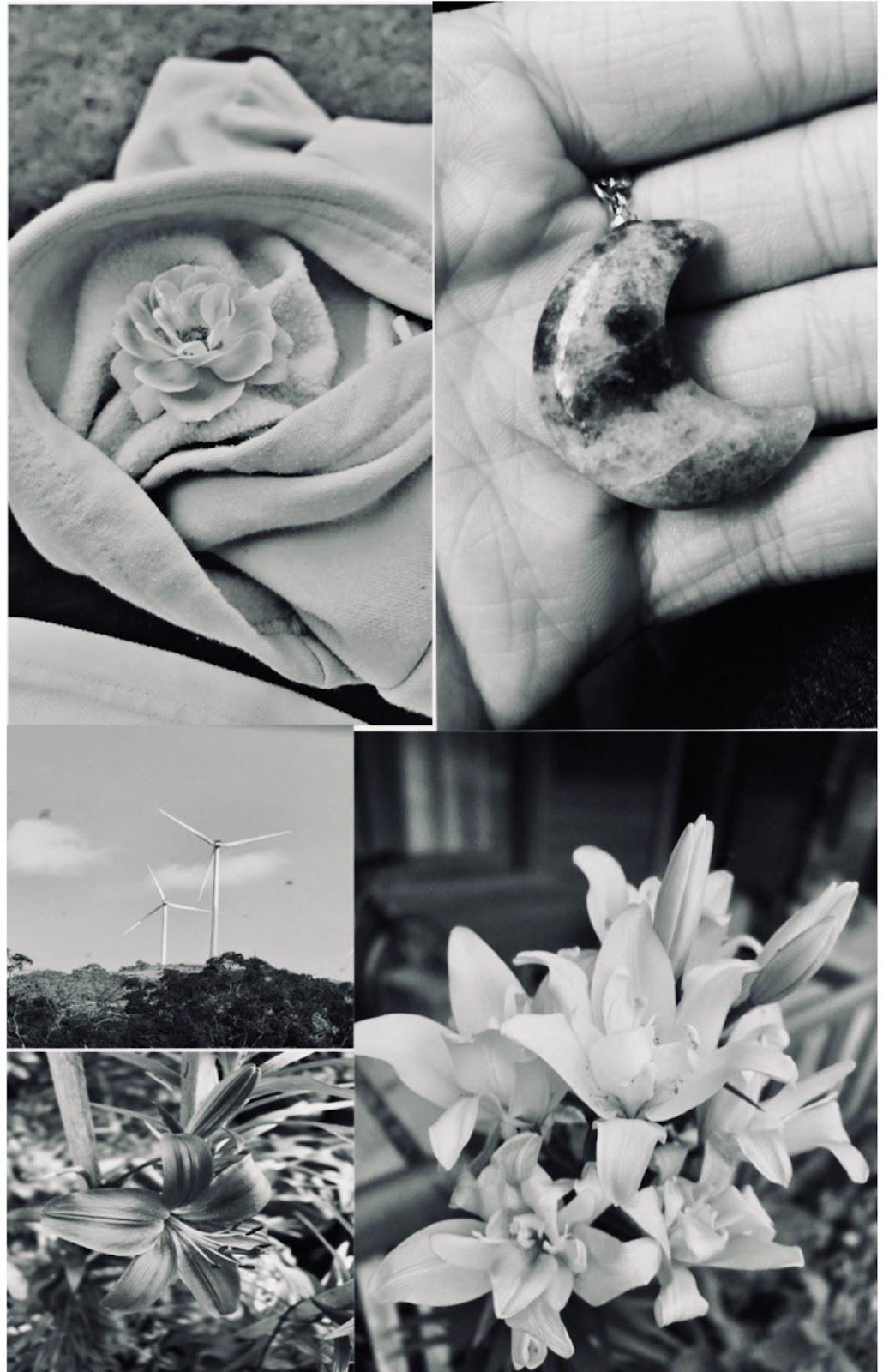
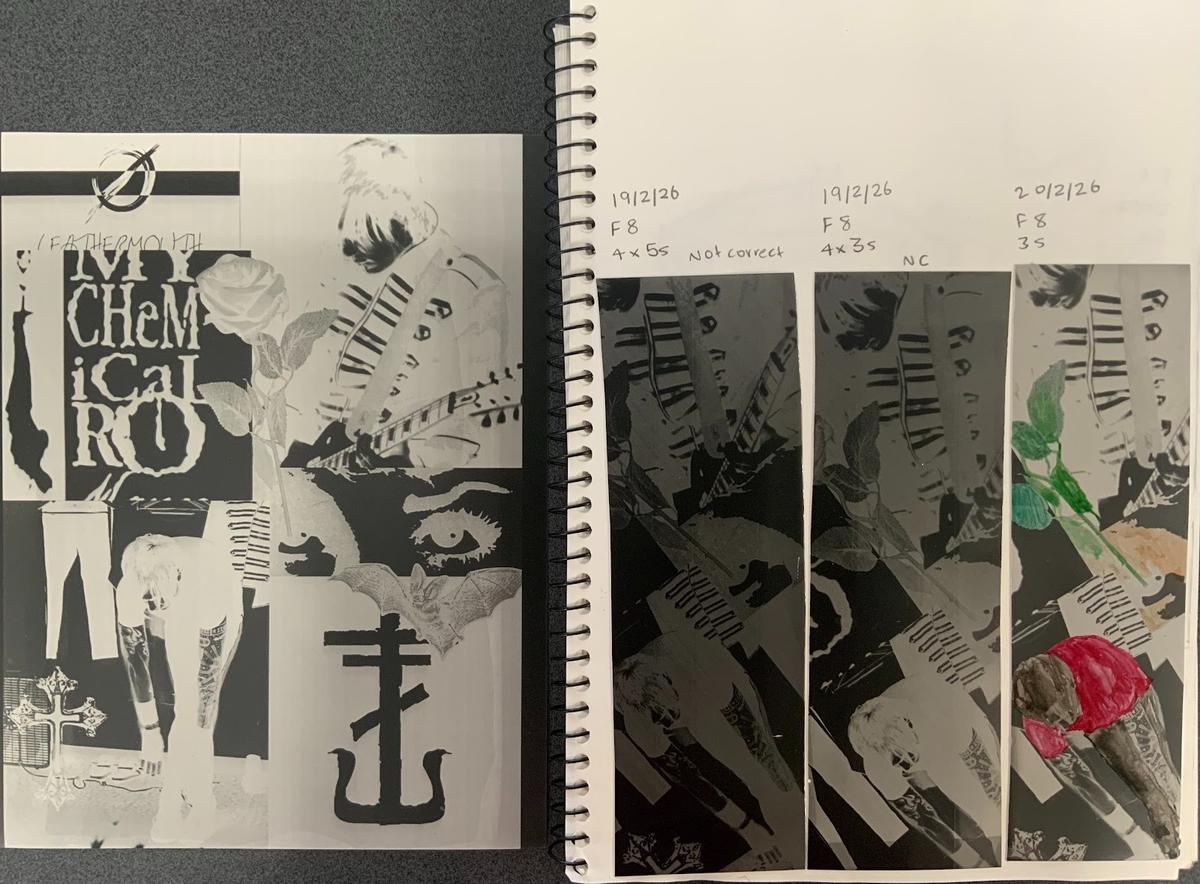
Danny Wiley - Photomontage first digital image.
Rose White. First final print with test strips and hand colouring methods
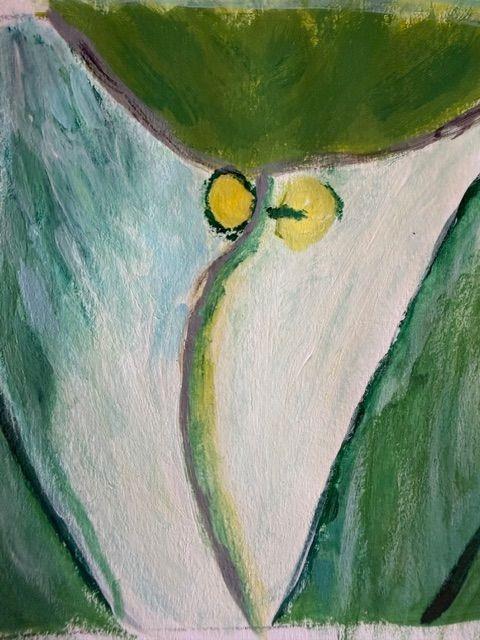
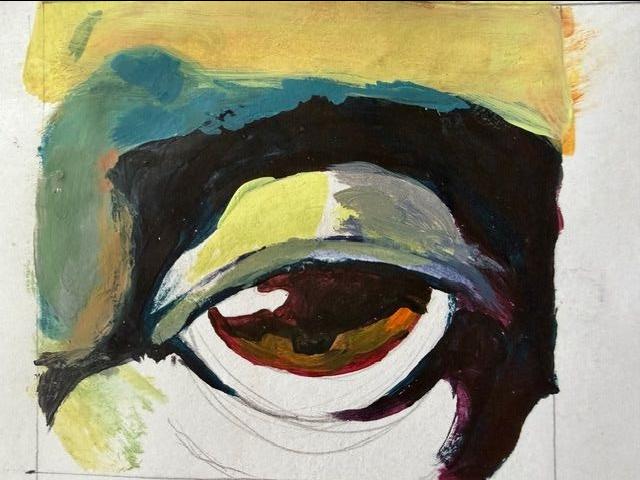
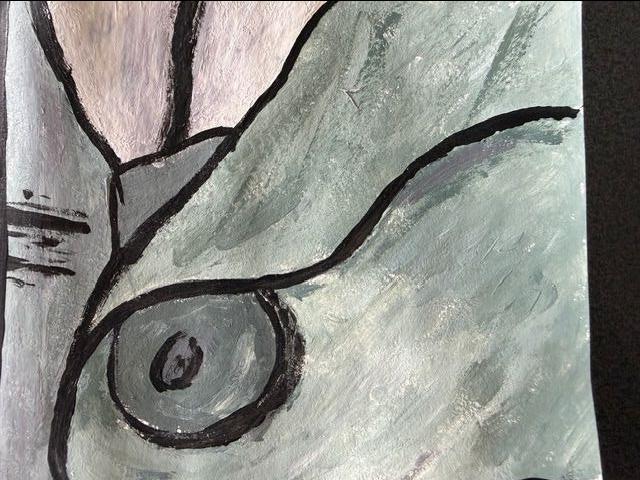
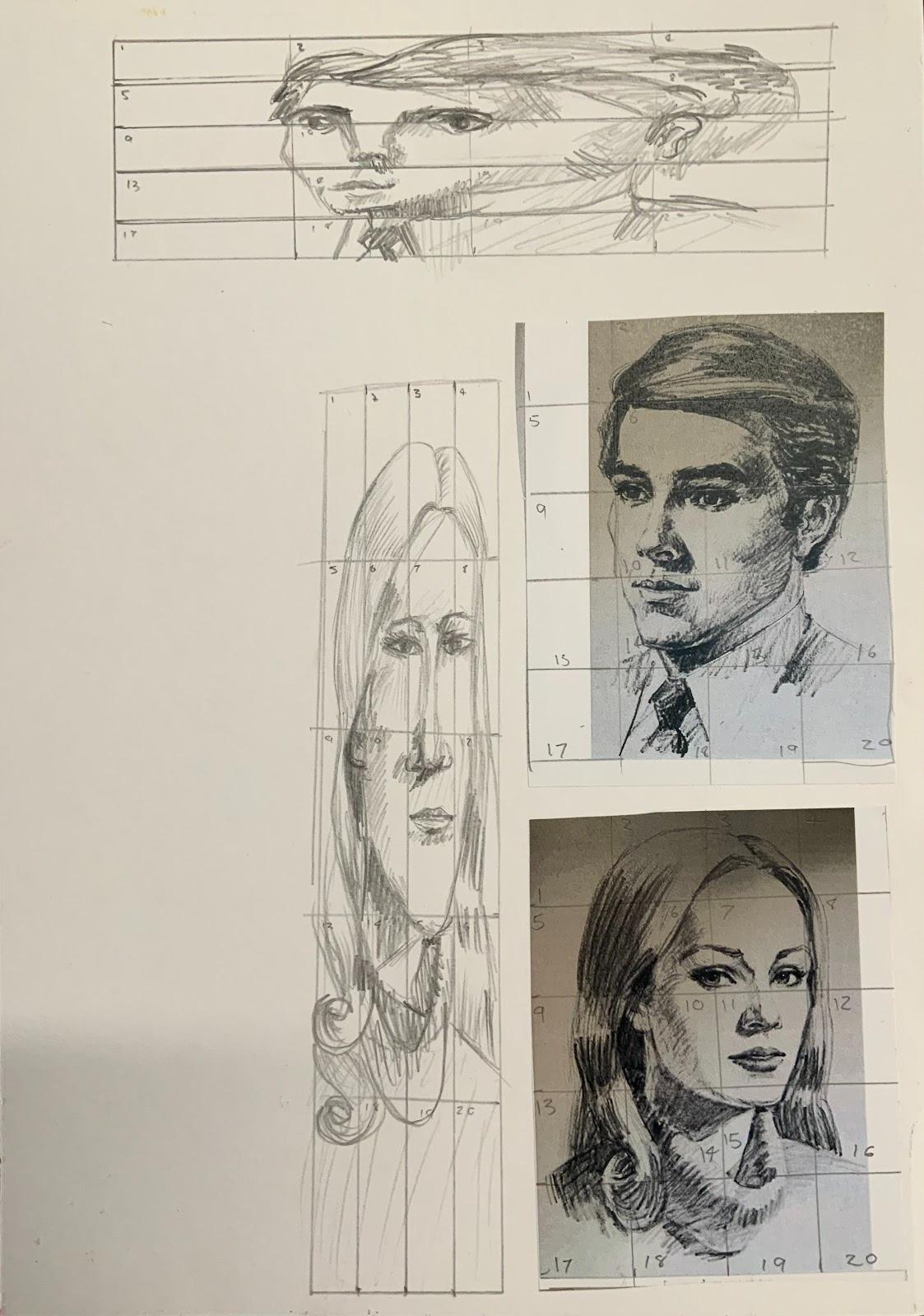
Year 9 Visual arts are developing their painting skills with grid drawings and sectional views in preparation for a Contemporary self portrait painting. They will also be completing an artist research task this term investigating and critically writing about the work Frida Kahlo
Year 10- Surrealism
Year 10 have been preparing to make a large mixed media artwork with the theme “Strange happenings”. They looked at the artist Escher to understand how to distort images.
They are now working with a range of materials to develop skills before selecting at least three to complete their artwork.
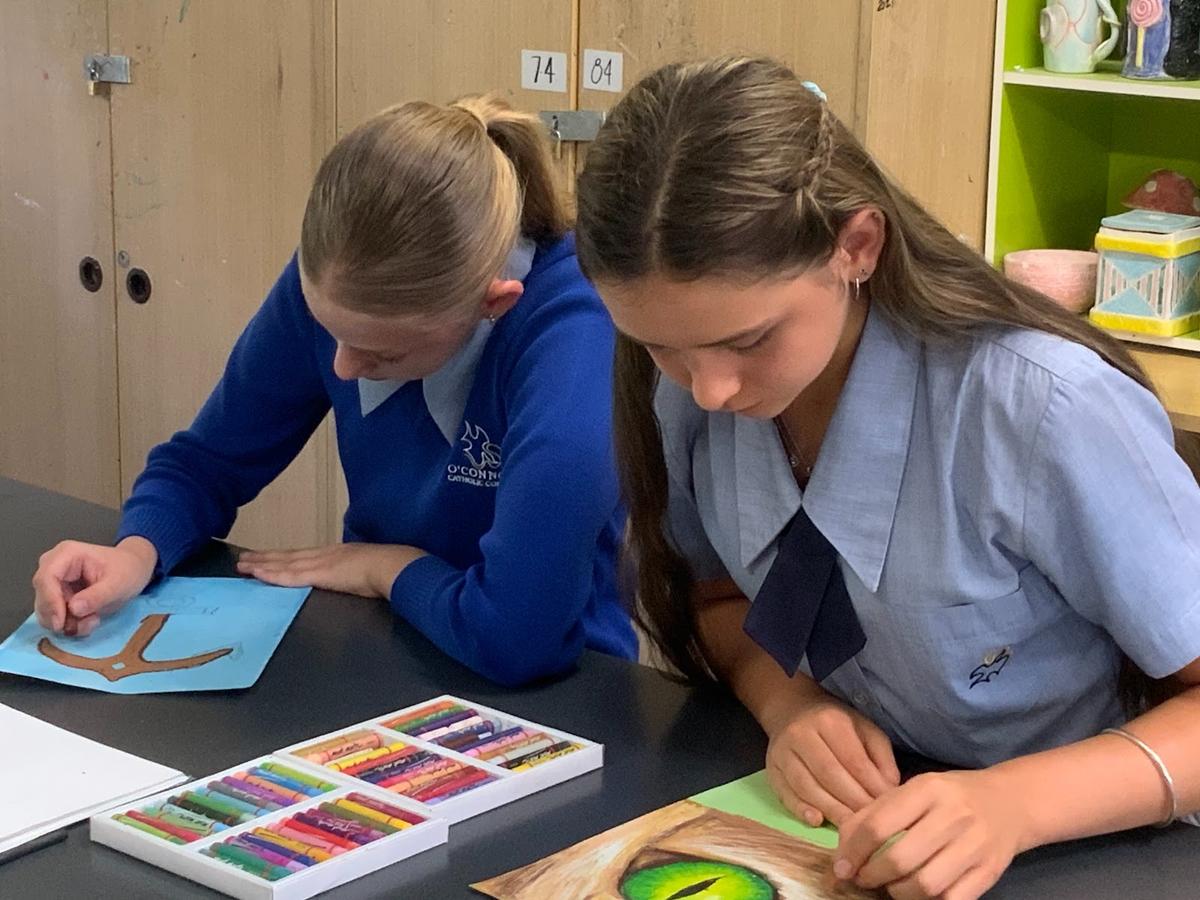
Ruby Krug and Charlie Streeting in action developing their skills in a range of materials.
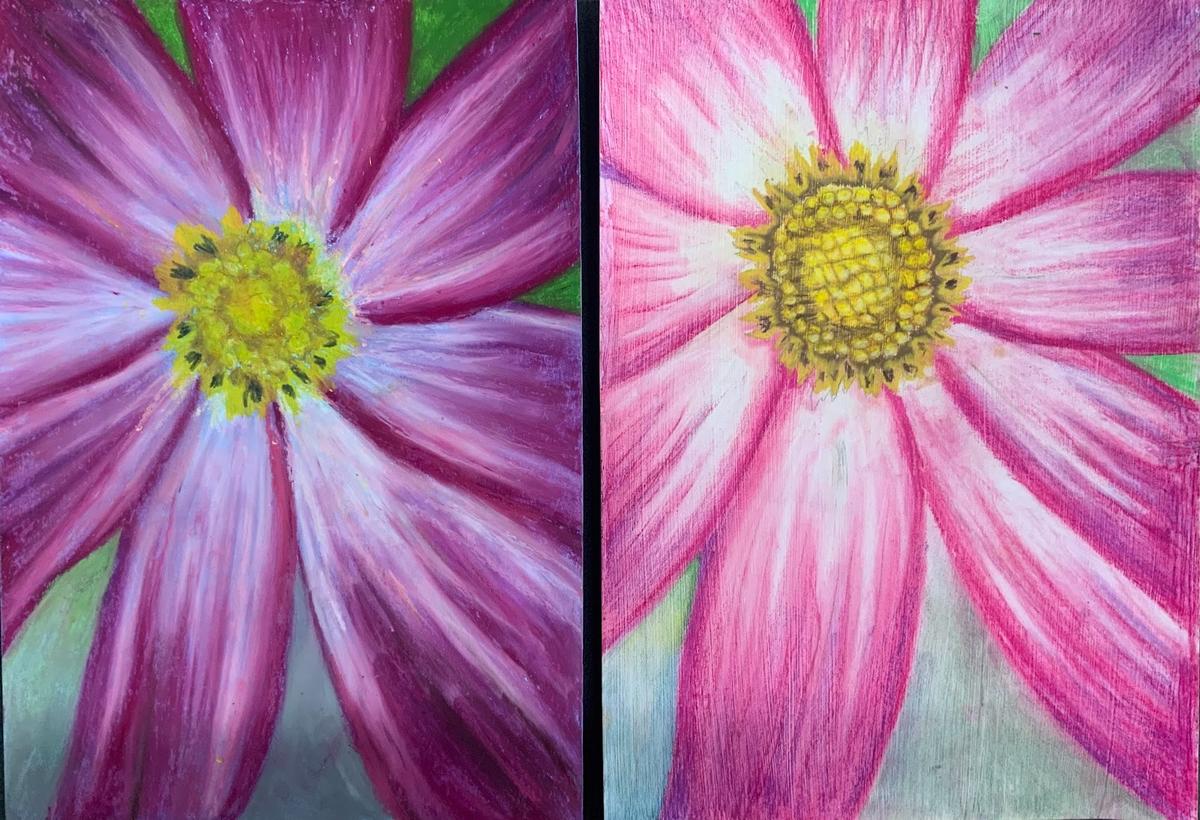
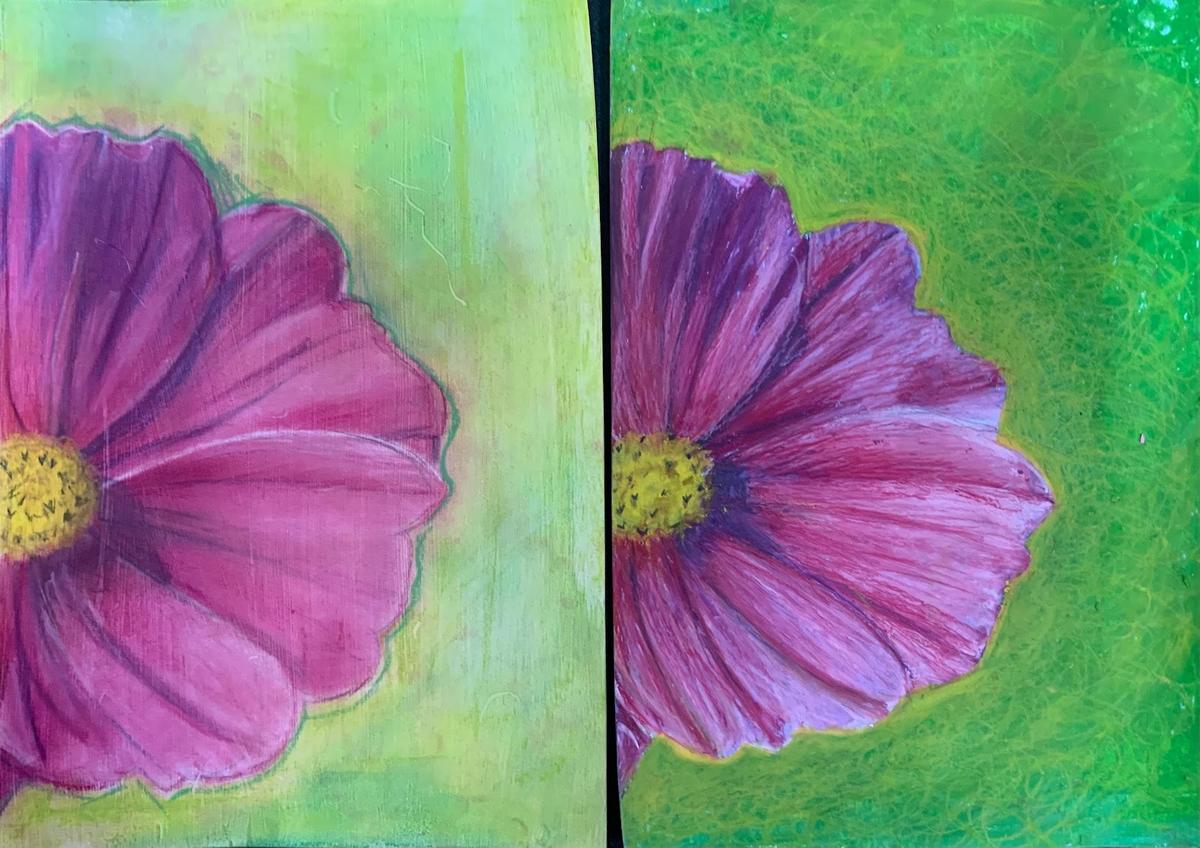
Bronte Hawthorne and Addison Nugent - oil and chalk pastel techniques
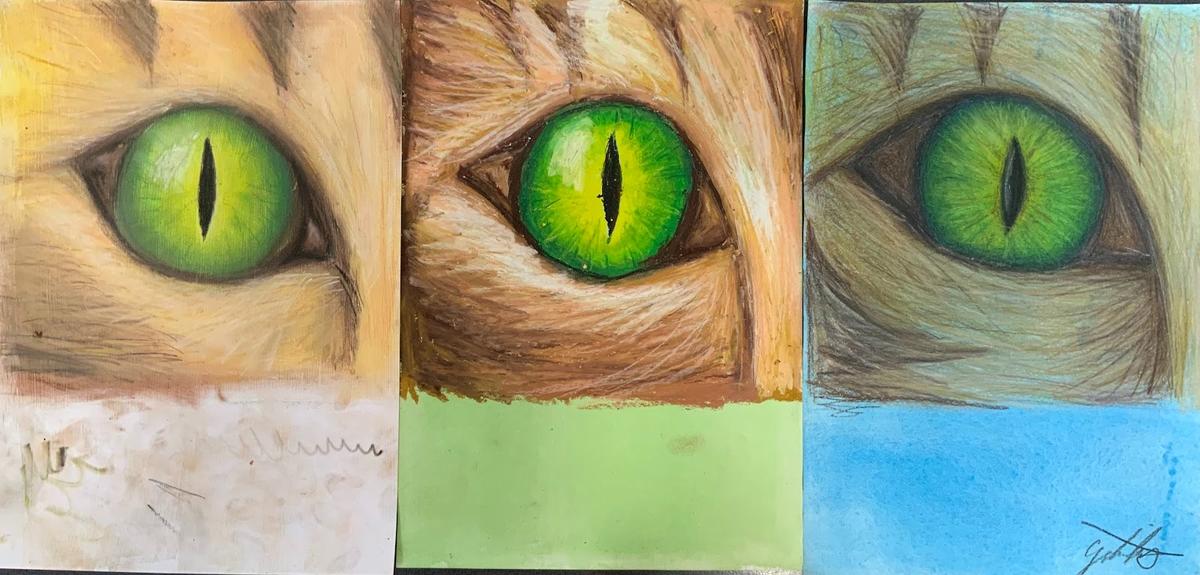
Charlie Streeting - oil and chalk pastel and pencil techniques
Year 11- Duality
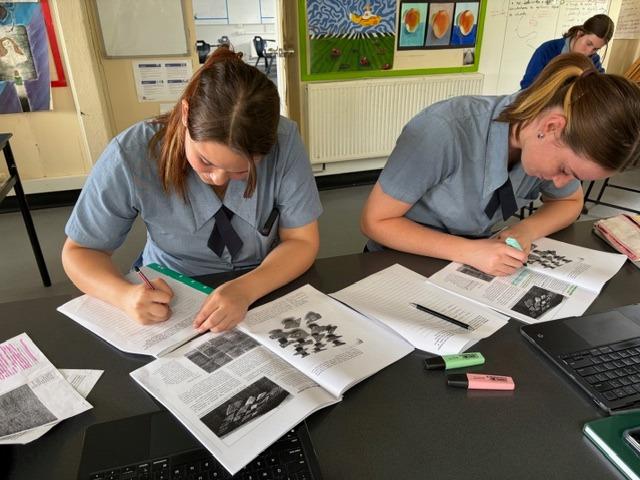
Are exploring the concept of Duality as a means to create a sculptural body of work as well as exploring how artists create meaning through both material practice and conceptual ideas. In art theory they will be exploring how artists build meaning through symbolism focusing on the Renaissance period and creative thinkers in 3D from the 20th century.
Dance
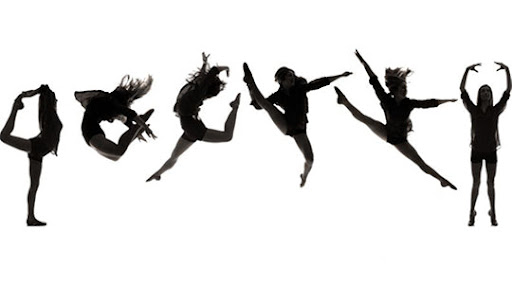
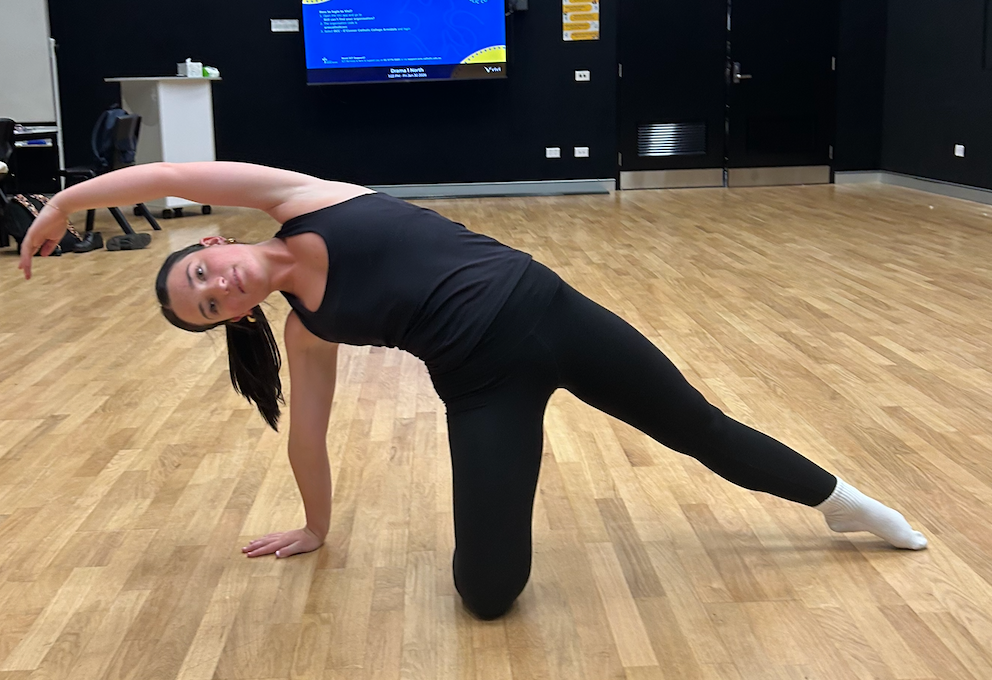
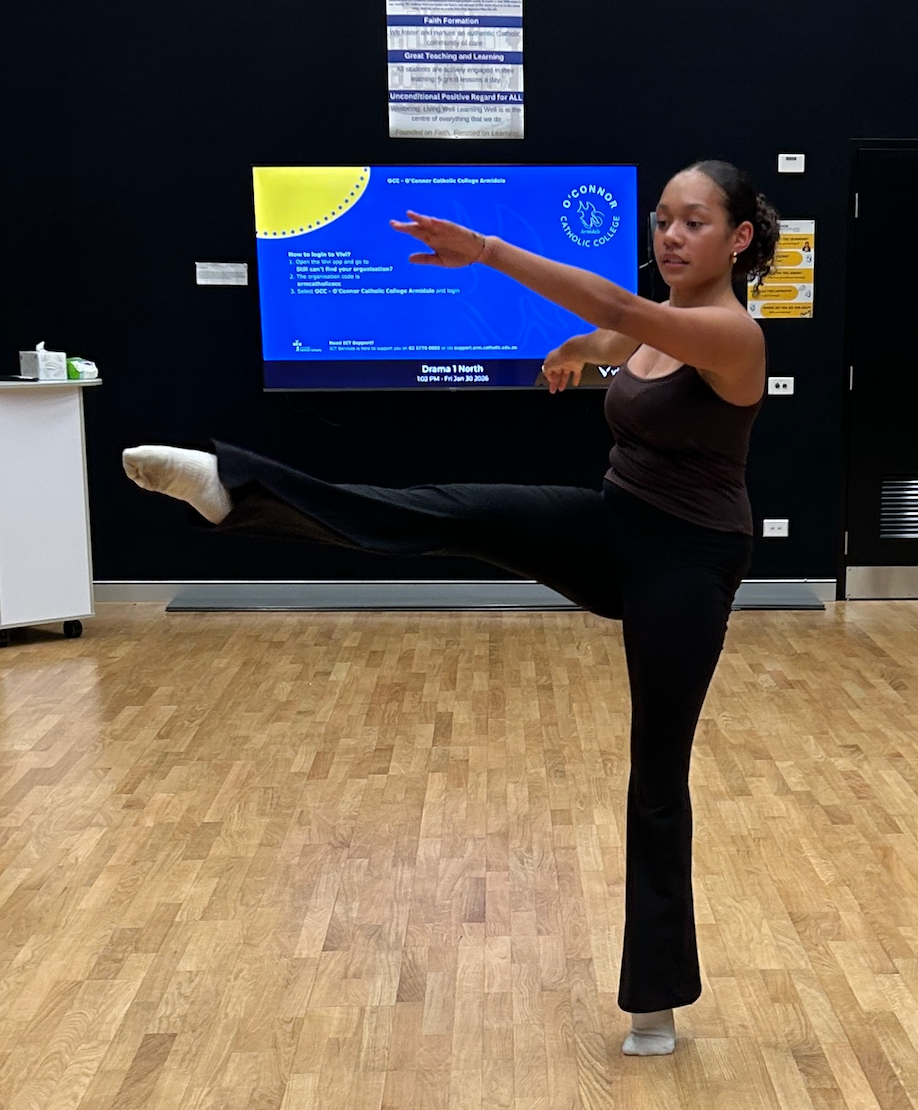
In Year 11 Dance this Term, students are engaging in a unit called The Performer with a focus on Core Performance. Throughout the unit, students develop their understanding of the dancing body through practical technique classes that explore alignment, safe dance practice, performance quality, and the elements of dance. Students build both physical skills and dance literacy as they learn how movement communicates meaning and intention, while reflecting on their progress through a process diary. As a part of their assessment for learning, students will soon start working on preparing a performance piece inspired by the Stations of the Cross, allowing them to connect expressive movement with themes of sacrifice, reflection and storytelling. This assessment provides students with an opportunity to demonstrate technical skill, performance quality, and personal interpretation while engaging with an important tradition of the Catholic faith through dance.
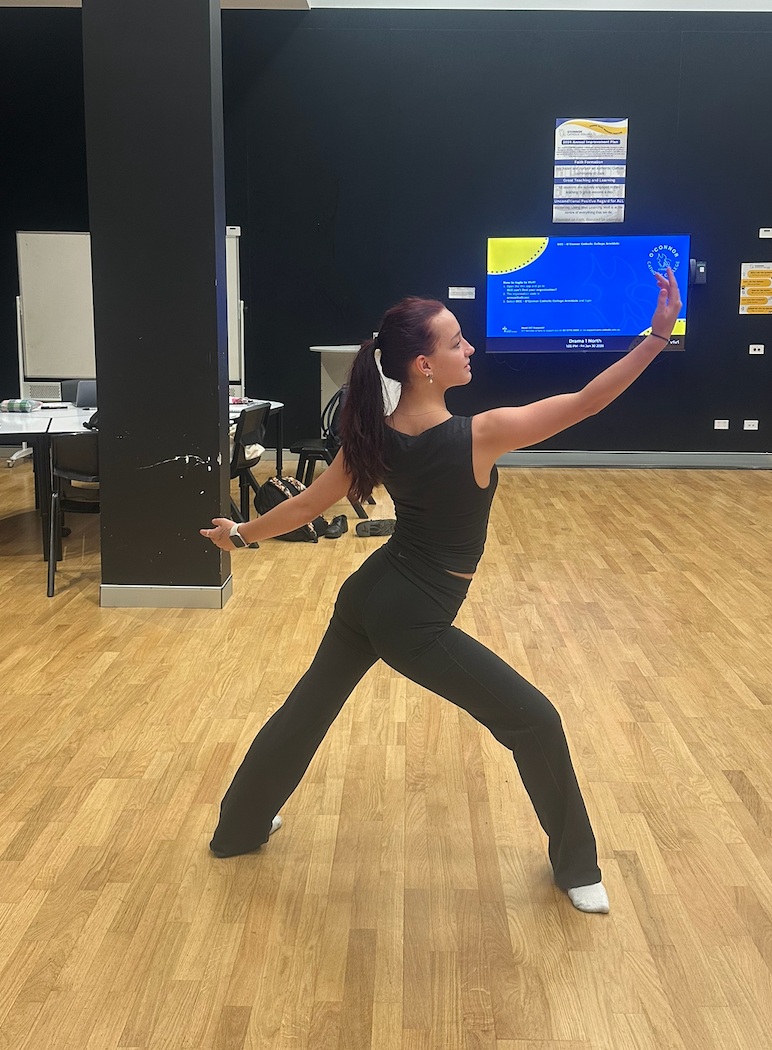
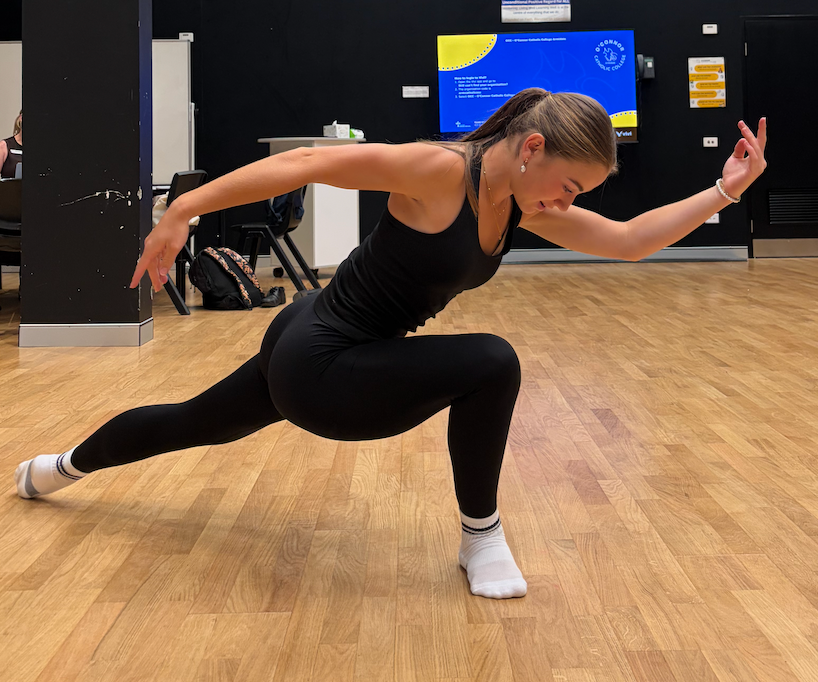
Mrs Megan Wooster
On behalf of the CAPA team.
English
All English classes are in the full swing of their studied units - focusing on refining their analytical, critical thinking and creative skills.
Term 1 Overview
Below is an overview of the units our students are studying, with their text/s and the assessment task they are working towards;
| Year Group | Unit | Text/s | Assessment Task |
| Year 7 English | ‘Survival’ | Hatchet by Gary Paulson | Survival Narrative due in week 8 |
| Year 8 English | ‘A Sense of Time and Place’ | Selected Australian Poetry | Analytical response due in week 8 |
| Year 9 English | ‘Dystopian Worlds’ | Fahrenheit 451 by Ray Bradbury, The Giver by Lois Lowry or Gone by Michael Grant | Dystopian narrative plan Due Week 9 |
| Year 10 English | ‘From screen to page’ | Spiderman into the spiderverse directed by Peter Ramsey, Bob Persichetti, Rodney Rothman OR Scott Pilgrim vs. the World directed by Edgar Wright | Analytical Response Week 8 |
| Year 10 Drama | ‘A world of your own’ | A variety of drama scripts | Performance due in week 10. |
| Year 11 English - Studies, Standard, Advanced and Extension | Studies/ Standard and Advanced are all completing the common module, ‘Reading to Write’.
English Extension is completing the unit Text, Culture and Value concurrently with the Research Project.
| A selection of texts depending on the course they are studying. | Both Standard and Advanced are due in week 9 and are producing imaginative responses.
Studies is due in week 8 and they are producing an imaginative/discursive response.
English Extension is due Term 2, Week 1. This task is a creative with a viva voce. |
| Year 12 English - Studies, Standard, Advanced and Extension | English Studies is completing the unit ‘ Module D: Digital Worlds’
English Standard is completing ‘Module B: Close Study of literature’.
English Advanced is completing ‘Craft of Writing’. English Extension is exploring ‘Worlds of Upheaval’. | English studies is exploring Black Mirror episodes.
Standard English is analysing the poetry of Oodgeroo Noonuccal.
Advanced English is exploring a variety of short texts including 13 ways of looking at a blackbird by Wallace Stevens and Spotty-handed villainesses by Margaret Atwood.
English Extension is currently focusing on Frankenstein by Mary Shelley. | English Studies multimodal is due in week 9.
Standard English is completing an in class analytical response due in week 7.
Advanced English is crafting an imaginative response due in week 7.
English Extension is crafting an imaginative response with analytical annotations. This is due in week 10. |
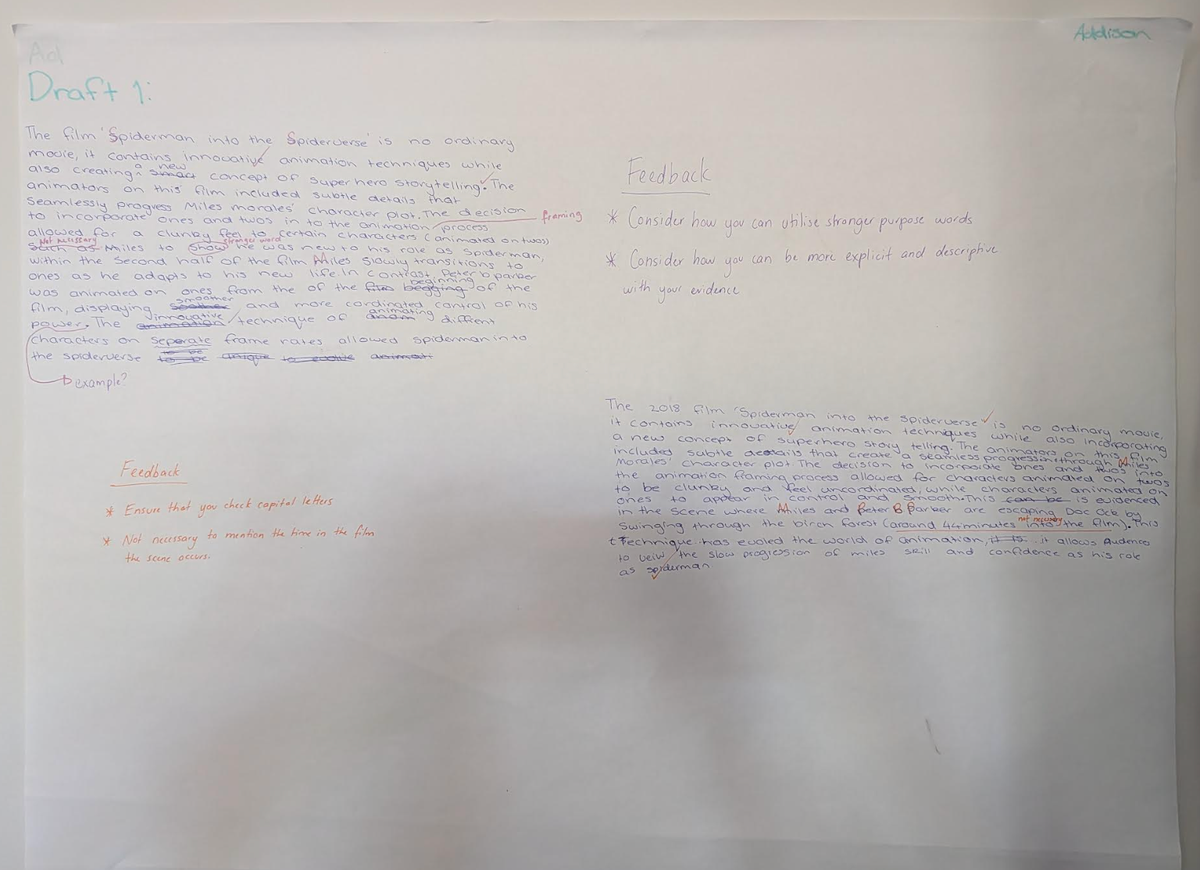
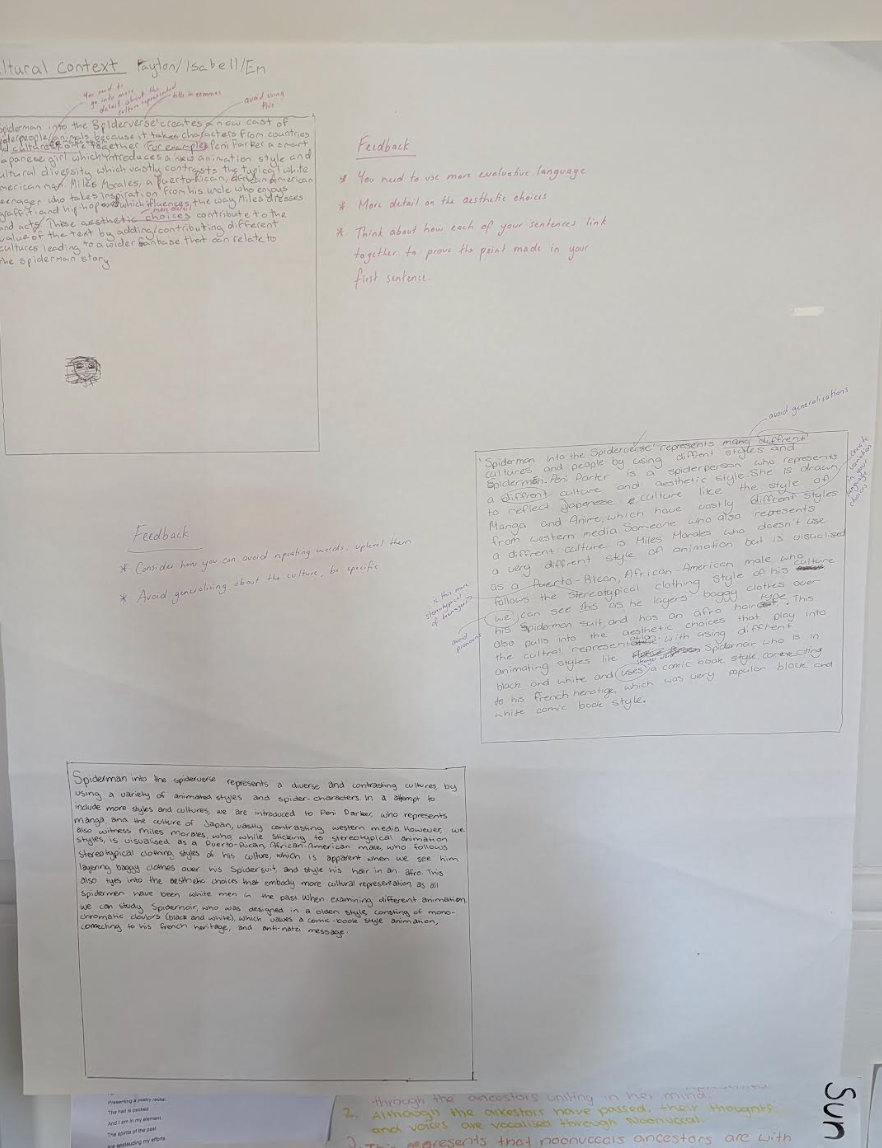
Below are some work samples from students in Year 10, Year 11 and Year 12.
Year 10 - Evaluative writing with a focus on bumping up our skills by applying feedback
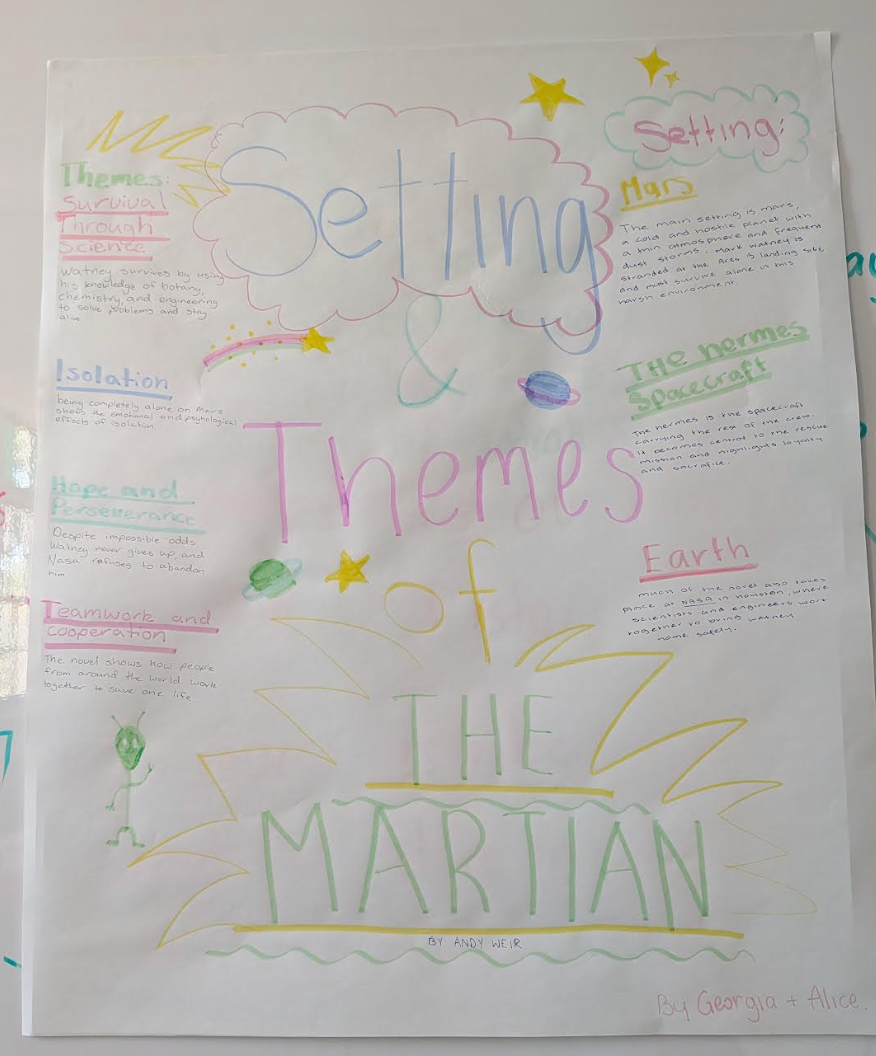
Year 11 - Setting and Theme in the Martian connected to the real world
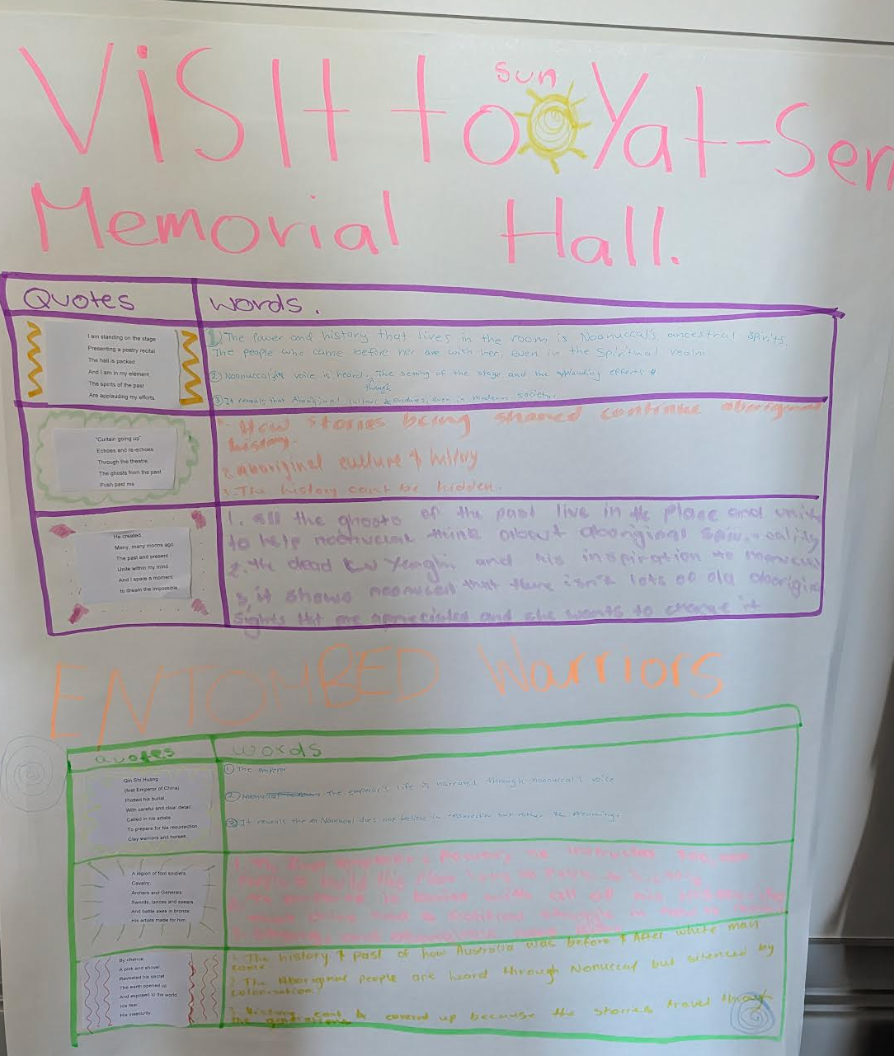
Year 12 - Examining the ideas in Oodgeroo Noonuccals 'Entombed Warriors' and 'Visit to Sun Yat-Sen Memorial Hall'.
Miss Jessica Armfield
Leader of Learning - English
HSIE
Year 8 Geography
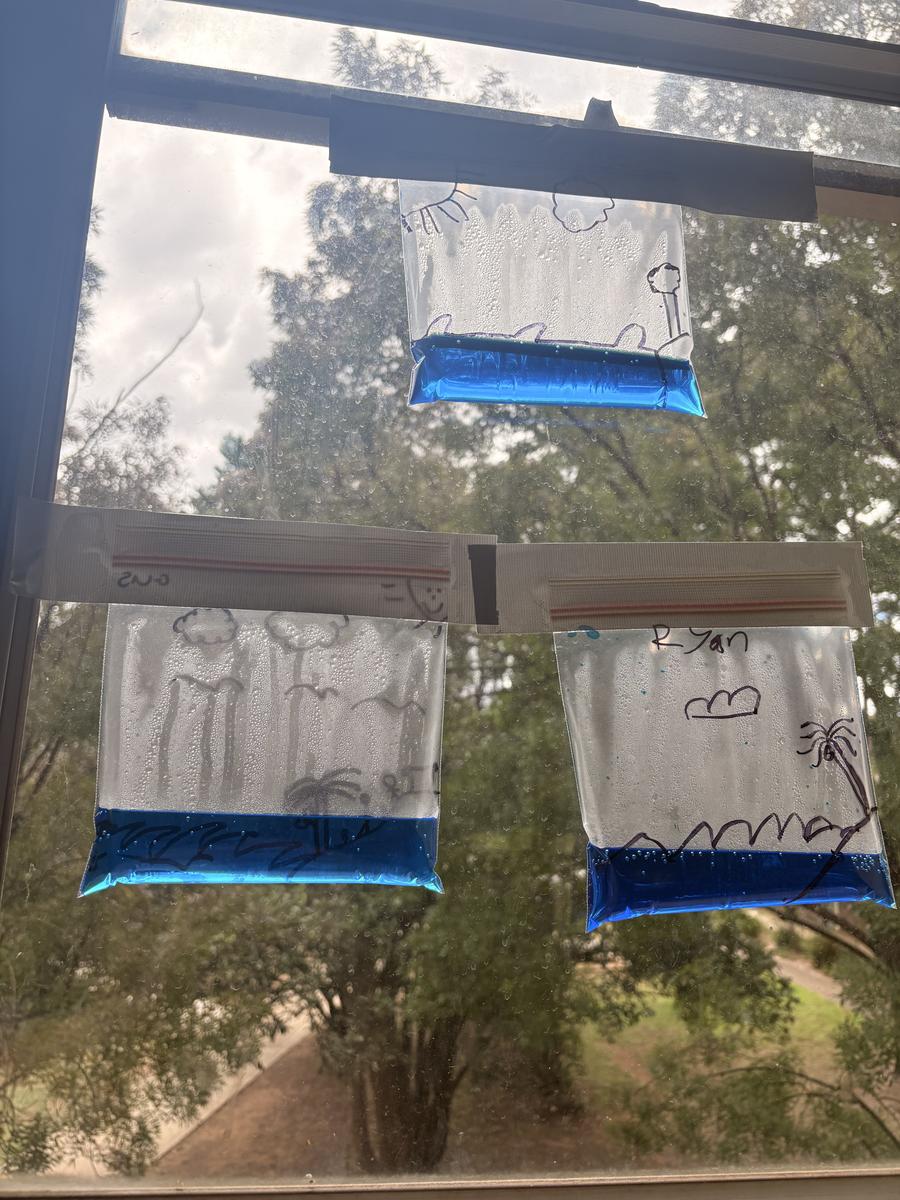
In the last week, our Year 8 students have been exploring the fascinating journey of water through the water cycle, and they didn’t just learn about it from a textbook, they engaged in this cycle themselves
To bring our learning to life, students conducted a hands-on experiment to model the water cycle in real time, using simple materials, like a sandwich bag, sharpie, water and food colouring. They created their own mini water cycles and observed the processes of evaporation, condensation, and precipitation as they happened.
As the water warmed, students noticed evaporation occurring as water turned into vapor. Soon after, droplets began forming on the inside surface, condensation in action! Before long, those droplets grew larger and fell back down like rain, demonstrating precipitation. Seeing these stages unfold helped students clearly understand how water continuously moves through our environment.
The excitement in the classroom was wonderful to see. Students eagerly recorded their observations, made predictions, and discussed how this small-scale model reflects what happens in nature every day.
Well done to our young geographers for their enthusiasm and thoughtful observations!
Jayden Goodchild - Yr 8 HSIE teacher.