Vice Principal Message

Ms Julie Hall
Ms Julie Hall
Songroom Project
Nikki the indigenous artist who has been working with our students this term is continuing to introduce the different Wurundjeri seasons.
Last week the students learnt about the Guling Season which runs from July-August. Guling means 'orchid' in the Woi Wurrung language and during this time the native orchids and other early flowering plants begin to bloom, signalling a subtle seasonal change. During this time, wildlife activity also shifts—platypus (Dulai wurrung) become more active as waterways support increased
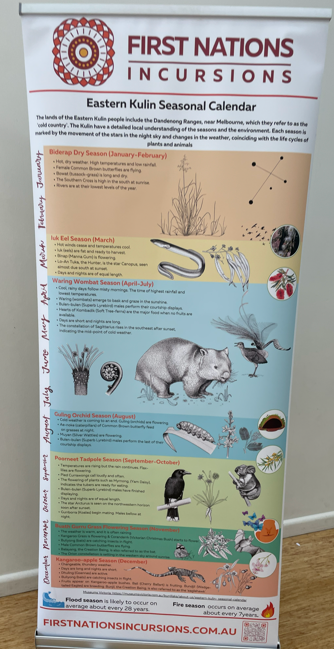
feeding and movement, while male lyrebirds (Buln Buln) begin their remarkable courtship displays, building mounds and singing complex songs to attract mates. Observing these signs of Guling helps us understand how Aboriginal knowledge connects plants, animals and climate, reminding our community of the deep relationship between the natural world and the First Peoples’ care for Country over thousands of years.
Screens, Social Comfort, and the World Beyond the Device
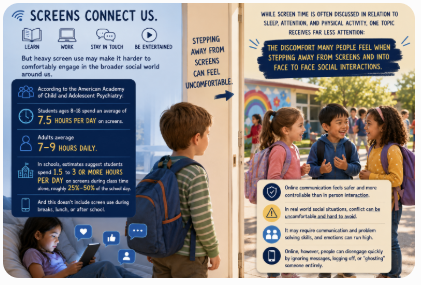
I recently read an article by Social Thinking ( CLICK HERE to see the full article) that goes beyond looking at screentime in terms of safety and focuses on the impact it is having on social, face to face interactions.
Young people aged 8–18 spend an average of 7.5 hours per day on screens, while adults average 7–9 hours. While discussions often focus on the impact of screen time on sleep, attention, and physical activity, less attention is given to its effect on social interaction. Many individuals report feeling less comfortable engaging in in-person communication after extended time online. Digital communication can feel safer and more controlled, whereas face-to-face interactions may involve complex emotions, conflict, and problem-solving.
Supporting children to balance screen use with opportunities for real-world social interaction is an important step in helping them build confidence, resilience, and strong interpersonal skills.
Have your child/ren reflect on whether they agree or disagree with the following ideas. Ask them to discuss which areas feel easier or safer for them and talk about what their goals are for online vs. in-person interactions.
Online, text based interactions often allow people to:
- Take time to carefully craft responses
- Communicate without facial expressions or body language
- Rely on emojis to convey feelings
- Exit uncomfortable situations abruptly
- Misinterpret tone, humour, or sarcasm
- Feel more distant from others, which can sometimes lead to harsher behaviour
In person interactions, by contrast, involve:
- Facial expressions, body language, and tone of voice
- Spontaneous, dynamic exchanges
- Opportunities to clarify misunderstandings
- Greater awareness of others’ feelings
- Clear social cues when entering or exiting an interaction
Policy Reviews
The Policy Sub-Committee are reviewing the following policies:
As always value the input from our community.
Please email your feedback/suggestions to: julie.hall2@education.vic.gov.au
Regards
Julie Hall
Vice-Principal