VCE News

Lindy Gumpold - VCE Coordinator
Lindy Gumpold - VCE Coordinator
2026 is a challenging academic year, with 10 full weeks of schooling per term. For our Year 12 VCE students, this makes the timeline especially clear. From the beginning of Term 1 to the end of Term 3, students have just 30 weeks of academic teaching before classes conclude. Term 4 then consists of only three weeks of revision prior to the final VCE exams.
When viewed this way, the year moves quickly. Every lesson counts.
With such a compact timeframe, consistent attendance and purposeful use of class time are essential. Each class builds on prior learning, and missing even one lesson can mean missing key concepts, SAC preparation, or important exam guidance. We strongly encourage all VCE students to attend regularly and to make the most of every opportunity available — including Study Hall and After School Study sessions, where tutors and teachers are available for additional support.
Attendance Matters
Attendance plays a vital role in academic success, particularly in the final years of secondary schooling. Over the past three weeks, students who achieved 100% attendance each week have been recognised with a Kurnai University postcard. This initiative not only celebrates strong commitment but also reflects how much we value students being present and engaged in their learning.
It has also been pleasing to see students who have been absent taking responsibility by:
- Contacting their teachers promptly
- Using their “study buddy” to catch up on missed work
- Accessing Study Hall or After School Study for clarification
Overall, it has been a fantastic start to the year, with positive attendance patterns setting the tone for success.
Study Hall
There has been an excellent atmosphere in Study Hall since the beginning of term. Students are making thoughtful choices about how they work — selecting either the quiet study area for individual focus or the small group area for collaborative learning.
Supervising teachers regularly check in with students to discuss what they are working on and how additional support can be provided. We are also pleased to share that an additional tutor has been added to selected Study Hall sessions, giving students even greater access to targeted assistance.
One of the key benefits of using Study Hall effectively is that it can significantly reduce the amount of work students need to complete at home, helping to create a healthier balance between study and wellbeing.
After School Study
Beyond the ever-popular hot chips on Mondays and pizza on Thursdays, After School Study offers students valuable academic support in a relaxed and productive environment in the library.
- Tutors are available at all sessions to provide extra guidance.
- Teachers are particularly available during Thursday sessions for subject-specific assistance.
After School Study is an excellent opportunity for students to consolidate learning, seek clarification before SACs, and develop strong study habits — all within a supportive setting.
With only 30 teaching weeks available to our Year 12 students, time is precious. Strong attendance, effective use of Study Hall, and engagement in After School Study will make a significant difference as students move steadily toward their final VCE examinations. It has been a positive and focused start to 2026, and we look forward to seeing this momentum continue.
2026 Special Examination Arrangements
Special Examination Arrangements are supports for students who have a disability, illness or other circumstances that make it difficult to complete VCE exams under normal conditions. They can help you access the exam fairly - so you can show what you know. These arrangements can apply to written exams, oral or performance exams, the Extended Investigation oral presentation and critical thinking test (CTT), and the General Achievement Test (GAT).
Who can apply?
You may be eligible if you have a condition that affects your ability to read or write, concentrate or manage anxiety, move or communicate, or see or hear clearly. This includes disabilities or illnesses as defined under the Disability Discrimination Act 1992 (CWlth).
How to Apply?
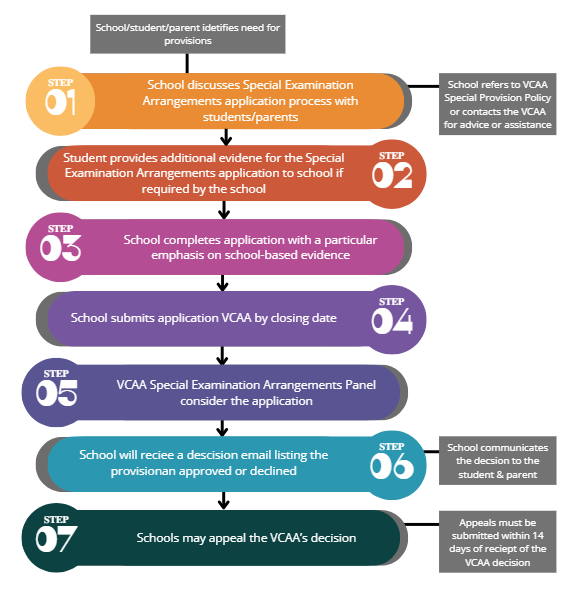
- You don’t apply directly - your school applies to the VCAA on your behalf.
- Your school will collect supporting evidence (for example, from a doctor, psychologist, or specialist).
- The principal must approve the application before it’s sent to the VCAA (Victorian Curriculum and Assessment Authority).
- The VCAA reviews your application and decides which arrangements are fair and suitable for your needs.
Examples of Possible Arrangements
- Extra writing or reading time
- Rest breaks
- Use of a computer or assistive technology
(Note: Schools can’t provide special arrangements unless they’re approved by the VCAA.)
Why Apply Early?
It’s best to start planning early — even before VCE. Talking to your school in Years 7–10 helps them put the right supports in place for classwork and school-based assessments. These same supports can then be included in your VCAA application later on.
After You’re Approved
If your application is approved, your arrangements will usually apply to future VCE or VET Unit 3–4 subjects as well. The VCAA may sometimes ask for updated information if your condition or needs change.
Need Help
Talk to your VCE Coordinator, DI Specialist, or Wellbeing Team if you think you may need Special Examination Arrangements. They provide information on key dates and guide you through the paperwork process.