Year 3/4 News
GRADE 3/4 CELEBRATION NEWSLETTER TERM 2 2026
Reading
This term in Reading, Grade 3/4 students enjoyed exploring ancient Greece and ancient Greek myths and legends. They learnt that Greece was the birthplace of democracy and this tied in well with our inquiry unit ‘Have Your Say’. Students read various myths and legends, including myths surrounding teeth in different cultures, to understand the purpose and audience of myths. While reading these, students gained a deeper understanding of ancient Greece, and also explored myths from their own and other cultures. Students used this knowledge to make predictions about texts before, during and after reading, along with making inferences about these texts and learning vocabulary related to ancient Greece and democracy. They learnt new facts about ancient Greece from reading and listening, and asking questions to expand their understanding of myths and legends. They explored the Greek myth of ‘Theseus and the Minotaur’ in depth to investigate the characters, symbolism, and nature of Greek myths and gods, and developed their ability to summarise in their own words.
Writing
This term in Writing, Grade 3/4 students explored the structure, purpose and craft of writing procedural texts. Students practised, documented, and wrote procedures such as recipes and instructions, culminating in fun activities making jelly and fairy bread. They focused on the type of language specific to procedures such as verbs and adverbs and the use of the present tense to give the readers directions, and then created their own texts with supporting visuals.
Later in term two students examined the structure and purpose of information reports, and how to write for their audience. The focus was on ancient civilisations, such as ancient Greece, which also tied in with their work in reading and inquiry. They worked on using paragraphs and headings to organise information and words specific to their topic. Learning to distinguish between facts and opinions was a central skill they developed. They also learnt to vary sentence length and complexity by using conjunctions such as ‘but’ ‘because’ and ‘so’. Working through the editing and revising process for both writing styles was a part of the completion for both types of writing. In the final week of term they had an opportunity to present their work to their class.
Mathematics
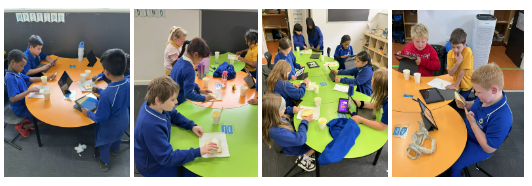
This term in number students worked on understanding the place value of numbers between two and six digits. This involved using skills such as identifying numbers ten more and ten less than a given number using a 100s counting chart and using number patterns to fill in blank 100s charts. They used physical materials to work out and double check their answers. They developed their skills in estimating numbers by rounding them to the nearest hundred or thousand. Number lines were used to show and compare relative size and order of numbers.
Students then moved onto addition and subtraction and focused on choosing and using efficient strategies for solving number problems such as jumping on number lines, bridging to tens, doubles, and near doubles. Students learnt to model and solve problems in addition and subtraction using and expanding on number lines.
In measurement students explored the different types of angles such as obtuse, acute and right angles and locating these in the real world. They took photos to compare these to each other and created examples of each. Students moved on to learning how to measure the length of objects in informal units such as icy-pole sticks and formal units such as the meters, centimeters, and millimeters. Students practised estimating the length of items and then checking the accuracy of their estimations with tools such as rulers and tape measures, making sure to choose the best unit of measurement to answer with.
At the end of term they examined the properties of two dimensional shapes such as length and width, along with learning appropriate mathematical language. Students located these in the environment and labelled their features as well as made these shapes. Three dimensional shapes such as cubes and cylinders were also explored and students compared different types of shapes such as prisms and pyramids. They learnt to identify and label features such as edges, faces and vertices(corners).
Inquiry
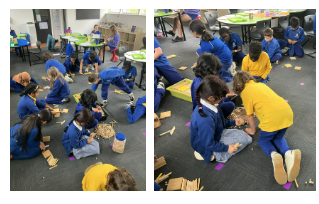
This term’s inquiry unit was called ‘Have Your Say’ and was centered around learning about the ancient Greek civilisation and how it provided the foundation for many modern democracies. Students learnt that as citizens they have the right and responsibility to participate in decision-making by voting and electing representatives. They explored their local government and practised voting and making decisions in their classes, discussing their opinions and what things should change. They considered the following questions:
What are the rights and responsibilities of citizens in making decisions for their community?
How do local governments make decisions, and whose needs do they consider?
Why is it important for citizens to participate in elections and other decision-making processes?
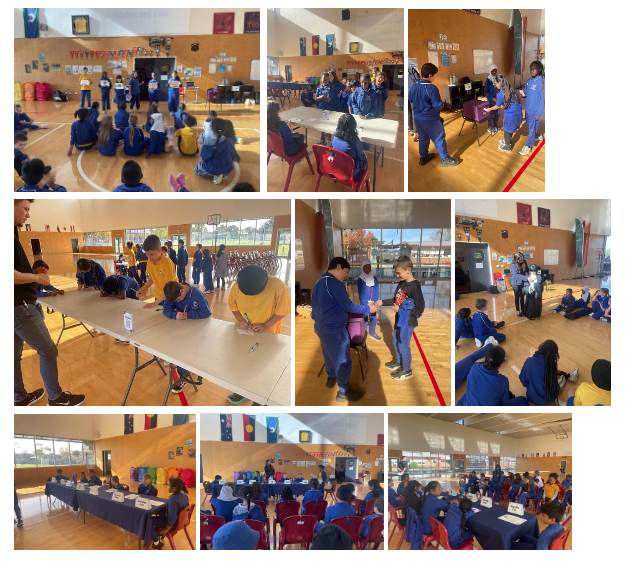
At the end of the term, students enjoyed the wonderful incursion ‘Democracy, Community & Me’ where they got to learn about and roleplay the processes of local government. They practised voting, observing and following the steps of the process, and presenting their opinions to their mock local council and mayor.
Science
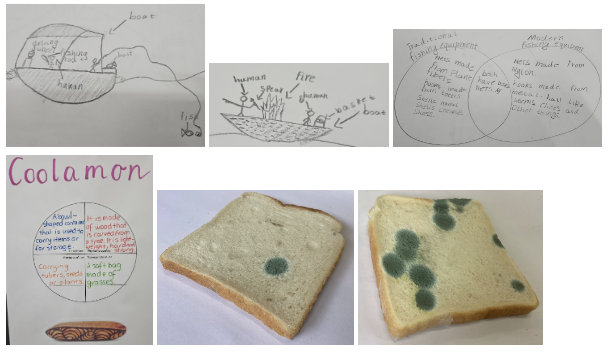
Congratulations to all of our Grade 3/4 students for all that you have achieved in Science during Term 2. During our ‘The Uses of Materials’unit, students identified and described the physical properties of common materials; instigated why materials are selected for everyday objects based on their properties and considered if they can be reused; planned and conducted a scientific investigation to test how different materials affect food freshness; identified and described First Nations peoples' use of natural materials based on their properties; compared traditional and modern fishing materials and explained their environmental impacts; investigated eco-friendly material alternatives to plastic and evaluated their potential to reduce environmental impact.
LOTE
During Term 2, Grade 3/4 students learnt about: Amusement Parks, Deaf History, HOLM NMF – Movement, My Australian Holiday – Sydney, Use of Space, Back to Basics (Alphabet, Colours, Family), Minibeasts/Bugs, Deaf Artist Study, Acknowledgement of Country and Revision – My Talent.
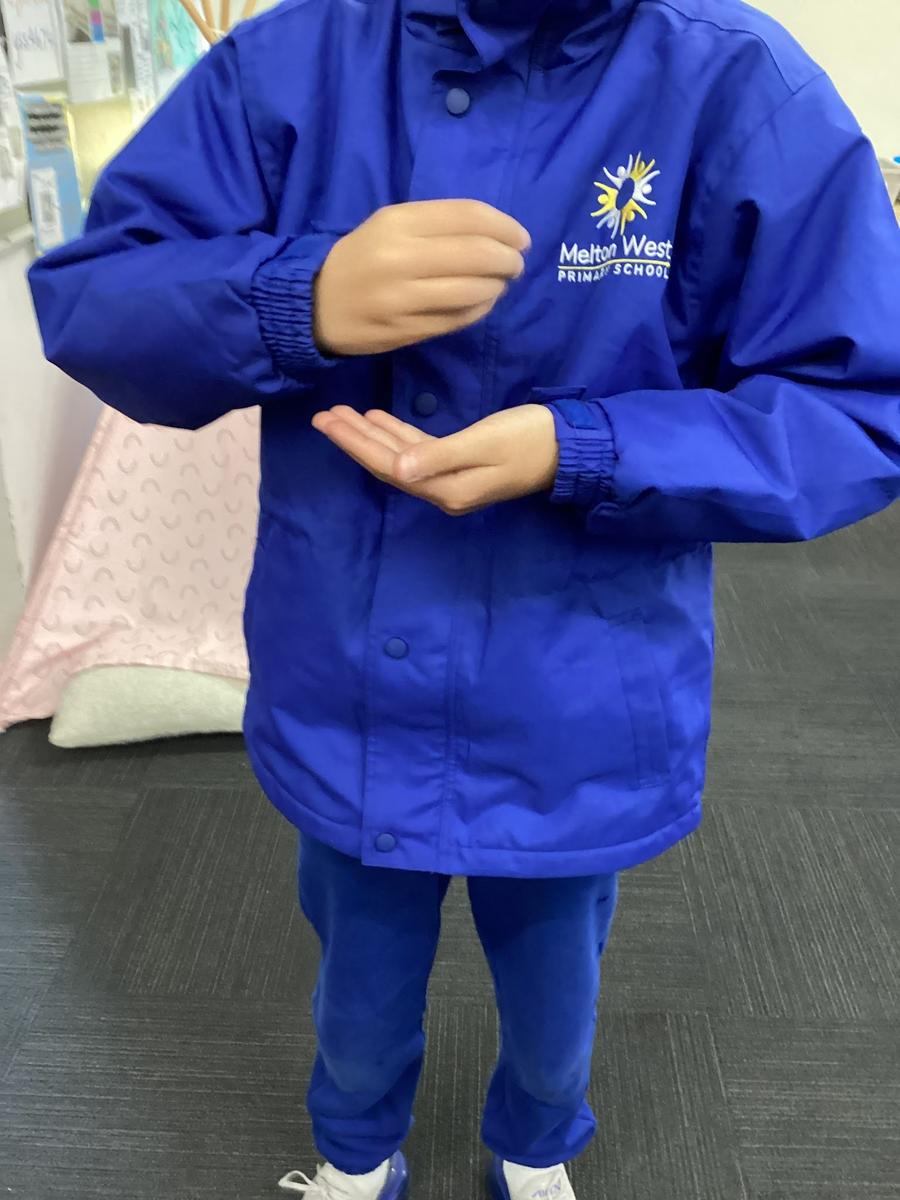
We started the term in an Amusement Park, where our video showed the visual and expressive elements of Auslan, how body language and facial expressions can be used to indicate scenes such as riding on the Rollercoaster and the Merry Go Round Carousel. The lessons on Deaf History and our Indigenous lessons shared important information and skills about Deaf History/Culture and Australian themes.
Many of our lessons this term had an ‘Australia’ focus - Use of Space, Australian Holiday – Sydney and Deaf History, Deaf Artist Study and Acknowledgement of Country. The map of Australia and its states was a useful reference.
Art
In Term 2, Year 3/4 students continued to build their confidence in the art room while strengthening their understanding of routines, expectations and the safe use of materials. They further developed their ability to plan and create artworks that expressed their ideas with increasing detail and creativity.
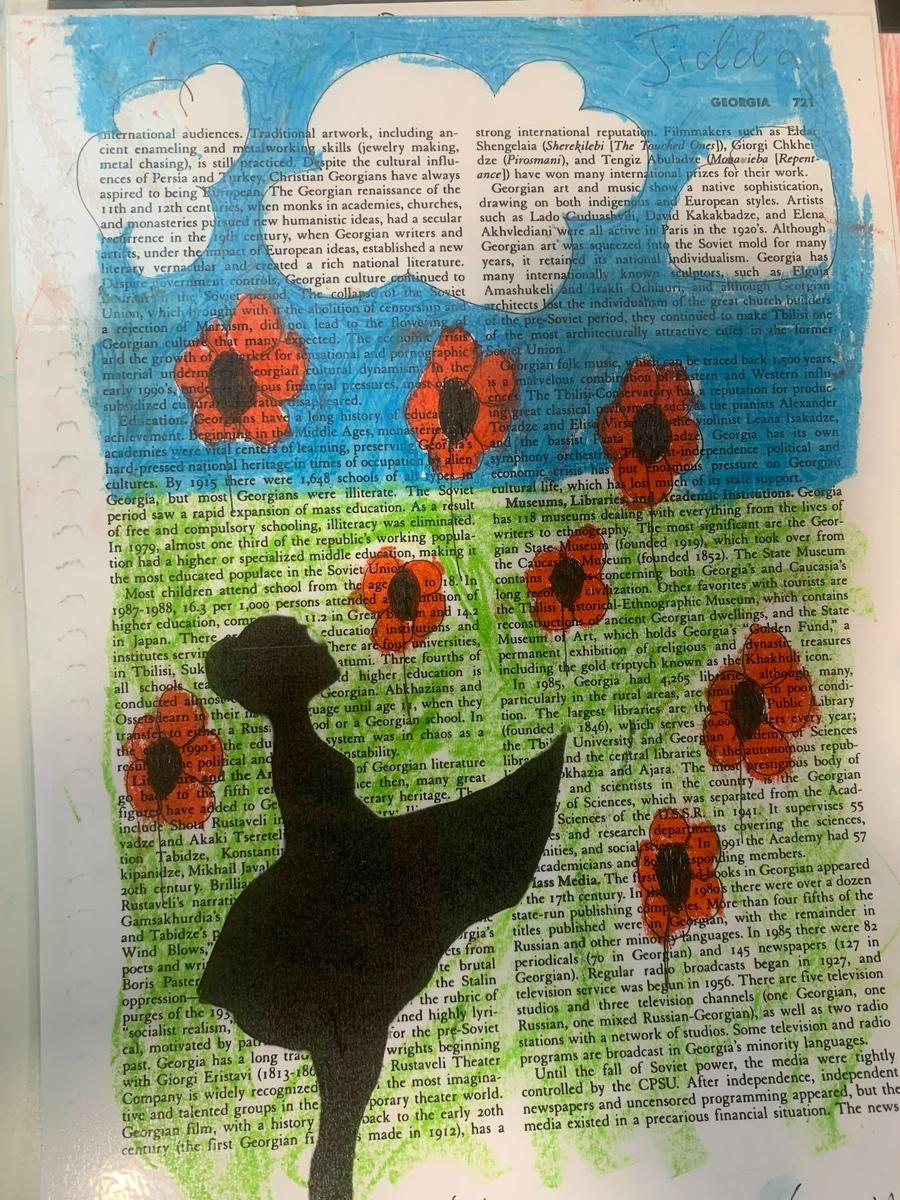
Students began the term by learning about the significance of ANZAC Day and creating poppy artworks to show respect and remembrance. They explored the symbolic meaning of poppies while refining their drawing, painting and observational skills.
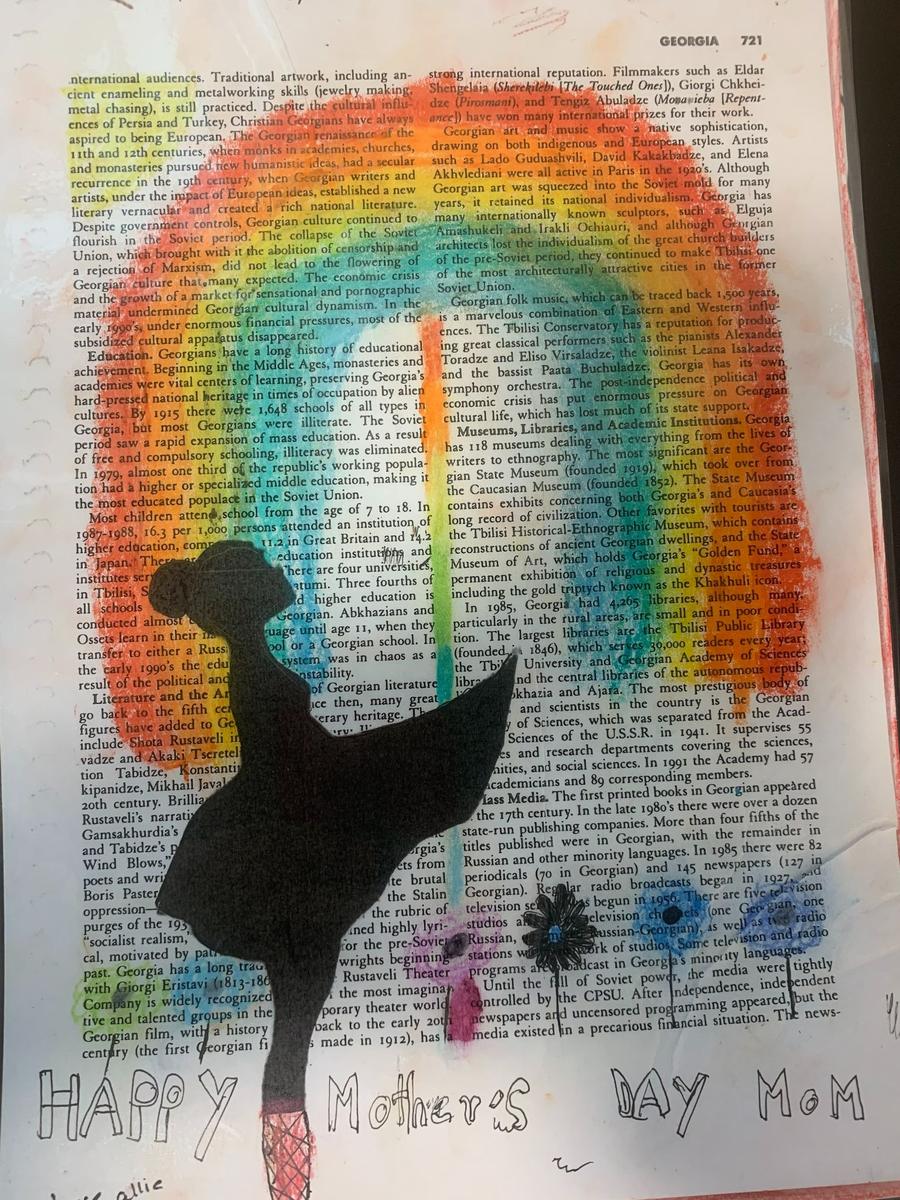
Students were then introduced to the work of Vincent van Gogh, creating expressive flower artworks inspired by his use of colour, texture and brushstrokes as part of their Mother’s Day celebrations.
Towards the end of the term, students explored the work of Pablo Picasso. They examined how he used abstraction and different perspectives in his artworks and experimented with creating their own imaginative portraits using a range of shapes and techniques.
It was a positive and engaging Term 2 in Art, with students continuing to develop their creativity, skills and confidence.
P.E
This term in Physical Education, our Grade 3/4 students had a dynamic and engaging Term 2. They began with a football unit, focusing on developing key skills such as handballing, marking and the drop punt. Through a range of drills and skill-based activities, students improved their technique before applying their learning in modified game situations. Students then moved into an athletics unit, where they participated in relay events as well as shot put and discus, building their throwing technique, control and coordination. To finish the term, students took part in a teamwork unit, where they used their communication and collaboration skills in a variety of group challenges such as tunnel ball, dodgeball and tug of war. These activities helped students work well with others and show positive sportsmanship. It has been great to see their progress this term, and I look forward to seeing our Grade 3/4 students continue to grow next semester!